How to Grill Chicken at the Ideal Celsius Temperature
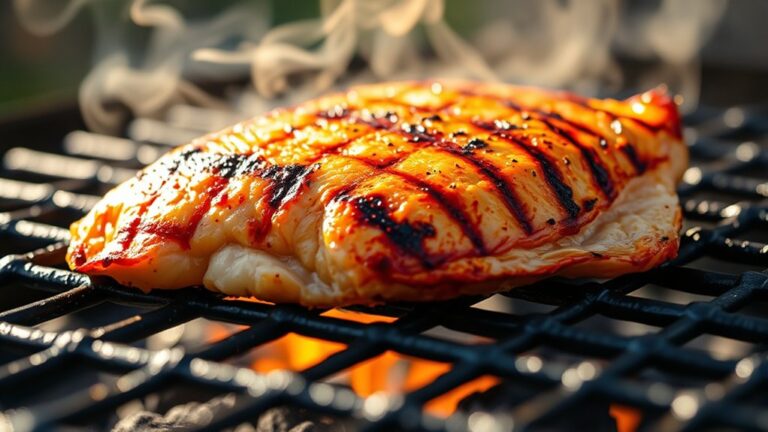
To grill chicken perfectly, it’s essential to understand the ideal Celsius temperature for safe and juicy results. Achieving an internal temperature of 75°C ensures the chicken is thoroughly cooked while retaining moisture.
Preheating your grill and using a reliable thermometer are key steps to maintain consistent heat throughout the cooking process.
Aim for a grill temperature of around 180°C when cooking thicker cuts, such as thighs or drumsticks, and increase to 200°C for quicker-cooking pieces like wings and breasts.
Use direct heat for faster cooking and indirect heat for larger or bone-in pieces to avoid burning.
Monitoring the temperature closely helps prevent drying out the meat. With proper heat control and attention to cooking times, you can master grilling chicken that’s both safe and flavorful.
Keep following for more tips on grilling techniques and temperature management.
Key Takeaways
- Grill chicken until the internal temperature reaches 75°C for safe, juicy, and tender meat.
- Use a digital meat thermometer to monitor temperature by inserting into the thickest part, avoiding bones.
- Preheat the grill and maintain steady heat between 160°C and 220°C, adjusting for cut size and cooking method.
- Use direct heat at 200–230°C for small cuts and indirect heat at 120–180°C for larger or bone-in pieces.
- Control airflow with vents, keep the lid closed, and adjust for weather to maintain consistent grilling temperature.
What’s the Ideal Celsius Temperature for Juicy Grilled Chicken?
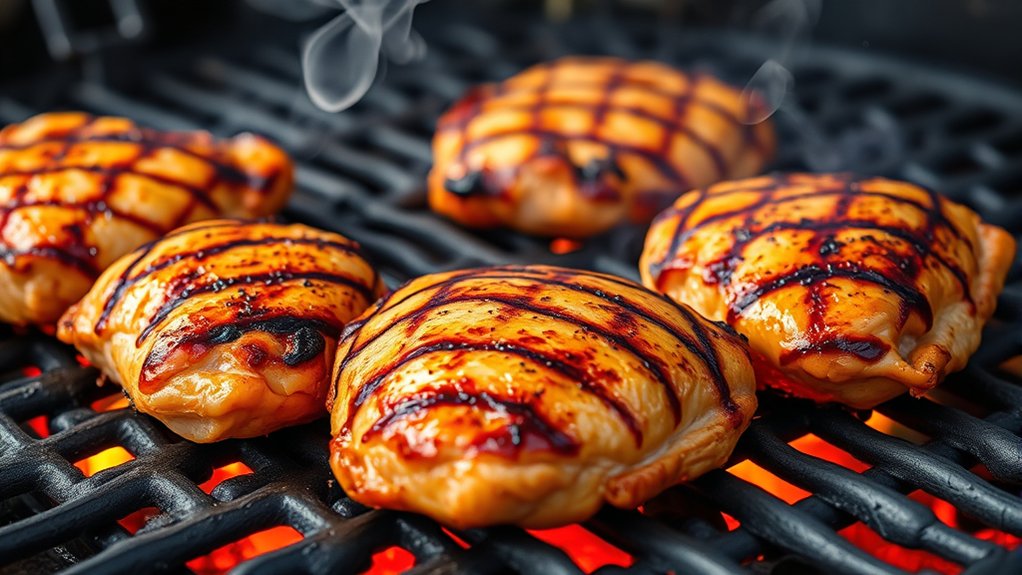
When grilling chicken, you want to aim for an internal temperature of 75°C to assure it stays juicy and safe to eat. Reaching this temperature ensures harmful bacteria are killed without drying out the meat. You’ll notice that chicken cooked to exactly 75°C holds onto its natural moisture and tenderness.
Cooking below this temperature risks undercooking, which is unsafe, while going much higher can make the chicken dry and tough. Using a reliable meat thermometer helps you check the temperature precisely, preventing guesswork. Whether you’re grilling breasts, thighs, or wings, target 75°C internally before removing them from heat.
Let the chicken rest a few minutes afterward; this allows juices to redistribute, making every bite flavorful and tender.
Why Using Celsius Temperatures Improves Your Grilling Accuracy
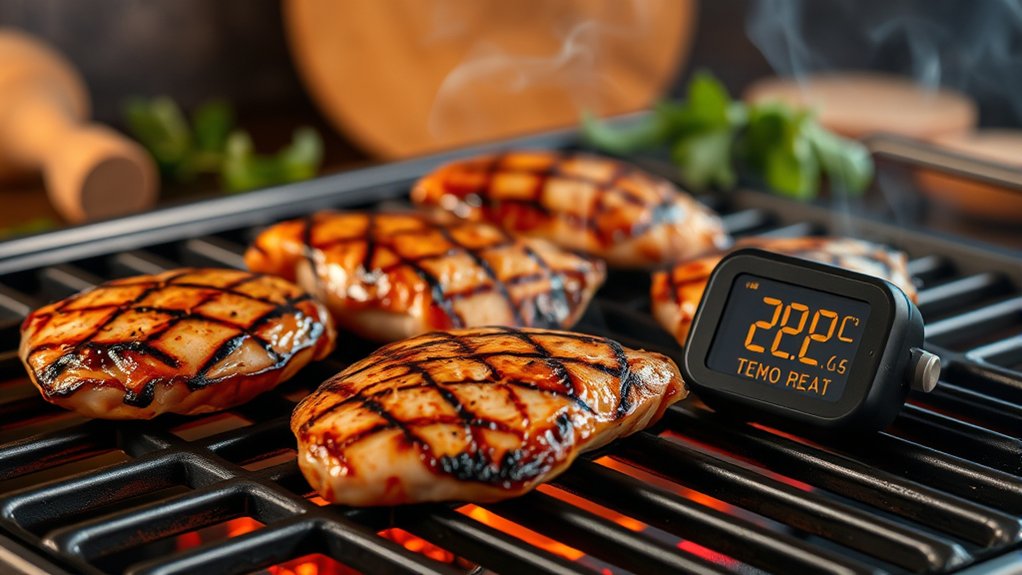
Grilling chicken to the perfect internal temperature of 75°C depends on accurate measurement, and using Celsius temperatures can help you achieve that precision. Celsius is a straightforward scale based on water’s freezing and boiling points, making it easier to understand and apply consistently.
When you use Celsius, you avoid the confusion of converting between Fahrenheit and Celsius, which can lead to errors. It simplifies temperature settings on modern grills, which often display Celsius by default. Here’s a quick comparison to show why Celsius improves accuracy:
| Temperature (°C) | Temperature (°F) | Doneness Indicator |
|---|---|---|
| 60 | 140 | Under-cooked |
| 70 | 158 | Almost done |
| 75 | 167 | Perfectly cooked (safe) |
| 80 | 176 | Slightly dry |
| 85 | 185 | Overcooked |
Using Celsius keeps you precise and confident.
How to Set Your Grill to the Right Celsius Heat
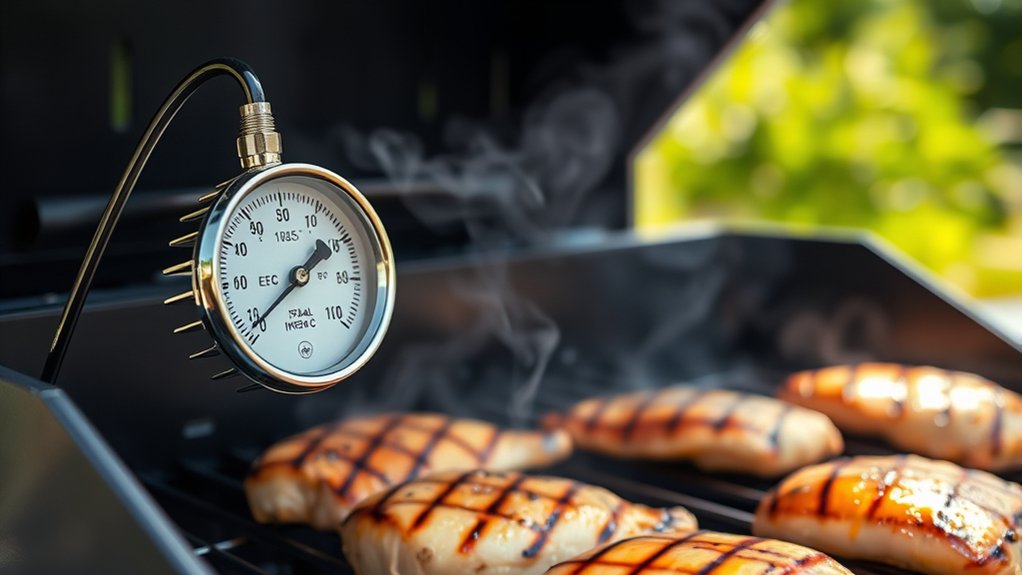
Although getting your grill to the perfect Celsius heat might seem tricky, you can easily master it by understanding your grill’s settings and using a reliable thermometer. Start by turning your grill on and adjusting the controls to the temperature range you want. Most grills have a dial or digital panel—set it close to your target Celsius temperature.
Next, place an accurate grill thermometer on the cooking grate to monitor the heat. Avoid guessing; the thermometer will confirm if you need to increase or decrease the heat. Remember, gas grills heat up quickly, while charcoal grills take a bit longer to stabilize.
Keep adjusting and checking your thermometer until the grill consistently holds the desired Celsius temperature before you start cooking your chicken.
Direct vs Indirect Heat: Which Celsius Setting Should You Use?
You’ll want to use direct heat between 200°C and 230°C for quick-cooking cuts like wings or breasts. For thicker pieces, indirect heat around 120°C to 160°C helps cook chicken evenly without burning.
Choosing the right temperature depends on the cut and how you want your chicken cooked.
Direct Heat Temperature Range
When you apply direct heat, the temperature usually ranges between 200°C and 260°C, which is perfect for quickly searing chicken and locking in juices. This high heat cooks the chicken’s exterior fast, creating a flavorful, crispy skin while keeping the inside moist. You’ll want to keep a close eye on the grill at this temperature to avoid burning, flipping the chicken frequently to ensure even cooking.
Direct heat works best for smaller pieces like drumsticks, wings, or thin breasts that cook quickly. Using this temperature range, you get that signature grilled char and smoky flavor. Just remember, controlling flare-ups and maintaining consistent heat is crucial to perfect results when grilling with direct heat at these higher Celsius settings.
Indirect Heat Temperature Range
Since indirect heat cooks chicken more gently, you should set your grill between 120°C and 180°C for this method. This lower temperature range allows the chicken to cook evenly without burning the outside, preserving moisture and tenderness. Indirect heat is perfect for larger cuts or bone-in pieces that need longer cooking times.
Here’s a quick guide to help you understand how different temperatures affect your chicken when using indirect heat:
| Temperature (°C) | Effect on Chicken |
|---|---|
| 120 | Slow cooking, very tender |
| 140 | Juicy, evenly cooked |
| 160 | Slightly firmer texture |
| 180 | Well-cooked, safe temp |
Adjust within this range based on your chicken’s size and desired doneness.
Choosing Heat Based On Cut
Although grilling chicken at the right temperature is essential, choosing between direct and indirect heat depends largely on the cut you’re cooking. For smaller, thinner pieces like breasts or wings, use direct heat at around 180-200°C. This high heat sears the chicken quickly, locking in juices and creating a crispy exterior.
Thicker cuts, such as bone-in thighs or whole legs, benefit from indirect heat set between 160-180°C. This gentler heat lets the meat cook evenly without burning the outside before the inside is done. If you’re grilling a whole chicken, combine both methods: start with direct heat to crisp the skin, then move it to indirect heat to finish cooking thoroughly.
Adjust your grill’s temperature accordingly to get the best results for each cut.
How to Use a Meat Thermometer to Check Celsius Temperatures
To get accurate Celsius readings, you’ll need the right meat thermometer—digital models work best. Insert the probe into the thickest part of the chicken to measure its internal temperature properly.
Once you know the reading, you can decide if your chicken has reached the safe and ideal grilling temperature.
Choosing The Right Thermometer
When grilling chicken, you’ll want to use a reliable meat thermometer to guarantee you reach the ideal Celsius temperature for safe and juicy results. Choose a thermometer that offers quick, accurate readings—digital instant-read models are excellent for this. Avoid analog thermometers, as they can be slower and less precise.
Look for one with a clear Celsius scale to make temperature checks straightforward. Consider the probe’s length and durability; it should easily reach the chicken’s thickest part without burning your fingers. Waterproof or splash-resistant features add convenience during grilling.
Ultimately, pick a thermometer that’s easy to clean since hygiene matters when handling raw poultry. Selecting the right thermometer ensures you confidently cook your chicken perfectly every time.
Measuring Internal Chicken Temperature
Having the right thermometer in hand makes it simple to measure your chicken’s internal temperature accurately. First, insert the probe into the thickest part of the chicken, avoiding bones since they can give false readings. Push the thermometer in deep enough to reach the center.
Wait a few seconds for the reading to stabilize. Make sure to check multiple spots if the chicken is large or unevenly shaped. If you’re using a digital thermometer, it’ll display the temperature quickly.
For dial thermometers, give it a little extra time to settle. Always clean the probe before and after use to maintain hygiene. By measuring internal temperature this way, you guarantee your chicken is cooked safely and perfectly every time.
Interpreting Celsius Readings
Although measuring the internal temperature is essential, knowing how to interpret those Celsius readings guarantees your chicken is cooked safely and juicy. When you insert your meat thermometer into the thickest part of the chicken, look for a reading of at least 75°C. This temperature ensures harmful bacteria are destroyed, making your chicken safe to eat.
If the reading falls below 75°C, keep grilling and check again after a few minutes. Avoid touching bone, as it can give a false high reading. Once your thermometer shows 75°C or higher, your chicken is perfectly cooked—tender and moist inside.
Using your meat thermometer correctly helps you avoid overcooking or undercooking, giving you confidence every time you grill.
How to Adjust Celsius Heat for Different Chicken Cuts
Since each chicken cut has a different thickness and fat content, you’ll need to adjust your grill’s Celsius temperature accordingly to guarantee even cooking. Thinner cuts like chicken breasts do best at moderate heat, around 180-190°C, to avoid drying out.
Thicker cuts, such as bone-in thighs or drumsticks, require slightly lower heat, around 160-170°C, so they cook through without burning the skin. For chicken wings, higher heat near 200°C works well to crisp the skin quickly. Remember to preheat your grill and use a reliable thermometer to monitor surface temperature.
Adjusting heat based on cut ensures juiciness and safety. By tailoring your grill temperature, you’ll get perfectly cooked chicken every time, no matter the cut.
How Long to Grill Chicken at Each Celsius Temperature
You’ll want to grill chicken at 150°C for a slower, more even cook that usually takes about 25-30 minutes.
If you turn up the heat to 180°C, expect the grilling time to drop to around 18-22 minutes.
At 220°C, the chicken cooks fastest but needs close attention, typically finishing in 12-15 minutes.
Optimal Time For 150°C
When grilling chicken at 150°C, you should plan for a cooking time of about 25 to 30 minutes, depending on the size and thickness of the pieces. This moderate heat allows the chicken to cook evenly and retain moisture without burning the exterior.
To get the best results, keep an eye on:
- Juices running clear, indicating doneness
- Skin turning golden brown and slightly crisp
- Internal temperature reaching 75°C (165°F)
- Meat pulling away easily from the bone
Using a meat thermometer can help you avoid overcooking. Remember, patience at this temperature rewards you with tender, juicy chicken with a perfectly cooked interior and a nicely browned exterior.
Grilling Duration At 180°C
Although grilling chicken at 180°C cooks it faster than at lower temperatures, you still need to monitor the process closely to avoid drying out the meat. At this temperature, boneless chicken breasts typically take about 15 to 20 minutes, while bone-in pieces may need 25 to 30 minutes. Turn the chicken halfway through to ensure even cooking and prevent charring.
Use a meat thermometer to check for an internal temperature of 75°C (165°F), signaling safe doneness. Keep the grill lid closed as much as possible to maintain consistent heat. Remember, grilling times can vary based on the chicken’s thickness and grill type, so rely on temperature rather than time alone for perfect results every time.
Cooking Period Near 220°C
Since grilling chicken near 220°C cooks it more quickly, you need to watch it closely to prevent overcooking or burning. At this temperature, chicken pieces cook in about 10 to 15 minutes, depending on their size and thickness. Use a meat thermometer to check for an internal temperature of 75°C to ensure safety without drying out the meat.
Keep these tips in mind while grilling near 220°C:
- Sear the chicken to lock in juices and create a crisp exterior
- Turn pieces every 3-4 minutes for even cooking
- Avoid flare-ups by trimming excess fat before grilling
- Let the chicken rest for 5 minutes after grilling to redistribute juices
This approach helps you achieve juicy, flavorful chicken in less time.
How Weather and Altitude Affect Your Grill’s Celsius Temperature
Because weather and altitude directly influence how heat distributes on your grill, you need to adjust your cooking approach accordingly. On windy days, heat escapes faster, causing your grill’s temperature to drop below your set Celsius target. You’ll need to monitor the grill closely to avoid undercooking.
Cold weather also cools the grill’s surface, meaning you might need more fuel or longer preheating to reach around 220°C. At higher altitudes, the thinner air reduces oxygen levels, which can lower flame intensity and grill temperature. You might notice your grill struggles to maintain heat as efficiently.
Understanding these factors helps you anticipate changes in grill temperature, so you can better control the cooking process and still achieve perfectly grilled chicken at the ideal Celsius temperature.
Tips for Maintaining Consistent Celsius Heat on Your Grill
Weather and altitude can make it tricky to keep your grill at a steady Celsius temperature, but there are practical steps you can take to maintain consistent heat. Start by preheating your grill thoroughly so the surface stabilizes. Use a reliable grill thermometer to monitor temperature fluctuations closely.
Adjust vents gradually to control airflow, which directly affects the heat inside the grill. Keep the grill lid closed as much as possible to avoid heat loss and sudden temperature drops.
- Visualize a glowing charcoal bed evenly spread beneath the grill grates.
- Picture the thermometer dial steady at your target Celsius.
- Imagine gently twisting the vents to fine-tune the oxygen flow.
- See yourself lifting the lid briefly, then closing it quickly to trap heat.
These actions help you keep your grill’s heat steady for perfectly grilled chicken.
How to Avoid Overcooking Chicken at High Celsius Temperatures
When grilling chicken at high Celsius temperatures, you’ll need to stay attentive to prevent overcooking and drying out the meat. First, monitor your grill’s temperature closely and avoid leaving the chicken unattended. Use a meat thermometer to check internal temperature, aiming for 75°C (165°F) to ensure safety without overcooking.
Cook thinner pieces faster or use indirect heat for thicker cuts to avoid burning the outside while the inside cooks. Flip the chicken regularly to promote even cooking and prevent charred spots. Marinating or basting can help retain moisture during high-heat grilling.
Finally, avoid piercing the meat with a fork, which lets juices escape and causes dryness. With these steps, you’ll grill juicy, perfectly cooked chicken even at high temperatures.
Resting Chicken After Grilling to Retain Juices
Although grilling gets your chicken to the right temperature, letting it rest afterward locks in the juices and enhances flavor. When you pull the chicken off the grill, don’t rush to cut it. Resting allows the meat fibers to relax and redistribute the moisture.
Here’s how to do it right:
- Place the chicken on a clean plate or cutting board
- Tent it loosely with aluminum foil to keep warm
- Let it rest for 5 to 10 minutes, depending on size
- Avoid pressing or poking the meat during this time
Common Celsius Temperature Mistakes When Grilling Chicken
Because you might rely too heavily on numbers alone, it’s easy to make common Celsius temperature mistakes when grilling chicken. For example, setting the grill too high can char the outside while leaving the inside undercooked. On the other hand, too low a temperature can dry out the meat and extend cooking time unnecessarily.
Another mistake is not accounting for grill hotspots, which can cause uneven cooking even if your thermometer shows the right temperature. Avoid guessing internal doneness; always use a reliable meat thermometer to check that the chicken reaches 75°C.
Finally, don’t forget that different chicken cuts may require slightly different temperatures and times. Staying mindful of these details helps you avoid these common errors and grill perfectly cooked chicken every time.
Safe Celsius Temperature Experiments for Flavor Variations
Exploring safe Celsius temperature experiments lets you reveal new flavor profiles while keeping your chicken perfectly cooked. By adjusting grilling temperatures within safe ranges, you can enhance juiciness, tenderness, and smokiness without risking undercooking. Try these approaches:
- Grill at 160°C for slower cooking, allowing spices to deepen and juices to lock in.
- Use 180°C for a balance of crisp skin and tender meat.
- Sear at 220°C briefly, then reduce to 150°C to maintain moisture while adding char.
- Experiment with indirect heat at 140°C for a smoky, slow-roasted flavor.
Each method preserves safety—reaching the essential 74°C internal temperature—while inviting unique tastes. Keep a reliable meat thermometer handy to monitor doneness precisely and enjoy exploring these delicious variations confidently.
Frequently Asked Questions
What Types of Wood Chips Enhance the Flavor of Grilled Chicken?
You’ll love using apple, hickory, or cherry wood chips to enhance grilled chicken’s flavor. They add a sweet, smoky touch that pairs perfectly with the meat, making your barbecue taste even more delicious and memorable.
Can Marinating Chicken Affect the Ideal Grilling Temperature?
You might think marinating changes grilling heat, but it doesn’t. Marinating tenderizes and adds flavor, so you still grill chicken at the ideal temperature to cook it safely without drying it out or undercooking it.
How Do Different Grill Types Impact Cooking Times?
Different grill types affect cooking times because charcoal grills heat unevenly, so you’ll need more attention, while gas grills provide steady heat, letting you cook faster and more consistently.
Electric grills usually take longer to reach temperature.
What Are the Best Side Dishes to Serve With Grilled Chicken?
You’ll want vibrant corn on the cob and crisp, tangy coleslaw to dance alongside your grilled chicken. Roasted vegetables and garlic mashed potatoes also make perfect partners, balancing smoky flavors with creamy, comforting textures.
These sides bring a variety of textures and flavors that complement the juicy, smoky chicken beautifully. For a fresh touch, consider a simple garden salad or grilled asparagus.
If you prefer something heartier, baked beans or a cheesy macaroni dish can add a satisfying richness to the meal.
How to Clean and Maintain Your Grill After Cooking Chicken?
You should let your grill cool slightly, then scrape the grates with a wire brush to remove residue.
Wipe down surfaces with soapy water, empty the drip tray, and cover your grill to prevent rust and dirt buildup.
Conclusion
Grilling chicken at the ideal Celsius temperature isn’t just about taste—it’s about safety too. Did you know that cooking chicken to 75°C ensures harmful bacteria are killed while keeping it juicy? By mastering your grill’s Celsius settings and using a meat thermometer, you’ll avoid dry, overcooked meat every time.
Remember, resting your chicken after grilling locks in those delicious juices. Keep these tips in mind, and you’ll serve perfectly grilled chicken that’s both safe and flavorful! Achieving the ideal Celsius temperature is key to grilling chicken that is tender, juicy, and safe to eat.