Do Electric Cooktops Need to Be Vented and How to Vent Them
You don’t technically need to vent electric cooktops since they don’t produce combustion gases. However, ventilation is important to clear steam, smoke, and odors that build up while cooking. Proper venting helps maintain a fresh and comfortable kitchen environment.
You can use range hoods, downdraft vents, or ductless hoods with charcoal filters to effectively vent electric cooktops. Each option has its benefits depending on your kitchen layout and cooking habits.
Proper placement and regular maintenance of these systems make a big difference in performance.
Keep exploring to discover the best options and tips for venting electric cooktops effectively. Understanding how to choose and install the right ventilation system will enhance your cooking experience and kitchen air quality.
Key Takeaways
- Electric cooktops do not produce combustion gases, so venting is not required for safety but recommended for air quality.
- Ventilation removes cooking steam, smoke, odors, and grease, improving kitchen comfort and preventing buildup on surfaces.
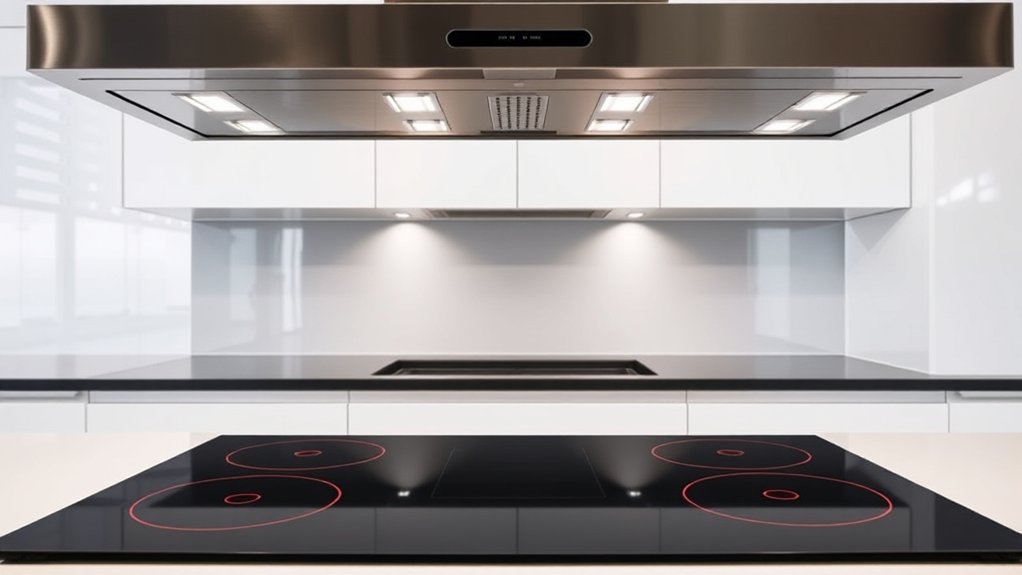
- Common venting options include downdraft vents, ductless range hoods with filters, and wall- or under-cabinet-mounted hoods.
- Proper installation requires positioning the vent above or near the cooktop, following clearance guidelines, and complying with local codes.
- Regular maintenance of filters and ducts ensures effective ventilation and keeps kitchen air clean and fresh.
Do Electric Cooktops Need Ventilation?
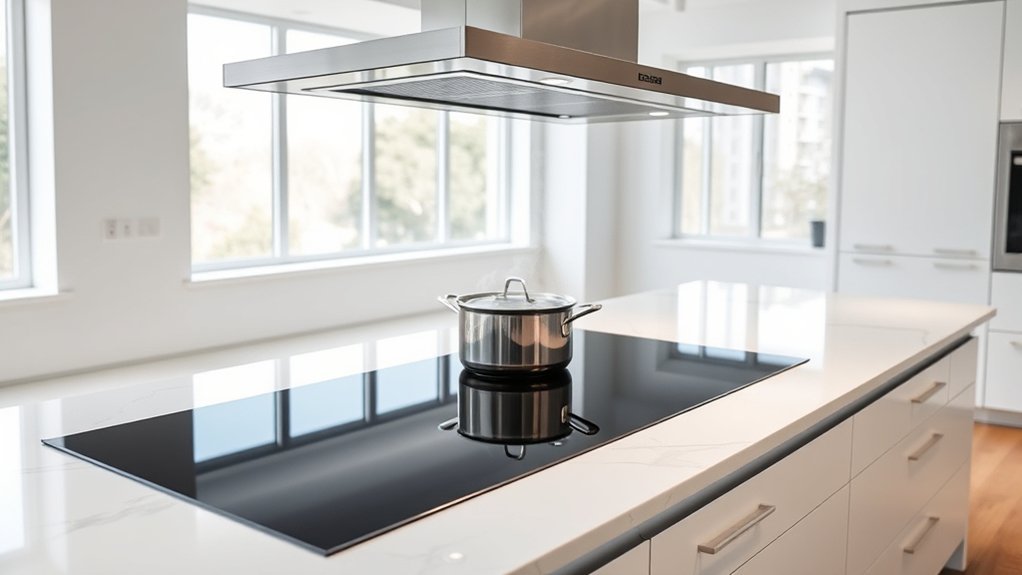
When cooking with an electric cooktop, you might wonder if you need ventilation like you do with gas stoves. Unlike gas cooktops, electric models don’t produce combustion gases, so you won’t have carbon monoxide or natural gas fumes to worry about. However, cooking still generates steam, smoke, and odors, especially when frying or boiling.
Ventilation helps remove these byproducts, improving air quality and reducing lingering smells. While electric cooktops don’t require ventilation for safety, having a good vent system enhances comfort and cleanliness in your kitchen. You can rely on recirculating range hoods or exhaust fans to manage airborne particles.
How to Tell If Your Electric Cooktop Needs Better Ventilation
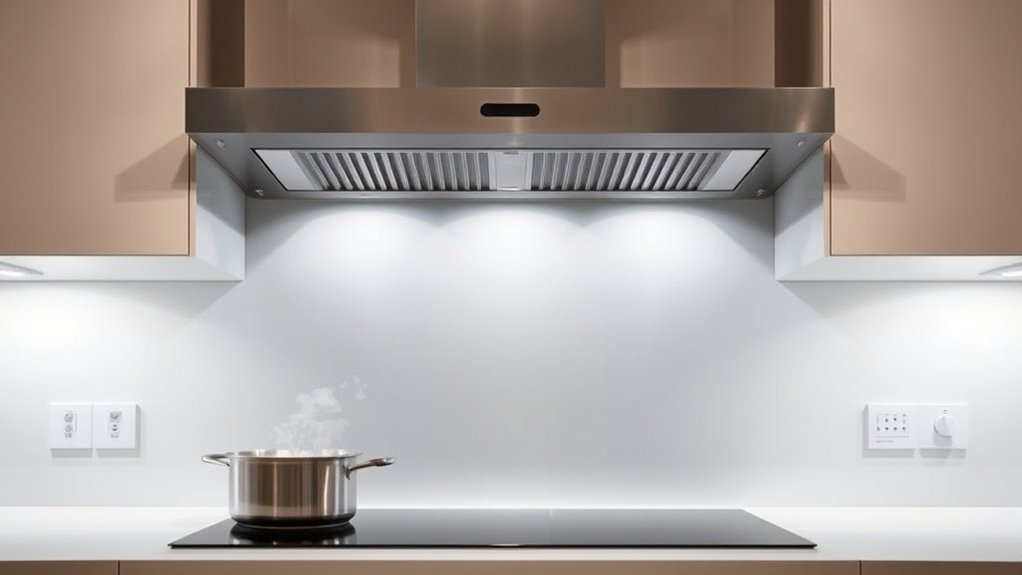
You’ll know your electric cooktop needs better ventilation if you notice lingering smoke, odors, or excessive heat around your cooking area. Poor air quality can make your kitchen uncomfortable and even affect your health.
Let’s look at the key signs that tell you it’s time to improve your ventilation.
Signs of Poor Ventilation
If your kitchen often feels stuffy or you notice lingering cooking odors after using your electric cooktop, it could be a sign that your ventilation isn’t working effectively. You might also spot excess moisture on walls or windows, which indicates poor air circulation. Another clear sign is visible grease buildup on cabinets or walls near the cooktop, showing that airborne particles aren’t being properly removed.
If you frequently experience headaches or irritation while cooking, poor ventilation could be the culprit. Finally, if you hear your ventilation fan running constantly without improving air quality, it might be time to upgrade or clean your system. Recognizing these signs early helps you maintain a safer, more comfortable kitchen environment.
Cooking Area Air Quality
How can you tell if your electric cooktop needs better ventilation? Pay attention to the air quality around your cooking area. If you notice lingering odors, excessive humidity, or a build-up of grease on nearby surfaces, your ventilation might be insufficient.
You might also feel uncomfortable heat or notice condensation on windows and walls after cooking. These signs suggest that smoke, steam, and cooking byproducts aren’t being effectively removed. Poor air circulation can affect your comfort and even your health.
Using a range hood or upgrading to a more powerful vent can improve air quality by extracting pollutants and moisture. Regularly check for these indicators to guarantee your kitchen stays fresh, safe, and comfortable while you cook.
How Venting Electric Cooktops Improves Kitchen Air Quality
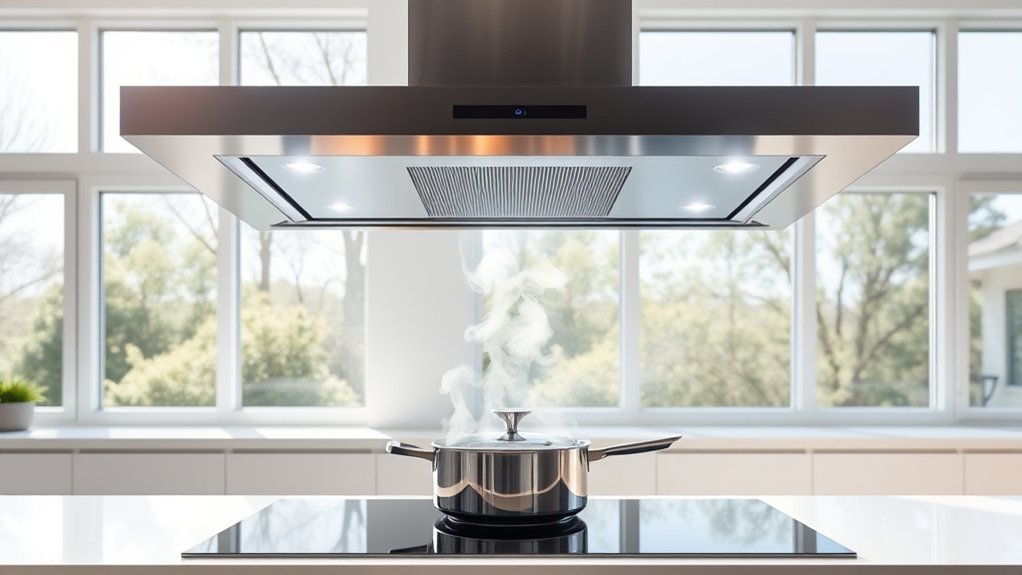
When you vent your electric cooktop, you cut down on lingering cooking odors that can stick around for hours. You also reduce indoor air pollutants, making your kitchen healthier to breathe in.
Plus, venting helps control excess heat, keeping your cooking space more comfortable.
Reduces Cooking Odors
Although electric cooktops produce fewer fumes than gas stoves, they still generate odors that can linger in your kitchen. Venting your electric cooktop helps remove these smells quickly, preventing them from settling into walls, fabrics, and furniture. When you cook aromatic dishes like garlic or fish, the vent captures and exhausts the odors outside or filters them efficiently.
This keeps your kitchen smelling fresh and inviting, especially if you cook frequently. Without proper ventilation, lingering odors can build up and become tough to eliminate. By installing a vent hood or downdraft system, you guarantee that unpleasant cooking scents don’t overpower your space.
Ultimately, venting your electric cooktop improves your kitchen’s comfort and makes your cooking experience more enjoyable.
Minimizes Indoor Air Pollutants
Removing cooking odors is just one benefit of venting your electric cooktop. When you cook, tiny particles and gases release into the air, even without flames. These indoor air pollutants can build up, affecting your health and comfort.
By installing a proper vent, you actively pull these contaminants outside, preventing them from lingering in your kitchen. This improves the overall air quality, reducing the risk of respiratory irritation and allergies. Venting also helps stop grease and moisture from settling on your walls and surfaces, making cleaning easier.
Controls Excess Heat
Since cooking generates more than just odors and pollutants, venting your electric cooktop also helps control excess heat that builds up in your kitchen. When you cook, your electric cooktop releases heat that can quickly raise the temperature in your space, making it uncomfortable and stuffy. Proper ventilation draws out this excess heat, keeping your kitchen cooler and more pleasant to work in.
Without venting, heat can linger, impacting not only your comfort but also the efficiency of your appliances. By installing an effective vent hood or exhaust system, you guarantee hot air escapes promptly, improving overall air circulation. This not only protects your kitchen environment but also helps maintain a safer, more enjoyable cooking experience every time you use your electric cooktop.
Popular Ventilation Options for Electric Cooktops
How do you guarantee your electric cooktop stays free of smoke, odors, and grease? Choosing the right ventilation option is key. You have several practical choices to keep your kitchen air fresh and clean.
Keep your electric cooktop smoke, odor, and grease-free with the right ventilation solution.
Here are some popular ventilation options for electric cooktops:
- Downdraft vents: Installed behind or beside the cooktop, pulling fumes downward.
- Ductless range hoods: Use charcoal filters to recirculate air without external venting.
- Wall-mounted vents: Positioned above the cooktop to capture rising smoke and steam.
- Under-cabinet vents: Mounted beneath cabinets, efficiently removing cooking odors.
Each option suits different kitchen layouts and venting needs, so pick one that fits your space and cooking habits best.
Range Hood Installation for Electric Cooktops
Selecting the right ventilation option sets the stage for effective air quality management in your kitchen. When installing a range hood for your electric cooktop, position it directly above the cooking surface to capture steam, smoke, and odors efficiently. Confirm the hood’s size matches or exceeds the width of your cooktop for ideal coverage.
Mount the hood at the manufacturer’s recommended height—usually 24 to 30 inches above the cooktop—to balance effective ventilation without interfering with cooking. You’ll want to connect the range hood to a vent duct that leads outside, allowing contaminants to exit your home. Use rigid ductwork when possible to maximize airflow and reduce noise.
Proper electrical connections and secure mounting are essential for safety and performance. With careful installation, your range hood will keep your kitchen fresh and comfortable.
Downdraft Vent Options for Electric Cooktops
If you’re looking for a sleek way to vent your electric cooktop, downdraft systems offer great benefits like saving overhead space and reducing noise. You’ll want to take into account how they fit into your kitchen layout since installation can be more complex than traditional hoods.
Understanding these factors will help you decide if a downdraft vent is the right choice for your cooking space.
Benefits of Downdraft Venting
Why choose downdraft venting for your electric cooktop? It offers a sleek, space-saving solution that keeps your kitchen looking clean and modern. Unlike traditional overhead vents, downdraft vents pull smoke, steam, and odors directly downward, preventing them from spreading around your cooking area.
You’ll enjoy benefits like:
- Improved kitchen aesthetics with no bulky hood overhead
- Enhanced air quality by capturing fumes close to the cooktop
- Better compatibility with open-concept kitchen designs
- Flexibility in cooktop placement since you’re not limited by overhead venting
Downdraft venting keeps your kitchen fresh and stylish while efficiently managing cooking emissions, making it a smart choice if you want both form and function in your cooking space.
Installation Considerations
Though downdraft venting offers a sleek alternative to traditional hoods, installing it for your electric cooktop requires careful planning. You’ll need to verify there’s enough space behind or beside your cooktop to accommodate the vent’s motor and ductwork. Since downdraft vents pull air downward, proper ducting is essential to avoid airflow restrictions.
Consider the vent’s height and clearance, especially if you have drawers or cabinets nearby. Electrical connections must be safely routed, often requiring a licensed electrician. Also, check local building codes to confirm compliance.
If you’re remodeling, plan for the vent duct to run through the floor or cabinets, which might affect your kitchen layout. Taking these factors into account will help you enjoy effective ventilation without compromising your kitchen’s design.
Venting Electric Cooktops Without External Ductwork
Wondering how to keep your kitchen air fresh without external ductwork? You can still vent your electric cooktop effectively using ductless or recirculating range hoods. These systems pull air through filters, trap grease and odors, then release clean air back into your kitchen.
They’re ideal when venting outside isn’t an option, such as in apartments or condos.
To vent electric cooktops without external ductwork, you should:
- Choose a range hood with high-quality charcoal and grease filters
- Replace filters regularly to maintain efficiency
- Position the hood close to your cooktop for better capture
- Use models with strong airflow ratings to handle smoke and steam
This setup keeps your kitchen comfortable and odor-free without complex duct installations.
How to Reduce Cooking Odors and Steam Without Vents
If you don’t have vents or ductless hoods, there are still ways to keep cooking odors and steam in check. Start by opening windows and using a portable fan to push stale air outside. You can also run your kitchen exhaust fan, if available, even if it’s not ducted—it helps circulate air.
Cooking with lids on pots traps steam and reduces moisture release. Using a splatter screen cuts down on grease particles, which contribute to odors. Clean your cooktop and surrounding surfaces regularly to prevent buildup that worsens smells.
Finally, consider placing bowls of baking soda or activated charcoal nearby; they naturally absorb odors and keep the air fresher. These simple steps help you manage steam and odors effectively without a traditional vent system.
How to Maintain Your Electric Cooktop Ventilation System
Maintaining your electric cooktop ventilation system guarantees it works efficiently and keeps your kitchen air clean. Regular upkeep prevents buildup that can reduce airflow and cause odors. Here’s what you should do:
- Clean or replace filters monthly to trap grease and particles effectively.
- Wipe down vent surfaces and fan blades to avoid dust accumulation.
- Check ductwork for blockages or damage to assure proper ventilation.
- Test the fan regularly to confirm it runs smoothly and quietly.
Quick Comparison: Venting Electric vs. Gas Cooktops (Brief Overview)
Although both electric and gas cooktops require proper ventilation, they differ markedly in how they handle heat and emissions. Gas cooktops burn fuel, producing combustion byproducts like carbon monoxide and nitrogen dioxide, which need to be vented outdoors for safety. Electric cooktops, on the other hand, don’t produce harmful gases but still generate steam, smoke, and food odors that ventilation can manage.
When venting gas cooktops, you’ll often need a powerful range hood with ductwork leading outside to remove those toxic fumes. With electric cooktops, a recirculating vent hood or downdraft system often suffices, since you’re mainly dealing with odors and moisture. Understanding these differences helps you choose the right ventilation system for your kitchen, ensuring safety and comfort with minimal effort.
Frequently Asked Questions
What Safety Precautions Should I Take When Using an Electric Cooktop?
You should keep the cooktop clean, avoid leaving it unattended, use cookware with flat bottoms.
Keep flammable items away, guarantee proper ventilation, and never touch hot surfaces without protection to prevent burns and fire hazards.
Can Electric Cooktops Cause Electrical Issues if Improperly Installed?
Yes, if you don’t install your electric cooktop properly, you can cause electrical issues like shorts or shocks. Make sure you follow the manual and hire a professional electrician to keep things safe and working well.
Are There Specific Cleaning Products Recommended for Electric Cooktops?
You won’t find a cleaner more effective than specially formulated electric cooktop cleaners! They tackle grime like a superhero, leaving your surface spotless without scratching.
Avoid abrasive products—they can damage your cooktop’s delicate finish.
How Energy-Efficient Are Electric Cooktops Compared to Other Cooking Appliances?
You’ll find electric cooktops quite energy-efficient, often using less power than gas stoves. They heat quickly and evenly, so you won’t waste energy. Induction models are even more efficient, saving you money and time.
What Are Common Troubleshooting Tips for Electric Cooktop Malfunctions?
If your electric cooktop malfunctions, check the power supply first. Clean burner coils and controls regularly. Reset the circuit breaker if needed.
If burners don’t heat, test elements and replace faulty parts promptly to avoid further issues.
Conclusion
Think of venting your electric cooktop as giving your kitchen a gust of fresh air—it’s not always a must, but when steam and smells start to dance around, proper ventilation becomes your kitchen’s best friend.
Whether you choose a sleek range hood or clever ductless options, keeping your space fresh turns cooking chaos into a smooth, enjoyable breeze.
So, take a deep breath and let your kitchen sing with every meal you create! Remember, effective electric cooktop ventilation is key to maintaining a clean, odor-free kitchen environment.