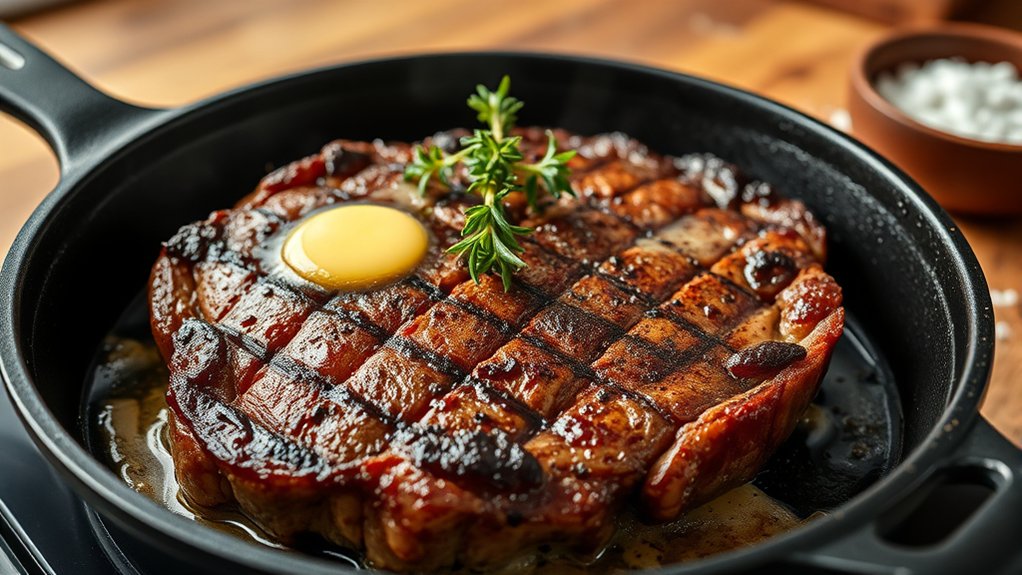
Pan Fry Steak With Butter in 7 Easy Steps
Choose a tender cut like ribeye or New York strip, about 1-1.5 inches thick, for the perfect pan fry steak with butter. Let the steak reach room temperature to ensure even cooking.
Season generously with coarse salt and pepper just before cooking.
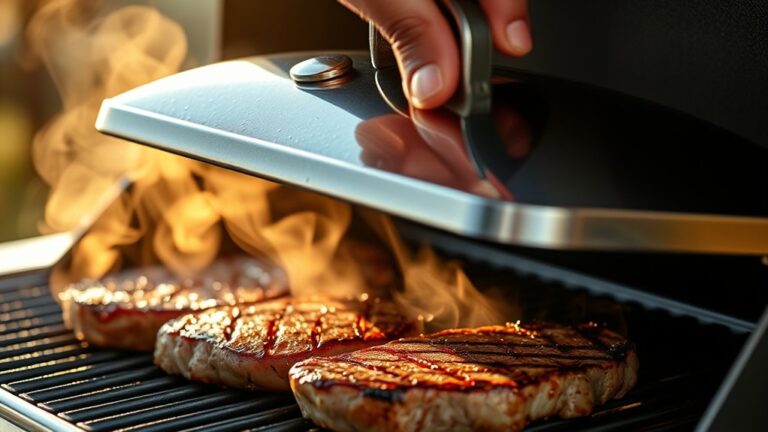
Heat a cast iron pan until it is smoking hot, then sear your steak for 2-3 minutes per side without moving it. This creates a delicious crust.
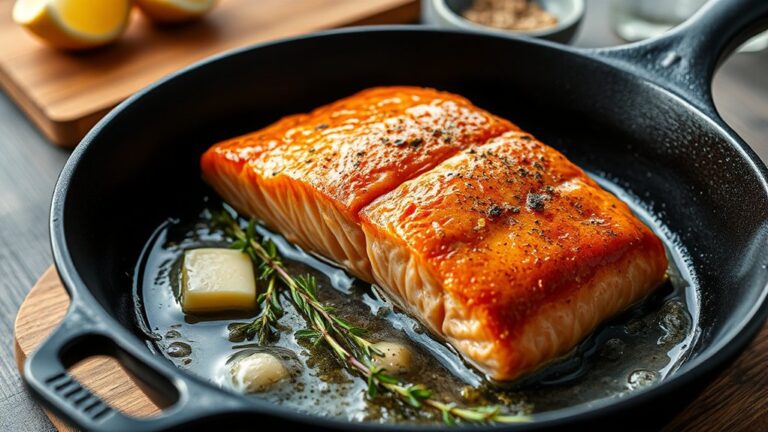
Add butter, garlic, and herbs to the pan, basting the steak for rich flavor.
Rest the steak for 5-10 minutes to lock in the juices.
Keep practicing to master perfect timing and technique for pan frying steak with butter every time.
Key Takeaways
- Choose a 1-1.5 inch ribeye, New York strip, or filet mignon steak, and bring it to room temperature before cooking.
- Season the steak with coarse sea salt at least 40 minutes before cooking and add freshly cracked black pepper just before searing.
- Preheat a heavy-bottomed pan on medium-high heat until smoking hot, then pat the steak dry to ensure a good sear.
- Sear the steak 2-3 minutes per side without moving, basting continuously with melted unsalted butter, garlic, and herbs like thyme or rosemary.
- Rest the steak 5-10 minutes loosely covered to allow juices to redistribute for tender, flavorful results.
Choose the Right Steak Cut for Pan Frying
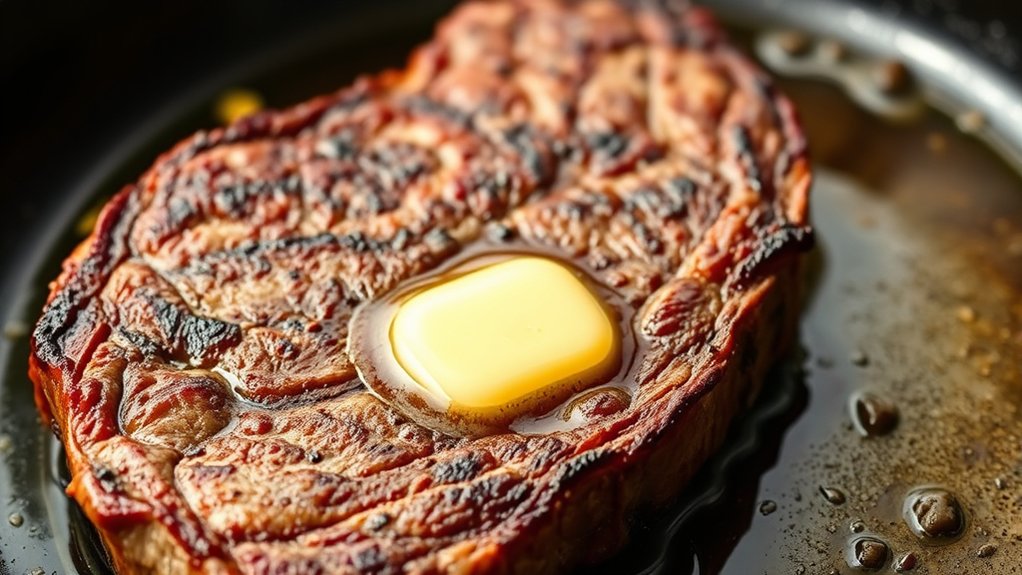
When you pan fry a steak, choosing the right cut makes all the difference in flavor and texture. You’ll want to pick cuts that cook evenly and stay tender on the stovetop. Ribeye is a top choice because its marbling melts into the meat, creating rich flavor and juiciness.
New York strip offers a nice balance of tenderness and beefy taste, perfect for pan frying. If you prefer a leaner option, filet mignon is excellent, but be careful not to overcook it since it’s very lean. Avoid thicker cuts like T-bone or porterhouse unless you have a very large pan and can manage even cooking.
Opt for cuts about one to one-and-a-half inches thick for the best sear and consistent doneness.
Season Your Steak: Salt, Pepper, and Tips
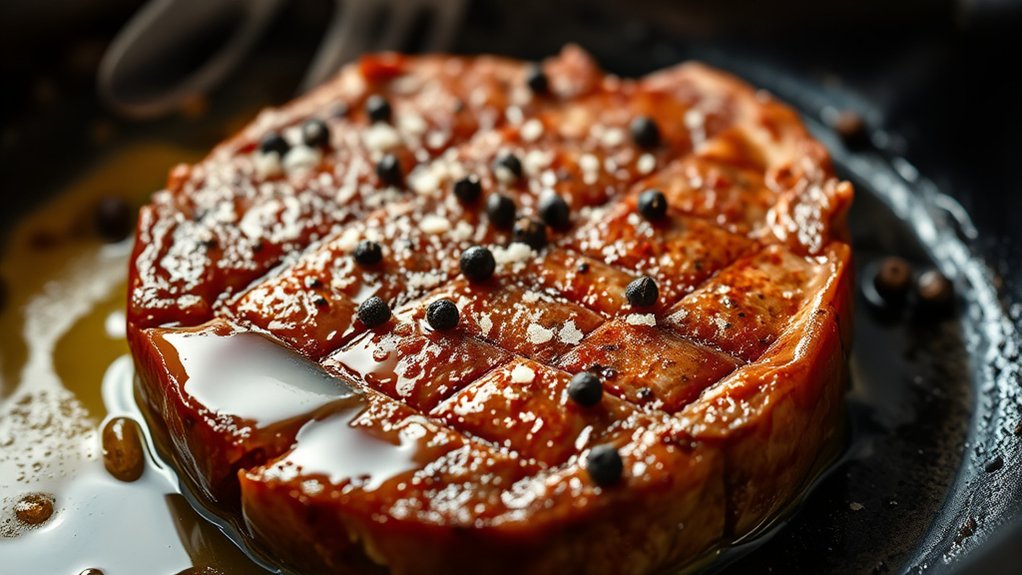
You’ll want to pick the right salt and pepper to bring out the best flavor in your steak—coarse sea salt and freshly cracked black pepper work great. Timing matters too; seasoning just before cooking helps create a perfect crust.
Let’s look at how to get this step just right.
Choosing The Right Salt
Although salt might seem like a simple seasoning, choosing the right type can dramatically enhance your steak’s flavor and texture. For pan-frying steak, coarse salts like kosher salt or sea salt work best. They dissolve slowly, helping you control the seasoning and creating a nice crust when seared.
Avoid fine table salt; it can over-season quickly and doesn’t add much texture. When you season, sprinkle evenly and generously, letting the salt penetrate the meat before cooking. You can also season just before cooking or 40 minutes prior—both methods let salt improve flavor differently.
Pepper Varieties Explained
Since pepper adds a bold kick to your steak, choosing the right variety can elevate your dish considerably. Black pepper is the classic choice, offering a sharp, pungent flavor that complements rich, buttery steaks perfectly. If you want something milder, white pepper provides subtle heat without overpowering other flavors.
For a smoky touch, try pink peppercorns; they bring a fruity, floral note that’s unexpected but delightful. Green peppercorns are fresh and vibrant, great if you like a slightly tangy bite. Don’t overlook crushed or coarsely ground pepper—it releases more aroma and texture than finely ground versions.
Experiment with these varieties to find your favorite pairing, ensuring your steak isn’t just seasoned, but perfectly seasoned with pepper that suits your palate.
Timing For Seasoning
Choosing the right pepper variety sets the stage for seasoning your steak effectively, but knowing when to apply salt and pepper makes all the difference in flavor and texture. For the best results, salt your steak at least 40 minutes before cooking. This timing allows the salt to draw out moisture, then reabsorb it, intensifying the meat’s flavor and improving its juiciness.
If you’re short on time, season just before cooking, but avoid salting too early to prevent dryness. As for pepper, add it right before or during the pan fry to preserve its aromatic oils and prevent bitterness. Remember, seasoning isn’t just about taste—it’s about enhancing the steak’s natural qualities, so be deliberate with timing to get every bite just right.
Get Your Pan and Butter Ready for Pan Frying Steak
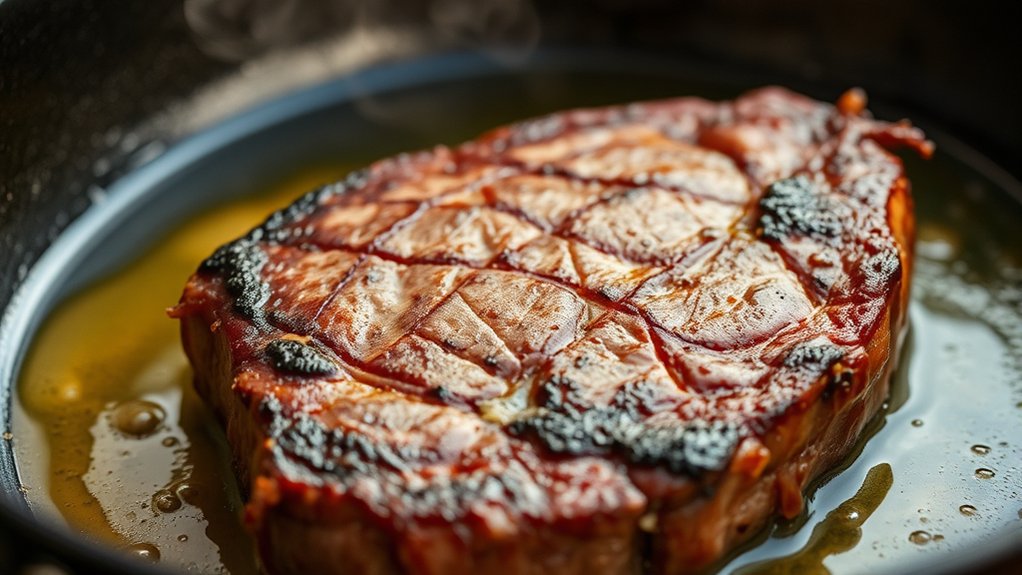
You’ll want to grab a heavy-bottomed pan, like cast iron, to get an even sear on your steak. Make sure your butter is high quality, preferably unsalted, so you can control the flavor.
Getting these ready sets you up for the perfect pan-fried steak.
Choosing The Right Pan
Before you start pan frying your steak, make sure you have the right pan ready. A heavy-bottomed skillet, like cast iron or stainless steel, works best because it retains and distributes heat evenly. This guarantees your steak develops that perfect crust without burning.
Avoid nonstick pans—they don’t get hot enough for a good sear. Also, choose a pan large enough to fit your steak comfortably without crowding, which can cause steaming instead of frying. Preheat your pan on medium-high heat until it’s hot but not smoking.
This step is vital to lock in juices and flavor. Having the right pan ready sets the foundation for a beautifully seared, buttery steak you’ll want to savor every bite.
Selecting Quality Butter
How do you pick the best butter to elevate your pan-fried steak? Start by choosing unsalted butter to control seasoning perfectly. Look for high-fat content, around 82% or more, for richer flavor.
European-style butters often offer this higher fat and creamier texture. Also, check for freshness by the sell-by date to avoid off-flavors.
Here’s a quick guide to select quality butter:
| Butter Type | Fat Content (%) | Best For Steak Pan Frying |
|---|---|---|
| Unsalted | 80-82 | Control seasoning, clean taste |
| European-style | 82-86 | Rich, creamy, intense flavor |
| Grass-fed | 80-84 | Deeper, natural flavor |
| Cultured | 80-84 | Tangy, complex notes |
| Clarified (Ghee) | 99+ | High smoke point, no milk solids |
Pick your butter wisely to enhance every bite.
Sear Your Steak for the Perfect Crust
When you place your steak in a hot pan, the intense heat triggers the Maillard reaction, creating that irresistible golden-brown crust. To achieve this perfect sear, you’ll need to focus on a few key steps:
- Make certain your pan is smoking hot before adding the steak; this prevents sticking and promotes even browning.
- Pat your steak dry with paper towels to remove excess moisture, which can hinder crust formation.
- Avoid moving the steak too soon—let it sear undisturbed for 2-3 minutes per side to develop a deep, flavorful crust.
Use Butter to Baste and Boost Steak Flavor
Although searing your steak creates a fantastic crust, adding butter while cooking takes the flavor to the next level. Once your steak is seared on both sides, reduce the heat slightly and add a generous pat of butter to the pan. As it melts, tilt the pan and use a spoon to baste the melted butter over the steak repeatedly.
This technique infuses the meat with rich, creamy flavor and keeps it juicy. You can also toss in herbs like thyme or rosemary and crushed garlic cloves to enhance the butter’s aroma. Keep basting for a couple of minutes, ensuring every inch of your steak is coated.
This simple step transforms your pan-fried steak into a tender, flavorful masterpiece.
How to Tell When Your Steak’s Done: No Thermometer Needed
After you’ve basted your steak with butter and infused it with flavor, knowing exactly when it’s cooked to your liking becomes the next step. You don’t need a thermometer to get it right—your hands and eyes are great tools. First, use the finger test: gently press the steak and compare its firmness to the fleshy part of your palm beneath your thumb.
Second, watch the steak’s surface; it should have a rich brown crust with slight juices pooling on top. Finally, time matters—typically, 3-4 minutes per side for medium-rare on a hot pan. Keep these cues in mind:
- Soft and spongy feel means rare
- Slightly springy indicates medium-rare to medium
- Firm texture suggests well-done
Trust your senses, and you’ll master perfect timing every time.
Rest Your Steak for Juicy, Tender Results
To lock in the flavors and juices, you’ll want to rest your steak before slicing into it. Once you remove the steak from the pan, transfer it to a warm plate and loosely cover it with foil. Let it rest for about 5 to 10 minutes.
During this time, the muscle fibers relax, allowing the juices to redistribute evenly throughout the meat. If you cut into your steak immediately, those flavorful juices will spill out, leaving your steak dry. Resting also helps the steak finish cooking gently, ensuring a consistent doneness from edge to center.
Frequently Asked Questions
Can I Pan Fry Steak Without Butter?
Yes, you can pan fry steak without butter. Use a high smoke point oil like vegetable or canola oil instead. It still sears the steak nicely, locking in flavor and juices without butter’s richness.
What Oil Is Best for Pan Frying Steak?
For frying flavorful, fabulous steaks, choose oils with high heat tolerance like avocado, canola, or grapeseed oil. They’ll sear your steak superbly without smoking or spoiling its savory, succulent taste.
How Thick Should the Steak Be for Pan Frying?
You should choose a steak about 1 to 1.5 inches thick for pan frying. This thickness lets you get a nice sear while keeping the inside juicy and perfectly cooked without overcooking.
Can I Reuse Butter for Pan Frying Multiple Steaks?
You can’t ride the same wave twice with butter; reusing it for multiple steaks risks burnt flavors and bitterness.
It’s best to use fresh butter each time to keep your steaks tasting rich and delicious.
How Long Can Cooked Steak Be Stored Safely?
You can safely store cooked steak in the fridge for 3 to 4 days.
Make sure to keep it in an airtight container or wrap it tightly to maintain freshness and prevent contamination.
Conclusion
Now that you’ve mastered these simple steps, imagine the sizzle of butter meeting your perfectly seared steak—the aroma alone is a promise of deliciousness. With just a little patience and care, you’ve transformed ordinary ingredients into a mouthwatering masterpiece.
So, go ahead, savor every juicy bite, and let your kitchen be filled with the warmth of a meal made with love. Pan fry steak with butter is not just a cooking method; it’s an experience that brings out rich flavors and tender textures. After all, isn’t that what great cooking is all about?