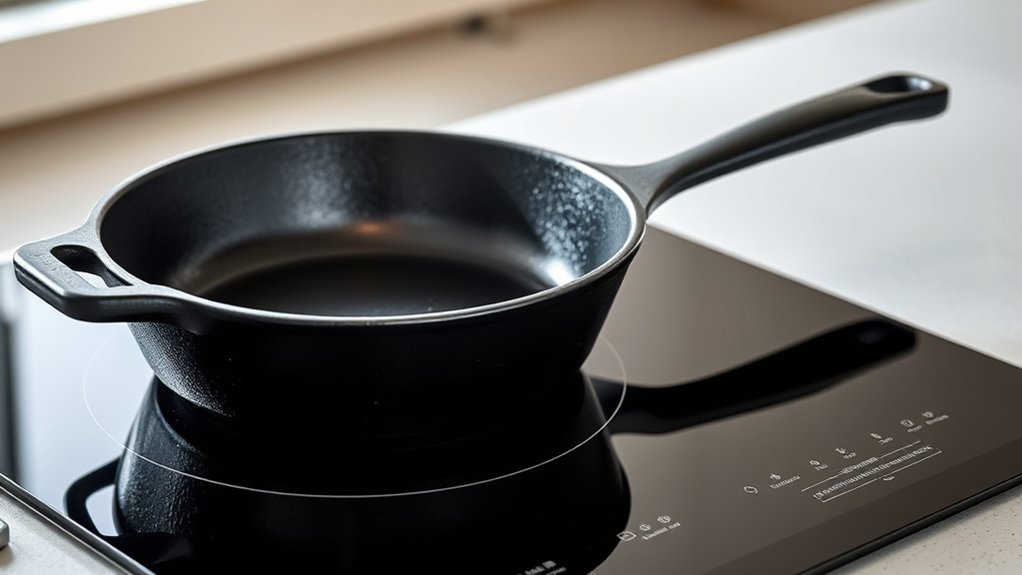
How Is Cast Iron Used on Induction Cooktops?
You use cast iron on induction cooktops because its high iron content reacts well with the magnetic field, making it an ideal material for induction cooking. This compatibility allows the pan to heat efficiently and evenly, providing excellent heat retention.
Cast iron is perfect for various cooking methods like searing, simmering, or slow cooking due to its ability to maintain consistent temperatures.
You’ll get fast, energy-saving cooking with great heat retention, which helps enhance the flavor and texture of your dishes. Just make sure your pan has a flat, smooth bottom for full contact with the cooktop surface.
Handle the cast iron carefully to avoid scratches and maintain its quality.
If you want to understand more about the benefits of using cast iron on induction cooktops and care tips to extend its lifespan, keep exploring. Proper maintenance will ensure your cast iron cookware performs optimally for years to come.
Key Takeaways
- Cast iron works on induction cooktops by inducing electric currents from the magnetic field, heating the pan efficiently and evenly. A flat, smooth cast iron base ensures full contact with the cooktop for optimal heat transfer and energy efficiency.
- Cast iron’s excellent heat retention and stability make it ideal for slow cooking, searing, and consistent temperature control. To protect the cooktop, lift cast iron cookware instead of sliding and preheat slowly to avoid thermal shock and scratches.
- Regular seasoning, cleaning, and proper handling maintain cast iron’s performance and extend its lifespan on induction surfaces.
How Cast Iron Works on Induction Cooktops
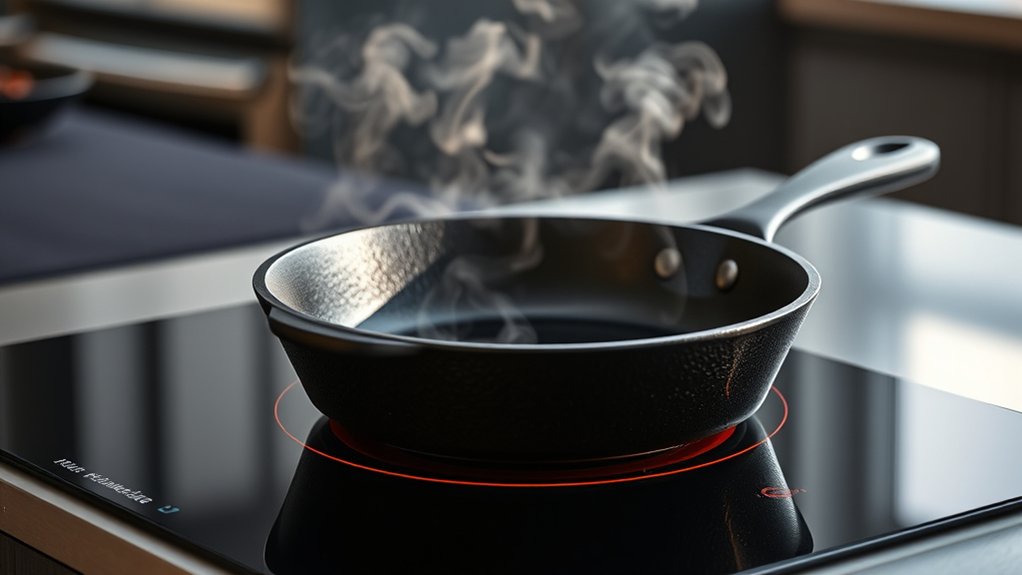
Although cast iron isn’t magnetic like some other cookware materials, it works well on induction cooktops because it contains enough iron to trigger the magnetic field. When you place a cast iron pan on an induction cooktop, the cooktop generates an alternating magnetic field. This field induces electric currents in the cast iron, which heats up due to the metal’s resistance.
You’ll find that cast iron heats evenly and retains heat exceptionally well, making it ideal for slow cooking and searing. Plus, because the heat is generated directly in the pan, you get faster cooking times and better energy efficiency. Just make sure your cast iron is flat on the bottom to maintain good contact with the cooktop surface for maximum heating.
Is Cast Iron Safe to Use on Induction Cooktops?
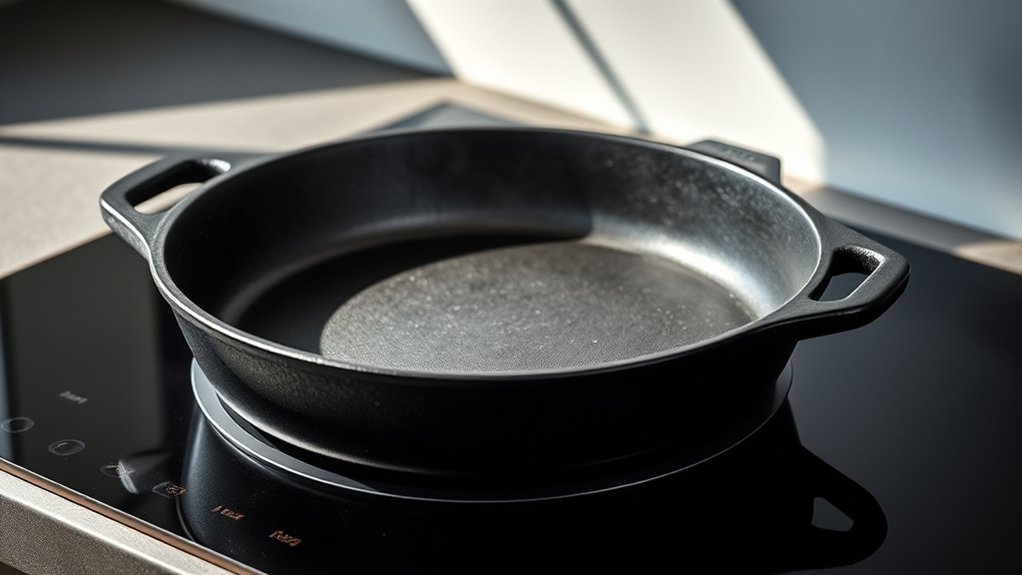
Because cast iron heats efficiently on induction cooktops, you might wonder if it’s safe to use regularly. The good news is, cast iron is generally safe and works well, but you should handle it with care. Its heavy weight can scratch or damage the glass surface if you’re not careful.
Cast iron works great on induction but requires careful handling to avoid scratching the glass surface.
Also, rapid temperature changes can cause thermal shock, potentially cracking your cookware or cooktop.
To use cast iron safely on induction:
- Lift pots instead of sliding them to avoid scratches.
- Preheat slowly to prevent thermal shock.
- Avoid dragging cookware across the cooktop.
- Use cookware with a smooth, flat bottom for stable contact.
Following these tips ensures your cast iron stays safe and your induction cooktop remains in good shape.
Best Cast Iron Cookware for Induction Cooking
When choosing cast iron cookware for your induction cooktop, pay close attention to the material composition to guarantee peak performance. You’ll also want to take into account the size and weight, as heavier pieces can affect handling and heat distribution.
Finally, knowing how to maintain and care for your cast iron will keep it working well for years to come.
Material Composition Matters
Since induction cooktops rely on magnetic fields to generate heat, the material composition of your cast iron cookware plays a crucial role in performance. Pure cast iron works best because it’s highly magnetic, ensuring efficient heat transfer.
If you opt for enameled cast iron, check that the base is solid cast iron to maintain compatibility. Avoid cookware with aluminum or copper bottoms, as these reduce magnetic responsiveness. Also, look for cookware with a smooth, flat base for even heating on induction surfaces.
- 100% cast iron core for maximum magnetic attraction
- Enameled surfaces that don’t interfere with induction heat
- Avoid mixed metals at the base to prevent weak magnetic connection
- Flat, polished bottoms for consistent contact and heat distribution
Choosing the right composition means faster cooking and less wasted energy.
Size And Weight Considerations
Although cast iron is known for its durability, you should consider both size and weight carefully to guarantee comfortable handling and efficient cooking on induction cooktops. Larger, heavier pans provide excellent heat retention but can be hard to lift and maneuver, especially when full. Smaller pans are easier to handle but may not cover larger induction zones effectively.
Balancing these factors can improve your cooking experience and prevent strain.
| Pan Size | Weight Range | Best Use Case |
|---|---|---|
| Small (8″) | 3-5 lbs | Quick meals, single servings |
| Medium (10″) | 5-7 lbs | Everyday cooking |
| Large (12″) | 7-10 lbs | Family meals, slow cooking |
Choose a size and weight that suit your comfort and cooking needs.
Maintenance And Care Tips
Choosing the right size and weight for your cast iron cookware sets the stage for a smoother cooking experience, but keeping your pans in top condition will make certain they perform well on induction cooktops for years to come. Cast iron requires regular maintenance to maintain its seasoning and prevent rust. After cooking, clean your pan with warm water and a brush—avoid soap or harsh detergents.
Dry it thoroughly to stop moisture from causing rust. Apply a thin layer of oil to the surface before storing to keep it seasoned and non-stick. Here are some quick tips to help you care for your cast iron:
- Avoid soaking your cast iron in water.
- Use wooden or silicone utensils to protect the seasoning.
- Re-season your pan periodically with a light coat of oil.
- Store in a dry place to prevent rust buildup.
Benefits of Cooking Cast Iron on Induction Stoves
When you cook with cast iron on an induction stove, you’ll enjoy faster, more even heating compared to other cookware. The magnetic properties of cast iron allow the cooktop to transfer energy directly, making your cooking more efficient.
Plus, cast iron retains heat well, so your food cooks consistently without sudden temperature drops. This means better searing, browning, and overall flavor development.
| Benefit | Explanation | Result |
|---|---|---|
| Fast Heating | Direct energy transfer to cookware | Saves cooking time |
| Even Heat Distribution | Cast iron’s heat retention properties | Prevents hot spots |
| Energy Efficient | Less heat loss around the pan | Lower energy consumption |
| Versatile Use | Works well for various cooking techniques | Enhances meal variety |
Common Challenges With Cast Iron on Induction and Solutions
Even though cast iron works well on induction cooktops, you might face some challenges like uneven surface contact or heavy weight that can scratch the cooktop. The rough bottom of cast iron pans may not sit flush, leading to uneven heating. Their weight also makes them tricky to handle without damaging the glass surface.
Plus, you might notice slower temperature adjustments compared to lighter cookware.
To tackle these issues:
- Use a smooth-bottomed cast iron pan or season the base for better contact.
- Lift pans instead of sliding them to avoid scratches.
- Preheat slowly to help even heating.
- Be cautious with heavy pans to prevent cracking or damage.
Addressing these challenges ensures you enjoy the benefits of cast iron without risking your induction cooktop.
Safe Use and Maintenance of Cast Iron on Induction Cooktops
How can you guarantee your cast iron cookware stays in great shape while protecting your induction cooktop? First, always lift your cast iron pans instead of sliding them across the cooktop to avoid scratches. Use cookware with smooth, flat bottoms to ensure stable contact and prevent damage.
After cooking, let your pan cool before cleaning it with warm water and a soft brush—avoid harsh detergents or metal scrubbers that can strip seasoning. Regularly oil your cast iron to maintain its non-stick surface and prevent rust. If you notice any residue on the induction surface, clean it gently with a soft cloth and a cooktop cleaner.
How Cast Iron Distributes Heat on Induction Cooktops
You’ll notice cast iron holds heat exceptionally well, making your cooking more consistent. Its ability to spread heat evenly depends a lot on how well the pan’s surface touches the cooktop.
Understanding this helps you get the best results when using cast iron on induction.
Heat Retention Efficiency
Why does cast iron excel at retaining heat on induction cooktops? It’s because cast iron’s dense structure stores heat exceptionally well, giving you consistent cooking temperatures even after the element cycles off.
When you use cast iron, you’ll notice it holds warmth for extended periods, making it great for simmering or slow cooking. It minimizes temperature fluctuations, helping you avoid hotspots. It also allows food to cook evenly by maintaining steady heat.
Cast iron saves energy by reducing the need for constant power input. This heat retention means you get more control over your cooking process. Cast iron keeps your dishes cooking steadily, so you don’t have to babysit your stovetop as much.
Making it a reliable companion on induction cooktops.
Even Heat Distribution
Although induction cooktops heat quickly, cast iron guarantees that heat spreads evenly across the cooking surface. When you use cast iron cookware, its dense and thick material absorbs the heat generated by the cooktop and distributes it uniformly throughout the pan. This even heat distribution prevents hotspots that can burn food or cause uneven cooking.
You’ll notice your meals cook more consistently, making it easier to control temperature and achieve perfect results. Cast iron’s ability to spread heat smoothly is especially helpful for slow-cooked dishes or recipes requiring steady, gentle heat. By choosing cast iron on your induction cooktop, you assure heat moves steadily across the entire base, giving you reliable performance whether you’re searing, simmering, or frying.
Surface Contact Importance
When cooking on an induction cooktop, the amount of surface contact between your cast iron cookware and the cooktop matters a great deal. Good contact ensures efficient heat transfer, helping your food cook evenly and quickly.
If the base of your cast iron pan is warped or uneven, it won’t sit flush, reducing contact and causing hot spots or slower heating. You want your pan to rest steadily on the cooktop surface for best performance. Keep in mind:
- Flat, smooth pans maximize contact area
- Warped or rough bottoms reduce heat transfer
- Smaller contact areas mean longer cooking times
- Full contact prevents energy waste and uneven heating
Comparing Cast Iron to Other Induction Cookware
While cast iron offers excellent heat retention and durability on induction cooktops, you might wonder how it stacks up against other popular induction cookware materials like stainless steel, aluminum, or copper. Each material has unique benefits and drawbacks, affecting your cooking experience in different ways.
| Material | Heat Retention | Induction Efficiency |
|---|---|---|
| Cast Iron | Excellent | High |
| Stainless Steel | Moderate | Moderate to High |
| Aluminum | Poor (requires base) | Low (needs induction plate) |
Cast iron excels in heat retention and induction efficiency but is heavier and slower to heat compared to stainless steel. Aluminum and copper often need a magnetic base to work well on induction. Choose based on your cooking style and priorities.
Frequently Asked Questions
Can Cast Iron Cookware Be Used on Gas and Induction Cooktops Interchangeably?
Yes, you can use cast iron cookware on both gas and induction cooktops interchangeably. Just be careful when handling it on gas burners since it heats unevenly, and avoid dragging it on induction surfaces to prevent scratches.
This will help maintain the cookware’s condition and ensure safe cooking. Always lift the cookware when moving it on induction cooktops to avoid damaging the surface.
Does Seasoning Cast Iron Affect Its Performance on Induction Cooktops?
Seasoning cast iron doesn’t affect its performance on induction cooktops. You’ll still get excellent heat transfer because induction relies on the metal’s magnetic properties, which remain unchanged regardless of the seasoning layer.
How Do You Prevent Rust on Cast Iron Cookware Stored After Induction Use?
Want to avoid rust on your cast iron after cooking? Dry it thoroughly, apply a thin layer of oil, and store it in a dry place.
Don’t forget to air it out occasionally to keep moisture away.
Are There Specific Brands of Cast Iron Recommended for Induction Cooking?
You’ll find brands like Lodge, Le Creuset, and Staub work great on induction cooktops. They offer excellent heat retention and flat bottoms that guarantee full contact with the cooktop for efficient cooking every time.
These brands are specifically designed to maximize performance on induction surfaces. Their durability and even heating make them a popular choice among home cooks and professionals alike.
Choosing cast iron from these reputable brands ensures compatibility and long-lasting use with your induction cooktop.
Can Cast Iron Cookware Damage Induction Cooktop Surfaces?
Cast iron cookware can scratch induction cooktop surfaces if you slide it around carelessly. To avoid damage, lift pots when moving them and keep both the cookware and cooktop clean.
You’ll protect your stove this way.
Conclusion
When you place your sturdy cast iron skillet on an induction cooktop, imagine the magnetic dance beneath, heating your pan evenly like a warm embrace. You’ll enjoy rich, consistent cooking with that classic sear and crisp.
Though heavy, with a little care, your cast iron becomes a trusted kitchen ally, blending old-world charm with modern tech.
So go ahead—let your cast iron shine on induction, turning every meal into a cozy, flavorful masterpiece. Cast iron cookware works perfectly on induction cooktops, offering durability, excellent heat retention, and efficient cooking performance.