7 Cookware Types That Work Best With Induction Cooktops
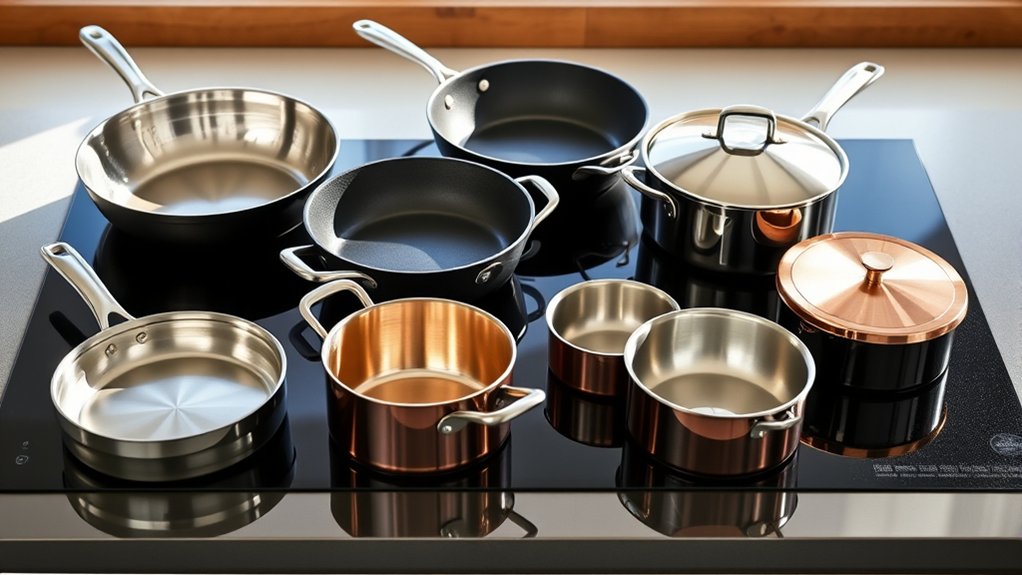
You’ll want cookware made from magnetic materials like cast iron or specific stainless steels to work best with your induction cooktop. These cookware types ensure efficient heat transfer and compatibility with induction technology, making them essential for any kitchen using an induction cooktop.
Cast iron heats evenly and retains heat well, providing consistent cooking results.
Magnetic stainless steel often features an aluminum core for improved responsiveness and heat distribution. Enamel-coated, carbon steel, and multi-layered pieces also deliver great performance with induction, combining durability and even heat.
Non-stick options compatible with induction offer easy food release too. Explore these types to upgrade your cooking experience efficiently and confidently.
Key Takeaways
- Cast iron cookware is ideal for induction due to its magnetic properties, excellent heat retention, and durability.
- Magnetic stainless steel, especially 18/0 grade, works well with induction and often features aluminum cores for better heat distribution.
- Enamel-coated cookware combines induction compatibility with rust resistance and aesthetic appeal.
- Multi-layered (clad) cookware uses layers of stainless steel and aluminum for even heating and precise cooking on induction surfaces.
- Non-stick induction cookware offers easy food release, reduced oil use, and consistent cooking performance.
Cookware Materials and Induction Compatibility
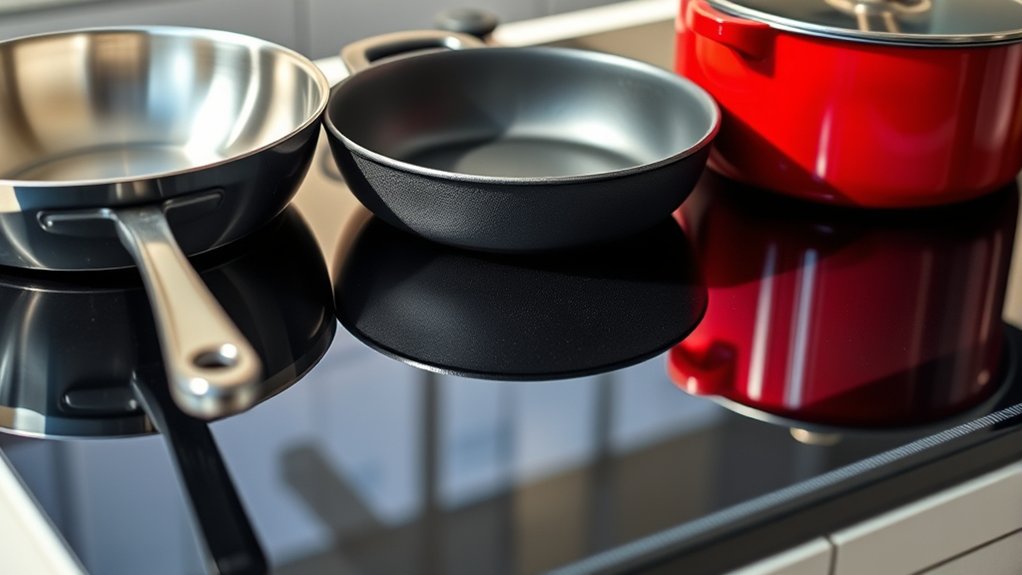
How do you know if your cookware will work with an induction cooktop? The key lies in the material. Induction cooktops require cookware made of ferromagnetic metals—those that a magnet will stick to.
Cast iron and certain types of stainless steel fit this bill perfectly. On the other hand, aluminum, copper, glass, and most non-ferrous materials won’t work unless they have a magnetic base layer. To test your current pots and pans, just grab a magnet and see if it clings to the bottom.
If it does, you’re good to go. If not, the cookware won’t heat up on an induction surface. Understanding this material compatibility saves you time and money when upgrading your kitchen.
Key Features of Induction-Compatible Cookware
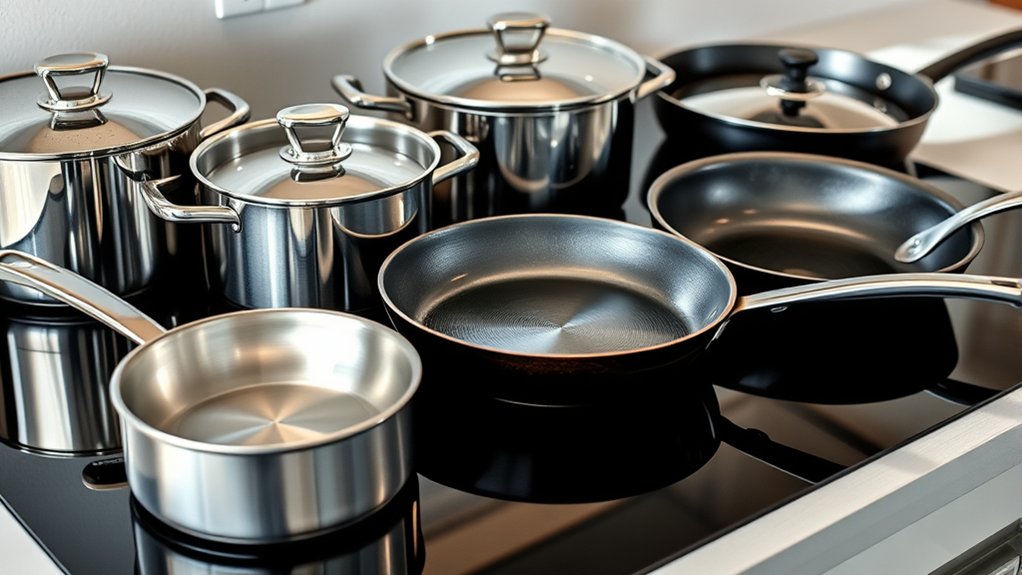
Knowing which materials work with induction cooktops sets the stage for choosing cookware that performs well. You’ll want pots and pans with a magnetic base, as induction heats only when in direct contact with ferrous metals. Look for flat, smooth bottoms to guarantee even contact and efficient heat transfer.
Lightweight cookware may not sit as steadily, so moderate weight typically offers better stability. Durability matters too—scratches or warping can reduce effectiveness over time. Also, consider cookware with good heat conductivity to cook evenly and save energy.
Handles that stay cool and are securely attached improve safety and comfort. By focusing on these features, you’ll pick induction-compatible cookware that heats quickly, lasts long, and delivers great cooking results every time.
Cast Iron Cookware: Classic Heavy-Duty Choice for Induction
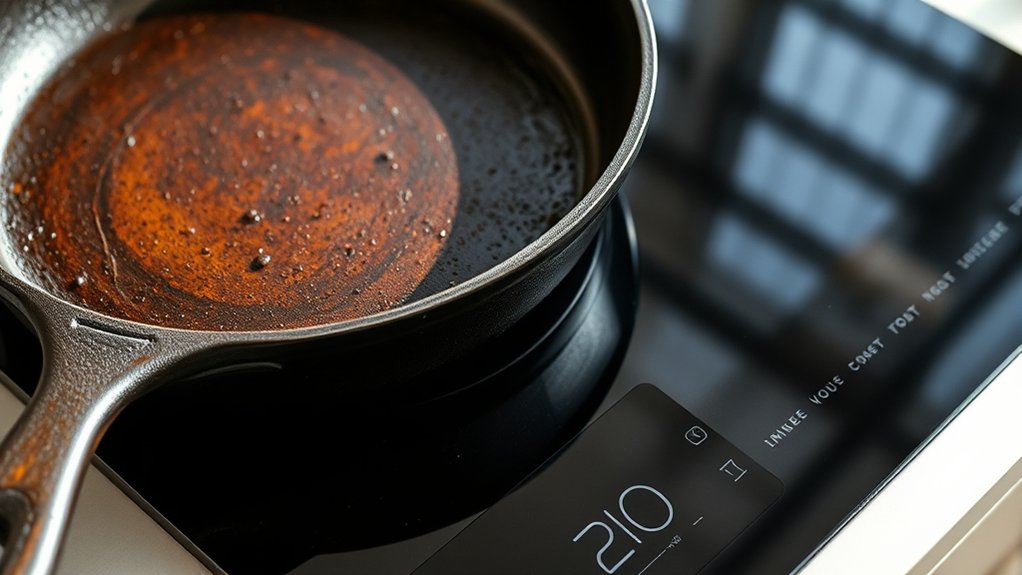
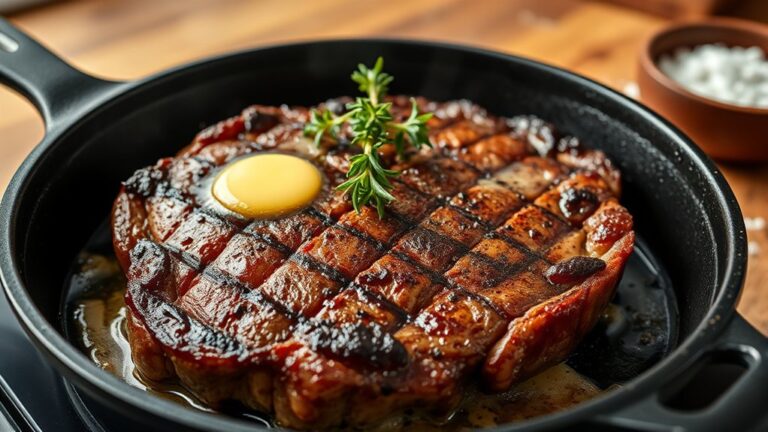
Why does cast iron remain a top pick for induction cooking? Its magnetic properties make it an ideal match for induction cooktops, ensuring quick, even heating. When you use cast iron, you benefit from excellent heat retention, which helps maintain consistent cooking temperatures.
This heavy-duty cookware is incredibly durable, often lasting generations if cared for properly. You might find cast iron a bit heavy, but that weight contributes to its stability on the smooth induction surface. Plus, it develops a natural non-stick seasoning over time, enhancing your cooking experience.
Just remember to avoid drastic temperature changes to prevent cracking. Overall, cast iron offers reliable performance, combining tradition with the efficiency induction cooking demands. It’s a classic choice that works exceptionally well on your induction cooktop.
Choosing Magnetic Stainless Steel Cookware for Induction
You need cookware with magnetic properties to work efficiently on induction cooktops, so not all stainless steel will do. Look for grades like 18/0 or those labeled as magnetic to guarantee compatibility.
Understanding these details helps you pick the right stainless steel cookware for your induction setup.
Magnetic Properties Importance
How can you be sure your stainless steel cookware works with an induction cooktop? The key is magnetic properties. Induction cooktops heat cookware through magnetic fields, so only cookware with a magnetic base will work efficiently.
Not all stainless steel is magnetic, so testing is essential.
Here’s a quick guide to help you understand magnetic compatibility:
| Cookware Type | Magnetic? | Induction Friendly? |
|---|---|---|
| 18/10 Stainless Steel | Usually not | No |
| 18/0 Stainless Steel | Yes | Yes |
| Cast Iron | Yes | Yes |
| Aluminum (non-coated) | No | No |
You can use a simple magnet test—if a magnet sticks firmly to the base, your cookware is induction-ready.
Stainless Steel Grades
Although stainless steel offers durability and a sleek look, not all grades perform well on induction cooktops. You need to choose stainless steel cookware with magnetic properties to guarantee efficient heating.
Here are four common grades to contemplate:
- 18/8 and 18/10 (Type 304): Popular for cookware, but usually non-magnetic unless specially treated.
- Magnetic 400 Series (Type 430): Contains more ferritic stainless steel, making it naturally magnetic and induction-compatible.
- Clad Cookware: Combines layers of 304 stainless steel with a magnetic base, offering durability and induction performance.
- Duplex Stainless Steel: A mix of ferritic and austenitic grades, providing strength and magnetism.
Check your cookware’s magnetic response before buying to guarantee it works seamlessly with your induction cooktop.
Magnetic Stainless Steel Pans With Aluminum Core
You’ll want to pick magnetic stainless steel pans that work seamlessly with your induction cooktop. These pans have an aluminum core that heats evenly and quickly, boosting cooking performance.
Understanding the magnetic properties and core benefits helps you choose cookware that’s efficient and durable.
Magnetic Properties Explained
Because induction cooktops rely on magnetic fields to generate heat, your cookware must have magnetic properties to work effectively. Magnetic stainless steel pans with an aluminum core combine the best of both worlds: magnetic responsiveness and heat distribution. The stainless steel exterior ensures compatibility with induction, while the aluminum core enhances cooking performance.
Here’s what you should know about their magnetic properties:
- Magnetic stainless steel attracts the cooktop’s magnetic field, allowing rapid heating.
- Non-magnetic metals like pure aluminum won’t work alone on induction surfaces.
- The aluminum core doesn’t interfere with magnetism but improves heat conduction.
- You can test your pan’s compatibility by checking if a magnet sticks firmly to its base.
This blend makes magnetic stainless steel pans with aluminum cores ideal for induction cooking.
Benefits of Aluminum Core
Three key benefits make aluminum core stainless steel pans a top choice for induction cooking. First, aluminum’s excellent heat conductivity guarantees your pan heats quickly and evenly, eliminating hot spots and giving you precise temperature control.
Second, the aluminum core keeps the pan lightweight, so you won’t struggle when flipping or tossing food. Third, the stainless steel exterior offers magnetic properties necessary for induction, combining durability with compatibility.
You get a pan that’s both responsive and built to last. With an aluminum core, your cookware heats efficiently, cooks food evenly, and responds swiftly to adjustments, making your induction cooking experience smoother and more enjoyable overall.
Choosing these pans means you won’t sacrifice performance for compatibility.
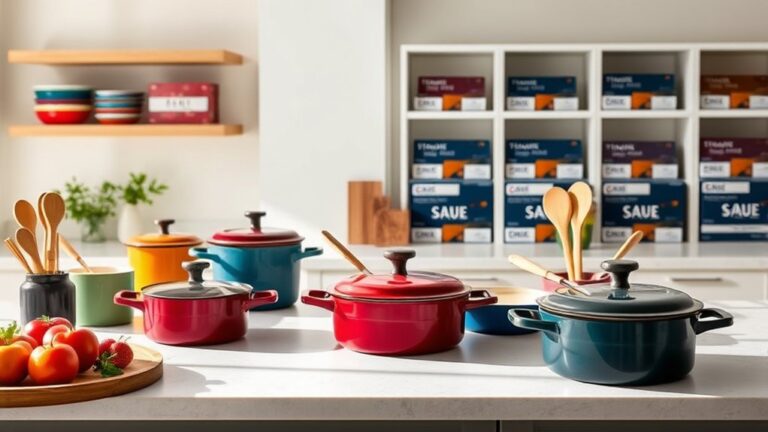
Enamel-Coated Cookware: Stylish and Induction-Friendly
Although enamel-coated cookware might look delicate, it’s actually a robust choice for induction cooktops. You get the benefit of a smooth, stylish finish that’s easy to clean and resistant to rust. Plus, the magnetic base ensures efficient heat transfer on your induction surface.
When you use enamel-coated pans, here’s what you can expect:
- Even heating thanks to the cast iron or steel core beneath the enamel.
- Durability that withstands daily cooking without chipping easily.
- Compatibility with all induction cooktops due to their magnetic properties.
- A visually appealing option that comes in many colors and designs.
This cookware combines function and style, making it perfect if you want something both practical and attractive for your kitchen.
Carbon Steel and Multi-Layered Cookware for Induction
Wondering which cookware offers versatility and performance on induction cooktops? Carbon steel and multi-layered cookware are excellent choices. Carbon steel heats quickly and evenly, giving you great control over your cooking.
It’s lightweight, durable, and develops a natural non-stick surface with seasoning, making it perfect for searing and frying. Multi-layered cookware, often called clad cookware, combines the best materials—like stainless steel and aluminum—to provide even heat distribution and magnetic induction compatibility.
You get the durability of stainless steel with the superior heat conduction of aluminum, ensuring your dishes cook consistently. Both types work flawlessly on induction surfaces, so you can cook a wide range of meals efficiently. Investing in either will enhance your induction cooking experience with reliability and precision.
Frequently Asked Questions
How Do I Test if My Cookware Is Induction-Compatible?
You can test your cookware by placing a magnet on its bottom.
If the magnet sticks firmly, your cookware is induction-compatible.
If it doesn’t, the cookware won’t work with an induction cooktop.
Can Induction Cookware Be Used on Gas or Electric Stoves?
You can use induction cookware on gas or electric stoves like a versatile tool in your kitchen. It heats well, but magnetic cookware might respond differently, so expect some variations in performance or heat distribution.
What Maintenance Tips Prolong Induction Cookware Lifespan?
You should hand wash your induction cookware with mild detergent, avoid abrasive scrubbers, and dry it thoroughly.
Use wooden or silicone utensils to prevent scratches, and store pots carefully to maintain their magnetic base and overall lifespan.
Are Induction Cooktops Energy-Efficient Compared to Other Types?
Yes, you’ll find induction cooktops more energy-efficient because they heat cookware directly, reducing wasted heat. This means your cooking is faster and uses less electricity compared to gas or traditional electric cooktops.
Induction cooktops convert energy more effectively, as the heat is generated within the pot or pan itself. As a result, less energy is lost to the surrounding environment, making them a greener choice.
Does Induction Cookware Affect Cooking Times or Heat Distribution?
Think of induction cookware as a perfectly tuned orchestra—your meals cook faster because heat spreads evenly, avoiding hot spots.
You’ll notice quicker, more consistent cooking times, making your kitchen rhythm smooth and efficient every time.
Conclusion
When it comes to induction cooktops, you’re in for a delightful surprise with cookware that’s both charming and efficient. Whether you choose the timeless sturdiness of cast iron or the sleek appeal of magnetic stainless steel, your cooking experience will feel effortlessly smooth.
Even enamel-coated and multi-layered options bring a touch of elegance without the fuss. So, embrace these friendly materials—they’re here to make your kitchen adventures a breeze, not a burden.
Choosing the right cookware for induction cooktops ensures better heat distribution and energy efficiency. With the right induction-compatible cookware, your meals will cook faster and more evenly. Make sure to pick cookware that works best with induction cooktops to elevate your cooking game.