How Do Induction Cooktops Work?
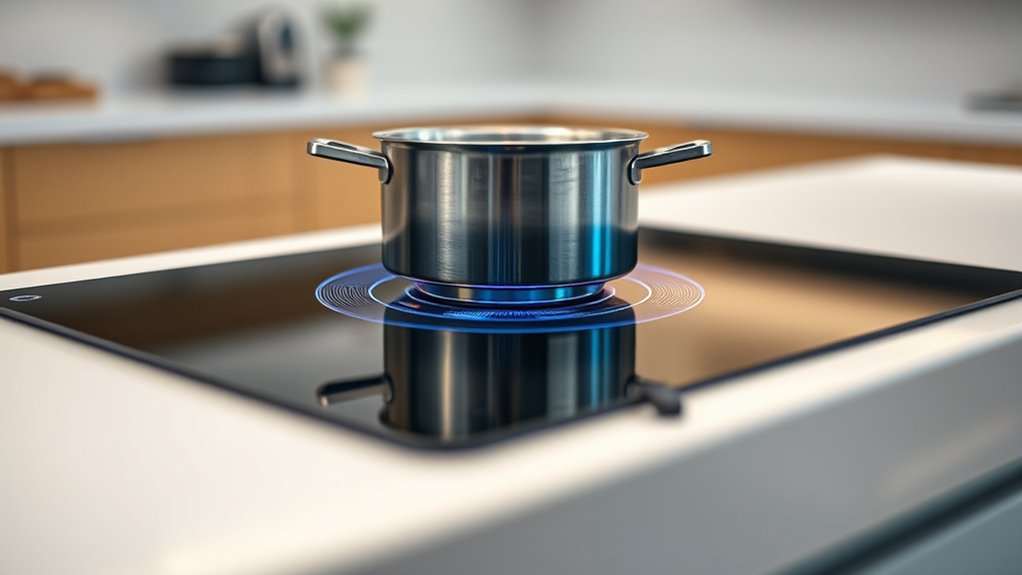
Induction cooktops use advanced magnetic induction technology to heat your cookware directly, offering an energy-efficient and safe cooking experience. This innovative method relies on magnetic fields generated by an electric coil located beneath the cooktop surface.
When you place ferromagnetic pots—such as cast iron or certain stainless steels—on the cooktop, tiny electric currents are induced within the cookware. These currents heat the pot or pan itself, rather than the cooktop, resulting in faster and more even cooking.
This direct heating mechanism reduces energy waste and keeps the cooktop surface cooler to the touch, enhancing safety.
If you want to understand how this technology compares to traditional gas or electric stoves and discover which cookware works best, keep exploring.
Key Takeaways
- Induction cooktops use magnetic fields to generate heat directly inside ferromagnetic cookware.
- An electric current in a coil beneath the surface creates a magnetic field that induces eddy currents in the cookware.
- Heat is produced inside the cookware due to electrical resistance, allowing faster and more even cooking.
- The cooktop surface remains cooler since heat is generated in the pan, enhancing safety during use.
- Compatible cookware must be magnetic, such as cast iron or certain stainless steels, for effective heating.
How Do Induction Cooktops Generate Heat Differently?
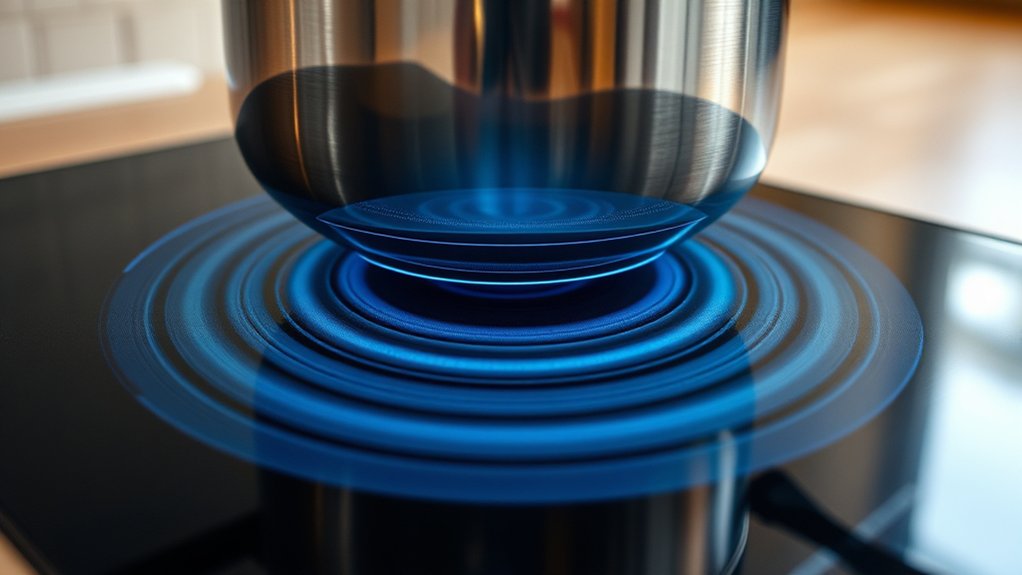
Although induction cooktops may look like traditional stoves, they generate heat in a completely different way. Instead of heating the cooktop surface directly, induction uses a magnetic field to heat your cookware. When you place a compatible pot or pan on the cooktop, an electric current flows through a coil beneath the surface, creating a magnetic field.
This magnetic field induces electrical currents inside the metal of your cookware, which then heats up. As a result, the heat transfers directly to your food, making cooking faster and more efficient. Since the cooktop itself doesn’t get hot except under the cookware, it stays cooler and is safer to touch.
You’ll notice quicker temperature adjustments and less wasted energy compared to gas or electric stoves.
How Do Electromagnetic Fields Cook Your Food?
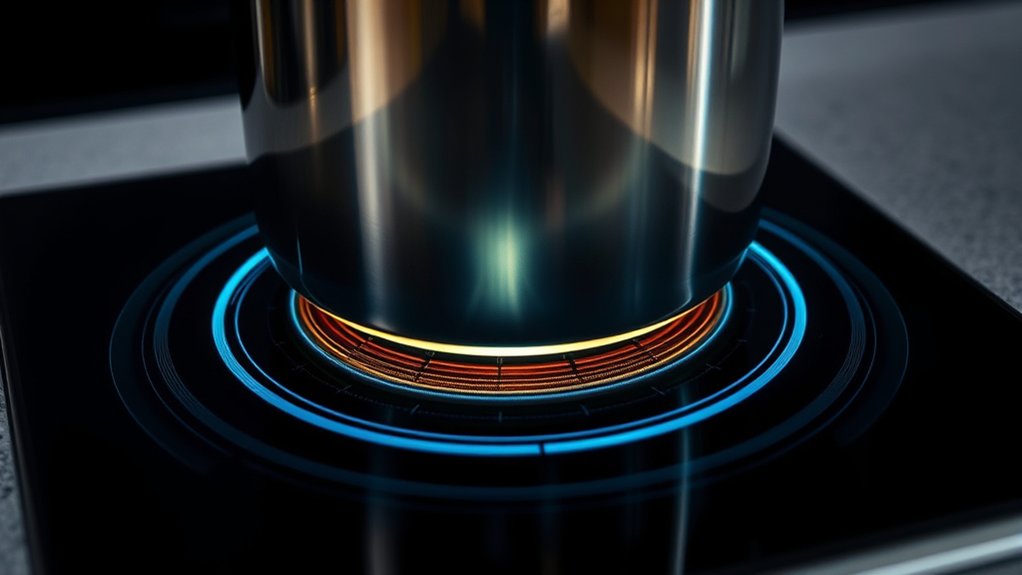
When you place a magnetic pot on an induction cooktop, the electromagnetic field creates tiny electric currents inside the metal. These currents, called eddy currents, flow against the metal’s resistance, generating heat directly within the pot. This process heats the pot quickly and efficiently, turning your cookware into the heat source.
As the pot warms up, it transfers heat to your food through conduction, cooking it evenly. You don’t see flames or glowing coils because the cooktop itself remains cool, while the energy focuses on the pot. This direct heating method saves energy and reduces cooking time.
You get precise temperature control since the cooktop adjusts the electromagnetic field strength instantly, responding to your cooking needs.
Why Do Induction Cooktops Heat Pots, Not the Surface?
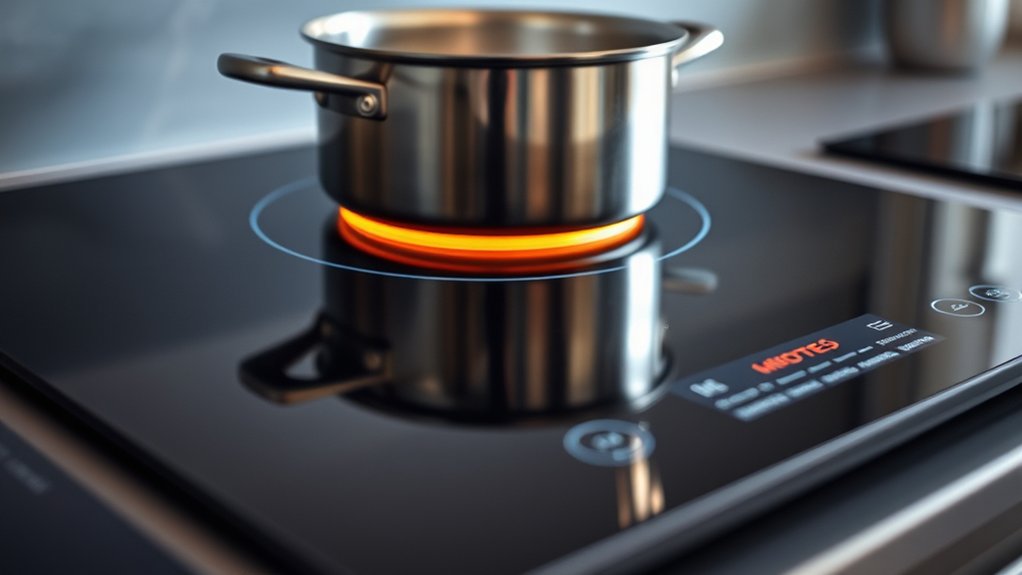
You might wonder why the cooktop surface stays cool while your pot heats up. It’s all about how the magnetic field interacts directly with the metal in your cookware.
This interaction creates heat inside the pot itself, not on the cooktop’s surface.
Magnetic Field Interaction
Because induction cooktops rely on magnetic fields to generate heat, they only warm pots made of ferromagnetic materials like cast iron or stainless steel. When you place a compatible pot on the cooktop, the coil beneath creates a rapidly changing magnetic field. This field penetrates the pot’s metal, inducing electric currents inside it.
The cooktop’s surface itself isn’t magnetic, so it doesn’t interact with the magnetic field the same way. As a result, the magnetic field passes right through without generating heat in the glass or ceramic surface. This selective interaction guarantees that only the pot heats up while the cooktop stays relatively cool.
That’s why you can touch the surface safely, even when the pot is hot.
Heat Generation Mechanism
Although the induction cooktop’s coil generates a magnetic field, it’s the pot that actually heats up due to the electric currents induced within its metal. These currents, called eddy currents, encounter resistance inside the pot, producing heat directly in the cookware.
The cooktop surface remains cool because it doesn’t have these currents flowing through it.
Here’s a quick comparison:
| Component | Magnetic Field Effect | Heat Produced |
|---|---|---|
| Induction Coil | Generates field | Minimal heat |
| Cooktop Surface | No current induced | Stays cool |
| Pot (metal) | Eddy currents induced | Heats up rapidly |
You get efficient heating focused only on your pot, making cooking faster and safer.
Which Cookware Materials Work Best With Induction Cooktops?
Which cookware materials work best with induction cooktops? You’ll want pots and pans made from ferromagnetic metals, like cast iron or certain types of stainless steel. These materials respond well to the magnetic field, heating quickly and efficiently.
If your cookware isn’t magnetic, the cooktop won’t generate heat properly, wasting energy and frustrating you. Aluminum, copper, glass, and ceramic alone won’t work unless they have a magnetic base layer. To test if your cookware is compatible, simply use a magnet—if it sticks firmly, it’s good to go.
Choosing the right materials guarantees your induction cooktop performs at its best, delivering fast, even heating every time you cook.
Induction Cooktops vs. Gas and Electric Stoves: What’s the Difference?
When you cook, the type of stove you use can greatly affect your experience and results. Induction cooktops differ from gas and electric stoves in key ways:
- Heat Source: Induction uses magnetic fields to directly heat cookware, while gas flames and electric coils transfer heat indirectly.
- Efficiency: Induction stoves heat faster and waste less energy since heat goes straight to the pan.
- Control and Safety: You get precise temperature control with induction, and the surface stays cooler, reducing burn risks. Gas gives instant control but has an open flame, and electric stoves heat slower and remain hot after switching off.
Understanding these differences helps you choose the right stove for your cooking style and kitchen needs.
Why Do Induction Cooktops Heat Food Faster?
How exactly do induction cooktops manage to heat food faster than traditional stoves? Unlike gas or electric cooktops, induction directly heats the cookware itself through magnetic fields. This means the energy goes straight into your pot or pan, not the air around it.
You won’t lose heat to the environment, so your food starts cooking almost immediately. Plus, induction cooktops can alter the magnetic field rapidly, allowing precise and instant temperature changes. Since the pan’s surface heats evenly and quickly, you avoid hot spots and reduce cooking time.
Fundamentally, induction’s direct and efficient energy transfer speeds up heating, letting you cook meals faster while maintaining better control over the temperature throughout the cooking process.
How Do Induction Cooktops Save Energy?
Because induction cooktops heat cookware directly, they use less energy compared to traditional stoves that waste heat on the surrounding air. This efficiency means you save money and reduce your environmental impact every time you cook.
Induction cooktops save energy by heating cookware directly, reducing waste and lowering your environmental footprint.
Here’s how they save energy:
- Direct Heat Transfer: Energy goes straight into your pot or pan, so no power is lost heating the cooktop surface or air around it.
- Faster Cooking Times: Since cookware heats up quickly, you spend less time using the cooktop, cutting overall energy use.
- Precise Temperature Control: Induction cooktops adjust power instantly, preventing overheating and unnecessary energy waste.
What Safety Benefits Do Induction Cooktops Offer?
Although you might not immediately think of safety when choosing a cooktop, induction models offer several important benefits that protect you and your home. Since induction cooktops heat only the cookware, the surface stays relatively cool, reducing the risk of burns. You won’t have to worry about accidentally touching a hot burner right after cooking.
They also cool down quickly once you turn them off, adding an extra layer of safety. Induction cooktops automatically detect when there’s no pot on the surface and won’t heat, preventing accidents or wasted energy. Plus, many models include child lock features to keep curious little hands safe.
How to Choose the Best Cookware for Induction Cooktops
Wondering which cookware works best with your induction cooktop? Choosing the right pots and pans guarantees efficient heating and a smooth cooking experience. Here’s what you need to know:
- Magnetic Material: Your cookware must be magnetic for induction to work. Test this with a magnet—if it sticks, the pan is compatible. Cast iron and stainless steel often work well.
- Flat Bottom: A flat, smooth bottom ensures maximum contact with the cooktop, allowing even heat distribution and preventing damage.
- Size Matters: Match the cookware size to the induction zone. Using too small or too large cookware can cause inefficient heating or error messages.
Common Myths About Induction Cooktops You Shouldn’t Believe
You might have heard that induction cooktops are unsafe or that they only work with certain cookware. Some people also claim they waste more energy than traditional stoves.
Let’s clear up these common myths so you can cook with confidence.
Induction Cooktops Are Unsafe
Why do so many people believe induction cooktops are unsafe? It’s often due to misunderstandings and misinformation. You might worry about electromagnetic fields, burns, or electrical hazards, but these concerns don’t hold up under scrutiny.
Here’s why:
- Induction cooktops generate heat directly in the cookware, so the surface stays cooler, reducing burn risks.
- They use low electromagnetic emissions, well within safety standards, so they won’t harm you or interfere with medical devices.
- Safety features like automatic shut-off and pan detection prevent accidents and overheating.
Only Specific Cookware Works
Although many believe induction cooktops only work with a narrow range of cookware, the reality is more flexible than you might think. Induction cooktops require cookware made of ferromagnetic materials—those containing iron—because they generate heat through magnetic fields. This means you can use cast iron, stainless steel with a magnetic base, and some other metal pots and pans.
However, aluminum, copper, glass, and ceramic cookware won’t heat up unless they have a magnetic layer on the bottom. To quickly check if your cookware works, simply hold a magnet to its base; if it sticks, you’re good to go.
Induction Wastes More Energy
Many people assume induction cooktops waste more energy than traditional stoves, but that’s a common misconception. In fact, induction cooktops are often more energy-efficient. Here’s why you shouldn’t believe the myth that they waste more energy:
- Direct Heating: Induction cooktops heat the cookware directly through electromagnetic fields, minimizing energy loss compared to gas or electric stoves that heat the air around the pan.
- Faster Cooking: Because induction heats up quickly, you spend less time cooking, which reduces overall energy consumption.
- Precise Temperature Control: You can adjust the heat instantly, preventing wasted energy from overheating or long warm-up times.
How to Maintain and Clean Your Induction Cooktop
To keep your induction cooktop working efficiently and looking great, you need to clean it regularly and handle it with care. After each use, wait for the surface to cool, then wipe it with a soft, damp cloth to remove spills. Avoid abrasive cleaners or scrubbers that can scratch the glass surface.
For stubborn stains, use a cooktop cleaner specifically designed for induction surfaces. Be sure to clean the cooktop’s edges and control panel gently to prevent damage. Regularly check for and remove any food debris under cookware to maintain proper contact.
Never slide heavy pots across the surface to avoid scratches. Following these simple steps will extend your cooktop’s life and keep it performing at its best.
Why Chefs and Home Cooks Prefer Induction Technology Today
When you cook with induction technology, you’ll notice how quickly and evenly your food heats up compared to traditional methods. That’s why chefs and home cooks alike prefer induction cooktops today.
Here’s why:
- Speed and Precision: You get instant heat adjustments, so you can control cooking temperatures with exactness, avoiding overcooking or burning.
- Energy Efficiency: Induction transfers energy directly to the pan, wasting less heat and saving you money on your energy bill.
- Safety and Cleanliness: The cooktop surface stays cool, reducing burn risks, and spills don’t bake onto the surface since it doesn’t get hot.
With these benefits, induction technology makes cooking faster, safer, and more efficient—perfect for anyone serious about cooking.
Frequently Asked Questions
Can Induction Cooktops Be Used During Power Outages?
No, you can’t use induction cooktops during power outages since they rely on electricity to generate heat.
You’ll need an alternative cooking method, like a gas stove or portable burner, when the power goes out.
Are Induction Cooktops Compatible With All Kitchen Layouts?
Induction cooktops aren’t compatible with all kitchen layouts. You’ll need enough countertop space and proper electrical wiring.
If your kitchen’s small or lacks power capacity, installing one might be challenging or require professional upgrades.
How Loud Are Induction Cooktops During Operation?
You’ll find induction cooktops are generally quiet, but you might hear a soft hum or occasional buzzing when they’re on.
The noise level is much lower than traditional electric or gas stoves, so it won’t bother you.
Do Induction Cooktops Emit Any Harmful Radiation?
No, you don’t need to worry like it’s the age of the plague—induction cooktops emit non-ionizing electromagnetic fields, which are safe and don’t cause harmful radiation.
You can cook confidently without any health risks.
Can Induction Cooktops Be Installed Outdoors?
You can install induction cooktops outdoors, but you’ll need a weatherproof setup and proper ventilation. Make sure it’s protected from rain and extreme temperatures to keep it safe and functioning well in your outdoor kitchen.
Proper installation and maintenance are key to ensuring durability. Consider using covers or enclosures designed for outdoor use. This will help extend the life of your induction cooktop.
Conclusion
Think of your kitchen as a stage, and the induction cooktop as a magician’s wand. Instead of flames or coils, it uses invisible electromagnetic forces to bring your pots to life, heating only what’s needed. Like a precise dance partner, it moves with your cookware, making every meal a seamless performance.
By choosing the right tools and caring for your cooktop, you’ll master this modern magic, turning cooking into an effortless, enchanting experience. Understanding how induction cooktops work helps you appreciate their efficiency, safety, and speed. Embracing induction cooking transforms your kitchen into a hub of innovation and convenience.