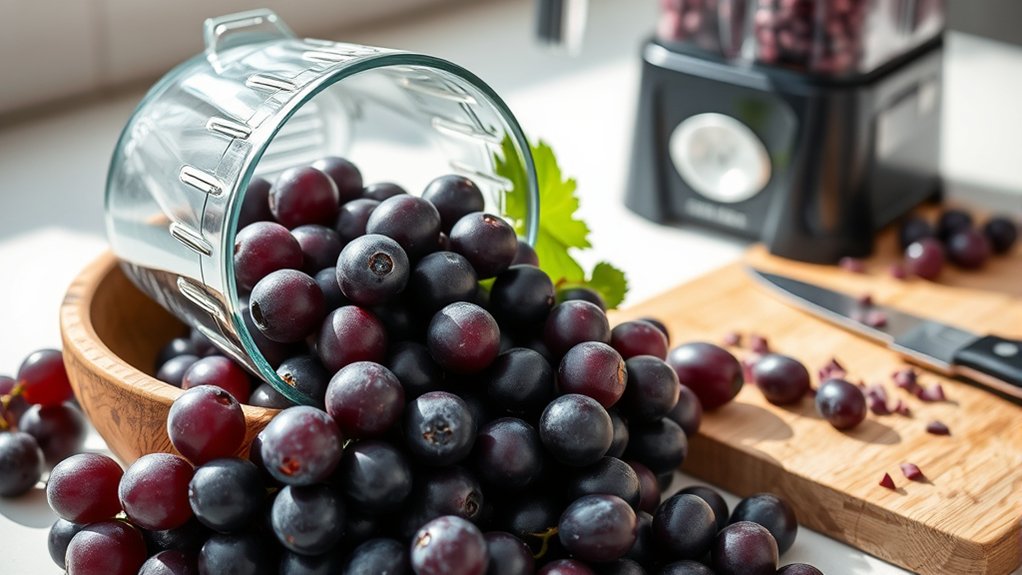
How to Make Grape Juice With a Blender in 7 Easy Steps
To make fresh, delicious grape juice with a blender in 7 easy steps, start by selecting ripe, firm grapes and washing them thoroughly. Using a blender is a quick and efficient method to extract juice while preserving the natural flavor and nutrients of grapes.
This simple process requires minimal ingredients and equipment, making it perfect for homemade juice lovers.
Remove the stems and any damaged grapes before blending.
Blend the grapes in small batches, starting on low speed and then increasing to high speed for about 30 seconds.
Strain the juice to remove seeds and pulp for a smooth finish.
If desired, add flavor tweaks like lemon or mint to enhance the taste.
Store the juice in a sealed container in the fridge and consume it within a week for optimal freshness.
Keep going to discover tips for perfecting your juice.
Key Takeaways
- Thoroughly wash and remove stems from fresh, ripe grapes to ensure clean, flavorful juice.
- Blend grapes in small batches on low speed, then high speed for 30-45 seconds until smooth.
- Strain the blended mixture using a fine mesh strainer or cheesecloth to separate juice from pulp and seeds.
- Add natural flavor enhancers like lemon juice or mint if desired, adjusting taste gradually.
- Store juice in sterilized airtight containers in the refrigerator and consume within 5-7 days for freshness.
Choose the Best Grapes for Grape Juice
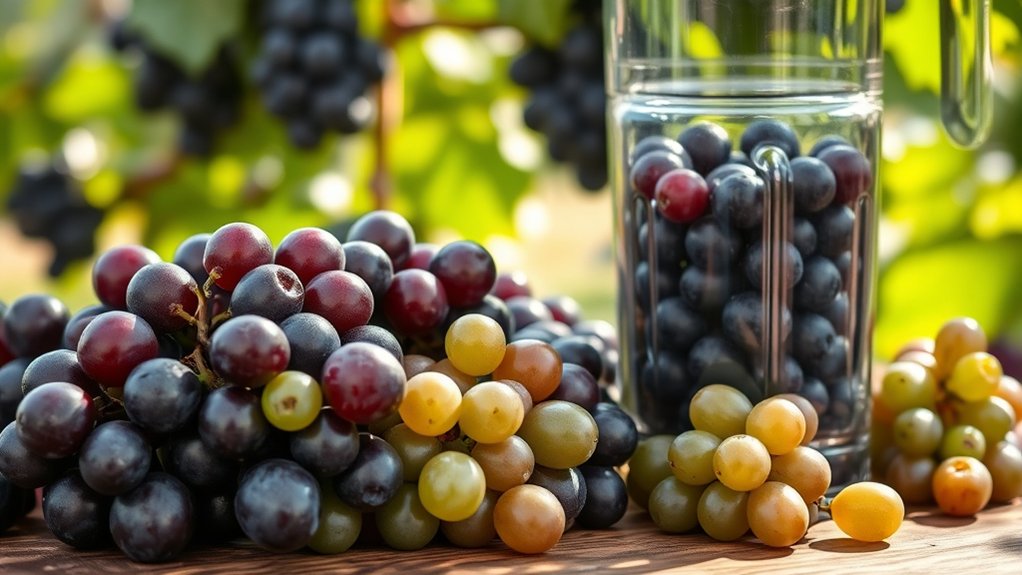
How do you pick the best grapes for making grape juice? Start by choosing grapes that are ripe and sweet since they’ll give your juice the best flavor. Look for grapes with a deep, rich color—purple, red, or green depending on the variety—but avoid any that look dull or shriveled.
Check for firmness; grapes should be plump and not mushy. Also, avoid grapes with visible mold or damage. Organic grapes are a great choice if you want to skip pesticides, but regular grapes work fine too.
Prepare Grapes Properly for Blending
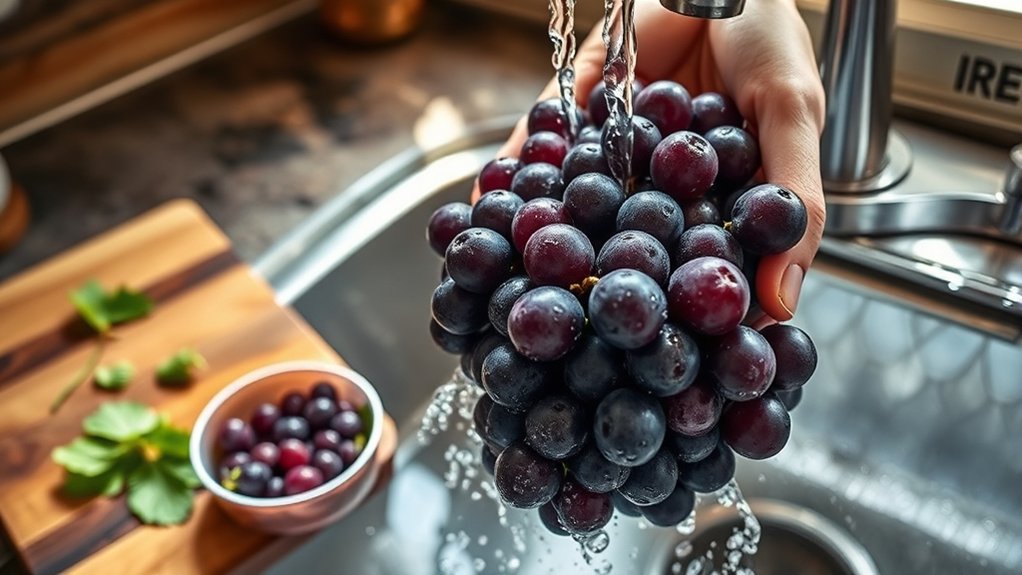
Before blending, you’ll want to thoroughly wash your grapes to remove dirt, pesticides, and any lingering debris. Rinse them under cold running water, gently rubbing each grape to guarantee cleanliness. Next, remove the stems, since they can add bitterness to your juice.
Pick through the grapes carefully, discarding any that are bruised, moldy, or overly soft to maintain a fresh flavor. If you prefer a smoother juice, you can also peel the grapes, though this step is optional.
Finally, pat the grapes dry with a clean towel or paper towels to avoid adding excess water during blending, which can dilute your juice. Taking these steps will prepare your grapes perfectly for the next stage of making delicious grape juice.
Blend Grapes to Make Smooth Grape Juice
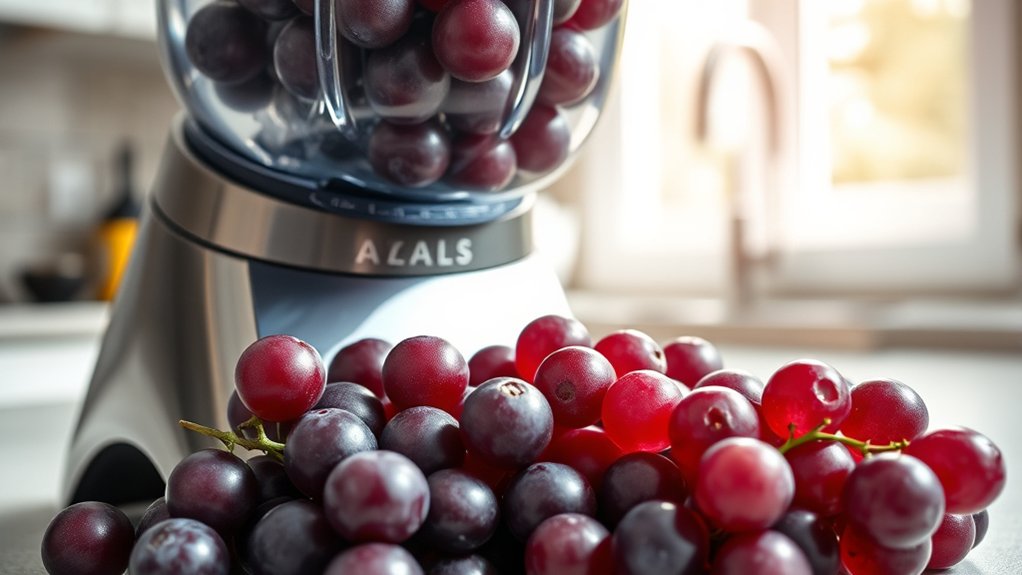
Choose fresh, ripe grapes to guarantee your juice tastes sweet and vibrant. Place them in your blender, then pulse a few times before blending continuously to get a smooth consistency.
Adjust the blending speed as needed to avoid over-processing and heating the juice.
Choosing Fresh Grapes
Since the quality of your grape juice depends largely on the grapes you use, selecting fresh, ripe grapes is essential. Look for grapes that are firm to the touch and free from wrinkles or soft spots, which indicate overripeness or spoilage. Choose grapes with vibrant color—deep purple for red varieties or bright green for white ones—to guarantee sweetness and flavor.
Avoid grapes with stems that are brown or dry; fresh grapes usually have green, flexible stems. Wash them thoroughly under cold water to remove dirt and pesticides before blending. Picking grapes that are well-ripened and clean assures a sweeter, more flavorful juice and reduces the risk of bitterness or off-flavors in your blend.
Freshness truly makes the difference in your homemade grape juice.
Blending Techniques
How smoothly you blend your grapes can make all the difference in the texture of your juice. To get that perfect smoothness, start by adding grapes in small batches. Use a low speed first to break them down, then increase to high for about 30 seconds.
Avoid over-blending, which can heat the juice and affect flavor. If you prefer pulp, blend for less time.
| Speed Setting | Time (seconds) | Texture Outcome |
|---|---|---|
| Low | 10-15 | Chunky, pulpy juice |
| Medium | 20-30 | Smooth with some pulp |
| High | 30-45 | Very smooth juice |
| High + Pause | 60 (with breaks) | Prevents overheating |
| Low + Stir | 15 + stirring | Even texture |
Adjust based on your preference for pulp and smoothness.
Strain Grape Juice to Remove Pulp and Seeds
Now that you’ve blended the grapes, it’s time to strain the juice to get rid of pulp and seeds. Choosing the right strainer and using the right technique will make this process easier and cleaner.
You’ll also want to know how to handle the leftover pulp and seeds efficiently.
Choosing The Right Strainer
When you want smooth, seed-free grape juice, choosing the right strainer is crucial. You’ll want a fine mesh strainer or a nut milk bag to catch even the smallest pulp bits and seeds. A coarse sieve might let unwanted solids slip through, leaving the juice gritty.
Stainless steel strainers are durable, easy to clean, and won’t impart any flavors. If you prefer a reusable option, a nylon mesh strainer works well, but be sure it’s fine enough to filter out seeds. Avoid cheesecloth unless it’s tightly woven, as it can be too loose.
Picking a strainer that fits comfortably over your bowl or pitcher also makes the process easier. The right tool ensures your grape juice tastes fresh and smooth every time.
Techniques For Effective Straining
Although blending breaks down the grapes thoroughly, you’ll still need to strain the juice carefully to remove pulp and seeds for a smooth result. Start by pouring the blended mixture into a fine mesh strainer over a bowl. Use a spatula or spoon to press the pulp gently, extracting as much juice as possible without forcing solids through.
For finer straining, you can use cheesecloth or a nut milk bag.
Here’s a quick guide to effective straining:
| Technique | Description |
|---|---|
| Gentle pressing | Extract juice without pushing pulp |
| Fine mesh strainer | Catches seeds and larger pulp |
| Cheesecloth or nut bag | For ultra-smooth juice |
Master these steps to enjoy clear, fresh grape juice every time.
Handling Pulp And Seeds
After straining your grape juice to separate the liquid from the larger pulp and seeds, you’ll want to focus on managing any remaining solids. Use a fine mesh strainer or cheesecloth to catch smaller pulp pieces and seeds you might have missed. Gently press the pulp with the back of a spoon to extract more juice, but avoid forcing it too hard to prevent bitterness.
If you notice stubborn seeds, pick them out by hand or use tweezers for precision. For a smoother juice, consider straining twice. Don’t discard the leftover pulp right away—it’s great for compost or adding to smoothies.
Properly handling pulp and seeds ensures your grape juice is smooth, fresh-tasting, and enjoyable every time you blend.
Adjust Grape Juice Flavor Naturally Without Sugar
Since you want to enjoy grape juice without added sugar, you can enhance its flavor using natural ingredients. Start by adding a splash of fresh lemon or lime juice to brighten the taste and balance the sweetness. A pinch of cinnamon or a few fresh mint leaves can add invigorating complexity.
If your grapes are less ripe, try blending in a small amount of naturally sweet fruits like apple or pear for gentle sweetness. You can also experiment with a hint of vanilla extract or ginger for warmth and depth. Remember to taste as you go, adjusting gradually until you find your perfect flavor.
These natural tweaks keep your grape juice wholesome and delicious, letting the fruit’s true essence shine without relying on extra sugar.
Store Your Homemade Grape Juice Safely
Once you’ve crafted the perfect blend of flavors for your grape juice, keeping it fresh is your next priority. Store your juice in clean, airtight containers—glass jars work best. Refrigerate immediately to slow spoilage and preserve taste.
Label each container with the date you made the juice to track freshness easily.
| Feeling | Tip | Result |
|---|---|---|
| Proud | Use sterilized glass jars | Juice stays pure |
| Confident | Seal containers tightly | Avoids contamination |
| Satisfied | Refrigerate promptly | Maintains vibrant flavor |
| Secure | Label with date | Know when to consume |
| Happy | Store upright | Prevents leaks |
Following these steps makes your grape juice safe, delicious, and ready to enjoy anytime.
Keep Your Grape Juice Fresh Longer
To keep your grape juice fresh longer, you’ll want to minimize its exposure to air, light, and heat. Always store your juice in an airtight container to prevent oxidation, which can degrade flavor and nutrients. Use dark or opaque bottles to block light, which breaks down delicate compounds in the juice.
Keep the juice refrigerated at or below 40°F (4°C) to slow bacterial growth. If you’ve made a large batch, consider freezing portions in freezer-safe containers, leaving room for expansion. Avoid repeatedly opening the container, as this introduces air and contaminants.
In the end, consume your grape juice within 5 to 7 days for the best taste and freshness. Following these steps will help you enjoy your homemade grape juice at its peak quality.
Frequently Asked Questions
Can I Use Frozen Grapes for Making Grape Juice?
Yes, you can use frozen grapes for making grape juice. They’ll blend smoothly and chill your juice naturally.
Just let them thaw slightly for easier blending, and you’ll get fresh, tasty juice in no time!
Is It Necessary to Wash Grapes Before Blending?
Yes, you should always wash grapes before blending. Washing removes dirt, pesticides, and bacteria, ensuring your juice is clean and safe to drink.
Just rinse them thoroughly under cold running water before blending.
How Long Does Homemade Grape Juice Last in the Fridge?
Your homemade grape juice lasts about 3 to 5 days in the fridge. Make sure to store it in an airtight container to keep it fresh, and always give it a quick sniff before drinking.
Can I Add Other Fruits to Grape Juice in the Blender?
Yes, you can add other fruits to grape juice in the blender. Mixing berries, apples, or oranges enhances flavor and nutrition.
Just adjust sweetness and blend thoroughly for a smooth, delicious juice blend you’ll enjoy.
What Type of Blender Works Best for Making Grape Juice?
You’ll want a high-speed blender with a strong motor, around 600 watts or more. It’ll crush grapes efficiently, extracting maximum juice and pulp while ensuring a smooth texture.
Avoid low-powered or basic blenders for best results.
Conclusion
Now that you’ve mastered making fresh grape juice with your blender, you’re ready to enjoy a timeless treat that’s as invigorating as a telegram from the past. By choosing the best grapes, blending carefully, and storing your juice properly, you’ll savor every drop of natural sweetness without added sugar.
Keep your juice chilled and fresh, and you’ll have a delicious, healthy drink that’s perfect for any moment—just like a cherished classic letter from days gone by. Making grape juice with a blender is simple and rewarding, giving you a fresh, homemade beverage anytime.
With these easy steps, your homemade grape juice will be flavorful, nutritious, and free from preservatives. Enjoy the natural taste and health benefits of fresh grape juice made with a blender!