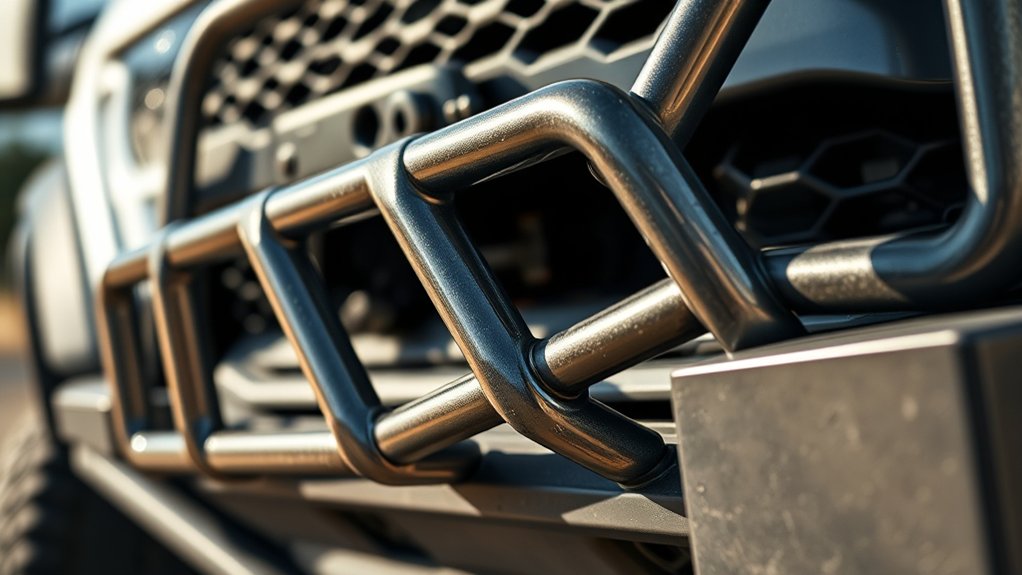
How Does a Grill Guard Work?
A grill guard is an essential accessory that protects your vehicle by acting as a strong barrier against impacts. It absorbs and redirects forces from rocks, branches, and minor collisions, safeguarding your vehicle’s front end.
By shielding critical parts like your grille, headlights, and radiator, a grill guard helps prevent damage and costly repairs.
Made from durable steel or aluminum, it effectively spreads collision forces across its frame. This design keeps your front end safe during unexpected impacts.
If you want to know how to pick the right grill guard and install it properly, keep exploring what these tough accessories offer.
Key Takeaways
- A grill guard absorbs and deflects impacts from road hazards, protecting the grille, headlights, and radiator from damage.
- It distributes collision energy across reinforced bars, reducing damage by preventing impact concentration on critical vehicle parts.
- Made from steel or aluminum, it offers durable impact resistance while resisting corrosion and wear.
- Curved and angled surfaces redirect forces away from vital components, channeling impacts safely into the vehicle frame.
- Properly designed guards maintain engine airflow by allowing sufficient cooling through open patterns and strategic bar placement.
Why You Need a Grill Guard: Protecting Your Vehicle’s Front End
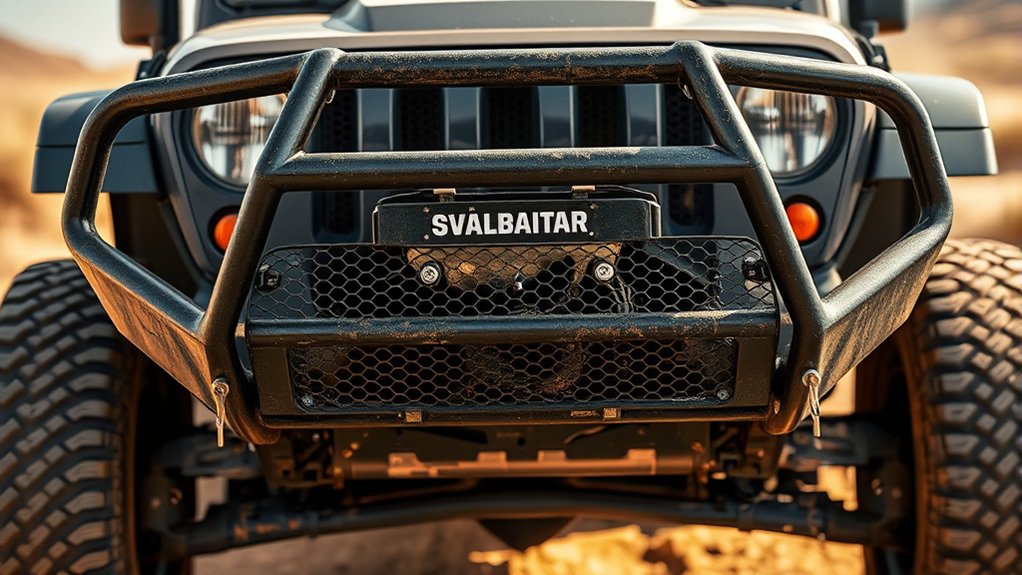
Why should you invest in a grill guard for your vehicle? Because it offers essential protection to your front end, which faces the highest risk of damage from road debris, animals, and minor collisions. When you drive, small rocks, branches, or even unexpected impacts can harm your grille, headlights, or radiator.
A grill guard acts as a sturdy barrier, absorbing and deflecting these threats before they reach sensitive parts. Additionally, it helps prevent costly repairs by minimizing dents and scratches. You also maintain your vehicle’s appearance and functionality longer.
Installing a grill guard isn’t just about aesthetics—it’s a practical choice that saves you time, money, and stress while enhancing your vehicle’s durability and safety on the road.
Bull Bars, Brush Guards, and Grill Guards: What’s the Difference?
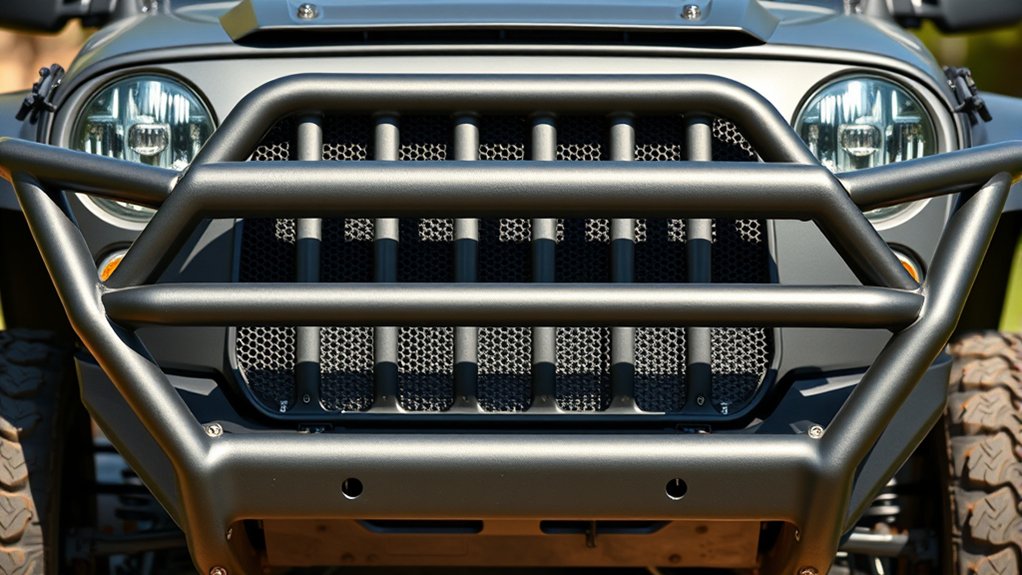
Although bull bars, brush guards, and grill guards all protect your vehicle’s front end, each serves a distinct purpose and offers different levels of coverage. You’ll find bull bars focus on protecting the lower front, especially the bumper.
Brush guards cover the entire front, including headlights, ideal for off-road use. Grill guards primarily shield the grille area, balancing protection and style.
Here’s a quick comparison to help you choose:
| Type | Coverage Area |
|---|---|
| Bull Bar | Lower front bumper |
| Brush Guard | Full front, headlights |
| Grill Guard | Grille and upper front |
Understanding these differences guarantees you pick the right guard for your needs without overspending on unnecessary protection.
What Grill Guards Are Made Of: Materials That Matter
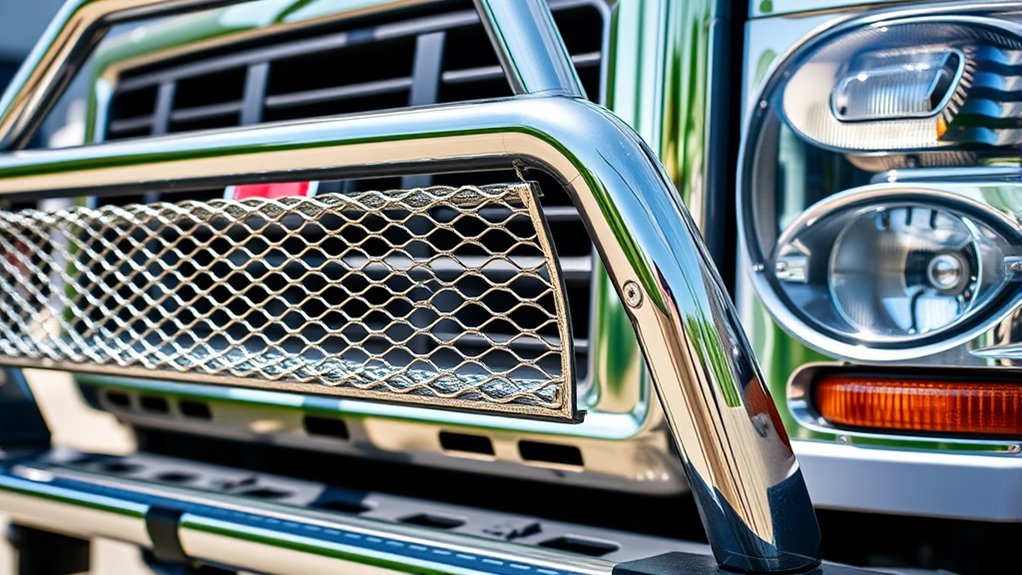
When you choose a grill guard, the materials used play a crucial role in its durability and performance. Most grill guards are crafted from steel or aluminum, each offering unique benefits. Steel provides exceptional strength and impact resistance, making it ideal for heavy-duty protection.
However, it’s heavier and can rust if not properly coated. Aluminum, on the other hand, is lightweight and naturally resistant to corrosion, which helps it last longer with less maintenance. Some grill guards also feature powder coatings or chrome finishes to enhance durability and appearance.
Understanding these materials helps you pick a grill guard that matches your vehicle’s needs and your driving conditions, ensuring reliable protection without compromising style or weight.
How Grill Guards Absorb and Redirect Impact Forces
When your vehicle hits an object, the grill guard spreads out the impact force to reduce damage. It uses materials designed to absorb energy and cushion the blow.
Plus, the guard helps deflect and redirect forces away from critical parts, keeping your truck safer.
Impact Force Distribution
Because grill guards are designed to shield your vehicle’s front end, they actively absorb and redirect impact forces during a collision. When you hit an object, the grill guard distributes the force across its sturdy frame, preventing a single point from bearing the full brunt. This even spread reduces damage to critical components like the radiator and headlights.
The grill guard’s structure channels energy away from vulnerable spots, guiding it along reinforced bars and mounting points. This controlled distribution helps maintain your vehicle’s integrity and can lessen repair costs. So, by choosing a grill guard, you’re primarily giving your vehicle a first line of defense that manages impact forces smartly, protecting both your investment and your safety on the road.
Energy Absorption Materials
How exactly do grill guards absorb and redirect impact forces to protect your vehicle? They rely on specially designed energy absorption materials that deform under pressure, converting kinetic energy from a collision into less harmful forms. These materials, often high-strength steel combined with foam or polymer inserts, act like cushions, reducing the force transmitted to your vehicle’s frame.
When impact occurs, the steel bends or crumples strategically while the foam compresses, absorbing shock and minimizing damage. This controlled deformation prevents sudden energy spikes that could harm critical components. By incorporating these materials, grill guards don’t just block objects—they actively manage impact energy, helping to keep your vehicle safer during collisions.
Understanding this helps you appreciate the engineering behind your grill guard’s protective role.
Deflection And Redirection
Although grill guards absorb impact through energy-absorbing materials, they also play an essential role in deflecting and redirecting forces away from your vehicle. When an object strikes your grill guard, the guard’s shape and sturdy construction guide the force to safer areas, reducing damage to critical parts. This deflection prevents direct hits to your radiator, engine, and headlights.
Here’s how deflection and redirection work:
- Curved surfaces push impact forces to the sides
- Reinforced bars spread the energy over a wider area
- Angled design channels forces downward or outward
- Sturdy mounting points transfer force to the frame, not fragile components
Which Vehicle Parts Do Grill Guards Protect?
When you install a grill guard, it shields several critical parts of your vehicle from damage during collisions or debris impacts. Primarily, it protects your front grille, which houses the radiator and engine cooling system. Without a guard, these components are vulnerable to rocks, branches, or animal strikes that can cause costly repairs.
Your headlights also benefit from the sturdy barrier, reducing the risk of cracks or breaks during minor accidents. Additionally, grill guards safeguard the front bumper and fenders, preserving your vehicle’s structural integrity and appearance.
How to Choose the Right Grill Guard for Your Truck or SUV
Choosing the right grill guard for your truck or SUV starts with understanding your specific needs and vehicle type. You want a guard that fits securely and offers the protection level you require. Consider these factors:
- Vehicle compatibility: Verify the guard matches your truck or SUV model for a proper fit.
- Material quality: Look for durable materials like steel or aluminum for long-lasting defense.
- Style and design: Choose between full grille guards or brush guards depending on your protection needs.
- Purpose: Decide if you need heavy-duty protection for rough terrain or a lighter guard for everyday use.
Installing Your Grill Guard: Tips for Maximum Protection
To get the most out of your grill guard, you need to install it correctly and securely. Start by reading the manufacturer’s instructions carefully, as each model varies. Use the right tools and hardware included in the kit to assure a snug fit.
Align the grill guard with your vehicle’s mounting points before tightening bolts to avoid misalignment. Don’t overtighten bolts, which can damage components, but make sure they’re firm enough to prevent movement. Double-check all connections after installation and periodically inspect them for loosening.
If you’re unsure, consult a professional installer to guarantee maximum protection. Proper installation not only strengthens your grill guard’s impact resistance but also helps maintain your vehicle’s aesthetics and safety features.
Common Grill Guard Myths: And Why They’re Wrong
You might have heard that grill guards damage your paint, block airflow, or are tough to install. These are common myths that don’t hold up under scrutiny.
Let’s clear up the facts so you can make an informed choice.
Grill Guards Damage Paint
How exactly do grill guards affect your vehicle’s paint? Many believe grill guards scratch or chip paint, but that’s mostly a myth. If installed correctly, a grill guard won’t damage your paint.
Here’s why: Proper installation includes padding or rubber mounts that prevent metal-to-paint contact. Quality grill guards have smooth finishes that minimize abrasion risks. Regular maintenance stops dirt and debris buildup, which could scratch paint over time.
The guard primarily protects the front end from impacts that would otherwise harm the paint and body.
Guards Obstruct Airflow
Although many drivers worry that grill guards block airflow to the engine, this concern is largely unfounded. Grill guards are designed with airflow in mind, featuring open patterns and strategically placed bars to allow plenty of air to pass through. Your engine needs cooling, and manufacturers guarantee the guard doesn’t interfere with that essential function.
In fact, a well-designed grill guard can even help direct air more efficiently toward the radiator. Of course, if you pick a bulky or improperly fitted guard, it might restrict airflow, but quality guards are tested to prevent this issue. So, you don’t have to sacrifice engine performance or cooling for added front-end protection when you install a proper grill guard.
Installation Is Difficult
Wondering if installing a grill guard will turn into a complicated project? It’s a common myth, but you’ll find it’s actually straightforward. Most grill guards come with clear instructions, and you don’t need special tools or professional help.
With a bit of patience, you can have it mounted in no time.
Here’s why installation isn’t as difficult as you might think:
- Most guards use bolt-on or clamp-on systems that fit existing mounting points
- The process usually involves just a few screws and basic hand tools
- Manufacturers design guards to match your vehicle’s make and model for easy alignment
- You can often complete the job solo in under an hour
You’ll be surprised how simple it is to protect your grill without hassle.
Frequently Asked Questions
Do Grill Guards Affect My Vehicle’s Fuel Efficiency?
Yes, grill guards can slightly reduce your vehicle’s fuel efficiency by increasing aerodynamic drag. You’ll notice a small drop in mileage, especially at higher speeds, but it’s usually minimal and won’t drastically affect your fuel costs.
Can I Paint or Customize My Grill Guard?
Yes, you can paint or customize your grill guard. Just make sure to use proper prep and paint designed for metal to prevent rust.
Customizing helps match your vehicle’s style while keeping it protected and looking great.
How Do Grill Guards Impact Parking Sensor Functionality?
Imagine a clear driveway versus one blocked by a grill guard; your parking sensors might struggle or fail to detect obstacles accurately when the guard’s metal interferes.
This interference can cause false alerts or missed detections.
Are Grill Guards Compatible With All Truck Brands?
You’ll find that grill guards aren’t compatible with all truck brands. They’re usually designed for specific models, so you’ll need to check fitment guides or consult manufacturers to guarantee a proper, secure installation on your truck.
Do Grill Guards Require Regular Maintenance or Cleaning?
No, grill guards don’t clean themselves—surprise! You’ll need to rinse off dirt and bugs now and then, and check for rust.
A little maintenance keeps your guard looking sharp and ready to protect your ride.
Conclusion
Just like a knight’s armor shields them in battle, your grill guard stands ready to protect your vehicle’s front end from unexpected impacts. It’s more than metal—it’s peace of mind on every drive.
By choosing the right guard and installing it properly, you’re not just adding a part—you’re giving your truck or SUV a trusted defender.
So gear up, protect what matters, and drive with confidence, knowing your grill guard has your back. A quality grill guard enhances safety, durability, and style, making it an essential accessory for any vehicle owner.