Is Mold on Grill Dangerous?
Yes, mold on your grill can be dangerous and should not be ignored. Mold on grill surfaces poses health risks such as allergic reactions, respiratory issues, and food poisoning when inhaled or ingested. It also indicates moisture problems that can damage your grill and compromise food safety.
Inhaling mold spores or eating food cooked on a moldy grill can trigger serious health issues. Regular cleaning and maintenance are essential to prevent mold growth and keep your grill safe for cooking.
It’s important to know how to spot mold, clean it effectively, and take steps to prevent it. Keep reading to learn more about identifying mold on your grill and ensuring a safe grilling experience.
Key Takeaways
- Mold on grills can cause allergic reactions, respiratory issues, and food poisoning if mold spores or toxins are inhaled or ingested.
- Individuals with asthma or weakened immune systems face higher health risks from mold exposure on grills.
- Mold presence indicates moisture problems that can damage the grill and compromise food safety during cooking.
- Mold spores can spread to surrounding areas, increasing broader health hazards beyond the grill itself.
- Prompt cleaning and maintenance prevent mold growth, ensuring safe grilling and reducing health risks.
Is Mold on Your Grill Harmful to Your Health?
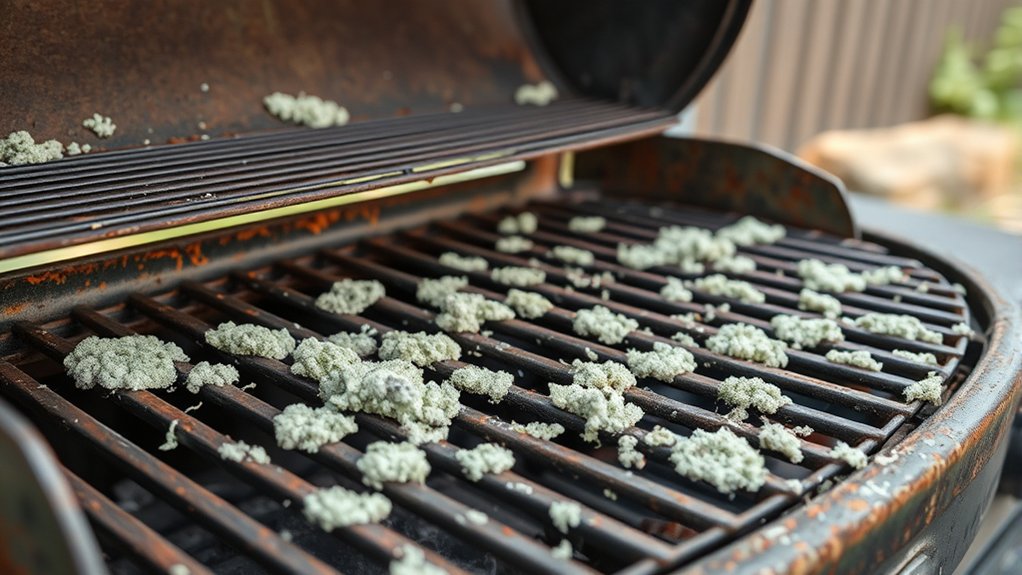
Although mold on your grill might seem harmless, it can pose health risks if left untreated. When you use a moldy grill, you risk inhaling mold spores or ingesting harmful toxins that can trigger allergic reactions, respiratory issues, or food poisoning. If you have asthma or a weakened immune system, these risks increase considerably.
Mold can also contaminate the food you cook, making it unsafe to eat. You might experience symptoms like coughing, sneezing, skin irritation, or stomach discomfort after exposure. To protect your health, you should clean your grill thoroughly before use.
Ignoring mold growth not only affects your grill’s performance but also puts your well-being at risk every time you fire it up.
Why Does Mold Grow on Your Grill?
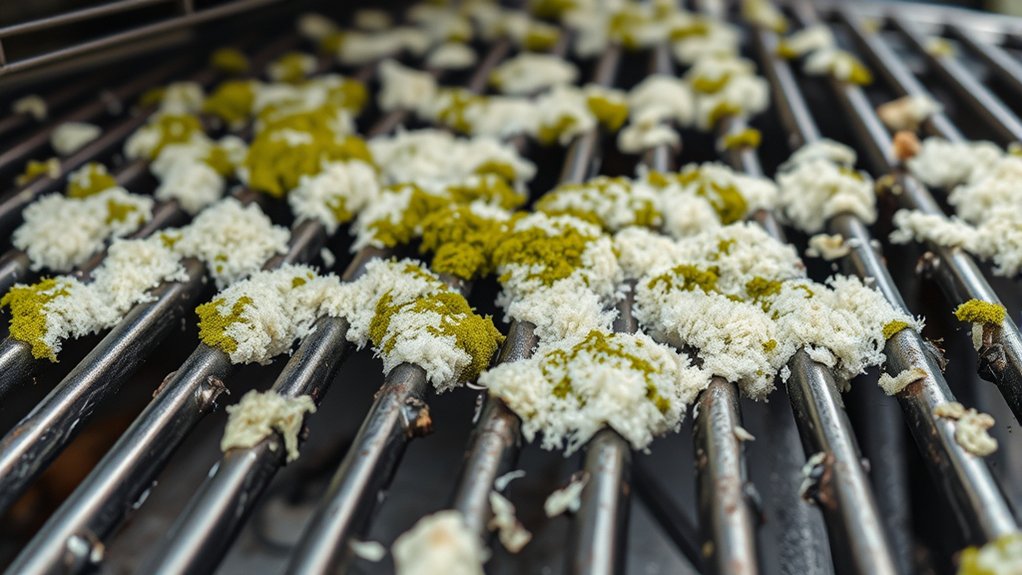
You’ll often find mold growing on your grill because of leftover food residue and the right environmental conditions. Moisture, warmth, and lack of cleaning create the perfect spot for mold to thrive.
Understanding these causes helps you prevent mold from taking over your grill.
Causes Of Grill Mold
Because grills often stay damp and warm between uses, mold finds the perfect environment to grow. When you don’t clean your grill regularly, leftover food particles and grease provide a feast for mold spores. Moisture from rain, humidity, or leftover water after washing creates the damp conditions mold needs to thrive.
Additionally, storing your grill in a shaded, enclosed area without proper ventilation traps moisture, encouraging mold growth.
Here are the main causes of grill mold:
- Residual food and grease left on grates
- Moisture from rain or washing
- Warm temperatures between uses
- Poor ventilation or storage in damp areas
Understanding these causes helps you prevent mold and keep your grill safe and ready to use.
Environmental Factors Impact
When your grill sits in a damp or poorly ventilated spot, mold can quickly take hold and multiply. Moisture is the biggest environmental factor encouraging mold growth. If rainwater or humidity lingers on or inside your grill, it creates an ideal breeding ground.
Lack of airflow worsens the situation by trapping moisture, preventing it from drying out. Temperature also plays a role—mold thrives in warm, humid conditions common in many outdoor settings. Additionally, shaded areas without sunlight let mold spores settle and grow undisturbed.
To minimize mold risk, store your grill in a dry, well-ventilated area and cover it with breathable material. Keeping moisture and stagnant air away disrupts mold’s ability to establish itself on your grill surfaces.
Food Residue Contribution
Besides environmental factors, leftover food residue on your grill plays a significant role in mold growth. When you don’t clean your grill thoroughly after cooking, tiny bits of food get trapped in crevices and on grates. These remnants provide a perfect nutrient source for mold spores to thrive.
Moisture from rain or humidity combined with food particles creates an ideal breeding ground for mold.
Here’s why food residue encourages mold growth on your grill:
- Sugars and proteins in leftover food feed mold spores
- Oil and grease create a sticky surface for spores to cling to
- Warm grill temperatures can help mold spores activate faster
- Residue traps moisture, increasing the likelihood of mold development
Regular cleaning reduces these risks and keeps your grill safe to use.
How to Spot Mold on Your Grill Before Cooking
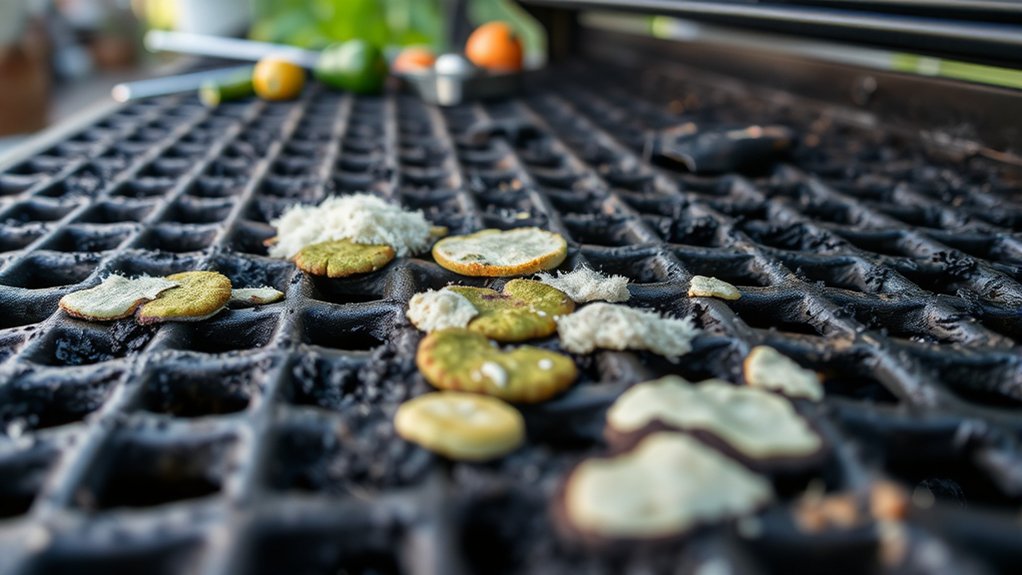
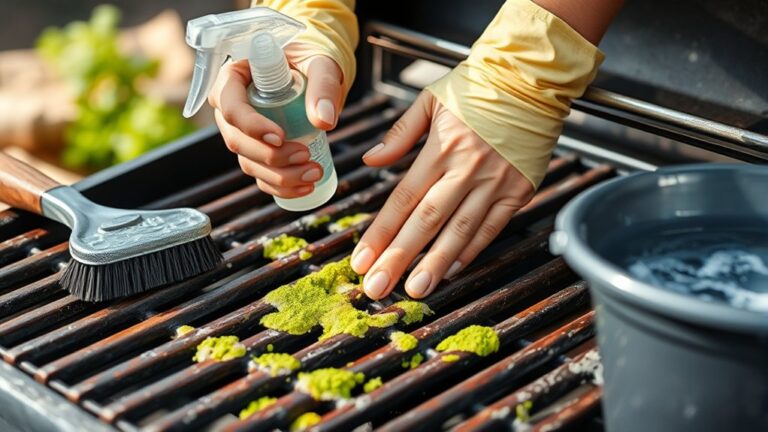
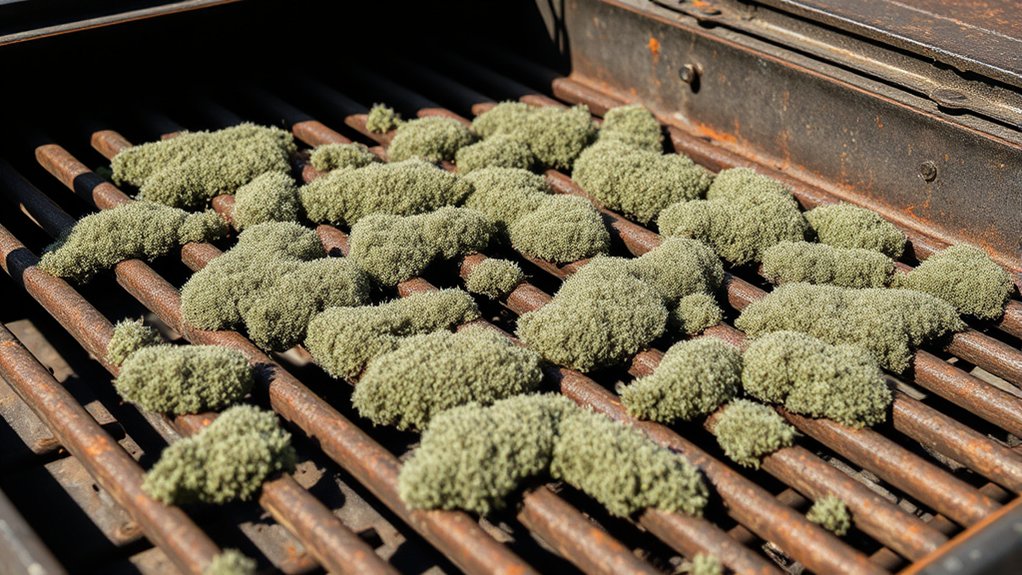
Before you fire up your grill, take a close look for any signs of mold, which often appears as fuzzy patches in shades of white, green, or black. Mold can grow on grill grates, inside the lid, or on any stored grill covers. You might also notice a musty smell, indicating mold presence.
Use a flashlight if needed to inspect hard-to-see areas.
| Location | What to Look For |
|---|---|
| Grill grates | Fuzzy spots, discoloration |
| Lid interior | Dark patches, moldy odor |
| Grill cover | White or green fuzzy areas |
Spotting mold early helps you avoid health risks and guarantees safe grilling.
How to Clean Mold Off Your Grill Effectively
Although mold on your grill can be concerning, you can clean it effectively with the right tools and techniques. Start by scrubbing the grill grates with a stiff wire brush to remove mold and debris. Then, wash the grates with warm, soapy water to kill remaining spores.
Rinse thoroughly to avoid any soap residue. Finally, heat your grill on high for 15 minutes to sanitize it completely.
Here’s how to clean mold off your grill effectively:
- Use a wire brush to scrub off mold and buildup
- Apply warm soapy water and scrub again
- Rinse well to remove soap and loosened mold
- Heat the grill on high to kill lingering spores
Following these steps guarantees your grill is safe and ready to use.
Preventing Mold When Your Grill’s Not in Use
When you’re not using your grill, taking simple steps to prevent mold can save you time and effort later. First, always clean your grill thoroughly after each use, removing food residue and grease where mold can thrive. Make sure it’s completely dry before covering it.
Use a breathable grill cover instead of plastic sheets to avoid trapping moisture. Store your grill in a dry, well-ventilated area, preferably under a shelter but not enclosed, to reduce humidity buildup. If you live in a damp climate, consider using moisture absorbers nearby.
Regularly inspect your grill for any early signs of mold, so you can act quickly. These habits keep your grill mold-free and ready for your next cookout.
When to Replace Your Grill Instead of Cleaning It
Keeping your grill mold-free is important, but sometimes cleaning isn’t enough to guarantee safe cooking. You should consider replacing your grill if mold has deeply penetrated parts that can’t be thoroughly cleaned. Rusty, corroded grates or internal components can harbor bacteria and mold spores, making them unsafe.
Also, if your grill has been neglected for a long time and shows signs of structural damage, replacement is safer than risking contamination.
Look out for these signs to know when it’s time to replace your grill:
- Deep rust or corrosion on grates and burners
- Mold growth inside hard-to-reach areas
- Warped or cracked parts that affect function
- Persistent mold odors despite cleaning
Choosing replacement ensures your cooking stays safe and enjoyable.
Does Mold Change How Your Food Tastes or Its Safety?
If mold grows on your grill, it can affect both the taste and safety of your food. Mold spores can transfer to your food, causing off-flavors that are unpleasant or even bitter. You might notice a strange, musty taste that ruins what should be a delicious meal.
More importantly, mold isn’t just about flavor—it can pose health risks. Some molds produce mycotoxins, which can cause allergic reactions or respiratory issues. Eating food contaminated by mold from your grill could lead to stomach discomfort or worse, especially if you have a weakened immune system.
Even if you don’t see visible mold on your food, the residues left on grill grates can contaminate it. So, ensuring your grill is mold-free before cooking helps protect your food’s flavor and your health.
Tips to Keep Your Grill Mold-Free Year-Round
Mold on your grill can ruin the taste of your food and pose health risks, so it’s important to prevent it from taking hold in the first place. You can keep your grill mold-free year-round by following a few simple steps. First, clean your grill thoroughly after every use, removing food particles and grease that mold loves to feed on.
Second, store your grill in a dry, covered area to limit moisture buildup. Third, regularly inspect and replace grill covers if they become damp or damaged. Finally, schedule deep cleanings during off-seasons, scrubbing grates and interior parts with a grill brush and mild detergent.
Staying proactive with these habits will ensure your grill stays safe and ready for your next cookout.
Frequently Asked Questions
Can Mold on Grill Parts Damage the Grill’s Components?
Yes, mold on grill parts can damage your grill’s components by causing corrosion and degrading materials.
You should clean it promptly to prevent long-term damage and guarantee your grill stays safe and functions properly.
Is It Safe to Use Moldy Grill Covers?
Sure, you can totally snuggle up with moldy grill covers—if you enjoy breathing in funky spores. But if you want to avoid respiratory drama, clean or replace them before grilling.
Your lungs will thank you.
Does Weather Affect How Quickly Mold Grows on Grills?
Yes, weather affects mold growth on grills. Warm, humid conditions speed it up, while dry, cool weather slows it down.
You should clean and dry your grill regularly to prevent mold, especially in damp climates.
Can Mold Spores Spread From Grill to Other Outdoor Furniture?
You might think mold spores won’t spread easily, but they can travel from your grill to other outdoor furniture through wind or contact.
Are There Specific Grill Materials More Prone to Mold Growth?
Yes, grills with porous materials like cast iron or wood are more prone to mold growth because they retain moisture. Stainless steel resists mold better, but you still need to clean and dry your grill regularly to prevent it.
Conclusion
So, mold on your grill might be the last thing you want seasoning your BBQ, but ironically, it’s a clear sign you need a little TLC for your grill. While mold isn’t exactly a tasty guest, a good clean will kick it out and keep your food safe.
Remember, your grill isn’t a pet mold farm—treat it right, and you’ll enjoy fresh, flavorful meals, not a side of spores. Regular cleaning and maintenance are essential to prevent mold growth.
By keeping your grill clean, you reduce health risks and ensure safe, delicious grilling every time. Mold on grill can be dangerous if ignored, so always prioritize proper grill hygiene.