How to Grill Fish in the Oven in 10 Easy Steps
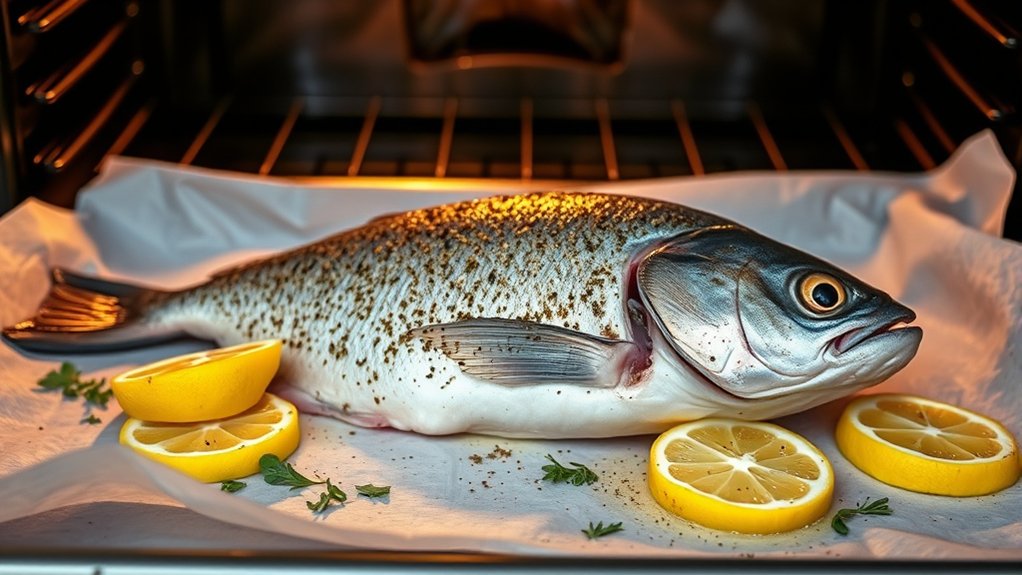
To grill fish in your oven, start by selecting firm, thick fillets such as salmon or tuna, which are ideal for oven grilling. Season the fish simply with olive oil, lemon, salt, and herbs to enhance its natural flavors. Proper preparation is key to achieving perfectly grilled fish every time.
Preheat your oven to 400–450°F, positioning the rack near the top heating element for optimal grilling. Lightly oil both the pan and the fish to prevent sticking during cooking.
Grill the fish according to its thickness, typically between 6 to 12 minutes. Check for opaque, flaky flesh and an internal temperature of 145°F to ensure it’s fully cooked.
Finish with fresh herbs and lemon for added brightness. Don’t forget to keep your oven clean after grilling. Keep going to uncover helpful tips and tricks.
Key Takeaways
- Preheat the oven to 400°F–450°F and position the rack close to the top heating element for direct heat.
- Choose firm, thick fish fillets like salmon or tuna, and season with olive oil, lemon, salt, pepper, and fresh herbs.
- Lightly oil both the fish and the baking pan to prevent sticking and promote even cooking.
- Place the fish centered on a low-edged baking sheet or wire rack with space around for airflow and even heat distribution.
- Grill fish for 6-12 minutes depending on thickness, until opaque, flaky, and reaching an internal temperature of 145°F.
Choose the Right Fish for Oven Grilling
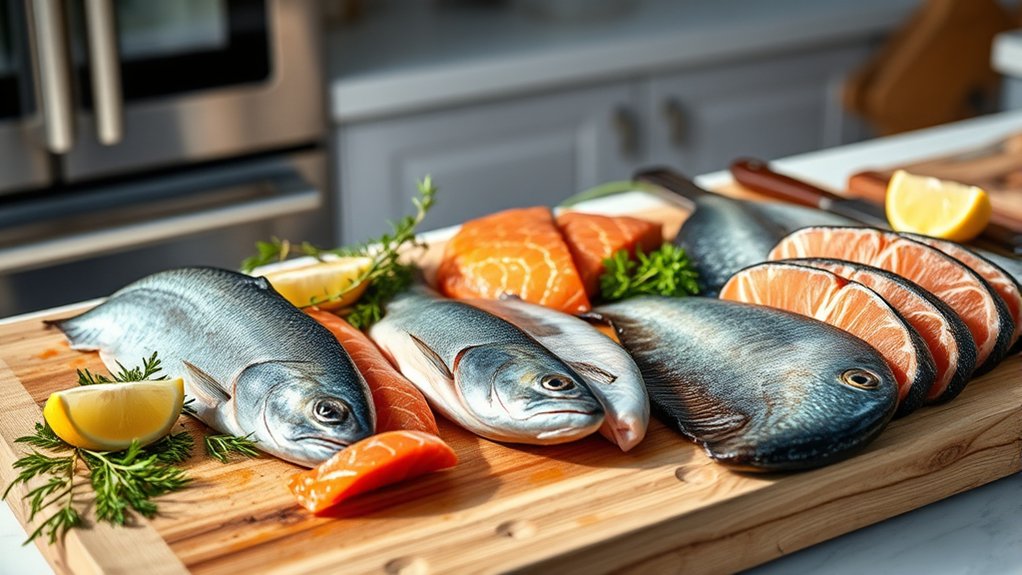
When choosing fish for oven grilling, you’ll want to pick varieties that hold up well to heat and won’t fall apart easily. Opt for firm, meaty fish like salmon, swordfish, tuna, or halibut. These types maintain their texture and flavor under high temperatures, making grilling simpler.
Avoid delicate fish like flounder or sole, as they tend to flake apart quickly. Also, consider the thickness of the fillet; thicker cuts are easier to grill without drying out. Freshness is key — fresher fish grills better and tastes superior.
If you’re unsure, ask your fishmonger for firm, grilling-friendly options. Choosing the right fish sets the foundation for a successful oven grilling experience and ensures you’ll enjoy a delicious, well-cooked meal every time.
Prepare Your Fish With Simple Seasonings
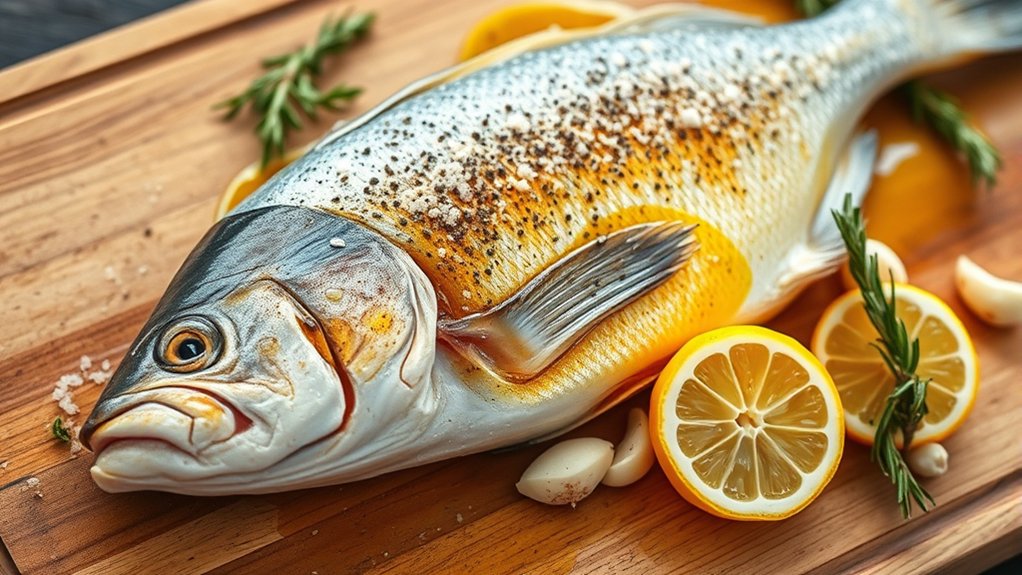
Before seasoning, make sure your fish is fresh for the best flavor. You’ll want to use simple ingredients like olive oil, lemon, salt, and pepper to enhance the natural taste.
A quick marinade can also boost flavor without overpowering the fish.
Choosing Fresh Fish
How can you tell if your fish is fresh and ready for grilling? Fresh fish smells clean, like the ocean, not fishy or sour. Its eyes should be clear and bulging, not cloudy or sunken.
The flesh must be firm and bounce back when pressed.
To choose fresh fish, focus on these key points:
- Smell: Fresh fish has a mild, sea-like aroma without any strong or unpleasant odors.
- Appearance: Look for bright, shiny skin and moist flesh that glistens rather than looks dull or dry.
- Texture: Press the fish gently; if it springs back, it’s fresh. Avoid fish with mushy or sticky flesh.
Selecting fresh fish ensures the best flavor and texture for grilling in your oven.
Essential Seasoning Ingredients
Once you’ve picked fresh fish, the next step is to enhance its natural flavor with simple seasonings. Start with salt and freshly ground black pepper to bring out the fish’s delicate taste. Add a touch of olive oil to keep it moist during grilling.
Fresh herbs like dill, parsley, or thyme complement most fish varieties beautifully. Don’t forget a squeeze of lemon juice or a sprinkle of lemon zest for brightness and a hint of acidity. Garlic powder or minced garlic adds a subtle kick without overpowering the fish.
Keep your seasoning balanced—too much can mask the fish’s natural flavor. By sticking to these essential ingredients, you’ll prepare your fish perfectly for the oven grill.
Marinating Tips and Tricks
Why settle for plain when a simple marinade can elevate your fish to the next level? Marinating not only adds flavor but also helps keep your fish moist while grilling in the oven. You don’t need complicated ingredients—just a few basics will do the trick.
Here are three quick tips to get your marinade just right:
- Use acid wisely: Lemon juice, lime juice, or vinegar brighten flavors but marinate only 15-30 minutes to avoid “cooking” the fish.
- Add oil: Olive or avocado oil helps distribute flavors evenly and prevents sticking.
- Include aromatics: Garlic, herbs like dill or parsley, and spices enhance taste without overpowering.
Follow these simple tricks, and you’ll prepare fish that’s bursting with flavor and perfectly tender every time.
Preheat Your Oven for Perfect Grilling
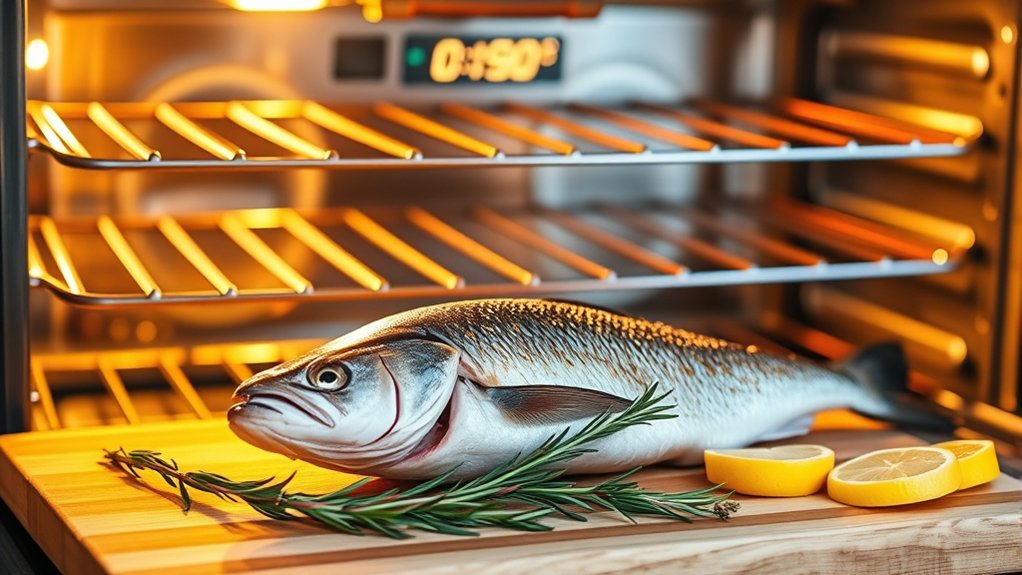
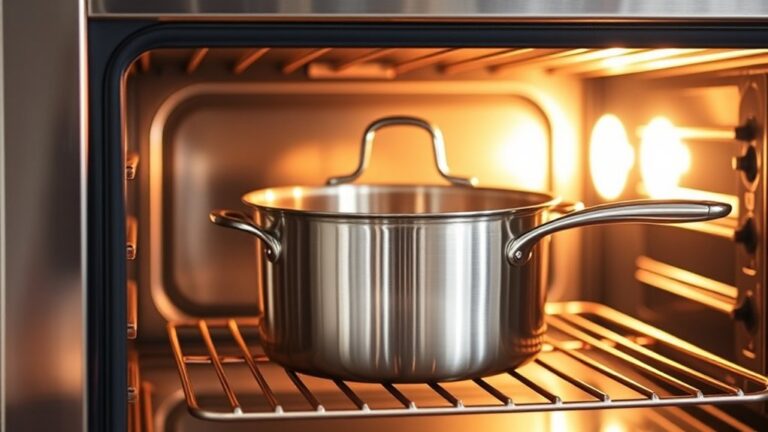
You’ll want to preheat your oven to around 450°F for the best grilling results. Give it at least 10-15 minutes to reach the right temperature before cooking.
Also, position the oven rack close to the top heating element to mimic an outdoor grill’s direct heat.
Ideal Oven Temperature
Although grilling fish in the oven might seem simple, setting the right temperature is essential for achieving a perfectly cooked, flavorful result. Too low, and your fish may turn out soggy or unevenly cooked. Too high, and it could dry out or burn.
Aim for a balanced temperature to lock in moisture and develop a nice crust.
Here’s what you should keep in mind:
- 400°F (205°C) is ideal for most fish types, ensuring quick, even cooking without drying out.
- For delicate or thin fillets, lower the temperature to around 350°F (175°C) to avoid overcooking.
- Thicker cuts or whole fish can handle 425°F (220°C) for a crisp exterior while staying tender inside.
Set your oven accordingly to get the best grilled fish every time.
Preheating Time Guidelines
Setting the right oven temperature lays the groundwork for grilling fish perfectly, but preheating your oven properly makes all the difference in how evenly your fish cooks. You should preheat your oven for at least 10-15 minutes to reach the desired temperature fully. This ensures the heat is stable and consistent, preventing uneven cooking or sticking.
Avoid opening the oven door frequently during this time, as it lets heat escape, prolonging preheating and disrupting temperature accuracy. If your oven has a built-in thermometer or indicator light, use it to confirm when it’s ready.
Oven Rack Positioning
When positioning your oven rack, placing it correctly guarantees your fish cooks evenly and develops a perfect grilled texture. The right rack height ensures your fish gets the ideal heat exposure without burning or undercooking.
Follow these tips for ideal rack positioning:
- Top third of the oven: Place the rack here for direct, intense heat that mimics outdoor grilling, perfect for thinner fillets.
- Middle rack: Use this for thicker cuts requiring slower, even cooking to avoid drying out.
- Adjust based on broiler type: If your broiler is at the top, keep the rack 4-6 inches away from the heat source for balanced grilling.
Positioning your rack thoughtfully helps you master oven grilling and enjoy juicy, flavorful fish every time.
Pick the Right Oven Rack and Pan
To guarantee your fish cooks evenly and develops a perfect crust, place your oven rack in the upper-middle position. Choosing the right pan is just as important. Opt for a heavy-duty baking sheet or a rimmed roasting pan that can handle high heat without warping.
A broiler pan works well, too, because it allows excess fat to drip away, preventing sogginess. If you prefer, use a cast-iron skillet for excellent heat retention and even cooking. Avoid thin or flimsy pans, as they can cause uneven cooking and may not withstand the oven’s high temperature.
Make sure the pan fits comfortably on the rack with enough space around it for proper air circulation. This setup helps your fish grill perfectly every time.
Oil Your Oven-Grilled Fish and Pan to Prevent Sticking
To keep your fish from sticking, you’ll want to use oils with high smoke points like avocado or grapeseed oil. Lightly brush both the fish and the pan to create a slick surface without excess oil. This simple step helps your fish cook evenly and makes cleanup much easier.
Best Oils For Grilling
Although oiling fish and your pan might seem like a small step, it plays an essential role in preventing sticking and ensuring even cooking. Choosing the right oil is key because some oils handle heat better and add flavor without overpowering your fish.
Here are three of the best oils for grilling fish in the oven:
- Avocado Oil – With a high smoke point around 520°F, it’s perfect for high-heat grilling and has a mild, buttery flavor.
- Canola Oil – Affordable and neutral, it has a smoke point near 400°F, making it versatile for most oven grilling.
- Light Olive Oil – Unlike extra virgin, it has a higher smoke point (about 465°F) and a subtle taste that complements fish well.
Pick one that suits your heat level and flavor preference for the best results.
How To Oil Properly
When you oil both your fish and pan correctly, you’ll prevent sticking and promote even cooking, making your grilled fish come out perfectly every time. Start by lightly coating your fish with oil using a brush or your hands, ensuring every surface is covered but not dripping. This helps lock in moisture and creates a barrier against the heat.
Next, apply a thin, even layer of oil to your pan or baking sheet—use a high-smoke-point oil like avocado or grapeseed for best results. Heat the pan briefly before placing the fish in it; this further reduces sticking.
Oiling both fish and pan properly means you won’t lose any precious fillets, and you’ll enjoy a clean release and beautiful grill marks every time.
Place the Fish for Even Cooking
Since uneven heat can cause parts of your fish to cook faster than others, you’ll want to position it carefully in the oven. Proper placement guarantees consistent cooking and prevents overcooked or undercooked sections.
Positioning your fish correctly in the oven ensures even cooking and avoids overdone or underdone spots.
Here’s how to place your fish for even cooking:
- Center the fish on the middle rack to expose it to the most consistent heat.
- Leave space around the fish so hot air circulates freely, avoiding crowded trays.
- If using a baking sheet, choose one with low edges or place fish directly on a wire rack to promote airflow beneath.
Grill the Fish at the Right Temperature and Time
After positioning your fish properly to guarantee even heat distribution, you’ll need to focus on the right temperature and cooking time to achieve perfect results. Set your oven grill to a high heat, typically between 400°F and 450°F, to make sure the fish cooks quickly without drying out.
Cooking time varies by thickness; thinner fillets need less time, while thicker cuts require a bit longer. Use the guide below to help you gauge the ideal temperature and timing for different fish thicknesses.
| Fish Thickness | Temperature & Time |
|---|---|
| Up to 1 inch | 400°F for 6-8 minutes |
| 1 to 2 inches | 425°F for 8-10 minutes |
| Over 2 inches | 450°F for 10-12 minutes |
Stick to these guidelines to grill your fish evenly and perfectly.
How to Tell When Your Fish Is Perfectly Cooked
Although grilling fish at the right temperature and time sets the stage, you’ll want to know exactly when your fish is perfectly cooked to avoid dryness or undercooking.
Here’s how to tell:
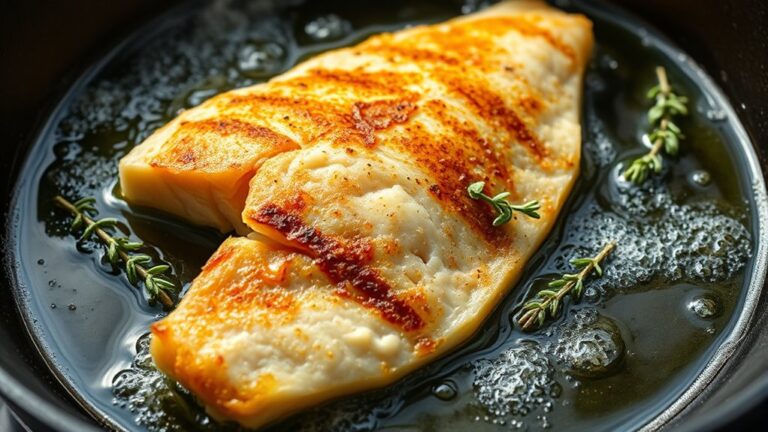
- Check the color: The flesh should turn opaque and lose its translucent look. If it’s still shiny or raw-looking, give it more time.
- Flake test: Gently press a fork against the thickest part. If it flakes easily and separates into sections, it’s done.
- Internal temperature: Use a meat thermometer. Fish is perfectly cooked at 145°F (63°C). This guarantees safety while keeping it moist.
Trust your senses along with these tips to achieve flaky, tender fish every time you grill in the oven.
Finish With Flavor and Presentation Tips
When your fish is perfectly cooked, enhancing its flavor and presentation can turn a simple dish into a memorable meal. Start by squeezing fresh lemon or lime juice over the fish to add brightness and balance its natural richness. Sprinkle chopped herbs like parsley, dill, or cilantro for a fresh aroma and color contrast.
A drizzle of high-quality olive oil or a pat of herb butter can also elevate flavor and texture. For presentation, serve your fish on a clean, warm plate and garnish with colorful sides like grilled vegetables or a simple salad. Use a sharp knife to create neat portions, and consider adding edible flowers or microgreens for a professional touch.
These finishing touches make your dish inviting and delicious.
Clean Up Your Oven After Grilling
Adding those final touches to your grilled fish leaves you with a delicious meal, but don’t forget that cleaning your oven promptly helps maintain its performance and prevents lingering odors.
Finishing your grilled fish is satisfying, but timely oven cleaning keeps it working well and fresh.
Here’s how you can quickly clean your oven after grilling:
- Remove racks and trays: Take out any removable parts to clean separately with warm soapy water. This prevents buildup and makes scrubbing easier.
- Wipe spills and splatters: Use a damp cloth or sponge with a mild cleaner to wipe down the oven interior. Focus on areas with grease or food residue to avoid smoke next time you use it.
- Run a self-cleaning cycle: If your oven has this feature, run it to burn off any stubborn grime. Just make sure to ventilate your kitchen well during the process.
Frequently Asked Questions
Can I Use Frozen Fish for Oven Grilling?
Yes, you can use frozen fish for oven grilling. Just make sure to thaw it completely and pat it dry to avoid excess moisture.
This helps you get a nice, even cook and crisp texture.
What Type of Wood Chips Work With Oven Grilling?
You can use fruitwoods like apple, cherry, or alder for oven grilling—they add mild, sweet smoke flavors.
Avoid strong woods like mesquite or hickory, as they can overpower the delicate taste of fish.
Is It Safe to Grill Fish in a Convection Oven?
Yes, you can safely grill fish in a convection oven. Just make sure to use a broiler pan, keep an eye on cooking time, and avoid overcrowding.
This way, your fish cooks evenly and stays moist.
How Do I Avoid Fish Drying Out During Grilling?
You can avoid drying out fish by marinating it, using a high heat for a short time, keeping the skin on, and basting occasionally.
Also, watch it closely—fish cooks quickly and dries out fast if overdone.
Can I Marinate Fish Before Oven Grilling?
Yes, you can marinate fish before oven grilling. It adds flavor and helps keep the fish moist. Just don’t marinate too long—30 minutes to an hour is perfect to avoid overpowering the delicate fish.
Conclusion
Now that you’ve mastered grilling fish in your oven, imagine the sizzle as your perfectly seasoned fillets turn golden, filling your kitchen with mouthwatering aromas. Like a painter adding final strokes to a masterpiece, you’ll finish with fresh herbs and a squeeze of lemon, transforming simple fish into a feast.
With these steps, your oven becomes a gateway to effortless, delicious meals—ready to impress every time you fire it up. Grilling fish in the oven is not only easy but also a healthy way to enjoy seafood.
By following this guide on how to grill fish in the oven, you’ll consistently create flavorful, tender dishes that everyone will love. Happy grilling!