How to Cook Spinach in a Frying Pan in 10 Easy Steps
Choose fresh spinach for the best flavor and nutrition. Wash and dry it thoroughly to remove any dirt or grit.
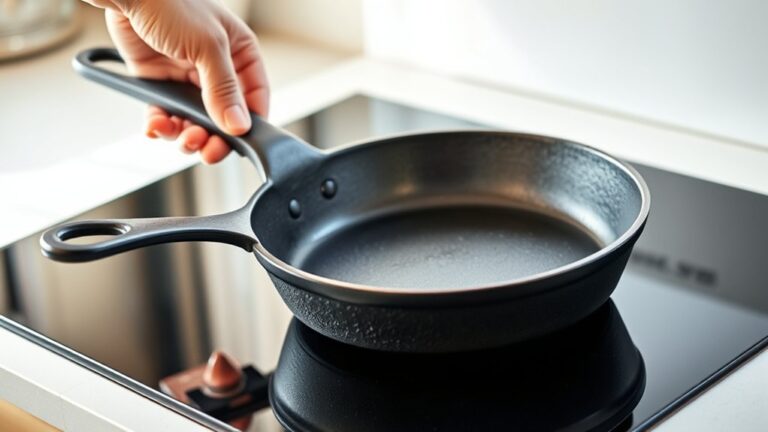
Preheat a wide frying pan over medium heat to prepare for cooking.
Add oil or butter to the pan, then sauté minced garlic for 30-60 seconds until fragrant.
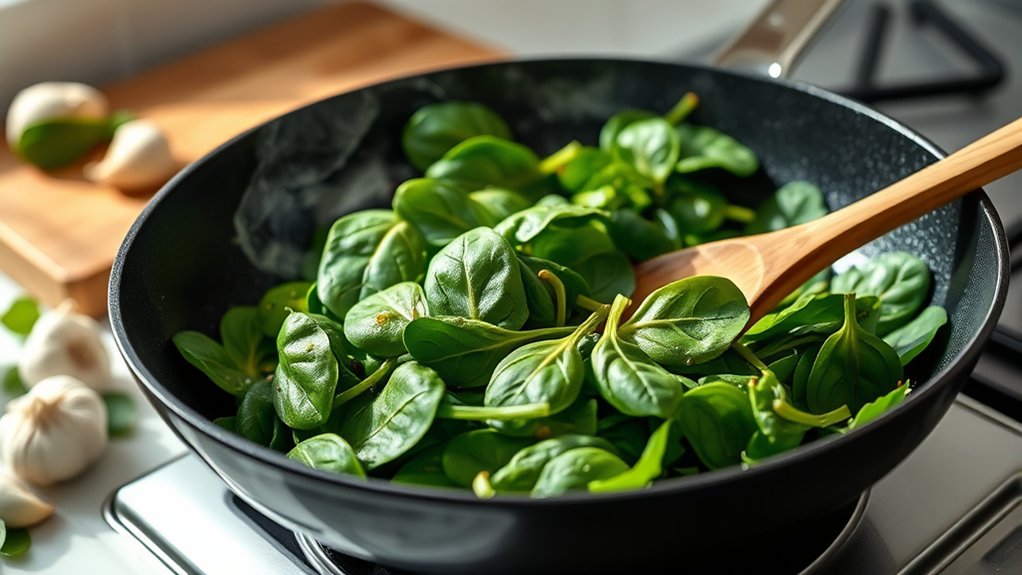
Add spinach in batches to avoid overcrowding the pan. Stir gently until the spinach is just wilted, about 1-2 minutes.
Season the cooked spinach with salt, pepper, and a splash of lemon juice for brightness.
Remove the spinach from the pan immediately to keep it vibrant and nutritious.
For tips on perfect texture and tasty pairings, keep exploring these simple steps.
Key Takeaways
- Preheat a wide pan over medium heat and add oil or butter once hot to prevent sticking and enhance flavor.
- Add minced garlic or aromatics to the fat and sauté for 30-60 seconds before adding spinach.
- Add washed, thoroughly dried spinach in batches, stirring gently to avoid overcrowding and bruising.
- Cook spinach for 1-2 minutes until just wilted, stirring frequently, then promptly remove from heat.
- Season with salt, pepper, and optional flavor boosters like lemon juice or chili flakes; serve immediately.
Choose the Best Spinach for Cooking
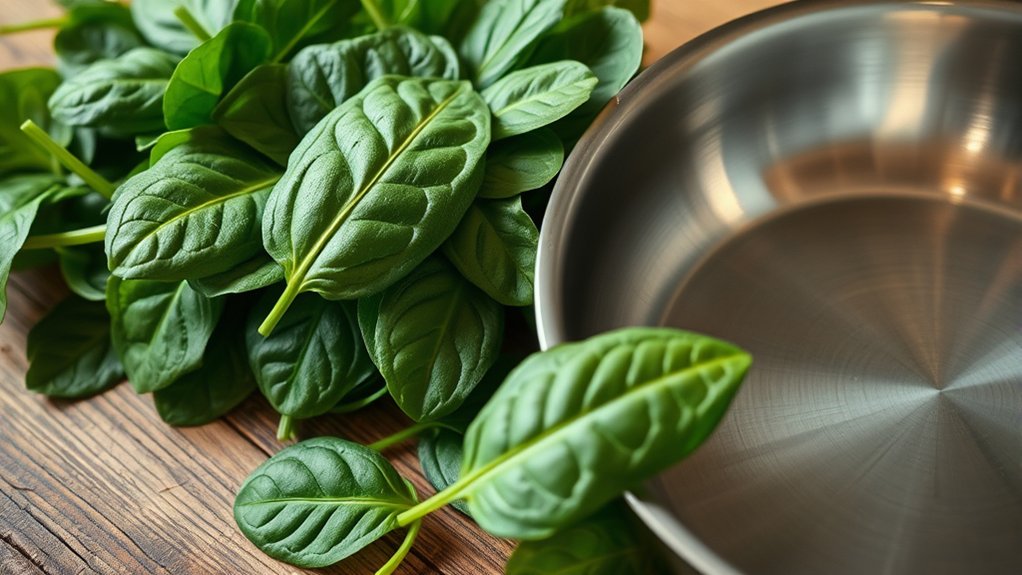
When choosing spinach for cooking, focus on fresh, vibrant leaves with a deep green color and no signs of wilting or yellowing. You want spinach that feels crisp and firm rather than limp or slimy. Avoid bunches with damaged or discolored leaves because they’ll affect the taste and texture.
Baby spinach is tender and cooks quickly, making it perfect for pan-frying if you prefer a delicate texture. Mature spinach has larger, thicker leaves that hold up well to heat and offer a more robust flavor. Whether you pick loose leaves or pre-packaged spinach, check the expiration date and packaging for any moisture buildup, which can cause spoilage.
Selecting quality spinach sets the foundation for a delicious dish every time.
Wash and Dry Spinach Properly
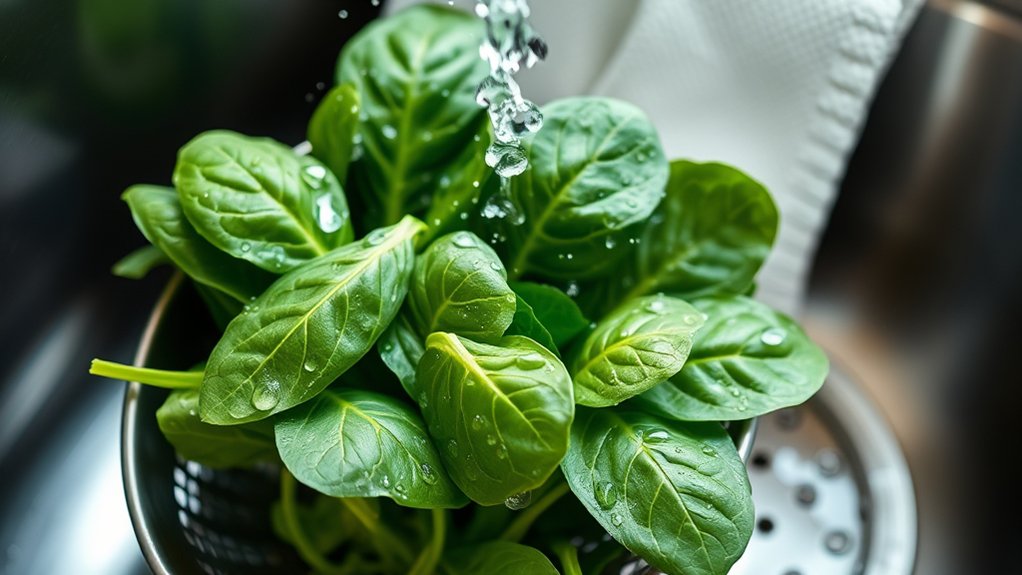
After selecting fresh spinach, the next step is to wash and dry it thoroughly to remove any dirt or grit. Start by placing the spinach in a large bowl or sink filled with cold water. Swirl the leaves gently to loosen any soil.
Let them sit for a minute, then lift the spinach out, leaving the dirt behind in the water. Repeat this process if the water looks dirty. Once clean, use a salad spinner to remove excess water efficiently.
If you don’t have a spinner, pat the leaves dry with a clean kitchen towel or paper towels. Ensuring your spinach is dry prevents it from steaming instead of sautéing, helping you get a better texture and flavor in your dish.
Pick the Right Frying Pan and Heat for Spinach
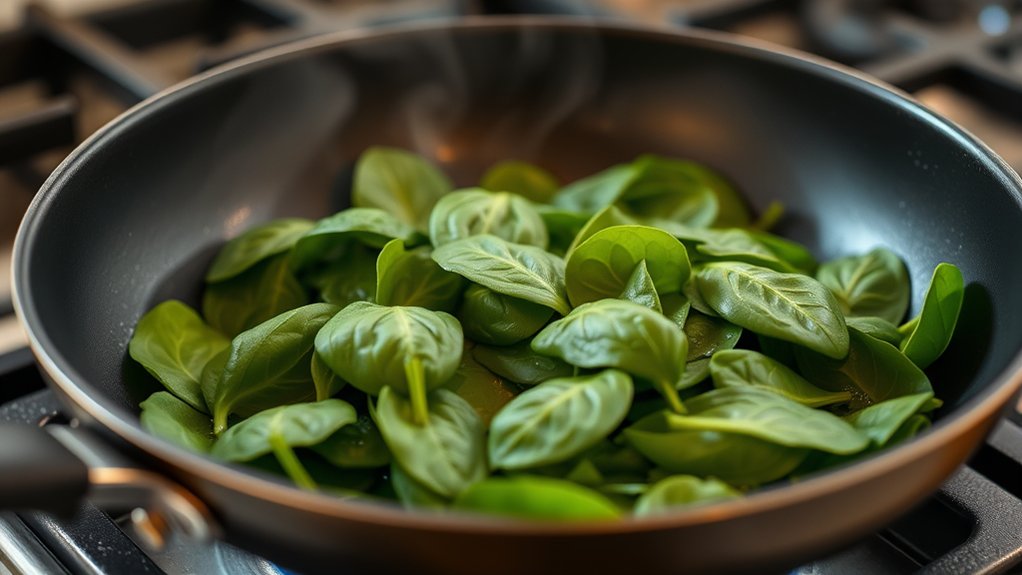
How do you guarantee your spinach cooks evenly and retains its vibrant color? Choosing the right frying pan and heating method is key. Use a pan that distributes heat uniformly to avoid hot spots where spinach might burn or cook unevenly.
Here’s what to contemplate:
- Opt for a non-stick or stainless steel pan to prevent sticking.
- Pick a pan large enough to hold the spinach in a single layer.
Preheat the pan on medium heat to ensure gentle cooking. Avoid high heat, which can wilt spinach too quickly and dull its color.
Add Oil or Butter for Spinach Flavor and Texture
Once your pan is properly heated and ready, adding oil or butter enhances both the flavor and texture of your spinach. Choose oil for a lighter taste or butter for a richer, creamier finish. Heat the fat until it shimmers or melts fully, then add the spinach to coat each leaf evenly.
This step prevents sticking and helps the spinach wilt beautifully without drying out. Here’s a quick comparison to guide you:
| Fat Type | Flavor Profile |
|---|---|
| Olive Oil | Fruity, slightly peppery |
| Butter | Rich, creamy |
| Coconut Oil | Mild, slightly sweet |
| Avocado Oil | Neutral, buttery |
| Ghee | Nutty, aromatic |
Pick what suits your taste, and your spinach will turn out perfectly tender and flavorful every time.
Add Garlic and Aromatics at the Right Time
Although spinach cooks quickly, adding garlic and aromatics at just the right moment guarantees their flavors infuse the dish without burning. You want to let these ingredients release their aroma and flavor into the oil or butter before the spinach hits the pan.
Here’s how to time it perfectly:
- Heat your oil or butter until shimmering but not smoking.
- Add minced garlic or shallots first and sauté for 30-60 seconds.
- Introduce herbs like thyme or chili flakes early to bloom their flavors.
- Watch closely—once garlic turns golden, it’s time to add the spinach.
This careful timing prevents bitterness and ensures your spinach tastes vibrant and fragrant with every bite.
Add Spinach to the Pan Without Overcrowding
Make sure you leave enough space in the pan so the spinach can cook evenly. Don’t pile it all in at once; instead, spread the leaves out in a single layer.
This helps the spinach wilt properly without steaming or turning soggy.
Proper Pan Space
How much spinach you add to the pan can make a big difference in cooking results. When you overcrowd the pan, the spinach steams instead of sautés, leading to a soggy texture and uneven cooking.
To guarantee proper pan space, follow these tips:
- Use a large enough pan to give each leaf room to cook.
- Add spinach in batches if needed, letting each batch shrink before adding more.
- Avoid piling spinach too high to maintain heat and airflow.
- Stir gently and occasionally to keep the spinach moving without crowding one spot.
Even Spinach Distribution
When you add spinach to the pan, spreading it evenly guarantees each leaf cooks properly without overcrowding. If you pile too much spinach in one spot, the leaves steam instead of sauté, becoming soggy and unevenly cooked.
Instead, add a handful at a time, distributing it across the pan’s surface in a single layer. If your pan feels too full, cook the spinach in batches. This approach helps maintain the right temperature and prevents wilting into a mushy mess.
Use tongs or a spatula to gently toss the spinach, ensuring every leaf touches the pan for even heat exposure. Taking these steps results in perfectly cooked, tender spinach with vibrant color and flavor.
Stir and Cook Spinach Until Just Wilted
Once you’ve added the spinach, stir it gently to guarantee even cooking. Keep a close eye on the timing—you want it just wilted, not soggy or overcooked.
Mastering this balance will keep your spinach tender and flavorful.
Timing for Perfect Wilt
Although spinach cooks quickly, you’ll want to keep a close eye on it to achieve the perfect wilt. Overcooking can make it soggy and dull, while undercooking leaves it tough.
Aim for a tender but vibrant result by timing your cooking carefully.
Here’s what to keep in mind:
- Start checking spinach after about 30 seconds of cooking.
- Most batches take just 1 to 2 minutes to wilt perfectly.
- Remove from heat as soon as leaves shrink and soften but still retain color.
- If you wait too long, spinach will lose its bright green and become watery.
Stirring Techniques Explained
Keeping a close watch on the spinach’s color and texture is only part of the process; how you stir it also affects the final result. You want to use a gentle folding motion, lifting the leaves from the edges of the pan and turning them toward the center. This helps cook the spinach evenly without bruising or breaking the tender leaves.
Avoid constant stirring; instead, give the spinach brief rests between stirs so it can wilt naturally under the heat. Use a wooden spoon or silicone spatula to prevent tearing the leaves. Stirring too aggressively can release excess moisture, making the spinach soggy.
Avoid Overcooking Spinach
If you cook spinach too long, it quickly loses its vibrant color and turns mushy. To preserve your spinach bright and fresh, you want to stir and cook it just until it wilts. Here’s how to avoid overcooking:
- Keep the heat medium to medium-high for quick cooking.
- Stir constantly to guarantee even heat and prevent sticking.
- Watch the leaves closely—they’ll shrink and soften in just 1-2 minutes.
- Remove the pan from heat as soon as the spinach is wilted but still vibrant.
Season Spinach With Salt, Pepper, and Flavor Boosters
Once your spinach has softened in the pan, it’s time to enhance its natural flavor by seasoning it with salt and pepper. Sprinkle a pinch of salt evenly over the leaves to bring out their earthiness, then add freshly ground black pepper for a subtle kick.
Don’t be afraid to experiment with flavor boosters like minced garlic, crushed red pepper flakes, or a squeeze of fresh lemon juice to brighten the dish. If you want something richer, a small pat of butter or a drizzle of olive oil can add depth.
Toss everything gently in the pan to distribute the seasonings evenly. Remember, seasoning while the spinach is still warm helps the flavors meld beautifully, making your sautéed spinach taste fresh and vibrant.
Avoid Overcooking to Preserve Spinach Nutrients
After seasoning your spinach, it’s important to cook it just enough to retain its nutrients and vibrant color. Overcooking can cause nutrient loss and make your spinach mushy. To avoid this, keep an eye on the cooking process and follow these tips:
Cook spinach briefly to preserve nutrients and vibrant color while avoiding mushiness.
- Cook spinach for just 2-3 minutes until it wilts.
- Use medium heat to prevent burning while ensuring even cooking.
- Stir frequently to cook all leaves evenly.
- Remove from heat as soon as the spinach shrinks and turns bright green.
Serving Ideas for Sautéed Spinach
You can easily pair sautéed spinach with your favorite main dishes to add color and nutrition. Try mixing it into salads for extra flavor and texture.
It also works great as a tasty topping for sandwiches, giving them a fresh, healthy boost.
Pairing With Main Dishes
Although sautéed spinach can stand on its own as a side, pairing it with the right main dish can elevate your meal. You’ll find that its mild, slightly earthy flavor complements a variety of proteins and hearty dishes. When planning your plate, consider these pairings:
- Grilled chicken breast, for a lean and flavorful combo
- Pan-seared salmon, adding richness and healthy fats
- Garlic butter steak, balancing bold and fresh tastes
- Roasted vegetable quinoa bowls, for a nutritious vegetarian option
These pairings enhance the spinach’s texture and taste without overpowering it. Plus, sautéed spinach cooks quickly, making it a perfect last-minute side to round out many meals.
Incorporating Into Salads
How can sautéed spinach transform your salads? Adding warm, tender spinach introduces a rich, earthy flavor and a silky texture that fresh leaves can’t match. It pairs beautifully with ingredients like nuts, cheese, and fruits, elevating your salad from simple to gourmet.
Use it as a base or a topping to add depth and nutrition.
| Salad Base | Complementary Toppings |
|---|---|
| Mixed greens | Feta cheese |
| Quinoa | Toasted pine nuts |
| Arugula | Sliced strawberries |
| Couscous | Dried cranberries |
| Romaine lettuce | Hard-boiled eggs |
Try mixing sautéed spinach with these bases and toppings to create vibrant, balanced salads you’ll crave.
Using as Sandwich Toppings
When you add sautéed spinach to your sandwiches, you instantly boost their flavor and nutrition. This vibrant green adds a mild, slightly earthy taste and a tender texture that complements various fillings.
You can easily incorporate it with:
- Grilled chicken or turkey for a lean protein boost
- Melted cheese like mozzarella or Swiss for creamy richness
- Roasted vegetables to add a savory, wholesome touch
- Hummus or pesto as a flavorful spread to enhance every bite
Sautéed spinach also keeps your sandwich moist without sogginess, making it a perfect alternative to raw greens. Simply drain any excess liquid before adding it to your sandwich, and enjoy a tasty, nutrient-packed upgrade that’s quick to prepare and delicious any time.
Frequently Asked Questions
Can I Use Frozen Spinach Instead of Fresh for Frying?
Yes, you can use frozen spinach instead of fresh for frying. Just thaw and drain it well to avoid excess moisture.
Then, cook it in the pan until heated through and any liquid evaporates for the best texture.
How Long Can Cooked Spinach Be Stored in the Refrigerator?
You can store cooked spinach in the refrigerator for up to 3 to 4 days.
Make sure to keep it in an airtight container to maintain freshness and prevent it from absorbing other odors in the fridge.
Is It Necessary to Remove Stems Before Cooking Spinach?
You don’t have to remove stems before cooking spinach since about 90% of people leave them on for extra fiber. Just make sure to wash thoroughly—they’ll soften quickly and add a nice texture without overpowering the dish.
Can I Add Other Vegetables While Cooking Spinach in the Pan?
Yes, you can add other vegetables while cooking spinach in the pan. Just add harder veggies like carrots or peppers first, then toss in the spinach last since it cooks quickly and wilts down fast.
What Type of Oil Is Healthiest for Cooking Spinach?
You’ll want to use olive oil or avocado oil since they’re rich in healthy fats and have high smoke points. They help preserve nutrients while adding flavor, making your spinach both tasty and nutritious.
Conclusion
Now that you know how to cook spinach perfectly in a frying pan, remember that practice makes perfect. With the right spinach, proper washing, and careful cooking, you’ll have a delicious, nutrient-packed side dish every time.
Don’t overcook it—just wilt it to keep those vibrant flavors and nutrients intact. Keep experimenting with seasonings and serving ideas, and soon, sautéed spinach will become a quick, go-to favorite in your kitchen!
Mastering how to cook spinach in a frying pan ensures you enjoy fresh, flavorful, and healthy greens every time. Keep these tips in mind for perfect sautéed spinach as a nutritious addition to any meal.