How Do You Use Cast Iron Cookware on Glass Top Stoves Safely?
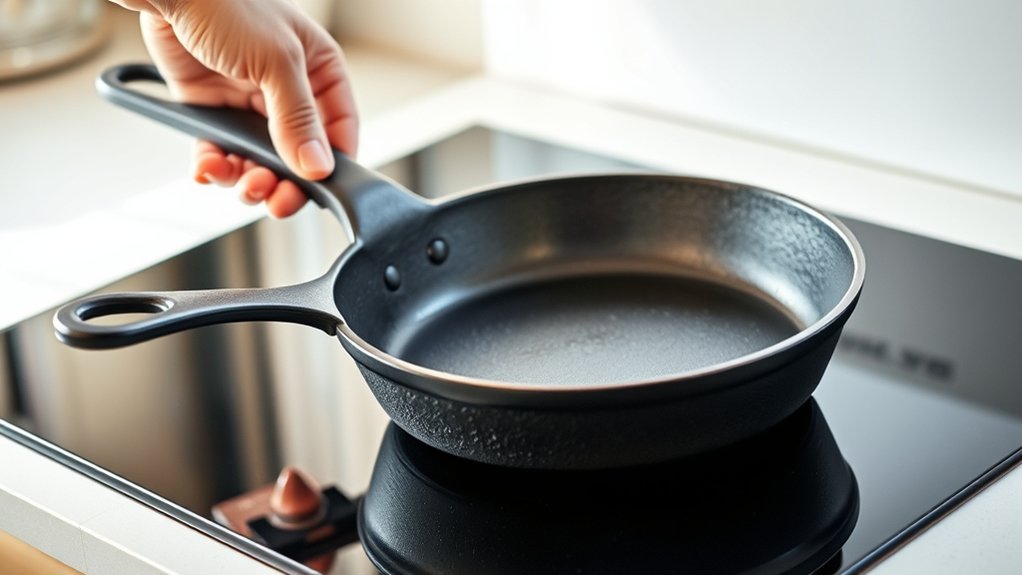
You can safely use cast iron cookware on glass top stoves by following some essential tips to prevent damage. Cast iron is heavy and can scratch or crack the delicate glass surface if not handled properly.
By understanding how to use cast iron cookware on glass top stoves safely, you can enjoy its excellent heat retention without risking your stove’s condition.
Always lift the cookware instead of sliding it to avoid scratches or cracks. Place your pan gently and center it on the burner to guarantee even heat and stability. Keep the bottom clean and smooth to prevent abrasive contact with the glass surface.
Handle the heavy weight carefully and avoid sudden temperature changes that can cause thermal shock. After cooking, clean the stovetop with a soft cloth and non-abrasive cleaner to maintain its smooth finish.
Following these tips will help protect your stove and improve your cooking experience.
Key Takeaways
- Always lift cast iron cookware instead of sliding it to prevent scratches and cracks on the glass stove surface.
- Place cookware gently and centered on the burner to ensure even heat distribution and reduce surface stress.
- Use cast iron with smooth, flat bottoms and keep them clean to avoid abrasive damage to the glass top.
- Allow the cooktop to cool before cleaning and use non-abrasive cleaners and soft cloths to maintain surface integrity.
- Regularly inspect for scratches or cracks and address any damage promptly to prevent further harm or safety risks.
How to Use Cast Iron Cookware Safely on Glass Top Stoves
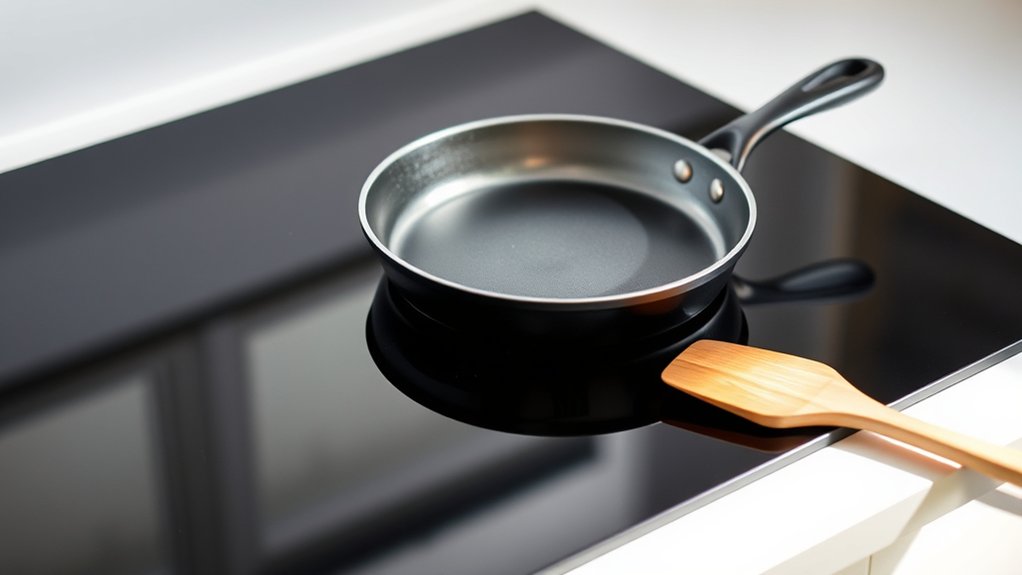
Although cast iron cookware is heavy and can scratch your glass stove, you can still use it safely by handling it with care. Always lift the cookware instead of sliding it across the surface to avoid scratches. Make sure the bottom of your cast iron is clean and smooth; any grit can damage the glass.
Use burner sizes that match your cookware to prevent uneven heating and potential cracking. Avoid sudden temperature changes—don’t place a hot pan on a cold surface or add cold water to a hot pan. Keep the stove surface clean from spills and debris to maintain smooth contact.
Why Cast Iron Can Be Tough on Glass Stoves
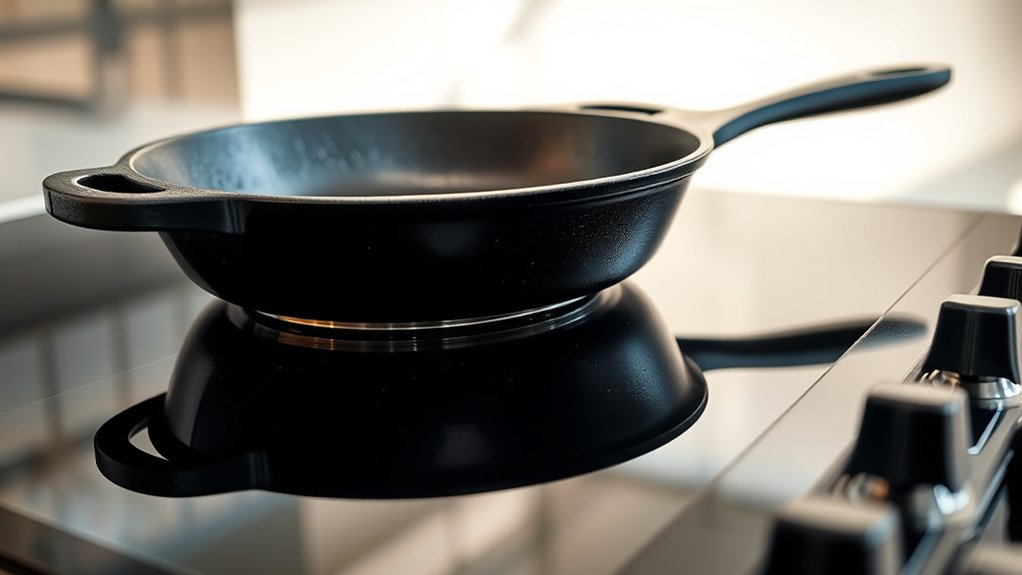
You need to be careful because cast iron is heavy and can scratch or damage your glass stove’s surface. Its uneven heat distribution can also cause hot spots that stress the glass.
Understanding these challenges helps you protect your stove while cooking.
Weight And Surface Abrasion
Cast iron cookware can weigh several times more than other pots and pans, which puts extra pressure on your glass stove’s surface. This weight increases the risk of cracks or scratches, especially if you slide the pan instead of lifting it.
Cast iron’s rough bottom can also cause surface abrasion, wearing down the glass over time. To protect your stove, always lift the cookware when moving it and consider using a protective pad.
| Cookware Type | Average Weight (lbs) |
|---|---|
| Cast Iron Skillet | 6-12 |
| Stainless Steel Pan | 2-4 |
| Aluminum Pan | 1-3 |
| Non-stick Pan | 1-3 |
Heat Distribution Challenges
When using cast iron on a glass stove, uneven heat distribution can create challenges that affect both your cooking and the stove’s surface. Cast iron holds heat well but heats unevenly, which can lead to hot spots on your glass top. This can cause:
- Sudden temperature changes that might stress the glass and increase the risk of cracks.
- Uneven cooking results, forcing you to adjust heat frequently to avoid burning food.
- Difficulty in controlling the temperature, since cast iron takes longer to heat and cool.
- Potential damage if the pan’s bottom isn’t flat, concentrating heat unevenly on the glass.
To protect your stove, be mindful of these heat distribution issues and adjust your cooking technique accordingly.
How to Prepare Your Glass Top Stove Before Using Cast Iron
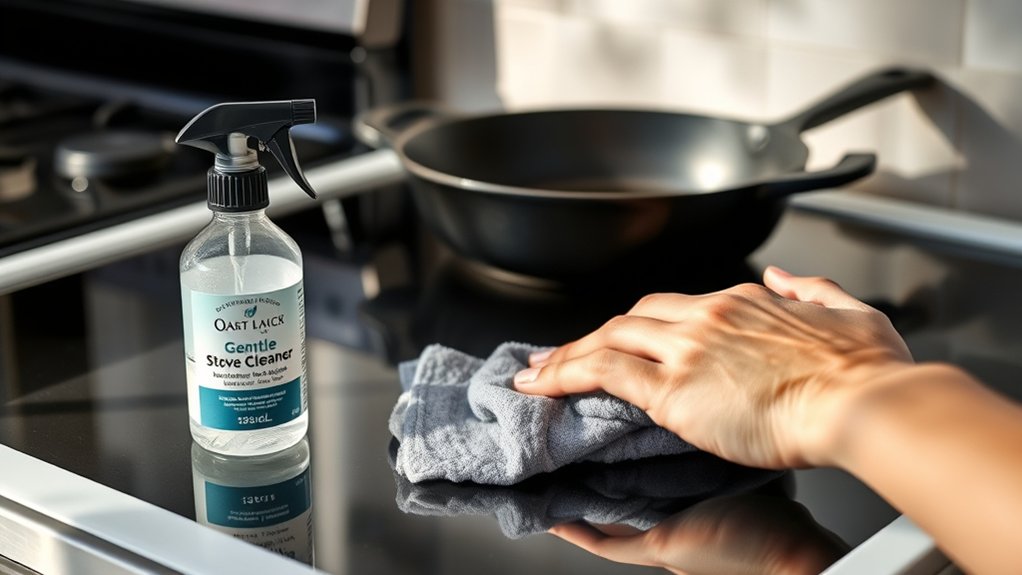
Before you place your cast iron cookware on the glass stove, make sure to clean the surface thoroughly to remove any debris that could cause scratches. You’ll also want to contemplate using protective stove covers to add an extra layer of defense.
These simple steps help keep your stove looking great and prevent damage.
Clean Surface Thoroughly
Although glass stove tops are designed to be smooth and resilient, you’ll want to clean the surface thoroughly before placing your cast iron cookware on it. Any debris or residue can scratch or damage the glass when the heavy cast iron moves.
Here’s how to prepare your stove properly:
- Turn off the stove and let it cool completely.
- Wipe the surface with a soft cloth and warm, soapy water to remove grease and spills.
- Use a non-abrasive cleaner or a specialized glass cooktop cleaner for stubborn stains.
- Dry the surface thoroughly with a microfiber cloth to avoid streaks and guarantee no moisture remains.
This careful cleaning helps protect your glass stove and keeps it looking pristine.
Use Protective Stove Covers
Cleaning your glass stove top thoroughly sets a solid foundation, but adding an extra layer of protection can further guard against scratches and heat damage. Using protective stove covers designed for glass tops creates a buffer between the cast iron and the surface. These covers are typically made of heat-resistant materials that distribute weight evenly and prevent direct contact.
Before placing your cast iron cookware, position the stove cover carefully to cover the burners fully. This step helps minimize the risk of scratches caused by sliding or rough cast iron bottoms. Remember to choose covers that fit your stove model and clean them regularly to avoid trapping debris.
How to Place Cast Iron Cookware Safely on Glass Cooktops
When you place cast iron cookware on a glass cooktop, you need to be mindful of how you set it down to prevent scratches or cracks. Here’s how you can do it safely:
- Always lift the cookware instead of sliding it across the surface to avoid friction damage.
- Center the pan on the burner to distribute heat evenly and reduce stress on the glass.
- Place the cookware gently, letting its weight settle naturally without dropping it.
- Use cookware with smooth, flat bottoms to ensure stable contact and minimize pressure points.
How to Avoid Scratching or Damaging Your Glass Stove Surface
To avoid scratching or damaging your glass stove surface, you need to handle your cookware with care and pay attention to how you use your stove. Always lift your cast iron pans when moving them instead of sliding them across the glass. Sliding can create scratches or even cracks.
Make sure the bottom of your cookware is clean and free of debris before placing it on the stove. Tiny particles can act like sandpaper and wear down the surface. Use felt or silicone pads when storing your pans to prevent accidental scratches.
Avoid dropping heavy cast iron cookware onto the stove, as the impact can damage the glass. By being mindful and gentle, you’ll keep your glass top stove looking great while enjoying your cast iron cookware safely.
Heating Cast Iron Safely on Glass Top Stoves
Although cast iron retains heat exceptionally well, you need to warm it gradually on a glass top stove to prevent thermal shock. Sudden temperature changes can crack the glass surface or warp your pan.
To heat cast iron safely, follow these steps:
- Start with a low heat setting to gently warm the pan.
- Increase the temperature slowly, allowing the cast iron to adjust.
- Avoid placing a cold pan directly on a hot burner; instead, let the pan warm up alongside the burner.
- Use a burner that matches the size of your cast iron cookware to ensure even heating and reduce stress on the glass.
How to Move Cast Iron Cookware Without Scratching Glass
Since cast iron cookware is heavy and rough on the bottom, you’ll need to handle it carefully to avoid scratching your glass stove surface. Always lift the pan instead of sliding it. Use soft fabric pads or silicone mats under the cookware when placing it down.
Clean the stove and pan bottoms regularly to remove debris that could cause scratches. Moving cast iron cookware with these steps keeps your glass top in great shape.
| Action | Tip |
|---|---|
| Lifting | Always lift, never slide |
| Padding | Use silicone mats or fabric pads |
| Cleaning | Remove debris from bottom |
| Handling | Use both hands for stability |
| Placement | Set down gently, avoid dropping |
How to Clean and Maintain Glass Cooktops After Cast Iron Use
When you’ve finished cooking with cast iron on your glass cooktop, it’s important to clean and maintain the surface promptly to prevent stains and scratches. Here’s how you can do it effectively:
- Let the cooktop cool completely before cleaning to avoid burns or thermal shock.
- Use a soft cloth or sponge with warm, soapy water to wipe away grease and food residues.
- For stubborn spots, apply a specialized glass cooktop cleaner and gently scrub with a non-abrasive pad.
- Dry the surface thoroughly with a microfiber cloth to prevent streaks and water marks.
Following these steps keeps your glass cooktop looking new and ensures it stays safe for future cast iron use.
How to Fix Scratches or Cracks From Cast Iron
If you notice scratches or cracks on your glass cooktop after using cast iron, you can take steps to minimize the damage and restore its appearance. For minor scratches, try using a ceramic cooktop cleaner or a glass polishing kit with a soft cloth to buff out the marks gently. Avoid abrasive pads that can worsen the damage.
If cracks appear, assess their size—small hairline cracks may be temporarily sealed with a specialized glass stove top repair kit. However, deeper cracks usually require professional repair or replacement to avoid safety risks. Always clean the area thoroughly before applying any repair product.
To prevent future damage, lift your cast iron cookware instead of sliding it across the surface. Taking these steps helps maintain your cooktop’s look and longevity.
How Cast Iron Compares to Other Cookware for Glass Top Stoves
Although cast iron offers excellent heat retention and durability, it differs considerably from other cookware types when used on glass top stoves. You’ll notice these key differences:
- Weight: Cast iron is much heavier, increasing the risk of scratching or cracking if dropped or dragged.
- Surface Contact: Its rough bottom can cause more friction compared to smooth stainless steel or aluminum, affecting your stove’s surface.
- Heat Distribution: Cast iron heats evenly but slowly, unlike copper or aluminum, which heat quickly but unevenly.
- Maintenance: Cast iron requires seasoning and careful cleaning, whereas nonstick or stainless steel pans are generally low maintenance.
Knowing these contrasts helps you handle cast iron more cautiously, protecting your glass stove while enjoying its cooking benefits.
Frequently Asked Questions
Can Cast Iron Cookware Be Used on Induction Glass Top Stoves?
Yes, you can use cast iron cookware on induction glass top stoves because cast iron is magnetic. Just be careful when placing or moving it to avoid scratching the surface, and clean spills promptly to keep your stove safe.
Is Pre-Seasoning Cast Iron Necessary Before Using on Glass Tops?
You don’t have to pre-season cast iron before using it on glass tops, but you’ll want to. Without seasoning, food sticks and cleaning gets tough—so seasoning protects both your pan and your stove’s surface.
Does the Weight of Cast Iron Affect Cooking Time on Glass Stoves?
Yes, the weight of cast iron can affect cooking time because heavier pans retain heat longer, causing slower temperature changes.
You’ll need to adjust your cooking time and heat settings to avoid overheating or burning your food.
Can Cast Iron Cookware Cause Discoloration on Glass Stove Surfaces?
Yes, cast iron cookware can cause discoloration on glass stove surfaces if it’s dragged or overheated.
To prevent this, always lift the pan and avoid high heat, keeping the stove clean after each use.
Are There Specific Brands of Cast Iron Recommended for Glass Top Stoves?
You’ll find brands like Le Creuset and Lodge recommended for glass top stoves because they offer smooth, enameled surfaces that reduce scratching risk.
Just handle them carefully to keep your stove’s surface pristine.
Conclusion
Using cast iron on glass top stoves requires careful handling to prevent damage. Did you know that nearly 30% of glass cooktop damages result from improper cookware use? By prepping your stove, placing the cast iron gently, and avoiding sliding, you’ll protect your surface and enjoy cast iron’s benefits.
Clean up carefully and address scratches promptly to keep your stove looking great. With the right care, cast iron can be a safe, durable option for glass cooktops. Following these tips will help you use cast iron cookware on glass top stoves safely and maintain your cooktop’s appearance.