Season HexClad Cookware in 7 Easy Steps
To season your HexClad cookware properly, it’s important to start with a clean, dry pan. Seasoning HexClad cookware helps create a natural non-stick surface and protects against rust. This process enhances the pan’s performance and longevity, making your cooking experience even better.
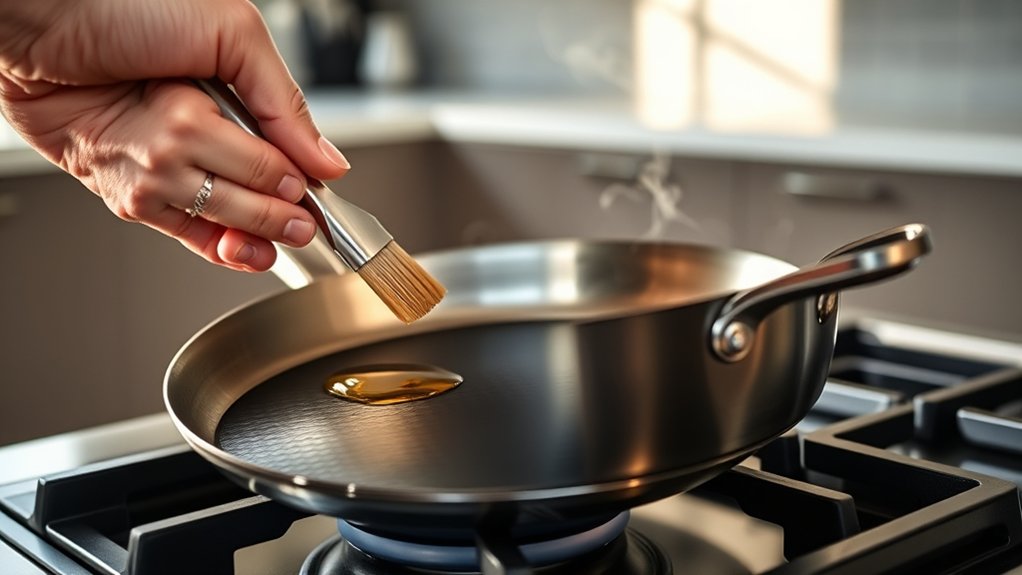
First, wash and dry the cookware thoroughly. Next, apply a thin layer of high smoke point oil like avocado or grapeseed oil.
Heat the pan on medium until it starts to smoke, then let it cool naturally.
Wipe off any excess oil and repeat this process 2-3 times for a strong, protective coating.
This will prevent sticking and rust while enhancing performance.
Keep following for tips on testing and maintaining your pan’s seasoning.
Key Takeaways
- Clean HexClad cookware with warm water and mild soap, then dry thoroughly before seasoning.
- Choose a high smoke point oil like avocado or grapeseed for best seasoning results.
- Apply a thin, even oil layer over the entire cooking surface.
- Heat the pan on medium until the oil lightly smokes, then let it cool naturally.
- Repeat heating and cooling 2-3 times, wiping off excess oil after each cycle for a durable coating.
Why Seasoning Your HexClad Cookware Matters
Although HexClad cookware is designed with a durable non-stick surface, seasoning it enhances its performance and longevity. When you season your pan, you create a natural, protective layer that fills microscopic pores in the metal. This layer reduces the chance of food sticking and makes cleaning easier.
You’ll also help prevent rust and maintain the pan’s appearance over time. Seasoning improves heat distribution, letting you cook more evenly. Skipping this step might lead to quicker wear and decreased non-stick effectiveness.
Preparing Your HexClad Pan for Seasoning
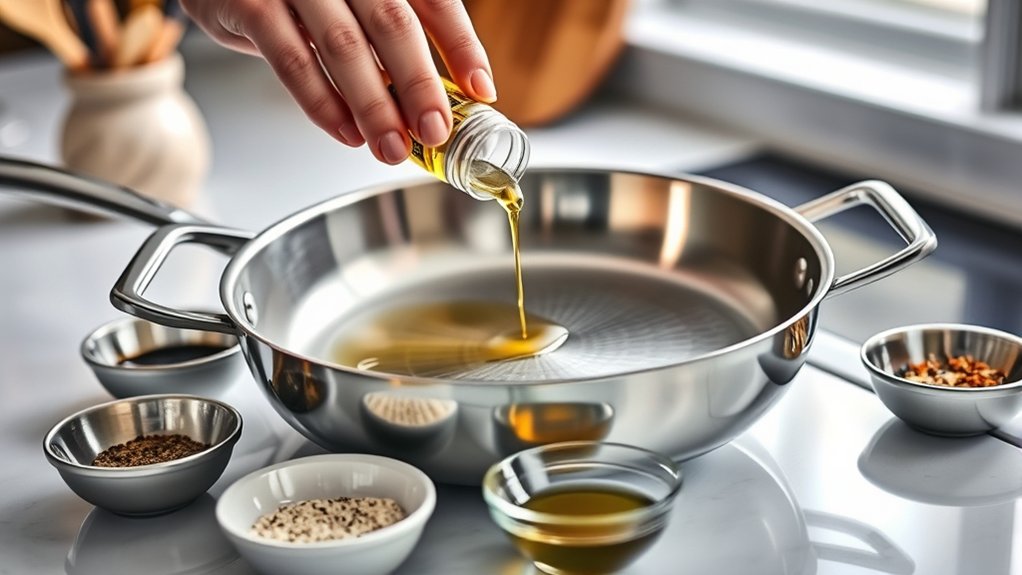
Before you start seasoning your HexClad pan, you’ll want to clean it thoroughly to remove any factory oils or residues. Begin by washing the pan with warm water and mild dish soap, using a soft sponge or cloth. Avoid abrasive scrubbers that could damage the pan’s surface.
Rinse it well and dry it completely with a clean towel to prevent water spots. Next, inspect the pan for any stubborn spots or leftover debris and give those areas a gentle scrub if needed. Ensuring your pan is spotless and dry sets the stage for effective seasoning.
Choosing the Best Oil for Seasoning
You’ll want to pick an oil with a high smoke point to create a durable, non-stick layer on your HexClad pan. Oils like grapeseed, avocado, or refined canola work great because they handle heat well and season evenly.
Knowing each oil’s benefits helps you choose the best one for your seasoning process.
Types Of Suitable Oils
Choosing the right oil is essential for seasoning your HexClad cookware effectively. You want oils that create a durable, non-stick surface and enhance the pan’s performance. Here are four great options to contemplate:
- Flaxseed Oil – Popular for its ability to polymerize into a hard, protective layer.
- Canola Oil – Affordable and widely available, it works well for general seasoning.
- Grapeseed Oil – Light and neutral, it provides a smooth finish without strong odors.
- Avocado Oil – Rich in healthy fats, it’s perfect for seasoning at higher temperatures.
Smoke Points And Benefits
Although many oils can season your HexClad cookware, understanding their smoke points is essential to get the best results. The smoke point is the temperature at which oil starts to burn and break down, creating unpleasant flavors and harmful compounds. You want to pick an oil with a high smoke point, like avocado oil (around 520°F) or grapeseed oil (about 420°F), so it can withstand the heat needed for proper seasoning without smoking excessively.
These oils create a durable, non-stick layer while adding minimal flavor. Avoid low smoke point oils like unrefined olive oil, which can burn quickly and ruin your seasoning. Choosing the right oil helps protect your HexClad, ensuring it performs well and lasts longer.
Seasoning Your HexClad Cookware: Step-by-Step
How do you give your HexClad cookware that perfect, non-stick finish? Seasoning your pan properly is key. Follow these simple steps to get started:
- Clean your pan with warm water and mild soap, then dry it thoroughly.
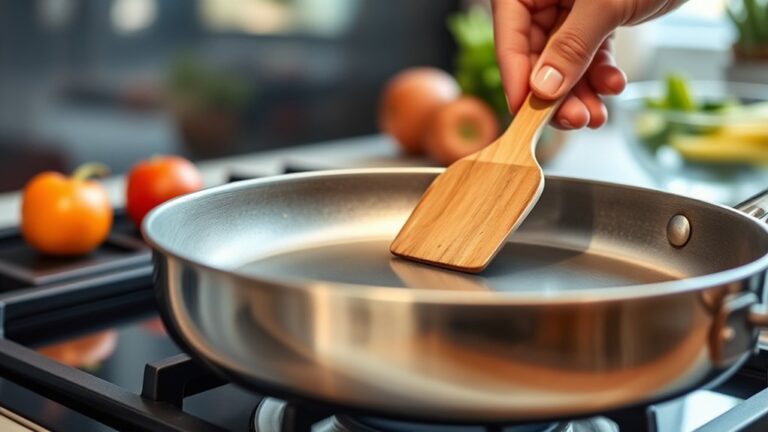
- Apply a thin layer of high-smoke point oil (like avocado or grapeseed oil) evenly over the cooking surface.
- Heat the pan on medium heat for about 2-3 minutes until it starts to smoke lightly.
- Cool the pan naturally, then wipe off any excess oil with a paper towel.
Repeat this process 2-3 times for a durable, smooth coating that enhances your cooking experience and protects your HexClad cookware.
How to Test Your HexClad Pan’s Seasoning
You can tell your HexClad pan is properly seasoned by checking for a smooth, darkened surface and testing water droplets—they should bead up and dance on the pan.
Another clear sign is how easily food releases when cooking. Let’s explore these simple ways to make sure your seasoning is on point.
Visual Seasoning Indicators
When your HexClad pan develops a smooth, slightly glossy surface with no sticky residue, it’s a clear sign that the seasoning process is working. To visually check your pan’s seasoning progress, watch for these indicators:
- Even Color: The pan should have a consistent, deepened hue without patchy spots.
- Subtle Shine: A slight gloss signals that the oil has polymerized properly.
- No Stickiness: The surface feels slick and smooth—not tacky or oily.
- Minimal Discoloration: Avoid any rust or dull areas, which suggest uneven seasoning or moisture exposure.
Water Droplet Test
Wondering if your HexClad pan’s seasoning is ready for cooking? The water droplet test is a simple way to find out. Heat your pan over medium heat for a couple of minutes, then flick a few drops of water onto the surface.
If the droplets bead up and dance around like tiny balls, your seasoning is well-established and your pan’s ready for use. If the water spreads out and sizzles quickly, the seasoning needs a bit more work. This test helps you gauge how well the seasoning layer repels moisture, which is essential for a non-stick surface.
Repeat this test periodically to maintain your pan’s performance and confirm it’s always primed for cooking success.
Food Release Efficiency
Although the water droplet test gives you an idea of your HexClad pan’s seasoning, evaluating food release efficiency truly reveals how well the surface performs during cooking. To test it yourself, follow these steps:
- Preheat your seasoned HexClad pan over medium heat for a few minutes.
- Lightly oil the surface with a small amount of cooking oil.
- Cook a delicate food item, like an egg or a thin slice of potato.
- Observe how easily the food releases from the pan without sticking or tearing.
If the food slides off effortlessly and leaves minimal residue, your seasoning is effective. If not, repeat the seasoning process to improve the non-stick properties.
This simple test guarantees your HexClad pan is ready for everyday cooking.
Maintaining Your HexClad Seasoning
To keep your HexClad cookware performing at its best, you’ll need to maintain the seasoning regularly. After each use, clean your pan gently with warm water and mild soap, avoiding abrasive scrubbers that can damage the seasoned surface. Dry it thoroughly to prevent rust and water spots.
Apply a thin layer of oil—like vegetable or flaxseed oil—while the pan is still warm to reinforce the seasoning. Store your HexClad cookware in a dry place and avoid stacking heavy items on top to protect the surface. By following these simple steps, you’ll preserve the non-stick qualities and extend the life of your seasoning.
Proper maintenance ensures your HexClad stays ready for effortless cooking every time.
When to Re-Season Your HexClad Cookware
Regular maintenance helps preserve your HexClad’s seasoning, but over time, even the best care can’t prevent wear. You’ll need to re-season your cookware when the non-stick surface starts to fade or food begins sticking more often. Look out for these signs:
- Food sticks despite proper preheating and oiling.
- The surface appears dull or unevenly colored.
- You notice rust spots or discoloration.
- Cleaning becomes harder due to residue buildup.
When you see any of these signs, it’s time to re-season. This not only restores the non-stick layer but also protects your cookware from damage. Re-seasoning keeps your HexClad performing at its best, ensuring every meal cooks smoothly and cleanup stays easy.
Frequently Asked Questions
Can I Use Hexclad Cookware on Induction Cooktops?
Yes, you can use HexClad cookware on induction cooktops. Its magnetic stainless steel base guarantees efficient heat transfer, so you’ll enjoy even cooking and great performance every time you cook with your induction stove.
Is Hexclad Dishwasher Safe?
You won’t have to wrestle with scrubbing—HexClad cookware is dishwasher safe, gliding through cycles like a smooth sail on calm waters. Still, hand washing keeps its sharp gleam longer, so consider that for best care.
What Is the Warranty Period for Hexclad Cookware?
HexClad offers a lifetime warranty on their cookware. You can trust they’ll cover defects in materials or workmanship, so you don’t have to worry about your investment failing over time.
Just keep your receipt handy!
Can Hexclad Pans Be Used in the Oven?
You can use HexClad pans in the oven up to 500°F. With 70% of users praising their versatility, you’ll love how these pans seamlessly shift from stovetop to oven without damage or performance loss.
How Do I Clean Stubborn Stains on Hexclad Cookware?
To clean stubborn stains on your HexClad cookware, soak it in warm soapy water, then scrub gently with a non-abrasive sponge. For tough spots, use a baking soda paste and rinse thoroughly afterward.
Conclusion
Seasoning your HexClad cookware not only boosts its non-stick power but also extends its life. Imagine Sarah, who seasoned her pan once and noticed her omelets slid right out every morning without a hitch. Keeping up with maintenance means you’ll enjoy effortless cooking and easy cleanup.
When you spot food sticking more than usual, it’s time to re-season. With these simple steps, your HexClad will stay a kitchen favorite for years to come. Proper seasoning is key to maximizing the performance and durability of your HexClad cookware.