How to Do Frying Pans Need Low Specific Heat Capacity
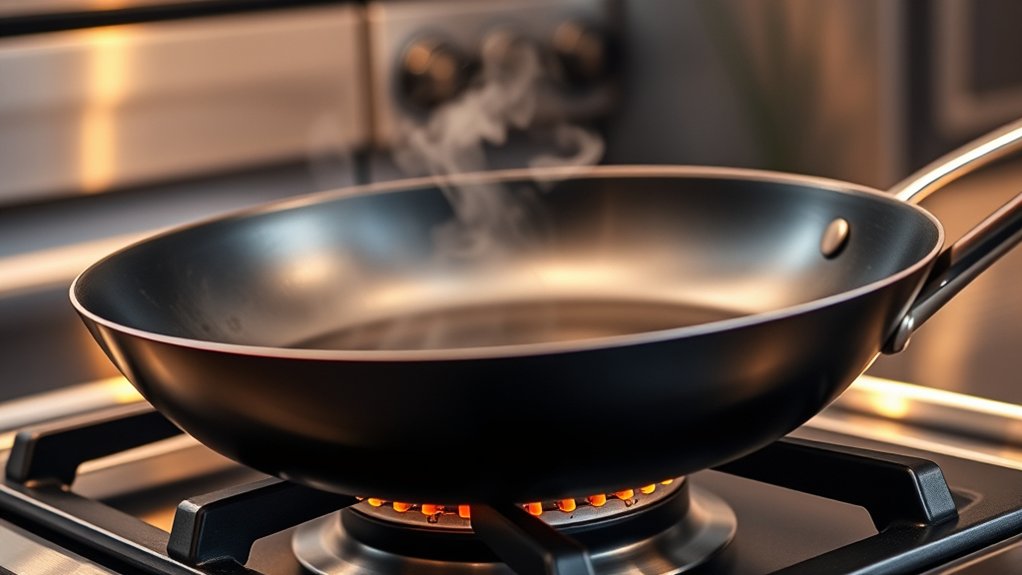
You want frying pans with low specific heat capacity because they heat up quickly, saving you time and energy in the kitchen. This property allows for precise temperature control, which is essential for preventing overcooking or burning your food.
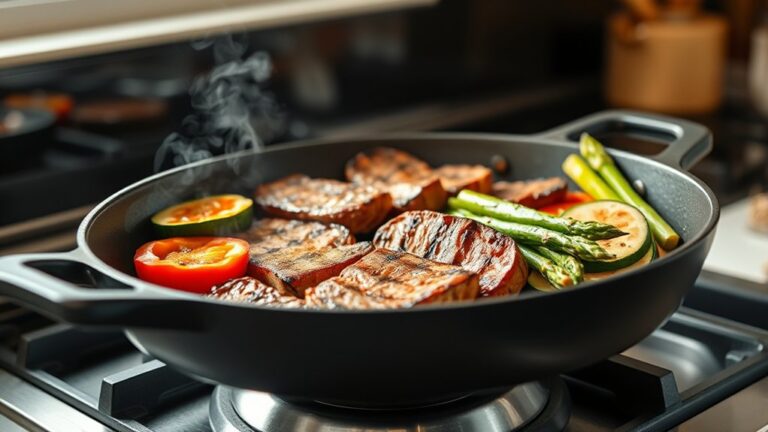
Low specific heat capacity pans respond rapidly to heat adjustments, making them ideal for quick searing or browning tasks.
However, these pans may not maintain steady heat for delicate dishes that require consistent temperatures. As a result, you’ll need to monitor your cooking more closely to achieve the best results.
Understanding how material composition and heat conductivity affect frying pans can help you select the right one for your cooking style.
Keep exploring these factors to improve your cooking performance and enjoy better control over your meals.
Key Takeaways
- Frying pans with low specific heat capacity heat up and cool down quickly, allowing fast temperature adjustments during cooking. Low heat capacity materials reduce energy consumption by reaching desired temperatures with less heat input. These pans enhance cooking efficiency, ideal for quick frying, searing, and browning tasks.
- They require careful temperature control to avoid overheating or uneven cooking due to rapid temperature changes. Low specific heat capacity pans are less suitable for recipes needing stable, prolonged low heat.
What Is Specific Heat Capacity and Why It Matters for Frying Pans
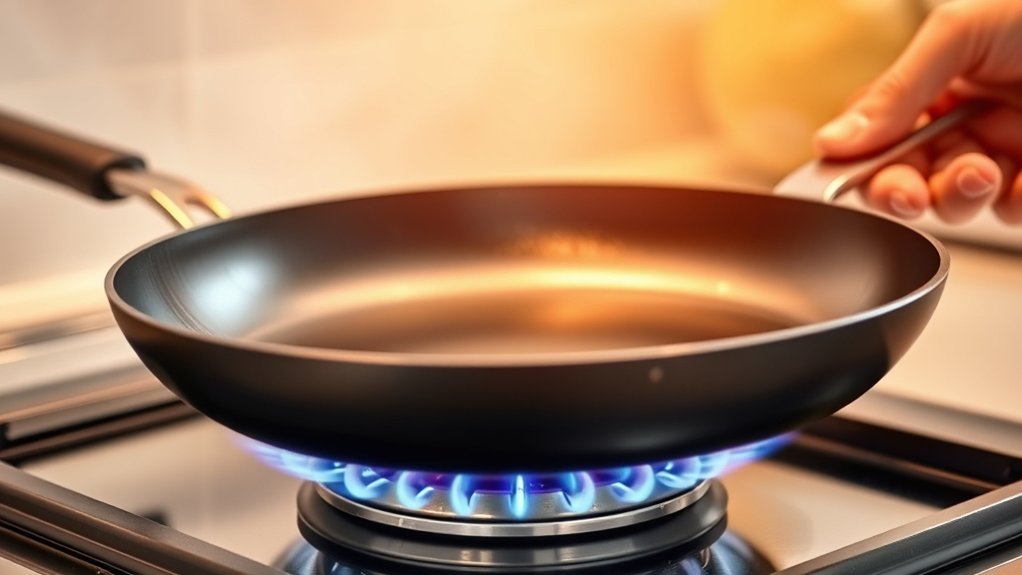
Although specific heat capacity might sound like a scientific term, it directly affects how your frying pan performs. Specific heat capacity is the amount of heat required to raise the temperature of a material by one degree Celsius. When you heat your frying pan, this property determines how quickly it warms up and how well it retains heat.
If your pan has a high specific heat capacity, it takes longer to heat but holds temperature steadily, giving you consistent cooking results. Conversely, a pan with a low specific heat capacity heats quickly but may cool down faster when you add food. Understanding this helps you choose the right pan for your cooking style and guarantees you get the heat control you need for perfect dishes every time.
How Low Heat Capacity Speeds Up Frying Pans
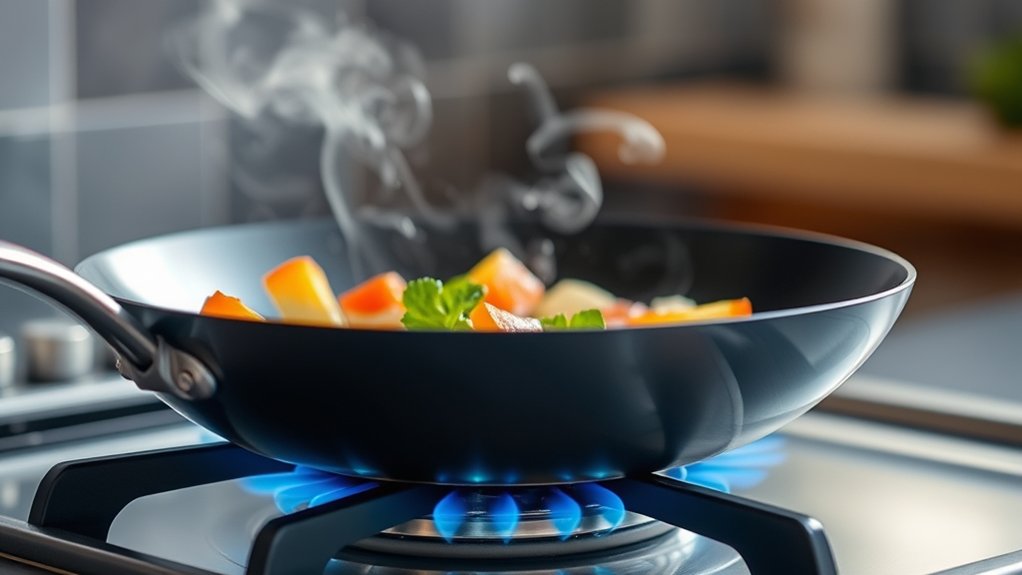
When you choose a frying pan with a low specific heat capacity, you’ll notice it heats up much faster than pans made from materials with higher heat capacities. This happens because such pans require less energy to raise their temperature, so your stove’s heat quickly transfers to the pan’s surface.
As a result, you spend less time waiting for the pan to reach cooking temperature, which saves energy and gets your meal started sooner. Additionally, low heat capacity pans respond more rapidly to changes in heat, giving you better control while cooking.
You can adjust the temperature quickly without the pan retaining too much heat, reducing the risk of overcooking or burning your food. Ultimately, a low specific heat capacity makes cooking more efficient and precise.
Why Frying Pans’ Material Shapes Heat Distribution
Because the material of a frying pan directly influences how heat moves across its surface, it plays a crucial role in cooking performance. When you cook, you want heat to spread evenly, so your food cooks uniformly without hot spots. Materials like aluminum and copper conduct heat quickly and distribute it smoothly, letting you control cooking temperature precisely.
On the other hand, pans made from materials with uneven heat distribution can cause some areas to burn while others remain undercooked. You’ll notice how the pan’s thickness and structure also affect heat flow—thicker bases often help in retaining and distributing heat more steadily. Understanding how different materials shape heat distribution helps you pick the right pan for consistent, efficient cooking.
Frying Pan Materials With Low Heat Capacity
How quickly your frying pan heats up and cools down depends largely on its heat capacity. Materials with low specific heat capacity heat faster, saving you time and energy. For example, aluminum and copper are popular choices because they respond quickly to temperature changes.
These metals let you control cooking temperature precisely. In contrast, pans made from cast iron or stainless steel have higher heat capacities, meaning they take longer to heat but retain heat longer.
| Material | Specific Heat Capacity (J/g°C) |
|---|---|
| Aluminum | 0.90 |
| Copper | 0.39 |
| Cast Iron | 0.46 |
| Stainless Steel | 0.50 |
| Carbon Steel | 0.49 |
Choosing materials with low heat capacity helps you cook efficiently and adapt quickly to heat adjustments.
Is Low Heat Capacity Always Better for Cooking?
Materials with low heat capacity like aluminum and copper heat up quickly, making them great for fast cooking and quick temperature changes. But is low heat capacity always better for cooking? Not necessarily.
While you benefit from rapid heating, these materials can cool down just as fast, which means maintaining a steady temperature can be challenging. If you’re cooking delicate dishes requiring consistent heat, a pan with a slightly higher heat capacity might suit you better.
It absorbs more energy and holds heat longer, preventing sudden temperature drops when you add food. So, while low heat capacity pans excel at quick tasks, they’re not always the best choice for recipes needing stable, even heat throughout the cooking process. Consider your cooking style before deciding.
Thermal Conductivity vs. Heat Capacity: What Matters More?
When you choose a frying pan, understanding the difference between thermal conductivity and heat capacity can help you pick the right one for your cooking needs. Thermal conductivity determines how quickly heat spreads across the pan’s surface, while heat capacity affects how much energy the pan stores before its temperature changes. Both matter, but thermal conductivity often plays a bigger role in cooking performance.
Consider these points:
- High thermal conductivity means even heating, preventing hot spots.
- Low heat capacity allows the pan to heat up and cool down quickly.
- High heat capacity can stabilize temperature during cooking.
- Fast heat transfer helps with searing and browning.
- Heat capacity influences how long the pan retains heat after cooking.
Balancing these properties ensures better control and results in your kitchen.
How to Pick Frying Pan Material for Your Cooking
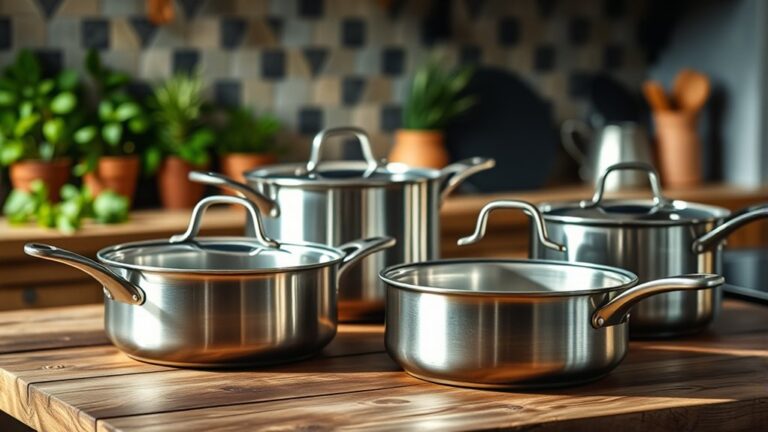
Choosing the right frying pan means looking beyond just heat capacity and thermal conductivity. You want a material that suits your cooking style and maintenance preferences. Stainless steel is durable and non-reactive, perfect if you like searing or deglazing.
Cast iron excels at retaining heat, great for slow cooking and high-heat searing, but it requires seasoning and care. Aluminum heats quickly and evenly, ideal for everyday use, but it can warp or react with acidic foods unless coated. Non-stick pans offer easy cleanup and require less oil, though they don’t handle high heat well.
Consider your cooking habits, how much effort you want to put into upkeep, and the type of dishes you prepare most often to pick the material that fits your kitchen best.
Controlling Temperature When Frying With Different Pans
Although different frying pans heat up in unique ways, you can control cooking temperatures effectively by understanding their specific heat capacities and heat retention properties. Pans with low specific heat heat quickly but cool down fast, while those with high specific heat offer steady heat but take longer to adjust.
Understanding your pan’s heat capacity helps control cooking temperatures for better results.
To master temperature control, consider these tips:
- Preheat your pan to the right temperature before adding food.
- Adjust heat gradually; avoid sudden changes to prevent sticking or burning.
- Use a pan with thicker material for even heat distribution.
- Monitor cooking closely, especially with thin pans that respond quickly.
- Let your pan cool a bit when cooking delicate foods to avoid overheating.
Tips to Keep Your Frying Pan Heating Efficient
To keep your frying pan heating efficiently, you’ll want to maintain clean surfaces and avoid overheating. Residue buildup or burnt food can block heat transfer, making your pan less effective. Also, don’t leave an empty pan on high heat; that wastes energy and damages the pan.
Use medium heat settings for most cooking to maintain even temperature distribution. Preheat your pan briefly before adding oil or food to ensure consistent cooking.
| Tip | Benefit |
|---|---|
| Clean pan after use | Improves heat conduction |
| Avoid empty heating | Prevents pan damage |
| Use medium heat | Ensures even cooking |
| Preheat before cooking | Promotes temperature consistency |
| Use flat-bottom pans | Maximizes surface contact |
Frequently Asked Questions
Can a Frying Pan’s Handle Material Affect Heat Retention?
Yes, a frying pan’s handle material affects heat retention. You’ll find materials like silicone or wood stay cooler, letting you hold the pan comfortably, while metal handles can get hot quickly, making them harder to grip safely.
How Does Pan Thickness Impact Cooking Performance?
Thickness in a pan is the heart of your cooking; thicker pans heat evenly and hold warmth longer, preventing hot spots. You’ll cook food more consistently, but they’ll take longer to heat and cool, so patience pays off.
Are Nonstick Coatings Affected by Specific Heat Capacity?
Nonstick coatings aren’t directly affected by specific heat capacity, but you’ll notice uneven heating if the pan’s material has high capacity. So, you should choose pans with balanced heat properties to protect the coating and cook evenly.
Does Pan Color Influence Heat Absorption During Frying?
You might think pan color doesn’t matter, but it does. Darker pans absorb heat faster and cook food more evenly, while lighter pans reflect heat.
Can Low Heat Capacity Pans Affect Food Flavor?
Yes, low heat capacity pans heat up quickly, which can cause uneven cooking and burnt spots, affecting flavor.
You’ll want to monitor heat carefully to avoid ruining your food’s taste and texture.
Conclusion
When choosing a frying pan, low specific heat capacity acts like a quick spark, heating your pan faster and saving you time. But remember, it’s not just about speed—how heat spreads and holds matters too. You’ll want a balance between warmth and control, so your food cooks evenly without burning.
Keep these tips in mind, and you’ll turn your frying pan into a kitchen ally that dances perfectly with your cooking style. Ultimately, frying pans need low specific heat capacity to heat quickly, but the right material ensures even heat distribution and retention. This balance is key for achieving delicious, evenly cooked meals every time.