How to Grill on a Stove Top in 10 Easy Steps
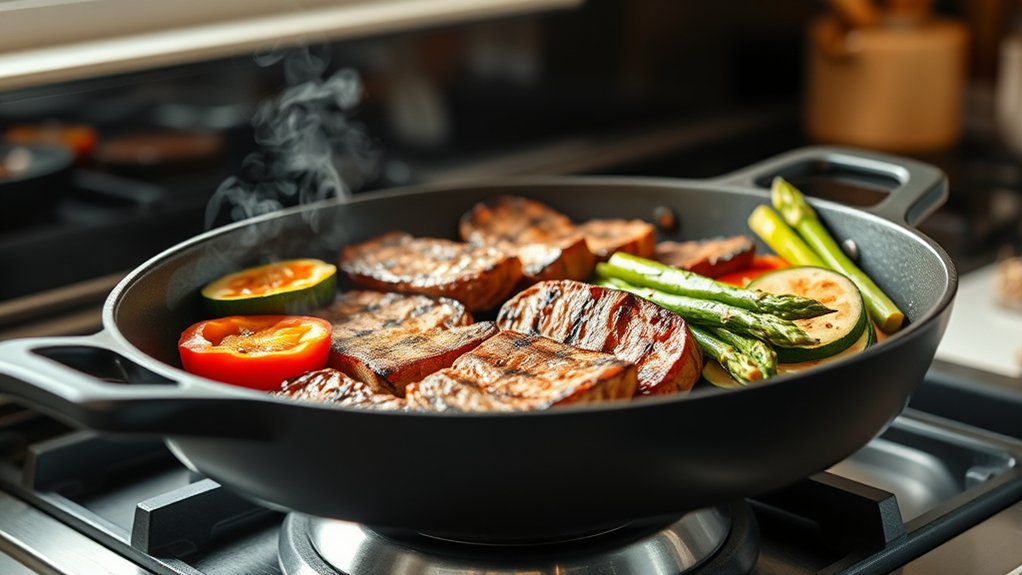
To grill on a stove top effectively, start by selecting a cast iron or heavy-duty stainless steel grill pan with deep ridges. These pans are essential for achieving those classic grill marks and enhancing the flavor of your food.
Preheating the pan over medium-high heat for about 5 minutes ensures it is hot enough to sear your ingredients properly.
Next, add a small amount of high smoke point oil to prevent sticking and promote even cooking. Pat your food dry and season it well before placing it on the pan.
Make sure to avoid overcrowding, which can cause steaming instead of grilling.
Flip the food halfway through cooking and use a thermometer to check for doneness.
Cover the pan to lock in juices and retain moisture.
Clean the pan thoroughly between batches to keep flavors fresh.
Keep going to uncover tips on marinades, indoor smoking, and more.
Key Takeaways
- Preheat a cast iron grill pan on medium-high heat for at least 5 minutes until water droplets sizzle.
- Pat food dry, season well, and toss vegetables with high smoke point oil to prevent sticking and promote browning.
- Place food on the hottest pan area without overcrowding, arrange thicker cuts at an angle for grill marks, and flip halfway.
- Use a thermometer to check doneness and cover food with a lid or foil to retain moisture and control heat.
- Clean pan and tools thoroughly between batches, re-season lightly, and optionally use indoor smoker techniques for smoky flavor.
What Is Stove Top Grilling and Why Try It?
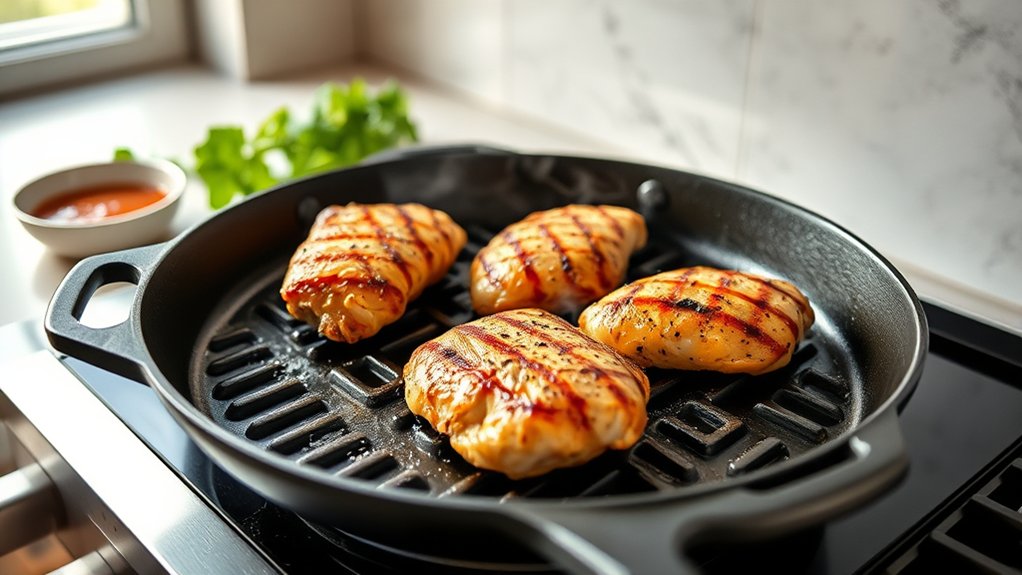
What makes stove top grilling a great alternative to traditional outdoor grilling? It lets you enjoy that smoky, charred flavor without needing a backyard or perfect weather. You can grill right in your kitchen, anytime you want.
Stove top grilling uses a specialized pan or grate placed on your burner, allowing your food to cook quickly over high heat, mimicking an outdoor grill’s effects. You’ll save time since you don’t have to wait for charcoal or propane to heat up. Plus, it’s convenient and mess-free, making it ideal if you live in an apartment or during winter months.
Trying stove top grilling means you don’t miss out on grilled meals just because you can’t go outside. It’s a practical, tasty solution for everyday cooking.
Pick the Best Pan for Stove Top Grilling
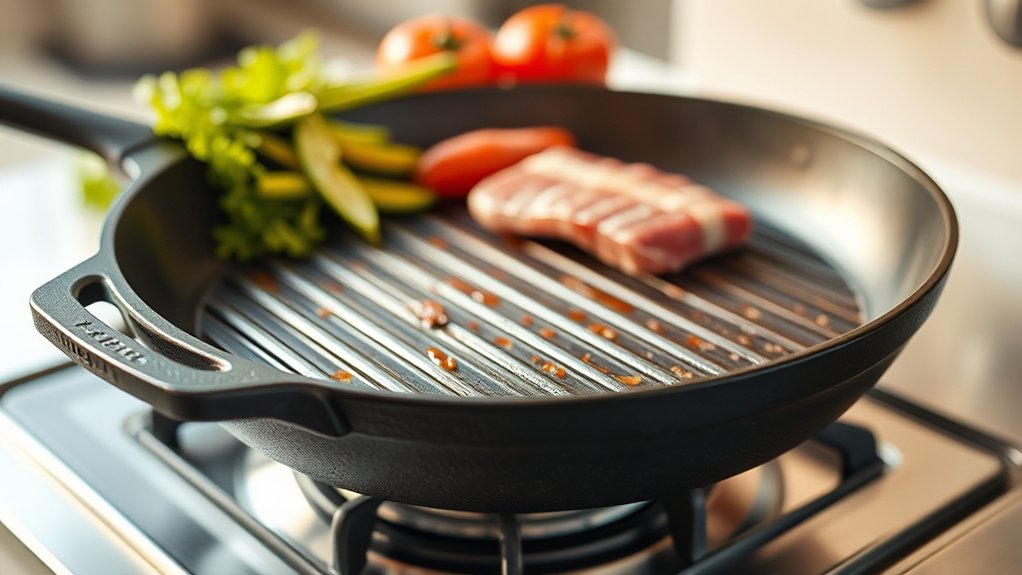
Choosing the right pan can make all the difference in your stove top grilling experience. You’ll want a pan that mimics an outdoor grill’s high heat and grill marks. Cast iron grill pans work best because they retain heat evenly and create those classic sear marks on your food.
Look for deep ridges to allow fat to drain away, preventing sogginess. Avoid pans with non-stick coatings if you want authentic grilling flavor since they can’t withstand very high heat. Also, make sure your pan fits comfortably on your burner for even cooking.
If you don’t have a cast iron pan, a heavy-duty stainless steel grill pan is a good alternative. Picking the right pan lets you enjoy that grilled taste no matter the weather.
Prep Your Food for Even Cooking and Flavor
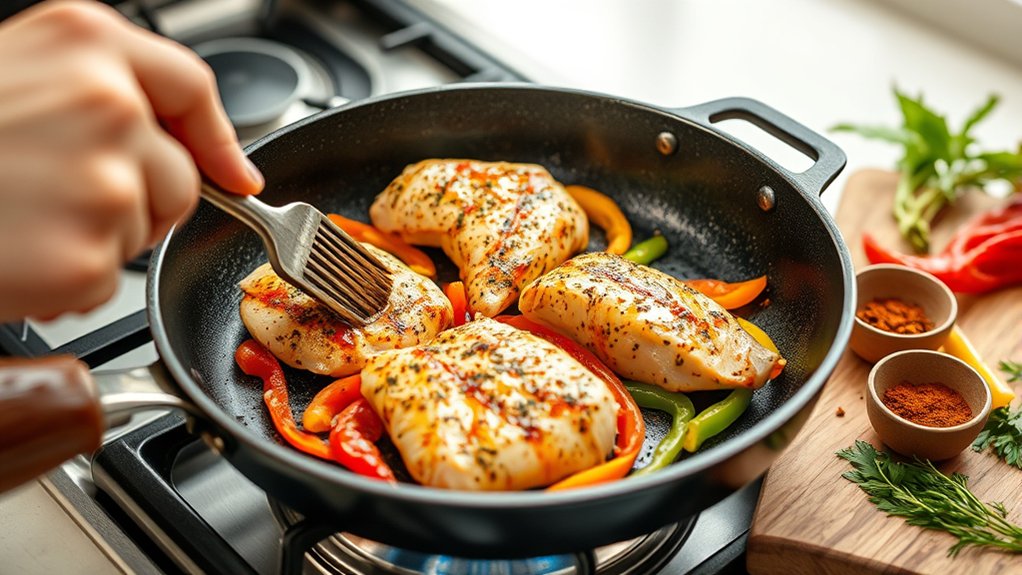
Once you have the right pan ready, preparing your food properly guarantees even cooking and enhances flavor. Start by patting your ingredients dry; moisture creates steam, which prevents that perfect sear. Cut your food into uniform sizes so everything cooks evenly—thicker pieces take longer, so slice accordingly.
For meats, consider bringing them to room temperature before grilling; this helps them cook more consistently. Score thicker cuts lightly to avoid curling. If you’re grilling vegetables, toss them with a little oil to prevent sticking and promote even browning.
Don’t overcrowd the pan; leave space so heat circulates well around each piece. With these steps, you’ll maximize flavor and assure every bite cooks just right.
Choose the Best Oils and Seasonings for Stove Top Grilling
Although stove top grilling lacks the open flame of an outdoor grill, selecting the right oils and seasonings can still create that coveted smoky flavor and perfect crust. Use oils with high smoke points like avocado or grapeseed oil to prevent burning while ensuring a crisp sear.
For seasonings, focus on bold spices and herbs that enhance your food’s natural taste without overpowering it.
| Oil Type | Best For |
|---|---|
| Avocado Oil | High heat grilling |
| Grapeseed Oil | Neutral flavor |
| Olive Oil | Medium heat, flavor |
| Canola Oil | Versatile, affordable |
| Sesame Oil | Adds nutty aroma |
Pair these oils with garlic powder, smoked paprika, black pepper, and fresh herbs for a flavorful stove top grilling experience.
Heat Your Pan Properly Before Grilling
Before you start grilling, make sure you heat your pan thoroughly to achieve that perfect sear. Place your grill pan on medium-high heat and let it warm up for at least 5 minutes. You’ll know it’s ready when a drop of water sizzles and evaporates immediately upon contact.
Heating the pan properly guarantees your food cooks evenly and develops those desirable grill marks. Avoid rushing this step; a cold pan will cause sticking and uneven cooking. If you’re using a cast-iron grill pan, preheating is especially essential since it retains heat well.
Once the pan is hot, add a thin layer of oil with a high smoke point to prevent burning. Now you’re set for flavorful, beautifully seared results every time you grill on your stove.
Arrange Food to Maximize Grill Marks and Char
You’ll want to place your food carefully to get those perfect grill marks. Position items where the pan is hottest to boost the char and flavor. Moving pieces strategically helps you control the sear and avoid overcooking.
Positioning for Optimal Marks
When arranging food on your stovetop grill pan, placing each piece strategically guarantees you get those coveted grill marks and a flavorful char. Start by positioning items where the grill ridges are hottest—usually the center of the pan. Avoid overcrowding; give each piece enough space so heat circulates evenly, which helps create distinct sear lines.
Place thicker cuts at an angle to the ridges, then rotate them 90 degrees halfway through cooking to form crosshatch marks. For thinner items, align them parallel to the ridges for quick, even grilling. Resist moving the food too soon—let it sear properly before flipping.
Enhancing Char Through Placement
Getting your food lined up just right not only creates impressive grill marks but also intensifies the char that adds rich flavor. To maximize this, place your food directly over the hottest parts of the grill pan where the ridges are hottest. Don’t overcrowd the pan; give each piece enough space to allow proper air circulation and even heat exposure.
Rotate items 45 degrees halfway through cooking on each side to create crosshatch marks and deepen the char. Thicker cuts benefit from searing on high heat initially, then moving to a cooler spot to finish cooking without burning. Remember, the key is balancing direct contact with ridges and heat intensity, so your food gets those signature grill marks and a delicious, smoky char every time.
Flip and Monitor Your Food for Juicy Stove Top Grilling
You’ll want to flip your food at just the right time to lock in juices and avoid overcooking. Keep a close eye on the surface for perfect grill marks and use a thermometer to check internal temperature.
This way, you’ll get flavorful, evenly cooked results every time.
Timing Your Flips
Although it’s tempting to flip your food constantly, timing your flips carefully guarantees even cooking and juicy results. Flip too often, and you risk uneven browning; flip too late, and food might stick or burn.
Aim to flip once halfway through the cooking time. This approach helps lock in juices and creates a perfect sear.
Use this quick reference table to time your flips based on food thickness and type:
| Food Type | Thickness | Flip Timing |
|---|---|---|
| Chicken Breast | 1 inch | After 5-6 minutes |
| Steak | 1.5 inches | After 4-5 minutes |
| Vegetables | Medium slices | After 2-3 minutes |
Adjust times slightly based on your stove’s heat and personal preference.
Checking Internal Temperature
How do you guarantee your grilled food reaches the perfect doneness without drying out? The key is checking the internal temperature. Use an instant-read thermometer to get accurate readings quickly.
Insert it into the thickest part of the meat, avoiding bones or fat, for the best result. Different meats have ideal temperature ranges: for example, poultry should hit 165°F, beef steaks are best around 130-140°F for medium-rare to medium, and pork reaches perfection at 145°F.
Checking the temperature lets you avoid overcooking, keeping your food juicy and tender. Make it a habit to monitor regularly during cooking, especially after flipping. This simple step ensures your stove top grilling delivers flavorful, perfectly cooked meals every time.
Cover Your Food to Keep It Juicy and Control Heat
When you cover your food while grilling on a stove top, it traps moisture and heat, ensuring your meal stays juicy and cooks evenly. Using a lid or foil creates a mini-oven effect, controlling temperature and reducing flare-ups. This method is especially helpful for thicker cuts or foods that need thorough cooking without drying out.
| Benefit | Impact |
|---|---|
| Retains Moisture | Keeps food tender and juicy |
| Controls Heat | Prevents burning or uneven cooking |
| Speeds Cooking | Traps heat, reducing cook time |
| Enhances Flavor | Locks in aromas and seasonings |
| Reduces Flare-Ups | Minimizes charring and smoke |
Covering your food is key to mastering stove top grilling, giving you juicy results every time.
Clean Your Pan and Tools Between Batches
You’ll want to clean your pan and tools between batches to keep flavors fresh and avoid any unwanted mixing. Use a scraper or paper towel to remove residue, then wipe or rinse as needed.
Staying on top of cleanliness helps your food taste its best every time.
Importance of Cleanliness
Why should you clean your pan and tools between batches? Keeping everything clean is key to great stove-top grilling. When you don’t, leftover bits can burn, causing smoke and unpleasant flavors.
Plus, grime buildup affects heat distribution, making it harder to cook evenly. Here’s why it matters:
- Flavor Integrity: Old residue can mix with fresh food, altering taste and ruining your meal.
- Cooking Efficiency: A clean surface ensures even heat, so your food grills perfectly every time.
- Safety: Grease buildup increases fire risk and can lead to dangerous flare-ups.
Effective Cleaning Methods
Although cleaning between batches might seem tedious, it’s essential to maintain the quality of your grilled food and prevent flare-ups. After each batch, carefully remove leftover food particles from the pan using a spatula or brush. Wipe the surface with a damp cloth or paper towel to clear grease and residue.
For stubborn bits, sprinkle some coarse salt or baking soda, then scrub gently with a non-abrasive pad. Don’t forget to clean your grilling tools too—rinsing and drying them prevents buildup and keeps them ready for the next round. Taking these quick steps between batches helps your food cook evenly and keeps your pan in great condition.
Making your stove-top grilling experience smoother and more enjoyable.
Preventing Flavor Cross-Contamination
How often do you think about the flavors mingling on your grill pan? If you’re grilling different foods back-to-back, cleaning between batches is key to prevent flavor cross-contamination. Here’s how you can keep tastes distinct and delicious:
- Wipe the Pan: After each batch, use a paper towel or cloth to remove residue and grease while the pan is still warm.
- Clean Tools: Rinse spatulas and tongs thoroughly to avoid transferring flavors, especially between meats and vegetables.
- Re-season if Needed: Lightly oil the pan again after cleaning to maintain its non-stick surface and prevent sticking.
Following these steps ensures your grilled dishes stay true to their unique flavors every time you cook.
Add Flavor With Marinades and Indoor Smoke
When you want to boost the taste of your stove-top grilled dishes, marinades and indoor smoke add layers of rich, complex flavors. Start by marinating your meat, fish, or veggies for at least 30 minutes. Use ingredients like olive oil, vinegar, soy sauce, garlic, and herbs to infuse your food with bold, tangy notes.
Don’t overcrowd the marinade—let each piece soak up the flavors evenly.
For indoor smoke, try using a stovetop smoker or create a DIY version with a covered pan and wood chips designed for indoor use. Heat the chips until they smolder, then trap the smoke to impart that authentic grilled taste. This method recreates outdoor grilling aromas and makes your meal taste smoky and delicious without stepping outside.
Frequently Asked Questions
Can I Stove Top Grill Vegetables and Fruits?
Yes, you can stove top grill vegetables and fruits. Just slice them evenly, brush with oil, and grill over medium heat.
You’ll get a delicious smoky flavor and perfect char without needing an outdoor grill.
How Do I Prevent Smoke Alarms From Going Off?
Smoke alarms are like vigilant sentinels; you can prevent them from going off by turning on your exhaust fan, keeping windows open, using a grill pan with a lid, and maintaining moderate heat to reduce smoke buildup.
What Are the Best Safety Tips for Stove Top Grilling?
You should keep a fire extinguisher nearby, never leave the stove unattended, use proper ventilation.
Avoid overheating oil, wear short sleeves, and keep flammable items away.
Always stay alert to prevent accidents while grilling.
Can I Use Stove Top Grilling for Frozen Foods?
You wouldn’t jump into a cold pool expecting warmth; similarly, don’t grill frozen foods straight on the stove. Thaw them first to guarantee even cooking, avoiding a burnt outside and icy inside on your stove top grill.
How Do I Store Leftovers From Stove Top Grilled Meals?
You should let leftovers cool, then store them in airtight containers. Keep them refrigerated within two hours and eat within 3-4 days.
If you want to keep them longer, freeze them in suitable containers.
Conclusion
So, you’ve mastered stove top grilling without a fancy outdoor grill—who knew the secret to smoky, juicy perfection was right on your stovetop all along? You might’ve been avoiding it, thinking it’s a sad substitute, but now you’re flipping, seasoning, and covering like a pro.
Next thing you know, your kitchen smells like a barbecue joint, and friends are begging for your “grilled” secrets. Looks like stove top grilling isn’t so second best after all!
With these 10 easy steps, stove top grilling brings the flavor and satisfaction of outdoor grilling right to your kitchen. Now, you’re ready to enjoy delicious, perfectly grilled meals anytime, no matter the weather.