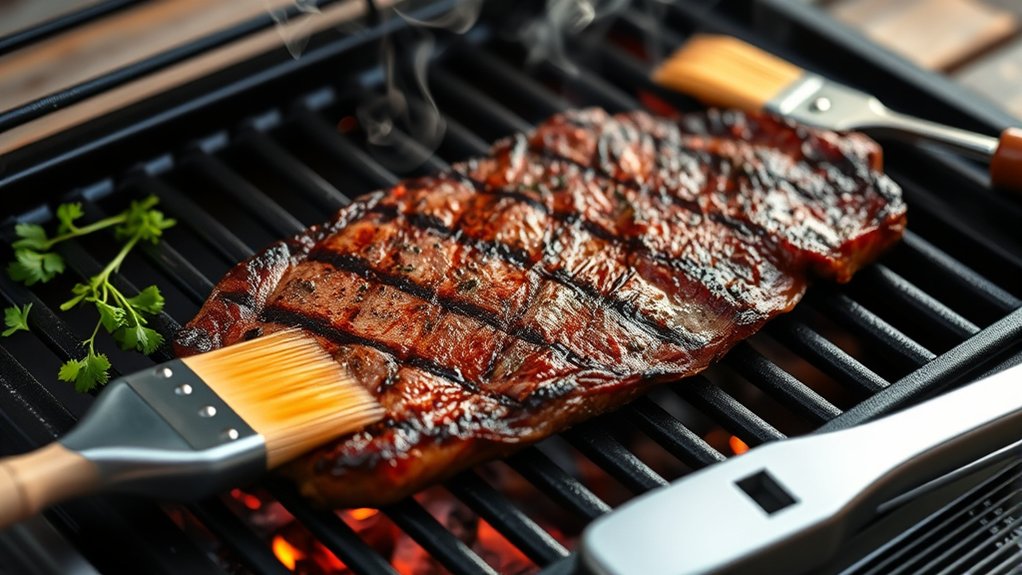
How to Grill Thin Steak in 10 Essential Steps
Choose a tender cut like flank or skirt steak for the best grilling results. These thin steaks cook quickly and are perfect for a flavorful meal. You can either use a marinade to boost juiciness or a dry rub to enhance the flavor.
Preheat your grill to 450-500°F and oil the grates to prevent sticking. Grill the thin steak quickly, flipping every 2-3 minutes to ensure even cooking. Use a meat thermometer to check doneness for perfect results.
Let the steak rest for a few minutes before slicing against the grain. This helps retain the juices and tenderness. Serve with simple sides and sauces to complement the rich flavors.
Keep following for a detailed guide on mastering perfect thin steaks every time you grill.
Key Takeaways
- Preheat the grill to 450-500°F for at least 10-15 minutes to ensure even, high heat for quick searing.
- Lightly oil hot grill grates with high smoke point oil to prevent sticking without causing flare-ups.
- Place the thin steak on the grill and sear undisturbed for 2-3 minutes per side for crust formation.
- Flip the steak frequently every 2-3 minutes, monitoring internal temperature to avoid overcooking.
- Rest the steak for 3-5 minutes before slicing thinly against the grain for maximum tenderness.
Choose the Best Thin Steak Cut for Tenderness and Flavor
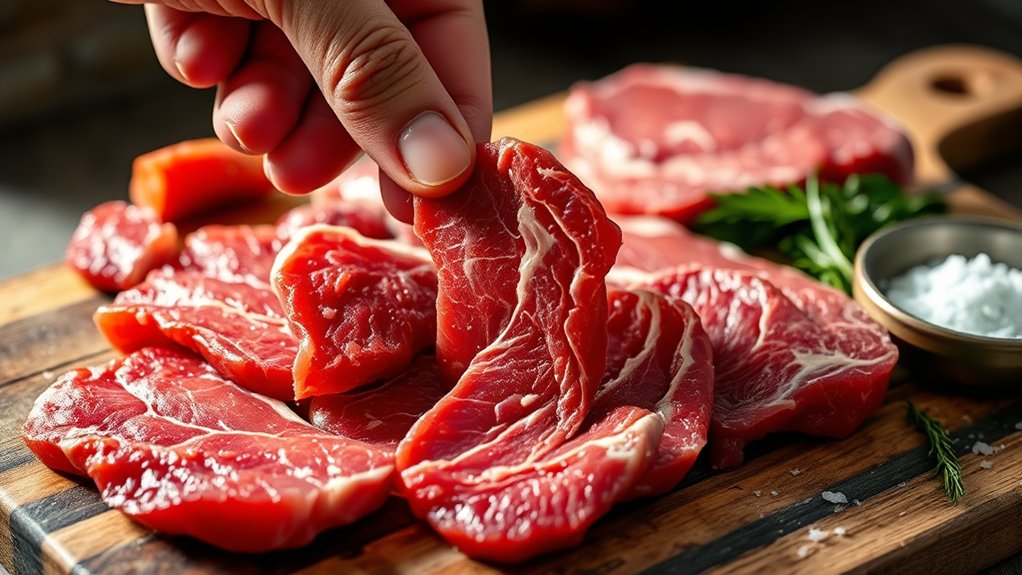
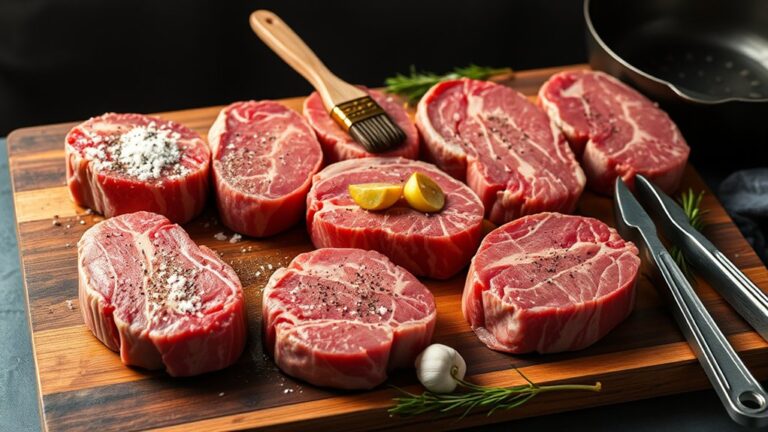
When choosing a thin steak, you want cuts that stay tender and flavorful even with quick grilling. Opt for cuts like flank, skirt, or sirloin, which naturally have good flavor and cook fast without becoming tough. These steaks have enough marbling or muscle structure that keeps them juicy despite their thinness.
Avoid leaner cuts like round or chuck, as they can dry out quickly. Look for steaks with a bright red color and some fat streaks, which indicate freshness and taste. Remember, the right cut sets the foundation for a great grilled steak, so picking wisely saves you from a chewy, disappointing meal.
With the right thin cut, you’ll enjoy a tender, flavorful bite every time.
Prep Your Steak: When to Use Marinades vs. Dry Rubs

You’ll want to use marinades when you’re looking to tenderize and add moisture to your thin steak. Dry rubs are perfect for boosting flavor with a quick, intense seasoning that forms a tasty crust.
Knowing when to choose each will help you get the best taste and texture from your grill.
Benefits of Marinades
Why choose a marinade over a dry rub for your thin steak? Marinades add moisture and infuse flavor deeply, which is especially helpful for thinner cuts that cook quickly and can dry out. When you soak your steak in a marinade, the acidic ingredients like vinegar or citrus break down muscle fibers, making the meat more tender.
Plus, marinades often contain herbs, spices, and oils that boost flavor complexity beyond what a dry rub can deliver. Using a marinade also helps you control the final taste profile, whether you want something tangy, sweet, or savory.
When to Use Rubs
Marinades work wonders for thin steaks that benefit from added moisture and tenderness, but dry rubs have their own strengths that can elevate your grilling game. Use rubs when you want a quick prep that adds bold texture and flavor without waiting hours. Since rubs sit on the surface, they form a crust when grilled, which enhances the steak’s sear and lock in juices.
Choose dry rubs if you prefer a straightforward seasoning approach or if your steak is already tender and doesn’t need extra moisture. Rubs also work best when you’re short on time because you can apply them just before grilling. Remember, rubs highlight the natural meat flavor while adding a punch of seasoning, making them perfect for thin cuts that cook fast.
Flavor Impact Differences
How does the choice between marinades and dry rubs change the flavor of your thin steak? Marinades soak into the meat, adding moisture and infusing it with bright, tangy, or savory notes depending on the ingredients you pick. They tenderize the steak, which is great for lean cuts.
Dry rubs, on the other hand, create a concentrated crust of spices and herbs on the surface, delivering bold, intense flavors and a satisfying texture when grilled. You’ll notice that marinades offer a more subtle, layered taste, while rubs emphasize a strong, immediate punch.
Choose marinades when you want juiciness and complexity; opt for dry rubs if you prefer a smoky, charred exterior with straightforward seasoning. Both methods enhance your steak but in distinctly different ways.
Heat Your Grill Hot for Thin Steaks
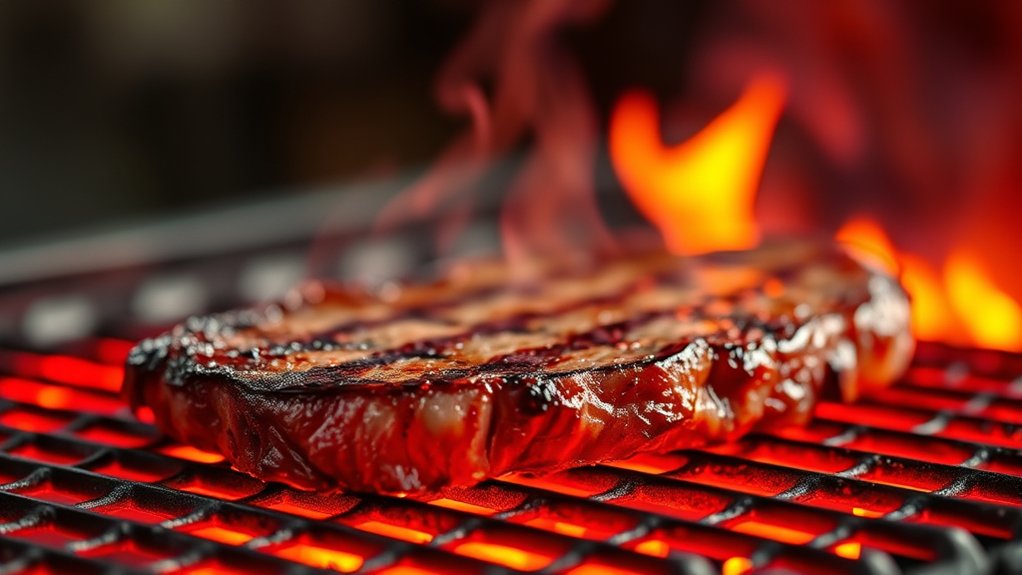
You’ll want to heat your grill to a high temperature, around 450-500°F, to get the best sear on thin steaks. Preheat the grill for at least 10-15 minutes to make sure it’s evenly hot.
High heat is key to cooking the steak quickly without drying it out.
Optimal Temperature Range
Because thin steaks cook quickly, you need to heat your grill to a high temperature to sear the meat properly. Aim for an ideal temperature range of 450°F to 550°F (232°C to 288°C). This intense heat locks in juices and creates a flavorful crust without overcooking the inside.
Here’s why this temperature range matters:
- Instant Sear: It caramelizes the surface fast, giving you that mouthwatering char.
- Juice Retention: Quick cooking at high heat keeps the steak tender and juicy.
- Time Efficiency: You’ll finish grilling in minutes, perfect for a quick meal.
Stick to this temperature zone, and your thin steak will come off the grill bursting with flavor and perfect texture every time.
Preheating Duration Tips
Although it might be tempting to start grilling immediately, letting your grill preheat for at least 15 minutes guarantees it reaches the ideal high temperature needed for thin steaks. This assures even cooking and a nicely seared crust. Using a consistent preheating time also helps you avoid flare-ups and sticking.
Here’s a quick guide to preheating duration based on grill type:
| Grill Type | Preheat Time | Tip |
|---|---|---|
| Gas Grill | 15 minutes | Keep lid closed |
| Charcoal Grill | 20 minutes | Wait for coals to gray |
| Electric Grill | 10 minutes | Use medium-high heat |
Stick to these timings, and your thin steaks will cook perfectly every time.
Importance Of High Heat
Once your grill has reached the right temperature, heating it to a high level becomes key for cooking thin steaks properly. High heat guarantees a quick sear, locking in juices and creating that irresistible crust you crave. Without it, your steak may turn out dry and overcooked.
Here’s why you want your grill blazing hot:
- Speedy Cooking: Thin steaks cook fast; high heat prevents them from drying out.
- Flavor Boost: The intense heat caramelizes the surface, adding rich, smoky flavors.
- Perfect Texture: It creates a crispy exterior while keeping the inside tender and juicy.
Trust the heat—it’s your secret weapon for turning thin steaks into mouthwatering, restaurant-quality bites every time.
Oil the Grill to Prevent Thin Steak From Sticking
To keep your thin steak from sticking, you’ll want to oil the grill grates right before cooking. First, heat the grill to high, then use a pair of tongs to hold a paper towel dipped in high smoke point oil, like canola or avocado oil. Rub the oiled towel over the hot grates carefully to coat them evenly.
This creates a slick surface that helps prevent the steak from tearing when you flip it. Avoid applying oil directly to the steak, as this can cause flare-ups and uneven cooking. Properly oiled grates not only protect the delicate meat but also promote those appealing grill marks.
Taking this simple step ensures your thin steak cooks smoothly without sticking or falling apart.
Grill Thin Steaks Quickly for Even Cooking
To grill thin steaks evenly, make certain your grill is preheated properly and set to high heat. You’ll want to cook the steaks quickly to lock in juices and avoid overcooking.
Flip them frequently to guarantee both sides cook evenly without burning.
Preheat Grill Properly
Although it might seem simple, preheating your grill properly is essential for cooking thin steaks evenly and quickly. When the grill is hot enough, it sears the steak instantly, locking in juices and flavor. If you skip this step, your steak can stick, cook unevenly, or dry out.
Here’s how to get it right:
- Start early: Turn on your grill 10-15 minutes before cooking to reach the right temperature.
- Check the heat: Hold your hand 5 inches above the grill; you should only be able to keep it there for 2-3 seconds.
- Clean the grates: A clean, hot grate prevents sticking and gives those beautiful grill marks.
Preheat well, and your thin steaks will cook faster and taste better.
Use High Heat
Once your grill is properly preheated, it’s time to crank up the heat. High heat is essential when grilling thin steaks because it cooks the meat quickly, locking in juices and flavor without drying it out. Aim for a temperature around 450-500°F (232-260°C).
This intense heat sears the steak’s surface fast, creating a delicious crust while keeping the inside tender. Since thin steaks cook rapidly, high heat guarantees even cooking before the meat overcooks. Avoid medium or low heat, as it’ll make your steak tough and chewy.
Flip Frequently
When grilling thin steaks, flipping them frequently helps cook the meat evenly and prevents overcooking. Because thin steaks cook so fast, turning them often ensures every side gets direct heat without burning.
You’ll keep the steak juicy and tender by avoiding long exposure on one side.
Here’s why flipping frequently matters:
- Even Cooking – Each flip exposes the steak to consistent heat, preventing raw spots or charred edges.
- Better Texture – Frequent flipping locks in juices, keeping the meat tender and flavorful.
- Control Over Doneness – You can easily judge when the steak hits your preferred doneness without guesswork.
Trust this technique, and you’ll impress with perfectly cooked thin steaks every time.
Flip Your Thin Steak Once for a Perfect Sear
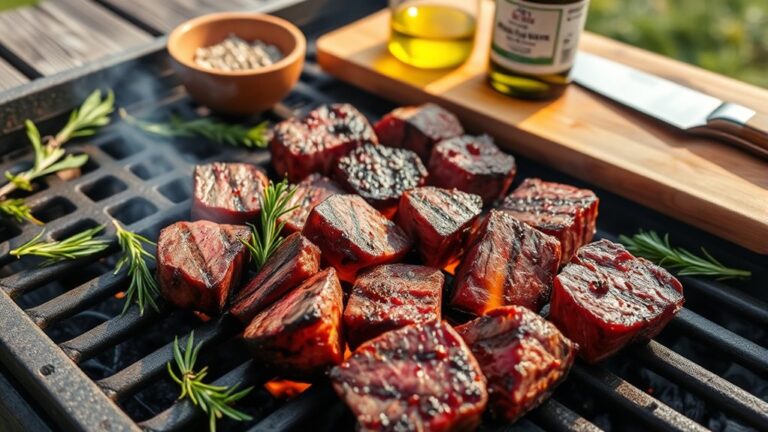
To achieve a perfect sear on your thin steak, you need to flip it only once during grilling. Start by placing the steak on a hot grill and let it cook undisturbed. This allows the surface to develop a rich, caramelized crust that locks in juices.
Flipping too often prevents this crust from forming properly. After a few minutes—usually 2 to 3, depending on thickness—flip the steak gently using tongs. Cook the other side for the same amount of time, ensuring even doneness and a beautiful sear on both sides.
Resist the urge to poke or press the steak, as that squeezes out flavorful juices. By flipping just once, you’ll get a tender, juicy steak with a perfect, mouthwatering crust.
Check Thin Steak Doneness With a Meat Thermometer
After flipping your steak just once for that perfect sear, it’s important to make certain it’s cooked exactly how you like it. A meat thermometer is your best friend here, giving you confidence that every bite will be delicious.
To check doneness:
1. Insert the thermometer into the thickest part of the steak, avoiding bone or fat. 2. Look for these temperatures: 120°F for rare, 130°F for medium-rare, and 140°F for medium. 3. Pull the steak off the grill just before it hits your target temperature—it will continue cooking slightly after removal.
Using a thermometer takes the guesswork out of grilling thin steak and ensures you serve up juicy, perfectly cooked meat every time.
Let Your Thin Steak Rest Before Serving
Although your thin steak looks ready off the grill, you should let it rest for a few minutes before serving. Resting allows the juices to redistribute throughout the meat, making each bite moist and flavorful. If you cut into it immediately, those tasty juices will spill out, leaving your steak dry.
Tent your steak loosely with foil to keep it warm while resting. For thin steaks, 3 to 5 minutes is usually enough time to rest without cooling down too much. Use this time to prepare any sides or sauces, so your steak stays at the perfect temperature when it hits the plate.
Slice Thin Steak Against the Grain for Tenderness
Once your thin steak has rested and the juices have settled, it’s time to slice it properly to maximize tenderness. Cutting against the grain breaks down muscle fibers, making each bite easier to chew and more enjoyable.
Here’s how to do it right:
- Identify the grain: Look for the lines running through the meat; these are the muscle fibers.
- Position your knife: Hold your knife perpendicular to these lines to cut across the fibers.
- Slice thinly and evenly: Use smooth, controlled motions to create thin slices that melt in your mouth.
Serve Thin Steak With Simple Sides and Sauces
To complement your perfectly grilled thin steak, choose simple sides and sauces that enhance its flavor without overwhelming it. Light, fresh sides like a crisp salad or grilled vegetables add balance, while sauces such as chimichurri or a classic garlic butter boost taste without masking the meat’s natural richness.
Keep it straightforward to let your steak shine.
Here’s a quick guide to pairings:
| Side Dishes | Sauces |
|---|---|
| Grilled asparagus | Chimichurri |
| Roasted baby potatoes | Garlic butter |
| Mixed green salad | Balsamic glaze |
These combinations bring out the best in your thin steak, making each bite enjoyable and well-rounded.
Frequently Asked Questions
Can I Grill Thin Steak Indoors on a Stovetop Grill Pan?
Yes, you can grill thin steak indoors using a stovetop grill pan. Just preheat the pan, oil it lightly, and cook the steak quickly on high heat for a flavorful, juicy result.
This method lets you enjoy grilled steak without needing an outdoor grill. It’s convenient and efficient for a quick meal.
Make sure not to overcrowd the pan to allow even cooking. Use tongs to flip the steak gently for the best sear.
How Long Can I Store Leftover Grilled Thin Steak Safely?
You can store leftover grilled thin steak safely in the fridge for 3 to 4 days.
Make sure to keep it in an airtight container or wrap it tightly to maintain freshness and prevent contamination.
What Are the Best Drinks to Pair With Grilled Thin Steak?
You’ll want drinks that make your steak dance like fireworks! Try a bold red wine like Malbec or Cabernet, a smoky bourbon, or even a crisp IPA.
These perfectly complement your grilled thin steak’s flavors.
Can I Use Frozen Thin Steak for Grilling Without Thawing?
You shouldn’t grill frozen thin steak without thawing because it cooks unevenly and stays tough.
Instead, thaw it in the fridge or cold water first to guarantee even cooking and better flavor.
How Do I Clean My Grill After Cooking Thin Steak?
You should clean your grill while it’s still warm by scrubbing the grates with a grill brush. Then, wipe down with a damp cloth to remove residue. This keeps your grill ready and prevents buildup.
Conclusion
Now that you’ve got the hang of grilling thin steak, you’re ready to impress every time. Just remember, practice makes perfect, and with these steps, you’ll avoid any rookie mistakes. Keep your grill hot, watch your timing, and don’t forget to let your steak rest—it’s the secret sauce to juicy, tender bites.
Slice against the grain, and you’ll have a meal that’s worth its weight in gold. Following these essential steps ensures your thin steak is flavorful and cooked to perfection. Happy grilling, and enjoy mastering the art of how to grill thin steak!