Is Granite Cookware Good?
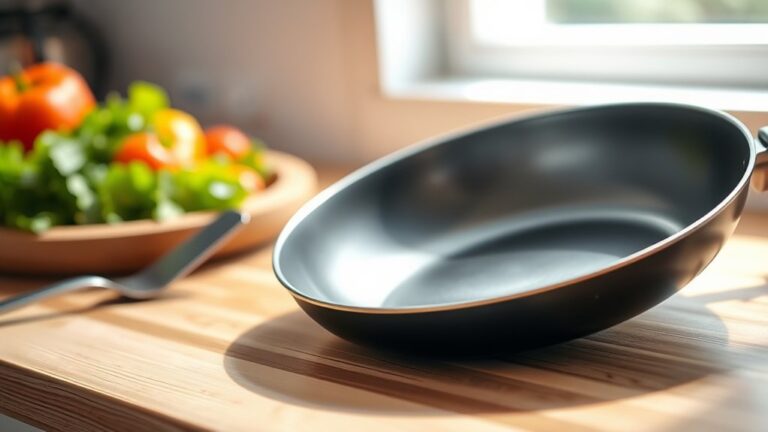
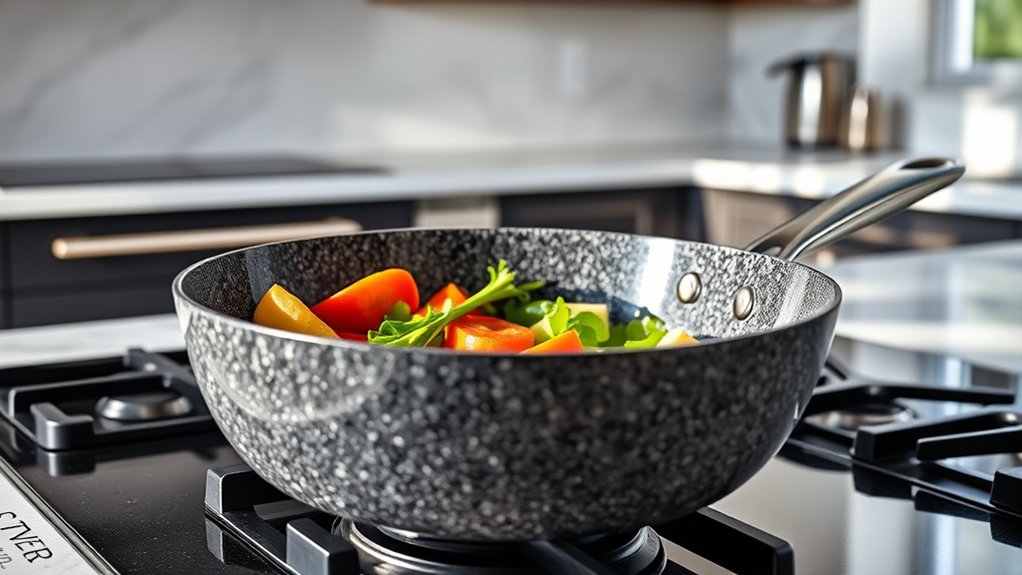
Granite cookware is a popular choice for many home cooks looking for durable and stylish kitchen tools. Although it isn’t made from solid granite, this cookware features a sturdy metal core coated with a durable, non-toxic surface that mimics the look of natural granite.
This combination offers the benefits of both strength and aesthetic appeal.
You’ll find granite cookware lasts longer and resists scratches better than traditional non-stick pans. It handles medium to high heat safely, making it versatile for various cooking methods.
Cleaning is also easy, which adds to its convenience.
Besides being practical, granite cookware adds a sleek, modern look to your kitchen.
If you want cookware that combines durability, safety, and stylish performance, there’s plenty more to explore about its benefits and care.
Key Takeaways
- Granite cookware features a durable, non-toxic granite-infused coating that resists scratches and withstands high heat safely. It offers superior durability and even heat distribution compared to traditional non-stick pans, enhancing cooking performance. The non-stick surface simplifies cooking and cleaning while maintaining food release over time.
- Proper care involves hand washing with gentle sponges and using wooden or silicone utensils to prolong the coating’s life. Though pricier than standard options, granite cookware delivers long-term value through longevity and reliable performance.
What Is Granite Cookware Made Of?
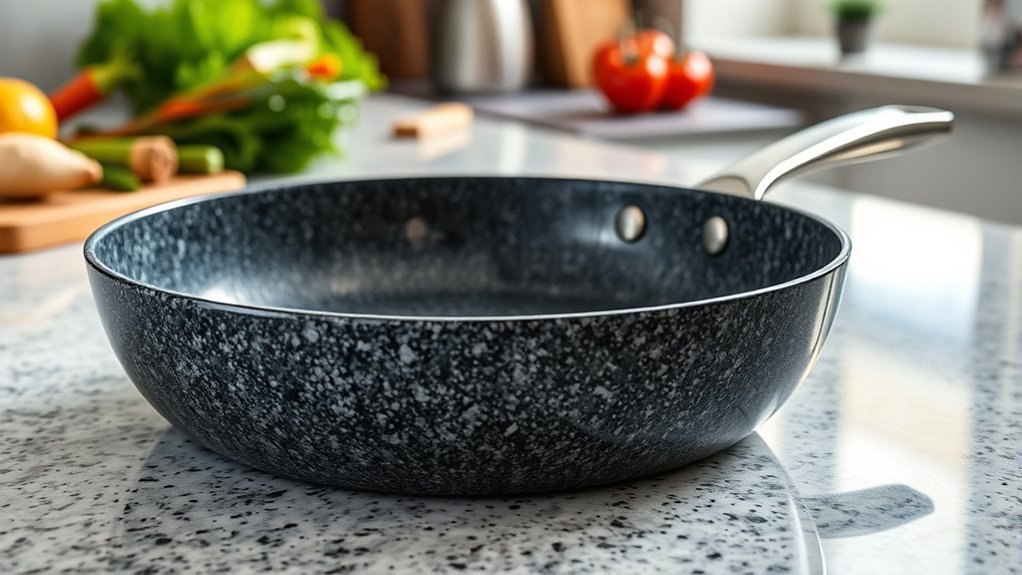
Although the name suggests otherwise, granite cookware isn’t made from solid granite stone. Instead, it features a base metal, usually aluminum or steel, coated with a durable, non-stick layer that mimics granite’s speckled appearance. This coating is typically a blend of ceramic and non-stick materials infused with minerals, giving it a tough, scratch-resistant surface.
When you use granite cookware, you benefit from even heat distribution thanks to the metal core, while the granite-like coating provides easy food release and simple cleanup. You’ll find that the coating is free of harmful chemicals like PFOA and PTFE, making it a safer choice for daily cooking.
How Does Granite Cookware Compare to Other Non-Stick Options?
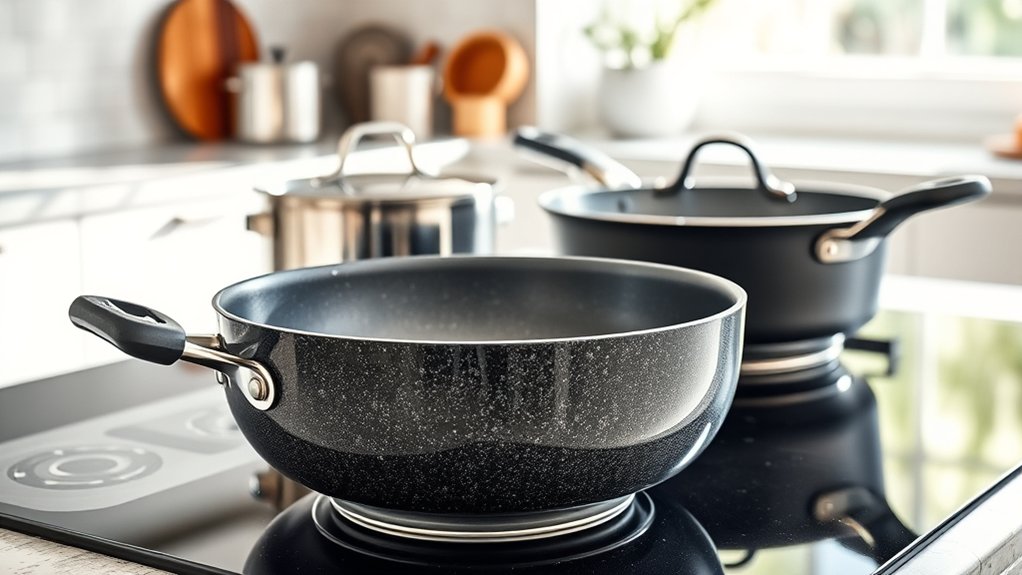
When comparing granite cookware to other non-stick options, you’ll notice it often stands out for its durability and scratch resistance. You’ll also want to take into account how well it distributes heat, which affects cooking performance.
Let’s explore how these factors stack up against alternatives.
Durability and Scratch Resistance
Because granite cookware features a tough mineral-based coating, it often outperforms traditional non-stick pans in durability and scratch resistance. You’ll find that granite coatings resist scratches from metal utensils better than many standard non-stick surfaces, which can easily wear down. This means your pan stays looking new longer, even with regular use.
Additionally, granite cookware tends to withstand higher temperatures without degrading, so it won’t peel or chip as quickly. While no cookware is completely indestructible, granite’s resilience gives you more confidence when cooking with various tools. Compared to Teflon or ceramic options, granite cookware offers a solid balance between non-stick convenience and long-lasting strength, making it a smart choice if durability is a priority for your kitchen.
Heat Distribution Efficiency
Granite cookware’s durability goes hand in hand with its ability to distribute heat evenly across the cooking surface. When you use granite cookware, you’ll notice it heats up quickly and maintains a consistent temperature, reducing hot spots that can burn your food.
Compared to traditional non-stick pans, granite cookware often has a thicker base, which helps spread heat more uniformly. This means your meals cook more evenly, and you don’t have to constantly adjust the heat. While some non-stick options heat fast, they might have uneven heat distribution, leading to patchy cooking.
With granite cookware, you get a reliable, efficient heat transfer that enhances your cooking performance, making it a solid choice if even heat is important to you.
Is Granite Cookware Safe to Use?
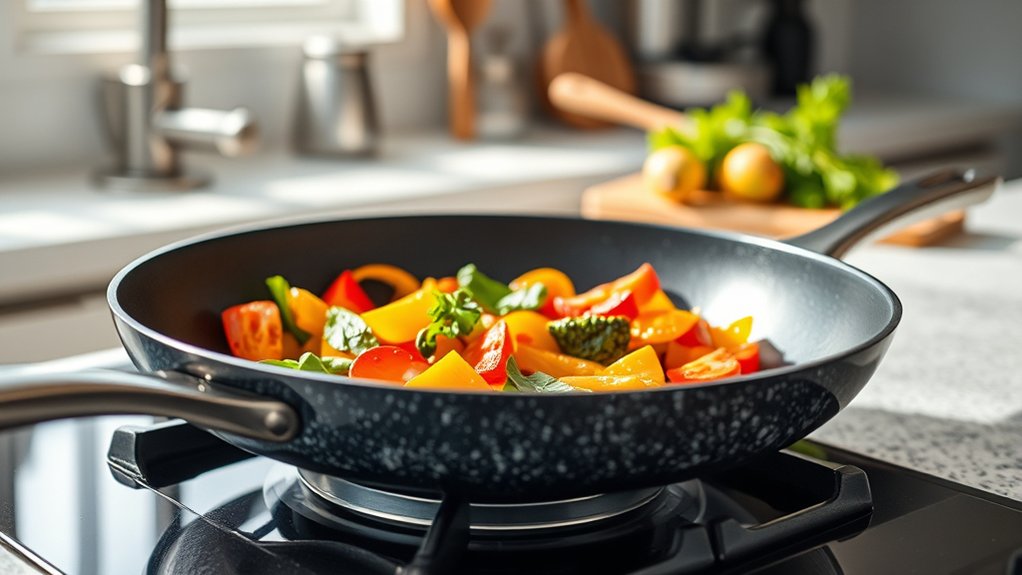
You’ll want to know if granite cookware is safe before making a choice. It’s made from non-toxic materials that can handle high heat without releasing harmful chemicals.
Let’s look at how this affects your cooking safety and overall kitchen experience.
Non-Toxic Material Composition
When choosing cookware, you want to guarantee it won’t release harmful chemicals into your food. Granite cookware typically features a non-stick coating made from natural minerals combined with a sturdy metal base, often aluminum or stainless steel. Unlike traditional non-stick pans that might contain PFOA or PTFE, granite coatings are generally free from these toxic substances.
This means you can cook without worrying about harmful fumes or chemical leaching. The materials used are safe and inert, ensuring your meals stay pure and uncontaminated. However, it’s essential to buy from reputable brands that clearly state their products are free from harmful chemicals.
Doing so helps you avoid low-quality imitations that might compromise your health.
Heat Resistance and Safety
Although some cookware materials can warp or degrade under high heat, granite cookware stands out for its impressive heat resistance. When you cook with granite cookware, you don’t have to worry about it cracking or releasing harmful chemicals due to temperature changes. Its sturdy construction allows it to withstand high temperatures without compromising safety or performance.
Granite cookware often features a non-stick coating enhanced with mineral particles, which adds durability and prevents toxic fumes that some non-stick pans emit when overheated. You can confidently use granite cookware on stovetops and in ovens, knowing it’s designed to handle heat safely. Just avoid sudden extreme temperature shifts, like moving it directly from the freezer to a hot burner, to maintain its longevity and safety.
Benefits of Granite Cookware
Why choose granite cookware for your kitchen? It offers excellent durability and a non-stick surface, making cooking and cleaning easier. You’ll appreciate its resistance to scratches and chips, ensuring your cookware stays looking new longer.
Granite cookware distributes heat evenly, so your meals cook uniformly without hot spots. Plus, its stylish appearance adds a sleek, modern touch to your kitchen. Here’s a quick look at the benefits:
| Benefit | Why It Matters |
|---|---|
| Durability | Resists scratches and chips |
| Non-stick surface | Easier cooking and cleaning |
| Even heat distribution | Cooks food uniformly |
| Aesthetic appeal | Enhances kitchen style |
| Chemical-free | Safe, non-toxic cooking |
Granite cookware combines performance and style, making it a smart choice.
Drawbacks of Granite Cookware
Despite its many advantages, granite cookware does have some downsides you should consider before buying. First, granite-coated pans can be heavier than traditional nonstick options, which might make handling them less comfortable, especially when cooking for extended periods. Also, while the granite surface is generally durable, it’s still susceptible to chipping or cracking if dropped or hit against hard surfaces.
You’ll need to avoid using metal utensils to prevent scratching the coating, which can limit your tool choices. Additionally, some granite cookware may contain synthetic coatings underneath the stone-like finish, so it’s important to check product details if you want a truly natural option.
Finally, granite cookware can be more expensive than other nonstick alternatives, so keep that in mind if you’re on a budget.
Is Granite Cookware Tough Enough for Daily Use?
Handling granite cookware requires some care, especially since it can chip or crack if mishandled. You might wonder if it’s tough enough for daily use. The good news is that granite cookware is designed to be durable, with a strong non-stick coating bonded to a solid base.
However, it’s not indestructible. If you drop it or use metal utensils, you risk damaging the surface. To keep it lasting longer, treat it gently and avoid sudden temperature changes.
You’ll appreciate granite cookware if you:
- Want a sturdy option that resists scratches better than traditional non-stick pans.
- Enjoy cookware that feels solid and well-made in your hands.
- Prefer something stylish yet practical for everyday cooking without constant worry.
Granite Cookware and Different Cooking Techniques
How well does granite cookware adapt to various cooking techniques? You’ll find it performs impressively across the board. Its non-stick surface makes sautéing vegetables or searing meats easy without sticking or burning.
When simmering sauces or soups, granite maintains steady heat, preventing hot spots that could ruin your dish. You can also use it for gentle frying or even baking, as many granite pans are oven-safe up to high temperatures. However, avoid overly high flames to preserve the coating.
While it’s not ideal for rapid stir-frying due to heat retention speed, it excels in slow cooking and medium-heat tasks. Overall, granite cookware offers versatility, allowing you to explore many cooking styles with confidence and consistent results.
Cleaning and Maintaining Granite Cookware
Since granite cookware performs well with various cooking methods, keeping it in top condition will help you enjoy its benefits longer. You’ll want to clean it gently to preserve its non-stick surface and vibrant finish. Avoid harsh abrasives or metal scrubbers that can scratch the coating.
Instead, wash your cookware with warm, soapy water and a soft sponge. After washing, dry it thoroughly to prevent water spots and maintain its shine.
To keep your granite cookware looking and performing its best, remember to:
- Hand wash promptly to avoid stuck-on food stress.
- Use wooden or silicone utensils to protect the surface.
- Store carefully, avoiding stacking that scratches the granite finish.
With these simple steps, you’ll keep your cookware reliable and beautiful for years.
What to Look for When Buying Granite Cookware
When buying granite cookware, you’ll want to check the material composition to guarantee it’s high quality and durable. Pay close attention to the nonstick coating, since that affects how well your food cooks and how easy it is to clean. Choosing the right combination can make a big difference in performance and longevity.
Material Composition Quality
Although granite cookware looks sturdy, you’ll want to pay close attention to its material composition to guarantee durability and safety. Not all granite cookware is created equal, and the blend of materials affects performance. High-quality granite cookware usually combines a strong aluminum or stainless steel core with a granite-infused coating that offers excellent heat distribution and scratch resistance.
When shopping, focus on these key points:
- Look for cookware with a heavy-gauge base to prevent warping and ensure even cooking.
- Check if the granite coating is bonded well to avoid peeling or chipping over time.
- Ascertain the cookware is free from harmful chemicals like PFOA and PTFE for safe, healthy cooking.
Choosing cookware with solid material composition means you’re investing in long-lasting, reliable kitchen tools.
Nonstick Coating Durability
If you want your granite cookware to last, you’ll need to pay close attention to the durability of its nonstick coating. A high-quality coating resists scratches, peeling, and wear, ensuring your pans remain easy to clean and cook with over time.
Look for cookware that uses multiple layers of nonstick material fused with a granite-infused surface for added strength. Avoid products with coatings that rely solely on paint or thin layers, as they tend to degrade quickly.
Also, check if the manufacturer recommends using wooden or silicone utensils to prevent damage. By choosing granite cookware with a robust nonstick coating, you’ll enjoy reliable performance and extend the lifespan of your investment, saving money and frustration in the long run.
Granite Cookware Price Compared to Alternatives
While granite cookware often carries a higher upfront cost than traditional non-stick or stainless steel options, it offers durability and performance that can justify the investment. When you compare prices, granite cookware typically sits in the mid to high price range but lasts longer, reducing the need for replacements. You might find cheaper alternatives tempting, but they often compromise on quality or lifespan.
Granite cookware may cost more upfront but offers lasting durability and superior performance that justifies the price.
Consider these emotional points when weighing the cost:
- Peace of mind knowing your cookware won’t chip or peel easily
- Satisfaction from cooking with a reliable, sturdy pan every day
- Pride in owning elegant cookware that enhances your kitchen’s look
Ultimately, the price reflects not just the cookware but the experience it delivers.
Is Granite Cookware Worth Buying for Your Kitchen?
Considering the price and durability of granite cookware, you might wonder if it truly fits your kitchen needs. Granite cookware offers excellent heat distribution and long-lasting non-stick surfaces, making it a practical choice. However, it may be heavier than alternatives and requires gentle care to maintain its coating.
Here’s a quick comparison to help you decide:
| Feature | Granite Cookware | Stainless Steel | Non-Stick Aluminum |
|---|---|---|---|
| Durability | High | Very High | Moderate |
| Maintenance | Moderate (avoid harsh scrubbing) | Low | Low |
| Price | Mid-range | High | Low to Mid-range |
If you value durability and even cooking, granite cookware is worth buying for your kitchen.
Frequently Asked Questions
Can Granite Cookware Be Used on Induction Cooktops?
Granite cookware usually won’t work on induction cooktops because it lacks a magnetic base. You’ll need cookware with a magnetic layer, like stainless steel or cast iron, to guarantee proper heating on induction surfaces.
Does Granite Cookware Affect the Taste of Food?
Taste buds don’t lie—granite cookware won’t alter your food’s flavor. You’ll enjoy pure, natural tastes because its non-reactive surface keeps ingredients true, letting your meals shine without unwanted metallic or chemical hints.
Are Granite Cookware Sets Dishwasher Safe?
Granite cookware sets are usually dishwasher safe, but you should check the manufacturer’s instructions. To keep the non-stick coating intact and extend your cookware’s life, it’s better if you hand wash them gently with mild detergent.
This helps preserve the quality and performance of your cookware over time. Always follow the care guidelines provided by the manufacturer for best results.
Can Granite Cookware Withstand Oven Temperatures?
You can toss granite cookware in the oven without worrying—it’s like a superhero resisting fiery blasts! Most granite sets handle temperatures up to 450°F, but always double-check your brand’s limits to keep your cookware safe.
How Environmentally Friendly Is Granite Cookware Production?
You’ll find granite cookware production relatively eco-friendly since it uses natural minerals and less harmful chemicals. However, energy consumption during manufacturing still impacts the environment, so it’s not entirely sustainable but better than some alternatives.
Conclusion
Choosing granite cookware is like picking a sturdy, reliable companion for your kitchen adventures. While it may not shine as brightly as some high-end options, its durability and non-stick charm make cooking feel like a breeze. Just like a well-worn path, it requires care to keep going strong.
If you want cookware that balances beauty, safety, and performance without breaking the bank, granite cookware might just be your perfect match. Its robust construction and non-stick properties offer a practical solution for everyday cooking. Overall, granite cookware is a good choice for those seeking durability, ease of use, and affordability.