How to Cook St. Louis Style Ribs on the Grill in 10 Steps
To cook St. Louis style ribs on the grill, start by selecting meaty, fresh ribs that are perfect for grilling. Trim any excess fat and silver skin to ensure tenderness and better flavor. Applying a flavorful dry rub is essential to enhance the taste, so let it absorb into the meat.
Set your grill for indirect heat at 225°F-250°F to slow-cook the ribs low and slow. This method helps develop a delicious crust on the ribs. Once a crust forms, wrap them to lock in moisture and keep the ribs juicy.
After wrapping, glaze the ribs with your favorite barbecue sauce for a sticky, flavorful finish. Be sure to check tenderness before slicing and serving.
Follow these steps closely, and you’ll master every detail for perfect St. Louis style ribs on the grill.
Key Takeaways
- Select meaty, well-trimmed St. Louis style ribs and remove the silver membrane for better seasoning and cooking.
- Apply a balanced dry rub generously on both sides and let ribs sit for at least 30 minutes to absorb flavors.
- Set up a two-zone grill with coals on one side for indirect heat, maintaining 225°F to 250°F for slow cooking.
- Cook ribs over indirect heat, wrap in foil or butcher paper after bark forms, and add moisture like apple juice before continuing.
- Apply barbecue sauce in thin layers near the end, check tenderness with the bend test, rest ribs, then slice and serve.
What Are St. Louis Style Ribs and Why Choose Them?
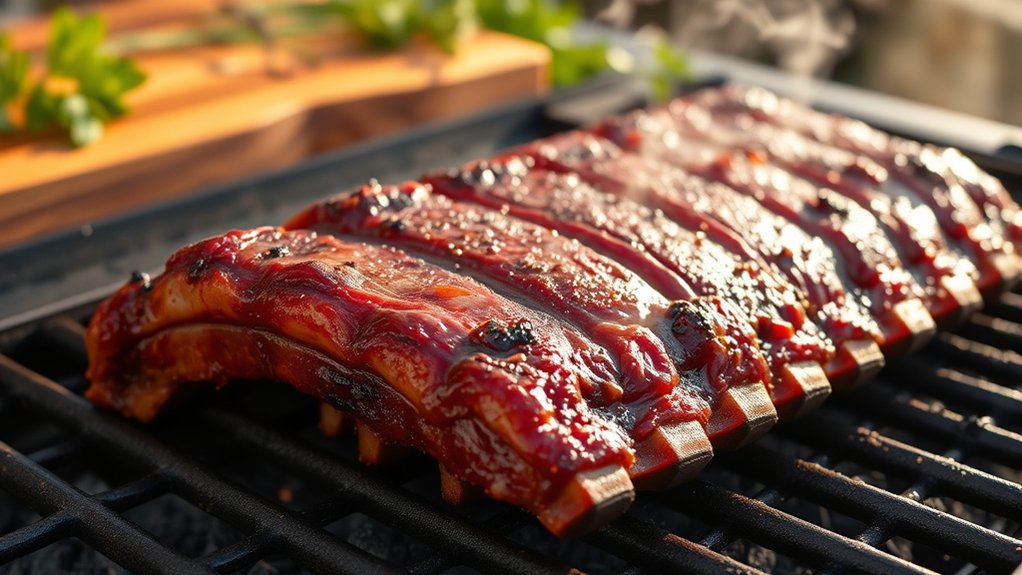
Although you might be familiar with various rib styles, St. Louis style ribs stand out for their unique cut and flavor. These ribs come from the pork belly, trimmed to remove the sternum bone, cartilage, and rib tips, resulting in a neat rectangular rack. You’ll appreciate how this trim creates a consistent thickness, which helps the ribs cook evenly on the grill.
Plus, the exposed meat offers a great canvas for your favorite rubs and sauces. Choosing St. Louis style ribs means you’re opting for meat that’s tender, juicy, and packed with flavor, without excess fat or gristle. They’re perfect if you want a balance between rich taste and easy grilling, making your barbecue experience more enjoyable and rewarding.
Choose the Best St. Louis Style Ribs for Grilling
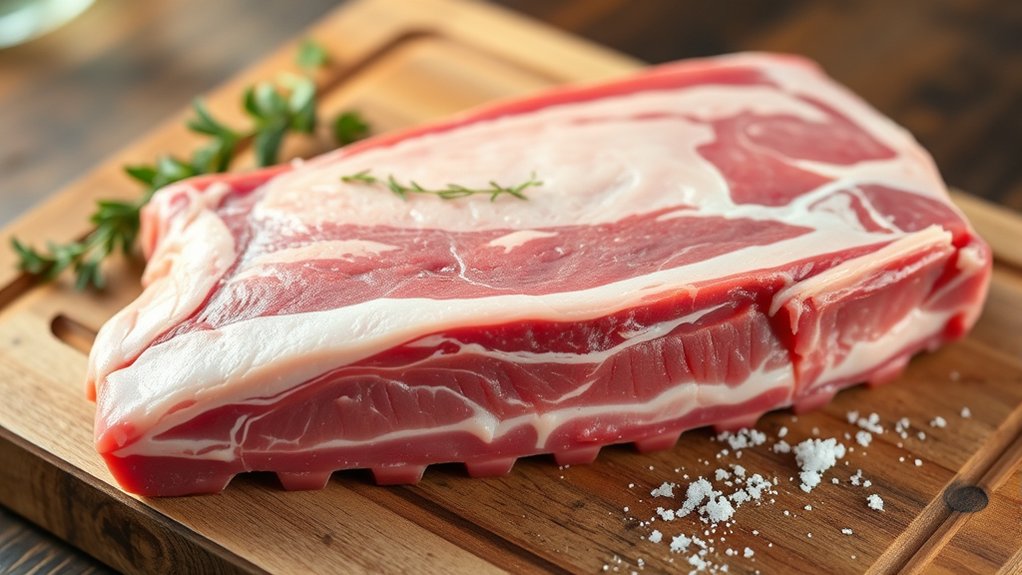
When selecting St. Louis style ribs, look for a rack that’s meaty and well-trimmed. You want ribs with a good amount of meat between and on top of the bones, but avoid racks with excess fat or silver skin. Freshness matters, so choose ribs with a bright, pinkish-red color and a firm texture.
If possible, buy from a trusted butcher who can recommend quality cuts. Avoid ribs that smell off or look dried out. Remember, the best St. Louis style ribs have that perfect balance of meat and fat, which helps keep them juicy and flavorful on the grill.
Picking the right rack sets you up for delicious, tender ribs every time.
Trim and Prep Your St. Louis Style Ribs
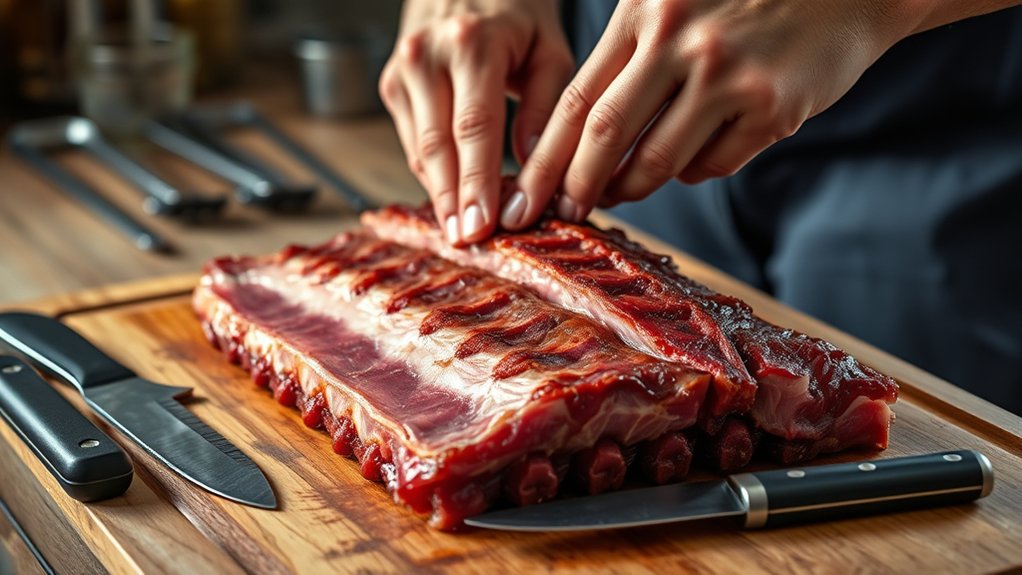
Before you fire up the grill, you’ll want to trim and prep your St. Louis style ribs to guarantee even cooking and great flavor. Start by removing the thin membrane on the back of the ribs—it’s tough and prevents seasonings from soaking in. Use a paper towel to grip and peel it off.
Next, trim any excess fat or loose bits to avoid flare-ups on the grill. Pat the ribs dry with paper towels to help the rub stick better later. Finally, let the ribs sit at room temperature for about 30 minutes before grilling; this helps them cook evenly.
- Peel off the silver membrane from the back.
- Trim excess fat and loose pieces.
- Pat ribs dry with paper towels.
- Let ribs rest at room temperature.
Pick and Apply a Dry Rub That Packs Flavor
Since seasoning is key to mouthwatering St. Louis style ribs, picking the right dry rub is vital. Look for a blend that balances sweet, salty, and smoky flavors—think brown sugar, paprika, garlic powder, onion powder, salt, pepper, and a touch of cayenne for heat. You can buy a pre-made rub or mix your own for a personalized touch.
Before applying, pat your ribs dry with paper towels to help the rub stick better. Then, sprinkle the rub generously over both sides, pressing it in with your fingers to verify it adheres well. Don’t be shy—this layer of seasoning forms the flavorful crust during grilling.
Let the ribs sit for at least 30 minutes to absorb the spices before moving on to cooking.
Set Up Your Grill for Indirect Heat Cooking
To cook St. Louis style ribs evenly, you’ll want to set up your grill for indirect heat. Start by choosing the right fuel and arranging your coals off to one side or around the edges.
Keep a close eye on your grill’s temperature to maintain steady, controlled heat throughout the cooking process.
Choosing The Right Fuel
When you choose the right fuel for grilling St. Louis style ribs, you set the foundation for perfect flavor and temperature control. The fuel you pick affects how evenly your ribs cook and the smoky taste they develop. Here are four excellent options to contemplate:
- Charcoal briquettes – Reliable and long-lasting, they provide steady heat and a classic smoky flavor.
- Natural lump charcoal – Burns hotter and cleaner, giving a more intense smoke and quicker temperature adjustments.
- Wood chunks or chips – Add distinct smoky aromas; hickory or applewood work great with pork.
- Propane or natural gas – Offers convenience and easy heat control but lacks that deep smoky essence.
Choose based on your flavor preference and grilling style to get the best St. Louis ribs.
Arranging Coals For Indirect
Picking the right fuel sets the stage, but arranging your coals correctly guarantees your St. Louis style ribs cook evenly and stay juicy. For indirect grilling, push your hot coals to one side of the grill, creating a two-zone fire. This setup lets you place the ribs on the cooler side, away from direct flames, preventing flare-ups and burning.
If you’re using a charcoal chimney starter, light your coals and dump them on one half of the grill grate. Leave the other half empty or place a drip pan beneath the grate to catch fat drippings. This arrangement provides consistent, controlled heat, perfect for the low and slow cooking St. Louis ribs need without drying them out or charring the surface.
Managing Grill Temperature Control
How do you keep your grill at the perfect temperature for cooking St. Louis style ribs? Managing grill temperature control is key for tender, juicy results. Set your grill for indirect heat by arranging coals to one side, then place the ribs on the cooler side.
Adjust the grill vents to regulate airflow—open vents increase temperature, while closing them lowers it. Use a grill thermometer to monitor heat closely, aiming for a steady 225-250°F. Here’s how to maintain control:
- Arrange coals on one side for indirect heat.
- Position ribs away from direct flames.
- Adjust vents to control oxygen flow.
- Use a reliable thermometer to check temperature.
With these steps, you’ll master consistent heat for perfectly cooked ribs every time.
Maintain the Perfect Temperature for Slow Cooking
To achieve tender, flavorful St. Louis style ribs, you need to maintain the perfect temperature for slow cooking. Aim to keep your grill steady between 225°F and 250°F. Use a reliable grill thermometer to monitor the heat closely, adjusting vents or burners as needed.
Avoid opening the grill lid too often, as this causes temperature fluctuations that can dry out the meat. If you’re using charcoal, add small amounts of briquettes periodically to keep the heat consistent without spikes. For gas grills, tweak the knobs gently to sustain a steady flame.
Consistent temperature control guarantees even cooking and helps break down connective tissues, resulting in juicy, tender ribs every time. Stay patient and attentive—you’ll be rewarded with delicious results.
Slow-Cook Your St. Louis Style Ribs Low and Slow
You’ll want to keep your grill’s temperature between 225°F and 250°F for the best results. Maintaining consistent heat at this low range guarantees your ribs cook evenly and stay tender.
Keep a close eye on the temperature to avoid any sudden spikes or drops.
Ideal Temperature Range
Since St. Louis style ribs need to cook low and slow, controlling the temperature is essential. You’ll want to keep your grill steady between 225°F and 250°F. This range lets the meat break down collagen without drying out, resulting in tender, juicy ribs.
Here’s what to visualize as you set the temperature:
- A glowing charcoal bed radiating steady, gentle heat.
- Wisps of smoke curling lazily around the ribs.
- Thermometer dial hovering just above 225°F.
- The slow sizzle of fat rendering into flavorful drippings.
Stick to this ideal temperature range, and you’ll reveal that perfect balance of tenderness and smoky flavor in every bite.
Maintaining Consistent Heat
Although keeping your grill temperature steady can be challenging, doing so is essential for perfectly cooked St. Louis style ribs. You want to aim for a consistent low heat, around 225-275°F, to slowly break down the connective tissue and render fat without drying out the meat. Use a quality grill thermometer to monitor the temperature frequently.
Adjust your vents or burners in small increments to maintain that ideal range. If you’re using charcoal, arrange the coals for indirect heat and replenish them as needed to avoid temperature spikes. For gas grills, turn burners on and off or move ribs to cooler spots if necessary.
Patience is key—keeping a stable temperature ensures your ribs become tender, juicy, and full of smoky flavor.
Wrap Ribs to Boost Tenderness and Moisture
When the ribs have developed a nice bark on the grill, wrapping them helps lock in moisture and speeds up the tenderizing process. You’ll want to use foil or butcher paper to wrap the ribs tightly, trapping the steam inside. This method softens the meat while keeping the bark intact.
Here’s how to wrap your ribs for the best results:
- Lay out a large sheet of heavy-duty foil or butcher paper.
- Place the ribs meat-side down, then fold the edges to seal tightly.
- Add a splash of apple juice or a small pat of butter inside for extra moisture.
- Return the wrapped ribs to the grill, maintaining steady indirect heat.
Wrapping boosts tenderness and keeps your ribs juicy and flavorful.
Finish Your Ribs With a Flavorful Glaze or Sauce
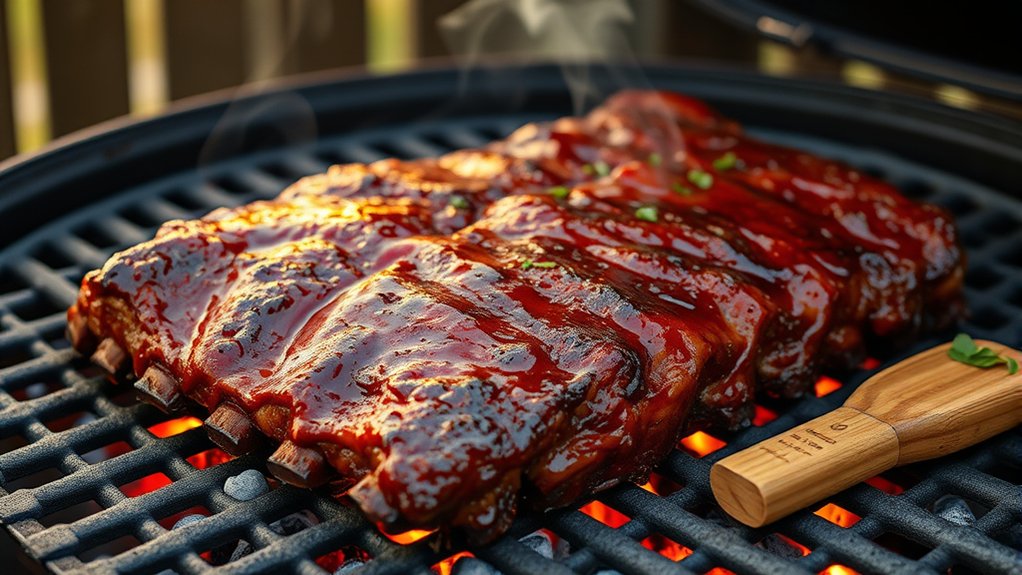
After the ribs have tenderized to perfection, you’ll want to add a flavorful glaze or sauce to enhance their taste and give them a beautiful, glossy finish. Brush your favorite barbecue sauce evenly over the ribs, making sure to cover every nook and cranny. For a sticky, caramelized exterior, place the ribs back on the grill for a few minutes after glazing, turning occasionally to avoid burning.
If you prefer a glaze, mix honey, mustard, or a fruit-based jam with a splash of vinegar or citrus for a tangy kick. Apply this glaze in thin layers, allowing each to set before adding more. This step not only boosts flavor but also creates an irresistible, shiny crust that makes your St. Louis style ribs truly mouthwatering.
Check Doneness and Serve Perfect St. Louis Style Ribs
You’ll want to check your ribs for doneness by looking for tender meat that pulls away easily from the bone. Use a toothpick or thermometer to make sure they’re cooked just right.
Once they’re perfect, slice and arrange them on a platter for a great presentation that’ll impress everyone.
Checking Rib Doneness
Although it can be tempting to rely solely on cooking time, checking the doneness of your St. Louis style ribs assures they’re perfectly tender and juicy. You want ribs that have just the right balance of firmness and pull.
Here’s how to check:
- Bend Test: Pick up the ribs with tongs; they should bend easily without breaking apart.
- Toothpick Test: Slide a toothpick between the bones—it should glide in with slight resistance.
- Meat Pull: The meat should pull back slightly from the ends of the bones.
- Internal Temperature: Use a meat thermometer; aim for about 190°F (88°C) for tender ribs.
Trust these signs over time alone, and your ribs will come out mouth-wateringly perfect every time.
Serving Tips and Presentation
When your ribs pass the doneness tests, it’s time to focus on serving them in a way that highlights their smoky, tender qualities. Start by letting the ribs rest for about 10 minutes to allow juices to redistribute. Slice between the bones to create individual portions, and arrange them neatly on a platter.
Add a sprinkle of fresh herbs like parsley for a pop of color. Serve with classic sides such as coleslaw, baked beans, or grilled corn to complement the rich flavor. Don’t forget to provide plenty of napkins—these ribs are deliciously messy!
Finally, offer your favorite barbecue sauces on the side, so everyone can customize each bite. By presenting your ribs thoughtfully, you’ll elevate the entire dining experience.
Frequently Asked Questions
Can I Use St. Louis Style Ribs in an Oven Instead of a Grill?
Yes, you can absolutely cook St. Louis style ribs in the oven. Just season them well, wrap in foil, bake low and slow around 275°F for 2.5-3 hours, then broil briefly for a crispy finish.
How Long Can Cooked Ribs Be Stored in the Refrigerator?
You can store cooked ribs in the refrigerator for 3 to 4 days. Make sure to keep them in an airtight container or tightly wrapped to maintain freshness and prevent any odors from affecting their taste.
What Side Dishes Pair Best With St. Louis Style Ribs?
You’ll want classic sides like coleslaw, baked beans, and cornbread—they complement ribs perfectly. Curiously, 70% of BBQ enthusiasts say these sides enhance flavor balance. Don’t forget a tangy BBQ sauce to elevate every bite!
Can I Use a Marinade Instead of a Dry Rub?
Yes, you can use a marinade instead of a dry rub. Just make sure to marinate the ribs for at least a few hours or overnight to let the flavors soak in before grilling.
How Do I Reheat Leftover Ribs Without Drying Them Out?
Like waking a sleeping giant, reheat ribs slowly in foil at 250°F with a splash of broth or BBQ sauce. This keeps them juicy, so you won’t end up with dry, sad leftovers.
Conclusion
Now that you’ve mastered the art of grilling St. Louis style ribs, picture tender meat falling off the bone, kissed by smoky whispers and a caramelized glaze that dances on your tongue. Your grill becomes a stage, where each rib is a star, sizzling to perfection.
With patience and love, you’ve crafted a feast that’s more than dinner—it’s a smoky symphony of flavors. The rich, smoky aroma and the perfectly cooked St. Louis style ribs create a mouthwatering experience. This grilling journey turns simple ingredients into a memorable feast.
Enjoy your delicious St. Louis style ribs, a true highlight of outdoor cooking. Whether for family or friends, these ribs bring everyone together. Celebrate the joy of grilling with every tender, flavorful bite.