7 Reasons Why Induction Cooktops Are Worth It
You’ll love how induction cooktops heat your food faster and use energy more efficiently, saving you time and lowering bills. Their advanced technology ensures precise temperature control, making cooking easier and more enjoyable.
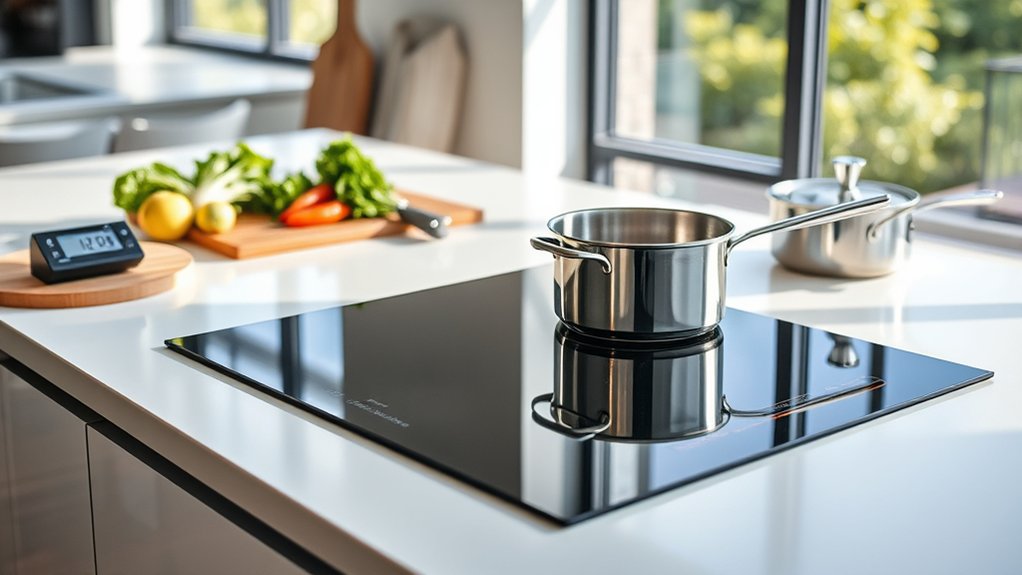
Plus, induction cooktops keep cool surfaces, making cooking safer and cleanup easy since spills don’t scorch.
Compatible cookware magnets guarantee perfect performance, enhancing the overall cooking experience. Their sleek design boosts your kitchen’s style and home value, combining functionality with modern aesthetics.
Additionally, their eco-friendly tech appeals to modern buyers looking for sustainable home upgrades. Keep exploring to uncover even more benefits that make them a smart upgrade.
Key Takeaways
- Induction cooktops heat cookware directly, providing faster cooking and precise temperature control for efficient meal preparation.
- They use magnetic cookware, ensuring safety with cool surfaces and automatic shut-off when no pan is detected.
- Energy-efficient design reduces heat loss, lowers utility bills, and keeps kitchens cooler during cooking.
- Smooth, flat surfaces make cleaning effortless, with spills not burning onto the cooktop.
- Sleek, modern appearance enhances kitchen aesthetics and increases home resale value by appealing to eco-conscious buyers.
What Is an Induction Cooktop and How Does It Work?
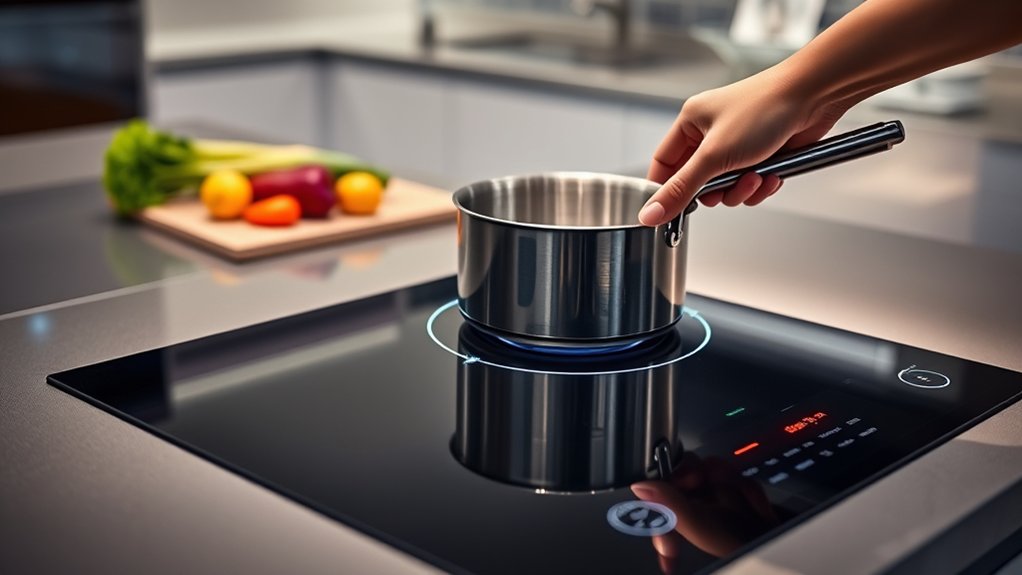
How exactly does an induction cooktop work? It uses electromagnetic fields to heat your cookware directly. When you turn it on, an electric coil beneath the glass surface generates a magnetic field that induces electric currents in the pot or pan.
These currents produce heat right in the cookware’s metal, cooking your food quickly and efficiently. Unlike traditional gas or electric stovetops, the cooktop itself stays relatively cool since the heat comes from the pot, not the burner. This design makes induction cooking faster and safer.
You’ll notice precise temperature control, as the magnetic field adjusts instantly. Plus, because the surface doesn’t get as hot, spills won’t burn onto it, making cleanup easier.
Which Cookware Works Best With Induction Cooktops?
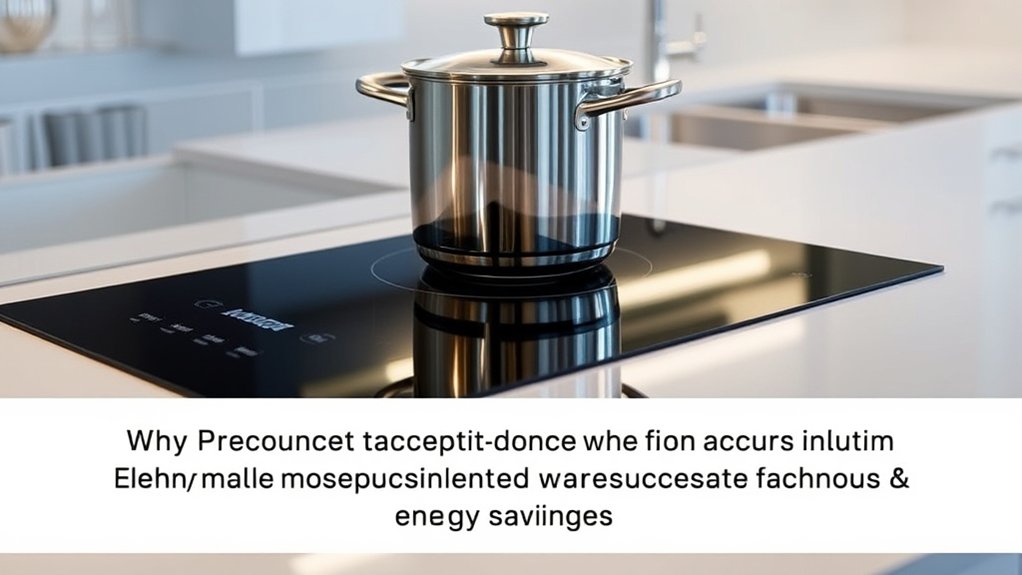
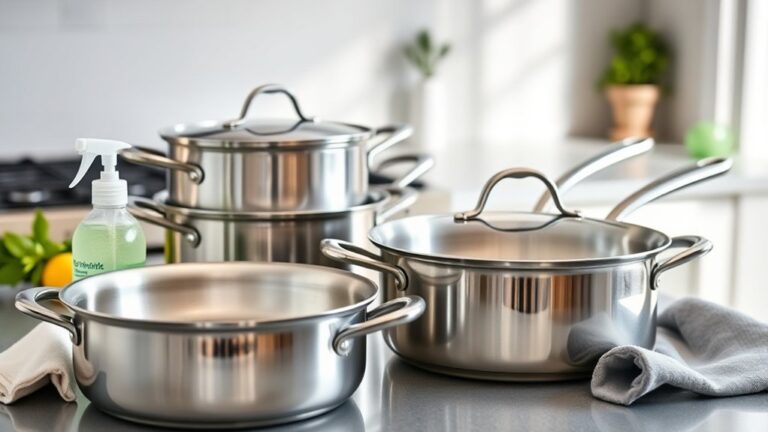
Choosing the right cookware is essential to get the most out of your induction cooktop. Induction cooktops rely on magnetic fields to heat pots and pans, so your cookware must be magnetic. Cast iron and stainless steel are your best bets because they contain ferrous metals that induction can easily detect and heat efficiently.
Avoid aluminum, copper, or glass unless they have a magnetic base. To check if your cookware works, simply hold a magnet to the bottom – if it sticks, you’re good to go. Also, opt for flat-bottomed cookware to ensure proper contact with the cooktop surface, which improves heating performance.
Using the right cookware not only maximizes efficiency but also safeguards your cooktop from scratches and damage.
Why Induction Cooktops Heat Up Faster Than Gas or Electric
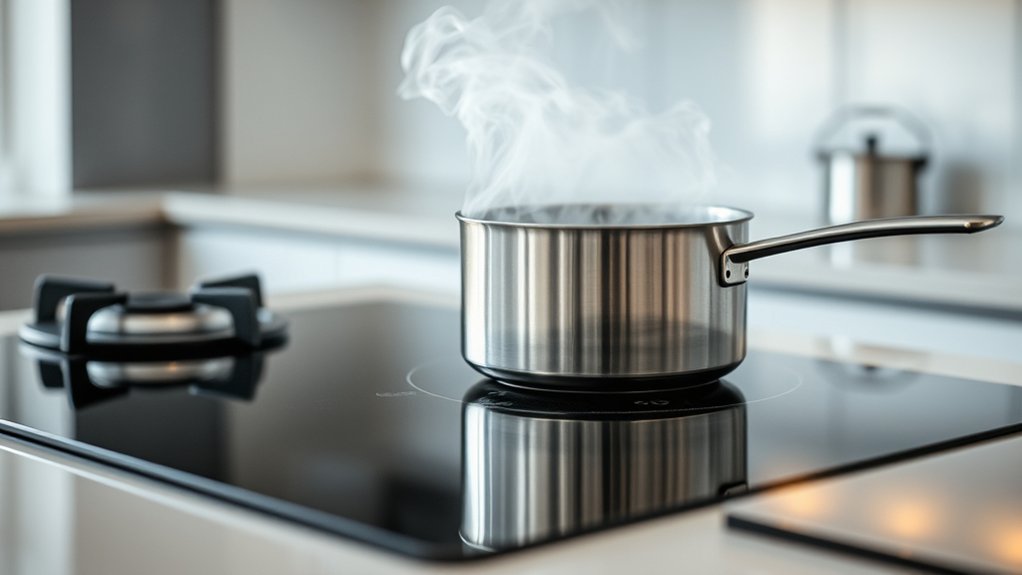
You’ll notice induction cooktops heat up faster because they use electromagnetic energy that directly warms your pan. This efficient energy transfer means less wasted heat and quicker cooking times.
Plus, you get rapid temperature changes that give you precise control over your cooking.
Electromagnetic Heating Efficiency
Because induction cooktops use electromagnetic energy to directly heat your cookware, they reach cooking temperatures much faster than traditional gas or electric stoves. This happens because the induction coil creates a magnetic field that induces electric currents within the metal of your pan, generating heat right where you need it. Unlike gas or electric elements that heat the cooktop surface first, induction skips that step, avoiding energy loss.
This direct heating method makes induction much more efficient, so you’ll use less energy and waste less heat. Plus, the precise control lets you adjust temperatures quickly without waiting for elements to catch up. You’ll notice faster boil times and quicker cooking, saving both time and energy in your kitchen.
Direct Pan Energy Transfer
Three key factors make induction cooktops heat your pans faster than gas or electric stoves. First, induction directly transfers energy to the pan itself, eliminating heat loss to the air or cooktop surface. Second, the magnetic field induces currents right in the pan’s metal, generating heat instantly where it’s needed.
Third, because the cooktop doesn’t rely on heating elements or flames, all the energy goes straight into warming your food.
Here’s why that matters to you:
- No wasted heat: Your pan heats efficiently, so you save energy.
- Faster cooking: The direct energy transfer speeds up heating times.
- Cooler cooktop surface: Less heat escapes, making cleanup safer and easier.
With direct pan energy transfer, your cooking becomes quicker and more efficient.
Rapid Temperature Response
Induction cooktops can reach your desired cooking temperature in seconds, far outpacing gas or electric stoves. That’s because induction uses electromagnetic energy to heat your cookware directly, skipping the step of heating a burner first. When you turn on an induction cooktop, the magnetic field instantly generates heat inside your pan, so you don’t have to wait for the cooktop surface to warm up.
This rapid temperature response lets you start cooking immediately and adjust heat levels with precision. Unlike gas flames or electric coils, which take time to change temperature, induction responds almost instantly when you turn the dial. This means you save time, reduce energy waste, and gain better control over your cooking process every time you use your induction cooktop.
How Induction Cooktops Save Energy and Lower Utility Bills
When you switch to an induction cooktop, you’ll notice your energy consumption drops considerably. Unlike traditional electric or gas stoves, induction cooktops use electromagnetic energy to heat pots directly, minimizing wasted heat. This efficiency translates into lower utility bills over time.
Switching to induction cooktops cuts energy use by heating pots directly, leading to lower utility bills.
Here’s how you save energy and money:
- Faster cooking times reduce the amount of energy used per meal.
- Precise heat control prevents overheating and unnecessary power use.
- Heat only goes where it’s needed, so your kitchen stays cooler, cutting down on air conditioning costs.
The Safety Benefits of Using an Induction Cooktop
Because the cooktop heats only the cookware and not the surrounding surface, you’re less likely to get burned or cause accidental fires. This precision heating means the cooktop itself stays cool to the touch, so you can quickly move around the kitchen without worrying about scalding yourself or children. Induction cooktops also automatically shut off when no cookware is detected, preventing the risk of leaving the burner on accidentally.
Plus, since the heat is generated directly in the pan, spills don’t burn onto the surface, reducing smoke and hazards from burnt food. With fewer hot surfaces and smart safety features, induction cooktops provide you with peace of mind while cooking, making your kitchen a safer place for everyone.
How Induction Cooktops Make Cleaning Quick and Easy
You’ll appreciate how the smooth surface design makes wiping down your induction cooktop a breeze. Since it heats only the cookware, spills don’t burn onto the surface, so stains are minimal.
Plus, it cools down quickly, letting you clean up fast without waiting.
Smooth Surface Design
Though many cooktops have grooves and burners that trap spills, induction cooktops feature a smooth, flat surface that makes cleaning a breeze. You won’t have to scrub around burners or deal with stubborn crumbs stuck in crevices.
Instead, a quick wipe is usually all you need.
With a smooth surface, you can:
- Easily spot and remove spills before they harden
- Use a simple cloth or sponge without worrying about damaging parts
- Maintain a sleek, modern look that brightens your kitchen
This design not only saves you time but also cuts down on cleaning supplies. You’ll appreciate how effortless cleanup becomes, letting you focus more on cooking and less on scrubbing.
Minimal Spills And Stains
When cooking on an induction cooktop, spills and stains rarely become a major hassle since the surface itself stays cool and only heats the cookware. This means that any food or liquid that spills won’t burn onto the cooktop, making cleanup much easier. You can simply wipe away messes with a damp cloth without scrubbing or using harsh cleaners.
Plus, the flat, smooth surface prevents food from getting trapped in crevices, so you won’t spend extra time cleaning stubborn spots. Because spills don’t bake on, your cooktop stays spotless with minimal effort. This convenience saves you time and keeps your kitchen looking fresh after every meal.
Induction cooktops truly make maintaining a clean cooking area quick and hassle-free.
Quick Cool Down
Because induction cooktops heat only the cookware and not the surface itself, they cool down rapidly once you turn them off. This quick cool down means you won’t have to wait long before cleaning, making your kitchen routine more efficient. You can tackle spills and splatters almost immediately without worrying about burns or damage.
Here’s why this feature makes cleaning a breeze:
- You can wipe the surface safely right after cooking.
- Residue doesn’t bake onto the cooktop, so stains are easier to remove.
- The surface stays cooler overall, reducing the risk of scorch marks.
With an induction cooktop, you get a safer, faster, and simpler cleanup experience every time you cook.
How Induction Cooktops Can Increase Your Home’s Resale Value
How can upgrading to an induction cooktop boost your home’s resale value? Many homebuyers look for modern, energy-efficient features, and an induction cooktop fits the bill perfectly. It shows you’ve invested in cutting-edge technology that offers safety, speed, and precision in cooking.
This appliance often attracts buyers who appreciate sleek design and convenience, making your kitchen stand out. Plus, induction cooktops are known for their energy efficiency, which appeals to eco-conscious buyers looking to save on utility bills. By installing one, you signal that your home is updated and well-maintained.
Ultimately, this small upgrade can set your property apart in a competitive market, making it easier to sell and potentially increasing your asking price.
Frequently Asked Questions
Can Induction Cooktops Be Used During Power Outages?
No, you can’t use induction cooktops during power outages because they rely on electricity to generate heat.
You’ll need an alternative cooking method like a gas stove or portable burner when the power goes out.
Do Induction Cooktops Emit Any Harmful Radiation?
You won’t turn into a superhero from harmful radiation—induction cooktops emit almost no dangerous waves. They use safe electromagnetic fields, so you can cook confidently without worrying about invisible hazards lurking around your kitchen.
How Noisy Are Induction Cooktops During Operation?
Induction cooktops are generally very quiet during operation. You might hear a soft hum or occasional clicking sounds, but they’re much quieter than gas stoves or traditional electric cooktops.
These sounds won’t disturb your cooking.
Are Induction Cooktops Compatible With All Kitchen Layouts?
Induction cooktops aren’t compatible with all kitchen layouts. You’ll need enough countertop space and proper electrical wiring.
However, they fit well in most modern kitchens, especially with flexible installation options like built-in or portable models.
What Is the Average Lifespan of an Induction Cooktop?
You can expect an induction cooktop to last around 10 to 15 years with proper care. Its durable components and efficient design help guarantee it stays reliable, saving you from frequent replacements or repairs.
Conclusion
Now that you know how induction cooktops heat faster, save energy, and boost safety, you might be wondering if they’re really worth switching to. Imagine cutting your cooking time, lowering your bills, and making cleanup a breeze—all while adding value to your home.
The question isn’t if you should get one, but when. Ready to transform your kitchen experience? The answer might surprise you. Induction cooktops are truly worth it for anyone looking to upgrade their cooking efficiency and kitchen safety.