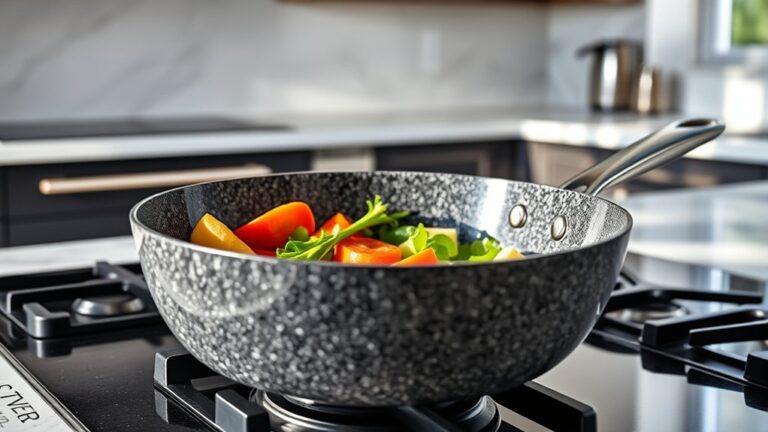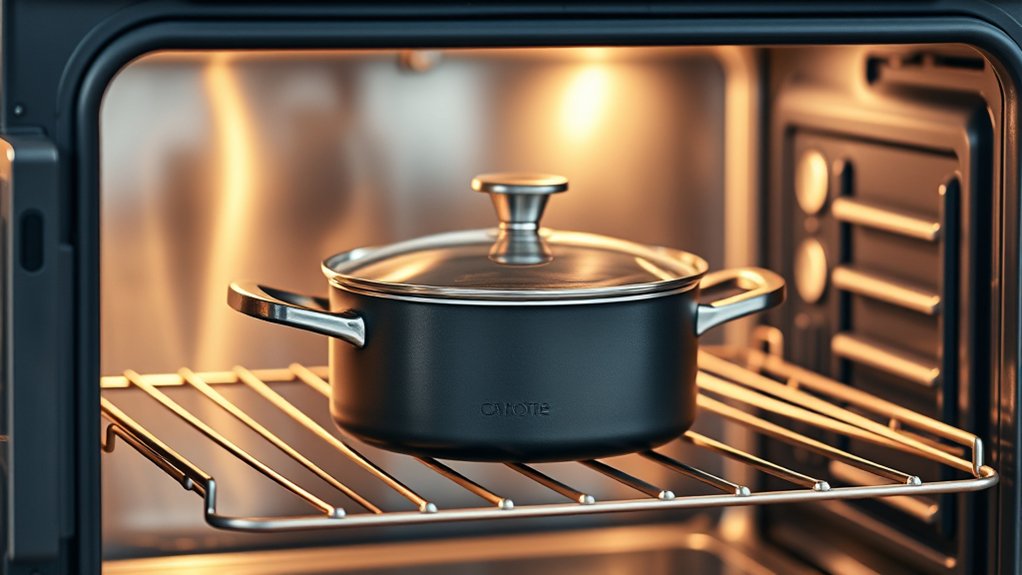
How to Use Carote Cookware Safely in the Oven
You can safely use Carote cookware in the oven by first confirming it’s made from oven-safe materials like stainless steel or cast aluminum. Checking your model’s temperature limits—usually between 350°F and 450°F—is essential for safe use. These key steps help you maximize the durability and performance of your Carote cookware.
Always preheat the oven gradually and avoid broiling to prevent damage. Use heat-safe oils when coating your cookware for cooking. Handle hot pieces with oven mitts to protect your hands from burns.
After use, clean your cookware gently to maintain its quality. Following these guidelines helps safeguard your cookware and ensures great results every time. Keep going to uncover more tips for lasting performance.
Key Takeaways
- Verify Carote cookware materials and parts are oven-safe by consulting manufacturer guidelines before use.
- Preheat the oven gradually, keeping temperatures within recommended limits (350°F–450°F) to prevent warping.
- Apply a thin layer of high-smoke-point oil before heating, and avoid broiling or exposing cookware to direct high heat.
- Use thick oven mitts to handle hot cookware and place it on heat-safe surfaces after removal.
- Cool cookware completely before cleaning with mild soap and soft sponges, and store in a dry, ventilated area.
Can You Use Carote Cookware in the Oven?
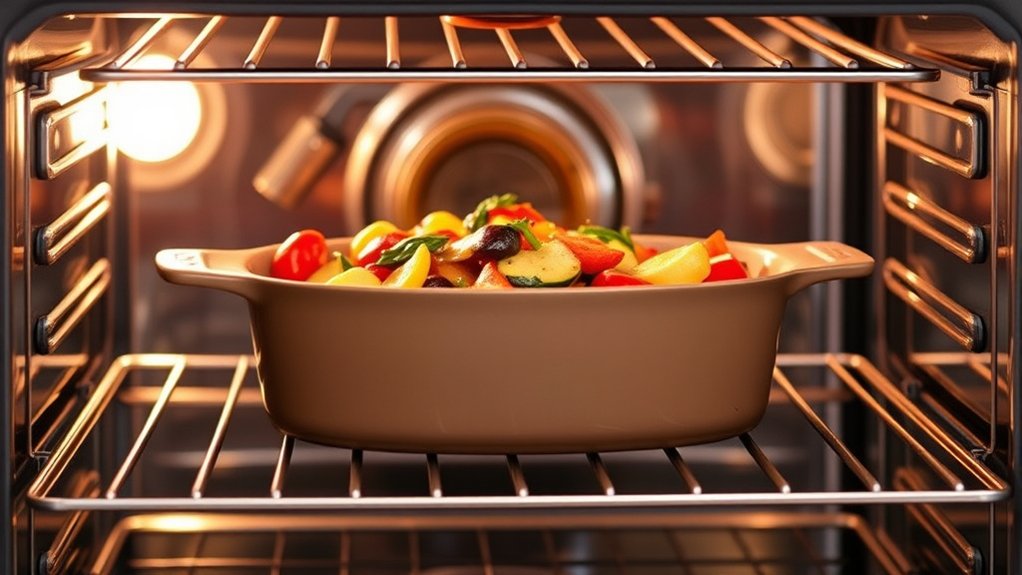
Although Carote cookware is primarily designed for stovetop use, you can safely use it in the oven as long as you follow the manufacturer’s temperature guidelines. Most Carote pots and pans are made from durable materials like stainless steel and aluminum, which handle oven heat well. However, you should never exceed the recommended temperature, usually around 350°F to 400°F, to avoid damaging the cookware or its nonstick coating.
Also, avoid sudden temperature changes that could warp the metal. Keep in mind that Carote’s handles and lids might not tolerate high oven temperatures, so it’s best to check their material before using them inside the oven. By respecting these limits, you can confidently use your Carote cookware for baking or finishing dishes without worry.
How to Check If Your Carote Cookware Is Oven-Safe
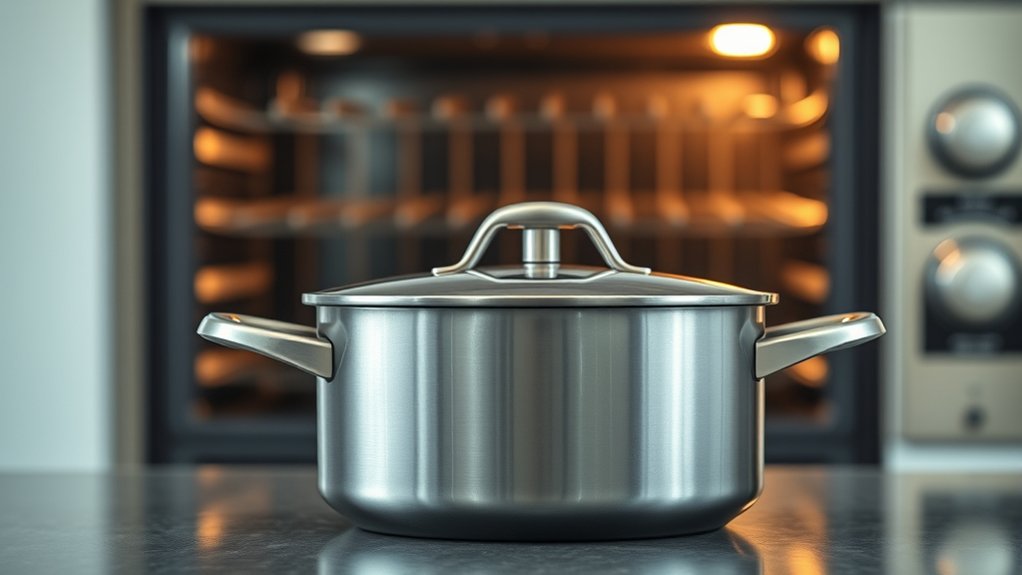
To check if your Carote cookware is oven-safe, first look at the material it’s made from, as some materials handle heat better than others. Then, consult the manufacturer’s guidelines for specific oven use instructions.
This will help you avoid any damage and cook safely every time.
Material Composition Check
Before placing your Carote cookware in the oven, you’ll want to verify its material composition to guarantee it can withstand high temperatures. Carote pots and pans are typically made from materials like stainless steel, cast aluminum, or ceramic-coated aluminum. Stainless steel and cast aluminum usually handle oven heat well, but you should confirm if any non-metal parts, such as handles or lids, are oven-safe.
Avoid cookware with plastic or rubber components that could melt. Check if the cookware has a ceramic nonstick coating, which often tolerates oven temperatures up to a certain limit. By understanding the materials your Carote cookware is made from, you can prevent damage and assure safe use, protecting both your cookware and your food during oven cooking.
Manufacturer’s Oven Guidelines
When you want to confirm if your Carote cookware is oven-safe, the best place to start is the manufacturer’s guidelines. Check the packaging, user manual, or Carote’s official website for specific oven temperature limits and usage instructions. These guidelines clearly state the maximum oven temperature your cookware can handle without damage.
If you don’t have the manual, look for labels or stamps on the cookware itself indicating oven safety. Remember, some Carote pieces may have handles or lids made from materials that aren’t oven-safe, even if the pot or pan is. Following these instructions helps you avoid warping, melting, or toxic fumes.
Always adhere to Carote’s recommendations to guarantee your cookware lasts and performs safely in the oven.
Safe Oven Temperatures for Carote Cookware
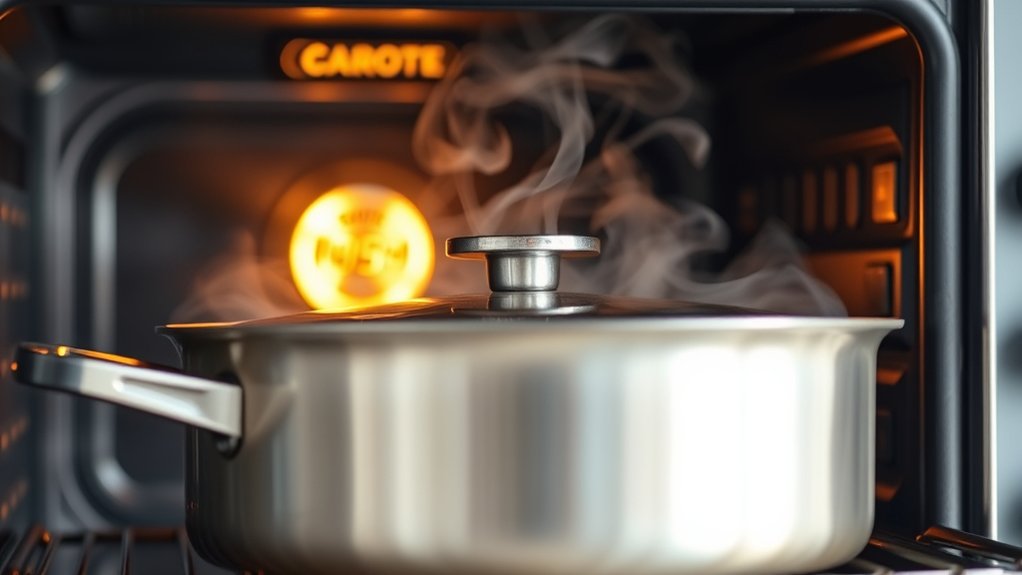
Although Carote cookware is designed for versatility, you should never exceed the recommended oven temperature to maintain its durability and performance.
Most Carote pieces can safely handle moderate oven heat, but pushing beyond limits risks damaging the nonstick surface or warping the pan.
Below is a quick reference to help you keep your cookware safe:
| Cookware Type | Max Safe Oven Temp (°F) |
|---|---|
| Nonstick Frying Pan | 400 |
| Cast Aluminum Pan | 450 |
| Ceramic Coated Pan | 425 |
| Grill Pan | 400 |
| Saucepan | 350 |
Stick to these temperatures, and your Carote cookware will serve you well for years without compromising safety or quality.
How to Prepare Carote Cookware Before Oven Use
Before placing your Carote cookware in the oven, make sure you clean it thoroughly to remove any residue. You’ll also want to follow proper preheating guidelines to protect the coating.
Finally, applying a thin layer of oil can help maintain its nonstick surface and improve cooking results.
Cleaning Before Use
Since Carote cookware often comes with a protective coating from the factory, you’ll want to clean it thoroughly before its first use in the oven. This guarantees any residues or dust are removed, promoting safe and effective cooking. Follow these steps:
- Rinse the cookware with warm water to remove loose particles.
- Use a soft sponge and mild dish soap to scrub all surfaces gently.
- Avoid abrasive cleaners or steel wool, as they can damage the non-stick coating.
- Dry the cookware completely with a soft cloth to prevent water spots or rust.
Preheating Guidelines
After cleaning your Carote cookware, you’ll want to prepare it properly before placing it in the oven. Begin by placing the cookware in a cold oven, then set the oven to the desired temperature. Heating it gradually with the oven prevents thermal shock, which can damage the cookware’s surface.
Avoid preheating the cookware separately on a stovetop or exposing it to sudden high heat. Also, do not place Carote cookware under a broiler, as direct intense heat may warp it. Let the cookware heat evenly with the oven’s rise in temperature.
Once the oven reaches your set temperature, you can add your ingredients and start cooking. Following these preheating steps guarantees your cookware lasts longer and performs safely during oven use.
Oil Application Tips
Although Carote cookware features a durable nonstick surface, applying a light layer of oil before oven use helps enhance its performance and prevents food from sticking. To prepare your cookware effectively, follow these steps:
- Use a high-smoke-point oil like avocado, grapeseed, or refined olive oil to withstand oven temperatures.
- Pour a small amount of oil onto a paper towel, then evenly rub it over the entire interior surface.
- Avoid using too much oil; a thin, even coating is sufficient to maintain the nonstick quality without creating residue.
- After applying oil, preheat the cookware in the oven for a few minutes to allow the oil to bond with the surface, improving durability and release.
This simple oil application helps you get the best results with your Carote cookware every time.
Best Oven Cooking Methods for Carote Cookware
When you use Carote cookware in the oven, choosing the right cooking method can enhance your results and protect your pans. Opt for baking, roasting, or slow cooking at moderate temperatures to maintain the non-stick surface and prevent warping. Avoid broiling or extremely high heat, which can damage the cookware.
Using a gentle cooking method also helps food cook evenly and retain moisture.
| Cooking Method | Temperature Range |
|---|---|
| Baking | 325°F – 375°F |
| Roasting | 350°F – 400°F |
| Slow Cooking | 200°F – 300°F |
| Reheating | 300°F – 350°F |
| Braising | 275°F – 325°F |
Stick to these methods to get the most from your Carote cookware while keeping it in great shape.
Using Metal Utensils With Carote Cookware in the Oven
Since Carote cookware features a durable non-stick coating, you might wonder if using metal utensils in the oven is safe. While the coating is resilient, metal utensils can still potentially scratch or damage it, reducing its lifespan. To keep your cookware in top shape, follow these guidelines:
Carote cookware’s tough non-stick coating is durable but can be scratched by metal utensils, so handle with care.
- Avoid direct scraping or stirring with metal utensils while cooking in the oven.
- Use metal utensils only for gentle tasks, like turning food, and avoid applying excessive force.
- Opt for silicone, wooden, or nylon utensils whenever possible to preserve the coating.
- If you must use metal utensils, inspect your cookware regularly for any signs of wear or damage.
Prevent Warping and Damage When Oven Cooking
Taking care with the utensils you use in your Carote cookware helps maintain its non-stick surface, but protecting the cookware from warping or damage during oven use is just as important. Avoid exposing your cookware to sudden temperature changes by not placing a hot pan directly on a cold surface or adding cold liquids to a hot pan. Preheat your oven gradually and never exceed the manufacturer’s recommended temperature limits.
Make sure your cookware sits flat and stable on the oven rack to distribute heat evenly. If your cookware has a glass lid, avoid subjecting it to extreme temperature shifts as well. Following these simple steps helps preserve your Carote cookware’s shape and performance, ensuring it lasts through many delicious meals without warping or damage.
Safely Removing Carote Cookware From the Oven
Although your Carote cookware is designed to withstand oven temperatures, you’ll want to handle it carefully when removing it to prevent burns or damage. Follow these steps to guarantee safety:
- Always use thick oven mitts or heat-resistant gloves to protect your hands from extreme heat. Open the oven door fully and pull the rack out slightly for better access without reaching deep inside. Grip the cookware firmly on both sides, avoiding handles if they’re hot or metal.
- Place the hot cookware on a heat-safe surface, such as a trivet or wooden board, to avoid damaging countertops.
How to Clean Carote Cookware After Oven Use
After using your Carote cookware in the oven, you’ll want to remove any leftover residue carefully. Use gentle cleaning methods to protect the nonstick surface and keep your cookware in great shape.
Let’s look at the best ways to clean it safely and maintain its performance.
Removing Oven Residue
When you notice oven residue on your Carote cookware, it’s important to clean it promptly to maintain its nonstick surface and overall performance. Start by letting the cookware cool completely to avoid warping.
Next, follow these steps:
- Gently scrape off any loose residue with a plastic or silicone spatula to prevent scratching.
- Soak the cookware in warm, soapy water for 10 to 15 minutes to loosen stubborn residue.
- Use a soft sponge or cloth to wipe away softened residue without damaging the coating.
- Rinse thoroughly with clean water and dry immediately with a soft towel to prevent water spots.
Safe Cleaning Methods
Keeping your Carote cookware clean after oven use helps preserve its nonstick surface and extends its lifespan. Start by letting the cookware cool completely before washing to avoid warping. Use warm, soapy water and a soft sponge—never abrasive pads or steel wool, as they can damage the coating.
Avoid harsh chemical cleaners; mild dish soap works best. After washing, dry the cookware thoroughly to prevent rust and water spots.
| Step | Tip |
|---|---|
| Cooling | Let cookware cool fully |
| Washing | Use mild soap, soft sponge |
| Avoid | Abrasive pads, harsh soap |
| Drying | Dry completely after washing |
Following these methods keeps your Carote cookware safe and ready for your next oven meal.
Maintaining Nonstick Surface
Although Carote cookware is designed with a durable nonstick surface, you should clean it gently to preserve its coating after oven use. Harsh scrubbing or abrasive cleaners can damage the finish, reducing its effectiveness over time.
To maintain the nonstick surface, follow these steps:
- Let the cookware cool completely before cleaning to avoid thermal shock.
- Use warm, soapy water and a soft sponge or cloth to wipe away food residue.
- Avoid metal utensils or scouring pads that can scratch the surface.
- Dry the cookware thoroughly to prevent water spots and maintain its smooth finish.
How to Store Carote Cookware After Oven Cooking
Since Carote cookware retains heat for a while after oven use, you’ll want to let it cool down completely before storing it. Putting hot cookware away can trap moisture, which might damage the nonstick coating or cause rust on metal parts.
Once cooled, wash the cookware gently with warm, soapy water to remove any food residue. Dry it thoroughly with a soft cloth to prevent water spots or corrosion. Store your Carote cookware in a dry, well-ventilated cabinet or shelf.
If you stack pieces, place a soft cloth or paper towel between them to protect the nonstick surfaces from scratches. Following these simple steps helps maintain your cookware’s performance and extends its lifespan after every oven use.
Troubleshooting Common Issues With Carote Cookware in the Oven
If you notice uneven cooking or sticking when using your Carote cookware in the oven, don’t worry—most issues have simple fixes. First, make sure you’re preheating the oven adequately; uneven heat can cause inconsistent results. Second, check if you’re using the correct rack position—middle racks usually provide the best heat distribution.
Third, avoid overcrowding the cookware, as this can block heat circulation and cause sticking. Finally, confirm that your Carote cookware is oven-safe at the temperature you’re using; exceeding limits can warp the pan and affect performance.
Extend the Life of Your Carote Cookware With These Oven Tips
To keep your Carote cookware performing at its best, you’ll want to handle it with care when using it in the oven. Follow these simple tips to extend its lifespan and maintain its quality. Avoid sudden temperature changes, use oven mitts to prevent damage, and clean it gently after each use.
Proper care keeps your cookware looking and functioning great for years.
| Tip | Benefit |
|---|---|
| Preheat oven gradually | Prevents warping |
| Avoid metal utensils | Protects non-stick surface |
| Use oven-safe mitts | Prevents burns and drops |
| Hand wash with mild soap | Maintains coating integrity |
| Store properly | Avoids scratches and dents |
Stick to these tips, and your Carote cookware will stay reliable for countless meals.
Frequently Asked Questions
Can Carote Cookware Be Used on Induction Stovetops?
Yes, you can use Carote cookware on induction stovetops since it has a magnetic base. Just make certain your cookware is clean and flat on the bottom to guarantee proper contact and efficient heating during cooking.
Is Carote Cookware Dishwasher Safe?
You can put Carote cookware in the dishwasher, but don’t forget, “a stitch in time saves nine.”
Hand washing helps maintain its non-stick surface longer, so consider washing by hand to keep it in top shape.
What Materials Are Carote Cookware Made From?
Carote cookware is made from aluminum with a non-stick ceramic coating. You’ll appreciate its durability and even heat distribution, making cooking easier.
Just remember, the ceramic surface requires gentle handling to maintain its non-stick properties.
Can I Use Non-Stick Spray With Carote Cookware?
Yes, you can use non-stick spray with Carote cookware, but don’t overdo it. A light coating helps prevent sticking without damaging the non-stick surface.
Too much spray can build up residue and affect cooking performance.
Does Carote Cookware Come With a Warranty?
Coincidentally, Carote cookware does come with a warranty, giving you peace of mind. You’ll find it covers manufacturing defects, so if anything’s off, you can contact their customer service and get it sorted quickly.
Conclusion
Using your Carote cookware in the oven can be as smooth as butter if you follow these simple steps. Always check for oven safety, keep temperatures within limits, and prep your cookware properly to avoid surprises.
After cooking, clean and store it with care to keep it shining like new. With these tips, your Carote cookware will be your trusty kitchen partner, ready to bake up delicious meals time and time again.
By following these guidelines, you can ensure safe and effective use of Carote cookware in your oven. Proper use and maintenance will help extend the life of your cookware and enhance your cooking experience. Enjoy creating wonderful dishes with your Carote cookware safely every time.