What Cookware Do I Need for Every Kitchen?
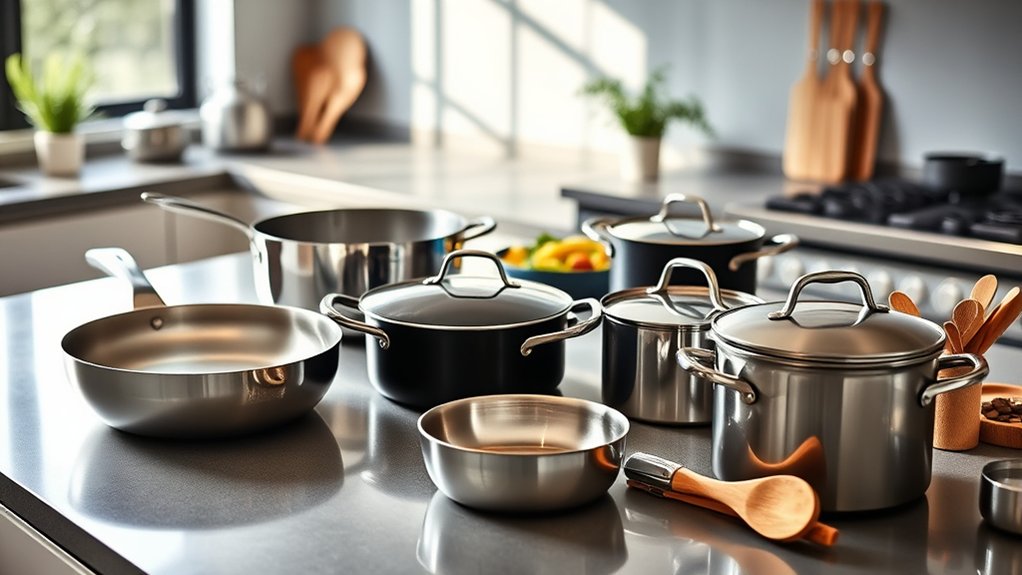
You need a solid foundation of versatile cookware for every kitchen, including a sturdy stockpot, a medium skillet, and a couple of saucepans. These essential pieces help handle most kitchen tasks smoothly and efficiently.
Choosing durable, non-stick options with even heat distribution is key to cooking success.
Consider stainless steel or cast iron for their excellent cooking benefits and long-lasting performance.
Specialty pieces like a Dutch oven or steamer can further expand your culinary options and make complex recipes easier.
With proper care and thoughtful additions, you’ll be ready for anything your cooking demands.
There’s plenty more to explore when building and maintaining your cookware collection.
Key Takeaways
- A sturdy saucepan, medium skillet, and large stockpot form the essential cookware trio for versatile everyday cooking.
- Use non-stick pans with durable coatings and oven-safe features for easy cooking and cleanup.
- Incorporate stainless steel and cast iron pieces for high-heat cooking, searing, and durability.
- Maintain cookware by cleaning gently, seasoning cast iron, and storing with protective liners to extend lifespan.
- Expand your collection gradually with specialty items based on cooking needs, ensuring compatibility and efficient storage.
Essential Cookware Every Kitchen Needs to Start Cooking
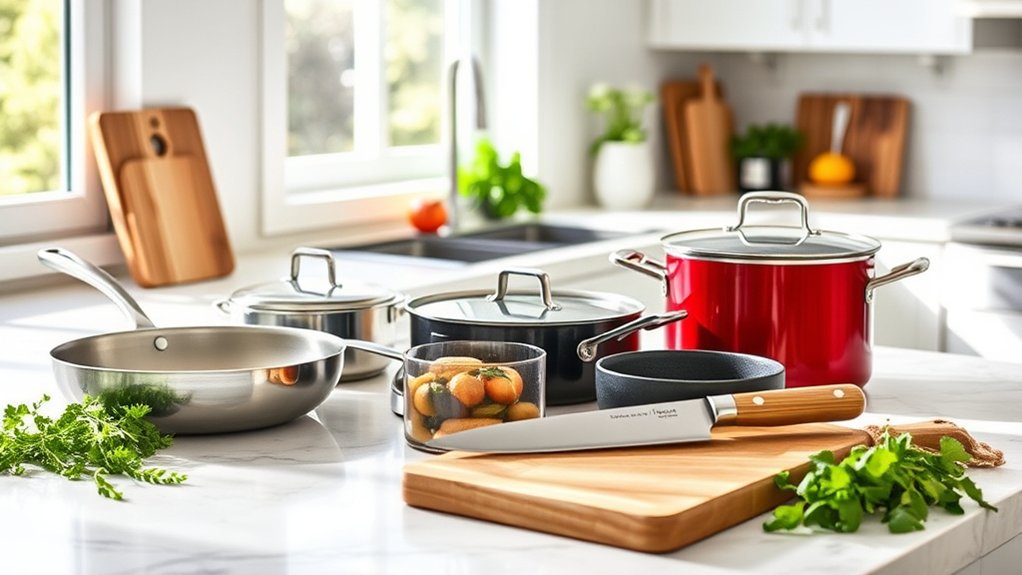
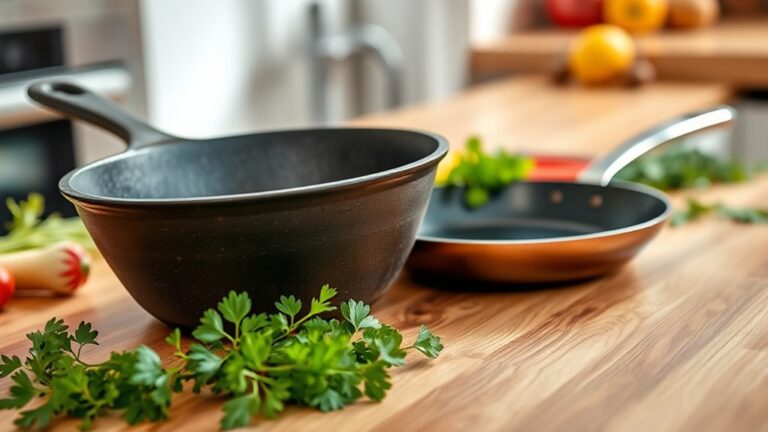
Before you plunge into complex recipes, you need a few key pieces of cookware that make cooking simple and efficient. Start with a sturdy saucepan for boiling, simmering, and making sauces. A medium-sized skillet is versatile for frying, sautéing, and searing.
Begin with essential cookware like a sturdy saucepan and versatile skillet for simple, efficient cooking tasks.
Don’t forget a larger pot for soups, stews, and pasta. A baking sheet is essential for roasting vegetables or baking cookies. Adding a stockpot helps when cooking larger meals or batches.
Grab a mixing bowl to combine ingredients easily. Lastly, invest in a reliable sauté pan with a lid—it’s perfect for one-pan meals. These basics cover almost every cooking task and set a solid foundation.
With these in your kitchen, you’ll handle most recipes without hassle or extra gear.
Choosing the Right Non-Stick Cookware
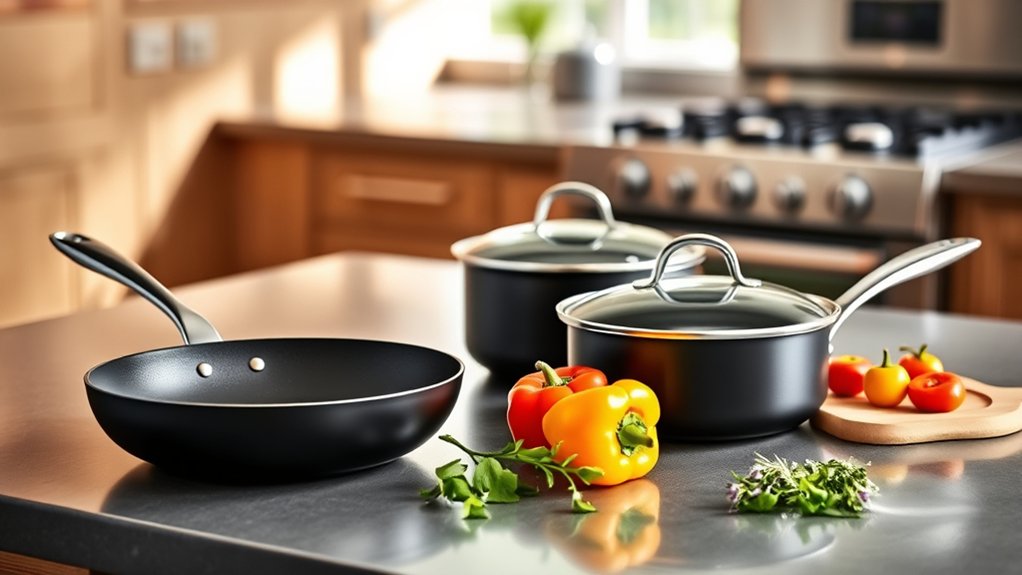
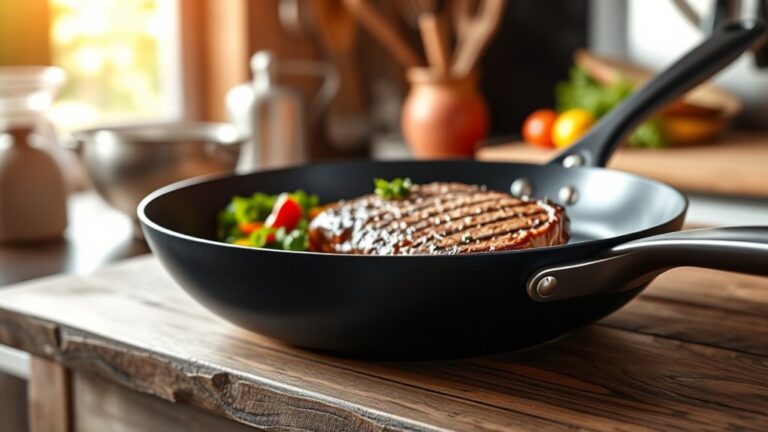
When you want cookware that simplifies cleanup and requires less oil, non-stick pans are your best bet. Look for pans with a durable coating like ceramic or PTFE, which resist scratching and peeling. Choose high-quality non-stick surfaces to avoid toxic fumes and extend your pan’s life.
Consider the pan’s base—thick, heavy bases distribute heat evenly, preventing hot spots. You’ll want pans that’re oven-safe if you like finishing dishes in the oven. Handles should be sturdy and comfortable, ideally stay-cool for safety.
Avoid metal utensils to protect the coating; silicone or wooden tools work best. Finally, pick sizes that suit your cooking style: a small skillet for eggs and a larger one for stir-fries or pancakes. With the right non-stick cookware, cooking becomes easier and healthier.
Why Stainless Steel Pots and Pans Are Worth It
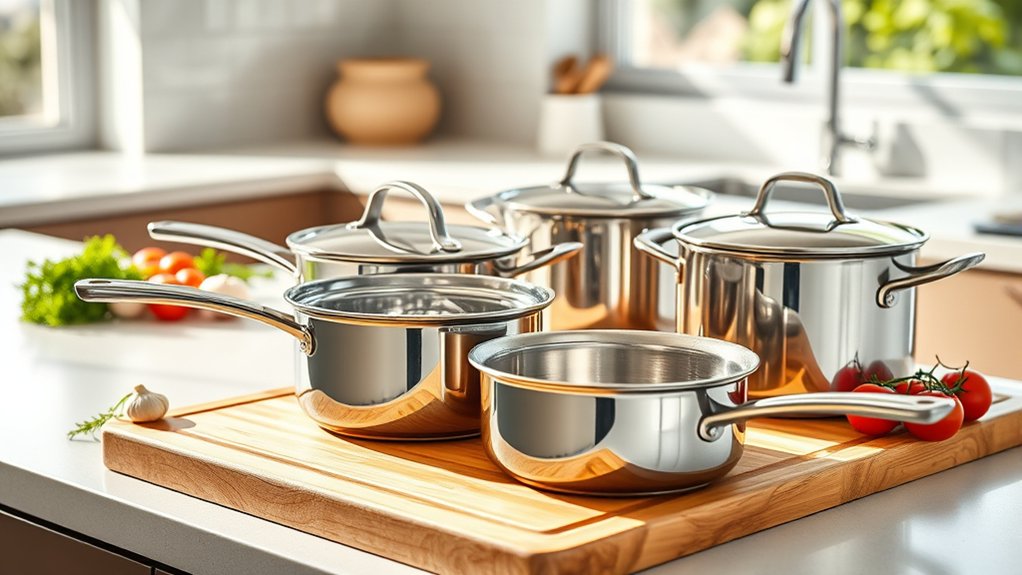
While non-stick pans excel at easy cleanup and low-fat cooking, stainless steel pots and pans offer unmatched durability and versatility that can elevate your kitchen game. You’ll appreciate how they handle high heat without warping, giving you consistent results every time.
Plus, stainless steel is non-reactive, so your sauces and soups stay true to flavor. Here’s why you should consider adding them to your cookware collection:
- Resistant to scratches and dents, ensuring long-term use
- Ideal for browning and deglazing, enhancing flavor depth
- Dishwasher safe for convenient cleaning
- Compatible with all cooktops, including induction
Investing in stainless steel cookware means you’re choosing reliability and performance that won’t disappoint.
Why Cast Iron Is a Must-Have Cookware
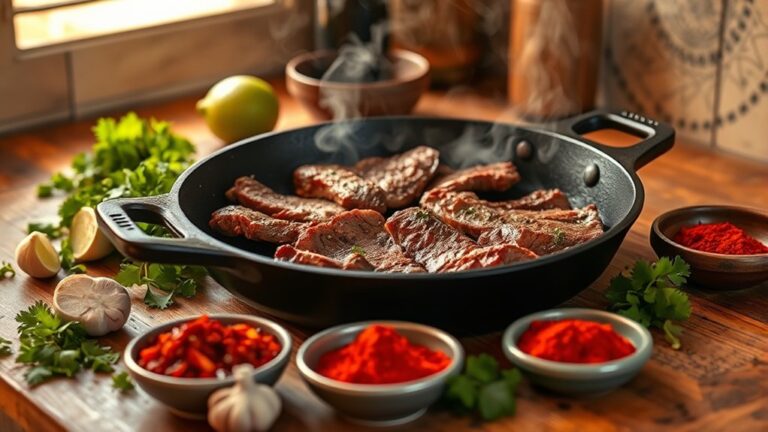
If you want cookware that combines durability with excellent heat retention, cast iron should be at the top of your list. This versatile cookware handles high heat, making it perfect for searing meats, frying, and even baking. Once seasoned, cast iron develops a natural non-stick surface that improves with use, so your food releases easily without synthetic coatings.
You’ll appreciate how evenly it distributes heat, preventing hot spots that can burn your meals. Plus, cast iron is virtually indestructible—it can last for generations if you care for it properly. While it’s heavier than other options, the benefits far outweigh the weight.
Whether you’re a beginner or a seasoned cook, cast iron adds reliability and flavor to your kitchen arsenal.
Best Stockpot Cookware for Soups and Stews
Selecting the right stockpot can transform your soups and stews from ordinary to exceptional by ensuring even heat distribution and ample cooking space. When choosing a stockpot, consider durability, size, and material to match your cooking style. Stainless steel with an aluminum core offers excellent heat conduction and durability.
Non-reactive surfaces prevent flavors from changing, crucial for long-simmered dishes. A tight-fitting lid helps retain moisture and flavor, while sturdy handles provide safe, easy handling.
Look for these features in your ideal stockpot:
- Thick, heavy bottom for consistent heating
- Capacity between 8 to 12 quarts for versatility
- Oven-safe construction for multi-method cooking
- Easy-to-clean, dishwasher-safe finish
With the right stockpot, you’ll enjoy perfectly cooked soups and stews every time.
Essential Small Cookware: Saucepans and Sauté Pans
When picking saucepans and sauté pans, you’ll want to focus on size, material, and how well they distribute heat. Choosing the right size helps you cook efficiently without overcrowding your food. Materials like stainless steel or nonstick affect both cooking performance and cleanup, so consider what fits your needs best.
Choosing the Right Size
Although it might seem simple, choosing the right size of saucepans and sauté pans can make a big difference in your cooking experience. Picking sizes that fit your typical meal prep saves time and energy.
Here’s how to decide:
- Opt for a small saucepan (1-2 quarts) for sauces, reheating, or boiling eggs.
- A medium saucepan (3 quarts) works well for grains, soups, or steaming vegetables.
- Choose a sauté pan around 10-12 inches to handle most sautéing, browning, and frying tasks.
- Consider your household size and cooking habits—larger pans suit families, while smaller ones fit solo cooks or couples.
Material and Heat Distribution
Because cookware material directly affects how evenly your pans heat, choosing the right one can enhance your cooking results. For saucepans and sauté pans, materials like stainless steel with an aluminum or copper core offer excellent heat distribution and durability. Aluminum heats quickly but can warp, while copper provides superb responsiveness to temperature changes, letting you control cooking precisely.
Nonstick pans often use aluminum bases for even heating, but their coating requires gentle care. Cast iron retains heat well but heats slowly and unevenly at first, making it better for certain recipes. When selecting your pans, consider how quickly and evenly they heat, along with maintenance needs.
Picking the right material guarantees your food cooks consistently, preventing hot spots and burning, and ultimately improving your everyday cooking.
Which Specialty Cookware to Add and When
As you expand your cooking skills, you’ll find that adding specialty cookware can elevate your meals and efficiency. Start by evaluating your cooking style and the dishes you enjoy. Specialty pieces aren’t daily essentials but can transform your kitchen when chosen wisely.
Consider these additions:
- Cast iron skillet: Perfect for searing and oven use, great for developing flavor.
- Dutch oven: Ideal for slow-cooking, braising, and soups.
- Steamer basket: Enhances healthy cooking by steaming vegetables and seafood.
- Nonstick crepe pan: Useful for delicate tasks like making crepes or pancakes.
Add these as your recipes call for them or when you want to master a specific technique. This approach keeps your kitchen versatile without cluttering it with unused tools.
How to Care for and Maintain Your Cookware
To keep your cookware in top shape, you’ll want to follow some simple cleaning tips that prevent damage and extend its life. Proper storage is just as important to avoid scratches and warping.
Let’s explore the best ways to clean and store your pots and pans effectively.
Cleaning Tips
When you invest in quality cookware, proper cleaning and maintenance guarantee it lasts longer and performs at its best. To keep your pots and pans in top shape, start by washing them with warm, soapy water immediately after use to prevent residue buildup. Avoid abrasive scrubbers on nonstick surfaces, which can damage the coating.
For stubborn stains or burnt food, soak your cookware before gently scrubbing. Finally, always dry your pieces thoroughly to prevent rust or water spots.
- Use mild dish soap and a soft sponge for routine cleaning
- Avoid dishwasher use unless cookware is labeled dishwasher-safe
- Remove discoloration from stainless steel with a vinegar solution
- Season cast iron cookware regularly to maintain its nonstick surface
These steps will keep your cookware looking great and performing reliably.
Storage Best Practices
How you store your cookware plays a crucial role in maintaining its quality and extending its lifespan. Always make sure your pans and pots are completely dry before storing to prevent rust and mold. Stack skillets with protective liners or cloth between them to avoid scratches.
Hang frequently used pieces on a sturdy rack for easy access and better air circulation. For lids, use a dedicated organizer or store them separately to keep everything tidy. Avoid overcrowding cabinets to prevent dents and damage.
If you have nonstick pans, store them carefully to protect the coating. By organizing your cookware thoughtfully and keeping it dry, you’ll preserve its performance and appearance, making your kitchen more efficient and enjoyable to use every day.
Growing Your Cookware Set Over Time
Building your cookware set one piece at a time lets you tailor your kitchen to fit your cooking style and budget. Start with essentials like a skillet, saucepan, and stockpot, then add specialty items as you discover new recipes or techniques. This approach prevents clutter and guarantees every piece gets used.
When expanding your collection, focus on:
- Versatility: Choose multipurpose items that cover several cooking methods.
- Quality: Invest in durable materials to avoid frequent replacements.
- Compatibility: Match new pieces with your existing cookware’s material and brand.
- Storage: Consider how additional items will fit in your kitchen space.
Frequently Asked Questions
Can I Use Dishwasher Detergent to Clean All Types of Cookware?
You shouldn’t use dishwasher detergent on all cookware because it can damage nonstick coatings and delicate materials. Instead, hand wash these items with mild soap to keep them in good shape and avoid ruining their surfaces.
How Do I Store Cookware to Save Kitchen Space Effectively?
Instead of piling pots randomly, you’ll save space by nesting similar cookware and hanging frequently used pans.
Stack lids vertically in a rack, and use cabinet organizers to contrast clutter with calm, maximizing your kitchen efficiency effortlessly.
Are Copper Cookware Pieces Safe for Everyday Cooking?
Copper cookware is safe if it’s lined with stainless steel or tin, preventing copper from leaching into food. You’ll want to avoid unlined copper for acidic dishes to keep your meals safe and your cookware lasting longer.
What Cookware Materials Are Best for Induction Cooktops?
You’ll want cookware made of magnetic materials like cast iron or stainless steel for induction cooktops. These materials heat efficiently on induction, while aluminum or copper won’t work unless they have a magnetic base.
How Do I Prevent Cookware From Warping Over Time?
You don’t want your pan turning into a crumpled mess overnight! Avoid rapid temperature changes, don’t overheat empty cookware, and always let your pots cool before washing.
Handle them gently, and they’ll stay flawless forever!
Conclusion
You don’t need a kitchen full of gadgets, but having just the right cookware makes all the difference. While non-stick pans offer ease, stainless steel brings durability; cast iron adds unmatched versatility, and a stockpot handles hearty meals.
Start small, then grow your set as your cooking skills do. Balancing quality with quantity transforms chaos into confidence—your kitchen becomes a place where every meal feels possible and every dish, delicious.
Having essential cookware in every kitchen ensures you’re prepared for any recipe. From sauté pans to saucepans, the right cookware set is key to cooking success and creating memorable meals.