Are Microwave Safe Items Also Oven Safe?
You can’t assume microwave-safe items are also oven-safe because they handle heat differently. Microwave-safe dishes are designed to withstand the rapid heating caused by microwaves, which excite water molecules quickly.
However, oven-safe items must endure prolonged exposure to dry, hot air. Ovens use dry heat that can cause some materials to melt, crack, or even release toxins.
This is why it’s crucial to always check the manufacturer’s labels or instructions before using microwave-safe dishes in an oven. Ignoring these guidelines can lead to damage or safety risks.
If you want to know which materials work best and how to stay safe with your cookware, keep exploring these important details.
Understanding the difference between microwave-safe and oven-safe items helps protect your kitchen and your health.
Key Takeaways
- Microwave safe items are not automatically oven safe due to different heating methods and temperature tolerances.
- Oven safe materials withstand high, dry heat, while microwave safe items handle rapid internal heating from microwaves.
- Plastics labeled microwave safe may melt or release toxins if used in an oven.
- Glass and ceramic labeled microwave safe might crack or shatter under oven thermal shock.
- Always check manufacturer labels or instructions to confirm if an item is safe for oven use.
What Does “Microwave Safe” Mean: And What About Oven Safe?
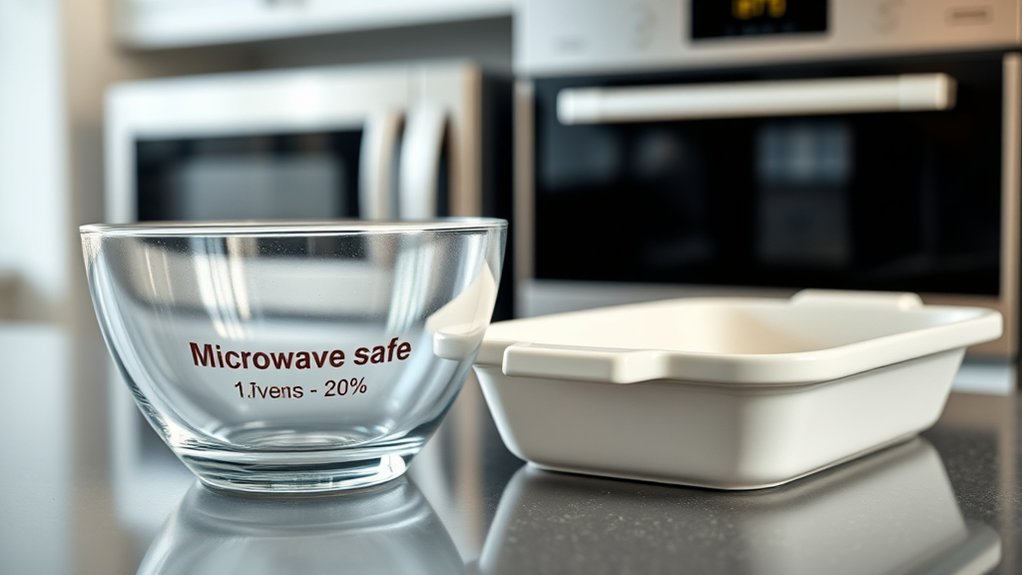
What exactly does “microwave safe” mean, and how does it differ from being oven safe? When a container is labeled microwave safe, it means you can heat or cook food in it using a microwave without the material melting, warping, or releasing harmful chemicals. It’s designed to withstand microwave radiation and the resulting heat.
Oven safe, on the other hand, means the item can handle the higher, direct heat of an oven without cracking, melting, or degrading. Unlike microwaves, ovens use dry, consistent heat, which demands sturdier materials. Just because something is microwave safe doesn’t guarantee it’s oven safe.
You need to check the manufacturer’s instructions or labels before putting an item in the oven to avoid damage or safety hazards.
How Do Microwaves and Ovens Heat Food Differently?
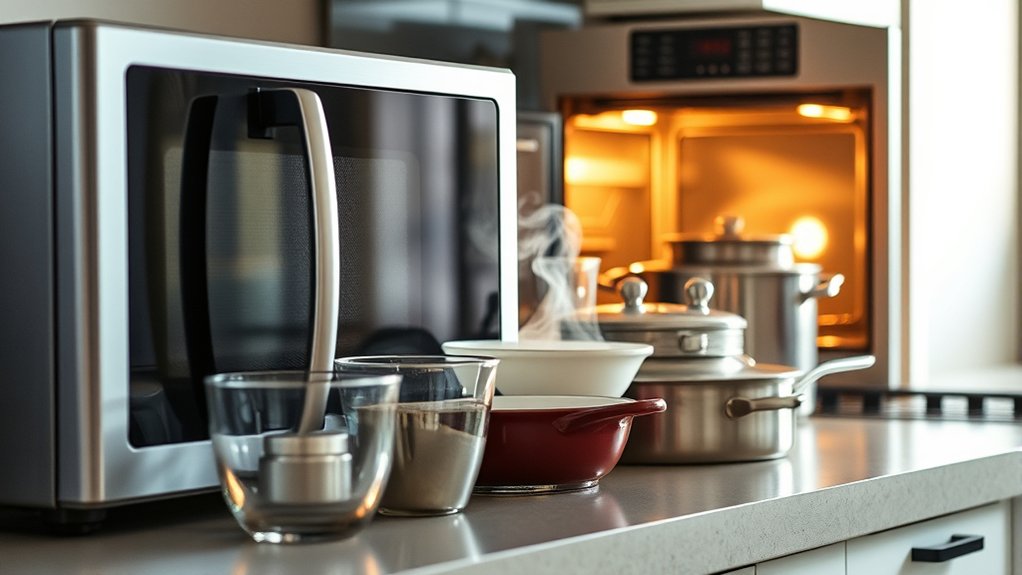
When you use a microwave, it heats food by causing water molecules to vibrate quickly, generating heat from within. In contrast, an oven heats food by surrounding it with hot air, cooking it more evenly on the surface over time.
Understanding these differences helps you choose the right containers for each method.
Microwave Heating Mechanism
Although both microwaves and conventional ovens cook food using heat, they do so through very different processes. When you use a microwave, it heats food by agitating water molecules inside it. This generates heat quickly and cooks food from the inside out.
In contrast, ovens cook by surrounding food with hot air, which heats the surface first.
Here’s what happens inside a microwave:
- Microwaves emit electromagnetic waves.
- Water molecules in food vibrate rapidly.
- Friction from this movement produces heat.
- Heat spreads to surrounding food parts.
This direct molecular vibration means microwaves cook faster but can’t brown or crisp food like ovens do. Understanding this helps you choose the right cookware and cooking method.
Oven Heat Distribution
Understanding how heat distributes inside ovens compared to microwaves helps you choose the right method for your cooking needs. In a traditional oven, heat surrounds your food, cooking it evenly from the outside in. The air inside the oven gets hot and transfers heat to the surface of your dish, gradually warming the inside.
This process takes longer but creates a crispy texture and browned exterior. Microwaves, on the other hand, heat food by agitating water molecules internally, speeding up the process. This causes uneven heating sometimes, especially in thicker foods.
Since ovens use convection or radiant heat, they’re better for baking or roasting, while microwaves excel at quick reheating. Knowing this difference helps you pick safe, suitable containers and avoid surprises in your cooking results.
Why Microwave-Safe Doesn’t Always Work in the Oven
Why does a microwave-safe dish sometimes fail in a conventional oven? It comes down to how these appliances cook food differently. Microwaves heat food by exciting water molecules, while ovens use direct radiant heat.
This means:
- Microwave-safe items tolerate rapid, uneven heating but may crack under steady, intense oven heat.
- Materials that don’t absorb microwave energy might still get extremely hot in an oven.
- Some plastics can release toxins or melt in an oven’s higher temperatures.
- Glass or ceramic labeled microwave-safe might not withstand thermal shock from oven heat.
You can’t assume microwave-safe means oven-safe because the heat exposure and cooking methods vary greatly. Always check manufacturer labels before switching between appliances to avoid damage or safety risks.
Materials Safe for Microwaves but Not Ovens
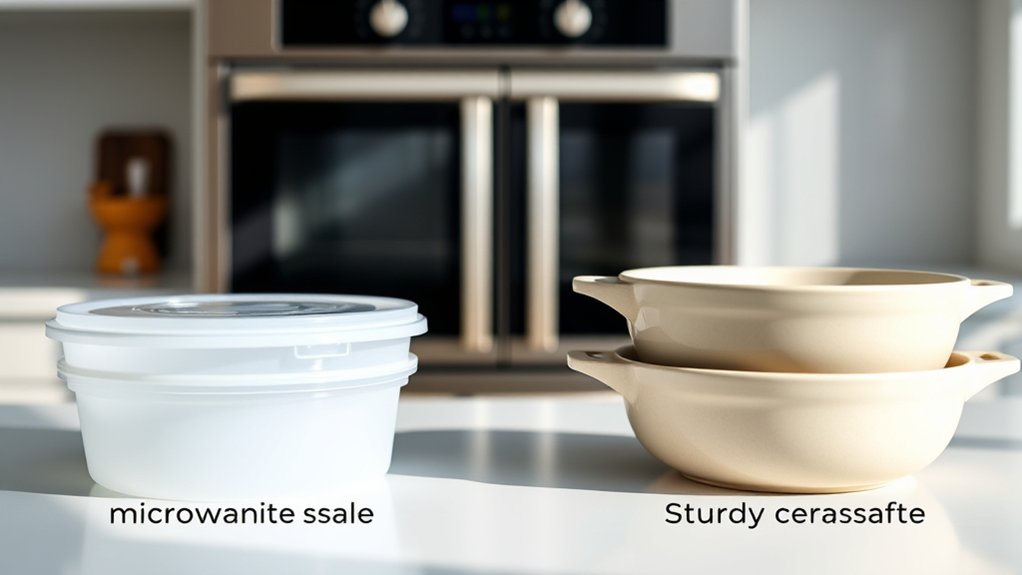
You might think plastic containers labeled microwave-safe can handle oven heat, but they often can’t withstand the higher temperatures. Even microwave-safe glass can be fragile and crack under direct oven heat.
Knowing these limits helps you avoid damaging your cookware or ruining your food.
Plastic Containers’ Heat Limits
Many plastic containers that are labeled microwave-safe can’t handle the high temperatures of a conventional oven. When you put these plastics in an oven, they can warp, melt, or even release harmful chemicals. Unlike microwaves, which heat food quickly and unevenly, ovens maintain steady, high heat that stresses plastic materials.
Here’s what happens if you use plastic containers in an oven:
- Container warping or melting from temperatures above 212°F (100°C)
- Release of toxic fumes when plastics degrade
- Loss of container integrity, causing leaks or spills
- Potential fire hazard if plastic ignites
To keep your kitchen safe, always check the temperature limits on plastic containers before using them in an oven. When in doubt, opt for oven-safe glass or ceramic instead.
Microwave-Safe Glass Fragility
Although glass containers labeled microwave-safe can handle the quick, uneven heating of microwaves, they often can’t withstand the prolonged, high temperatures inside a conventional oven. When you heat microwave-safe glass in an oven, it may crack or shatter because these containers aren’t designed for sustained heat exposure.
Microwave-safe glass is typically tempered to resist sudden temperature changes but not the steady, intense heat of an oven. If you want to use glass in the oven, look for ones specifically marked oven-safe or made from borosilicate glass. Otherwise, you risk ruining your dishware and your meal.
Cookware Safe for Both Microwave and Oven Use
When selecting cookware that works in both the microwave and oven, you need to focus on materials that handle rapid temperature changes without warping or releasing harmful substances. Not all microwave-safe dishes can withstand oven heat, so choosing the right cookware is essential for safety and durability.
Here are some materials to consider:
- Glass bakeware: Tempered or borosilicate glass resists thermal shock and won’t release chemicals.
- Ceramic dishes: Glazed ceramics designed for high heat are usually safe in both appliances.
- Silicone bakeware: Flexible and heat resistant, silicone handles both microwave and oven use well.
- Metal pans with microwave-safe coatings: Some metals work for ovens and microwaves if labeled safe.
Stick to these materials to avoid damage or health risks when switching between microwave and oven cooking.
How to Check If Your Microwave-Safe Dish Is Oven-Safe
If you want to use your microwave-safe dish in the oven, you need to verify its oven compatibility first. Start by checking the bottom or packaging for any oven-safe symbols or temperature limits.
If there’s no clear marking, consult the manufacturer’s website or user manual. Avoid guessing, as some materials can crack or release harmful chemicals under oven heat.
| Step | What to Look For |
|---|---|
| 1. Check markings | Oven-safe symbol or temperature |
| 2. Read instructions | Manufacturer’s guidance |
| 3. Material type | Glass, ceramic often oven-safe |
| 4. Avoid plastics | Usually not oven-safe |
Following these steps helps ensure your dish won’t be damaged or cause safety issues when baking.
Risks of Using Microwave-Safe Cookware in the Oven
Since microwave-safe cookware is designed specifically for low, uneven heat, using it in the oven can lead to serious risks such as cracking, melting, or releasing harmful chemicals. You might think it’s convenient, but these items often can’t handle the high, consistent heat of an oven.
When you put microwave-safe dishes in the oven, you risk:
- Cracking or shattering due to thermal shock
- Melting of plastic components or coatings
- Warping that ruins the cookware’s shape
- Exposure to toxic fumes from heated plastics
These dangers not only damage your cookware but can also contaminate your food and pose safety hazards. So, it’s essential to avoid using microwave-only safe items in your oven to keep your kitchen safe and your meals healthy.
Safe Tips for Reheating Food in Microwave and Oven
Although reheating food seems straightforward, using the microwave and oven safely requires some care to preserve taste and prevent hazards. You should always use cookware labeled for your reheating method and avoid metal in microwaves. Cover your food to maintain moisture but vent containers to prevent pressure buildup.
Stir or rotate food halfway through heating for even warmth, and let it stand briefly after reheating to allow heat distribution.
| Tip | Why It Matters |
|---|---|
| Use microwave-safe dish | Prevents melting and toxins |
| Avoid metal in microwave | Prevents sparks and fires |
| Cover but vent food | Keeps moisture, avoids explosions |
| Stir or rotate food | Ensures even heating |
| Let food stand | Distributes heat evenly |
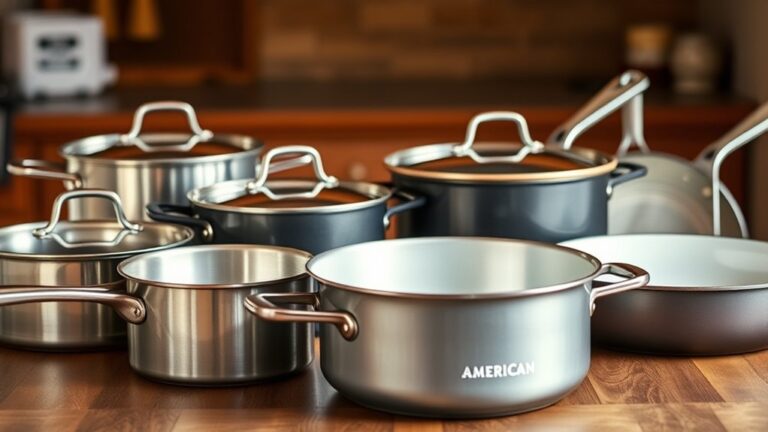
Best Cookware Choices for Both Microwave and Oven Use
When you choose cookware that works in both the microwave and oven, you save time and simplify meal prep. Opting for versatile pieces means you can seamlessly transfer food without switching containers, making cooking and cleanup easier.
Here are some of the best choices for dual-use cookware:
- Glass bakeware: Durable, non-reactive, and safe at most oven and microwave temperatures.
- Ceramic dishes: Stylish and heat-resistant, perfect for both appliances.
- Silicone molds: Flexible, microwave, and oven-safe up to high temperatures.
- Stoneware: Holds heat well and can go from microwave to oven effortlessly.
Avoid metal and plastics not labeled for oven use to prevent damage and safety hazards. Choose wisely to streamline your kitchen routine.
Frequently Asked Questions
Can Metal Utensils Be Used Safely in a Microwave?
You shouldn’t use metal utensils in a microwave because they can cause sparks and damage the appliance.
Instead, stick to microwave-safe containers made of glass, ceramic, or microwave-safe plastic to heat your food safely.
How Do I Clean Microwave-Safe Containers Without Damaging Them?
You should wash microwave-safe containers with warm, soapy water and a soft sponge. Avoid abrasive scrubbers or harsh chemicals to prevent damage. Rinse thoroughly and let them air dry to keep them in great condition.
Are There Specific Brands Known for Dual Microwave and Oven Safety?
You’ll be surprised—brands like Pyrex and CorningWare are trusted for both microwave and oven use. Just double-check labels, because not all their products handle high oven heat. Safety first, right?
Can Plastic Wrap Be Used in Both Microwaves and Ovens?
You shouldn’t use plastic wrap in ovens because it can melt or catch fire. It’s usually microwave-safe if labeled, but always check the packaging to avoid harmful chemicals or damage while heating your food.
How Long Can Food Safely Stay in Microwave-Safe Containers After Heating?
You should eat or refrigerate food in microwave-safe containers within two hours after heating to prevent bacteria growth. If you keep it longer, store it in the fridge and consume within 3-4 days for safety and freshness.
Conclusion
Microwave-safe doesn’t always mean oven-safe, so don’t assume you can switch between them without checking. For example, Sarah reheated her favorite ceramic dish in the microwave but cracked it when she popped it in the oven at 400°F.
To avoid surprises like hers, always look for oven-safe labels or consult the manufacturer. When in doubt, choose cookware designed for both appliances to keep your meals—and dishes—safe and sound.
Remember, microwave-safe items are not automatically oven safe. Always verify the oven-safe status to ensure safety and durability in your kitchen.