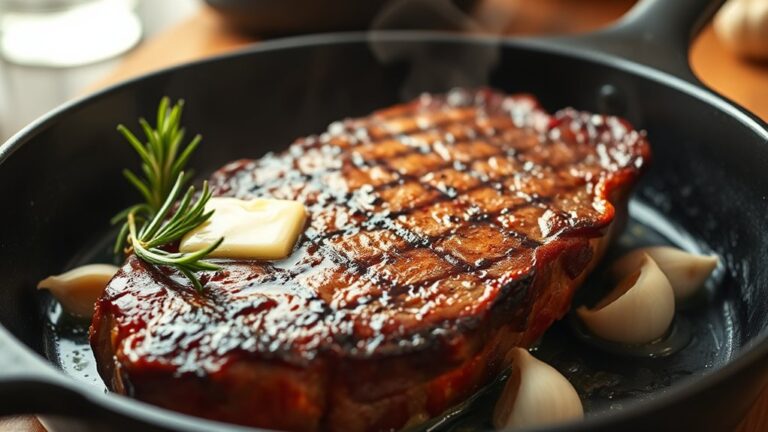
7 Easy Steps to Cook Flat Iron Steak on the Grill
Start by choosing a bright red flat iron steak about 1 to 1.5 inches thick with good marbling. This cut is known for its rich flavor and tenderness, making it ideal for grilling.
Season it simply with salt and pepper or marinate for up to four hours to boost flavor and tenderness.
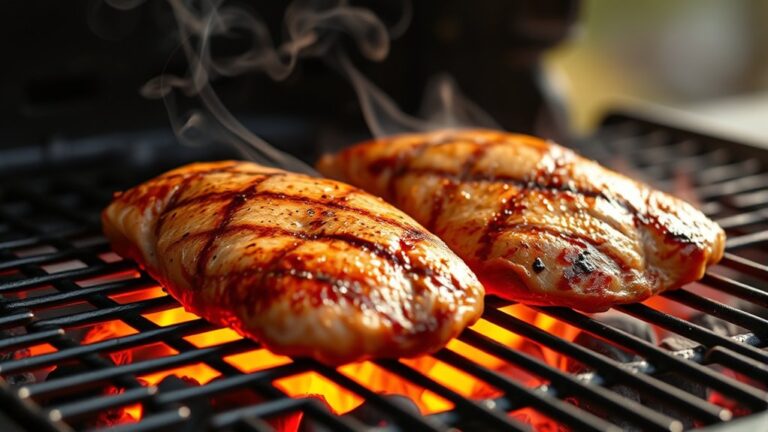
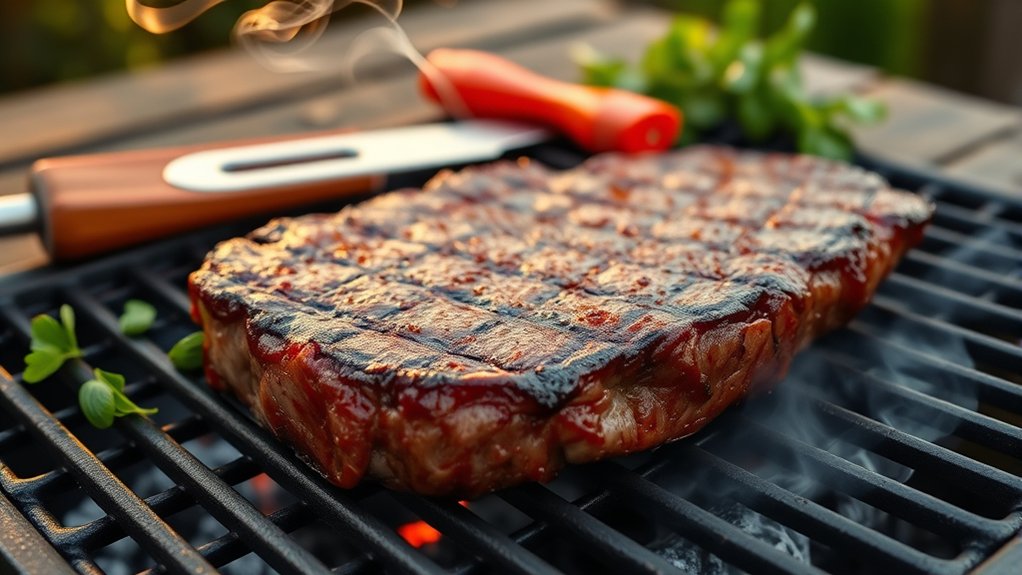
Preheat your grill to high heat around 450-500°F, then sear the steak about 4-5 minutes per side for medium-rare. Proper grilling technique is key to achieving the perfect crust and juicy interior.
Let it rest for 5-10 minutes before slicing against the grain at a slight angle.
Keep going to discover tips that make your steak even better. These easy steps to cook flat iron steak on the grill will help you master this flavorful cut every time.
Key Takeaways
- Choose a 1 to 1.5-inch thick flat iron steak with good marbling and bright red color for optimal flavor and tenderness.
- Season the steak evenly with salt and pepper or marinate for 1-4 hours to enhance juiciness and taste.
- Preheat the grill to high heat (450-500°F), clean, and oil the grates to prevent sticking and ensure a perfect sear.
- Grill the steak 4-5 minutes per side for medium-rare, using a meat thermometer to reach 130°F internal temperature.
- Let the steak rest for 5-10 minutes, then slice against the grain at a slight angle for maximum tenderness and presentation.
Pick the Best Flat Iron Steak for Grilling
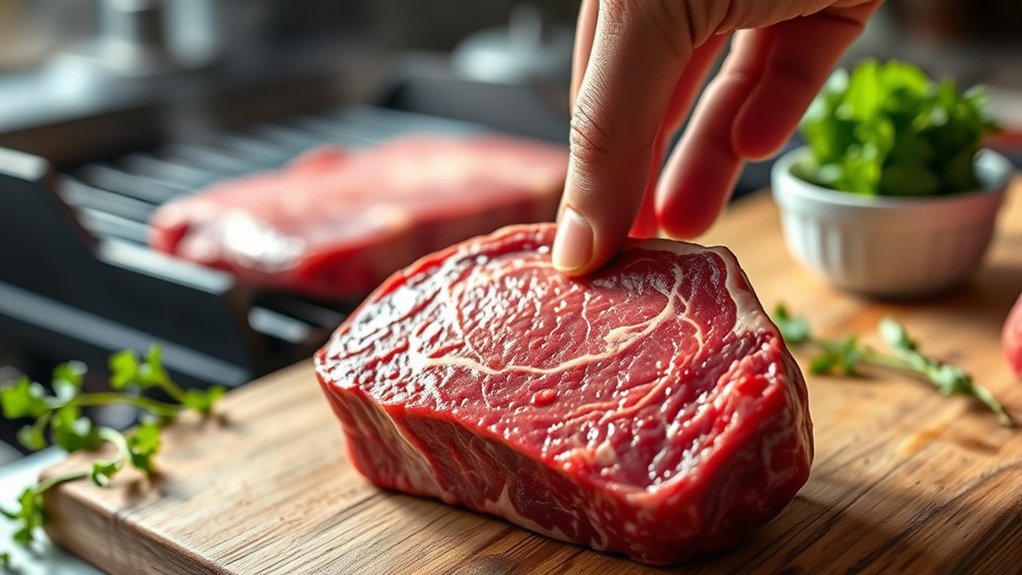
Before you fire up the grill, you need to choose the best flat iron steak to guarantee a flavorful and tender result. Look for steaks with good marbling—those streaks of fat throughout the meat will keep it juicy and add rich flavor as it cooks. Pick cuts that are about one to one-and-a-half inches thick to assure even grilling without drying out.
Avoid steaks with excessive gristle or connective tissue, as these can make the meat tough. Also, fresh meat with a bright red color indicates quality and freshness. If possible, buy from a trusted butcher who can help you select the best cut.
Taking a little extra time now sets you up for a perfectly grilled flat iron steak every time.
Season and Marinate Your Flat Iron Steak
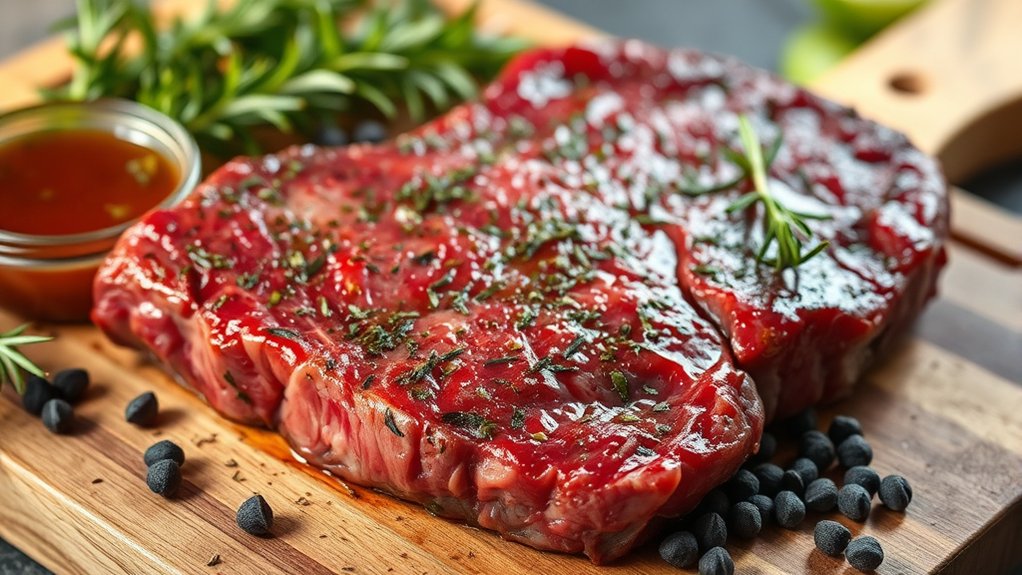
Since seasoning and marinating enhance the flavor and tenderness of your flat iron steak, you’ll want to give this step proper attention. Start with a simple rub of salt and pepper to bring out the natural taste. For extra flavor, marinate your steak for 1-4 hours using ingredients that complement beef.
Here’s a quick guide to popular seasonings and marinades:
| Seasoning | Marinade Ingredient |
|---|---|
| Salt & Pepper | Olive oil |
| Garlic Powder | Soy sauce |
| Paprika | Balsamic vinegar |
| Onion Powder | Worcestershire sauce |
| Crushed Red Pepper | Lemon juice |
Apply your seasoning or marinade evenly, then let the steak rest in the fridge. This step guarantees a juicy, flavorful outcome when you grill.
Preheat Your Grill for a Perfect Sear
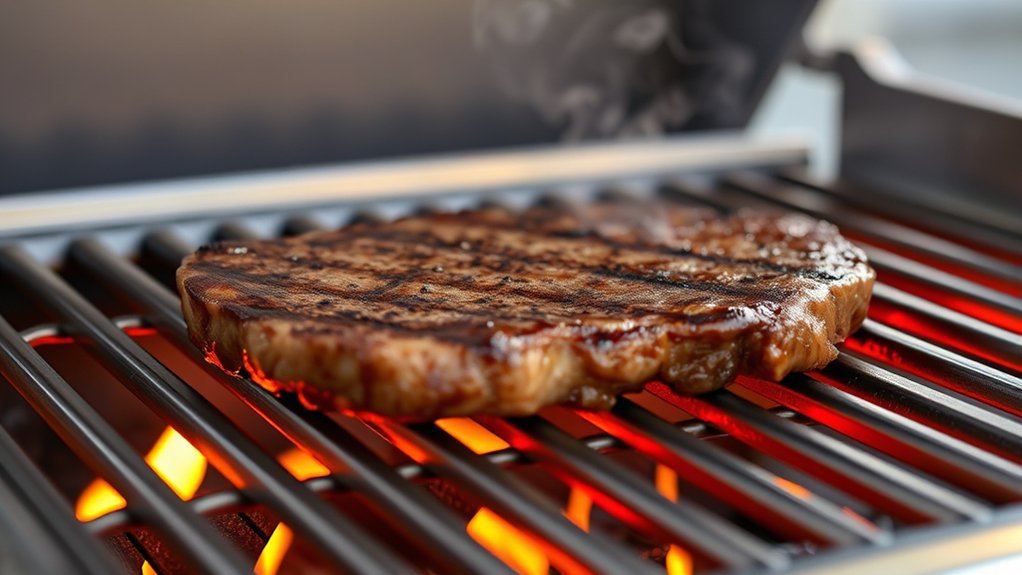
When you preheat your grill properly, you guarantee a perfect sear that locks in the steak’s juices and flavor. Start by cleaning the grill grates to prevent sticking and assure even heat. Turn your grill on to high heat and close the lid.
Let it preheat for at least 10-15 minutes until it reaches around 450-500°F (232-260°C). Use a grill thermometer or the built-in gauge to monitor the temperature accurately. A hot grill surface is key to creating that delicious crust instantly when your flat iron steak hits the grates.
Avoid placing the steak on a cool grill, as it won’t sear properly and could dry out. Proper preheating sets the stage for a flavorful, juicy steak every time.
Grill the Flat Iron Steak Over Direct Heat
Now that your grill is hot, place the flat iron steak directly over the flames to get that perfect sear. Make sure the heat is high enough to create a nice crust without burning the meat.
Keep a close eye on the timing to cook it just right for your preferred doneness.
Preparing The Grill
Before you place your flat iron steak on the grill, make sure it’s properly heated to achieve that perfect sear. Start by cleaning the grill grates thoroughly to prevent sticking and flare-ups. Use a grill brush to scrape off any residue from previous cooking sessions.
Next, oil the grates lightly using a paper towel dipped in cooking oil held with tongs. This step helps create a non-stick surface, ensuring your steak cooks evenly. Position your grill for direct heat by turning on all burners or placing the charcoal in a single pile.
Close the lid and let the grill preheat for about 10-15 minutes until it reaches an even temperature. A well-prepared grill sets the foundation for a juicy, flavorful flat iron steak cooked to perfection.
Achieving High Heat
How hot should your grill be to perfectly sear a flat iron steak? Aim for a high heat around 450°F to 500°F. This intense temperature creates a beautiful crust while locking in the steak’s juices.
To achieve this, preheat your grill on direct heat for at least 10-15 minutes with the lid closed. Avoid placing the steak over cooler spots; the goal is consistent, strong heat directly beneath the meat. Use a grill thermometer to check the temperature, ensuring you hit the sweet spot.
High heat also helps caramelize the natural sugars and proteins, giving you that rich, smoky flavor. Once your grill is properly heated, place the flat iron steak directly over the flames and get ready to sear it perfectly.
Timing The Cook
Once your grill reaches that ideal high heat, it’s time to focus on cooking the flat iron steak for just the right amount of time. You want to grill it over direct heat to get a beautiful sear while keeping the inside juicy. Timing is essential—overcook it, and it turns tough; undercook it, and it’s too rare.
Keep these tips in mind:
- Grill each side for about 4-5 minutes for medium-rare, adjusting time for thickness.
- Use a meat thermometer to check for 130°F (54°C) for medium-rare doneness.
- Let the steak rest for 5 minutes after grilling to redistribute juices.
Check Flat Iron Steak Doneness With a Meat Thermometer
Although grilling flat iron steak can be tempting to judge by sight or touch, using a meat thermometer guarantees you hit the perfect doneness every time. Simply insert the thermometer into the thickest part of the steak, avoiding bone or fat. For rare steak, look for 125°F; medium-rare is 130°F to 135°F; medium falls between 140°F and 145°F; and well-done reaches 160°F or higher.
Checking the temperature assures consistent results and prevents overcooking or undercooking. Digital instant-read thermometers work best for quick, accurate readings. Remember to check the temperature a few minutes before you expect the steak to be done, as carryover heat will raise the internal temperature slightly after removing it from the grill.
This step helps you serve a perfectly cooked flat iron steak every time.
Let the Steak Rest to Retain Juices
After you’ve checked the steak’s temperature and taken it off the grill, resist the urge to cut into it right away. Letting your flat iron steak rest is essential to keep all those flavorful juices locked inside. When the steak rests, the muscle fibers relax, allowing the juices to redistribute evenly throughout the meat instead of spilling out onto your plate.
Here’s how to make the most of this resting period:
- Tent the steak loosely with foil to keep it warm without trapping steam.
- Rest it for about 5 to 10 minutes, depending on the steak’s thickness.
- Avoid pressing down or poking the steak, which can squeeze out juices prematurely.
Slice Flat Iron Steak Against the Grain for Tenderness
You’ll want to identify the grain of the flat iron steak before slicing to guarantee tenderness. Cutting against the grain shortens muscle fibers, making each bite easier to chew.
Use a sharp knife and steady hand to create even, clean slices for the best texture.
Understanding Meat Grain
When you slice flat iron steak against the grain, you break up the muscle fibers, making each bite more tender and easier to chew. Understanding the meat grain is key to this process. The grain refers to the direction of the muscle fibers running through the steak.
If you cut parallel to these fibers, the steak will be tougher and chewier. To identify the grain, look for the long, stringy lines on the surface of the meat. Here’s what to keep in mind:
- The grain usually runs lengthwise along the steak.
- It’s easier to spot on flat iron steaks because of their distinct muscle pattern.
- Cutting perpendicular to the grain shortens muscle fibers, enhancing tenderness.
Benefits Of Slicing Against
Slicing your flat iron steak against the grain releases several key benefits that make every bite more enjoyable. When you cut across the muscle fibers instead of parallel to them, you shorten those fibers, making the meat easier to chew. This simple technique transforms a potentially tough steak into a tender, juicy experience.
You’ll notice the steak feels softer and less stringy, enhancing its natural flavor. Plus, slicing against the grain helps the steak retain moisture, so each piece stays juicy rather than drying out quickly. By adopting this method, you maximize tenderness and flavor without extra effort.
It’s a small step that elevates your grilled flat iron steak from good to truly delicious with every slice you serve.
Techniques For Even Cuts
Although it might seem simple, cutting your flat iron steak evenly requires attention to detail and proper technique. To guarantee tenderness, always slice against the grain, which shortens muscle fibers and makes the meat easier to chew. Before you start, let the steak rest to retain juices, then use a sharp knife for clean cuts.
Pay close attention to the grain direction—it usually runs lengthwise. Here are key techniques to help you achieve even slices:
- Use a slicing motion rather than pressing down to maintain meat texture.
- Cut at a slight angle to increase the surface area for more flavorful bites.
- Keep your slices consistent in thickness, ideally about ¼ inch, for uniform cooking and presentation.
Master these steps, and your flat iron steak will be perfectly tender every time.
Frequently Asked Questions
Can I Cook Flat Iron Steak Indoors Without a Grill?
Yes, you can cook flat iron steak indoors using a cast-iron skillet or grill pan. Just preheat it, season your steak, sear both sides, then finish in the oven for juicy, flavorful results without a grill.
What Side Dishes Pair Best With Grilled Flat Iron Steak?
Think of your plate as a colorful garden—roasted garlic mashed potatoes, grilled asparagus, and a fresh tomato salad dance together.
You’ll love how these sides brighten and balance your juicy, smoky flat iron steak perfectly.
How Long Can Cooked Flat Iron Steak Be Stored Safely?
You can safely store cooked flat iron steak in the fridge for 3 to 4 days.
Make sure to keep it in an airtight container or wrapped tightly to maintain freshness and prevent bacterial growth.
Is Flat Iron Steak Suitable for Slow Cooking Methods?
Think of flat iron steak like a sturdy bridge—it’s best for quick, strong support rather than slow, gentle wear. You shouldn’t slow cook it; you’ll lose its tenderness and flavor by overcooking.
Keep it quick!
Can I Freeze Flat Iron Steak Before or After Grilling?
You can freeze flat iron steak both before and after grilling. Just make sure to wrap it tightly to prevent freezer burn.
Thaw it slowly in the fridge for the best texture and flavor when you’re ready to cook or eat.
Conclusion
Now that you know how to grill the perfect flat iron steak in just seven easy steps, why settle for anything less? You’ve picked the best cut, seasoned it right, and mastered the grill’s heat.
By checking doneness and letting it rest, you guarantee every bite stays juicy and tender. Remember to slice against the grain for maximum tenderness.
Ready to impress your taste buds and guests with your new grilling skills? Follow these simple flat iron steak grilling tips to enjoy a delicious, restaurant-quality meal every time!