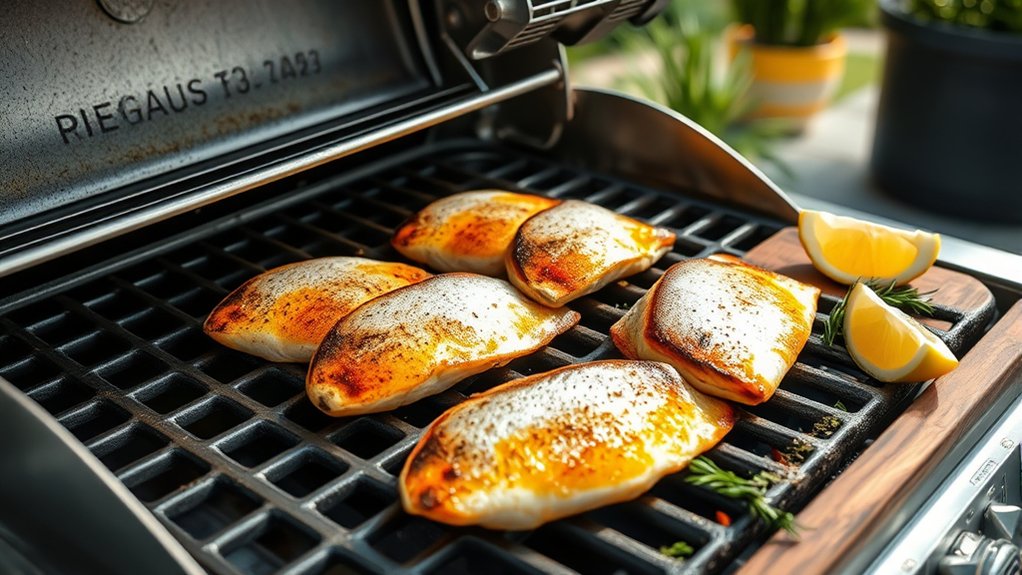
How to Grill Trout Fillets on a Gas Grill in 7 Easy Steps
Choose fresh, firm, skin-on trout fillets about half an inch thick for the best grilling results.
Grilling trout fillets on a gas grill is a quick and delicious way to enjoy this flavorful fish. Preheat your gas grill to medium-high, clean, and oil the grates to prevent sticking.
Pat the fillets dry, brush them with high-smoke-point oil, and season lightly with salt and pepper. Grill skin-side down for 3-4 minutes, flip carefully, and cook 2-3 more minutes until opaque and flaky.
Use a thermometer for accuracy and avoid overcooking.
Follow these simple steps for perfectly grilled trout fillets every time. Once you master this method, you’ll be ready to explore tips on perfect grilling and serving.
Key Takeaways
- Preheat the gas grill to medium-high heat (375-400°F) and clean, oil the grates for even cooking and grill marks.
- Choose fresh, firm, skin-on trout fillets about half an inch thick for better flavor and grilling stability.
- Pat fillets dry, brush with high-smoke-point oil, and season lightly with salt, pepper, and optional garlic or lemon zest.
- Grill fillets skin-side down for 3-4 minutes, then flip gently and cook 2-3 more minutes until flesh is opaque and flakes.
- Check doneness by flesh color, clear juices, and internal temperature of 125-130°F; remove before overcooking for tender trout.
Choose the Right Trout Fillets for Grilling
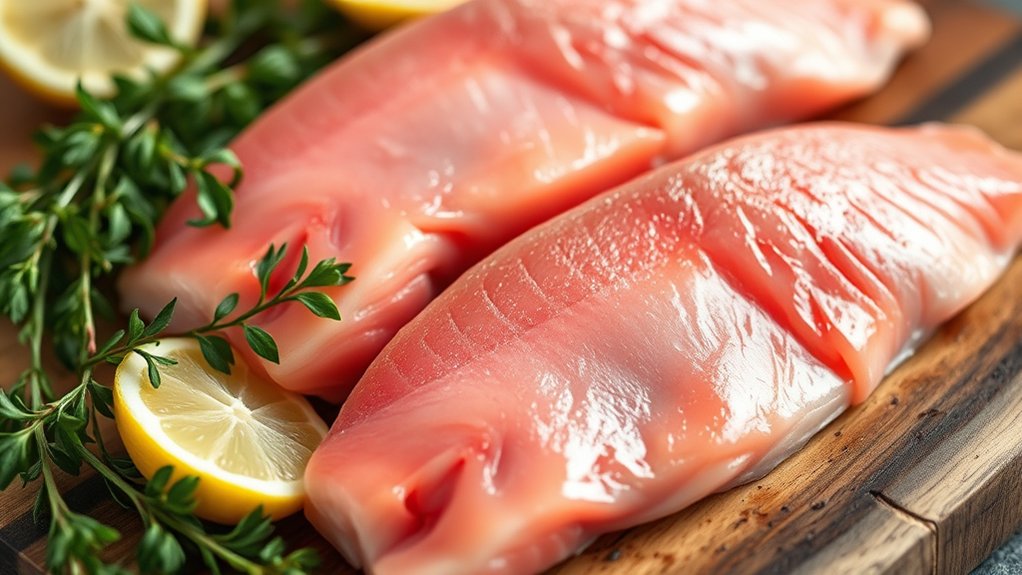
Before you start grilling, you’ll want to select trout fillets that are fresh and firm. Look for fillets with moist, translucent flesh and a mild, clean smell—avoid any fish that smells overly fishy or sour. Choose fillets that are about half an inch thick to guarantee even cooking without drying out.
Skin-on fillets work best for grilling because the skin helps hold the fish together and adds flavor. If you can, opt for wild-caught trout since it tends to have a richer taste and firmer texture compared to farmed varieties. When buying, check that the fillets are free from bruises or dark spots, which indicate poor quality.
Selecting the right fillets sets you up for a delicious grilled trout every time.
Prepare Your Gas Grill for Perfect Heat
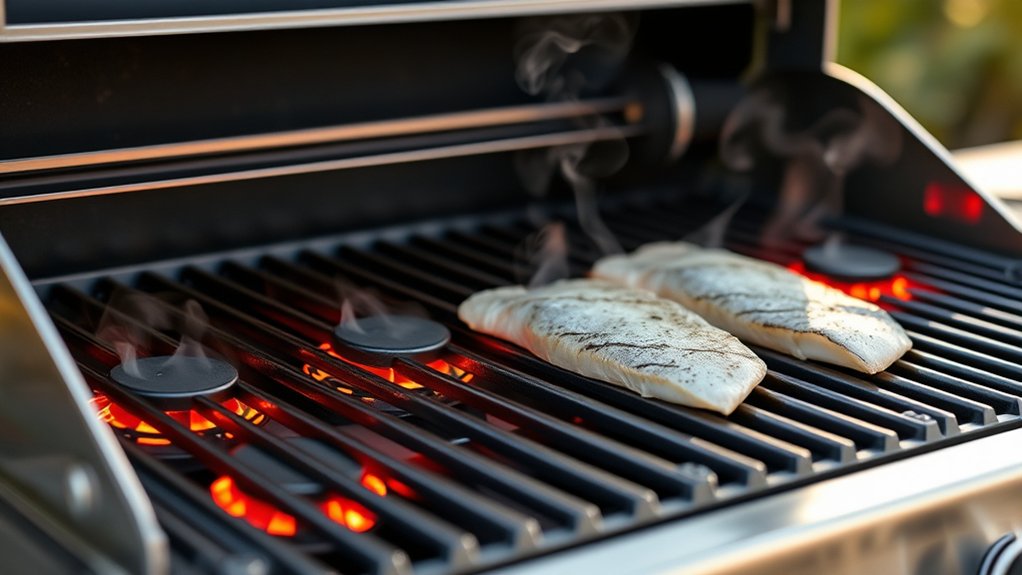
When you fire up your gas grill, make sure to preheat it to medium-high heat, around 375 to 400 degrees Fahrenheit, to achieve a perfect sear without overcooking the trout. Start by cleaning the grill grates thoroughly to prevent sticking and flare-ups. Use a grill brush to remove any leftover residue from previous cooking sessions.
Once clean, lightly oil the grates using a paper towel dipped in oil and tongs, which helps create a non-stick surface. Close the lid and allow the grill to reach the desired temperature, giving it about 10 to 15 minutes. Keeping the grill at an even temperature guarantees your trout cooks evenly and develops those beautiful grill marks you’re aiming for.
Season and Oil Trout Fillets Properly
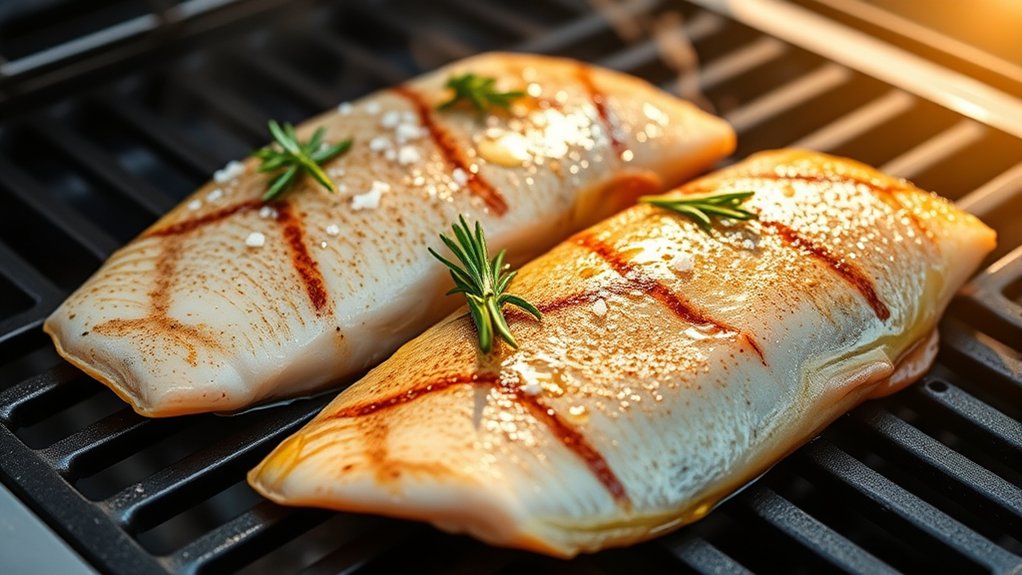
Although trout has a delicate flavor, seasoning it properly enhances its natural taste without overpowering it. Start by patting the fillets dry with paper towels to help the oil and seasoning stick. Lightly brush both sides with a high-smoke-point oil like canola or grapeseed oil to prevent sticking and promote even grilling.
Next, sprinkle a pinch of salt and freshly ground black pepper for basic seasoning. You can add a touch of garlic powder or lemon zest for subtle flavor boosts. Avoid heavy marinades that can mask the trout’s freshness.
Keep the seasoning simple and balanced so the fish’s natural sweetness shines through. Once seasoned and oiled, your trout fillets are ready for the grill, ensuring they cook evenly without sticking or drying out.
Grill Trout Fillets in Two Simple Steps
Since the fillets are seasoned and oiled, you can grill them quickly and easily. Follow these two simple steps to achieve perfectly grilled trout every time:
Seasoned and oiled, these trout fillets grill quickly for a simple, delicious meal every time.
- Preheat Your Grill: Turn your gas grill to medium-high heat and let it warm up for about 10 minutes. This guarantees even cooking and those beautiful grill marks you want.
- Grill the Fillets: Place the trout skin-side down on the grill. Cook for 3-4 minutes, then gently flip and grill for another 2-3 minutes until the flesh is opaque and flakes easily.
With just these two steps, you’ll enjoy tender, flavorful trout that’s sure to impress. It’s straightforward, fast, and delicious—perfect for any grilling occasion!
Prevent Trout From Sticking: Easy Tips and Tools
To keep your trout fillets from sticking to the grill, you need the right preparation and tools. Start by preheating the grill and cleaning the grates thoroughly with a grill brush. Then, oil the grates using a paper towel dipped in high-smoke-point oil like canola or grapeseed; use tongs to avoid burns.
Next, lightly brush your trout fillets with oil—this adds a protective layer that helps prevent adhering. Consider using a fish basket or grilling mat designed for delicate fish to make flipping easier and reduce sticking. Finally, make sure not to move the fillets too soon; letting them sear properly will naturally release them from the grill.
These simple steps ensure your trout stays intact and looks as good as it tastes.
Check Trout Doneness and Avoid Overcooking
You’ll know your trout is done when the flesh turns opaque and flakes easily with a fork. Aim for an internal temperature of 145°F to guarantee it’s perfectly cooked without drying out.
Keep a close eye on the fillets to avoid overcooking, which can make the fish tough and less flavorful.
Visual Cues For Doneness
Although grilling trout fillets can be quick, knowing when they’re perfectly cooked requires keen observation. You don’t want to ruin your meal by overcooking, so watch closely for these visual cues:
- The flesh turns opaque and milky white instead of translucent.
- The fillet flakes easily when you gently press it with a fork.
- The edges start to crisp and pull slightly away from the skin.
- Juices run clear and not milky or pink when pierced.
Temperature Guidelines To Follow
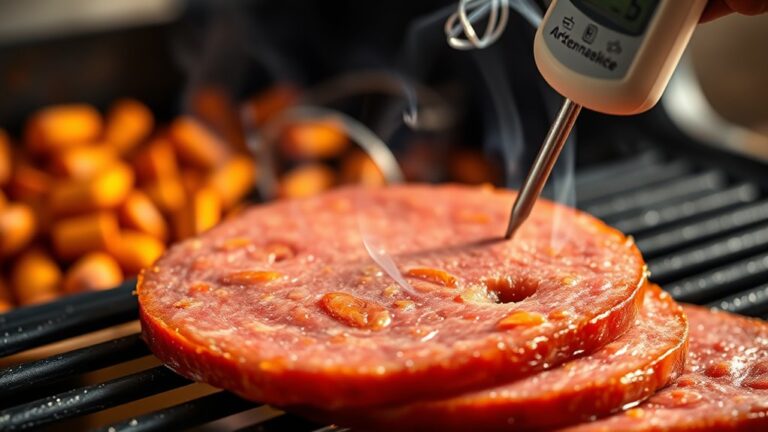
When grilling trout fillets, knowing the right internal temperature is key to achieving perfect doneness without overcooking. Use a reliable food thermometer to check the trout’s internal temperature. Aim for 125°F to 130°F for medium-rare, where the flesh flakes easily but stays moist.
If you prefer well-done, 140°F is the upper limit before the fish starts drying out. Remember to insert the thermometer into the thickest part of the fillet for an accurate reading.
| Temperature (°F) | Doneness Level |
|---|---|
| 120-125 | Rare |
| 125-130 | Medium-Rare |
| 130-135 | Medium |
| 135-140 | Medium-Well |
| Above 140 | Well-Done (Dry) |
Stick to these guidelines to check doneness and avoid overcooking.
Tips To Prevent Overcooking
To keep your trout fillets juicy and tender, monitor the cooking time closely and rely on visual cues alongside a thermometer. Overcooking can ruin the delicate texture, so stay attentive.
Here are four essential tips to prevent it:
- Use a digital thermometer to check for 145°F internal temperature.
- Watch for the flesh to turn opaque and flake easily with a fork.
- Grill skin-side down first to lock in moisture.
- Remove the fillets from heat a minute before they’re fully done; residual heat will finish cooking.
Serve and Garnish Your Grilled Trout Fillets
Since grilled trout fillets have a delicate flavor and flaky texture, you’ll want to serve them with simple, fresh garnishes that enhance rather than overpower the fish. Try squeezing fresh lemon juice over the fillets right before serving to add brightness. Sprinkle chopped fresh herbs like parsley, dill, or chives for a burst of color and subtle flavor.
You can also add thinly sliced green onions or a light drizzle of olive oil infused with garlic or herbs. Serve your trout alongside a crisp salad or grilled vegetables to keep the meal light and complementary. Avoid heavy sauces or too many strong seasonings that mask the natural taste.
Keep it straightforward, and your grilled trout will shine on the plate.
Frequently Asked Questions
Can I Grill Frozen Trout Fillets Directly Without Thawing?
You shouldn’t grill frozen trout fillets directly without thawing. They’ll cook unevenly and may stick to the grill.
It’s best to thaw them first for even cooking, better texture, and enhanced flavor.
What Type of Wood Chips Add the Best Flavor to Grilled Trout?
You’ll get the best flavor using fruit woods like apple or cherry, which add a mild, sweet smoke. Alder is also great for trout, providing a delicate, slightly nutty aroma that complements the fish perfectly.
How Long Can Grilled Trout Fillets Be Stored in the Refrigerator?
You can store grilled trout fillets in the refrigerator for up to 3 to 4 days. Make sure to keep them in an airtight container to maintain freshness and prevent any unwanted odors from spreading.
This will help preserve the flavor and texture of the fish. Always check for any signs of spoilage before consuming. Proper storage is key to enjoying your grilled trout safely.
Is It Safe to Reuse Marinade for Basting During Grilling?
You shouldn’t reuse marinade for basting unless you boil it first to kill bacteria. Raw marinade can contain harmful pathogens from the fish, so always cook it thoroughly before applying during grilling to stay safe.
Boiling the marinade ensures that any harmful bacteria are destroyed. This step is crucial because using raw marinade directly can lead to foodborne illness. Always prioritize food safety when grilling.
Can I Grill Trout Fillets on an Electric or Charcoal Grill Instead?
You absolutely can grill trout fillets on electric or charcoal grills! Each adds unique flavors—charcoal gives smoky depth, electric offers convenience.
Just adjust heat and cooking time, and you’ll enjoy delicious, perfectly grilled trout every time.
Conclusion
Now that you’ve chosen fresh trout, prepped your grill, seasoned your fillets, and mastered the perfect cooking time, you’re ready to enjoy a delicious meal. Remember to prevent sticking, check doneness carefully, and garnish with your favorite herbs.
Grill with confidence, savor every bite, and share the joy. Grilling trout isn’t just cooking—it’s creating moments, making memories, and celebrating flavor.
So fire up your grill, and let the good times begin! Follow these simple steps to grill trout fillets on a gas grill perfectly every time. Enjoy the fresh, smoky taste that only grilling trout can deliver!