How to Make Tahini Paste With a Blender in 7 Easy Steps
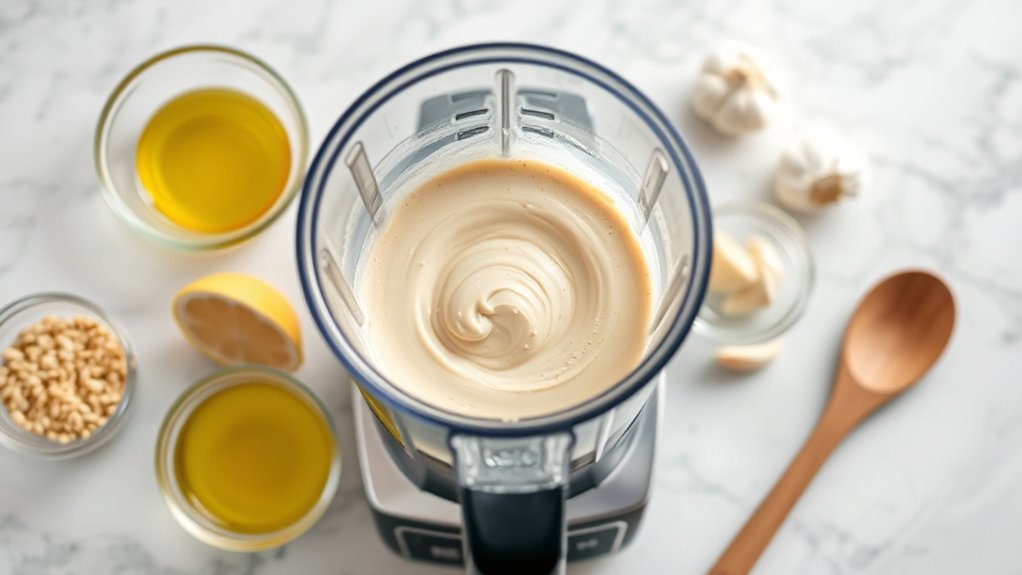
To make tahini paste with a blender in seven easy steps, start by gathering quality sesame seeds, neutral oil, and optional salt. Using a blender to make tahini ensures a smooth and creamy texture, perfect for various recipes.
Roast the sesame seeds in a dry skillet until they turn golden. Allow the seeds to cool completely before blending.
Add the cooled seeds to your blender along with the oil. Blend until smooth and creamy, adding more oil or water to achieve your preferred consistency.
Store the tahini paste in the fridge and stir well before each use. Keep reading to discover tips for perfecting your tahini and creative ways to enjoy it.
Key Takeaways
- Roast sesame seeds in a dry skillet over medium heat until golden and fragrant, about 3-5 minutes.
- Let the roasted seeds cool completely for 10-15 minutes before blending.
- Blend cooled sesame seeds with neutral oil in a blender, scraping sides frequently for a smooth texture.
- Add oil gradually during blending to achieve desired creaminess and consistency.
- Store tahini in an airtight container in the refrigerator and stir before use to mix separated oil.
Get Your Ingredients and Tools Ready for Tahini Paste
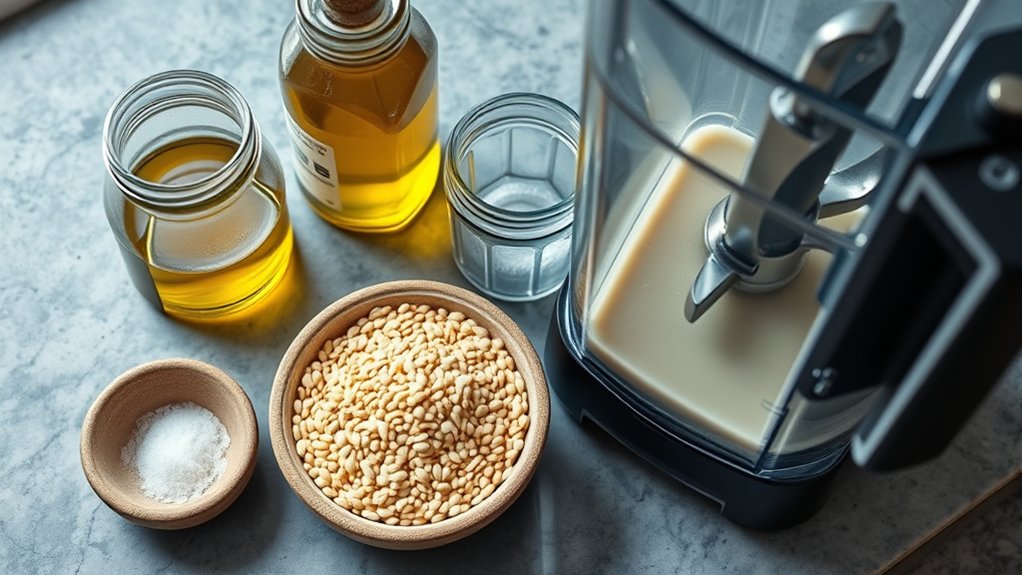
Before you start making tahini paste, gather all the ingredients and tools you’ll need. You’ll want raw or hulled sesame seeds as your main ingredient. Choose high-quality seeds to guarantee a smooth, rich paste.
Besides sesame seeds, you’ll need a neutral oil like vegetable or light olive oil to help blend the seeds into a creamy consistency. Salt is optional but adds flavor. As for tools, get a sturdy blender or food processor since you’ll be processing the seeds until smooth.
Have a spatula ready to scrape down the sides during blending. A measuring cup helps with accurate oil amounts, and a bowl or jar will store your finished tahini. Having everything ready makes the process smoother and faster once you begin.
Roast Sesame Seeds for Better Tahini Flavor
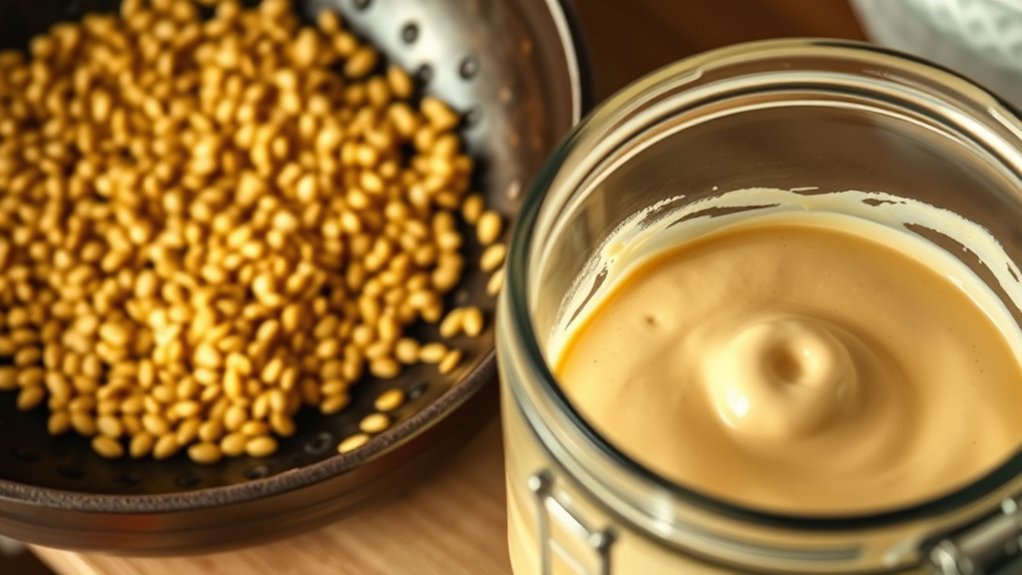
Once you’ve gathered your ingredients and tools, it’s time to enhance the flavor of your tahini by roasting the sesame seeds. Roasting brings out a nutty aroma and deepens the taste, making your tahini richer and more flavorful.
Enhance your tahini’s flavor by roasting sesame seeds for a richer, nuttier, and more aromatic taste.
Here’s how to do it right:
- Heat a pan over medium heat – Use a dry skillet without oil to avoid altering the tahini’s natural flavor.
- Add the sesame seeds in a single layer – Stir frequently to ensure even roasting and prevent burning.
- Watch for a golden color and fragrant smell – This usually takes 3-5 minutes; remove immediately once you notice these signs.
Roasting your seeds carefully will give your tahini a delicious, authentic flavor that’s worth the extra step.
Cool and Prepare Sesame Seeds for Blending
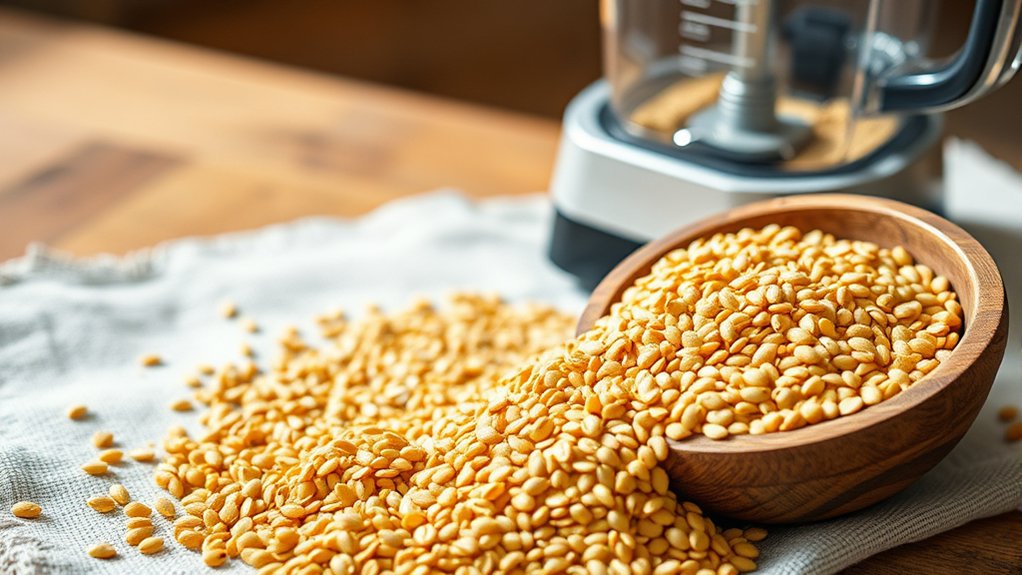
After roasting, let the sesame seeds cool completely so they don’t overheat your blender or food processor. Spread them out on a plate or baking sheet and give them about 10 to 15 minutes to reach room temperature. This step is essential because warm seeds can cause your appliance to strain or even damage the motor.
Once cooled, check for any burnt or unevenly roasted seeds and remove them to guarantee a smooth, balanced flavor. Measure the amount you need for your recipe, usually about one cup for a typical batch. If your seeds feel a bit dry, you can lightly toast them again, but avoid overdoing it.
Now, your sesame seeds are perfectly prepped and ready for the next step: blending into creamy tahini.
Blend Sesame Seeds Into Smooth Tahini Paste
Now that your sesame seeds are ready, it’s time to blend them into a smooth tahini paste. Use high-quality seeds to guarantee a rich, nutty flavor that shines through. Focus on blending until you reach a creamy texture without any gritty bits.
Choosing Quality Sesame Seeds
Because the quality of your sesame seeds directly affects the flavor and texture of your tahini paste, selecting the right seeds is essential. You want seeds that are fresh, clean, and free from any off-smells or discoloration.
Here’s how to pick the best:
- Opt for raw or lightly toasted seeds – Raw seeds offer a mild, nutty flavor, while lightly toasted ones bring a deeper, richer taste.
- Check the source – Buy from reputable brands or specialty stores to ensure freshness and quality.
- Consider hulled vs. unhulled – Hulled seeds yield smoother tahini with a milder flavor; unhulled seeds add a slightly bitter, earthier taste and more fiber.
Choosing quality seeds sets a solid foundation for delicious tahini paste.
Achieving Perfect Texture
How do you transform simple sesame seeds into a silky, smooth tahini paste? Start by toasting the seeds lightly to enhance their nutty flavor. Once cooled, add them to your blender along with a neutral oil like grapeseed or light olive oil.
Blend on high, pausing occasionally to scrape down the sides. This helps incorporate all the seeds evenly. You want to keep blending until the mixture reaches a creamy, pourable consistency without any gritty bits.
If the paste feels too thick, add oil gradually, a tablespoon at a time, until you achieve that perfect texture. Remember, patience is key—rushing the process can leave you with a coarse paste. With these steps, you’ll get smooth, luscious tahini every time.
Adjust Tahini Texture by Adding Oil or Water
Although tahini paste has a naturally thick consistency, you can easily adjust its texture by adding a small amount of oil or water. This helps you achieve the perfect creaminess for your recipes.
Tahini’s naturally thick texture can be effortlessly softened with a bit of oil or water for ideal creaminess.
To adjust your tahini paste:
- Add oil: Use neutral oils like vegetable or light olive oil. Start with a teaspoon, blending until smooth. Oil makes the tahini silkier and richer.
- Add water: Add water gradually, one teaspoon at a time. Water thins the paste without altering the flavor, ideal for dressings or sauces.
- Blend thoroughly: After each addition, blend well to incorporate liquid evenly and check the texture so it doesn’t get too runny.
Store Your Homemade Tahini Paste Properly
Once you’ve adjusted your tahini to the perfect texture, keeping it fresh will guarantee it stays delicious and ready to use. Store your tahini in an airtight container to prevent it from absorbing other fridge odors. Keep it refrigerated to slow down oxidation and maintain its rich, nutty flavor.
Stir your tahini before each use, as natural oil separation can occur.
| Storage Tip | Reason |
|---|---|
| Use airtight jars | Prevents moisture and odors |
| Refrigerate | Extends shelf life |
| Stir before use | Re-mixes separated oil |
| Avoid heat & light | Preserves flavor and nutrients |
Following these simple steps will keep your homemade tahini fresh for up to a month.
Make Recipes With Your Tahini Paste
Since you’ve mastered making and storing tahini paste, you can now explore a variety of delicious recipes that highlight its creamy, nutty flavor. Tahini adds depth and richness to both savory and sweet dishes, making it a versatile kitchen staple.
Here are three tasty ways to use your homemade tahini:
- Classic Hummus – Blend tahini with chickpeas, lemon juice, garlic, and olive oil for a smooth, flavorful dip.
- Tahini Salad Dressing – Whisk tahini with lemon juice, water, and a pinch of salt for a creamy, tangy dressing perfect on greens or roasted veggies.
- Tahini Cookies – Incorporate tahini into your cookie dough for a unique, nutty twist on traditional cookies.
Try these recipes to enjoy your tahini paste in new and exciting ways!
Frequently Asked Questions
Can Tahini Paste Be Made Without Roasting Sesame Seeds?
Yes, you can make tahini paste without roasting sesame seeds, but it’ll have a milder, more bitter flavor. Raw seeds give a different taste and texture, so expect a less rich and nutty result.
What Are the Health Benefits of Tahini Paste?
You’ll benefit from tahini’s healthy fats, protein, and fiber, which support heart health and digestion. It’s rich in vitamins and minerals like calcium, magnesium, and iron, boosting your bones and immune system naturally.
How Long Does Tahini Paste Last in the Refrigerator?
When Sarah stored her homemade tahini, she noticed it lasted about a month in the fridge. You’ll find tahini paste stays fresh for 4 to 6 weeks if you keep it sealed tightly and chilled consistently.
Can I Use Tahini Paste as a Substitute for Peanut Butter?
Yes, you can use tahini paste as a substitute for peanut butter, but it has a more bitter, sesame flavor and thinner texture.
Adjust sweetness and consistency to suit your taste and recipe needs.
Is It Possible to Make Tahini Paste With Raw Sesame Seeds?
Absolutely, you can make tahini with raw sesame seeds! Remember, “Rome wasn’t built in a day.” Toasting seeds deepens flavor, but raw seeds give a milder taste;
just blend patiently until smooth and creamy.
Conclusion
Now that you’ve mastered making tahini paste with just a blender, you’re joining a tasty tradition—did you know tahini is a staple in Middle Eastern cuisine, used in over 50% of their dishes?
With your homemade tahini, you can add rich, nutty flavor to countless recipes. Keep it stored well, and enjoy experimenting with your new kitchen staple.
You’ll love how easy and versatile tahini can be! Making tahini paste with a blender is a simple way to enhance your meals with authentic Middle Eastern flavors.