How Long Do You Fry Shrimp in a Pan in 7 Easy Steps?
To fry shrimp perfectly in a pan, start by choosing fresh, medium to large shrimp and pat them dry after deveining. Properly frying shrimp ensures a crispy texture and delicious flavor.
Season just before cooking, using your favorite spices or a light marinade to enhance taste without overpowering the shrimp.
Heat a cast iron or non-stick pan with a high smoke point oil like canola or vegetable oil.
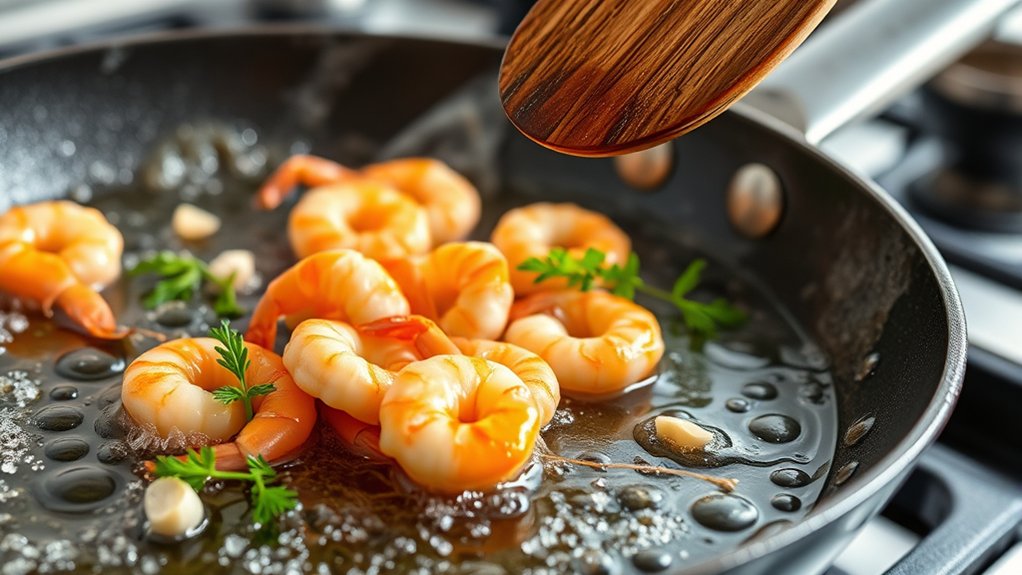
Fry shrimp for about 2-3 minutes per side until they turn golden and crispy.
Avoid overcrowding the pan to ensure even cooking.
Once cooked, drain the shrimp on paper towels to remove excess oil.
Serve hot with lemon wedges or your favorite dipping sauce.
Keep reading to uncover tips on seasoning, storage, and reheating for the best results.
Key Takeaways
- Heat oil in a pan over medium-high heat until shimmering before adding shrimp.
- Fry shrimp for 2-3 minutes per batch, turning once for even cooking.
- Cook shrimp until they turn pink and opaque with a golden crispy coating.
- Avoid overcrowding the pan to ensure even frying and prevent steaming.
- Drain cooked shrimp on paper towels to maintain crispness before serving.
How to Choose the Right Shrimp for Pan Frying
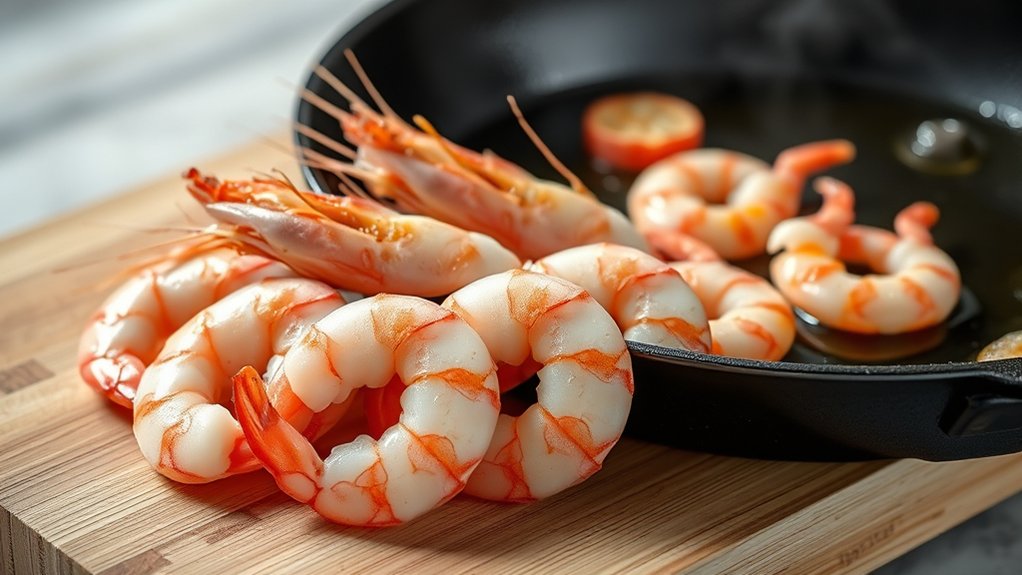
How do you pick the best shrimp for pan frying? Start by choosing shrimp that are fresh or properly thawed if frozen. Look for firm, translucent flesh with a mild ocean scent—avoid any with a strong fishy smell.
Size matters; medium to large shrimp work best because they cook evenly without drying out. Decide if you want peeled or shell-on shrimp; peeled saves time, but shells add flavor. Opt for wild-caught shrimp if you can—they often have better texture and taste.
Avoid pre-cooked or heavily processed shrimp, as they won’t fry well. Finally, make sure your shrimp are deveined for a cleaner bite. Picking the right shrimp sets you up for perfectly pan-fried results every time.
How Long to Fry Shrimp and How to Tell When They’re Done
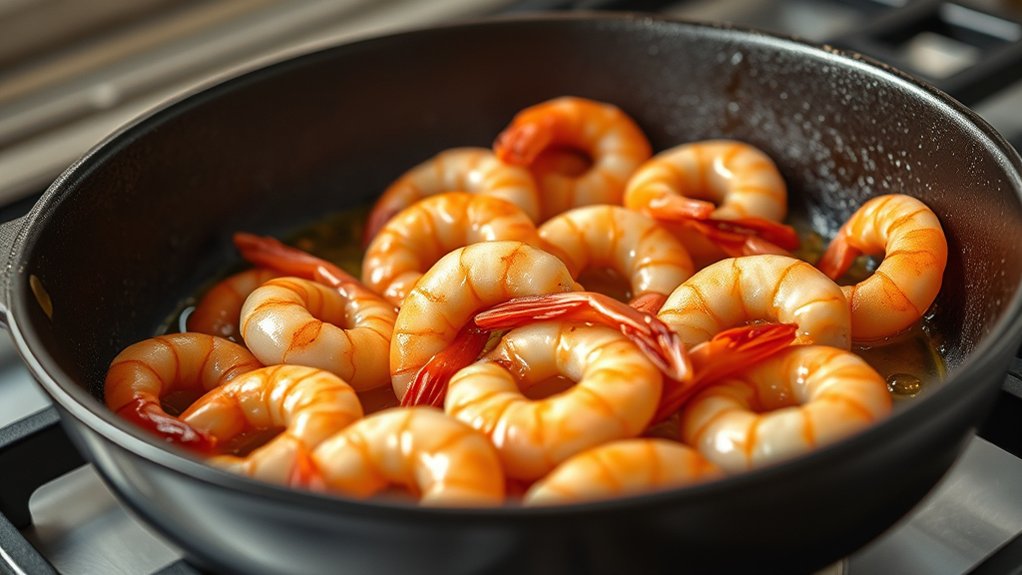
Once you’ve selected the perfect shrimp, the next step is knowing exactly how long to fry them and how to tell when they’re perfectly cooked. Generally, shrimp take about 2-3 minutes per side over medium-high heat. You’ll want to watch closely—overcooking makes them rubbery.
Shrimp are done when they turn opaque and pink, with a slight curl forming a loose “C” shape. If they curl tightly into an “O,” they’re likely overcooked. The texture should be firm but still tender.
To test, cut into one; it should be white all the way through without any translucency. Keep your pan hot and don’t overcrowd it, so the shrimp fry evenly. Following these cues guarantees juicy, flavorful shrimp every time.
How to Prepare Shrimp for Frying
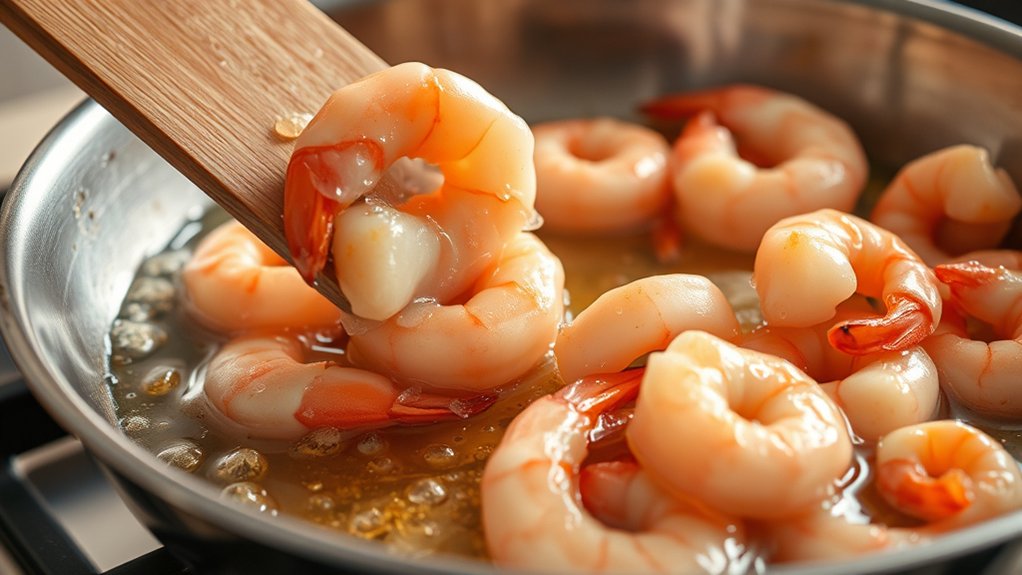
Before you start frying, make sure to clean and devein your shrimp properly for the best texture and taste. Next, season or marinate them to add flavor that will complement your cooking.
These simple steps will set you up for perfectly cooked shrimp every time.
Cleaning And Deveining
Although cleaning and deveining shrimp might seem tedious, doing it properly guarantees a better texture and taste when frying. Start by rinsing the shrimp under cold water. Then, use a small paring knife or shrimp deveiner to make a shallow cut along the back to remove the dark vein.
This removes grit and improves flavor. Peel the shell off if desired, leaving the tail on for presentation or removing it for easier eating.
| Step | Tool Needed | Tip |
|---|---|---|
| Rinse | Cold Water | Use a colander for ease |
| Cut Back | Paring Knife | Shallow cut to avoid damage |
| Remove Vein | Deveiner/Pick | Pull out the vein carefully |
| Peel Shell | Hands | Leave tail for looks |
| Pat Dry | Paper Towel | Ensures better frying |
Seasoning And Marinating
When you season and marinate shrimp properly, you enhance its natural flavor and guarantee a juicy, tender bite after frying. Start by patting your cleaned shrimp dry to help the seasoning stick. Use a simple mix of salt, pepper, garlic powder, and paprika for a classic taste.
If you want to marinate, combine olive oil, lemon juice, minced garlic, and herbs like parsley or cilantro. Let the shrimp sit in the marinade for 15 to 30 minutes—no longer, or the acid can start to cook the shrimp and alter its texture. Remember, seasoning is key, but don’t overpower the shrimp’s delicate flavor.
After marinating, drain excess liquid before frying to avoid splattering and assure even cooking.
How to Pick the Best Pan and Oil for Frying Shrimp
Choosing the right pan and oil plays an essential role in achieving perfectly fried shrimp with a crispy exterior and juicy interior. You want a pan that heats evenly and holds temperature well—non-stick or cast iron work best. For oil, choose one with a high smoke point like peanut or canola oil to prevent burning and maintain flavor.
Here’s a quick guide to help you pick:
| Pan Type | Why You’ll Love It |
|---|---|
| Cast Iron | Retains heat, crispy crust |
| Non-stick | Easy cleanup, less oil |
| Stainless Steel | Durable, even heating |
| Oil Type | Why You’ll Love It |
| Peanut Oil | High smoke point, neutral |
| Canola Oil | Affordable, mild flavor |
| Vegetable Oil | Versatile, good for frying |
How to Season and Flavor Shrimp While Frying
To bring out the best flavors in your shrimp, you’ll want to season them just before frying to keep the spices fresh and vibrant. Start with a simple mix of salt, pepper, and paprika for a classic taste. You can add garlic powder, cayenne, or chili flakes if you like a bit of heat.
Toss the shrimp gently in the seasoning to coat evenly. When the shrimp hits the hot oil, the spices will toast slightly, enhancing their aroma. For extra flavor, throw in minced garlic or fresh herbs like thyme or parsley into the pan during frying.
Just be careful not to overcrowd the pan, so each shrimp gets a chance to soak up those savory notes as it cooks perfectly.
How to Serve Fried Shrimp for Best Taste
After seasoning and frying your shrimp to perfection, serving them properly can elevate the entire dish. First, let the shrimp rest on a paper towel briefly to drain excess oil, ensuring they stay crispy. Serve them hot—shrimp lose their appeal when cooled.
Pair your shrimp with fresh lemon wedges; a squeeze of lemon brightens the flavor instantly. Add a dipping sauce like garlic aioli, cocktail sauce, or spicy remoulade to complement the crispy texture. For a complete meal, place the shrimp over a bed of rice, tossed salad, or alongside steamed vegetables.
Garnish with chopped parsley or cilantro to add a fresh, vibrant touch. By focusing on temperature, complementary flavors, and presentation, you’ll bring out the best in your fried shrimp every time.
How to Store Fried Shrimp Properly
Once your fried shrimp cools down, you’ll want to store it correctly to keep it fresh. Make sure to place the shrimp in an airtight container before refrigerating.
When you’re ready to eat, reheating them properly will help maintain their crispy texture.
Cooling Fried Shrimp
Although fried shrimp tastes best when served hot, you’ll want to cool it properly before storing to maintain its texture and flavor. First, let the shrimp rest on a wire rack or paper towels at room temperature for about 10 to 15 minutes. This helps excess oil drain away and prevents sogginess.
Avoid stacking the shrimp while cooling, as this traps steam and makes them lose their crispness. Once cooled, transfer the shrimp to an airtight container, separating layers with parchment paper if needed to keep them from sticking. Cooling shrimp this way ensures they stay crispy and delicious when you’re ready to enjoy leftovers.
Proper cooling is the key step before moving on to refrigeration and reheating.
Refrigeration Tips
To keep your fried shrimp fresh and crispy, you’ll want to store it properly in the refrigerator. First, make sure the shrimp has cooled completely to prevent condensation, which can make it soggy. Use an airtight container or wrap the shrimp tightly in aluminum foil or plastic wrap to lock in freshness and keep out moisture.
Place a paper towel inside the container to absorb any excess moisture and maintain crispiness. Store the shrimp on a middle or lower shelf, where the temperature is more consistent. Try to eat the refrigerated fried shrimp within 2 days for the best taste and safety.
Avoid leaving it out at room temperature for more than two hours before refrigerating, as that increases the risk of bacterial growth.
Reheating Methods
When you’re ready to enjoy your leftover fried shrimp, reheating it correctly will help maintain its crispiness and flavor. Avoid microwaving, as it often makes shrimp soggy and rubbery. Instead, heat a skillet over medium heat and add a small amount of oil or butter.
Place the shrimp in the pan, turning occasionally, for about 2-3 minutes until they’re heated through and crispy. Alternatively, you can use an oven or toaster oven preheated to 350°F (175°C). Arrange the shrimp on a baking sheet and heat for 5-7 minutes, flipping halfway.
This method keeps the coating crunchy. Whichever way you choose, don’t overheat shrimp—they cook quickly and can become tough. Proper reheating guarantees your fried shrimp tastes almost as good as when freshly cooked.
Frequently Asked Questions
Can I Freeze Raw Shrimp Before Frying?
Yes, you can freeze raw shrimp before frying. Just make sure to store them in an airtight container or freezer bag to prevent freezer burn.
Thaw them properly before cooking for the best texture and flavor.
Is It Better to Peel Shrimp Before or After Frying?
You’ll find it’s better to peel shrimp before frying to guarantee even cooking and better seasoning absorption.
Plus, it’s easier to eat without shells afterward.
Leaving shells on can add flavor but complicates eating.
What’s the Nutritional Value of Fried Shrimp?
Fried shrimp offers protein, vitamins, and minerals but also adds calories and fat from the oil. You’ll get essential nutrients, but frying increases fat content, so enjoy it in moderation to keep your meal balanced and healthy.
Can I Use Frozen Shrimp Directly for Frying?
You can use frozen shrimp directly for frying, but it’s best to thaw them first to avoid uneven cooking and excess moisture.
Thawed shrimp fry quicker and get crispier, giving you better texture and flavor every time.
How Do I Avoid Shrimp Sticking to the Pan?
You can avoid shrimp sticking by preheating your pan well, adding enough oil, and ensuring the shrimp are dry before cooking.
Don’t overcrowd the pan, and let the shrimp sear undisturbed for a couple of minutes before flipping.
Conclusion
Frying shrimp is like painting a quick masterpiece—timing and technique bring out its best colors and flavors. By choosing fresh shrimp, prepping them right, picking the perfect pan and oil, seasoning well, and watching the clock closely, you’ll achieve that golden, crispy perfection every time. Serve immediately for the best taste, and store leftovers properly to keep the magic alive.
With these steps, you’ll fry shrimp like a pro in no time! Remember, how long do you fry shrimp in a pan makes all the difference in texture and flavor. Mastering this timing ensures your shrimp is cooked perfectly every time.