7 Ways to Tell the Difference Between Induction and Electric Cooktops
You can tell induction and electric cooktops apart by their surfaces—induction has a smooth, cool glass surface with no visible coils, while electric often has glowing coils or radiant elements.
Using a magnet on your cookware is a quick test; if it sticks, the cookware likely works with induction.
Induction cooktops heat up fast and adjust temperature quickly, providing precise control.
Electric cooktops heat more slowly and retain heat longer, which can affect cooking times and safety.
Both types feature safety locks and heat indicators to prevent accidents.
However, induction cooktops are generally more energy-efficient, saving power during cooking sessions.
Keep exploring to uncover more details about these differences and learn which cooktop suits your kitchen needs best.
Understanding these features can help you make an informed cooking appliance choice.
Key Takeaways
- Induction cooktops have a smooth glass-ceramic surface with no visible coils, while electric cooktops may have raised coils or glowing radiant elements. Induction requires magnetic cookware that a magnet sticks to, whereas electric cooktops work with nearly any cookware material. Induction surfaces remain cool during cooking, but electric cooktops heat the surface and stay hot longer after use.
- Induction heats cookware directly and adjusts temperature quickly, while electric cooktops heat slower with less precise control. Induction cooktops are more energy-efficient due to direct heating, whereas electric cooktops waste more energy heating the surface first.
Physical Differences Between Induction and Electric Cooktops
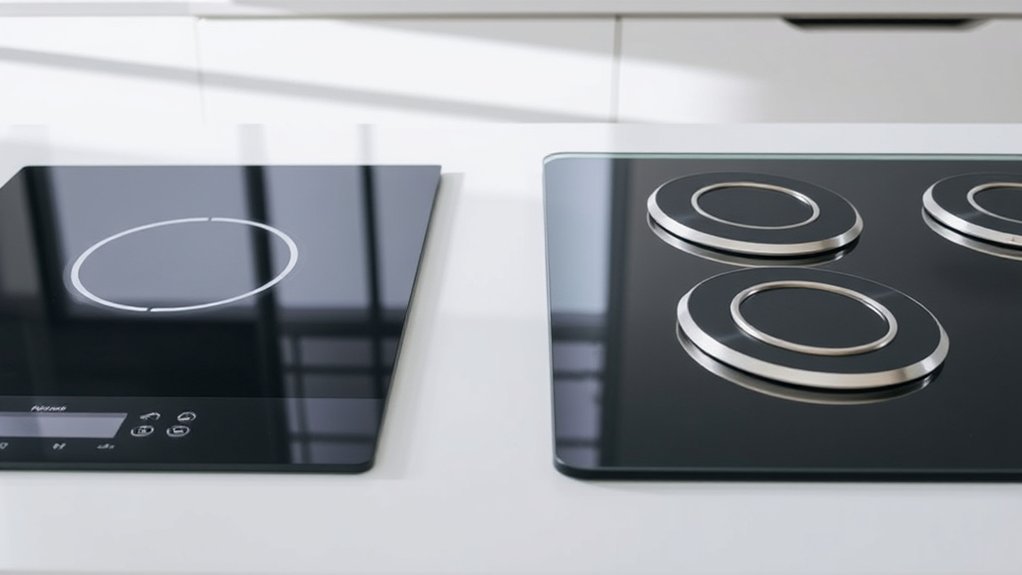
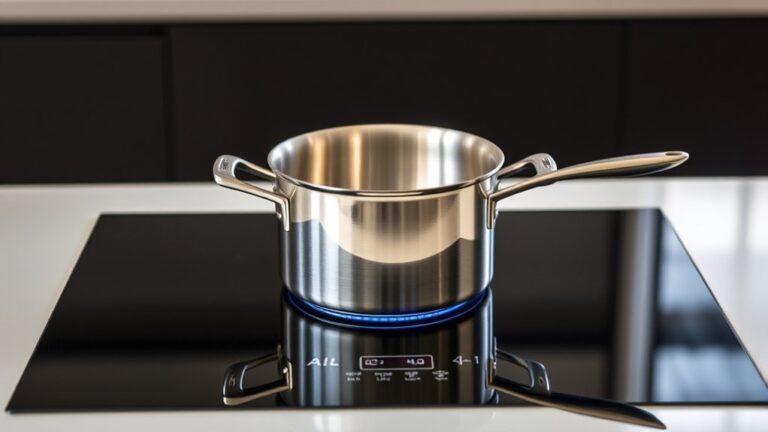
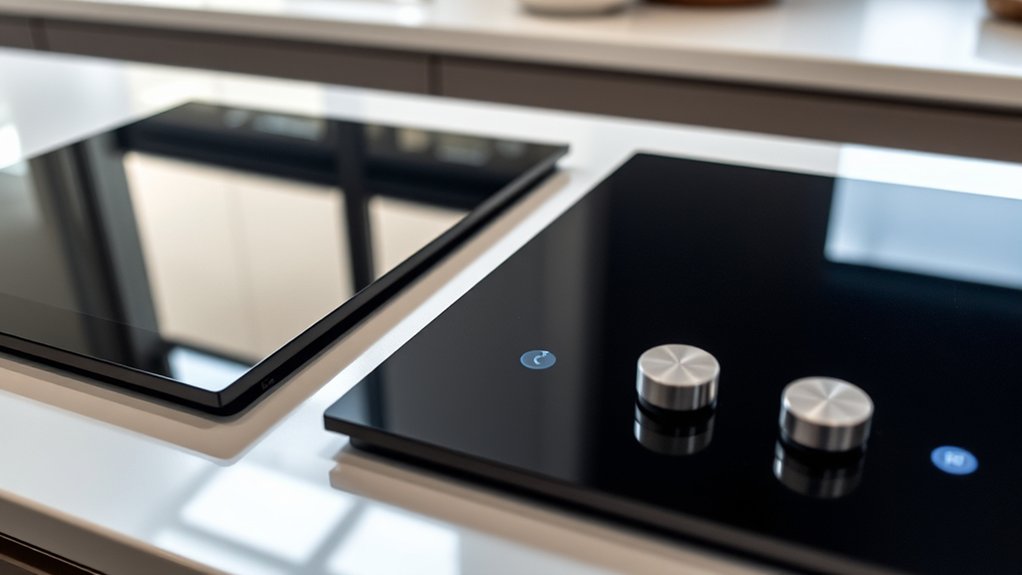
One of the easiest ways to tell induction and electric cooktops apart is by looking at their surface design. Induction cooktops usually have a smooth, glass-ceramic surface with clearly marked cooking zones, often outlined with circles or squares. You won’t see any visible coils or heating elements on induction models.
Electric cooktops, on the other hand, often feature raised coil burners or a smooth glass surface with visible radiant elements beneath it. Those radiant elements glow red when on, making it easy to spot the heat source. Induction surfaces stay relatively cool since they heat your cookware directly, whereas electric cooktops heat the surface itself.
How Cookware Compatibility Helps Identify Your Cooktop
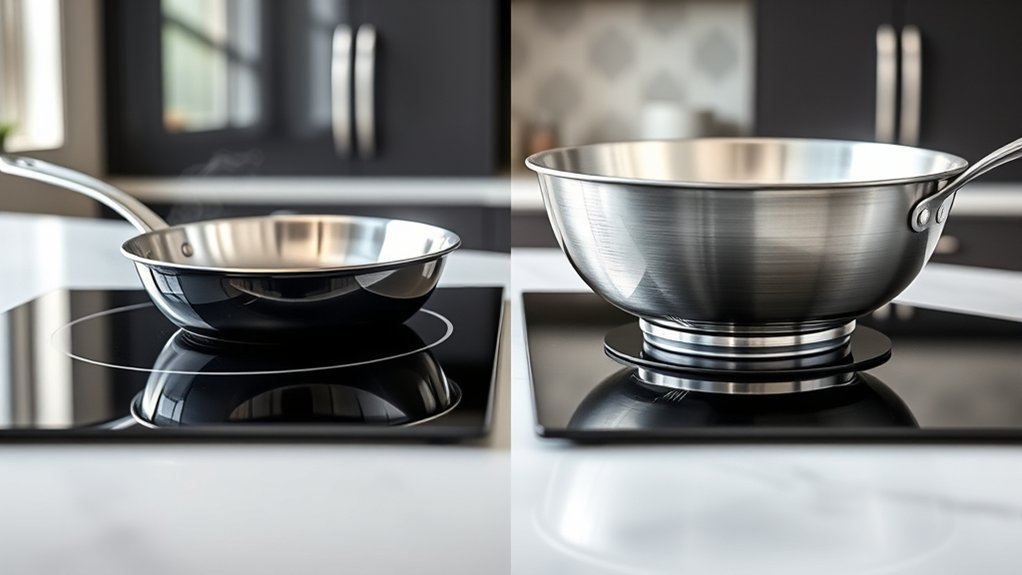
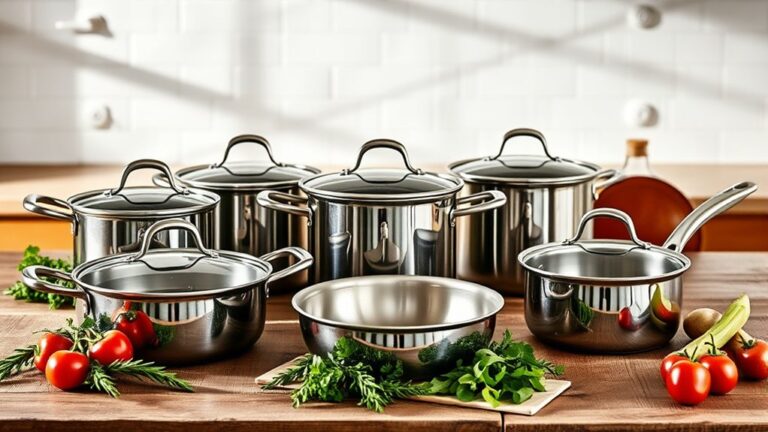
Several cookware types can quickly reveal whether you’re dealing with an induction or electric cooktop. Induction cooktops require magnetic cookware, while electric cooktops work with almost any type. To identify your cooktop, try checking your pots and pans for compatibility.
| Cookware Material | Works on Induction? | Works on Electric? |
|---|---|---|
| Cast Iron | Yes | Yes |
| Aluminum | No | Yes |
| Stainless Steel | Sometimes* | Yes |
| Copper | No | Yes |
*Stainless steel must be magnetic to work on induction. If your cookware sticks to a magnet, your cooktop is likely induction. If it doesn’t, it’s probably electric.
This compatibility test helps you quickly distinguish between the two types without guesswork.
Easy Tests to Identify Which Cooktop You Have
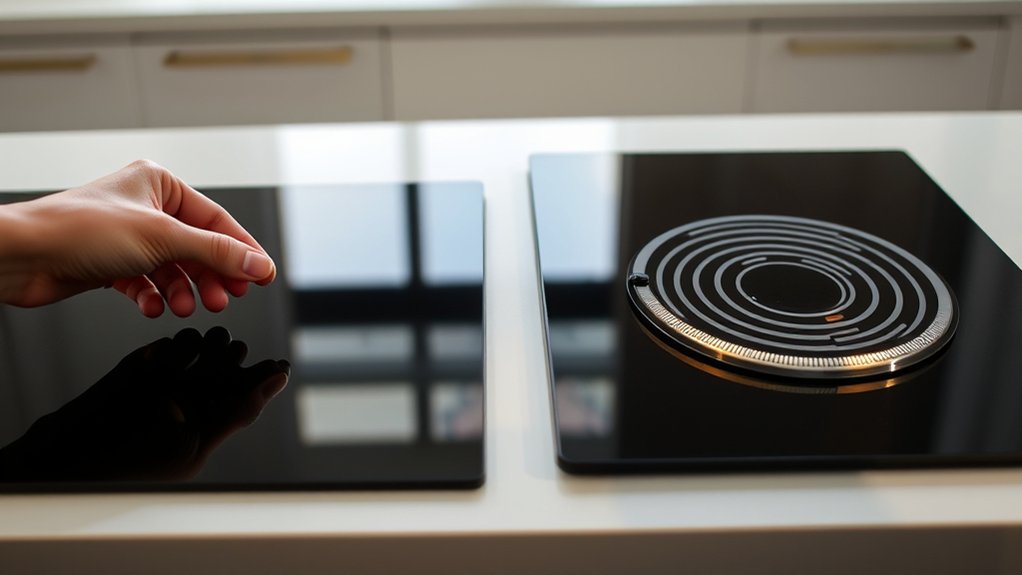
Although induction and electric cooktops may look similar at first glance, you can quickly identify which one you have by performing a few simple tests. First, place a magnet on the cooking surface. If it sticks firmly, you likely have an induction cooktop.
Electric cooktops usually have a glass-ceramic surface without magnetic properties. Next, try turning on the burner with a non-metallic pan like glass or aluminum. If the burner heats up, it’s electric; if it stays cool, it’s induction, which requires magnetic cookware.
You can also listen closely: induction cooktops often emit a subtle humming sound when in use, while electric ones remain quiet or produce a faint clicking. These straightforward tests help you confidently identify your cooktop type without specialized tools.
How Induction and Electric Cooktops Heat Food Differently
Now that you can tell which cooktop you have, understanding how each heats food helps explain their differences in performance. With an induction cooktop, you’ll notice it uses electromagnetic fields to directly heat the cookware. When you place a compatible pot or pan on the surface, the magnetic energy generates heat inside the metal itself.
This means the cooktop stays relatively cool while your food heats up quickly and efficiently.
On the other hand, electric cooktops heat food by warming the heating element beneath the glass surface. This element then transfers heat to the cookware through direct contact. Because the cooktop surface gets hot, you need to be cautious when handling it.
Each method impacts how your cooking experience feels and performs, setting them apart clearly.
Cooking Speed and Temperature Control Differences
How fast your cooktop heats up can make a big difference in the kitchen. Induction cooktops heat your pots and pans almost instantly because they use magnetic fields to directly warm the cookware. This means you can boil water or start cooking much quicker than on electric cooktops.
Electric cooktops rely on heating elements that take longer to reach the desired temperature, so you’ll notice a delay.
When it comes to temperature control, induction cooktops offer precise adjustments. You can quickly change heat levels, making it easier to simmer, sear, or maintain a steady low heat. Electric cooktops are less responsive; changes in temperature take time to register, which means you have to anticipate adjustments more carefully to avoid overcooking or undercooking your food.
Safety Features of Induction and Electric Cooktops
You’ll want to know how heat control mechanisms keep things safe on both cooktops. Child safety locks add an extra layer of protection in busy kitchens.
Plus, residual heat indicators let you see when the surface is still hot after cooking.
Heat Control Mechanisms
Although both induction and electric cooktops generate heat for cooking, they use different heat control mechanisms that impact safety and efficiency. With induction cooktops, heat is produced directly in the cookware through electromagnetic fields, allowing for rapid temperature changes and precise control. This means the cooktop surface stays relatively cool, reducing burn risks.
In contrast, electric cooktops rely on heating elements beneath the glass surface, which heat up and transfer heat to your pots and pans. These elements take longer to adjust temperature, and the surface remains hot for some time after cooking, increasing the chance of accidental burns. When you’re cooking, induction offers faster, more responsive heat control, while electric cooktops provide slower, less precise adjustments, affecting how you manage safety and efficiency in the kitchen.
Child Safety Locks
Beyond heat control, safety features like child safety locks play a key role in preventing accidents, especially if you have little ones at home. Both induction and electric cooktops often include these locks to stop kids from turning the burners on accidentally. When activated, the lock disables the control panel, so you won’t have to worry about tiny hands adjusting settings or starting the cooktop.
Induction cooktops typically have more advanced locking mechanisms because they rely on electronic controls, making it easier to integrate this feature. Electric cooktops also have child locks, but they might vary depending on the model. Using child safety locks adds peace of mind, letting you focus on cooking without constantly monitoring your children near the stove.
Always check for this feature when choosing your cooktop.
Residual Heat Indicators
While both induction and electric cooktops generate heat differently, they share an important safety feature: residual heat indicators. These indicators alert you when the cooking surface remains hot after you turn off the heat, helping prevent accidental burns. On electric cooktops, the surface stays hot for a while because the heating elements retain heat, so the indicator usually lights up until the temperature drops to a safe level.
Induction cooktops, on the other hand, only heat the cookware, but the glass surface can still get warm from residual heat. Their indicators work similarly, signaling when the surface is too hot to touch. Paying attention to these alerts guarantees you handle your cooktop safely, whether you’re cooking on induction or electric.
Energy Efficiency Comparison: Induction vs Electric Cooktops
When comparing energy efficiency, induction cooktops clearly outperform traditional electric models by transferring heat directly to the cookware. This direct heating means less energy is wasted, so your kitchen stays cooler and your bills stay lower.
Electric cooktops, on the other hand, heat the cooktop surface first, which then transfers heat to your pot or pan, causing energy loss. You’ll notice induction cooktops respond faster to temperature changes, giving you better control and less wasted energy over time.
If you want to maximize efficiency, induction is the way to go. While induction cooktops might cost more upfront, the savings from reduced energy use and faster cooking times quickly add up, making them a smart investment for your kitchen.
Frequently Asked Questions
Can Induction Cooktops Interfere With Pacemakers?
Induction cooktops can potentially interfere with pacemakers due to electromagnetic fields. If you have a pacemaker, you should consult your doctor before using one to guarantee it’s safe and doesn’t cause any interference with your device.
Are Induction Cooktops More Expensive to Repair Than Electric Ones?
Imagine a tangled maze of circuits beneath your cooktop’s glass. Yes, induction repairs often cost more than electric ones because of their complex technology and specialized parts, but with proper care, you’ll avoid frequent trips to the repair shop.
Do Induction Cooktops Work During Power Outages?
No, induction cooktops won’t work during power outages because they rely on electricity to create the magnetic field that heats your cookware. Without power, you’ll need an alternative cooking method until electricity returns.
How Noisy Are Induction Cooktops Compared to Electric Cooktops?
Induction cooktops are generally quieter than electric ones, but you might hear a soft humming or buzzing when cooking.
Electric cooktops can produce clicking or sizzling sounds, so you won’t find induction cooktops noticeably noisy.
Can Induction Cooktops Be Used Outdoors?
You can’t take the cook out of the kitchen, and induction cooktops aren’t made for outdoor use. They need a flat, stable surface and electricity, so using them outside isn’t practical or safe.
Outdoor environments can be unpredictable, with wind, moisture, and uneven surfaces posing risks. These factors can affect the performance and safety of induction cooktops.
For these reasons, it’s best to keep induction cooktops indoors where conditions are controlled and stable.
Conclusion
Now that you know the key differences between induction and electric cooktops, you’re well-equipped to choose the right one for your kitchen. Whether it’s the cookware compatibility or the way they heat, each type has its strengths.
Don’t put all your eggs in one basket—consider your cooking style, safety needs, and energy efficiency before making a decision. With this knowledge, you’ll cook smarter and safer every time.
Understanding the distinctions in heat source, temperature control, and surface temperature will help you pick the best cooktop. Keep in mind induction cooktops offer rapid heating and enhanced safety, while electric cooktops provide consistent performance and affordability.
By weighing these factors, you can select the ideal cooktop that fits your lifestyle and kitchen needs perfectly.