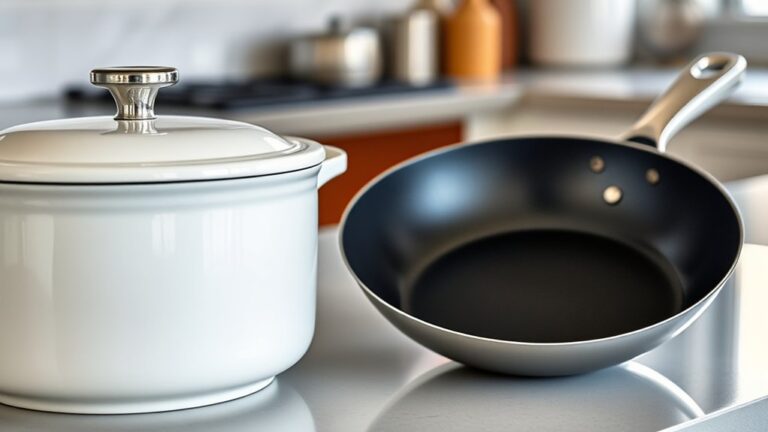
Does Stainless Steel Work on Induction Cooktops?
Yes, you can use stainless steel on induction cooktops, but only if it has magnetic properties. Induction cooktops require cookware with a magnetic base to generate heat efficiently. Not all stainless steel works—some alloys lack the magnetic qualities needed for induction cooking.
A simple magnet test will tell you if your cookware is compatible. Using the right stainless steel guarantees quick, even heating and durability. This ensures your cooking experience is both efficient and reliable.
If you want to get the most from your induction cooking, there’s plenty to know about choosing, caring for, and maintaining your cookware effectively. Proper selection and maintenance can extend the life of your stainless steel pots and pans while optimizing performance.
Key Takeaways
- Stainless steel works on induction cooktops only if it contains magnetic materials, typically found in 400-series grades like 430.
- A simple magnet test can confirm if stainless steel cookware is induction-compatible by sticking firmly to the base.
- Many stainless steel pans combine non-magnetic alloys with magnetic layers to ensure induction readiness.
- Using induction-compatible stainless steel ensures quick, even heating, durability, and resistance to rust and warping.
- Avoid dragging cookware on the cooktop and clean regularly to maintain performance and prevent damage.
How Induction Cooktops Work With Stainless Steel Cookware
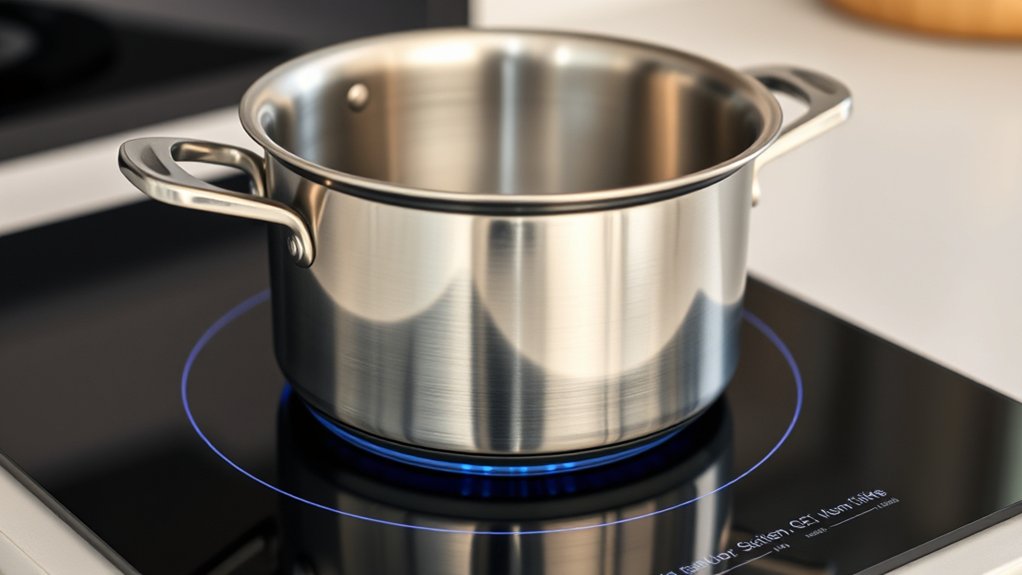
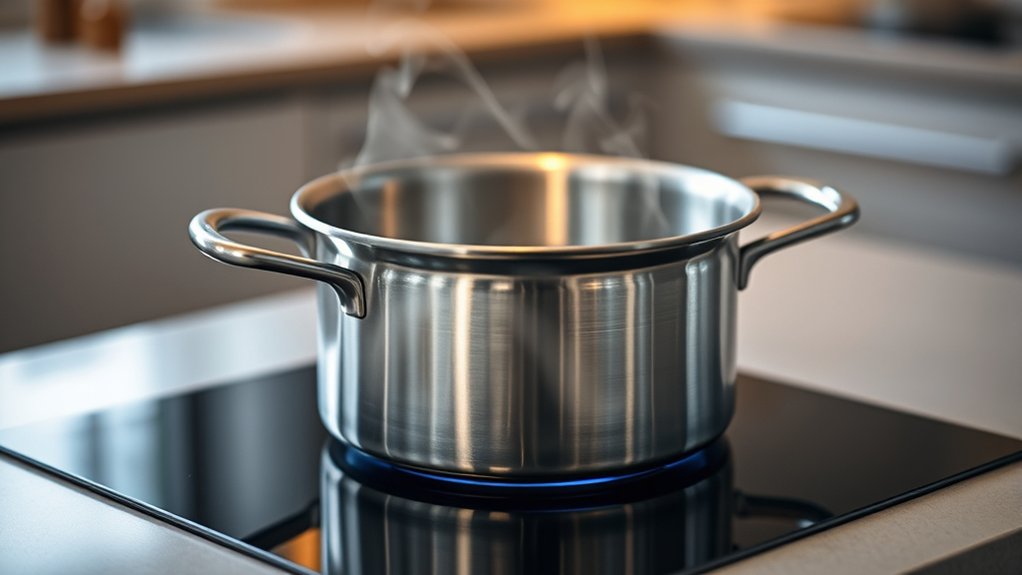
Although induction cooktops rely on magnetic fields to generate heat, they only work with certain types of cookware. When you use stainless steel cookware, the key is whether the steel contains enough ferromagnetic material. If it does, the cooktop’s magnetic field will induce electric currents in the cookware’s base, heating it directly.
You’ll find that many stainless steel pots and pans have a magnetic layer or core designed for induction compatibility. However, not all stainless steel is created equal—some alloys lack the necessary magnetic properties, so the cooktop won’t heat them. To get the best performance, choose stainless steel cookware labeled as induction-compatible or with a magnetic base, ensuring your cooktop works efficiently and your cooking heats evenly.
How to Test If Stainless Steel Cookware Works on Induction
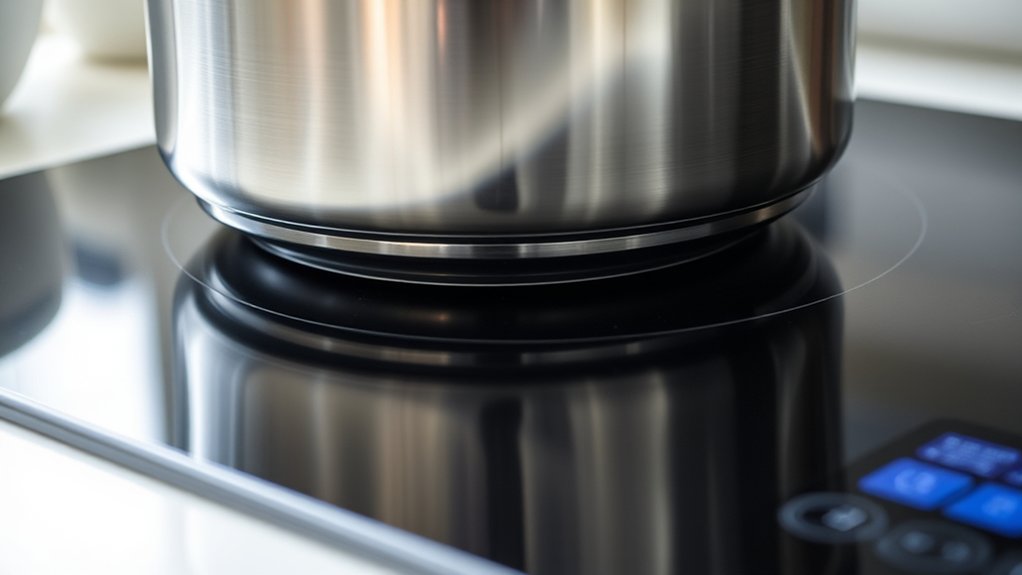
Wondering how to quickly check if your stainless steel cookware works with your induction cooktop? It’s simple and doesn’t require any special tools. Here are three easy methods to test your pans:
Quickly check if your stainless steel cookware works with induction using simple, tool-free methods anyone can try at home.
- Magnet Test: Grab a magnet and place it on the bottom of your cookware. If it sticks firmly, your pan is induction-compatible.
- Look for Symbols: Check the manufacturer’s label or bottom of the cookware for an induction symbol—usually a coil or a series of loops.
- Try It on the Cooktop: Place the pan on your induction cooktop and turn it on. If the cooktop activates and heats up, your cookware works with induction.
Using these quick tests, you’ll know if your stainless steel pans are induction-ready without guesswork.
Why Some Stainless Steel Pans Fail on Induction
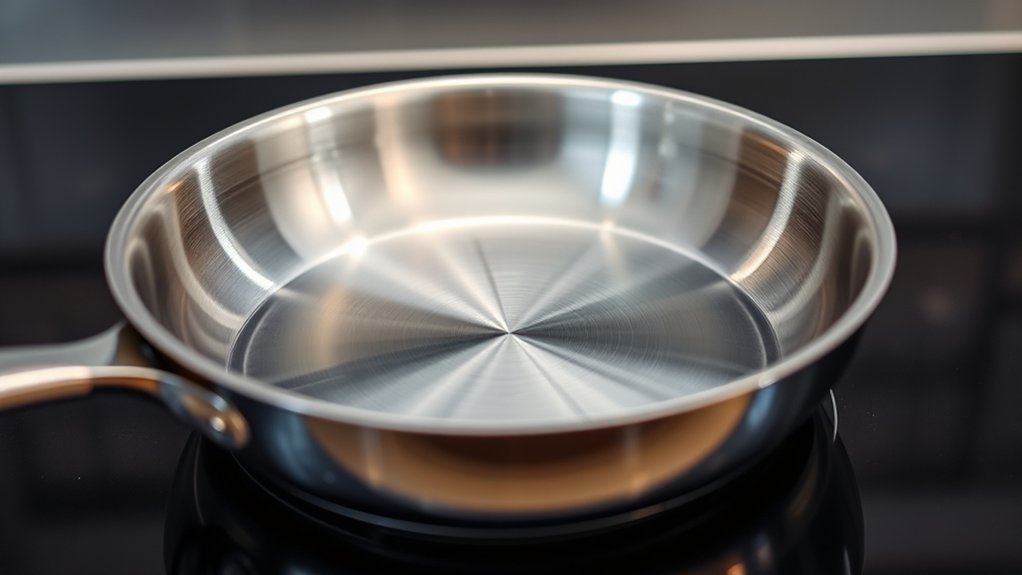
You might wonder why some stainless steel pans don’t work on your induction cooktop. It all comes down to the magnetic properties and the base material composition of the pan.
To avoid surprises, you should test your cookware’s induction compatibility before using it.
Magnetic Properties Matter
Because induction cooktops generate heat through magnetic fields, the magnetic properties of your stainless steel pans play a crucial role in whether they’ll work properly. Not all stainless steel is magnetic, so even if a pan looks suitable, it might fail to heat on your induction stove.
Here’s why magnetic properties matter:
- Ferromagnetism is key: Your pan needs ferromagnetic materials like iron to interact with the cooktop’s magnetic field.
- Non-magnetic stainless steel doesn’t react: Grades like 304 or 316 often lack magnetic properties, causing them to be incompatible.
- Testing with a magnet helps: If a magnet sticks firmly to your pan’s base, it’s likely induction-compatible.
Understanding this saves you from buying cookware that won’t work on your induction cooktop.
Base Material Composition
A stainless steel pan’s base material composition directly affects its performance on induction cooktops. If your pan’s base lacks sufficient ferromagnetic metals like iron or certain grades of stainless steel, it won’t generate the magnetic field needed for induction heating. Many cheaper pans use austenitic stainless steel, known for its corrosion resistance but poor magnetic properties.
Without a magnetic base layer, the cooktop won’t recognize your pan, leading to no heating. Some pans feature a layered base, combining stainless steel with a magnetic core or disc to improve induction compatibility. When choosing cookware, pay attention to the base material, as it determines whether your stainless steel pan will work efficiently on induction surfaces or fail to heat at all.
Induction Compatibility Testing
How can you quickly determine if your stainless steel pan will work on an induction cooktop? The key is testing its magnetic properties because induction relies on magnetism to generate heat. Some stainless steel pans fail because they contain non-magnetic alloys or have a base that’s not compatible with induction.
Here’s how you can test your pan’s compatibility:
- Use a magnet: If it sticks firmly to the base, your pan is induction-ready.
- Check the base: Look for an induction symbol or labeling from the manufacturer.
- Conduct a small boil test: Place the pan on the induction burner; if it heats quickly, it’s compatible.
If your pan fails these tests, it won’t work efficiently on an induction cooktop.
Best Stainless Steel Grades for Induction Cooktops
Which stainless steel grades perform best on induction cooktops? You want grades with high magnetic permeability to guarantee efficient heating. Typically, 400-series stainless steels, like 430, are your best bet because they’re ferritic and magnetic.
They heat up quickly and work consistently on induction surfaces. On the other hand, austenitic stainless steels, such as 304 or 316, usually aren’t magnetic and won’t perform well alone. However, some cookware blends these grades with magnetic layers to improve induction compatibility.
When shopping, check for cookware labeled “induction-ready” or test with a magnet. Choosing the right grade helps you avoid frustration and get the best performance from your induction cooktop every time.
Does All Stainless Steel Work on Induction?
Even though stainless steel is a popular cookware material, not all of it works on induction cooktops. You need to know that induction requires magnetic properties to generate heat, and not every stainless steel type has that.
Here’s why some stainless steel might not work:
- Non-magnetic alloys: Stainless steel grades like 304 are mostly non-magnetic and won’t activate induction heating.
- Construction matters: Some cookware has a stainless steel exterior but lacks a magnetic layer at the base, preventing induction compatibility.
- Mixed materials: Cookware combining stainless steel with aluminum or copper layers may not always induce a magnetic response unless the bottom layer is magnetic.
How to Choose Stainless Steel Cookware for Induction
Knowing that not all stainless steel works with induction cooktops means you’ll need to focus on certain features when selecting your cookware. First, look for cookware labeled as induction-compatible or magnetic stainless steel. You can test this by holding a magnet to the base; if it sticks firmly, the pan will work.
Opt for cookware with a flat, smooth bottom to guarantee full contact with the cooktop surface, promoting even heating. Tri-ply or multi-ply construction, where stainless steel is layered with magnetic materials like aluminum or iron, enhances performance on induction. Avoid lightweight, thin pans as they might not heat evenly.
Finally, choose brands known for quality induction cookware to get reliable results. These steps help you pick the right stainless steel pots and pans for your induction cooktop.
Benefits of Stainless Steel on Induction Cooktops
Why should you consider stainless steel for your induction cooktop? Stainless steel offers a great balance of durability, efficiency, and versatility that suits induction cooking perfectly.
Here are three key benefits:
- Excellent Magnetic Properties: Stainless steel cookware with a magnetic base heats quickly and evenly on induction, ensuring your food cooks consistently without hot spots.
- Durability and Longevity: Stainless steel resists rust, corrosion, and warping, so your cookware stays reliable over time despite frequent use on the high heat induction generates.
- Low Maintenance: It’s easy to clean and maintain, and it won’t react with acidic or alkaline foods, so you get safe, hassle-free cooking every time.
Choosing stainless steel means you’re investing in cookware that complements induction technology while standing up to everyday kitchen demands.
How to Care for Stainless Steel Cookware on Induction
To keep your stainless steel cookware performing well on induction, you’ll want to clean it properly and avoid scratches. Being gentle helps protect both the surface and the magnetic base that makes induction cooking possible.
Let’s look at simple steps to maintain your cookware’s durability and efficiency.
Cleaning Tips For Stainless
How do you keep your stainless steel cookware looking its best on an induction cooktop? Proper cleaning is key to maintaining its shine and performance. Here are three effective tips:
- Use warm, soapy water immediately after cooking to remove food residue without damaging the surface. Avoid harsh detergents.
- Apply a paste of baking soda and water for stubborn stains or discoloration. Gently rub with a soft cloth, then rinse thoroughly.
- Dry your cookware completely with a clean towel to prevent water spots and maintain that polished finish.
Avoiding Scratches And Damage
Although stainless steel is a durable material, you’ll want to handle your cookware carefully on an induction cooktop to prevent scratches and other damage. Always lift pots and pans instead of sliding them across the surface to avoid scratching the cooktop. Use cookware with smooth, flat bottoms to guarantee even contact and reduce the risk of abrasion.
Avoid using metal utensils that can scratch your cookware’s surface; opt for wooden or silicone tools instead. Regularly check the bottom of your pots for debris or rough spots that might scratch the induction surface. Also, clean both the cooktop and cookware after each use to remove any particles that could cause damage during cooking.
Taking these simple steps will keep both your induction cooktop and stainless steel cookware looking new longer.
Maintaining Magnetic Properties
Since induction cooktops rely on magnetic fields to generate heat, maintaining the magnetic properties of your stainless steel cookware is essential for peak performance. If your cookware loses its magnetism, it won’t heat efficiently, wasting energy and time.
To keep your pots and pans in top shape, follow these simple steps:
- Clean regularly with mild detergent – Avoid harsh chemicals that can damage the magnetic layer.
- Avoid overheating empty pans – Excessive heat can alter the metal’s magnetic properties.
- Check magnetism periodically – Use a small magnet to ensure your cookware still sticks well; if not, consider replacing it.
Common Mistakes to Avoid With Stainless Steel on Induction
When using stainless steel on induction cooktops, you’ll want to steer clear of a few common mistakes that can reduce cooking efficiency or damage your cookware. First, don’t use pans without a magnetic base—if your stainless steel isn’t induction-compatible, the cooktop won’t heat it properly. Avoid dragging your stainless steel pots and pans across the glass surface; it can scratch and damage the cooktop.
Also, make sure your cookware’s bottom is flat; warped or uneven bases can cause poor contact, leading to inefficient heating. Never place empty stainless steel pans on a hot induction burner, as this can cause discoloration or warping. Finally, clean your cookware and cooktop regularly to prevent residue buildup that can interfere with heat transfer.
Following these tips will keep your induction cooking smooth and safe.
Frequently Asked Questions
Can Stainless Steel Cookware Be Used on Other Types of Cooktops?
Yes, you can use stainless steel cookware on gas, electric, and ceramic cooktops. It heats evenly and is durable, so you won’t have to worry about damage or uneven cooking on those surfaces.
Does Stainless Steel Cookware Affect Cooking Time on Induction?
Stainless steel cookware won’t substantially affect cooking time on induction cooktops. You’ll experience quick, even heating because induction directly heats the pan, making your cooking efficient regardless of the stainless steel’s thickness or quality.
Are Stainless Steel Induction Pans Dishwasher Safe?
Yes, you can usually put stainless steel induction pans in the dishwasher, but it’s best to check the manufacturer’s instructions.
Dishwashing might dull the finish or cause discoloration over time, so hand washing is often recommended.
How Does Stainless Steel Compare to Cast Iron on Induction?
Imagine quick heating and easy handling—that’s stainless steel on induction. Cast iron, though, holds heat longer and offers even cooking but’s heavier and slower to respond.
You’ll choose speed or steady warmth, depending on your cooking style.
Can Stainless Steel Cookware Cause Scratches on Induction Cooktops?
Yes, stainless steel cookware can cause scratches on induction cooktops if you slide the pots or pans harshly.
To avoid damage, lift your cookware instead of dragging it and clean the surface regularly to keep it smooth.
Conclusion
Imagine the satisfying sizzle as your stainless steel pan heats evenly on your induction cooktop, a perfect dance of modern technology and durable cookware. You don’t have to guess if your pans will work—just test for magnetic properties and choose the right grade.
With care and the right selection, stainless steel becomes your reliable kitchen partner, delivering precision and beauty every time you cook.
Embrace the harmony of induction and stainless steel for effortless, joyful meals. Stainless steel cookware works well on induction cooktops when it has magnetic properties, making it an ideal choice for efficient cooking.