How to Stop Grill Fire Quickly and Safely
To stop a grill fire quickly and safely, it’s essential to act fast and know the right steps to prevent the flames from spreading. Grill fires can be dangerous, especially when fueled by grease or gas, so understanding how to manage them is crucial for every grilling enthusiast.
By following simple safety measures and using the proper tools, you can keep your outdoor cooking experience safe and enjoyable.
First, close the lid and vents to cut off the oxygen supply, then turn off the gas or fuel source immediately.
Use a Class B fire extinguisher or a metal fire blanket to smother the flames, and avoid using water, as it can worsen grease fires.
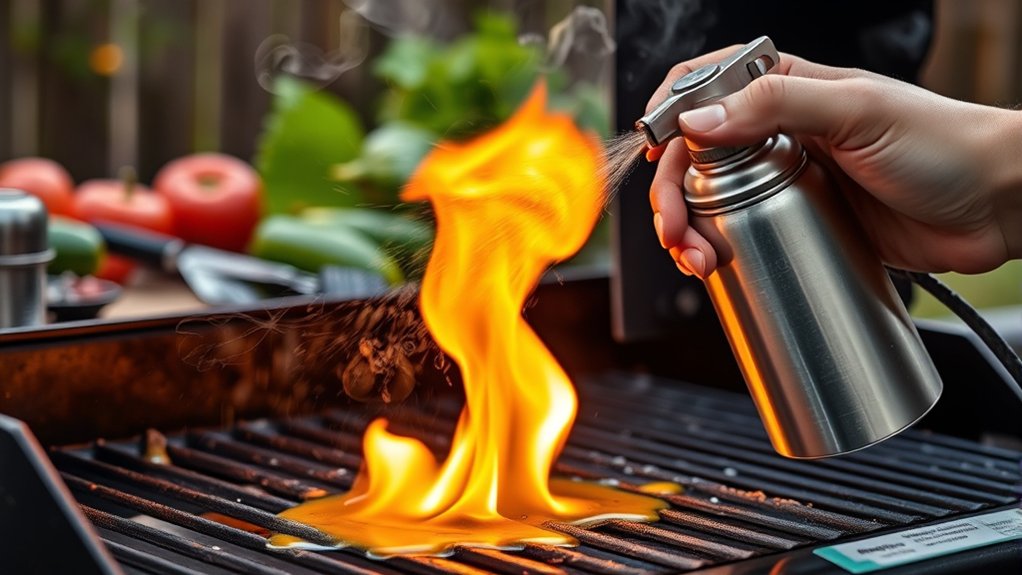
For minor flare-ups, a water spray bottle can help control the flames at their base.
Stay calm and keep safety tools nearby at all times.
You’ll find more tips ahead to manage and prevent grill fires effectively.
Key Takeaways
- Close the grill lid and vents immediately to cut off oxygen and help extinguish the fire.
- Turn off the gas supply at the tank or line to stop fuel flow during a gas grill fire.
- Use a Class B or ABC fire extinguisher or a metal fire blanket to safely smother grease fires.
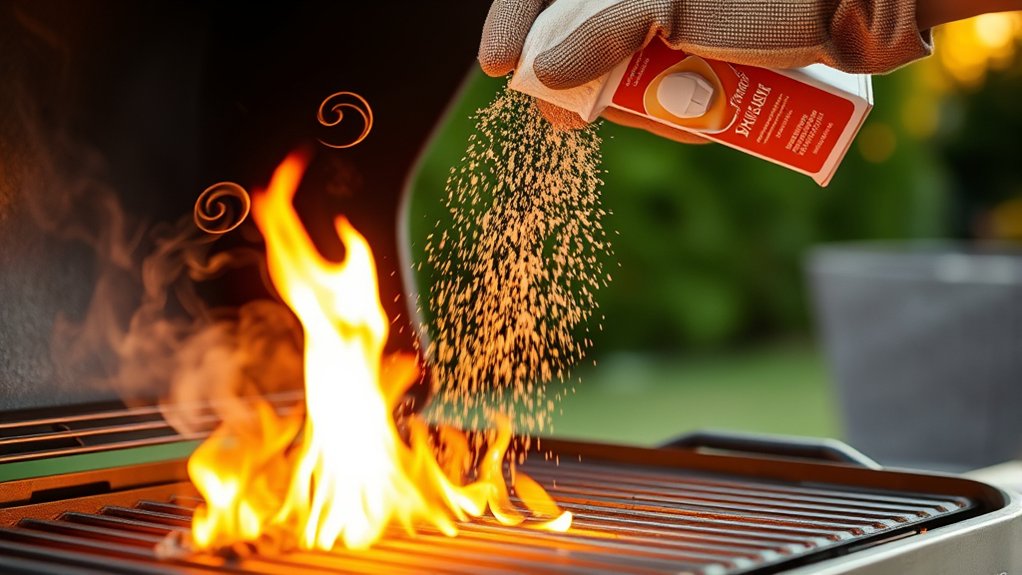
- Avoid using water or flour, as they can worsen grease fires; use baking soda for small flare-ups instead.
- Keep a spray bottle with water handy for minor flare-ups, aiming at the flame base in short bursts.
How To Spot Grill Fires Early And Understand Causes
Although grill fires can start unexpectedly, you can spot the early signs by watching for excessive flare-ups, unusual smoke, or sudden bursts of flames. When grease or fat drips onto hot coals or burners, it often causes these flare-ups, signaling danger. You’ll also notice thick, black smoke if food drips burn or if there’s a buildup of grease in your grill’s drip pan.
Pay attention to any sizzling sounds that seem louder than usual—they can indicate fat igniting. Understanding these causes helps you act fast before the fire grows. Keep an eye on the grill’s temperature, too; too much heat can trigger flare-ups.
Recognizing these early warning signs lets you prevent small issues from turning into serious grill fires.
How To Use Your Grill Safely To Prevent Grill Fires
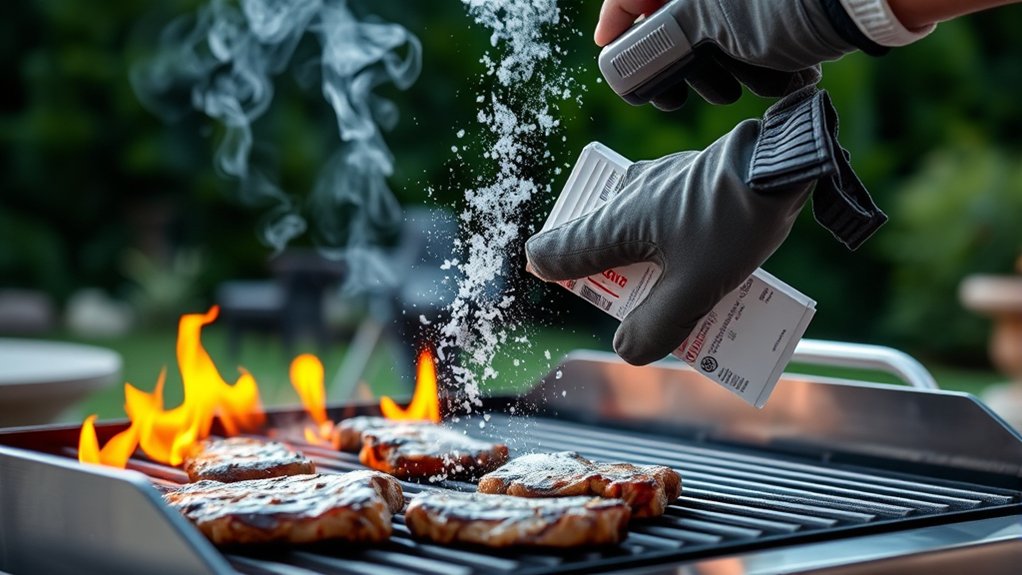
Spotting early signs of grill fires gives you a head start, but preventing them starts with how you handle your grill. Always keep your grill clean by removing grease buildup, which fuels flare-ups. Position your grill away from structures, trees, or flammable materials to avoid accidental fires spreading.
Use long-handled tools and wear heat-resistant gloves to keep your hands safe. Never leave your grill unattended while it’s on, and avoid overloading it with food or lighter fluid. Check gas connections for leaks before lighting a gas grill.
Also, keep a fire extinguisher or baking soda nearby to handle unexpected flames. By following these safety steps, you can enjoy grilling with peace of mind and considerably reduce the risk of fire hazards.
Quick Steps To Put Out A Grill Fire Immediately
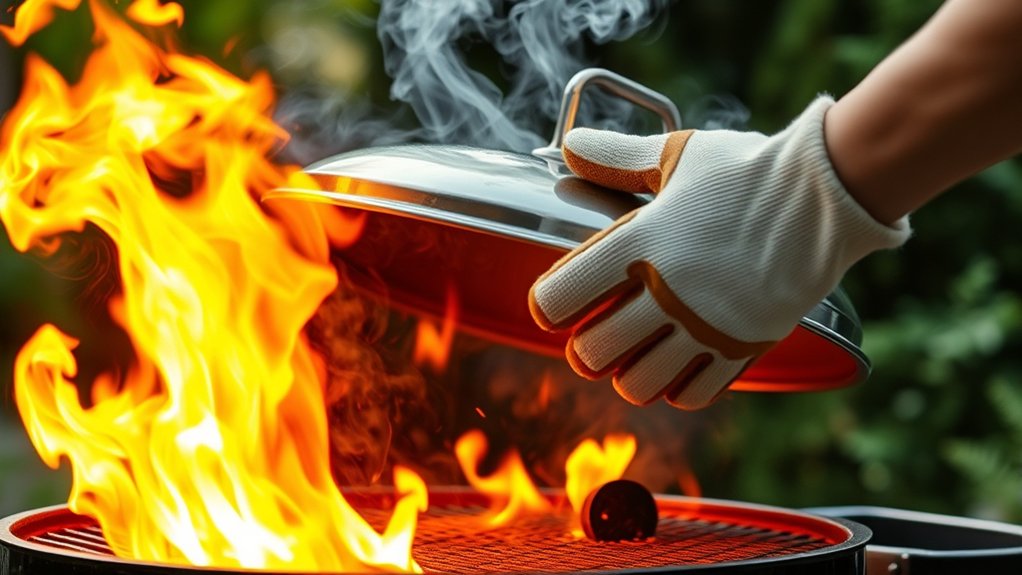
When a grill fire breaks out, act quickly to control the flames before they spread. First, close the lid and vents to cut off oxygen. If flames persist, turn off the gas supply immediately.
Avoid using water, which can make the fire worse. Instead, use baking soda or a fire extinguisher rated for grease fires. Keep a safe distance and call emergency services if it escalates.
| Step | Action | Why It Works |
|---|---|---|
| Close lid & vents | Cuts oxygen supply | Starves the fire |
| Turn off gas | Stops fuel flow | Prevents further ignition |
| Use baking soda | Smothers flames | Safe for grease fires |
Stay calm and act fast for the best results.
How To Handle Gas Grill Fires Without Panic
When a gas grill fire starts, stay calm and quickly assess the situation. First, turn off the gas supply to stop feeding the flames.
If the fire doesn’t die down, use a fire extinguisher properly to put it out safely.
Stay Calm And Assess
Although grill fires can be startling, staying calm is essential to handling the situation effectively. Take a deep breath and focus on what’s happening. Panicking only clouds your judgment and slows your response.
Quickly scan the fire’s size and location to decide your next move. Ask yourself if it’s something you can control or if you need emergency help. Keep bystanders at a safe distance to avoid accidents.
Turn Off Gas Supply
Keeping calm allows you to think clearly about the next steps to control the fire. The most essential action is to turn off the gas supply immediately. Locate the gas valve either on the propane tank or the natural gas line and turn it clockwise until it’s fully closed.
This cuts off the fuel feeding the flames, helping the fire to die down safely.
Here’s a quick guide to turning off your gas supply:
| Gas Type | Valve Location | Action |
|---|---|---|
| Propane Tank | At the tank’s top | Turn valve clockwise to close |
| Natural Gas | Near grill connection | Turn valve clockwise to close |
| Backup | Main gas shutoff valve | Turn valve clockwise to close |
Turning off the gas supply reduces fire risk without panic.
Use Fire Extinguisher Properly
If you need to use a fire extinguisher on your gas grill, staying calm and acting quickly is essential. First, grab a Class B or multipurpose (ABC) extinguisher designed for grease and gas fires. Remember the PASS technique: Pull the pin, Aim low at the fire’s base, Squeeze the handle, and Sweep side to side.
Keep a safe distance while spraying, moving closer as the flames reduce. Never turn your back on the fire until it’s fully out. After extinguishing, monitor the grill for any flare-ups.
If the fire doesn’t subside quickly, evacuate immediately and call emergency services. Handling the extinguisher properly can stop grill fires safely without panic, protecting you and your home.
How To Control Charcoal Grill Fire Flare-Ups
When flare-ups happen on your charcoal grill, controlling oxygen flow is key to calming the flames quickly. You can also use a gentle water spray to reduce flare intensity without killing the coals.
Adjusting the grill height lets you keep food safe while managing the heat effectively.
Manage Oxygen Flow
Although flare-ups can startle you, controlling the oxygen flow to your charcoal grill quickly reduces their intensity. You can do this by adjusting the grill’s vents—closing the bottom and top vents partially limits oxygen, which slows the fire without suffocating it completely. Don’t shut them fully, or the charcoal may smother and the grill will cool down.
Instead, aim for a controlled airflow that tames flare-ups while keeping your grill hot enough for cooking. Always monitor the vents when flames spike; small tweaks make a big difference. Managing oxygen flow helps you prevent flare-ups from getting out of hand, letting you enjoy safer grilling and better temperature control.
Keep your vents accessible and adjust as needed throughout your cook.
Use Water Spray
Since flare-ups can flare quickly, you’ll want to have a water spray bottle handy to control them without dousing your coals. A light mist can calm flames without ruining your grill’s heat, making it a perfect tool for quick fire management. When flare-ups start, follow these steps:
- Aim the spray bottle at the base of the flames, not directly on the coals.
- Use short bursts of water to reduce the fire gradually.
- Avoid soaking the grill to prevent ash from spreading and affecting flavors.
Keep the spray bottle within easy reach while grilling. This approach helps you react fast and maintain steady cooking temperatures, ensuring your food cooks evenly without risking flare-up damage.
Adjust Grill Height
Keeping a water spray bottle handy helps you manage flare-ups quickly, but adjusting your grill height offers another effective way to control the fire. When flare-ups occur, simply raise the grill grate to increase the distance between the flames and your food. This reduces the intense heat and prevents charring or burning.
If your grill has adjustable heights, use the settings to find a safe, cooler zone until the flare-up subsides. Lower the grate once the fire calms to resume cooking at the desired temperature. This method gives you more control without dousing your food with water, which can affect flavor.
Always monitor the fire closely and adjust the height as needed to keep your grilling safe and enjoyable.
Don’t Use Water On Grill Fires: Here’s Why
When a grill fire breaks out, your first instinct might be to grab water and douse the flames, but you shouldn’t. Using water on a grill fire can make things worse. Here’s why:
When a grill fire starts, resist the urge to use water—it can actually worsen the blaze.
- Spreading the fire: Water can cause grease to splash and spread, igniting other parts of the grill or surroundings.
- Steam burns: Pouring water on hot coals or flames creates steam that can cause serious burns.
- Flare-ups: Water hitting burning grease causes flare-ups, intensifying the fire unpredictably.
Instead, you want to smother the fire by cutting off its oxygen source. Using a fire extinguisher rated for grease fires or covering the grill with its lid is much safer and more effective than water. Keep these points in mind to handle grill fires safely.
How To Choose The Best Tools For Grill Fire Emergencies
Although grill fires can start unexpectedly, you can be ready by choosing the right tools for emergencies. First, keep a fire extinguisher rated for grease fires (Class B) nearby—it’s essential for quickly controlling flames without spreading them.
Next, have a metal fire blanket on hand; it smothers flames by cutting off oxygen. Avoid using water or flour, which can worsen the fire. A long-handled grill brush and heat-resistant gloves protect you while managing flare-ups safely.
Also, consider a spray bottle filled with water for minor flare-ups, but never for large fires. By selecting these tools and keeping them accessible, you’ll be prepared to act fast, minimizing damage and keeping everyone safe during a grill fire emergency.
How To Clean Your Grill Safely To Prevent Grill Fires
Because grease buildup and food residue can ignite quickly, you should clean your grill regularly and thoroughly. Start by turning off and unplugging the grill, ensuring it’s completely cool.
Then, follow these steps:
- Scrape Grates: Use a stiff wire brush to remove stuck-on food and grease from the grates.
- Clean Drip Pans: Empty and wash the drip pan to prevent grease accumulation, reducing fire risk.
- Wipe Surfaces: Use warm, soapy water to clean the grill’s exterior and interior surfaces, avoiding harsh chemicals.
When To Call The Fire Department For A Grill Fire
If your grill fire grows beyond your control or produces thick smoke, you need to call the fire department immediately. Don’t hesitate—your safety is the priority.
Here are clear signs when calling professionals is essential:
| Situation | Action Required | Reason |
|---|---|---|
| Fire spreads outside grill | Call fire department | Risk of home and property damage |
| Flames exceed 3 feet high | Call fire department | Difficult to control safely |
| Thick black or gray smoke | Call fire department | Indicates toxic fumes/fire intensity |
| Unable to extinguish fire | Call fire department | Prevents injury and escalation |
Always prioritize your safety and evacuate if needed. When in doubt, call for help immediately to avoid dangerous outcomes.
How To Protect Your Outdoor Space From Grill Fire Damage
To protect your outdoor space from grill fire damage, start by clearing away any nearby vegetation that could catch fire. Use fire-resistant materials for your grill area to add an extra layer of safety. Always keep your grill a safe distance from your home and other structures to prevent accidents.
Clear Surrounding Vegetation
While grilling, you should keep the area around your grill free of dry leaves, branches, and other flammable vegetation. This simple step reduces the risk of fire spreading quickly and helps protect your outdoor space.
To clear surrounding vegetation effectively, follow these tips:
1. Regularly trim grass, bushes, and tree branches within a 10-foot radius around your grill to minimize fuel for flames. 2. Remove any dead plants, leaves, or debris from the ground to prevent sparks from igniting them. 3. Store firewood, mulch, and other flammable materials at a safe distance, preferably at least 20 feet away.
Use Fire-Resistant Materials
Clearing vegetation around your grill reduces fire risks, but protecting your outdoor space goes beyond just trimming plants. You should use fire-resistant materials for surfaces near your grill, like stone, brick, or concrete patios, which won’t catch fire easily. Avoid placing your grill on or near wooden decks or dry mulch, as they’re highly flammable.
If you have a wooden deck, consider installing a metal or fireproof grill mat beneath your grill to catch sparks and grease. Also, choose outdoor furniture made from fire-retardant fabrics and materials to minimize hazards. By thoughtfully selecting fire-resistant materials around your grill area, you create a safer environment that can withstand accidental flare-ups and reduce the chance of fire damage to your outdoor space.
Maintain Safe Grill Distance
Although grills bring delicious flavors to your meals, you need to keep them at a safe distance from your home and other structures to prevent fire hazards. Position your grill at least 10 feet away from walls, fences, and overhangs to reduce the risk of flames spreading. Also, avoid placing it near dry leaves or flammable materials.
To maintain a safe grill distance:
- Choose an open, well-ventilated area free of combustible items.
- Keep children and pets at least 3 feet away from the grill while cooking.
- Regularly check the surrounding area for any potential fire risks before lighting the grill.
Following these steps helps protect your outdoor space and guarantees safe grilling every time.
Tips For Staying Calm And Safe During A Grill Fire Situation
If you find yourself facing a grill fire, keeping a clear head is essential to managing the situation effectively. First, take a deep breath to steady your nerves—panic can cloud your judgment. Step back immediately to avoid injury and alert anyone nearby to stay clear.
Don’t try to move the grill; instead, turn off the gas supply if it’s safe to do so. Use a fire extinguisher or baking soda to smother flames, but never water, as it can worsen grease fires. Call emergency services if the fire grows beyond your control.
Frequently Asked Questions
Can Grill Fires Cause Carbon Monoxide Poisoning?
Yes, grill fires can produce carbon monoxide, which is dangerous. You shouldn’t use grills indoors or in enclosed spaces to avoid poisoning.
Always grill outside where fresh air can disperse harmful gases safely.
What Are the Best Fire Extinguishers for Grill Fires?
You don’t want a flamethrower-sized disaster! Grab a Class B dry chemical extinguisher for grease fires or a multipurpose ABC extinguisher.
Keep it close, and you’ll snuff out grill fires fast before they rage out of control!
How Often Should Propane Tanks Be Inspected?
You should inspect propane tanks annually for leaks, rust, or damage. Always check connections before each use to stay safe.
If you spot any issues, get the tank serviced or replaced immediately to prevent hazards.
Are Electric Grills Safer Than Gas or Charcoal Grills?
You’d think electric grills could tame a volcano, making them safer than gas or charcoal. You’ll avoid flare-ups and harmful fumes, but always stay alert—any grill can surprise you if you’re not careful.
What Clothing Should I Avoid When Grilling?
You should avoid loose, flowing clothing and synthetic fabrics when grilling, as they can easily catch fire or melt.
Stick to tight-fitting, natural fibers like cotton to stay safe and comfortable near the heat.
Conclusion
When flames leap unexpectedly, don’t let panic ignite your actions. You’ve learned how to spot sparks before they blaze, tame fiery flare-ups like a pro, and shield your space with care.
By staying calm and acting quickly, you’re the captain steering your grill safely through smoky seas. Keep these fire-fighting skills close, and your backyard barbecues will shine bright—warm with flavor, not fear.
Grill smart, stay safe, and let the good times glow! Remember, knowing how to stop grill fire quickly and safely is key to enjoying every cookout without worry.