How to Keep Grill Grates Rusting-Free With 7 Simple Tips
To keep your grill grates rust-free and in top condition, it’s essential to adopt a few simple habits. Regular maintenance not only prevents rust but also extends the life of your grill.
By following these easy tips, you can enjoy a cleaner, safer grilling experience every time you fire up your barbecue.
Always clean your grill grates immediately after use using a wire brush to scrub off stuck residue. Dry them thoroughly and apply a thin layer of high smoke point oil to protect against moisture.
For cast iron grates, season regularly for extra rust resistance.
Store grates covered in a dry, ventilated place, and avoid harsh chemicals.
Check for rust often and tackle it quickly to prevent damage.
Follow these simple habits, and you’ll discover even more ways to extend your grill’s life.
Key Takeaways
- Clean grill grates thoroughly after each use using a wire brush to remove residue and prevent rust buildup.
- Dry grates completely after washing by wiping or heating to eliminate moisture that causes rust.
- Apply a thin layer of high smoke point oil to grates after cleaning to create a protective moisture barrier.
- Store grates in a dry, sheltered area with good ventilation and use weatherproof covers when not in use.
- Inspect grates regularly for rust, promptly remove any spots, and maintain by cleaning, drying, and oiling consistently.
Use a Wire Brush to Scrub Off Stubborn Residue
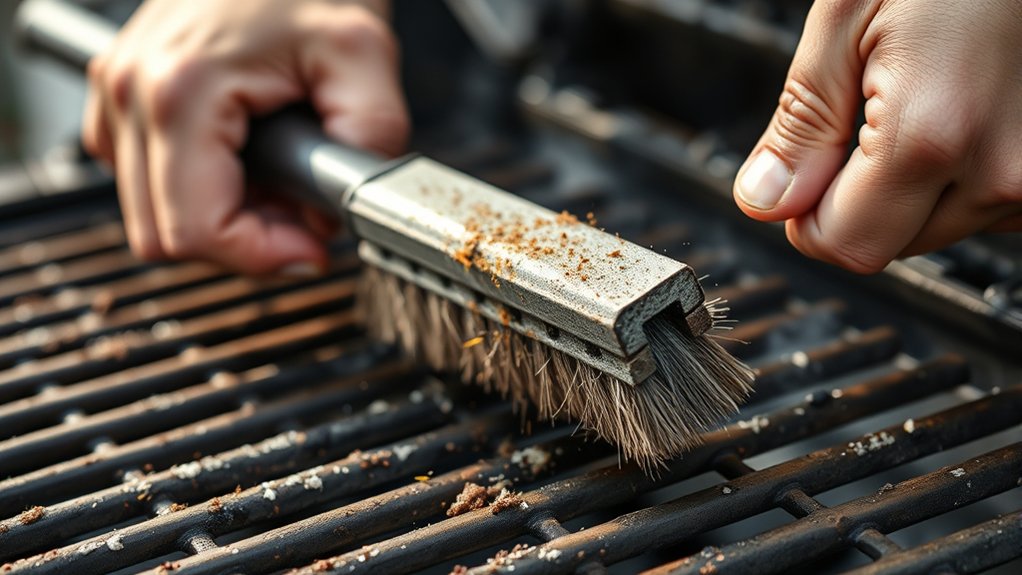
Although regular cleaning helps, using a wire brush is essential to remove stubborn residue from your grill grates. You’ll find that charred bits and grease buildup often cling tightly, and a simple wipe won’t cut it. Grabbing a sturdy wire brush lets you tackle these tough spots head-on, scraping away debris that can trap moisture and cause rust.
Make sure you brush each grate thoroughly, focusing on areas with visible buildup. Doing this not only keeps your grill cleaner but also prevents rust from forming by eliminating food particles that hold moisture. Just be careful not to use too much force, which could damage the grates.
Clean Your Grill Grates Immediately After Each Use
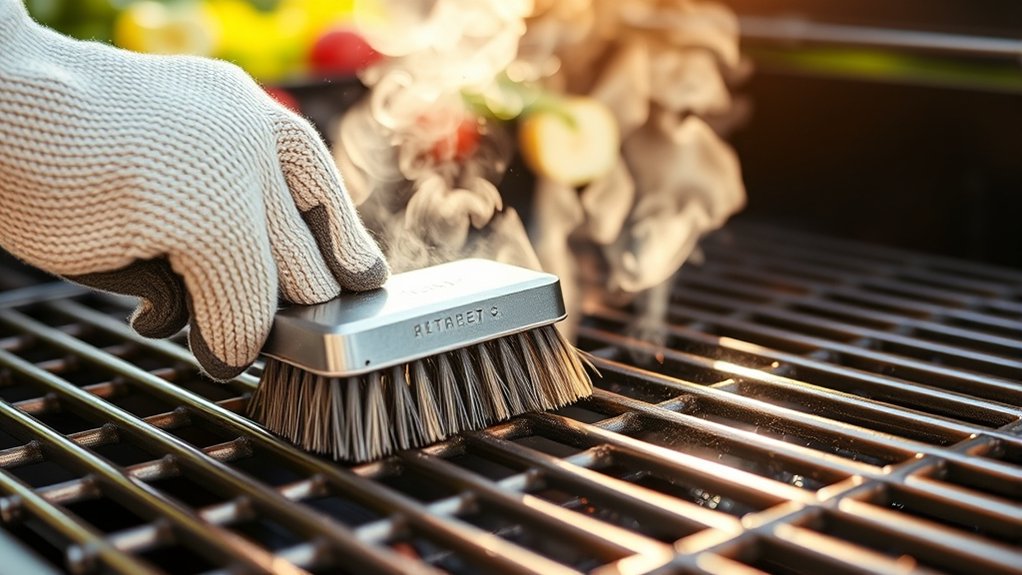
You should clean your grill grates right after cooking to remove any leftover food residue before it hardens. Grab the right tools, like a wire brush or scraper, to make the job easier and more effective.
Don’t forget to dry the grates thoroughly to prevent rust from forming.
Remove Food Residue Promptly
Since food residue can trap moisture and promote rust, cleaning your grill grates immediately after each use is essential. Leaving stuck-on bits lets moisture linger, accelerating corrosion.
By promptly removing residue, you keep the grates dry and rust-free, extending their life.
Here’s a quick guide to help you:
| When to Clean | Why It Matters |
|---|---|
| Right after cooking | Prevents buildup |
| While grates are warm | Easier to scrape off |
| Before cooling completely | Stops rust formation |
Make it a habit to scrape off leftover food right after grilling, while the grates are still warm. This simple step keeps your grill in top shape and ready for the next cookout.
Use Proper Cleaning Tools
When cleaning your grill grates immediately after each use, choosing the right tools makes the job faster and more effective. A sturdy grill brush with stainless steel bristles helps you scrape off stubborn food particles without damaging the grates. You can also use a scraper for tough spots, but be gentle to avoid scratching the surface.
For a deeper clean, a grill cleaning pad or a nylon brush works well on coated grates. Avoid wire brushes with loose bristles, as they can break off and pose health risks. Using a bucket of warm, soapy water alongside your tools loosens grease and grime efficiently.
Dry Grates Thoroughly
Although cleaning your grill grates right after cooking removes debris, drying them thoroughly is just as essential to prevent rust. Moisture left on the grates invites oxidation, which causes rust spots. After washing, use a clean cloth or paper towels to dry every nook and cranny.
For added protection, heat the grill briefly to evaporate any remaining moisture.
Here’s a quick drying checklist to keep your grates rust-free:
| Drying Method | Tools Needed | Benefits |
|---|---|---|
| Wipe with Cloth | Microfiber cloth | Removes surface moisture |
| Paper Towels | Paper towels | Disposable, easy cleanup |
| Heat Evaporation | Grill heat | Dries hard-to-reach areas |
Make drying part of your routine to extend your grill’s lifespan.
Apply Oil to Prevent Rust on Grill Grates
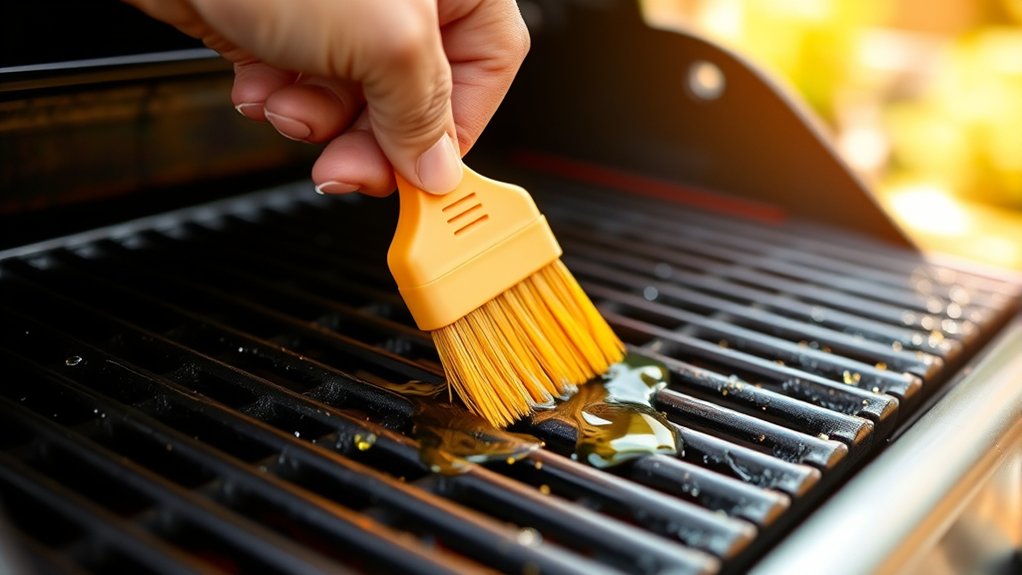
To keep your grill grates rust-free, you’ll want to apply a thin layer of oil regularly. After cleaning and drying your grates, use a paper towel or cloth dipped in a high smoke point oil like canola, vegetable, or grapeseed oil. Rub the oil over the entire surface to create a protective barrier against moisture and oxidation.
This thin coating prevents rust by sealing the metal from exposure to air and water. Make sure not to use too much oil, as excess can cause flare-ups during your next cook. Applying oil after each use ensures your grill grates stay in great condition, extending their life and maintaining peak performance.
This simple step keeps rust at bay and protects your investment effectively.
For Cast Iron Grates: Season Regularly to Protect Them
To keep your cast iron grates rust-free, you need to season them regularly. This process builds a protective layer that prevents moisture from causing rust. Use oils with high smoke points, like flaxseed or grapeseed oil, for the best results.
Benefits Of Regular Seasoning
When you season your cast iron grates regularly, you create a protective layer that keeps rust at bay and enhances their non-stick surface. This simple habit saves you time and money by extending the life of your grates and improving your grilling experience. Regular seasoning also makes cleaning easier since food is less likely to stick.
Here are the key benefits of keeping up with seasoning:
- Prevents moisture from causing rust and corrosion
- Builds a natural, non-stick cooking surface
- Enhances flavor by reducing food residue buildup
- Maintains the grate’s durability and appearance
Best Oils For Seasoning
Keeping your cast iron grates well-seasoned means choosing the right oil for the job. Using oils with a high smoke point helps build a durable, non-stick layer that resists rust. Here are some of the best oils to use:
| Oil Type | Smoke Point (°F) | Benefits |
|---|---|---|
| Flaxseed Oil | 225 | Creates a hard, durable coating |
| Grapeseed Oil | 420 | Neutral flavor, high smoke point |
| Canola Oil | 400 | Affordable and readily available |
| Vegetable Oil | 400-450 | Easy to find, good for seasoning |
Apply a thin layer of your chosen oil after each cleaning. Heat the grates to bond the oil, protecting them from moisture and rust.
Regular seasoning keeps your cast iron grates cooking-ready and rust-free.
Store Your Grill Grates Covered and in a Dry Place
Although grill grates are built to withstand heat and outdoor conditions, storing them exposed to moisture can quickly lead to rust. To keep your grill grates rust-free, always store them covered and in a dry place. This simple step prevents water from settling on the metal surface and causing corrosion.
When not in use, protect your grates by:
- Using a weatherproof grill cover to shield from rain and humidity
- Keeping grates indoors or in a garage during heavy rain or winter
- Storing grates off the ground to avoid contact with damp surfaces
- Ensuring the storage area has good ventilation to reduce moisture buildup
Skip Harsh Chemicals That Can Hurt Your Grill
Protecting your grill grates from moisture is just one part of preventing rust, but how you clean them matters just as much. Avoid harsh chemicals—they can damage the metal’s protective coating and accelerate rusting.
Instead, use mild soap and water or natural alternatives like vinegar and baking soda. Here’s a quick guide to keep your cleaning simple and safe:
| Cleaner Type | Effect on Grill | Recommended Use |
|---|---|---|
| Harsh Chemicals | Strips protective layer | Avoid completely |
| Mild Soap | Gentle, effective | Regular cleaning |
| Vinegar | Natural, non-toxic | Stubborn grime removal |
| Baking Soda | Mild abrasive | Scrubbing rust spots |
| Water + Brush | Safe, basic cleaning | After each use |
Stick to gentle methods to keep your grill grates rust-free and durable.
Check Grill Grates for Rust and Fix It Quickly
Whenever you spot rust forming on your grill grates, address it immediately to prevent further damage. Rust can weaken the metal and affect your food’s taste. Start by removing the rust with a grill brush or steel wool.
Once cleaned, wash the grates with warm, soapy water and dry them thoroughly. To protect your grill, apply a thin coat of cooking oil after cleaning. Regular checks help you catch rust early and maintain your grill’s performance.
Here’s how to stay on top of rust:
- Inspect grates before and after each use.
- Use a wire brush to scrub off minor rust spots.
- Avoid leaving your grill exposed to moisture.
- Store grates indoors during off-season or bad weather.
Quick action keeps rust at bay and your grill ready!
Frequently Asked Questions
Can Rust on Grill Grates Affect Food Taste or Safety?
Yes, rust on grill grates can affect food taste, giving it a metallic flavor. It’s also unsafe since rust particles might cause health issues.
You should clean and maintain your grill regularly to avoid these problems.
How Often Should I Replace My Grill Grates?
Think of your grill grates as loyal guardians; you should replace them every 3-5 years or sooner if they show heavy rust, warping, or flaking.
That way, your cooking stays safe and flavors stay true.
Are Stainless Steel Grates More Rust-Resistant Than Cast Iron?
Yes, stainless steel grates are more rust-resistant than cast iron. You’ll find they handle moisture better and require less maintenance.
However, cast iron offers superior heat retention if you’re willing to care for it properly.
Can Vinegar Be Used to Remove Rust From Grill Grates?
Ever seen rust vanish like magic? Yes, you can use vinegar to remove rust from grill grates.
Just soak or scrub them with vinegar, then rinse and dry thoroughly.
It’s simple, effective, and natural!
What Are the Signs That Grill Grates Need Professional Cleaning?
You’ll know your grill grates need professional cleaning if you see stubborn rust, warped metal, or persistent grease buildup that won’t scrub off.
Also, uneven heating or strange odors during grilling are clear signs to call an expert.
Conclusion
Keeping your grill grates rust-free is easier than you think. Just scrub stubborn residue with a wire brush, clean immediately after use, and apply oil regularly.
If you have cast iron, season it often to keep it protected. Store your grates covered and dry, avoid harsh chemicals, and tackle rust as soon as you spot it.
Remember, a well-maintained grill is like a trusty friend—treat it right, and it’ll always have your back when it’s time to cook. Following these simple tips will help you keep grill grates rust-free and ensure your grill lasts for many seasons.