10 Tips on How Often to Clean Your Grill
You should scrape your grill grates after every use to prevent grease buildup and flare-ups. Regular cleaning is essential for maintaining your grill’s performance and ensuring food safety.
Deep clean your grill thoroughly every 3-6 months, or more often if you grill frequently or cook greasy foods and sauces.
Gas, charcoal, and electric grills each need slightly different care. Regularly empty grease trays and check for rust or damage, especially if exposed to harsh weather.
Keep a consistent cleaning routine to guarantee safety, flavor, and grill longevity.
Discover more tips to perfect your maintenance schedule and enjoy delicious meals with a well-maintained grill.
Key Takeaways
- Clean grill grates after every use to prevent grease buildup and ensure better food flavor and safety.
- Deep clean grates, burners, and drip pans every 3-6 months or after heavy use for optimal performance.
- Empty grease trays weekly and inspect burners monthly to reduce flare-ups and maintain even heating.
- Adjust cleaning frequency based on grill type, cooking habits, and environmental exposure for best results.
- Cover and store grills properly to minimize rust, grime buildup, and decrease cleaning needs.
How Often Should You Clean Your Grill for Best Results
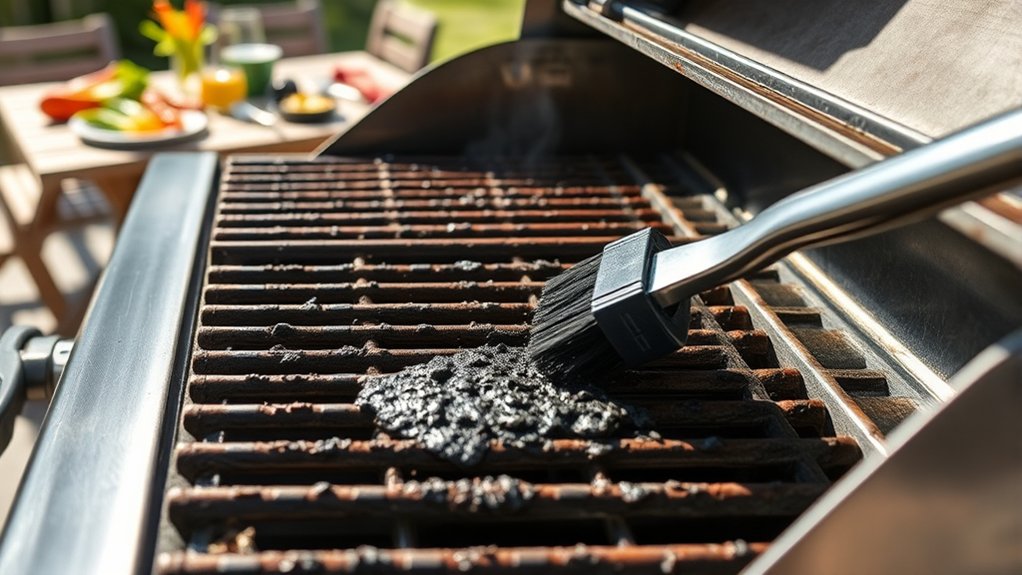
Although it might seem tedious, cleaning your grill regularly is essential for the best cooking results. You should aim to clean your grill after every use to prevent grease buildup, which can cause flare-ups and affect flavor. Scrape off food residue while the grill is still warm, making it easier to remove stuck-on bits.
Deep cleaning, including grates and drip pans, should happen at least once a month or after heavy use. Keeping your grill clean not only improves taste but also extends its lifespan and ensures even heat distribution. By sticking to a consistent cleaning routine, you’ll avoid unpleasant odors and reduce the risk of contamination.
Making every barbecue safer and more enjoyable for you and your guests.
How Grill Type Affects Cleaning Frequency
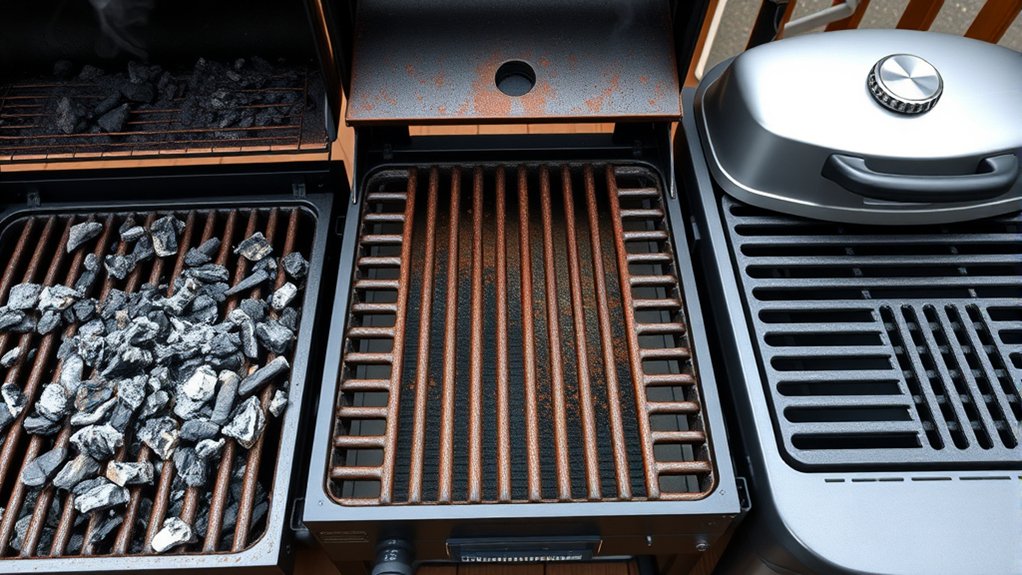
Your grill type plays a big role in how often you need to clean it. Gas grills usually require more regular cleaning to prevent grease buildup, while charcoal grills can handle a bit more time between deep cleans.
Electric grills often need the least maintenance but still benefit from regular wiping to keep things running smoothly.
Gas vs. Charcoal
Because gas and charcoal grills operate differently, they demand distinct cleaning routines. You’ll find that gas grills often need more frequent cleaning to prevent grease buildup in burners, while charcoal grills require thorough ash removal after each use.
| Grill Type | Cleaning Frequency |
|---|---|
| Gas Grill | Clean grates after every use; deep clean burners monthly |
| Charcoal Grill | Remove ashes after each use; clean grates weekly |
| Both | Inspect for rust and damage monthly |
With gas grills, grease traps and burners need attention to avoid flare-ups. Charcoal grills focus more on ash disposal and residue removal.
Adjust your cleaning habits based on your grill type to keep it safe and efficient.
Electric Grill Maintenance
Electric grills operate differently from gas and charcoal models, which means you’ll need to adjust how often and how you clean them. Since electric grills don’t produce open flames, they typically accumulate less grease and soot. However, food residue and oils can still build up on the plates and heating elements.
You should clean your electric grill after every use by wiping down the plates with a damp cloth or using a grill brush designed for non-stick surfaces. For a deep clean, unplug the grill and remove the plates if possible, soaking them in warm soapy water. Regular maintenance prevents odors and guarantees even heating.
Unlike gas or charcoal grills, electric models usually require more frequent but gentler cleaning to protect their electrical components.
How Your Cooking Habits Influence Grill Cleaning Needs
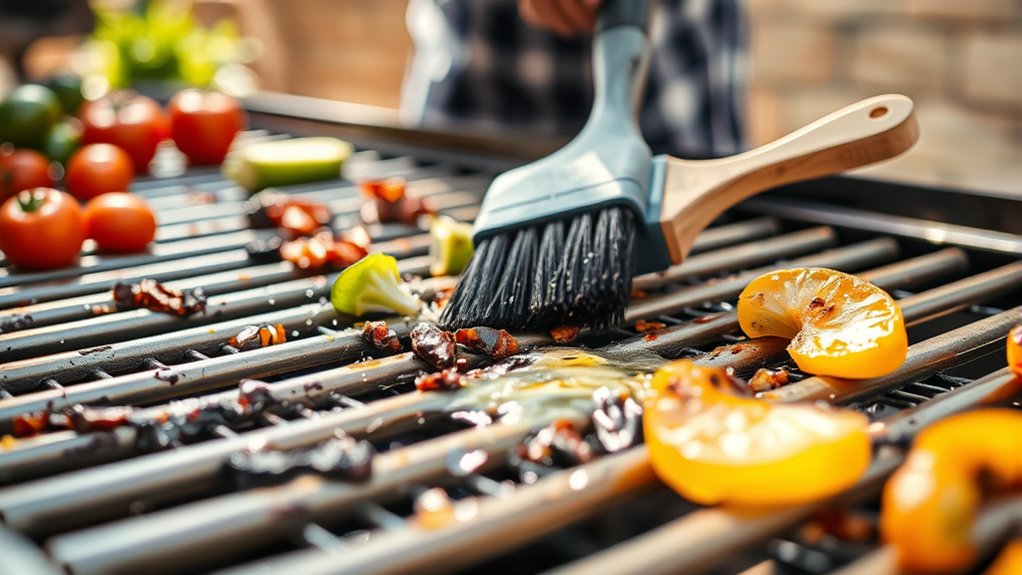
When you grill frequently or cook greasy foods, you’ll need to clean your grill more often to prevent buildup and flare-ups. Your cooking habits directly impact how quickly grease, food particles, and residue accumulate, affecting your grill’s performance and safety.
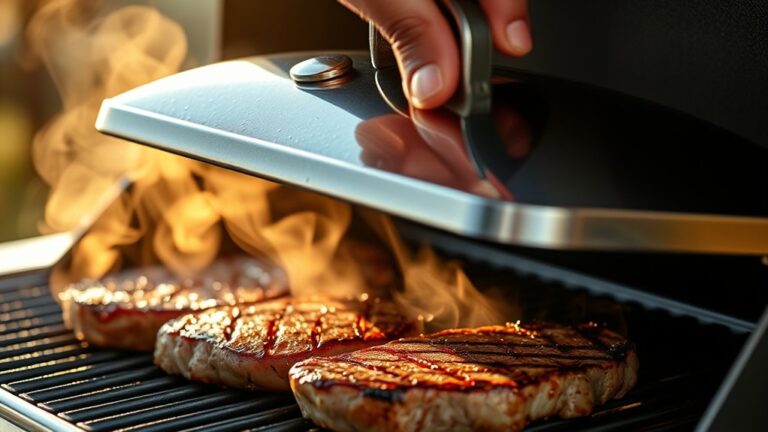
For example, if you often cook fatty meats or use sugary marinades, grease can drip and cause flare-ups, requiring more frequent cleaning.
Consider these factors to adjust your cleaning schedule:
- How often you grill each week
- Types of foods you cook (fatty vs. lean)
- Use of marinades or sauces that caramelize
- Whether you cook with direct or indirect heat
How Weather and Storage Affect Cleaning Frequency
Although your cooking habits play a big role, weather and storage conditions also considerably influence how often you should clean your grill. If you leave your grill exposed to rain, snow, or humidity, moisture can cause rust and buildup faster, meaning you’ll need to clean it more frequently.
Similarly, storing your grill in a garage or covered area protects it from the elements, reducing grime and rust and extending the time between cleanings.
Cold weather can cause grease to harden, making debris harder to remove, so plan thorough cleaning sessions before and after winter. Keep in mind that windy conditions might blow dirt and leaves onto your grill, requiring more attention.
Adjust your cleaning schedule based on these factors to maintain a safe, efficient grill.
Signs It’s Time to Clean Your Grill Grates Thoroughly
If your food starts sticking more than usual or you notice uneven heating, it’s a clear sign that your grill grates need a thorough cleaning. Ignoring these signs can lead to poor cooking results and even damage your grill over time. Watch for these indicators:
- Visible buildup of charred food or grease on the grates
- Flare-ups caused by accumulated fat and debris
- Rust spots appearing on the metal surface
- A lingering burnt smell during grilling sessions
When you spot any of these, it’s time to roll up your sleeves and give your grill grates a deep clean. Staying on top of these signs ensures better flavor, safer cooking, and prolongs your grill’s lifespan.
Cleaning Your Grill After Every Use (Without Overdoing It)
Noticing signs that your grill needs a deep clean is important, but you don’t have to wait until buildup becomes a problem to maintain it. After every use, a quick clean helps keep your grill ready and safe without overdoing it.
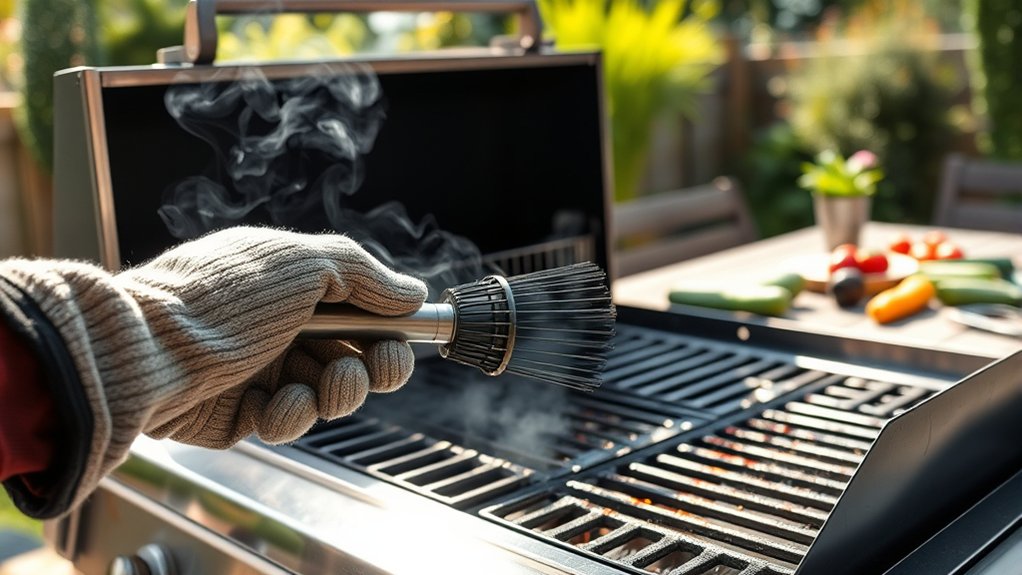
Simply scrape off leftover food with a grill brush while the grates are still warm. Then, wipe down surfaces to prevent grease buildup and bad odors.
| Task | Frequency | Tools Needed |
|---|---|---|
| Scrape grill grates | After every use | Grill brush |
| Wipe surfaces | After every use | Damp cloth or sponge |
| Empty grease tray | Weekly or as needed | Gloves, trash bag |
| Check burners | Monthly | Soft brush, cloth |
| Inspect gas lines | Monthly | Soapy water, cloth |
This routine keeps your grill clean without wearing it down prematurely.
When to Deep Clean Your Grill for Longevity
You should deep clean your grill when you notice buildup, rust, or uneven heating. Aim to do a thorough cleaning at least once every few months to keep it in top shape.
This routine helps extend your grill’s life and guarantees better-tasting food.
Signs You Need
When grease builds up and food starts sticking more than usual, it’s a clear sign you need to deep clean your grill. Ignoring these signs can shorten your grill’s lifespan and affect your food’s flavor. Watch for these indicators:
- Uneven heating or flare-ups during cooking
- A strong, unpleasant odor coming from the grill
- Visible rust or buildup on grates and burners
- Difficulty igniting or maintaining consistent temperature
If you notice any of these, it’s time to roll up your sleeves and give your grill a thorough cleaning. Deep cleaning removes harmful residue and keeps your grill running smoothly, ensuring better performance and delicious meals every time you fire it up. Don’t wait for problems—stay proactive to extend your grill’s life.
Recommended Cleaning Frequency
Keeping an eye on those warning signs helps you know when it’s time to deep clean your grill, but understanding how often to perform this task can keep your grill in top shape long before issues arise.
Generally, a deep clean every 3 to 6 months is ideal, depending on how often you grill.
If you use it weekly, aim for quarterly deep cleans. For occasional use, twice a year should suffice.
| Usage Frequency | Deep Clean Interval | Notes |
|---|---|---|
| Weekly | Every 3 months | Prevents buildup |
| Monthly | Every 4-6 months | Maintains grill quality |
| Occasionally | Twice a year | Avoids rust and damage |
Stick to this schedule to extend your grill’s life and keep it performing well.
Benefits Of Deep Cleaning
Although regular use can leave your grill coated with grease and residue, deep cleaning removes buildup that can damage parts and affect performance. When you deep clean your grill, you prolong its lifespan and improve cooking efficiency. You’ll also reduce flare-ups caused by accumulated grease, making grilling safer.
Plus, a thoroughly cleaned grill ensures your food tastes fresh, free from old residue or burnt bits. Consider deep cleaning your grill every few months or after heavy use, especially if you notice uneven heating or persistent odors. Here’s why it’s worth the effort:
- Prevents rust and corrosion on metal parts
- Maintains consistent heat distribution
- Enhances flavor by eliminating old grease and food particles
- Saves money by avoiding costly repairs or replacements
Deep cleaning keeps your grill working like new longer.
How Regular Cleaning Keeps Your Grill Safe
Since grease and food residue can build up quickly, cleaning your grill regularly reduces the risk of flare-ups and fires. When grease accumulates in drip trays or on burners, it can ignite unexpectedly, putting you and your property in danger. By wiping down grates and removing debris after each use, you keep your grill safe and ready.
Regular cleaning also prevents rust and corrosion, which can weaken parts and cause malfunctions. Plus, maintaining cleanliness guarantees that harmful bacteria don’t linger, protecting your health. You’ll also notice better heat distribution and more consistent cooking results.
Taking a few minutes to clean your grill after every cookout isn’t just about appearance—it’s a vital safety step that helps you enjoy tasty meals without worry.
Finding the Right Cleaning Routine for Your Grill
After understanding how regular cleaning protects your grill and guarantees safety, the next step is figuring out a cleaning schedule that fits your usage and grill type. You want a routine that’s practical and keeps your grill performing at its best without overwhelming you.
Consider these factors when setting your schedule:
- How often you grill: More frequent use means more frequent cleaning.
- Type of grill: Gas grills require different care than charcoal or electric ones.
- Cooking style: High-fat foods can cause more buildup.
- Season and environment: Outdoor grills in dusty or wet areas may need extra attention.
Maintenance Tips to Keep Your Grill Ready Between Cleanings
Even if you stick to a regular deep-cleaning schedule, you’ll want to perform simple maintenance tasks between sessions to keep your grill in top shape. Regularly check for grease buildup, wipe down surfaces, and inspect burners for clogs.
These quick steps prevent bigger issues and guarantee your grill heats evenly every time.
| Task | Frequency |
|---|---|
| Wipe grill grates | After each use |
| Empty grease tray | Weekly |
| Check burners | Monthly |
Frequently Asked Questions
What Cleaning Tools Work Best for Different Grill Types?
You’ll want a wire brush for gas grills, a scraper for charcoal grills, and a sponge or cloth for electric grills.
Don’t forget gloves and grill cleaner spray to make scrubbing easier and protect your hands.
Can I Use Household Cleaners on My Grill Safely?
You wouldn’t wash your salad with soap, so don’t use household cleaners on your grill—they can leave harmful residues.
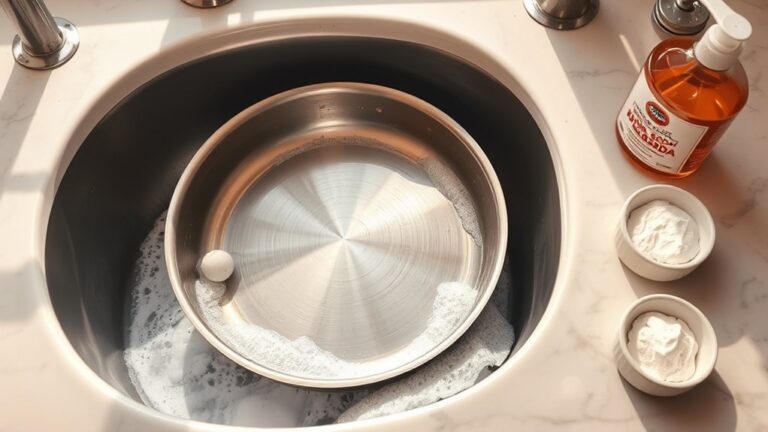
Stick to grill-specific cleaners or natural options like vinegar and baking soda to keep it safe and tasty.
How Do I Clean Inside the Grill Burners?
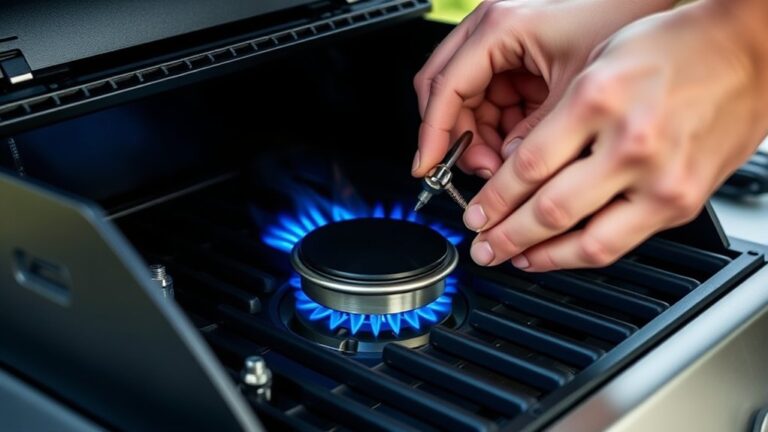
You’ll first turn off and disconnect your grill. Then, remove the burners carefully, use a soft brush to clear debris, and rinse with warm soapy water.
Let them dry completely before reinstalling to avoid damage.
What Are the Best Natural Cleaning Solutions for Grills?
You know what they say, “A clean grill is a happy grill.”
You can’t go wrong with vinegar, baking soda, and lemon juice—they’re natural, non-toxic, and work wonders on grease and grime without harsh chemicals.
How Do I Prevent Rust on My Grill Between Uses?
You can prevent rust by keeping your grill dry, covering it with a weatherproof cover, and applying a thin layer of cooking oil to the grates after cleaning.
Store it in a sheltered spot whenever possible.
Conclusion
Keeping your grill gleaming guarantees great grilling! By gauging your grill type, habits, and weather, you can craft a cleaning cadence that keeps your cookout crisp and your gear glowing. Don’t delay deep cleans; they defend durability and safety.
Staying steady with simple scrubs saves stress and sparks savory successes. So, set a smart schedule, stick to it, and savor sizzling sessions with a spotless, safe, and sturdy grill every time you fire it up!
Regular grill cleaning is key to maintaining performance and ensuring food safety. By following these tips on how often to clean your grill, you’ll enjoy delicious meals and extend the life of your equipment. Keep your grilling game strong with a consistent cleaning routine!