How Do You Safely Put a Pan on a Grill?
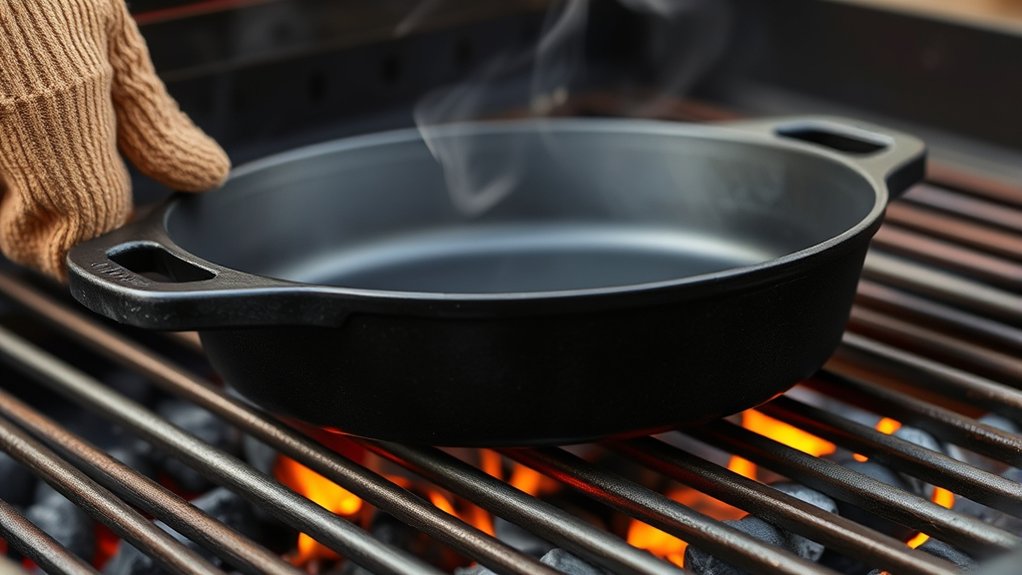
To safely put a pan on a grill, it’s important to choose the right type of pan. Durable, high-heat pans like cast iron or heavy-duty stainless steel work best. Avoid using nonstick or plastic-handled pans to prevent damage and safety hazards.
Before placing the pan, preheat the grill and clean the grates thoroughly.
Then, place the pan steadily across multiple bars to prevent tipping. Using heat-resistant gloves when handling the pan is essential for safety.
Control the grill’s temperature with vents or burners to avoid overheating.
Also, avoid sudden temperature changes that can damage your pan.
Following these steps keeps you safe and your pan in good shape—there’s plenty more to master for great results.
Key Takeaways
- Preheat the grill and clean the grates to ensure even cooking and prevent sticking before placing the pan.
- Use heavy, heat-resistant pans like cast iron or stainless steel, avoiding nonstick or plastic-handled pans.
- Position the pan securely across multiple grate bars away from grill edges to prevent tipping or sliding.
- Handle the pan with long tongs or heat-resistant gloves to avoid burns when placing or moving it on the grill.
- Use medium to medium-high heat and avoid sudden temperature changes to protect the pan from warping or cracking.
How to Use a Pan on a Grill Safely
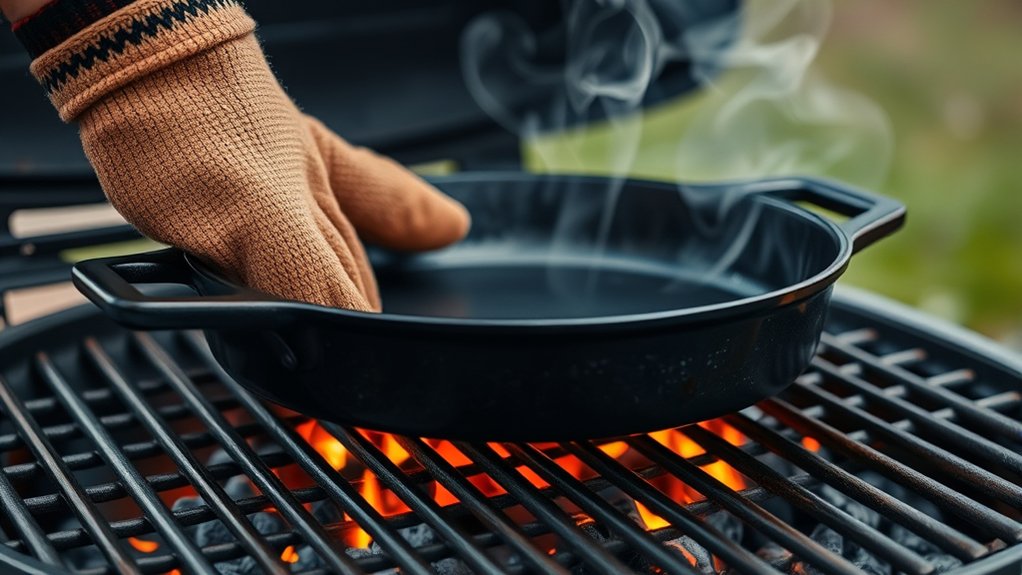
When you place a pan on a grill, make sure it’s designed to withstand high heat to avoid warping or damage. Always preheat your grill before putting the pan on it to guarantee even cooking and prevent sticking. Use long-handled tongs or heat-resistant gloves when handling the pan to protect your hands from burns.
Avoid sudden temperature changes, like placing a cold pan on a hot grill, as this can cause cracking or warping. Keep an eye on the pan while cooking to prevent flare-ups, and don’t overload it with food, which can cause uneven cooking or spills.
After cooking, carefully remove the pan and let it cool down gradually before cleaning or storing it. Following these steps helps you use a pan on a grill safely and effectively.
Which Pans Work Best on a Grill?
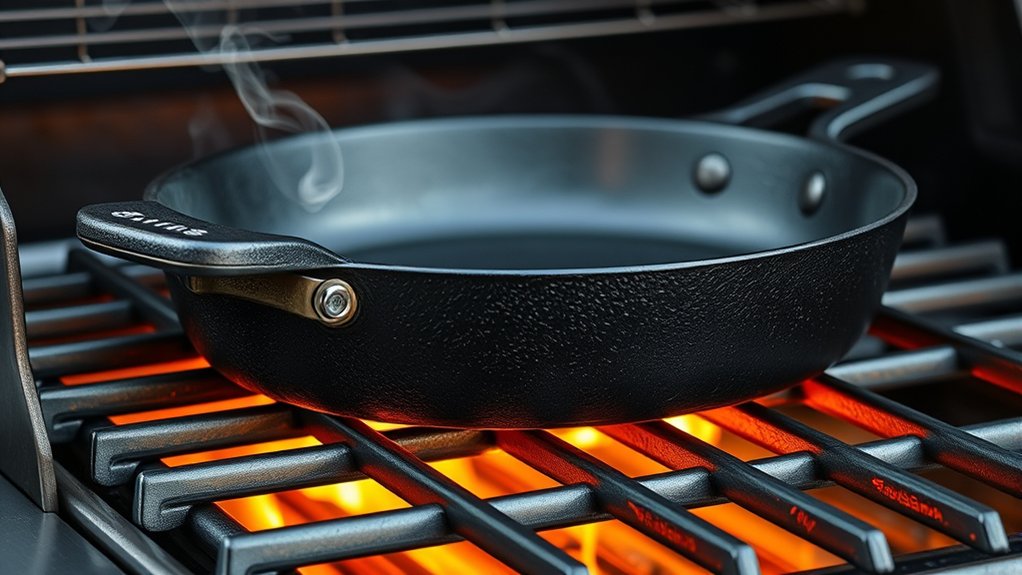
Although many pans can handle the heat of a grill, you’ll get the best results by choosing ones made from durable materials like cast iron, stainless steel, or heavy-duty aluminum. Cast iron pans hold and distribute heat evenly, making them perfect for searing and frying on a grill.
Stainless steel pans are great if you want something lightweight but still tough enough to withstand high temperatures. Heavy-duty aluminum pans heat quickly and offer excellent heat conduction but make sure they’re thick to avoid warping.
Avoid pans with nonstick coatings, as these can degrade or release harmful fumes at high grill temperatures. Also, steer clear of pans with plastic handles or parts that can melt. Sturdy, all-metal pans ensure safe, effective grilling without surprises.
How to Prepare Your Pan for Grilling
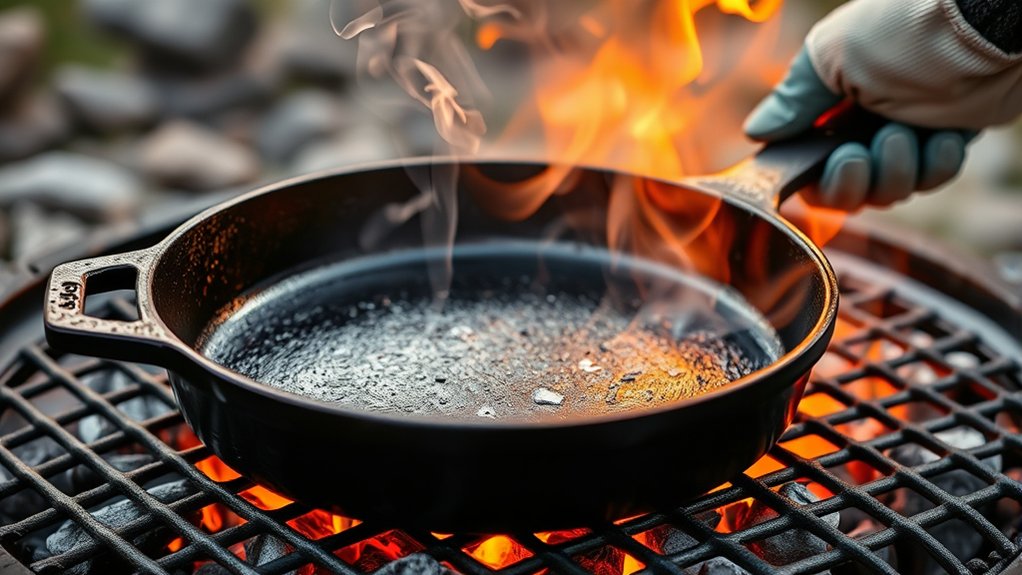
Before placing your pan on the grill, you’ll want to clean and lightly oil it to prevent sticking and guarantee even cooking. Start by washing the pan thoroughly with warm, soapy water to remove any residue or dust. Dry it completely to avoid steam when heated.
Next, apply a thin layer of high-smoke point oil—like canola, grapeseed, or avocado oil—using a paper towel to evenly coat the entire surface, including the sides. This helps create a natural nonstick barrier and protects the pan from rust, especially if it’s cast iron. Avoid using too much oil, as excess can cause flare-ups or uneven heating.
Proper preparation ensures your pan performs well on the grill and makes cleanup easier afterward.
How to Set Up Your Grill for Pan Cooking
You’ll want to pick a grill that offers steady, controllable heat for cooking with a pan. Make certain the cooking surface is clean and preheated to avoid sticking and uneven cooking.
Setting up your grill properly ensures your pan stays stable and your food cooks perfectly.
Choosing The Right Grill
When selecting a grill for pan cooking, focus on stability and heat control to guarantee safety and even cooking. Choose a grill with a sturdy, flat grate that can support the pan’s weight without wobbling. Gas grills offer precise temperature adjustments, making them ideal for dishes needing consistent heat.
Charcoal grills work too but require more attention to maintain steady heat. Avoid grills with uneven surfaces or wide gaps between grates, as pans can tip or get damaged. Also, consider the grill’s size; a compact grill allows better control, while a larger one provides more cooking space but may have hot spots.
Prioritize grills with adjustable vents or burners so you can fine-tune the heat easily and cook safely.
Preparing The Cooking Surface
Although setting up your grill for pan cooking might seem straightforward, taking a few careful steps guarantees even heat distribution and prevents sticking or burning. Start by cleaning the grill grates thoroughly to remove any residue that could affect your pan’s stability or flavor.
Next, preheat your grill to a medium heat; this helps avoid hotspots that can damage your pan or cook food unevenly. If you’re using a cast iron pan, season it lightly with oil to create a non-stick surface. Place a drip pan beneath your cooking area to catch any spills and prevent flare-ups.
Finally, position your pan on the grill carefully, ensuring it sits flat and stable. This setup makes your pan cooking safe and effective.
How to Place and Stabilize a Pan on Grill Grates
Since grill grates can be uneven or widely spaced, placing a pan securely requires careful attention to balance and support. Start by choosing a pan with a flat, sturdy bottom to guarantee it sits evenly on the grates. Position the pan so it rests on multiple grate bars rather than just one to prevent tipping.
If your grill grates are very wide, consider using a grill pan or a heat diffuser designed for stability. Avoid placing the pan near the edge of the grill where it could easily slide off. When you set the pan down, do so gently to keep it stable and avoid spills.
Always check that the pan doesn’t wobble before adding food or heat to maintain safety throughout cooking.
What Heat Levels Work Best When Cooking With a Pan on a Grill
Choosing the right heat level is essential to cooking effectively with a pan on a grill because too high a temperature can burn your food or damage the pan, while too low a heat may result in uneven cooking. Generally, medium to medium-high heat works best. It gives you enough control to cook food evenly without scorching the pan or your ingredients.
If you’re using a cast iron or heavy-duty pan, it can handle higher heat, but still avoid maxing out the grill. For delicate foods like eggs or fish, stick to medium or even medium-low to prevent sticking and burning. Adjust the heat as needed based on how your food is cooking—watch for sizzling but not smoking excessively.
This balance ensures you get great results every time.
How to Keep the Heat Just Right When Cooking on Your Grill
Finding the right heat level is just the start when cooking with a pan on your grill. To keep the heat just right, you need to monitor and adjust consistently. First, use a grill thermometer to track the temperature inside the grill chamber and guarantee it stays steady.
Second, adjust the grill vents or burners to control airflow and flame intensity, allowing you to fine-tune the heat. Third, position your pan strategically—directly over the flame for high heat or offset for gentler cooking.
How to Avoid Safety Hazards When Using a Pan on a Grill
You’ll want to choose cookware that can handle high heat without warping or melting. Keep an eye on grease buildup to prevent dangerous flare-ups. Managing your grill’s temperature carefully will help you stay safe and cook effectively.
Choose Heat-Resistant Cookware
Although many pans can handle stovetop heat, not all are built to withstand the intense temperatures of a grill. To keep things safe and effective, you need cookware designed for high heat.
Here’s what to look for:
- Material: Choose cast iron or heavy-duty stainless steel pans. They tolerate high heat without warping or releasing harmful chemicals.
- Handles: Opt for pans with metal or heat-resistant handles. Avoid plastic or wooden ones that can melt or catch fire.
- Non-Coated Surfaces: Avoid non-stick coatings on grills, as they can degrade or emit fumes at high temperatures. Instead, use bare metal pans or those with durable enamel coatings.
Prevent Grease Fires
Selecting the right cookware sets the stage for safe grilling, but managing grease is just as important to prevent fires. You should regularly wipe excess grease from the pan’s edges and avoid overfilling it, as spilled grease can ignite quickly. Keep a spray bottle of water nearby to handle small flare-ups, but never pour water directly on large grease fires—it makes things worse.
Use a pan with high, sturdy sides to contain grease splatters and minimize drips onto the grill flames. Also, clean your grill grates before cooking to reduce grease buildup. By staying attentive and keeping grease under control, you’ll reduce fire risks and enjoy a safer grilling experience every time you use a pan on your grill.
Use Proper Heat Management
When you manage heat properly, you reduce the risk of accidents and guarantee your food cooks evenly. Grills can get extremely hot, so controlling the temperature is essential when using a pan.
Here’s how to keep heat in check:
- Preheat Gradually: Avoid placing the pan over high heat immediately. Start with medium heat and increase it gradually to prevent warping or burning.
- Use Indirect Heat: Position the pan away from direct flames to avoid flare-ups and uneven cooking, especially for delicate foods.
- Monitor Frequently: Keep an eye on the pan’s temperature, adjusting the grill’s burners or vents as needed to maintain steady, controlled heat.
Tips to Protect Your Pan From Grill Heat Damage
To keep your pan in good shape while grilling, you’ll want to manage the heat carefully and use protective measures. First, avoid placing your pan directly over the hottest flames; instead, use indirect heat zones. This prevents warping or burning.
Next, consider using a heat diffuser or placing a layer of aluminum foil under the pan to distribute heat evenly. Always preheat your pan gradually to reduce thermal shock. Avoid sudden temperature changes like putting a cold pan on a hot grill or rinsing a hot pan with cold water.
Finally, choose pans made from sturdy materials like cast iron or heavy-duty stainless steel, as they withstand grill heat better. Taking these steps helps extend your pan’s life and keeps your grilling safe.
Best Foods to Cook in a Pan on the Grill
Although grilling directly on the grates works well for many foods, using a pan expands your options and helps you cook delicate or small items that might fall through. You can easily prepare dishes that require more control or have ingredients that could slip between the grill bars.
Here are the best foods to cook in a pan on the grill:
- Vegetables: Sauté peppers, onions, or mushrooms without losing any pieces to the coals.
- Seafood: Shrimp, scallops, or flaky fish stay intact and cook evenly without sticking.
- Eggs and Breakfast Foods: Scrambled eggs, omelets, or even pancakes cook smoothly without burning or falling apart.
Using a pan on the grill lets you enjoy a broader range of meals with the smoky flavor you love.
How to Clean and Maintain Your Pan After Grilling
After grilling, you’ll want to clean your pan properly to keep it in great shape. Using the right techniques prevents damage and helps maintain its durability.
Let’s go over the best ways to care for your pan after every use.
Proper Pan Cleaning Techniques
Since grilling can leave stubborn residues on your pan, you’ll want to clean it promptly to maintain its performance and longevity. Start by letting the pan cool slightly—don’t shock it with cold water to avoid warping.
Then, follow these steps:
- Scrape off food debris using a plastic or wooden spatula to prevent scratching the surface.
- Wash with warm, soapy water using a soft sponge or cloth; avoid abrasive scrubbers that can damage coatings.
- Dry thoroughly with a towel to prevent rust, especially if your pan is cast iron or carbon steel.
Maintaining Pan Durability
To keep your pan in top shape after grilling, you’ll need to clean and maintain it carefully to prevent damage and extend its lifespan. Start by letting the pan cool completely before washing to avoid warping. Use warm, soapy water and a soft sponge—skip abrasive scrubbers that can scratch the surface.
For stubborn residue, soak the pan briefly rather than scrubbing hard. If your pan is cast iron, avoid soap and dry it thoroughly after washing to prevent rust. Reapply a thin layer of oil to sustain its seasoning.
Store your pan in a dry area and avoid stacking heavy items on top. Regular maintenance like this guarantees your pan stays durable and ready for many grilling sessions to come.
Frequently Asked Questions
Can I Use a Non-Stick Pan on a Charcoal Grill?
Yes, you can use a non-stick pan on a charcoal grill, but you’ve got to watch the heat closely. High temperatures can damage the coating, so keep the flames low and avoid overheating to protect your pan.
Make sure to monitor the temperature regularly and adjust the grill as needed. Using a pan with a sturdy base can also help distribute heat more evenly.
Avoid placing the pan directly over large, open flames to extend its lifespan. With proper care, your non-stick pan can work well on a charcoal grill.
How Do I Prevent Food From Sticking to the Pan on the Grill?
You can prevent food from sticking by preheating the pan well, adding a generous amount of oil or butter, and ensuring your food is dry before placing it on the pan.
Avoid moving it too soon for better release.
Is It Safe to Leave a Pan Unattended on a Hot Grill?
You shouldn’t leave a pan unattended on a hot grill; you risk flare-ups, burning food, and damaging the pan.
You need to watch closely, adjust heat carefully, and stay nearby to keep everything safe and tasty.
Can I Use Aluminum Foil Under the Pan for Easier Cleanup?
Yes, you can use aluminum foil under the pan for easier cleanup. Just make sure the foil is secure and doesn’t block grill vents. This helps catch drips while keeping your grill clean and safe.
What Should I Do if Flare-Ups Occur While Using a Pan on the Grill?
If flare-ups occur, don’t panic like a knight facing dragons. Move the pan to a cooler grill spot, close the lid to starve flames, and keep a spray bottle handy to douse small flames safely and quickly.
Conclusion
Now that you’ve mastered placing a pan on your grill, you’re ready to dance with fire and flavor like a pro. Treat your pan like a trusted partner—steady, protected, and well-prepped—and it’ll help you create smoky, sizzling meals without missing a beat.
Keep safety and care in your rhythm, and your grill-side cooking will shine bright. By following these steps to safely put a pan on a grill, you ensure both great taste and secure handling. This approach turns every meal into a fiery masterpiece worth savoring.
Happy grilling! Remember, safety and proper technique are the keys to success when using a pan on your grill.