How to Cook Thin Steak in a Frying Pan in 7 Easy Steps
Choose a tender cut like flank or skirt, about 1/4 to 1/2 inch thick, to cook thin steak in a frying pan perfectly.
Bringing your steak to room temperature ensures even cooking, while patting it dry helps achieve a good sear.
Season generously with salt and pepper to enhance the natural flavors of the meat.
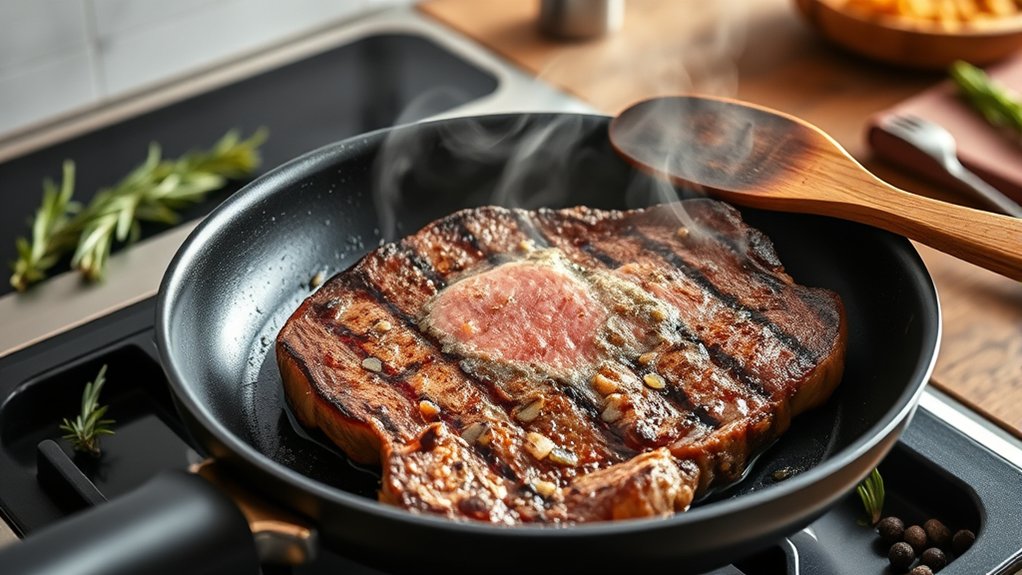
Heat a heavy-bottomed pan until very hot, then sear the steak for 1-2 minutes per side to develop a golden crust.
Avoid pressing down on the steak to keep it juicy and tender.
Once cooked, let it rest covered for 5 minutes to allow the juices to redistribute.
Finally, slice the steak against the grain for maximum tenderness.
Keep going to master every step and enjoy a perfectly cooked thin steak every time.
Key Takeaways
- Choose tender, well-marbled cuts like flank or skirt steak, about 1/4 to 1/2 inch thick for even cooking.
- Bring steak to room temperature, pat dry, and season both sides with salt and pepper just before cooking.
- Preheat a heavy-bottomed pan (cast iron or stainless steel) over medium-high heat until very hot but not smoking.
- Sear steak 1-2 minutes per side until a golden-brown crust forms, flipping gently without pressing down.
- Rest the steak for 5 minutes covered loosely with foil, then slice against the grain and serve immediately.
Choose the Right Cut and Thickness for Thin Steak
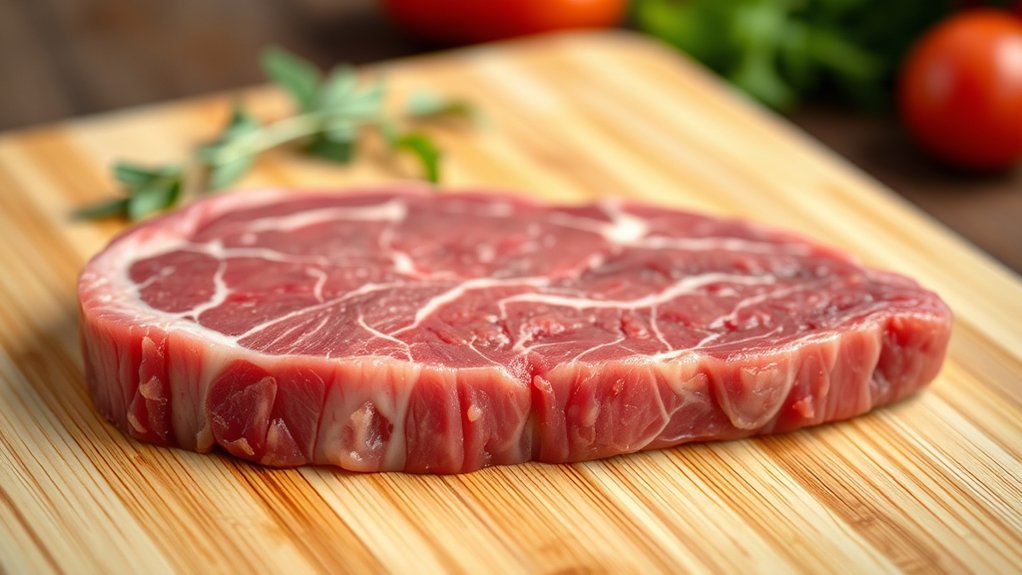
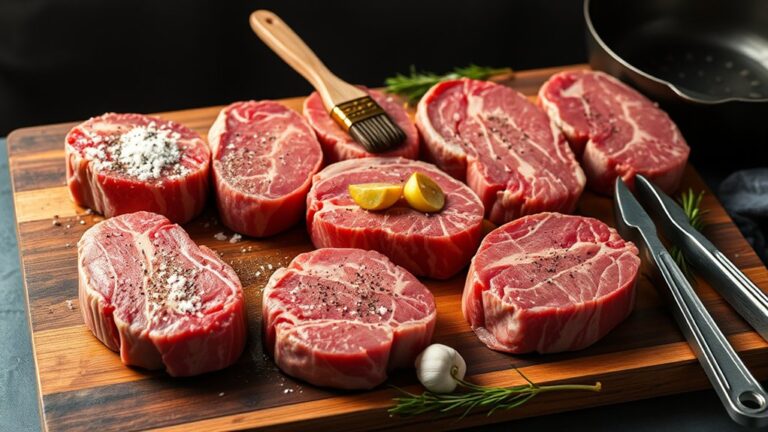
Although thin steaks cook quickly, choosing the right cut and thickness is essential to guarantee tenderness and flavor. You’ll want to pick cuts known for their tenderness, like flank, skirt, or sirloin. These cuts respond well to quick cooking methods without becoming tough.
Aim for steaks about 1/4 to 1/2 inch thick. Thinner than that, and the meat can overcook rapidly, losing juiciness. Thicker cuts might not cook evenly in a pan.
When selecting your steak, look for good marbling, as the fat helps keep the meat moist and adds flavor during cooking. Avoid overly lean cuts, since they tend to dry out faster. By choosing the right cut and thickness, you’re setting yourself up for a delicious thin steak that’s tender and flavorful every time.
How to Prepare Thin Steak for Even Cooking
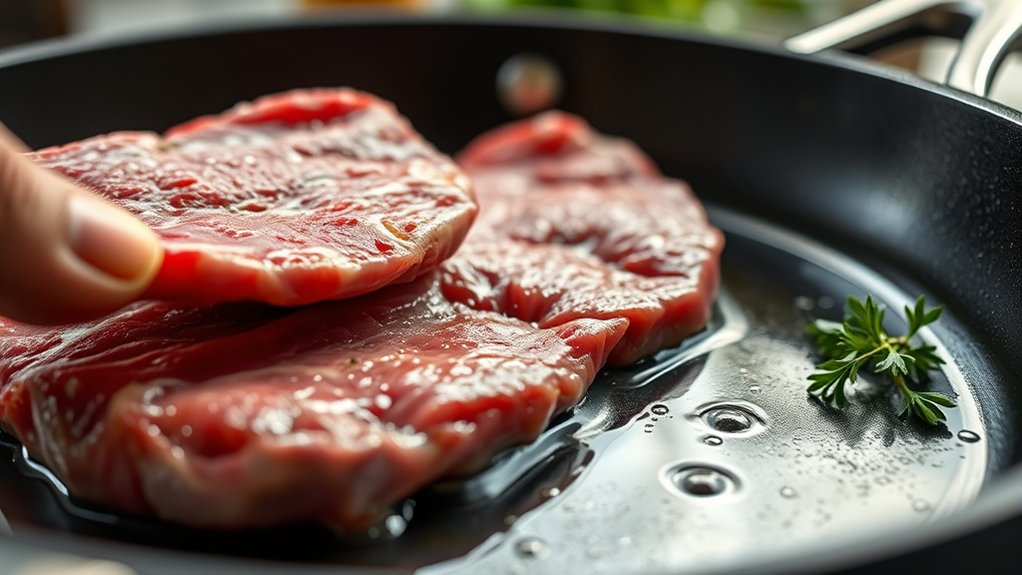
To guarantee your thin steak cooks evenly, start by bringing it to room temperature before hitting the pan. Take the steak out of the fridge about 20–30 minutes prior to cooking. This prevents the outside from overcooking while the inside warms up.
Next, pat the steak dry with paper towels to remove excess moisture; this helps achieve a good sear. Lightly season both sides with salt and pepper just before cooking to enhance flavor without drawing out moisture. If you want, gently tenderize the steak with a meat mallet or the back of a knife to ensure consistent thickness, avoiding overly thin spots.
These simple steps set you up for a perfectly cooked thin steak every time.
What Pan and Heat Level Work Best for Thin Steaks
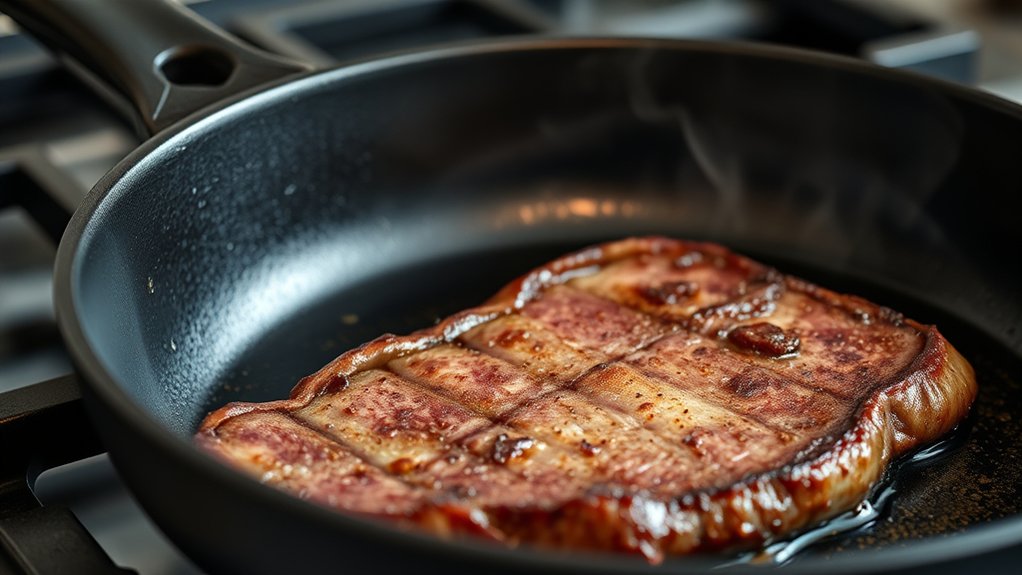
When cooking thin steaks, choosing the right pan and heat level is essential to achieve a perfect sear without overcooking. Use a heavy-bottomed skillet like cast iron or stainless steel because they retain and distribute heat evenly. Avoid nonstick pans since they don’t get hot enough to create a good crust.
Preheat your pan over medium-high heat until it’s very hot but not smoking. This temperature lets you quickly sear the steak’s surface, locking in juices without burning. Once you add the steak, resist lowering the heat; keep it high to maintain a steady sizzle.
Thin steaks cook fast, so a hot pan ensures you get a tasty crust before the interior overcooks. This balance is key to delicious results every time.
How to Season Thin Steak for Maximum Flavor
Now that you’ve got your pan hot and ready for searing, it’s time to focus on seasoning your thin steak to boost its natural flavor. Start by patting the steak dry with paper towels to guarantee the seasoning sticks well. Sprinkle both sides generously with kosher salt and freshly ground black pepper—these basics enhance the meat’s taste without overpowering it.
For extra flavor, add a pinch of garlic powder or smoked paprika. Don’t forget to press the seasoning gently into the steak so it adheres. Avoid marinating thin steaks for long, as they cook quickly and can become mushy.
Let the seasoned steak rest at room temperature for about 10 minutes before cooking to allow the flavors to meld and the meat to cook evenly.
How to Pan-Sear Thin Steak Perfectly (Including When to Flip)
Although thin steaks cook quickly, mastering the pan-searing technique guarantees you get a beautifully browned crust without overcooking the inside. Start by heating your pan until it’s smoking hot—this assures a good sear. Add a high smoke point oil, then place the steak in the pan without moving it.
Let it cook undisturbed to form that crust.
Here’s how to nail the perfect pan-sear and timing:
- Cook each side for about 1-2 minutes depending on thickness
- Flip only once to avoid losing juices
- Use tongs to turn gently
- Look for a rich, golden-brown crust before flipping
- Avoid pressing down on the steak to keep it juicy
This approach locks in flavor and texture every time.
How to Rest Thin Steak for the Best Taste
You’ll want to let your thin steak rest after cooking to lock in its juices and boost flavor. Aim for about 5 minutes of resting time to let the meat relax without losing heat.
Use a tent of foil to keep it warm while you wait for the best taste and texture.
Importance Of Resting
Why does resting your thin steak matter so much after cooking? Resting lets the juices redistribute evenly throughout the meat, preventing them from spilling out when you cut into it. This keeps your steak juicy and flavorful.
Plus, resting allows the steak to finish cooking gently, enhancing tenderness.
When you rest your thin steak, you:
- Lock in moisture for a juicy bite
- Achieve a more tender texture
- Prevent dry, tough edges
- Enhance the overall flavor profile
- Make slicing easier and cleaner
Skipping this step means losing those precious juices and sacrificing taste. So, don’t rush—give your steak a few minutes to rest before digging in. Your taste buds will thank you!
Resting Time Guidelines
When you finish cooking your thin steak, letting it rest for the right amount of time is essential to locking in its flavor and juiciness. For thin steaks, aim to rest it for about 5 minutes. This short resting period allows the juices to redistribute evenly throughout the meat without cooling it too much.
Resting longer than 10 minutes isn’t necessary and might cause the steak to lose warmth. If you cut into it too soon, those flavorful juices will spill out, leaving the steak dry. Use this guideline as a general rule: the thinner the steak, the shorter the rest.
Keep the steak loosely covered with foil to retain heat during this time. Following these resting time guidelines ensures your thin steak remains tender and delicious.
Optimal Resting Techniques
Although resting a thin steak might seem simple, using the right techniques can considerably enhance its flavor and texture. When you rest your steak properly, the juices redistribute evenly, making every bite juicy and tender. Here’s how to get it right:
- Place the steak on a warm plate to avoid cooling too quickly
- Loosely cover it with foil to keep heat in without trapping steam
- Rest for 5 minutes—long enough for juices to settle but not lose warmth
- Avoid stacking or pressing the steak, which can squeeze out moisture
- Use this time to prepare your sides or sauce for a perfect meal
Following these tips guarantees your thin steak stays flavorful and juicy from first bite to last.
How to Serve Thin Steak for Maximum Enjoyment
Since thin steak cooks quickly, serving it immediately guarantees you enjoy its tenderness and flavor at their peak. Once rested briefly, slice the steak against the grain to maximize tenderness in every bite. Arrange the slices neatly on a warm plate to maintain the steak at an ideal temperature.
Pair it with simple sides like fresh salad, roasted vegetables, or crispy potatoes to complement the steak without overpowering it. Drizzle a bit of the pan juices or a light sauce over the meat for added moisture and flavor. Finally, serve with freshly ground black pepper or a sprinkle of flaky sea salt to enhance the natural taste.
Frequently Asked Questions
Can I Marinate Thin Steak Overnight?
Yes, you can marinate thin steak overnight. It’ll enhance flavor and tenderize the meat, but don’t overdo acidic ingredients, or it might become mushy.
Overnight marinating works best with balanced marinades for juicy, tasty results.
How Long Does Thin Steak Keep in the Fridge?
You can keep thin steak in the fridge for 3 to 5 days. Make sure it’s properly wrapped or stored in an airtight container to maintain freshness and prevent it from absorbing other odors.
Is It Better to Use Oil or Butter for Cooking?
You don’t want your steak swimming in a butter jacuzzi or battling an oil wrestling match. Use oil for high heat to sear, then toss in butter at the end for flavor.
That’s how you win steak’s respect.
Can I Cook Frozen Thin Steak in a Pan?
You can cook frozen thin steak in a pan, but it’s best to thaw it first for even cooking. If you don’t, cook it slowly on low heat to avoid burning the outside while the inside stays raw.
This method helps ensure the steak cooks through properly. Patience is key when cooking from frozen. Avoid high heat to prevent uneven cooking.
What Side Dishes Pair Best With Thin Steak?
Pair your thin steak with roasted garlic potatoes and vibrant steamed asparagus—they symbolize comfort and freshness.
You’ll also enjoy a crisp side salad or sautéed mushrooms, balancing richness and lightness to make your meal truly satisfying.
Conclusion
Now that you’ve mastered these simple steps, cooking thin steak in a frying pan will be as easy as pie. With the right cut, proper seasoning, and perfect pan-searing, you’re well on your way to a juicy, flavorful meal that melts in your mouth.
Remember to let it rest—like a good story, thin steak needs a moment to settle before the grand finale. Enjoy every bite and savor your delicious success!
By following this guide on how to cook thin steak in a frying pan, you can confidently create a tender, tasty steak anytime. Perfect pan-searing and careful seasoning make all the difference in achieving that ideal thin steak texture and flavor.