How to Safely Use Thyme and Table Cookware in Your Kitchen
To safely use thyme and table cookware in your kitchen, start by selecting fresh, vibrant thyme without any discoloration. Proper storage is essential—wrap thyme in damp paper towels or freeze it to maintain its freshness. Always wash thyme thoroughly and handle it with clean hands to prevent contamination.
When using cookware, exercise caution to avoid overheating and damaging your pots and pans. Keep knives sharp to ensure safe and efficient cutting, and clean all cookware with gentle tools to preserve their condition.
Store thyme and cookware properly to prevent damage or injury in your kitchen.
By following these basic safety tips, you’ll create flavorful meals while minimizing risks. These guidelines help enhance both kitchen safety and efficiency for a better cooking experience.
Key Takeaways
- Select fresh thyme with vibrant leaves, avoid mold, and store properly in the fridge or freezer without washing beforehand.
- Wash thyme thoroughly before use, add fresh thyme late in cooking, and label dishes to avoid allergen risks.
- Prevent cross-contamination by handling thyme with clean hands, using separate utensils, and storing away from raw meats.
- Use oven mitts and stable surfaces to handle hot cookware, avoid overheating pans, and store knives safely with blade guards.
- Clean cookware gently with appropriate methods for each material, dry thoroughly, and maintain cast iron by oiling after washing.
How to Choose Fresh Thyme for Safe Cooking
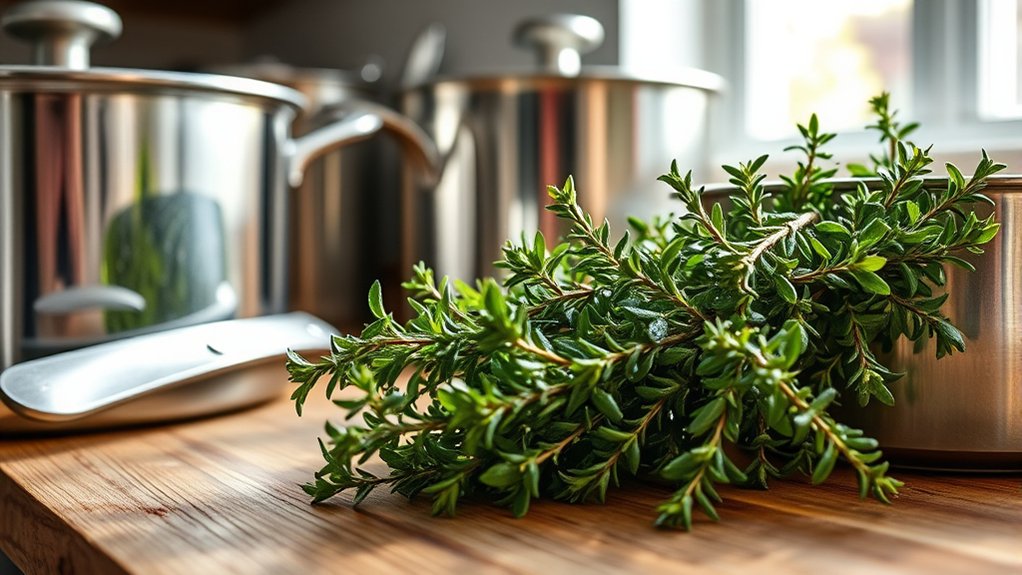
How can you tell if thyme is fresh and safe to use? Start by looking for vibrant green leaves without any yellowing or browning. Fresh thyme should feel firm and fragrant, not wilted or dry.
Avoid sprigs with dark spots or signs of mold. When you gently rub a leaf between your fingers, it should release a strong, pleasant aroma—this means the essential oils are intact and the thyme is flavorful. Check the stems; they should be flexible, not brittle or slimy.
If thyme looks limp or smells off, it’s best to skip it. Also, consider buying thyme from reputable sources or farmers’ markets where you can assess freshness directly. Choosing fresh thyme guarantees safety and enhances your dishes with its authentic taste.
How to Store Thyme to Keep It Fresh
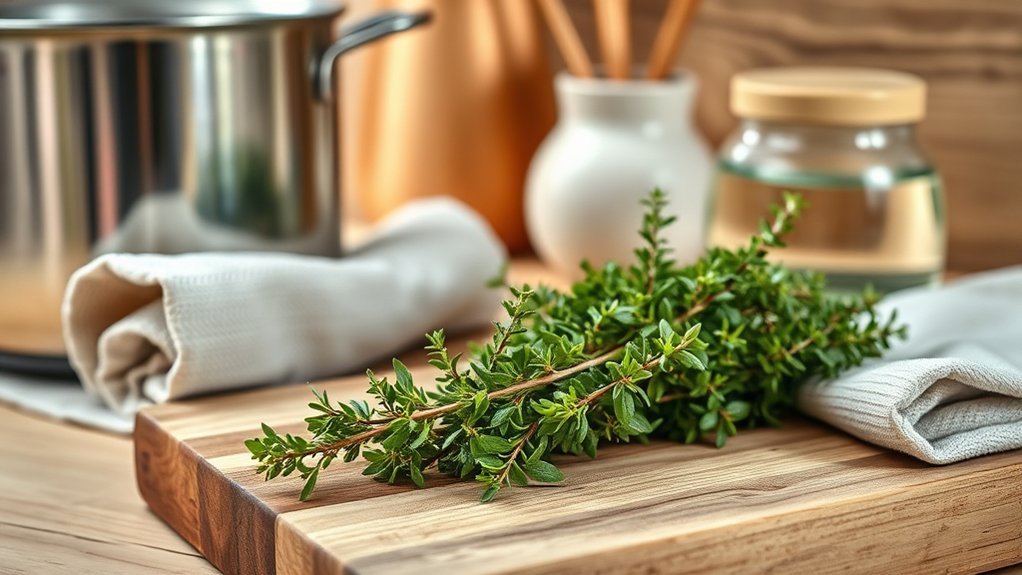
To keep thyme fresh longer, you’ll want to store it properly right after buying or harvesting. You can use methods like wrapping it in a damp paper towel or placing it in a glass of water in the fridge.
These simple steps help extend thyme’s freshness and flavor for your cooking.
Ideal Thyme Storage Methods
Although thyme is a hardy herb, storing it properly is key to maintaining its fresh aroma and flavor. Start by trimming the stems and removing any wilted leaves. If you plan to use thyme within a week, wrap the sprigs loosely in a damp paper towel and place them inside a plastic bag or airtight container in the refrigerator.
For longer storage, you can stand the thyme stems in a glass of water, covering them with a plastic bag, and keep them refrigerated—this mimics a bouquet and keeps thyme fresh. Avoid washing thyme before storing, as excess moisture promotes mold.
With these ideal storage methods, you’ll keep thyme fresh and flavorful, ready to enhance your dishes whenever you need it.
Extending Thyme Freshness
When you want to keep thyme fresh for longer periods, choosing the right storage technique makes all the difference. Proper storage preserves its aroma and flavor, so you can enjoy thyme in your dishes anytime.
Here are four effective ways to extend thyme freshness:
- Wrap thyme in a damp paper towel, place it in a plastic bag, and refrigerate.
- Store thyme stems upright in a glass of water, loosely covered with a plastic bag, in the fridge.
- Freeze thyme by spreading sprigs on a baking sheet, then transferring them to a freezer bag.
- Dry thyme by hanging small bunches upside down in a cool, dark area, then store in an airtight container.
Try these methods to keep your thyme flavorful and ready for use.
How to Wash and Prepare Thyme Safely
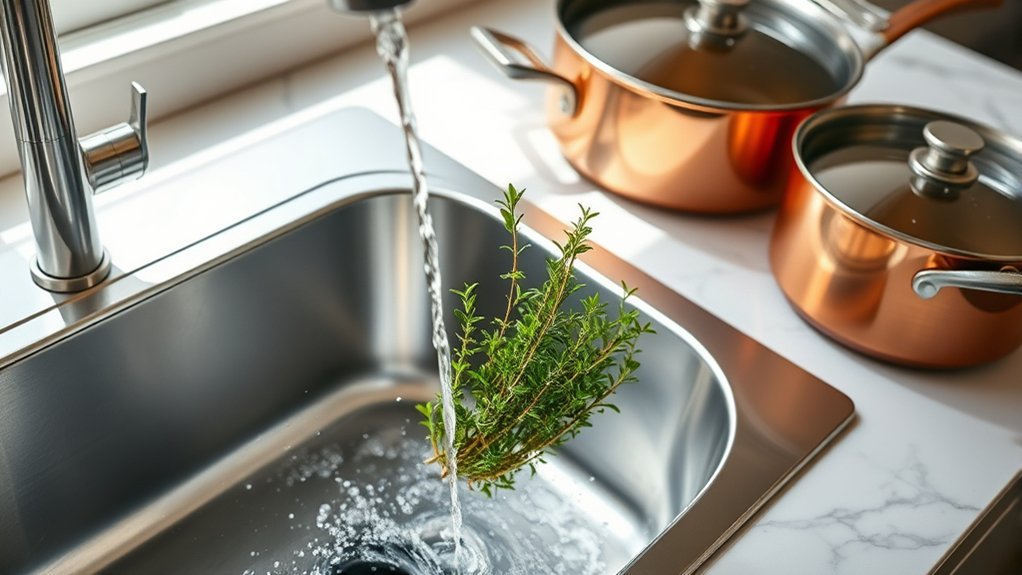
Since thyme often carries dirt and small insects from the garden or market, you should rinse it thoroughly under cold running water before use. Gently swish the sprigs in a bowl of water to remove soil without damaging the delicate leaves. After rinsing, pat the thyme dry with a clean kitchen towel or use a salad spinner to avoid excess moisture, which can cause spoilage.
Next, strip the leaves from the woody stems by running your fingers downward. Use only the leaves in your recipes unless the recipe specifies whole sprigs.
| Step | Action | Tip |
|---|---|---|
| Rinse | Cold running water | Use a bowl for soaking |
| Dry | Pat with towel/spinner | Avoid leaving wet |
| Strip leaves | Run fingers down stems | Only leaves for flavor |
| Inspect | Check for insects | Remove any you find |
How to Use Thyme Safely in Various Cooking Methods
When cooking with thyme, you’ll want to choose between fresh and dried based on your recipe and cooking time. Fresh thyme works best for dishes with shorter cooking times, while dried thyme holds up well in longer simmering.
Also, be mindful of any allergies or sensitivities to avoid unwanted reactions.
Fresh Versus Dried Thyme
How do you decide between fresh and dried thyme for your recipes? Both forms bring great flavor, but you’ll want to use them differently to keep your dishes safe and tasty.
- Fresh thyme offers a brighter, more subtle taste and works best when added towards the end of cooking.
- Dried thyme is more concentrated, so use about one-third the amount of fresh thyme.
- Always wash fresh thyme thoroughly to remove dirt or pesticides before use.
- Store dried thyme in a cool, dark place to maintain its potency and avoid contamination.
Cooking Time Considerations
Although thyme adds wonderful flavor to many dishes, you need to adjust cooking times based on whether you use fresh or dried thyme to get the best taste and guarantee safety. Fresh thyme releases its essence quickly, so add it near the end of cooking to preserve its bright flavor and avoid bitterness.
Dried thyme, being more concentrated, benefits from longer cooking times, allowing its flavors to fully infuse your dish. When simmering soups or stews, toss in dried thyme early, but add fresh thyme just before serving. For sautéing or roasting, add fresh thyme in the last few minutes to prevent burning, which can create unwanted bitterness.
Allergy and Sensitivity Awareness
Understanding the timing for adding thyme helps enhance flavor and safety, but you also need to take into account potential allergies and sensitivities. Some people might react to thyme’s essential oils or pollen, so it’s important to be cautious when cooking for others. To use thyme safely, consider these tips:
- Start with small amounts to test tolerance, especially for guests or family members with known allergies.
- Avoid using fresh thyme if anyone has a known herb allergy; dried thyme may be less potent but still check first.
- Clearly label dishes containing thyme to prevent accidental ingestion.
- If you or others experience symptoms like itching or swelling, stop using thyme immediately and seek medical advice.
How to Prevent Cross-Contamination When Handling Thyme
Since thyme often comes into contact with raw ingredients and various surfaces, you need to handle it carefully to avoid cross-contamination. Start by washing your hands thoroughly before and after touching thyme. Use clean utensils and cutting boards dedicated to herbs or thoroughly sanitize them after use.
Avoid placing thyme on countertops or surfaces where raw meat or poultry has been prepped unless those surfaces have been properly cleaned. When storing thyme, keep it separate from raw foods to prevent bacteria transfer. If you use thyme in marinades, don’t reuse the marinade without cooking it first.
How to Choose the Right Cookware for Your Kitchen
When selecting cookware for your kitchen, you want to focus on durability, heat conductivity, and ease of cleaning to assure it meets your cooking needs. Choosing the right cookware ensures your thyme and other ingredients cook evenly and safely.
Focus on durability, heat conductivity, and easy cleaning to ensure your cookware meets all your cooking needs.
Consider these factors:
- Material: Opt for stainless steel or cast iron for durability and even heat distribution.
- Non-stick surfaces: Great for easy cleanup but choose high-quality coatings to avoid peeling.
- Size and weight: Select cookware that’s comfortable to handle and fits your stove size.
- Compatibility: Make sure your cookware works with your stove type, whether gas, electric, or induction.
Common Cookware Hazards and How to Avoid Them
You need to recognize the common hazards that come with using cookware to keep yourself safe. Burns, cuts, and improper storage are risks you can easily prevent with the right precautions.
Let’s go over how to handle and store your cookware safely to avoid accidents.
Identifying Common Cookware Risks
Although cookware can make cooking easier and more enjoyable, it also presents several risks you need to recognize. Being aware of these common hazards helps you handle your thyme and table cookware safely.
Here are four risks to watch out for:
- Toxic Materials: Some cookware contains harmful substances like lead or cadmium that can leach into food.
- Nonstick Coatings: Overheating nonstick pans can release toxic fumes.
- Damaged Cookware: Cracks or chips can harbor bacteria or cause injury.
- Improper Use: Using cookware on incompatible heat sources can damage it or cause accidents.
Preventing Burns And Injuries
Because handling thyme and table cookware involves heat and sharp edges, burns and injuries are common risks that demand your attention. Always use oven mitts or pot holders to protect your hands when handling hot pots or pans. Keep pot handles turned inward on the stove to prevent accidental knocks.
When chopping thyme or other herbs, use a sharp knife and cut on a stable surface to avoid slips. Avoid overcrowding your workspace to maintain control over knives and hot items. Be cautious when adding thyme to hot oil, as it can splatter and cause burns.
Finally, never leave cooking unattended, especially when using high heat, to quickly address any hazards before they escalate. These simple steps help keep your kitchen safe.
Safe Handling And Storage
When storing thyme and table cookware, it’s important to keep safety in mind to prevent accidents and damage. Proper handling and storage reduce the risk of cuts, burns, and contamination. Follow these tips to keep your kitchen safe:
- Store knives separately with blade guards or in a knife block to avoid accidental cuts. Keep cookware dry before storing to prevent rust and bacterial growth. Organize heavy pots and pans on lower shelves to avoid injuries from falling items.
- Use airtight containers for thyme and other herbs to maintain freshness and avoid spills.
How to Clean and Maintain Pots and Pans Safely
To keep your pots and pans in great shape, you need to clean them properly after each use. Avoid abrasive scrubbers that can damage surfaces. Use warm, soapy water and a soft sponge.
For stubborn stains, soak the cookware before gently scrubbing. Dry them thoroughly to prevent rust and water spots.
Here’s a quick guide for cleaning different types of cookware:
| Cookware Type | Cleaning Tip |
|---|---|
| Non-stick | Use mild detergent, no steel wool |
| Stainless Steel | Soak, then scrub with a soft pad |
| Cast Iron | Avoid soap; dry and oil after washing |
| Copper | Use a vinegar-based cleaner |
| Aluminum | Wash promptly to avoid discoloration |
Follow these tips to extend your cookware’s life safely and efficiently.
Safe Handling Tips for Kitchen Cookware and Utensils
Although cookware materials vary, you should always handle pots, pans, and utensils with care to prevent accidents and damage. Proper handling keeps your kitchen safe and your tools in good shape.
Here are four tips to follow:
- Use oven mitts or pot holders when handling hot cookware to avoid burns.
- Avoid sudden temperature changes, like placing a hot pan in cold water, to prevent warping or cracking.
- Hold utensils firmly and avoid overloading them to prevent slips or spills.
- Store knives and sharp tools safely in a block or magnetic strip to protect yourself and the blades.
Tips to Extend the Life of Your Cookware
If you want your cookware to perform well for years, you need to care for it properly. Always hand wash your pots and pans with mild detergent and avoid harsh scrubbing pads that can damage surfaces. Use wooden, silicone, or plastic utensils to prevent scratches, especially on nonstick cookware.
Avoid overheating empty pans, as this can warp or degrade the material. Store your cookware carefully—stack pans with protective layers or hang them to avoid dents and scratches. Season cast iron regularly to maintain its nonstick surface and prevent rust.
Finally, follow manufacturer instructions for cleaning and maintenance, and avoid sudden temperature changes that can cause warping. By following these simple tips, you’ll extend your cookware’s life and keep it safe to use.
Frequently Asked Questions
Can Thyme Cause Allergic Reactions in Some People?
Yes, thyme can cause allergic reactions in some people. If you notice itching, swelling, or difficulty breathing after using thyme, stop immediately and consult a doctor.
Always test new herbs cautiously to avoid reactions.
Is It Safe to Use Thyme Essential Oil in Cooking?
Think twice—thyme essential oil is potent, so you shouldn’t use it directly in cooking. You can safely add tiny amounts diluted in oil or butter, but avoid overheating it to preserve flavor and prevent bitterness.
How Do I Know if My Cookware Is Made From Non-Toxic Materials?
You can check your cookware’s label or manufacturer website to confirm materials. Look for stainless steel, cast iron, or ceramic as safe options.
Avoid non-stick coatings with PFOA or heavy metals to guarantee non-toxic use.
Are There Any Health Benefits of Using Thyme Regularly?
Yes, using thyme regularly can boost your immune system, improve digestion, and reduce inflammation.
You’ll also benefit from its antioxidants, which help protect your cells and promote overall health when you add it to your meals.
Can Thyme Be Used in Non-Culinary Ways Safely in the Kitchen?
Thyme can dance beyond your dishes—spritz a thyme-infused mist to freshen air or simmer it for a soothing steam.
Just don’t ingest concentrated oils directly; use gentle, diluted forms to keep your kitchen safe and fragrant.
Conclusion
Think of thyme and your cookware like trusted teammates in your kitchen game. Just like a coach carefully chooses and trains players, you select fresh thyme and maintain your pots to guarantee safety and flavor.
Remember, a study found that properly cleaned utensils reduce foodborne illness by 30%. By handling thyme and cookware with care, you’re not just cooking—you’re creating a winning recipe that keeps your kitchen safe and your meals delicious.
Using thyme and table cookware safely ensures the best taste and hygiene. Proper selection and maintenance are key to preventing contamination. Always prioritize safety when working with thyme and your kitchen tools.