Are Ceramic Frying Pans Safe and How to Use Them
You can safely cook with ceramic frying pans because their mineral-based, chemical-free coating avoids harmful substances like PTFE and PFOA. Ceramic frying pans are known for being eco-friendly and non-toxic, making them a popular choice for health-conscious cooking.
Just avoid overheating and use gentle utensils like wood or silicone to prevent scratches. Preheat gradually and clean with soft sponges to keep the surface intact. Proper care guarantees they last longer and maintain non-stick performance.
With the right handling, ceramic frying pans offer a safe and effective cooking experience.
Want to know how to handle common issues and extend your pan’s life? You’ll find useful tips ahead.
Key Takeaways
- Ceramic frying pans are safe, free from harmful chemicals like PTFE and PFOA, and do not emit toxic fumes when used properly.
- Use moderate heat and avoid overheating to prevent damaging the ceramic coating and maintain safety.
- Cook with wooden, silicone, or plastic utensils to avoid scratching or chipping the ceramic surface.
- Clean pans gently with warm, soapy water and soft sponges, avoiding metal scrubbers for longevity.
- Store pans cooled, stacked with soft cloths between, or hang by the handle to prevent damage and preserve coating.
What Are Ceramic Frying Pans Made Of?
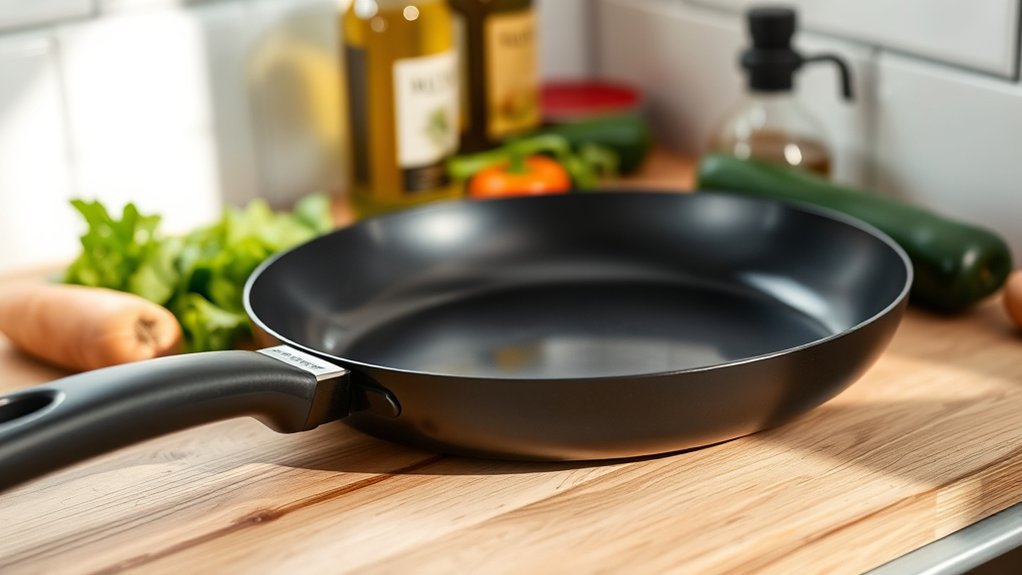
Although ceramic frying pans may look simple, they’re crafted from a blend of natural materials and advanced technology. When you pick up a ceramic pan, you’re holding a base usually made of aluminum or stainless steel, which guarantees even heat distribution. The standout feature is the ceramic coating, created from a silica-based gel derived from sand.
This coating gives the pan its non-stick properties without relying on synthetic chemicals. You’ll notice this layer is free from traditional non-stick compounds like PTFE or PFOA, making it a popular choice for those seeking a more natural option. This combination of a sturdy metal base with a smooth ceramic surface lets you cook efficiently while enjoying easy cleanup.
Understanding this helps you appreciate the thoughtful design behind your ceramic pan.
Are Ceramic Frying Pans Really Safe to Use?
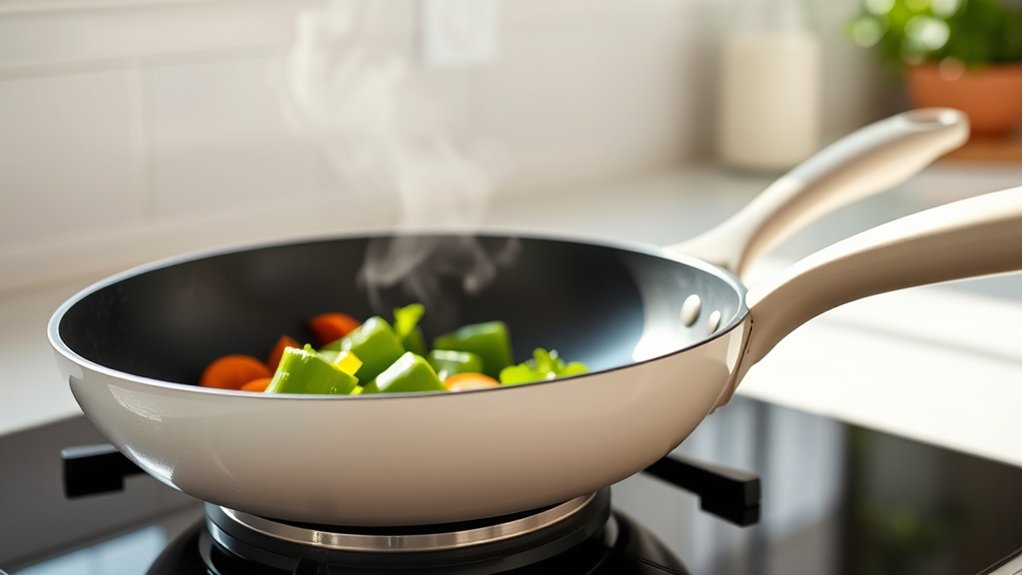
Knowing what ceramic frying pans are made of helps you understand their safety better. These pans typically feature a natural mineral-based coating free from harmful chemicals like PFOA, PTFE, and PFAS, making them a safer choice for cooking. You won’t have to worry about toxic fumes or chemical leaching when you use them properly.
However, avoid overheating, as extreme heat can damage the coating and affect safety.
| Feature | Ceramic Pans | Traditional Non-Stick Pans |
|---|---|---|
| Chemical-Free | Yes | Often contains PFOA/PTFE |
| Heat Resistance | Moderate (up to ~450°F) | Varies |
| Toxic Fumes | No | Possible at high heat |
| Durability | Moderate | Moderate to high |
| Easy Cleaning | Yes | Yes |
How Do Ceramic Frying Pans Compare to Other Non-Stick Pans?
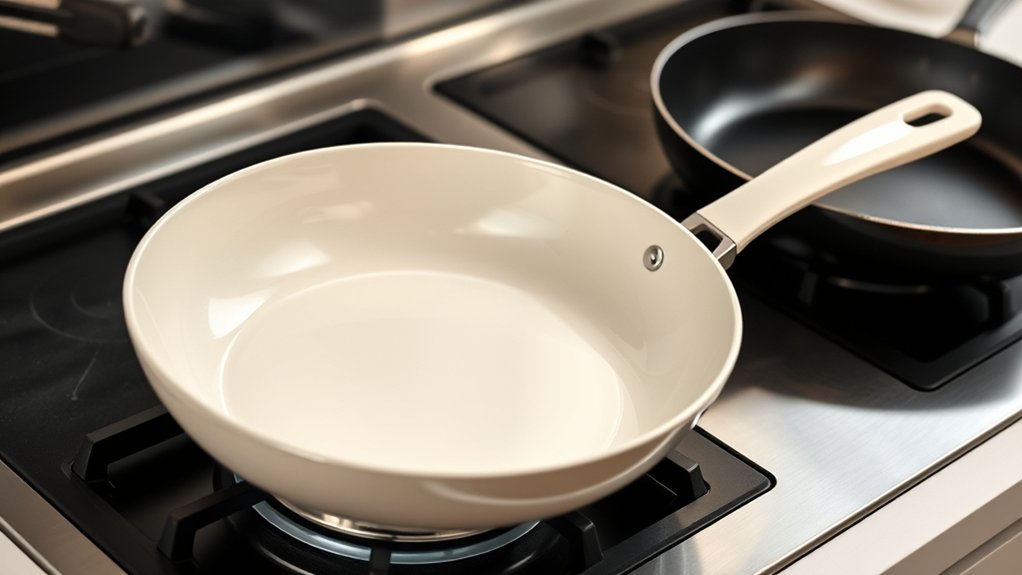
When choosing between ceramic and other non-stick pans, you’ll want to take into account durability and coating quality first. You’ll also notice differences in how evenly they distribute heat during cooking.
Plus, comparing their chemical safety can help you pick the best option for your kitchen.
Durability and Coating Quality
Since you rely on your frying pan daily, its durability and coating quality matter a lot. Ceramic frying pans boast a hard, inorganic coating that resists scratches better than traditional PTFE non-stick pans. However, they can still chip or wear down if you use metal utensils or stack them carelessly.
Unlike some non-stick pans with multiple layers, ceramic coatings are usually a single layer, which means they might lose their non-stick properties faster under heavy use. That said, ceramic pans avoid toxic chemicals found in some non-stick coatings, so even as the coating wears, safety remains a benefit. To keep your ceramic pan in good shape, use silicone or wooden tools and avoid sudden temperature changes.
This helps maintain both durability and coating quality over time.
Heat Distribution Efficiency
How well does a ceramic frying pan spread heat compared to other non-stick options? Ceramic pans generally offer good heat distribution, but they don’t always match the evenness of high-quality anodized aluminum pans. You’ll find ceramic coatings on aluminum bases, which help with quick, consistent heating.
However, ceramic pans can have slight hot spots if the base is thinner or lower quality. Unlike traditional non-stick pans, ceramic surfaces can tolerate higher temperatures without degrading, which aids in more stable heat distribution during cooking. Still, if you want ideal heat spread, look for ceramic pans with a thick, heavy base.
Chemical Safety Comparison
Although many non-stick pans claim to be safe, ceramic frying pans stand out by using a natural, non-toxic coating that doesn’t release harmful chemicals even at high temperatures. When you compare ceramic pans to traditional non-stick options like Teflon, the differences become clear. Here’s what you should know:
- Ceramic coatings are free from PTFE and PFOA, chemicals often linked to health risks in other pans.
- They don’t emit toxic fumes when overheated, unlike some traditional non-stick surfaces.
- Ceramic pans are less prone to chemical degradation over time.
- You avoid potential hormone disruptors found in some synthetic coatings.
- Though durable, ceramic coatings wear down faster but remain safer during use.
Choosing ceramic means prioritizing your health without sacrificing convenience.
What Are the Health Benefits of Cooking With Ceramic Frying Pans?
When you choose ceramic frying pans, you’re opting for cookware that minimizes exposure to harmful chemicals often found in traditional non-stick coatings. This means you reduce the risk of ingesting substances like PFOA or PTFE, which can release toxins when overheated.
Ceramic pans also allow you to cook with less oil thanks to their naturally smooth surface, helping you prepare healthier meals with lower fat content. Additionally, ceramic is non-reactive, so it won’t leach metals or chemicals into your food, preserving its natural flavors and nutritional value.
How Well Do Ceramic Frying Pans Handle High Heat?
If you often cook meals that require high heat, you’ll want to know how ceramic frying pans perform under intense temperatures. Ceramic pans handle moderate heat well but can struggle with very high heat, which might damage the coating or reduce its lifespan. Here’s what to keep in mind:
Ceramic pans excel at moderate heat but may suffer damage or shortened life at very high temperatures.
- Ceramic coatings can tolerate up to about 450°F (232°C).
- Exceeding this can cause the coating to degrade or discolor.
- Avoid preheating an empty ceramic pan on high heat.
- Use medium to medium-high heat for best durability.
- Sudden temperature changes may cause cracking or warping.
How to Use Ceramic Frying Pans for the Best Cooking Results
Since ceramic frying pans require gentle handling to maintain their coating, you’ll want to use moderate heat and avoid sudden temperature changes to get the best cooking results. Preheat your pan slowly to allow the ceramic surface to warm evenly. Use a small amount of oil or butter, as ceramic naturally resists sticking, but a little fat enhances flavor and texture.
Avoid metal utensils that can scratch the surface; opt for wooden, silicone, or plastic tools instead. When cooking, keep the heat steady rather than cranking it up, which prevents damage and ensures even cooking. Ultimately, don’t leave an empty pan on a hot burner; this protects the coating and extends your pan’s lifespan while delivering consistent results every time.
Cleaning Tips to Protect Your Ceramic Frying Pan’s Surface
Although ceramic frying pans are durable, proper cleaning is essential to maintain their non-stick surface and extend their lifespan. You’ll want to be gentle and avoid harsh abrasives that can wear down the coating.
Here are some cleaning tips to keep your pan in top shape:
- Let the pan cool before washing to prevent warping.
- Use warm, soapy water and a soft sponge or cloth.
- Avoid metal scrubbers or scouring pads that can scratch the surface.
- For stuck-on food, soak the pan in warm water for a few minutes before cleaning.
- Dry the pan thoroughly to prevent water spots and maintain its finish.
How to Prevent Scratches and Damage on Ceramic Frying Pans
Taking care during cleaning helps preserve your ceramic frying pan’s surface, but preventing scratches and damage starts with how you handle and use the pan daily. Always use wooden, silicone, or plastic utensils to avoid scratching the ceramic coating. Avoid metal tools, which can cause permanent damage.
When cooking, don’t drag the pan across stovetops or countertops—lift it instead to prevent abrasion. Also, avoid stacking your ceramic pans directly on top of each other without protective layers like cloth or paper towels in between. Store your pans carefully to prevent chipping.
Ultimately, avoid sudden temperature changes, such as placing a hot pan in cold water, which can weaken the coating over time. These simple steps will keep your ceramic frying pan in great shape longer.
When Should You Replace Your Ceramic Frying Pan?
If you notice your ceramic frying pan’s non-stick surface peeling, cracking, or becoming especially scratched, it’s time to contemplate replacing it. Continuing to use a damaged pan can lead to uneven cooking and potential health risks from flaking material.
Here are clear signs you should replace your ceramic frying pan:
- Non-stick coating is visibly peeling or flaking
- Persistent food sticking despite proper use
- Surface cracks or chips that compromise integrity
- Warping or uneven heating during cooking
- Handle loosening or damage affecting safe handling
How to Store Ceramic Frying Pans to Keep Them Durable
Once you start noticing wear on your ceramic frying pan, proper storage becomes even more important to extend its lifespan. Always let your pan cool completely before storing it to avoid thermal shock. Avoid stacking ceramic pans directly on top of each other, as this can cause scratches or chips.
If you must stack, place a soft cloth or paper towel between pans to protect the surface. Store your pan in a dry, ventilated area to prevent moisture buildup that can degrade the coating. Hang your ceramic pan by its handle if you have the space—that keeps it safe and accessible.
Troubleshooting Common Problems With Ceramic Frying Pans
Although ceramic frying pans offer excellent non-stick performance, you may encounter issues like sticking, discoloration, or chipping over time. When these problems arise, here’s how you can troubleshoot them effectively:
- Sticking: Make sure you preheat the pan properly and add a little oil before cooking.
- Discoloration: Remove stains by scrubbing gently with baking soda and water.
- Chipping: Avoid sudden temperature changes and use wooden or silicone utensils.
- Loss of non-stick: Re-season by heating a light layer of oil in the pan for a few minutes.
- Warping: Don’t use high heat; stick to medium or low heat for better pan longevity.
These simple steps will help you maintain your ceramic pan’s performance and extend its life.
Frequently Asked Questions
Can Ceramic Frying Pans Be Used on Induction Cooktops?
You can use ceramic frying pans on induction cooktops only if they have a magnetic base.
Check if a magnet sticks to the bottom; if it does, it’ll work well with your induction stove.
Are Ceramic Frying Pans Dishwasher Safe?
Ceramic frying pans aren’t usually dishwasher safe because harsh detergents and high heat can damage the coating. You should hand wash them gently with mild soap and a soft sponge to keep them lasting longer and performing well.
Do Ceramic Pans Emit Fumes if Overheated?
No, ceramic pans don’t emit harmful fumes if overheated, unlike some non-stick coatings. However, overheating can damage the ceramic surface, so you should avoid cooking on high heat to keep your pan safe and lasting longer.
Can Ceramic Frying Pans Be Used in the Oven?
Like a reliable friend, ceramic frying pans can often go in the oven, but you should check the manufacturer’s guidelines first. Don’t exceed their temperature limit, or you risk damaging the pan or losing its non-stick coating.
Are Ceramic Frying Pans Environmentally Friendly to Dispose Of?
Ceramic frying pans aren’t the most eco-friendly to dispose of since they can’t be recycled easily. You’ll want to donate or repurpose them if possible to reduce waste before considering landfill options.
Conclusion
Ceramic frying pans are a great choice for safer, healthier cooking, with 60% of users reporting fewer chemical concerns compared to traditional non-stick pans. You’ll enjoy their non-toxic surface and easy cleanup, but remember to avoid high heat and metal utensils to keep them lasting longer.
With proper care, your ceramic pan can serve you well for years, making your kitchen both safer and more efficient. So, go ahead and cook with confidence, knowing that ceramic frying pans are safe and easy to use for all your cooking needs!