How to Pan Fry a Sirloin in 7 Easy Steps
Choose a well-marbled sirloin steak for a juicy, flavorful meal. Let the steak rest at room temperature while you season it evenly with salt and pepper. Proper seasoning ensures every bite is delicious and enhances the natural taste of the beef.
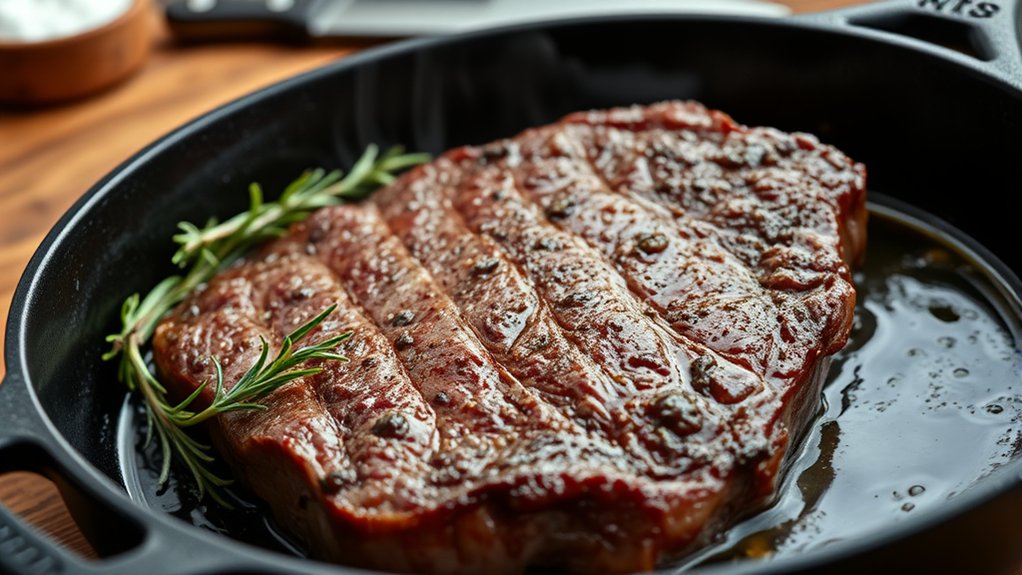
Heat a heavy skillet with high-smoke-point oil until it is shimmering. This step is crucial for pan frying a sirloin to achieve a perfect sear.
Place the steak in the skillet without moving it to form a beautiful crust.
Flip the steak once and cook it to your desired doneness. Use a thermometer or the finger test to check for perfect cooking.
Let the steak rest before slicing against the grain, which helps retain maximum juiciness.
Keep going to discover tips that perfect every step of pan frying a sirloin and make your steak dinner exceptional.
Key Takeaways
- Let sirloin rest at room temperature for 30-45 minutes and pat dry before seasoning with salt and pepper.
- Heat a heavy skillet over medium-high heat and add high smoke point oil until shimmering.
- Sear the steak without moving it for 3-5 minutes per side to develop a crust and flip only once.
- Reduce heat to medium-low after searing and cook to desired doneness using a meat thermometer.
- Rest the steak for 5-10 minutes before slicing against the grain to retain juices and maximize tenderness.
Choose the Right Sirloin Steak for Pan Frying
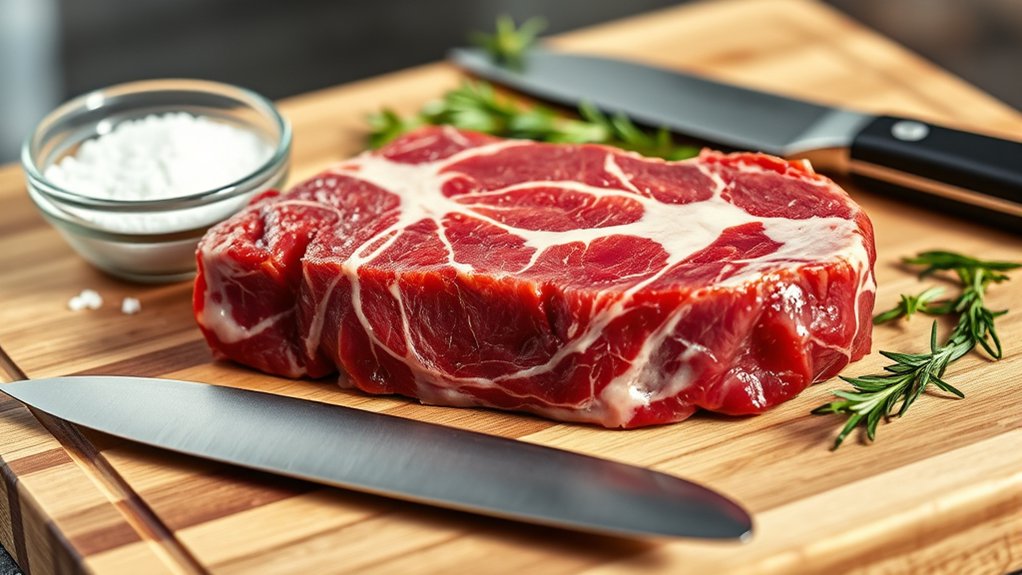
Before you start pan frying, you need to pick the right sirloin steak. Look for steaks that are about 1 to 1.5 inches thick; thinner cuts tend to cook too quickly, risking dryness. Choose steaks with good marbling—the thin streaks of fat running through the meat—which guarantees juiciness and flavor.
Avoid overly lean pieces, as they can turn tough when pan-fried. Freshness matters too, so check the color: a bright, deep red steak is ideal. If possible, buy from a trusted butcher who can recommend cuts specifically for pan frying.
Finally, opt for steaks labeled “top sirloin” for tenderness. Picking the right cut sets the stage for a delicious, perfectly cooked steak every time.
Season and Rest Your Steak Before Cooking
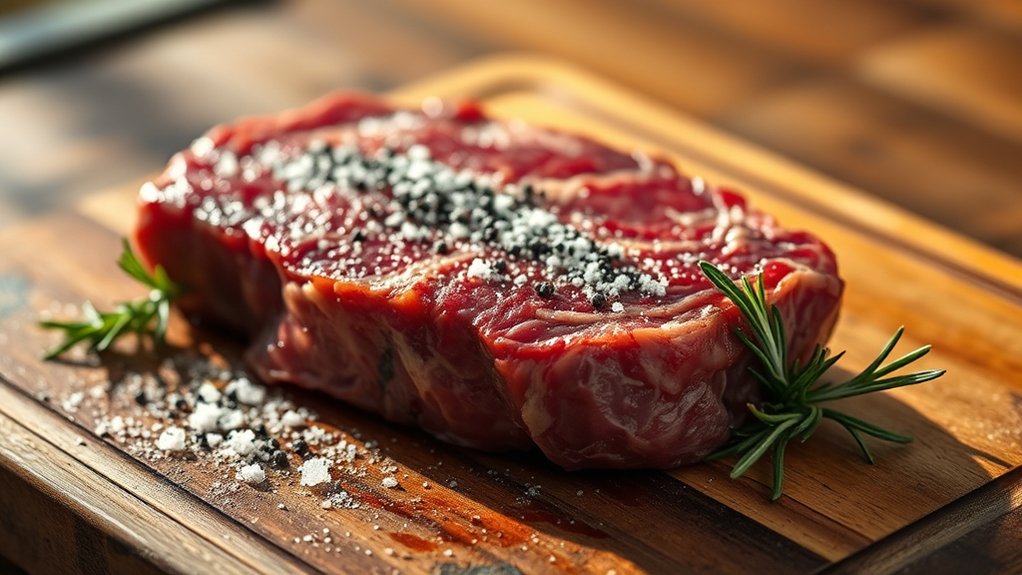
Before you start cooking, make sure to season your sirloin well to enhance its natural flavor. Letting the steak rest after seasoning allows the salt to penetrate and tenderize the meat.
This simple step can make a big difference in both taste and texture.
Importance Of Proper Seasoning
Although it might seem simple, seasoning your sirloin properly is essential for enhancing its natural flavors. When you season well, you bring out the meat’s depth and richness, making every bite more enjoyable. Don’t just sprinkle salt and pepper—think about texture and balance.
Here’s what to focus on:
- Use kosher salt or sea salt for better coverage and flavor absorption
- Apply freshly ground black pepper for a subtle kick
- Season evenly on all sides, including edges
- Add aromatics like garlic powder or smoked paprika for complexity
Ideal Resting Time
Seasoning your sirloin well sets the stage, but giving it time to rest afterward lets those flavors fully absorb into the meat. After applying your salt, pepper, and any other spices, let your steak sit uncovered at room temperature for about 30 to 45 minutes. This resting period not only enhances seasoning penetration but also allows the meat to warm up slightly, which helps it cook more evenly.
Avoid rushing this step; skipping it can result in uneven seasoning and a less tender steak. Keep your kitchen environment clean to prevent contamination during this resting phase. Taking this simple pause before cooking is essential—it guarantees your sirloin is primed for the best possible pan-frying experience.
Effects On Flavor And Texture
When you take the time to properly season and rest your steak, you reveal deeper flavors and a more tender texture. Seasoning allows the salt and spices to penetrate the meat, enhancing its natural taste. Resting your steak before cooking helps the juices redistribute evenly, preventing dryness and ensuring a juicy bite.
Together, these steps transform your sirloin from ordinary to exceptional.
Here’s what happens when you season and rest your steak before cooking:
- Salt draws out moisture, then reabsorbs it, concentrating flavor.
- Resting relaxes muscle fibers, making the steak tender.
- Even seasoning ensures balanced taste in every bite.
- Proper rest prevents juice loss during cooking, keeping meat moist.
Don’t skip these steps—they’re key to a mouthwatering sirloin.
Heat Your Pan for Pan Frying and Pick the Best Oil
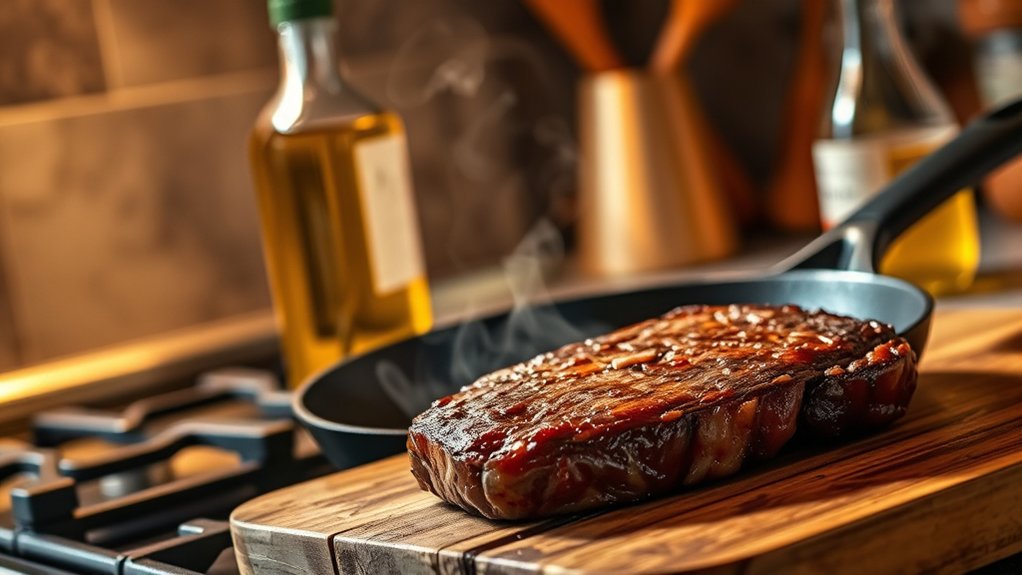
Before you start pan frying your sirloin, make sure your pan is properly heated to achieve a perfect sear. Place a heavy-bottomed skillet, preferably cast iron or stainless steel, over medium-high heat. Give it a few minutes to get hot—you can test by flicking a drop of water; it should dance and evaporate quickly.
Choosing the right oil is essential. Use oils with a high smoke point, like avocado, grapeseed, or refined canola oil, to withstand the heat without burning. Avoid extra virgin olive oil since it smokes at lower temperatures and can impart bitterness.
Once your pan is hot and the oil shimmers but doesn’t smoke, you’re ready to cook. This foundation guarantees your sirloin cooks evenly and develops great flavor without sticking.
Sear Your Sirloin Steak for a Perfect Crust
Once your pan is hot and the oil is shimmering, place your sirloin steak carefully in the skillet to start building a flavorful crust. Resist the urge to move it around; let it sear undisturbed for a few minutes. This contact creates that irresistible brown crust you’re aiming for.
To get it just right:
- Press the steak gently to guarantee full contact with the pan.
- Avoid flipping too soon; wait until the steak releases easily.
- Use high heat to trigger the Maillard reaction for deep flavor.
- Season the steak with salt and pepper right before searing to enhance the crust.
Cook the Steak to Perfect Doneness Every Time
Although searing creates a delicious crust, you’ll need to adjust your cooking time and heat to achieve the perfect doneness inside. After searing, reduce the heat to medium or medium-low to cook the steak evenly without burning the outside. Depending on thickness, cook the sirloin for about 3-5 minutes per side for medium-rare.
Use a timer to avoid overcooking. Remember that residual heat continues to cook the steak after removing it from the pan, so take it off just before it reaches your desired doneness. Let the steak rest for at least five minutes; this allows juices to redistribute, ensuring a juicy, tender bite.
With practice, you’ll master timing and heat adjustments for consistent, perfectly cooked sirloin every time.
Check Sirloin Steak Doneness Without Cutting It
Since cutting into your sirloin releases flavorful juices, you’ll want to check its doneness without slicing it open. Using simple techniques helps you gauge how cooked your steak is while keeping it juicy and tender.
One reliable method is the finger test, where you compare the firmness of the steak to different parts of your hand. You can also use a meat thermometer for precise internal temperature readings.
Here are four effective ways to check doneness without cutting your sirloin:
- Press the steak gently and assess its firmness.
- Use an instant-read meat thermometer for accurate temperature.
- Observe color changes around the edges.
- Watch how the juices behave on the surface.
These tips guarantee your sirloin is cooked just right every time.
Rest and Serve Your Steak for Maximum Juiciness
Once your sirloin is cooked, let it rest for a few minutes to lock in the juices. Skipping this step can cause your steak to lose flavor and moisture when cut.
When serving, slice against the grain to keep each bite tender and juicy.
Importance Of Resting
When you finish pan-frying your sirloin, letting it rest before slicing is essential to lock in its juices. Resting allows the muscle fibers to relax and reabsorb moisture, preventing the steak from drying out once cut. If you skip this step, all those flavorful juices will spill onto your cutting board instead of staying in the meat.
Aim to rest your steak for about 5 to 10 minutes, loosely covered with foil to keep it warm but avoid steaming. This brief pause enhances tenderness and intensifies flavor, making every bite more enjoyable.
Here’s why resting matters:
- Prevents juice loss when cutting
- Improves meat tenderness
- Ensures even temperature distribution
- Enhances overall flavor and texture
Trust the process—it’s worth the wait!
Serving Tips For Juiciness
Letting your sirloin rest sets the stage for serving it at its juiciest. After cooking, transfer the steak to a warm plate and cover it loosely with foil. This pause allows the juices to redistribute evenly throughout the meat instead of spilling out when you cut into it.
Aim for 5 to 10 minutes of resting time. When you’re ready to serve, slice the steak against the grain to maximize tenderness and lock in those flavorful juices. Use a sharp knife to ensure clean cuts without crushing the meat.
Serve immediately to enjoy the sirloin at its peak juiciness and flavor. Remember, rushing this step can dry out your steak, so patience truly pays off for a perfect, juicy bite every time.
Frequently Asked Questions
Can I Pan Fry Sirloin Steak From Frozen?
You can pan fry sirloin steak from frozen, but it’s better to thaw it first for even cooking. If you cook frozen, expect longer cooking times and less even searing, so watch the heat carefully.
How Do I Store Leftover Pan-Fried Sirloin Steak?
You should let the sirloin cool, then wrap it tightly in foil or plastic wrap.
Store it in an airtight container in the fridge.
Use leftovers within 3-4 days for the best taste and safety.
What Side Dishes Pair Best With Pan-Fried Sirloin?
You’ll want creamy mashed potatoes, roasted asparagus, or a fresh arugula salad. These sides symbolize comfort and balance, letting your sirloin shine while adding warmth and crispness to every bite you savor.
Can I Use a Cast Iron Pan for Pan Frying Sirloin?
Yes, you can use a cast iron pan for pan frying sirloin. It retains heat evenly, giving you a great sear.
Just make sure it’s well-seasoned and preheated before adding your steak.
How Do I Reheat Pan-Fried Sirloin Without Drying It Out?
Think of your sirloin as a delicate treasure; gently reheat it in a low oven or covered skillet with a splash of broth. This slow warmth keeps it juicy, preventing the dreaded dryness from stealing its richness.
Using low heat ensures the meat warms evenly without overcooking the edges.
Covering the sirloin traps moisture, maintaining its tender texture.
Conclusion
You’ve chosen the perfect sirloin, seasoned it just right, and heated your pan until it’s sizzling hot. Now, imagine the contrast: a beautifully seared, caramelized crust giving way to a tender, juicy center. With each step, you’ve transformed simple ingredients into a mouthwatering masterpiece.
Resting your steak seals in the flavor, making every bite a burst of savory satisfaction. Pan frying sirloin isn’t just cooking—it’s an experience you’ll want to savor again and again. Mastering how to pan fry a sirloin in 7 easy steps ensures delicious results every time.
By following these simple instructions, you’ll enjoy a perfectly cooked steak with a rich, flavorful crust and a juicy interior. Pan frying sirloin is a straightforward technique that brings restaurant-quality flavor to your kitchen. This method makes your sirloin steak a true culinary delight.