How to Go All-Clad Cookware Oven Cooking Step by Step
To go All-Clad cookware oven cooking step by step, start by verifying each piece’s oven safety and temperature limits, especially for handles and lids. Choose stainless steel or bonded metal cookware without plastic parts to ensure durability during oven use. Proper preparation is key to mastering All-Clad oven cooking techniques.
Preheat the oven and cookware together for even heat distribution. Carefully transfer the cookware using oven mitts to avoid burns. Set your oven temperature between 200–500°F, depending on your recipe.
Place the cookware on the center rack for the best cooking results. Following these steps will help you maintain your cookware’s quality while uncovering useful tips for successful oven cooking with All-Clad.
Key Takeaways
- Verify your All-Clad cookware model is oven-safe by checking handles, lids, and manufacturer guidelines for maximum temperature limits.
- Preheat the oven and cookware together to ensure even heating and avoid thermal shock.
- Use oven mitts to safely transfer cookware directly from stovetop to the oven’s center rack.
- Set the oven temperature within the cookware’s limit, typically up to 500°F, based on your recipe requirements.
- Cool cookware before cleaning with warm, soapy water, avoiding abrasive materials to maintain its finish and performance.
How to Check If Your All-Clad Cookware Is Oven Safe
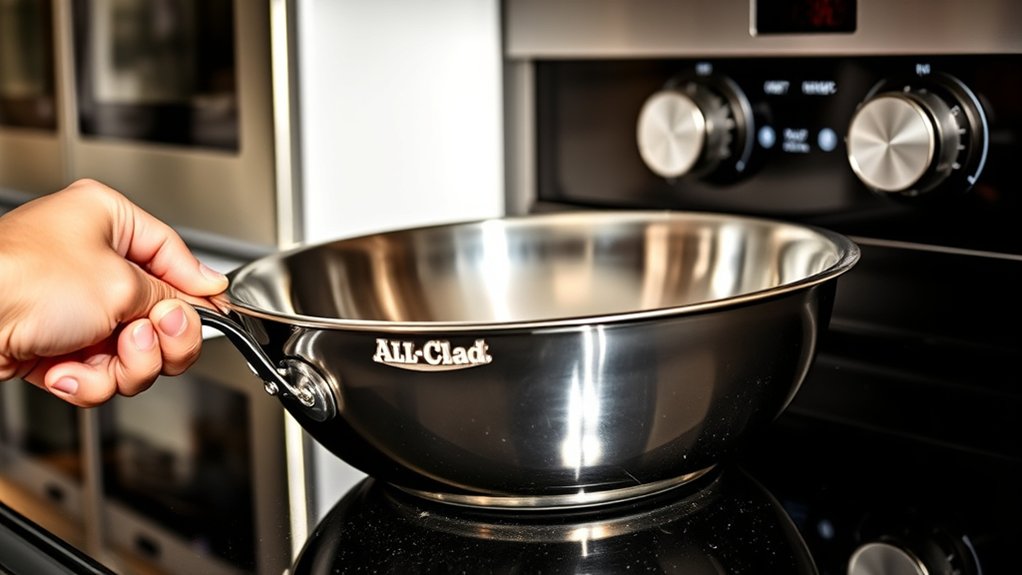
Before you put your All-Clad cookware in the oven, you need to verify it’s oven safe. Start by checking the manufacturer’s instructions or the All-Clad website for your specific model. Most All-Clad stainless steel pieces handle oven temperatures up to 600°F, but this varies.
Avoid guessing based on appearance alone. Look at the handles and lids—plastic, rubber, or wooden parts often limit oven use. If your cookware has metal handles and glass lids, verify the lid’s maximum temperature tolerance.
Don’t forget to inspect the bottom; some non-stick coatings may reduce oven safety. When in doubt, find your cookware’s exact line and model number and search for oven guidelines. This step ensures you avoid damage and safely enjoy oven cooking with your All-Clad cookware.
Choose the Right All-Clad Cookware for Oven Use
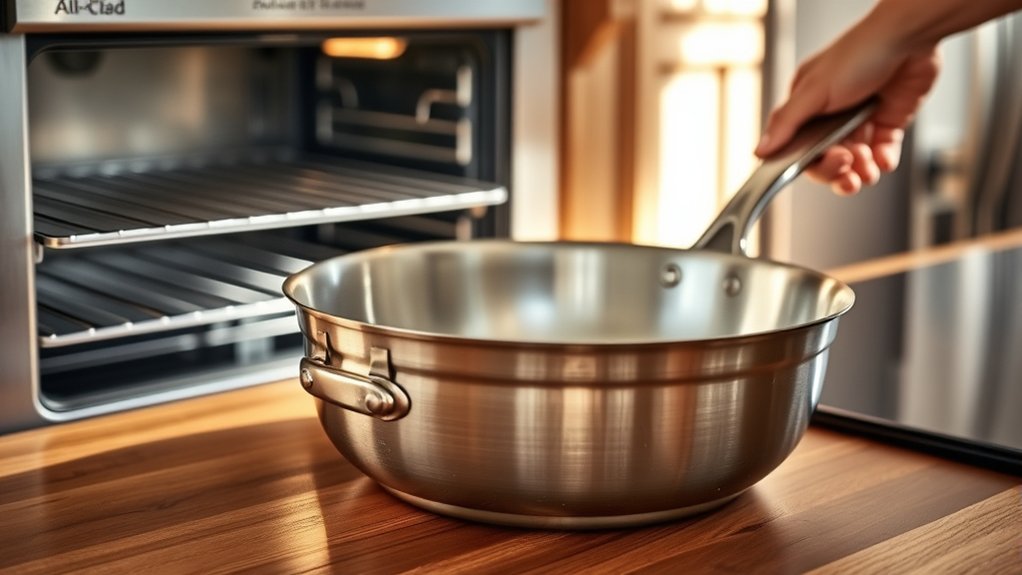
When choosing All-Clad cookware for oven use, pay close attention to the material to make sure it can handle high heat. You’ll also want to take into account the handle’s heat resistance to avoid any surprises.
Finally, pick the right size and shape to fit your oven and cooking needs perfectly.
Material Compatibility With Oven
Although All-Clad offers a variety of cookware lines, not all materials handle oven heat the same way, so you need to select the right one to guarantee safety and performance. Stainless steel and bonded metal cookware, like the popular D3 and D5 lines, are excellent for oven use because they withstand high temperatures without warping or reacting with food.
Copper-core pieces also perform well but require more care to avoid discoloration. Avoid any All-Clad cookware with plastic or rubber components, as these won’t tolerate oven heat. If your cookware has removable lids or inserts, check their material compatibility separately.
Always verify the maximum oven temperature listed by All-Clad for your specific cookware to ensure safe, effective cooking every time.
Handle Heat Resistance
How much heat can your All-Clad cookware handles take in the oven? Most All-Clad handles are made from stainless steel, which typically tolerates oven temperatures up to 500°F (260°C). This means you can confidently transfer your pan from stovetop to oven without worrying about handle damage.
However, some All-Clad lines feature handles with silicone or plastic components, which have lower heat resistance and might limit your oven use to around 350°F (175°C). Always check the specific cookware model’s guidelines before oven use. If you plan on frequent oven cooking, opt for fully metal handles to ensure durability and safety.
Size and Shape Options
Understanding your cookware’s handle heat resistance is just one part of using All-Clad in the oven effectively. You also need to pick the right size and shape for your cooking needs. All-Clad offers various options—from shallow skillets to deep roasting pans—so choose based on what you plan to cook.
A smaller skillet heats quickly and is perfect for individual dishes, while larger pans work well for roasting meats or baking casseroles. Consider the shape, too: round pans suit sautés, while rectangular or oval pans are great for oven roasting. Keep in mind your oven’s size limits to avoid overcrowding.
Prepare Your All-Clad Cookware for Oven Cooking
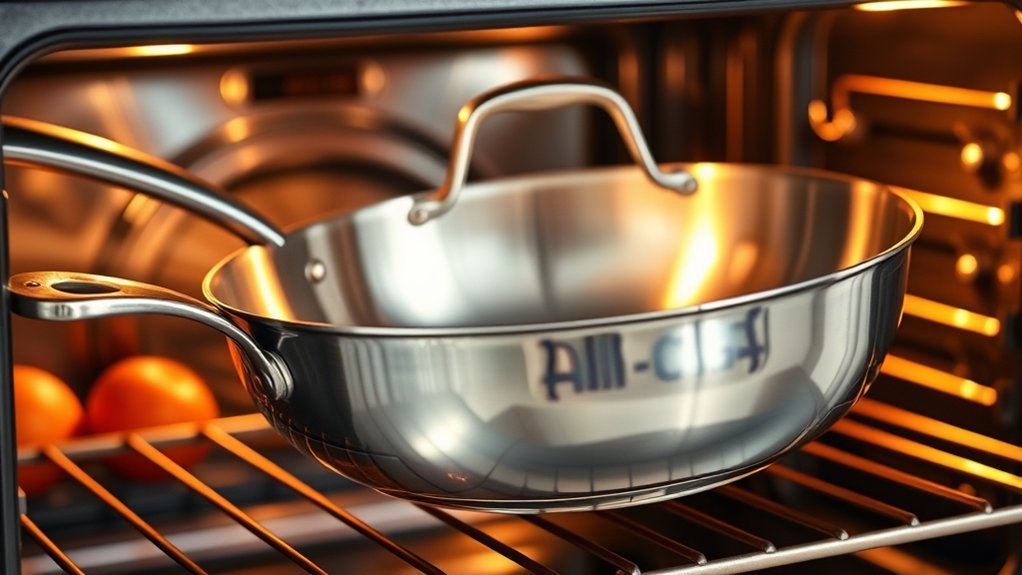
Before you start, make certain your All-Clad cookware is oven-safe by checking its specifications. Preheating your cookware properly helps ensure even cooking and protects the finish.
Let’s go over how to get your pans ready for the oven.
Check Oven Compatibility
Although All-Clad cookware is designed for versatility, you’ll want to confirm that your specific pieces can safely go into the oven. Not all All-Clad cookware handles or lids are oven-safe at high temperatures, so double-check before you proceed.
Here’s how to verify oven compatibility:
- Inspect the Handles: Look for metal handles, which usually indicate oven safety. Plastic or rubberized handles may have temperature limits or aren’t oven-safe at all.
- Check the Lids: Glass lids often have a maximum oven temperature rating. Some metal lids are better suited for oven use.
- Refer to Manufacturer Guidelines: Consult your All-Clad manual or website for exact oven temperature limits for your cookware model.
Doing this guarantees safe, effective oven cooking with your All-Clad pieces.
Preheat Cookware Properly
When you’re ready to use your All-Clad cookware in the oven, preheating it properly guarantees even cooking and prevents thermal shock. Start by placing the cookware in a cold oven and then set the oven to your desired temperature. This gradual heating helps the metal expand evenly, avoiding warping or damage.
Avoid preheating the pan separately on the stovetop, as sudden temperature changes can harm the cookware. Once the oven reaches the set temperature, give the pan a few extra minutes to stabilize heat before adding food.
Use Oven-Safe Lids and Accessories With All-Clad Cookware
Since not all lids and accessories are designed to withstand high oven temperatures, you’ll want to make sure you’re using only those labeled as oven-safe with your All-Clad cookware. Using non-oven-safe lids can damage your cookware or cause safety hazards.
To keep your cooking safe and efficient:
- Check the manufacturer’s label or manual to confirm oven safety for lids and handles.
- Opt for stainless steel or metal lids instead of glass if you plan on cooking at higher temperatures.
- Avoid plastic or silicone parts unless explicitly marked as oven-safe, as they can melt or release harmful fumes.
Set Oven Temperatures for All-Clad Recipes
When setting oven temperatures for your All-Clad recipes, aim for the ideal ranges specified in each dish to guarantee even cooking. You’ll often adjust heat depending on whether you’re searing, roasting, or baking.
Following these guidelines helps you get the best results without damaging your cookware.
Ideal Temperature Ranges
Although All-Clad cookware can withstand high heat, you’ll want to set your oven to the ideal temperature range to assure even cooking and protect your investment. Cooking within the right temperature guarantees your food cooks thoroughly without damaging the pan’s finish.
Here are three temperature guidelines to keep in mind:
- Low Heat (200–300°F / 93–149°C): Perfect for slow cooking, warming, or delicate dishes like custards.
- Medium Heat (300–400°F / 149–204°C): Ideal for roasting vegetables, baking casseroles, or finishing a seared steak.
- High Heat (400–500°F / 204–260°C): Best for quick roasting or broiling, taking advantage of All-Clad’s heat retention without warping.
Stick to these ranges to maximize performance and longevity while achieving consistent results.
Adjusting Heat for Recipes
To get the best results from your All-Clad cookware, you’ll need to adjust your oven temperature based on the recipe’s requirements and the cookware’s heat tolerance. Most All-Clad pieces can safely handle temperatures up to 500°F, but you should always verify your specific cookware’s limits. For delicate dishes, like custards or fish, use lower temperatures to prevent overcooking or sticking.
When roasting or baking, feel free to crank up the heat within the cookware’s tolerance to get that perfect sear or caramelization. Remember, All-Clad’s excellent heat conduction means you can often reduce oven temperatures slightly compared to other pans, saving energy and protecting your food. Adjust heat thoughtfully, and your dishes will come out consistently delicious every time.
Move Your All-Clad Cookware From Stove to Oven
Since All-Clad cookware is designed to handle high heat, you can confidently transfer your pans from the stove directly into the oven. This versatility lets you start cooking on the stovetop and finish in the oven without switching dishes.
To move your cookware safely and effectively:
- Use oven mitts to protect your hands from hot handles.
- Transfer the pan carefully to avoid spills or burns.
- Place the cookware on the center rack for even heat distribution.
Best Oven Cooking Techniques With All-Clad Cookware
When you use All-Clad cookware in the oven, you’ll want to take advantage of its excellent heat retention and even cooking. Start by preheating your oven to the desired temperature, allowing the cookware to heat evenly. Use your All-Clad skillet or Dutch oven for roasting, searing, or braising—its stainless-steel surface handles high heat without warping.
For baking, choose All-Clad’s oven-safe pans to guarantee consistent heat distribution, preventing hot spots. Always use oven mitts, as handles can get hot quickly. To achieve the best results, avoid sudden temperature changes that might stress the metal.
Avoid Common Oven Cooking Mistakes With All-Clad
Although All-Clad cookware is designed for durability and performance, you can easily damage it by making simple mistakes in the oven. To avoid costly errors, keep these points in mind:
- Don’t exceed temperature limits: All-Clad cookware typically handles up to 500°F, but pushing beyond that can warp or discolor your pans.
- Avoid sudden temperature changes: Placing a hot pan directly into cold water causes thermal shock, which may warp or crack the cookware.
- Use oven-safe handles and lids only: Some All-Clad lids and handles aren’t oven-safe at high temperatures, so always check before placing them inside.
Clean and Care for All-Clad Cookware After Oven Use
Because oven heat can leave residue or discoloration on your All-Clad cookware, you’ll want to clean it promptly and properly to maintain its shine and performance. Start by letting the cookware cool completely before washing to prevent warping. Use warm, soapy water and a soft sponge or nylon scrubber to remove food particles.
Avoid abrasive cleaners or steel wool, which can scratch the surface. For stubborn stains or discoloration, apply a paste of baking soda and water, gently scrubbing with a soft cloth. Rinse thoroughly and dry immediately with a clean towel to prevent water spots.
Regularly polishing with a stainless steel cleaner will keep your All-Clad looking its best. With proper care, your cookware will stay durable and beautiful for years to come.
Fix Common Oven Cooking Problems With All-Clad Cookware
If you notice uneven cooking or burning while using your All-Clad cookware in the oven, you can usually resolve these issues with a few simple adjustments. First, make sure you’re preheating the oven fully before placing your cookware inside. Second, check that your cookware sits flat on the oven rack to promote even heat distribution.
Preheat your oven fully and ensure cookware sits flat for even cooking with All-Clad.
Third, avoid overcrowding the oven; too many pans can block heat flow and cause hot spots.
Here are three quick tips to fix common problems:
- Use an oven thermometer to verify your oven’s actual temperature.
- Rotate your cookware halfway through cooking to ensure even exposure.
- Adjust cooking times and temperatures based on your recipe and cookware thickness.
Following these steps helps you get the best results with your All-Clad cookware every time.
Frequently Asked Questions
Can All-Clad Cookware Be Used on Induction Cooktops?
Yes, you can use All-Clad cookware on induction cooktops since it’s made with magnetic stainless steel. Just make sure the base is flat and clean for proper contact, so your cooking heats evenly and efficiently every time.
Are All-Clad Cookware Handles Dishwasher Safe?
No, All-Clad cookware handles aren’t dishwasher safe. You’ll want to hand wash them to preserve their finish and avoid damage.
Dishwashing can dull the handles and affect the cookware’s longevity, so stick to gentle cleaning.
What Metals Are Used in All-Clad Cookware Construction?
All-Clad cookware uses stainless steel, aluminum, and sometimes copper layers. You’ll find stainless steel for durability and non-reactivity, aluminum for excellent heat conduction, and copper in some lines for precise temperature control.
How Long Does All-Clad Cookware Typically Last?
All-Clad cookware typically lasts 20 to 30 years with proper care. You’ll find that its durable construction stands up to daily use, and many users pass it down through generations without losing performance or quality.
Is All-Clad Cookware Compatible With Glass Cooktops?
Yes, you can use All-Clad cookware on glass cooktops. Just make sure to lift the pans instead of sliding them to avoid scratches, and use moderate heat to protect both your cookware and cooktop surface.
Conclusion
Using your All-Clad cookware in the oven is like opening a new level in your cooking game. By checking its oven safety, prepping it right, and following key temperature and care tips, you’ll guarantee every meal turns out perfectly. Avoid common mistakes, and you’ll keep your cookware in top shape for years.
Embrace these steps, and watch your kitchen creations rise to delicious new heights with confidence and ease. Oven cooking with All-Clad cookware enhances flavor and ensures even heat distribution. Following these guidelines will help you master All-Clad cookware oven cooking with success.