Is GreenLife Cookware Safe to Use?
You can feel confident using GreenLife cookware because its ceramic coating is free from harmful chemicals like PFAS, PFOA, lead, and cadmium. This makes GreenLife cookware a safe choice for health-conscious cooks.
It heats evenly and resists sticking without releasing toxic fumes when used properly.
Just avoid overheating or using metal utensils to keep it safe and durable. GreenLife offers a lightweight, eco-friendly option that lasts with proper care.
If you want to understand how it compares and best care tips, there’s more to explore.
Key Takeaways
- GreenLife cookware features a non-toxic ceramic coating free of PFAS, PFOA, lead, and cadmium, ensuring chemical safety during cooking. The ceramic coating provides effective non-stick performance and resists scratching better than traditional coatings if properly cared for. It is safe up to 450°F but should not be overheated or used under broilers to prevent coating damage and harmful fumes.
- Users should avoid metal utensils and dishwasher cleaning to maintain coating integrity and prolong cookware lifespan. Compared to other cookware, GreenLife is a safer, lightweight option with decent durability when used and maintained correctly.
What Is GreenLife Cookware Made Of?
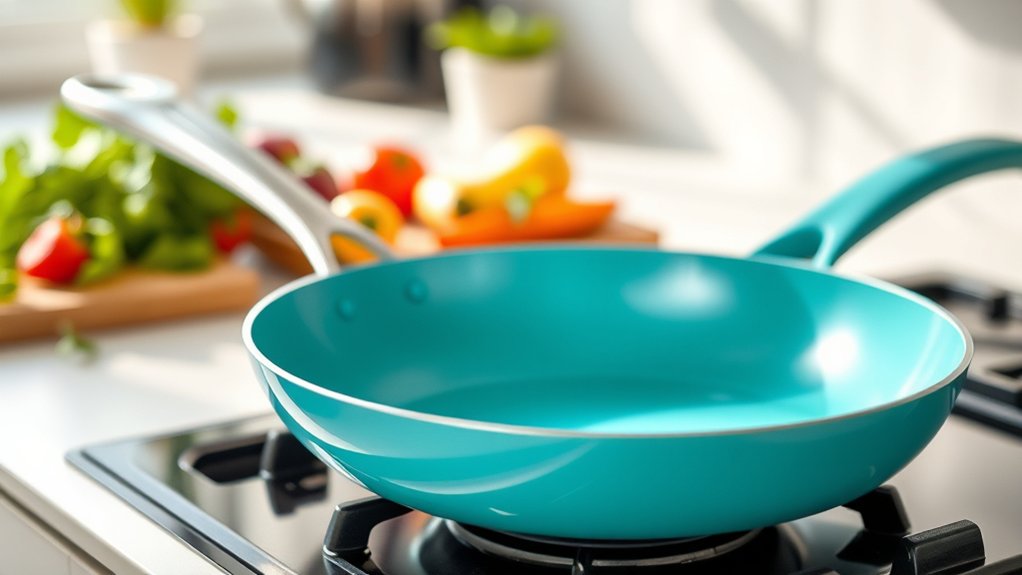
Although GreenLife cookware looks like traditional nonstick pans, it’s made from a unique combination of materials that set it apart. When you pick up a GreenLife pan, you’ll notice the base is typically crafted from lightweight aluminum, which heats up quickly and evenly. This means your food cooks uniformly without hot spots.
The handle is usually made from a soft-touch, heat-resistant material, so you can comfortably grip it without worrying about burns. What really stands out is the non-toxic ceramic coating GreenLife uses, which is free of PFAS, PFOA, lead, and cadmium, making it safer for your kitchen.
How Does GreenLife Cookware’s Ceramic Non-Stick Coating Work?
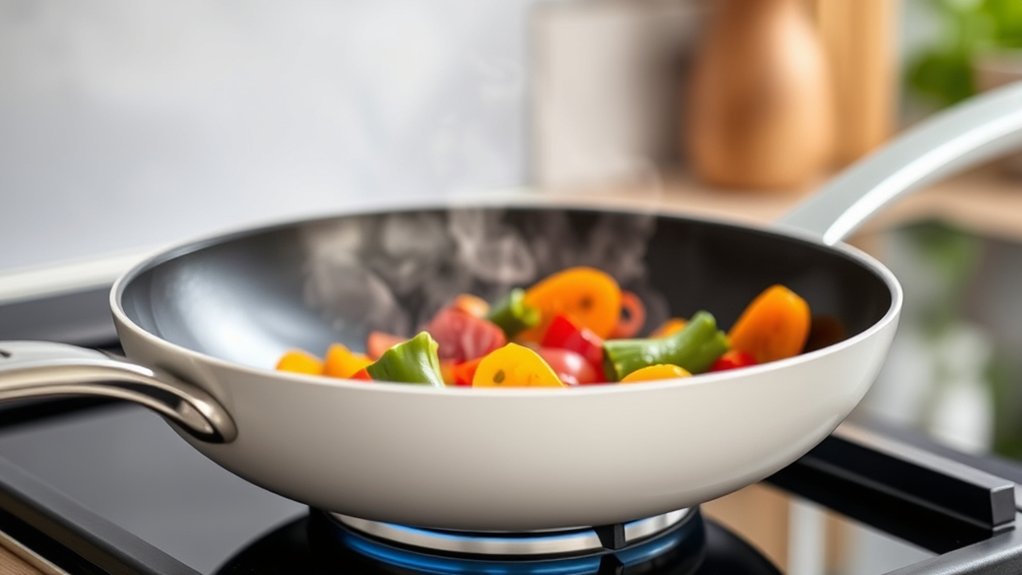
You’ll find that GreenLife’s ceramic coating is made from a silica-based material that creates a smooth, non-stick surface. This coating prevents food from sticking by minimizing surface tension, making cooking and cleaning easier.
Plus, it’s designed to withstand high heat, so you can cook confidently without worrying about damage.
Ceramic Coating Composition
Since GreenLife cookware uses a ceramic non-stick coating, it offers a safer alternative to traditional non-stick pans that often rely on PTFE or PFOA chemicals. The ceramic coating in GreenLife pans mainly consists of a silica-based compound derived from sand, which forms a hard, smooth surface when cured at high temperatures. This inorganic material resists scratches and heat, making it durable and non-toxic.
You won’t find any harmful chemicals like PFAS in this coating, which is why it’s praised for being eco-friendly and safe. The ceramic layer bonds tightly to the aluminum base, ensuring even heat distribution while preventing food from sticking. Overall, GreenLife’s ceramic coating composition focuses on combining safety with effective cooking performance.
Non-Stick Mechanism Explained
GreenLife’s ceramic non-stick coating doesn’t just rely on its safe composition; it also uses a unique surface structure to prevent food from sticking. You’ll notice that this coating creates a smooth, slightly textured layer that minimizes food contact points. Here’s how it works:
- Forms a natural barrier that reduces friction, letting food slide off easily
- Uses microscopic pores to trap tiny air pockets, which further lessen sticking
- Maintains a non-toxic surface, so you don’t have to worry about harmful chemicals leaching into your meals
- Enables easy cleanup since food residue doesn’t cling tightly
Durability and Heat Resistance
Although ceramic coatings generally offer good heat resistance, GreenLife cookware takes durability to the next level by combining advanced materials with a specially engineered surface. You’ll find that its ceramic non-stick layer can withstand high temperatures without degrading or releasing harmful chemicals.
This means your cookware stays effective longer and performs safely under typical cooking conditions.
Here’s a quick comparison of GreenLife’s durability and heat resistance features:
| Feature | GreenLife Ceramic Coating | Traditional Non-Stick |
|---|---|---|
| Max Heat Resistance | Up to 450°F (232°C) | Up to 350°F (177°C) |
| Scratch Resistance | High | Moderate |
| Longevity | 2-3 years with care | 1-2 years |
You can trust GreenLife for reliable, long-lasting cookware.
Is GreenLife Cookware Free From Toxic Chemicals?
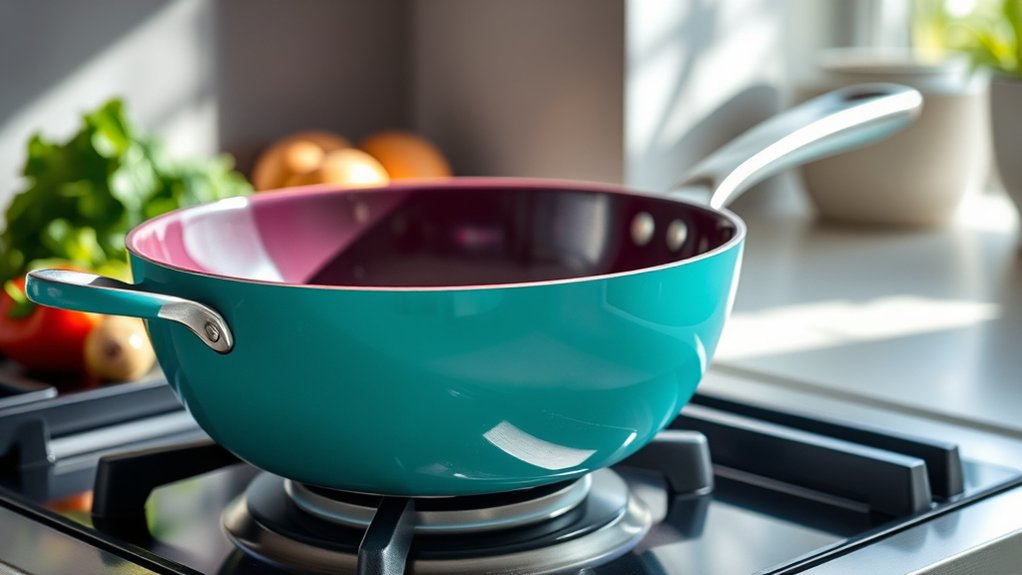
When you choose cookware, knowing it won’t release harmful chemicals is essential for your health. GreenLife cookware stands out because it’s free from many toxic substances that concern you. Here’s why you can feel safe using it:
- It contains no PFAS, PFOA, lead, or cadmium, which are often found in traditional nonstick pans. The ceramic nonstick coating is made from sand, a natural material, reducing chemical exposure. It doesn’t emit harmful fumes when heated, helping you avoid respiratory risks.
- GreenLife’s materials pass strict safety standards, so you won’t worry about toxins leaching into your food.
Is GreenLife Cookware Made Safely?
Because you want cookware that’s both safe and responsibly made, it’s important to know how GreenLife guarantees quality throughout its production. GreenLife manufactures its cookware using sustainable materials, including a ceramic non-stick coating derived from sand, avoiding harmful substances like PFAS, PFOA, lead, and cadmium. The company follows strict environmental standards, minimizing waste and energy use during manufacturing.
Their factories employ advanced quality control measures to ensure consistent durability and safety. Additionally, GreenLife partners with suppliers who meet ethical labor practices, so you can feel confident that your cookware isn’t just safe for you, but also ethically produced. By choosing GreenLife, you support a brand committed to eco-friendly manufacturing and transparent quality assurance, giving you peace of mind in your kitchen.
Can GreenLife Cookware Withstand High Heat Safely?
You might wonder if GreenLife cookware can handle high heat without risking damage or toxic fumes. It’s important to know the heat resistance limits and whether the materials stay safe when temperatures rise.
Let’s look at how GreenLife performs under intense cooking conditions.
Heat Resistance Limits
Although GreenLife cookware boasts a nonstick ceramic coating that’s free from harmful chemicals, it can’t withstand extremely high heat without risking damage. If you push the temperature too far, you might warp the pan or degrade its coating, reducing its lifespan.
To keep your cookware safe, consider these heat resistance limits:
- Avoid preheating empty pans on high heat.
- Stick to medium or low heat settings during cooking.
- Use cookware within the recommended temperature range of up to 450°F (232°C).
- Never use GreenLife cookware under a broiler or open flame.
Non-Toxic High-Temperature Safety
When cooking at high temperatures, GreenLife cookware stays safe thanks to its non-toxic ceramic coating that doesn’t release harmful fumes. You can confidently use it for sautéing or frying without worrying about toxic chemicals like PFOA or PFAS.
However, keep in mind that GreenLife is designed for medium to medium-high heat; using extremely high heat can damage the ceramic surface over time. To maintain safety and performance, avoid preheating empty pans on high heat.
If you stick to recommended temperature ranges, your cookware will handle everyday cooking safely without compromising your health. This non-toxic design means you get peace of mind while preparing meals, making GreenLife a reliable choice for those who want safe, high-temperature cooking without exposure to hazardous substances.
What Do Experts Say About GreenLife Cookware’s Safety?
Since safety is a top priority for anyone choosing cookware, experts have thoroughly evaluated GreenLife products to determine their health impact. They generally agree that GreenLife’s ceramic non-stick coating is free from harmful chemicals like PFAS, PFOA, lead, and cadmium, making it a safer choice compared to traditional non-stick pans.
Here’s what experts highlight about GreenLife’s safety:
- Uses Thermolon ceramic coating, known for being non-toxic and environmentally friendly
- Avoids synthetic chemicals linked to health risks in conventional cookware
- Maintains stability at typical cooking temperatures, reducing toxic fumes
- Emphasizes responsible manufacturing practices to minimize chemical exposure
You can trust GreenLife if you want cookware that balances safety with performance, according to expert assessments.
How Do Real Users Rate GreenLife Cookware’s Safety?
While experts praise GreenLife cookware for its safety, real users offer valuable insights from everyday use. If you check reviews, many appreciate how GreenLife heats evenly and prevents sticking without harmful chemicals. You’ll find users highlighting its ceramic non-stick coating as a safer alternative to traditional non-stick pans.
However, some mention that the coating can wear over time with heavy use or improper care. You’ll also see positive comments on its lightweight design, making it easy to handle during cooking. Many users recommend avoiding metal utensils to extend the cookware’s lifespan.
Potential Health Risks From Using GreenLife Cookware
Many users find GreenLife cookware safe and reliable, but it’s important to take into account potential health risks before making it your go-to choice. While GreenLife uses a ceramic non-stick coating free from PFAS, PFOA, lead, and cadmium, there are still concerns to consider. If you overheat the pans, the coating can break down, releasing potentially harmful fumes.
Additionally, scratches or chips in the ceramic surface may reduce its safety and durability. Here are some points to keep in mind:
- Avoid using metal utensils that can damage the ceramic layer
- Don’t preheat empty pans for too long to prevent overheating
- Replace cookware if you notice significant wear or chipping
- Always follow manufacturer guidelines for care and use
Being mindful of these risks helps you cook safely with GreenLife.
How Does GreenLife Stack Up Against Other Safe Cookware?
You want cookware that’s safe and built to last, so it’s important to compare GreenLife’s non-toxic materials with other options.
You’ll also want to see how its durability and cooking performance hold up in everyday use.
Let’s take a closer look at how GreenLife stacks up against other safe cookware brands.
Non-Toxic Material Comparison
Because choosing cookware that won’t leach harmful chemicals into your food is essential, it’s important to compare GreenLife’s non-toxic materials with other popular safe options. GreenLife uses a ceramic non-stick coating derived from sand, free of PFAS, PFOA, lead, and cadmium, making it a solid choice.
Here’s how it stacks up:
- GreenLife: Thermolon ceramic coating, toxin-free, eco-friendly.
- Cast Iron: Naturally non-toxic, but requires seasoning and maintenance.
- Stainless Steel: Durable and chemical-free but may leach nickel for sensitive users.
- Anodized Aluminum: Hard, non-reactive surface, but some concerns about aluminum exposure.
Durability and Performance Review
While GreenLife cookware boasts an eco-friendly, non-toxic ceramic coating, its durability and performance often come into question compared to other safe cookware options. You’ll find that GreenLife heats evenly and offers decent non-stick capabilities, making cooking and cleanup easier. However, the ceramic coating can wear down faster than traditional non-stick surfaces, especially if you use metal utensils or high heat.
Compared to brands like ceramic-coated stainless steel or anodized aluminum, GreenLife may require more careful handling to maintain its performance. If you prioritize eco-friendliness and non-toxicity, GreenLife is a solid choice, but if you want cookware that lasts longer under heavy use, you might consider alternatives. Overall, GreenLife performs well but demands gentle care to preserve its non-stick benefits.
Best Practices for Using GreenLife Cookware
Although GreenLife cookware offers many health and environmental benefits, following best practices guarantees you get the most from your investment.
To keep your GreenLife pans performing well and lasting longer, you should:
To maintain optimal performance and durability, follow simple care tips for your GreenLife cookware.
- Use low to medium heat settings since high heat can damage the ceramic coating.
- Avoid metal utensils; opt for wooden, silicone, or plastic tools to prevent scratches.
- Hand wash with a soft sponge and mild detergent instead of using a dishwasher.
- Allow cookware to cool before cleaning to avoid thermal shock that can crack the non-stick surface.
How Long Does GreenLife Cookware Last Safely?
If you take good care of your GreenLife cookware, it can last several years without losing its non-stick properties or safety. Typically, you can expect it to perform well for about 2 to 5 years, depending on how often you use and maintain it. To maximize its lifespan, avoid using metal utensils and always clean it gently with non-abrasive sponges.
Overheating the pan or using harsh cleaning agents can degrade the ceramic coating faster. Once you notice significant scratching, chipping, or sticking, it’s time to replace your cookware to guarantee safety and effectiveness. By following proper care guidelines, you’ll enjoy GreenLife’s benefits longer while keeping your cooking experience safe and reliable.
Frequently Asked Questions
Can Greenlife Cookware Be Used on Induction Cooktops?
You can’t use GreenLife cookware on induction cooktops because it lacks the magnetic base needed for induction heating. Instead, stick to gas, electric, or ceramic stoves to get the best performance from your GreenLife pans.
Is Greenlife Cookware Dishwasher Safe?
Yes, you can put GreenLife cookware in the dishwasher, but it’s best to hand wash it to preserve the non-stick coating and vibrant colors.
Dishwashing might wear down the finish faster over time.
Does Greenlife Cookware Come With a Warranty?
Yes, GreenLife cookware comes with a limited warranty. You’ll find it covers manufacturing defects for a specific period, usually one year.
Make sure to register your product and keep your receipt to use the warranty if needed.
Can Greenlife Cookware Be Used in the Oven?
Yes, you can use GreenLife cookware in the oven, but only up to 350°F.
Just make sure to check your specific piece’s guidelines, so you don’t damage the nonstick coating or handles.
What Colors and Styles Does Greenlife Cookware Offer?
You know what they say, variety is the spice of life! GreenLife cookware offers vibrant colors like turquoise, red, and lime green, plus styles ranging from classic ceramic to modern, sleek designs, so you’ll find something that fits your kitchen perfectly.
Conclusion
Using GreenLife cookware is like nurturing a garden—careful, mindful, and full of life. Its ceramic non-stick coating, free from harmful chemicals, offers a safer cooking experience, but it needs gentle heat and proper care to bloom fully.
Treat it well, avoid overheating, and it’ll serve you like a trusty green leaf shielding your meals. With thoughtful use, GreenLife can be a vibrant, safe companion in your kitchen journey.
In conclusion, GreenLife cookware is safe to use when handled properly. Its eco-friendly design and chemical-free coating make it a reliable choice for health-conscious cooks. Embracing GreenLife means choosing safety and sustainability in your cookware.