7 Key Features to Look for in Stainless Steel Cookware
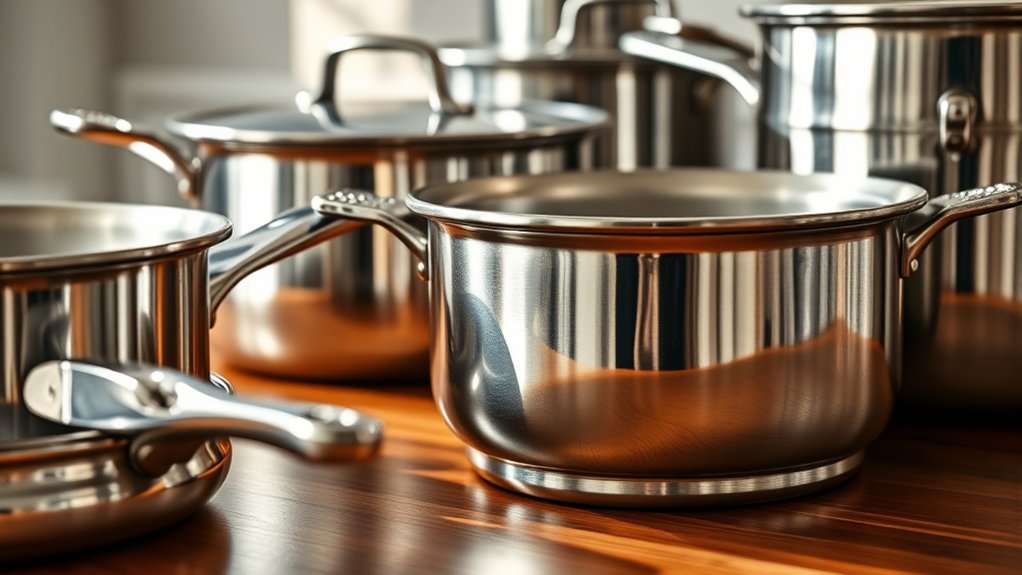
When choosing stainless steel cookware, it’s essential to focus on key features like high-quality alloys such as 18/10 stainless steel for lasting durability and corrosion resistance.
Multi-ply construction with aluminum or copper cores ensures even heat distribution, which is crucial for consistent cooking results.
Selecting the right cookware set that fits your cooking style and kitchen space can make a big difference in your culinary experience.
Make sure the handles are heat-resistant and ergonomic to provide comfort and safety during use.
Lids should fit snugly to lock in moisture and flavors while cooking.
Additionally, prioritize cookware with easy-to-clean surfaces to maintain its shine and performance over time.
By paying attention to these important features, you’ll enhance your cooking and extend the life of your stainless steel cookware.
Keep exploring to uncover tips that’ll help you cook better and care for your gear.
Key Takeaways
- Choose high-quality 18/10 or 18/8 stainless steel for excellent corrosion resistance and long-lasting durability.
- Opt for multi-ply construction with aluminum or copper cores for even heat distribution and precise temperature control.
- Ensure cookware handles are oven-safe, heat-resistant, and ergonomically designed for comfort and safety.
- Select lids that fit snugly, are made of tempered glass or stainless steel, and are oven-safe to retain moisture and flavor.
- Prioritize cookware with smooth, easy-to-clean surfaces that resist stains and odors for simple maintenance and longevity.
Stainless Steel Quality for Lasting Durability
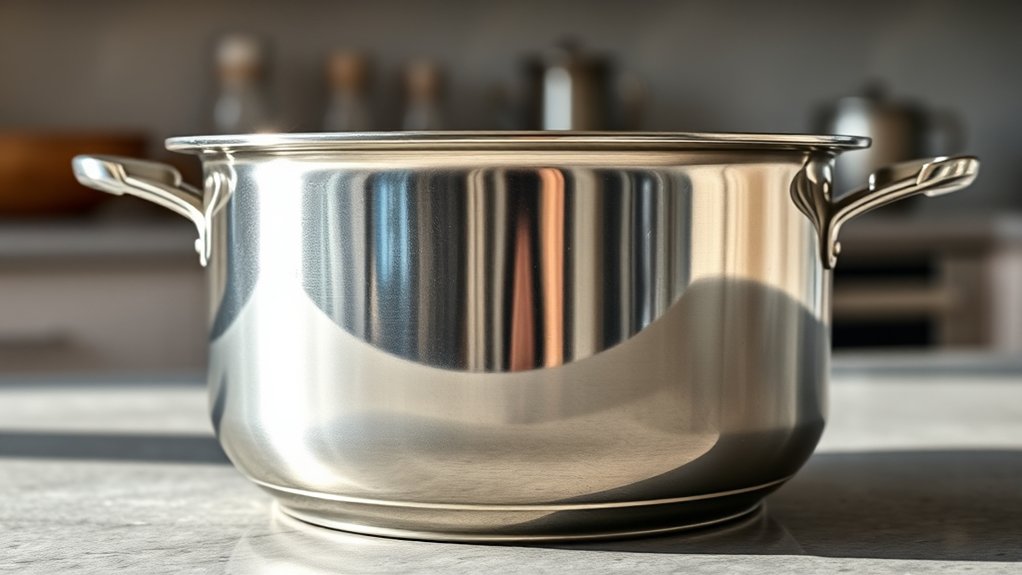
Although stainless steel comes in various grades, you should look for high-quality alloys like 18/10 or 18/8 to guarantee your cookware lasts for years. These numbers refer to the percentage of chromium and nickel in the steel, which improve corrosion resistance and maintain a shiny finish.
When you choose 18/10 or 18/8 stainless steel, you’re investing in cookware that resists rust, staining, and warping. Plus, it won’t react with acidic foods, so your meals stay pure in flavor. Avoid lower-grade stainless steel because it tends to dull quickly and may develop rust spots.
Multi-Ply Construction for Even Heat Distribution
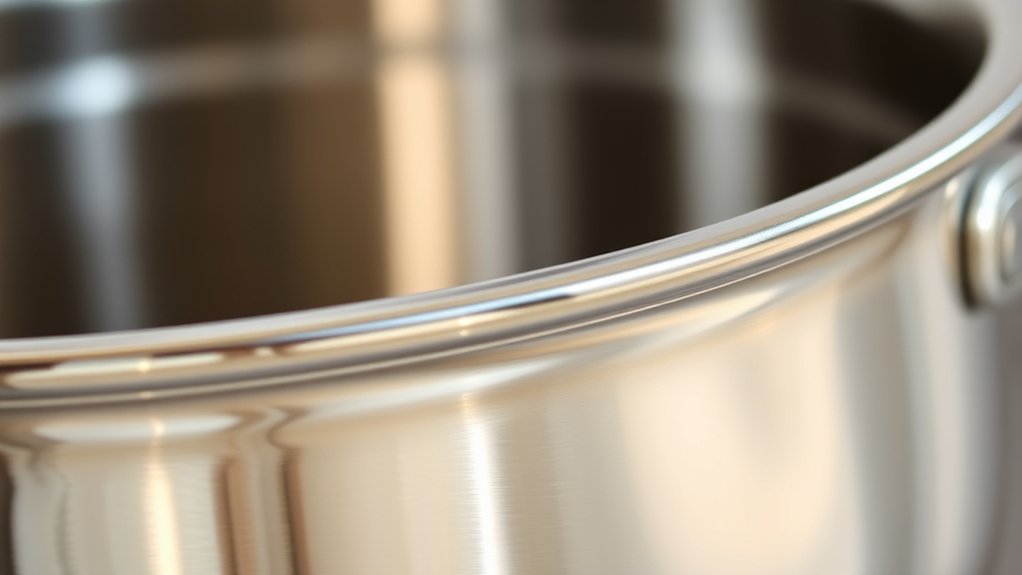
You’ll notice that multi-ply cookware uses several layers to improve heat retention and distribution. The core materials, often aluminum or copper, play a key role in spreading heat evenly across the surface.
Understanding these layers helps you appreciate why multi-ply pots and pans cook food more consistently.
Layers And Heat Retention
When you choose stainless steel cookware with multi-ply construction, you get layers designed to distribute heat evenly across the cooking surface. These layers work together to retain heat effectively, so your food cooks consistently without hot spots. The combination of metals in the layers helps maintain temperature longer, even after you reduce the heat.
This means you’ll save energy and avoid overcooking. You’ll also notice that dishes stay warm on the stove or table for a while, which is great when serving. In short, well-designed layers improve both heat retention and distribution, giving you better control and more reliable results every time you cook.
This feature is essential for achieving professional-level cooking in your kitchen.
Core Materials Explained
Since the core materials in multi-ply stainless steel cookware directly impact heat distribution, understanding their roles helps you choose the best set for your cooking needs. Typically, these cores consist of aluminum or copper, sandwiched between layers of stainless steel. Aluminum cores heat up quickly and distribute heat evenly, preventing hot spots that can burn your food.
Copper cores offer superior heat conductivity, allowing precise temperature control, which is ideal for delicate cooking tasks. The stainless steel outer layers provide durability and a non-reactive surface, ensuring your cookware won’t react with acidic ingredients. When you choose cookware with the right core material, you get consistent heat across the cooking surface, making your meals cook more evenly every time.
Benefits Of Multi-Ply
Although many cookware options exist, multi-ply construction stands out for its ability to deliver even heat distribution. When you cook with multi-ply stainless steel cookware, layers of metal work together—usually stainless steel with aluminum or copper cores—to spread heat uniformly across the surface. This means no hot spots that burn your food or cold spots that leave it undercooked.
You’ll get consistent results every time, whether you’re simmering sauces or searing steaks. Multi-ply cookware also heats up faster and retains heat longer, saving you energy and time. Plus, its sturdy build resists warping, so your pans stay flat and stable on any burner.
Choosing multi-ply cookware means you’re investing in precision and durability for your kitchen.
Choosing Cookware Sets for Your Cooking Style
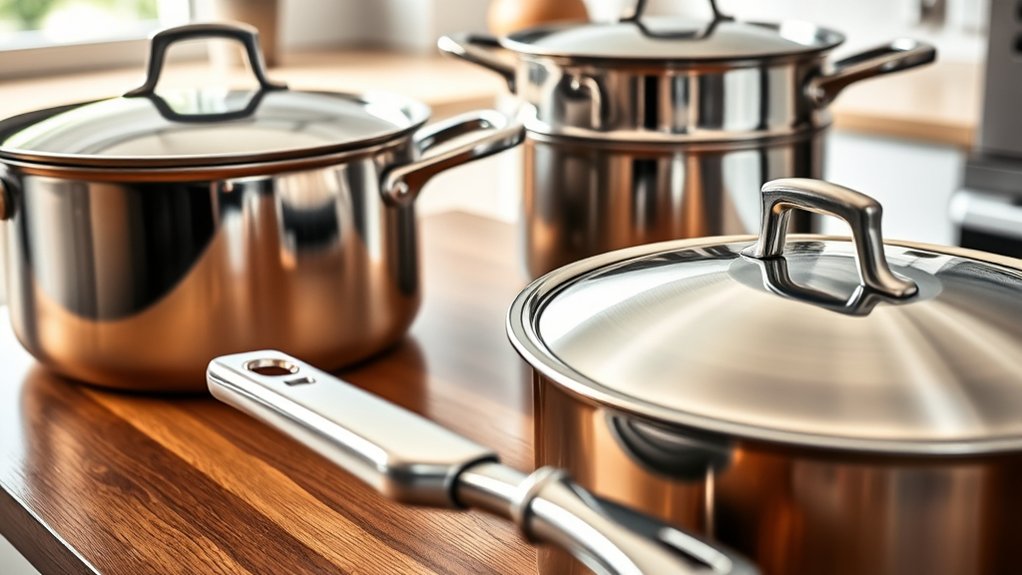
Understanding your cooking style helps you pick the right stainless steel cookware set that matches your needs. If you love quick, high-heat cooking, choose sets with thick, multi-ply bottoms to guarantee even heat distribution and prevent hot spots.
For those who enjoy slow simmering or braising, prioritize pots with tight-fitting lids and deeper pans to retain moisture. If you often prepare a variety of dishes, go for versatile sets that include different pan sizes and shapes, so you’re ready for anything.
Consider how much space you have, too—compact sets suit smaller kitchens better. By aligning your cookware choices with how you cook, you’ll get the best performance and durability, making your kitchen tasks smoother and more enjoyable every time.
Oven-Safe Cookware Features to Know
When choosing oven-safe stainless steel cookware, you’ll want to check the maximum oven temperature it can handle. Pay close attention to whether the handles resist heat or need protection.
Also, make sure the lids are oven compatible to avoid any surprises while cooking.
Maximum Oven Temperature
Because stainless steel cookware often comes with various components like handles and lids, you’ll need to know the maximum oven temperature it can safely withstand. This temperature varies depending on the construction and materials used, so always check the manufacturer’s guidelines before placing your pan in the oven. Exceeding the recommended limit can damage the cookware or its finish, affecting performance and safety.
Most stainless steel cookware is oven-safe up to 500°F, but some may tolerate higher temperatures, especially those without plastic or rubber parts. If you plan to use your cookware for roasting or baking at high heat, confirm its maximum oven temperature to avoid unexpected warping or discoloration. Knowing this helps you use your cookware confidently and extend its lifespan.
Handle Heat Resistance
How hot can the handles on your stainless steel cookware get in the oven? This is essential because even if the pan itself withstands high temperatures, the handles might not. Look for cookware with handles made from heat-resistant materials like stainless steel or silicone-wrapped grips designed to stay cooler.
Some brands craft handles that remain safe up to 400°F or even higher, letting you transfer your cookware from stovetop to oven without worry. Avoid pots with plastic or wooden handles if you plan to use them in the oven, as they can melt or catch fire. Always check the manufacturer’s guidelines for handle heat resistance to prevent burns and damage, ensuring your cookware is truly oven-safe from handle to base.
Lid Oven Compatibility
Knowing your cookware handles can handle oven heat is only part of the picture—your lids also need to be up to the task. When you’re choosing stainless steel cookware, check if the lids are oven-safe and note their maximum temperature limits. Many lids are made from glass with silicone or metal rims, but not all glass lids can withstand high oven heat.
If you want to use your cookware in the oven frequently, consider lids made entirely of metal or tempered glass designed for oven use. Avoid lids with plastic knobs or components that could melt or warp. By ensuring your lids match your cookware’s oven-safe specs, you maintain safety and protect your food’s flavor and moisture during baking or roasting.
Ergonomic Handles for Comfortable Cooking
When you’re cooking for extended periods, ergonomic handles make a significant difference in comfort and control. You want handles that fit well in your hand, with a shape that reduces strain and prevents slipping. Look for handles with a smooth, contoured design that allows a secure grip, even when your hands are wet or greasy.
Handles made from heat-resistant materials keep you safe from burns and let you move your cookware easily without needing potholders. Also, consider handles that are securely riveted or welded to the pan, as this adds durability and prevents wobbling. Choosing cookware with ergonomic handles means you can cook confidently and comfortably, making your time in the kitchen more enjoyable and efficient.
Tight-Fitting Lids to Boost Cooking Performance
Comfortable, sturdy handles help you maintain control while cooking, but the lid on your cookware plays an equally important role in how well your meal turns out. Tight-fitting lids trap steam and heat inside, which speeds up cooking and helps retain moisture and nutrients. When the lid fits snugly, you can simmer sauces and braise meats more efficiently without constantly lifting the lid to check on your food.
This also prevents heat and flavor from escaping, ensuring your dishes stay rich and tender. Look for lids made of tempered glass or stainless steel that seal well without warping over time. A properly fitting lid not only boosts cooking performance but also saves energy by maintaining consistent temperatures throughout the cooking process.
Easy-to-Clean Stainless Steel Surfaces
Although stainless steel is known for its durability, its smooth surface also makes cleanup surprisingly simple. When you choose cookware with polished stainless steel, food residue won’t cling stubbornly, so washing up becomes less of a chore. You can easily wipe away spills and splatters with a soft sponge and mild detergent.
Plus, stainless steel resists staining and odors, which means your pans stay fresh and looking new longer. If you want to tackle tougher spots, soaking the pan in warm, soapy water loosens burnt-on bits without damaging the surface. Avoid abrasive cleaners to preserve that sleek finish.
With easy-to-clean stainless steel surfaces, you’ll spend less time scrubbing and more time enjoying your meals and kitchen adventures.
Frequently Asked Questions
Can Stainless Steel Cookware Be Used on Induction Cooktops?
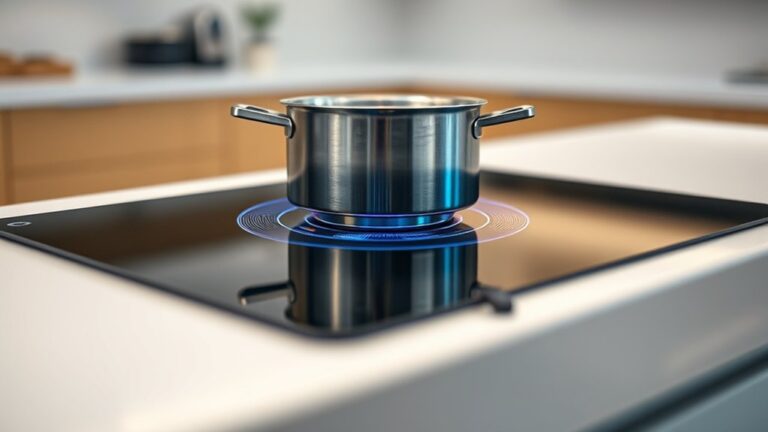
Yes, you can use stainless steel cookware on induction cooktops as long as it has a magnetic base. To check, hold a magnet to the bottom—if it sticks, your cookware will work perfectly on induction.
This simple test ensures compatibility and efficient heating. Induction cooktops rely on magnetic fields, so non-magnetic stainless steel won’t heat up properly.
Using the right cookware helps you get the most out of your induction cooking experience.
How Do Stainless Steel Pans Compare to Non-Stick Pans?
Choosing between stainless steel and non-stick pans is like picking between a trusty shield and a magic wand. You’ll find stainless steel durable and great for searing, while non-stick pans make cooking and cleaning feel effortless.
Stainless steel pans excel in high-heat cooking and browning, giving your food a rich flavor. Non-stick pans, on the other hand, are ideal for delicate foods and require less oil.
Both have their unique benefits, so your choice depends on your cooking style and needs.
Are Stainless Steel Pots Dishwasher Safe?
Yes, most stainless steel pots are dishwasher safe, but you should check the manufacturer’s instructions. Avoid harsh detergents or high heat cycles to keep them looking great and prevent discoloration or damage over time.
What Maintenance Is Required to Prevent Rusting?
You need to dry your stainless steel cookware immediately after washing to prevent rust. Avoid soaking it for long periods, clean with mild detergents, and occasionally polish with a stainless steel cleaner to keep it rust-free.
Can Stainless Steel Cookware Affect the Taste of Food?
You won’t taste metal or bitterness with quality stainless steel cookware; instead, your food’s natural flavors shine. Unlike some materials, it won’t interfere, so you can trust it enhances rather than taints every meal you prepare.
Conclusion
Choosing the right stainless steel cookware is like picking the perfect companion for a journey. With sturdy quality, even heat, and comfy handles, your cookware stands by you through every recipe’s twists and turns.
Tight lids and easy cleaning make the path smoother, while oven-safe features expand your adventure. When you select cookware with these key traits, you’re not just buying pots—you’re gaining trusted allies in your kitchen’s story.
By focusing on these 7 key features to look for in stainless steel cookware, you ensure durability, performance, and convenience. This way, your investment supports countless delicious meals and memorable cooking experiences.