7 Best Utensils to Use With Stainless Steel Cookware
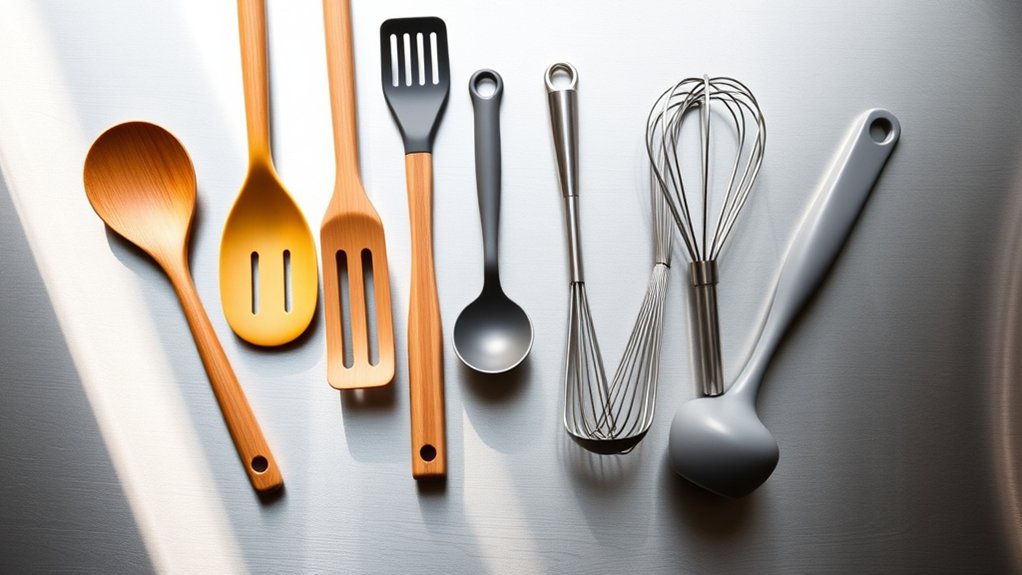
You want utensils that protect your stainless steel cookware’s finish and last long. Choosing the best utensils for stainless steel cookware ensures your pots and pans stay scratch-free and perform well over time. High-quality stainless steel utensils with smooth edges are ideal to avoid damaging the surface.
Wooden and bamboo tools are another excellent choice. They’re gentle, heat-resistant, and eco-friendly, making them perfect for everyday cooking. Silicone utensils also work great since they’re flexible, heat-resistant, and non-abrasive.
Nylon offers a lightweight option that’s suitable for daily use. Proper care and storage keep all your utensils in top shape. Let’s explore which options suit your cooking style best.
Key Takeaways
- Use wooden or bamboo utensils to prevent scratches and preserve the stainless steel cookware’s finish and durability.
- Silicone utensils are heat-resistant and flexible, protecting cookware surfaces while allowing easy stirring and scraping.
- High-quality stainless steel utensils with smooth edges offer durability without damaging cookware if used properly.
- Avoid aluminum or copper utensils as they may leave marks or react with the cookware surface.
- Store utensils separately and dry wooden tools thoroughly to prevent warping, scratching, and corrosion.
Why Choosing the Right Utensils Matters for Stainless Steel Cookware
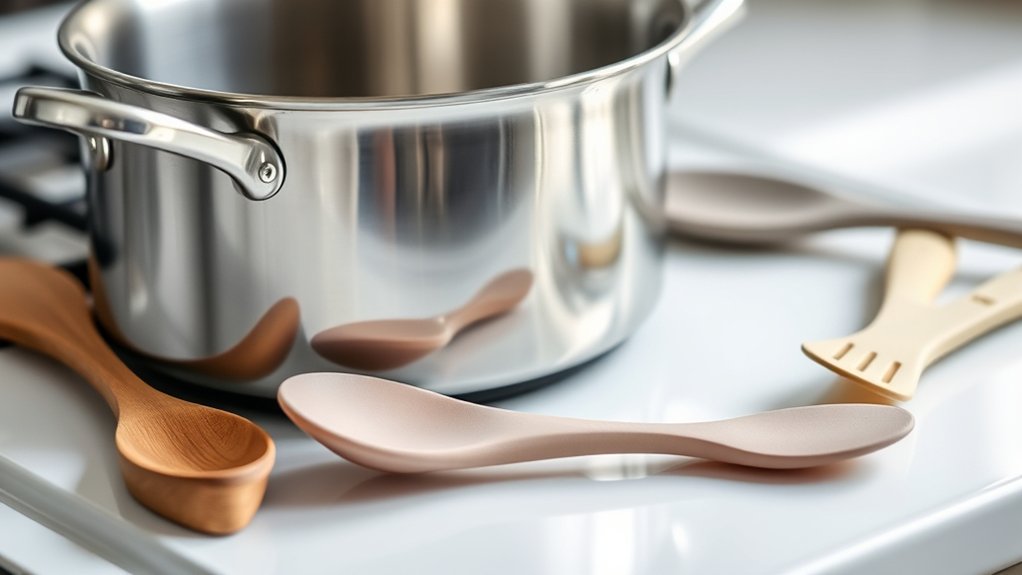
Although stainless steel cookware is known for its durability, using the wrong utensils can cause scratches and dull its finish. You might think any utensil will do, but metal tools with sharp edges can damage the surface, leading to uneven cooking and a worn appearance. Over time, these scratches not only affect the look but can also trap food particles, making cleaning harder.
Selecting the right utensil helps preserve your cookware’s smooth surface and guarantees it performs well for years. Plus, the right tools prevent you from accidentally warping or denting your pots and pans. When you’re mindful of what you use, you maintain both the cookware’s functionality and its sleek, professional look throughout countless meals.
Safe Metal Utensils for Stainless Steel Cookware
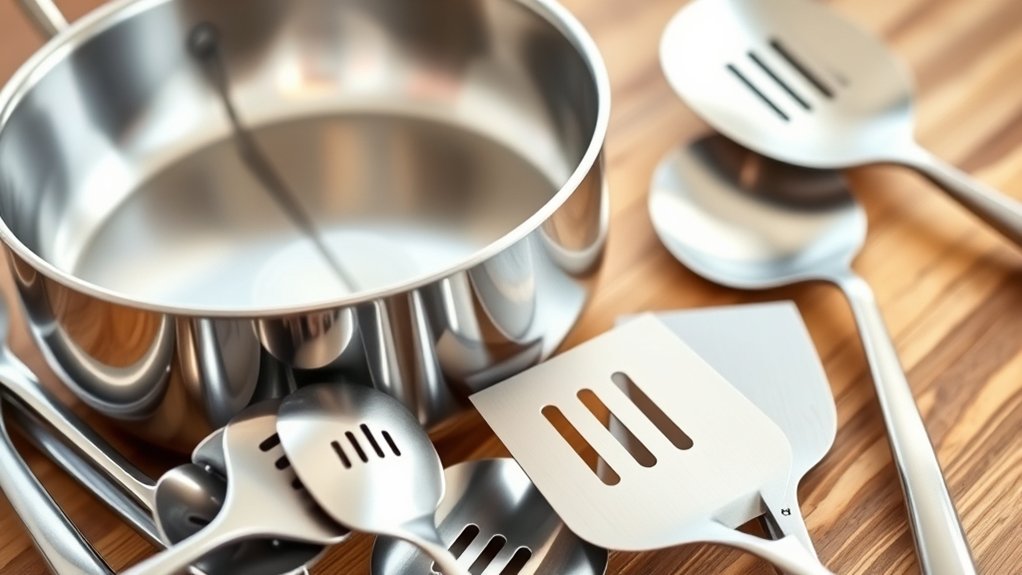
When you prefer metal utensils for their strength and precision, choosing the right type is essential to protect your stainless steel cookware. Stainless steel utensils are your safest bet—they’re durable and won’t scratch or damage the surface. Opt for utensils made from high-quality stainless steel with smooth edges to avoid any accidental scuffs.
You can also use silicone-coated metal utensils, which combine the sturdiness of metal with a gentle touch, reducing the risk of scratching. Avoid softer metals like aluminum or copper utensils, as they can leave marks or react with your cookware. By selecting the right metal utensils, you maintain the cookware’s finish and performance without sacrificing the control and durability you need while cooking.
Wooden and Bamboo Utensils for Protecting Your Pans
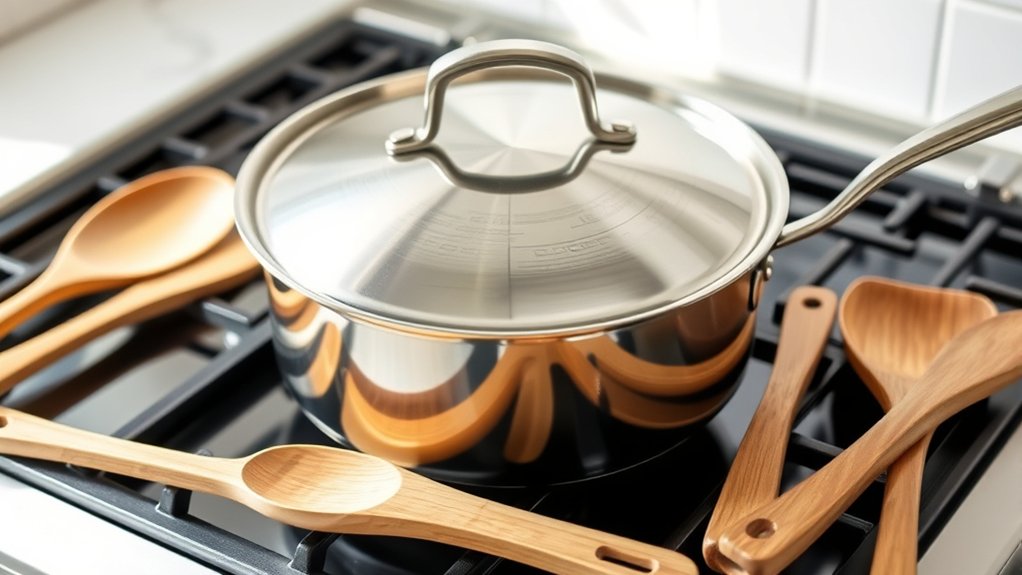
Metal utensils offer durability and control, but if you want to protect your stainless steel cookware’s surface even more, wooden and bamboo utensils are excellent alternatives. They’re gentle on your pans, preventing scratches and preserving that smooth finish you love. Plus, wooden and bamboo tools won’t react with acidic foods, keeping flavors pure and cookware clean.
You’ll find them lightweight and comfortable to handle, making stirring, flipping, and serving easier. Bamboo, in particular, is naturally antimicrobial and eco-friendly, adding a sustainable touch to your kitchen. Just remember to hand wash and dry them promptly to avoid warping or cracking.
Using wooden or bamboo utensils not only extends your cookware’s life but also enhances your cooking experience with their natural feel and durability.
Silicone Utensils to Prevent Scratches on Stainless Steel
You’ll love using silicone utensils because they’re gentle on your stainless steel cookware, preventing scratches and keeping the finish looking new. They also handle high heat without melting or warping, so you can cook confidently.
Benefits of Silicone Utensils
Silicone utensils offer several advantages that make them ideal for use with stainless steel cookware. First, they’re gentle on your pots and pans, helping you avoid scratches and maintain that sleek, shiny finish. You’ll appreciate how flexible silicone is—it bends easily, making stirring and scraping effortless, so you don’t waste any food stuck to the pan.
Plus, silicone won’t absorb odors or flavors, keeping your dishes tasting pure every time. They’re lightweight and comfortable to hold, reducing hand fatigue during long cooking sessions. Cleaning silicone utensils is a breeze, too, as they’re dishwasher-safe and resist staining.
Heat Resistance Properties
Beyond their flexibility and ease of cleaning, silicone utensils stand out for their impressive heat resistance. When you cook with stainless steel cookware, you want utensils that won’t melt or warp under high temperatures. Silicone handles heat up to 600°F, so you can stir, flip, and serve without worry.
Plus, they protect your cookware from scratches, keeping your pots and pans looking new. Using silicone means you avoid damaging that sleek finish while cooking safely.
| Feature | Benefit | Feeling |
|---|---|---|
| High heat tolerance | Safe near hot surfaces | Confidence |
| Non-scratch surface | Protects cookware finish | Satisfaction |
| Flexible material | Easy maneuvering | Comfort |
| Easy to clean | Hygienic and convenient | Peace of mind |
Maintaining Stainless Steel Finish
If you want to keep your stainless steel cookware looking pristine, choosing the right utensils makes all the difference. Silicone utensils are a smart choice because they’re gentle on the surface, preventing scratches and preserving that shiny finish. Using metal or abrasive tools can dull or damage your pots and pans over time.
Here’s why silicone utensils help maintain your cookware’s finish:
- They’re soft yet sturdy, avoiding surface damage.
- Heat-resistant silicone won’t melt or warp during cooking.
- Silicone won’t react with food or cookware materials.
- They’re easy to clean, reducing residue build-up that can harm finishes.
Switching to silicone utensils is an easy way to protect your investment and keep your stainless steel cookware looking brand new.
Nylon Utensils for Everyday Stainless Steel Cooking
When you cook with stainless steel every day, nylon utensils offer a practical balance of durability and gentleness. They won’t scratch your cookware’s surface, yet they stand up well to heat and frequent use. Nylon tools are also lightweight and easy to handle, making them perfect for stirring, flipping, and serving without damaging your pans.
| Feature | Benefit | Ideal Use |
|---|---|---|
| Heat Resistance | Withstands temperatures up to 400°F | Sauteing and stirring |
| Non-Scratch | Protects stainless steel finish | Daily cooking |
| Lightweight | Easy to maneuver and control | Flipping and serving |
| Affordable | Cost-effective option | Everyday use |
Choose nylon utensils to keep your stainless steel cookware looking great while cooking efficiently every day.
How to Care for Your Utensils to Keep Cookware Like New
To keep your stainless steel cookware looking new, you need to clean your utensils properly after each use. Avoid harsh scrubbing and store them in a dry place to prevent damage and buildup.
Taking these simple steps will help preserve both your utensils and cookware for years.
Proper Cleaning Techniques
Although stainless steel cookware is known for its durability, you’ll want to clean your utensils carefully to maintain their quality and prevent scratches. Proper cleaning not only extends your utensils’ lifespan but also keeps your cookware looking new. Here’s how to do it right:
- Rinse utensils immediately after use to avoid food residue hardening.
- Use warm, soapy water and a soft sponge or cloth—avoid abrasive scrubbers.
- For stubborn stains, soak utensils in a mixture of vinegar and water before washing.
- Dry utensils thoroughly with a soft towel to prevent water spots and corrosion.
Storage Tips
Proper cleaning sets the foundation for keeping your utensils in top shape, but how you store them plays an equally important role in preserving your stainless steel cookware. To avoid scratches and dents, store utensils separately or in a container that prevents them from rubbing against each other or the cookware. Avoid overcrowding drawers, and keep wooden or silicone utensils away from heat sources to maintain their shape and longevity.
| Storage Tip | Benefit |
|---|---|
| Use utensil holders | Prevents scratches |
| Store wooden utensils dry | Avoids warping and cracking |
| Separate metal utensils | Reduces noise and damage |
| Avoid stacking cookware | Maintains surface integrity |
| Keep away from heat sources | Preserves utensil durability |
Proper storage keeps your cookware looking new and your utensils functional longer.
Comparing Utensil Materials: Which Is Best for Your Stainless Steel?
When choosing utensils for your stainless steel cookware, you’ll want to contemplate how different materials interact with the surface. Some materials may scratch or damage your pots and pans, while others offer durability and ease of use. Here’s a quick comparison:
- Wood – Gentle on surfaces, heat-resistant, and won’t scratch, but can absorb odors.
- Silicone – Flexible and heat-resistant, perfect for non-stick and stainless steel, plus easy to clean.
- Plastic – Affordable and lightweight, but less heat-resistant and can melt if exposed to high temperatures.
- Stainless Steel – Durable and stylish but can scratch your cookware if not used carefully.
Choosing the right utensil depends on your cooking style and care preferences, but wood and silicone often provide the best balance for stainless steel.
Frequently Asked Questions
Can Stainless Steel Utensils Cause Discoloration on Stainless Steel Cookware?
No, stainless steel utensils won’t cause discoloration on your stainless steel cookware. However, using metal aggressively can scratch the surface, which might make stains or discoloration more noticeable over time.
Handle your utensils gently to keep cookware looking great.
Are Dishwasher-Safe Utensils Better for Stainless Steel Cookware?
Yes, dishwasher-safe utensils are better for stainless steel cookware because they resist damage and don’t degrade easily.
You’ll keep your cookware looking great and avoid scratches or stains from lower-quality utensils washed improperly.
How Do Temperature Changes Affect Utensil Performance With Stainless Steel?
You might not realize it, but sudden temperature changes can warp or weaken your utensils. When using them with stainless steel, avoid extreme heat shifts to keep their shape intact and guarantee they perform smoothly every time.
Can Using the Wrong Utensils Affect Cooking Times or Heat Distribution?
Yes, using the wrong utensils can affect cooking times and heat distribution because they might scratch or damage the cookware’s surface, causing uneven heating.
You’ll want to choose utensils that maintain your pan’s integrity for peak performance.
Are There Any Utensils to Avoid With Stainless Steel Cookware Altogether?
You definitely want to avoid metal utensils with stainless steel cookware—they can scratch and damage the surface.
Instead, stick to wooden, silicone, or nylon tools to keep your pans looking new and cooking evenly.
Conclusion
Choosing the right utensils for your stainless steel cookware makes all the difference in keeping your pans looking new and performing their best. Whether you prefer metal, wooden, silicone, or nylon, each has its perks and care tips to weigh up.
So, why settle for anything less than the best tools to protect your investment? With the right utensils, cooking becomes not only easier but also more enjoyable.
Ready to upgrade your kitchen game? Using the best utensils for stainless steel cookware ensures durability, prevents scratching, and enhances your overall cooking experience.