What Oven Temp Is Considered Warm?
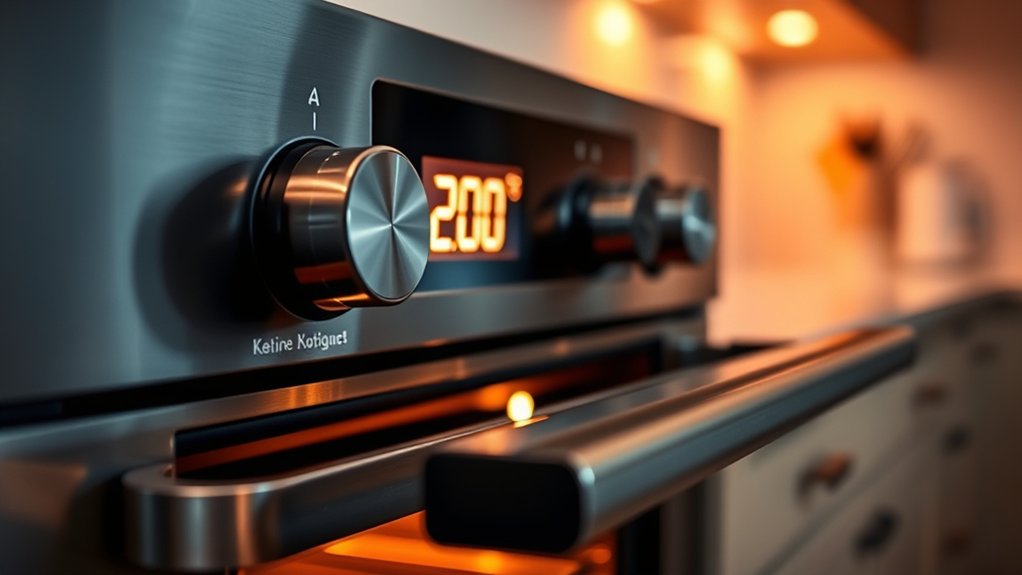
You consider your oven warm when it’s set between 140°F and 200°F, providing gentle, steady heat that keeps food moist without cooking it further. This oven temperature range is ideal for warming dishes, proofing dough, or melting chocolate without drying out your food.
Understanding what oven temp is considered warm helps you use your oven more effectively.
To maintain this temperature range, use an oven thermometer and avoid frequent door openings. This ensures consistent heat and prevents temperature fluctuations.
If you want to get the most from your warm oven, understanding how to set it and avoid common mistakes will help.
Key Takeaways
- A warm oven typically ranges between 90°F and 200°F (32°C to 93°C) for gentle heat without cooking.
- The ideal warm oven temperature is generally between 140°F and 200°F to keep food moist and safe.
- Warm oven settings are used for proofing dough, melting chocolate, warming dishes, and keeping food warm.
- Maintaining stable warmth requires preheating, using an oven thermometer, and avoiding frequent door openings.
- Temperatures below 140°F may not prevent bacterial growth, so food should stay above this for safety.
What Temperature Range Counts As a Warm Oven
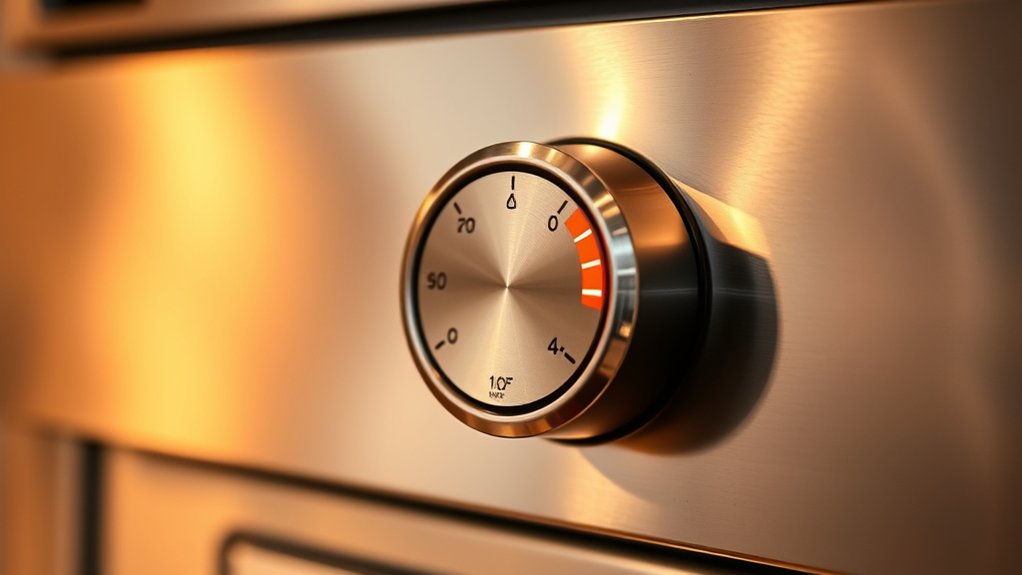
How warm is a warm oven, exactly? Typically, a warm oven ranges between 90°F and 200°F (about 32°C to 93°C). This temperature range is gentle enough to keep food heated without cooking it further or drying it out.
You’ll often use a warm oven to proof dough, melt chocolate, or keep dishes warm before serving. It’s not as hot as roasting or baking temperatures, which usually start at 325°F. Instead, a warm oven provides a controlled, low-heat environment.
When you set your oven anywhere in this range, you’re creating a cozy space for food that needs gentle heat. Just remember, different recipes might specify slightly different temperatures within this range based on their needs.
Why Warm Oven Temperatures Matter
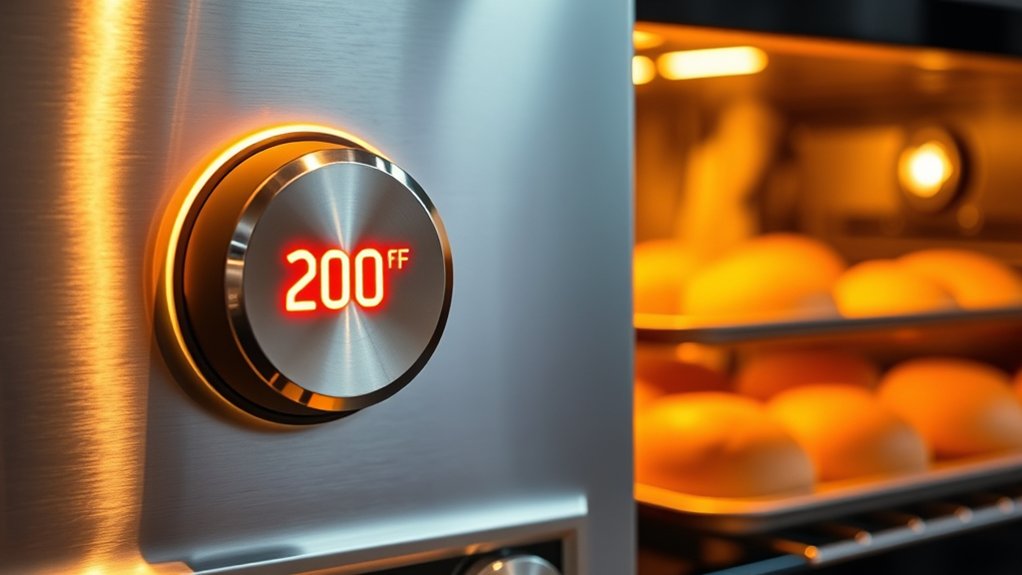
Because warm oven temperatures provide gentle, consistent heat, they help you control cooking processes that require patience and precision. When you use a warm oven, you prevent overcooking or burning delicate foods like custards, meringues, or slow-rising doughs. This temperature range allows ingredients to cook evenly without sudden temperature spikes that could ruin texture or flavor.
You’ll also find that warming plates or keeping dishes at serving temperature becomes easier without drying out your food. Using a warm oven can save you time and effort by maintaining steady heat for tasks like proofing yeast or melting chocolate gently. Overall, understanding why warm oven temps matter helps you achieve better results and gives you confidence to handle recipes that demand careful heat control.
How Oven Types Affect Warm Oven Settings
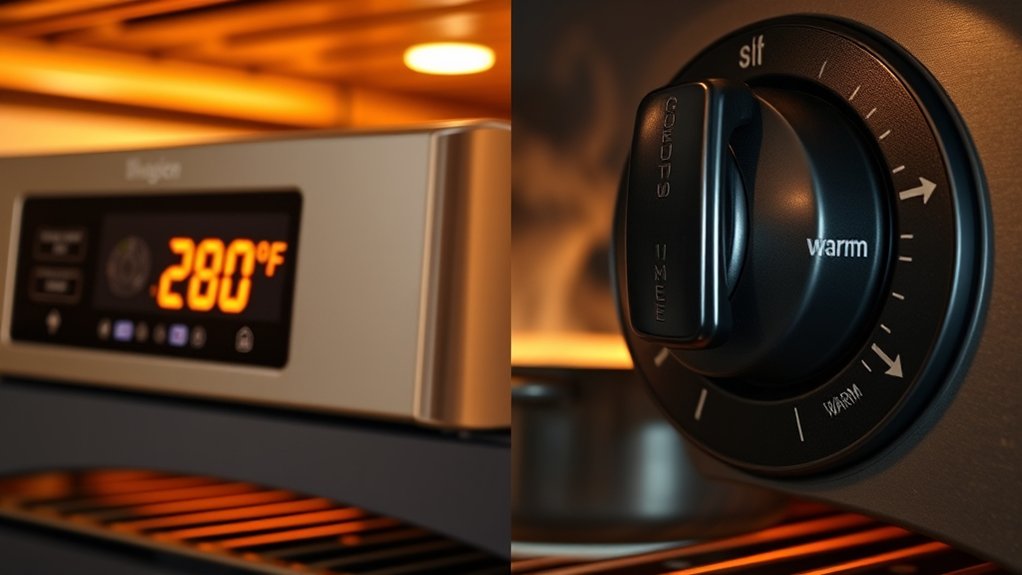
Different oven types can influence the way warm oven settings perform, so it’s important to understand their unique characteristics. Conventional ovens heat from the bottom, which might cause uneven warmth if you rely solely on low settings.
Convection ovens use fans to circulate hot air, offering more consistent and even warmth, so your food stays at a steady temperature. If you have a toaster oven, the small space heats up quickly but may fluctuate more, so keep an eye on it.
Gas ovens often have hotter spots near the flame, which can affect how warm settings work. Knowing your oven type helps you adjust cooking times and temperatures, ensuring your warm oven setting truly maintains the gentle heat you need.
How to Set Your Oven to a Warm Oven Temperature
When you want to keep your food warm without overcooking it, setting your oven to the right temperature is key. Generally, a warm oven ranges between 140°F and 200°F (60°C to 93°C). Most ovens have a “Warm” setting or you can manually set the temperature dial within this range.
Avoid higher temps, as they may dry out your dish.
Here’s a quick guide for setting your oven to warm:
| Temperature (°F) | Temperature (°C) | Use Case |
|---|---|---|
| 140 | 60 | Keep bread crusty |
| 150 | 65 | Warm cooked vegetables |
| 170 | 77 | Hold casseroles |
| 200 | 93 | Keep cooked meats warm |
Adjust based on your food type and oven accuracy.
Using a Thermometer to Check Your Oven’s Warmth
Although your oven’s dial gives you a temperature setting, it might not be perfectly accurate, so using a thermometer helps you check if the oven is truly at the warm temperature you need. Place a reliable oven thermometer in the center of your oven rack, then preheat the oven to your desired warm setting, usually between 90°F and 110°F.
After about 10 to 15 minutes, check the thermometer reading. If it’s lower or higher than intended, adjust your oven’s temperature accordingly and recheck. This method guarantees your oven maintains a consistent warmth, which is essential for delicate tasks like proofing dough or gently warming food.
Using an oven thermometer takes the guesswork out, giving you confidence that your oven’s warmth is just right.
Recipes That Use a Warm Oven
You’ll want to use a warm oven for gentle cooking techniques that protect delicate ingredients. This low heat helps prevent burning or overcooking while ensuring even results.
Let’s explore some recipes that benefit from this careful approach.
Gentle Cooking Techniques
Since gentle cooking requires steady, low heat, a warm oven is perfect for recipes that need slow, even cooking without burning or drying out.
You’ll find it ideal for dishes like slow-roasted vegetables, custards, and delicate casseroles. Using a warm oven helps maintain moisture and tenderness while developing flavors gradually.
Here are some gentle cooking techniques that work well with a warm oven:
| Technique | Example Dish |
|---|---|
| Slow roasting | Root vegetables |
| Braising | Chicken thighs |
| Slow baking | Custards |
| Proofing dough | Bread dough |
Baking Delicate Ingredients
Gentle cooking techniques set the stage for handling delicate ingredients with care. When baking items like custards, meringues, or sponge cakes, you’ll want to use a warm oven—typically between 200°F and 300°F. This lower temperature helps prevent the edges from burning while allowing the center to cook evenly.
You’ll avoid cracking, shrinking, or drying out these sensitive dishes by maintaining steady, gentle heat. For example, when baking a soufflé, you’ll rely on a warm oven to encourage slow, even rising without collapsing. Using this temperature range also works well for melting chocolate or warming bread dough without overcooking.
Warm Oven Tips for Baking vs. Roasting
You’ll want to set different warm oven temperatures depending on whether you’re baking or roasting to get the best results. Baking usually requires a lower, steady warmth, while roasting calls for a slightly higher heat to develop flavor.
Keep your oven’s temperature consistent by avoiding frequent door openings and using an oven thermometer for accuracy.
Optimal Warm Oven Temperatures
When you set your oven to a warm temperature, knowing the difference between baking and roasting can make all the difference in your dish’s outcome. You want to choose the right temperature to guarantee even cooking without drying out or undercooking your food. Typically, warm oven temps range from 150°F to 250°F.
Use lower temps for delicate baking like meringues, and slightly higher for slow roasting meats or vegetables.
| Cooking Method | Temperature Range | Best For |
|---|---|---|
| Baking | 150°F – 200°F | Delicate cakes, meringues |
| Roasting | 200°F – 250°F | Slow-cooked meats, veggies |
| Keep Warm | 140°F – 170°F | Bread, cooked dishes |
| Proofing | 80°F – 110°F | Dough rising |
| Reheating | 160°F – 180°F | Leftovers, casseroles |
Baking Vs. Roasting Differences
Although baking and roasting both use dry heat, they serve different purposes and require distinct temperature settings to achieve the best results. When you bake, you usually aim for moderate, consistent heat—often between 325°F and 375°F—to gently cook items like cakes, bread, and pastries. Baking in a warm oven (around 200°F to 250°F) helps with slow rising or keeping dishes warm without overcooking.
Roasting, on the other hand, uses higher temperatures, typically 400°F or more, to brown and caramelize meats and vegetables. If you use a warm oven for roasting, you won’t get the desired crispness or Maillard reaction. So, knowing when to use a warm oven helps you better control texture and doneness whether you’re baking delicate goods or roasting hearty dishes.
Tips For Maintaining Warmth
Since maintaining consistent warmth can make or break your baking or roasting results, it’s important to manage your oven carefully. Whether you’re keeping bread dough warm or gently roasting vegetables, small adjustments can keep your oven steady.
Here are some tips to help you maintain that ideal warm temperature:
- Use an oven thermometer to monitor accuracy.
- Avoid opening the door frequently to prevent heat loss.
- Preheat your oven fully before placing food inside.
- Consider using a baking stone or steel for even heat distribution.
- Adjust racks to position food away from direct heat sources.
How to Adjust Cooking Times for Warm Oven Temperatures
If you lower your oven temperature to keep food warm, you’ll need to extend the cooking time to guarantee it heats evenly. When using a warm oven setting—typically between 140°F and 200°F—foods won’t cook as quickly as they would at higher temperatures. To compensate, increase your cooking time by about 25-50%, depending on the dish’s density and moisture content.
Make certain to check the food periodically to avoid drying it out or overcooking. Using a thermometer can help you monitor internal temperatures without opening the oven door too often, which causes heat loss. Adjusting cooking times this way ensures your food stays safe and delicious while maintaining the gentle warmth you want.
How to Keep Food Warm in the Oven Safely
To keep your food warm safely, set your oven to an ideal temperature between 140°F and 170°F. This range prevents bacterial growth while maintaining heat. Always use a food thermometer to make sure your dishes stay in the safe zone.
Ideal Oven Temperatures
Although ovens vary, you’ll want to set your temperature between 140°F and 170°F to keep food warm safely without overcooking or drying it out. This range maintains heat just enough to preserve flavor and moisture, preventing food from cooling too quickly or becoming tough.
When you’re ready to keep dishes warm, consider these tips:
- Use a low oven rack to avoid direct heat.
- Cover food with foil to retain moisture.
- Avoid opening the oven door frequently to maintain temperature.
- Use an oven thermometer to ensure accuracy.
- Remove delicate items like bread early to prevent drying.
Following these guidelines helps you keep meals at an ideal temperature, making sure they stay appetizing until serving time.
Food Safety Tips
How do you keep food warm in the oven without risking safety? First, set your oven between 140°F and 170°F; this range keeps food warm without letting bacteria grow. Use an oven thermometer to verify accuracy since many ovens don’t display low temperatures precisely.
Avoid keeping food in the oven for more than two hours, as prolonged warming can increase the risk of foodborne illness. Cover your dishes with foil to retain moisture and prevent drying out. Stir or rotate food occasionally for even heating.
Always check that the food stays above 140°F before serving. If your oven doesn’t maintain these temperatures well, consider using a slow cooker or warming drawer for safer results. Following these tips helps keep your food both warm and safe.
Troubleshooting Warm Oven Temperature Issues
When your oven struggles to maintain a warm temperature, it can disrupt your cooking plans and lead to uneven results. You might notice the oven cycling on and off, or the temperature fluctuating unpredictably. To troubleshoot, start by checking the oven thermometer to verify the actual temperature.
Also, inspect the door seal for gaps that let heat escape. If the heating element looks damaged, it may need replacement. Additionally, confirm the oven sensor isn’t touching the wall, which can give false readings.
Finally, recalibrating your oven’s thermostat might solve temperature inconsistencies.
- Verify temperature with an oven thermometer
- Check door gasket for damage or gaps
- Inspect heating element for wear or breaks
- Ensure temperature sensor isn’t touching oven walls
- Recalibrate the oven thermostat if needed
Common Mistakes When Cooking With a Warm Oven
Even if you set your oven to warm, you might make mistakes that affect your food’s texture and safety. One common error is leaving food in too long, thinking low heat means slow cooking. This can dry out or overcook delicate items.
Another mistake is using the warm setting for raw meats; it doesn’t reach temperatures high enough to kill bacteria, risking foodborne illness. Also, placing food too close to the heating element can cause uneven warming or burning. Avoid opening the oven door frequently, as it causes temperature fluctuations and extends cooking time.
Lastly, don’t rely on the warm setting to reheat food thoroughly—use proper reheating temperatures to ensure safety and quality. Following these tips helps you cook confidently with a warm oven.
Frequently Asked Questions
Can a Warm Oven Help Proof Bread Dough Faster?
Yes, a warm oven can help proof your bread dough faster by providing a cozy environment that encourages yeast activity. Just don’t make it too hot, or you’ll kill the yeast and ruin your dough’s rise.
Is It Safe to Leave the Oven on Warm Overnight?
You wouldn’t leave a dragon’s fire burning unattended, so don’t leave your oven on warm overnight. It’s unsafe, risks fire hazards, and wastes energy.
Always turn it off before sleeping to keep your home safe.
How Does Altitude Affect Warm Oven Temperatures?
At higher altitudes, you’ll need to increase your warm oven temperature slightly because lower air pressure reduces heat transfer. This helps maintain consistent cooking or warming results despite thinner air and faster evaporation.
Adjusting temperature ensures food heats evenly and thoroughly. It compensates for the decreased efficiency in heat conduction and convection at altitude.
Can Warm Oven Settings Be Used for Dehydrating Food?
Yes, you can use warm oven settings for dehydrating food, but you’ll want to keep the temperature low and the door slightly open for airflow.
This prevents cooking and helps dry your food evenly and safely.
What Are Energy-Saving Tips When Using a Warm Oven?
You might think keeping the oven door open wastes energy, but it actually helps cool it faster when using a warm setting. To save energy, preheat only when necessary, use residual heat, and batch cook whenever you can.
Conclusion
Now that you know what a warm oven really means, you’re all set to keep your dishes cozy without overdoing it. Think of it as giving your food a gentle hug, not a hot spotlight. By mastering these subtle oven settings, you’ll keep meals perfectly snug and ready to enjoy.
Just remember to keep an eye on your thermometer, and you’ll avoid those little kitchen hiccups that can turn warm into too warm. Understanding what oven temp is considered warm helps you maintain the ideal cooking environment. This ensures your dishes come out just right every time.