How to Make Pineapple Juice With a Blender in 10 Simple Steps
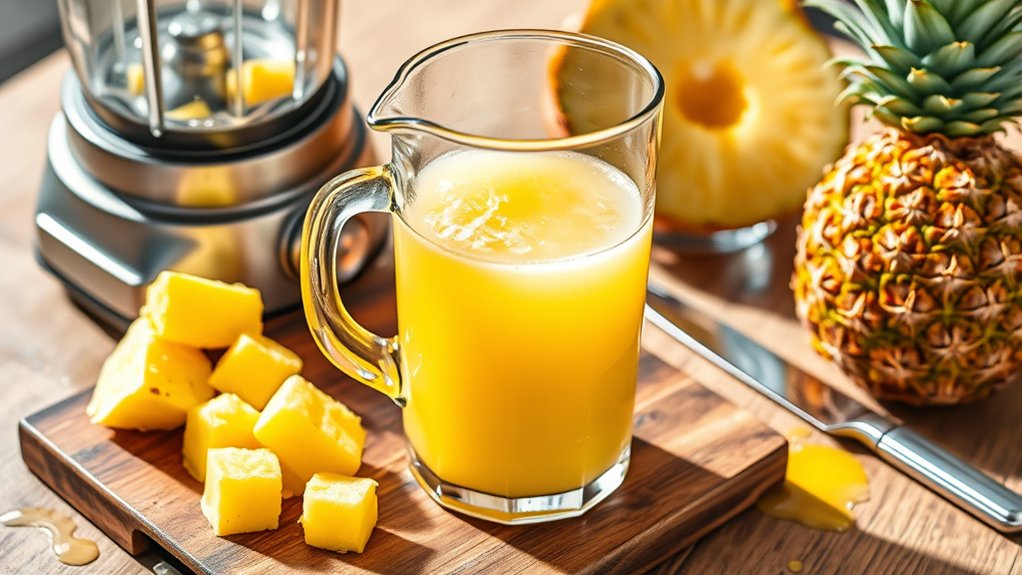
Start by choosing a ripe pineapple with a golden base and a sweet aroma for the best pineapple juice. Making pineapple juice with a blender is a quick and easy way to enjoy this tropical treat at home.
Peel and core the pineapple by removing the skin, eyes, and tough center, then cut it into 1-2 inch chunks.
Add the pineapple chunks along with a splash of water to your blender and blend until smooth. Strain the juice if you prefer it pulp-free.
Sweeten naturally to taste, chill before serving, and store any leftovers properly in the refrigerator.
For added flavor and health benefits, you can explore mixing in citrus fruits, fresh herbs, or spices.
This simple process ensures fresh, delicious pineapple juice anytime.
Key Takeaways
- Select a ripe pineapple with golden-yellow color, slight softness, sweet aroma, and fresh green leaves for the best juice flavor.
- Peel the pineapple by removing the top, bottom, skin, and eyes, then quarter and core it before cutting into chunks.
- Blend pineapple chunks with about 1/4 cup water per 2 cups of fruit until smooth, then strain to remove pulp for a clear juice.
- Optionally add sweeteners like honey or natural citrus juice (lime, lemon, orange) to enhance flavor and balance sweetness.
- Chill the juice for at least 30 minutes, store leftovers in the fridge, and consume within 2-3 days for freshness.
Choose a Ripe Pineapple for the Best Juice
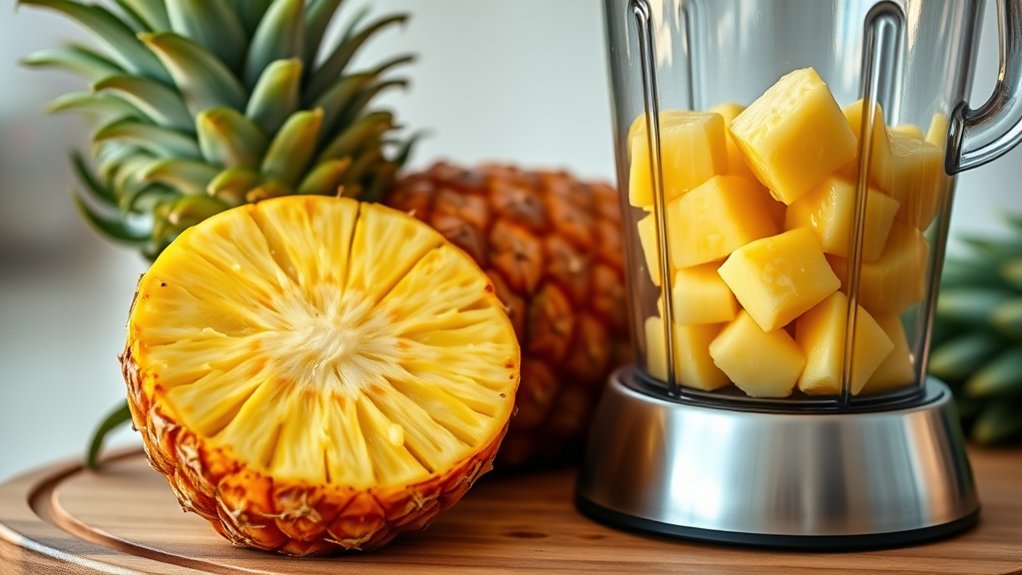
How do you know when a pineapple is ripe enough for juicing? Start by checking its color; a ripe pineapple usually has a golden-yellow hue at the base. Avoid ones that are mostly green, as they aren’t fully ripe.
Give the pineapple a gentle squeeze—you want it firm but slightly soft to the touch, indicating juiciness inside. Smell the base; a sweet, tropical fragrance means it’s ready. If it smells fermented or sour, it’s overripe.
Also, look at the leaves on top; they should be green and fresh, not brown or dry. Picking the right pineapple guarantees your juice will be naturally sweet and flavorful, saving you from adding extra sugar or flavorings later on.
Peel and Core Your Pineapple Properly
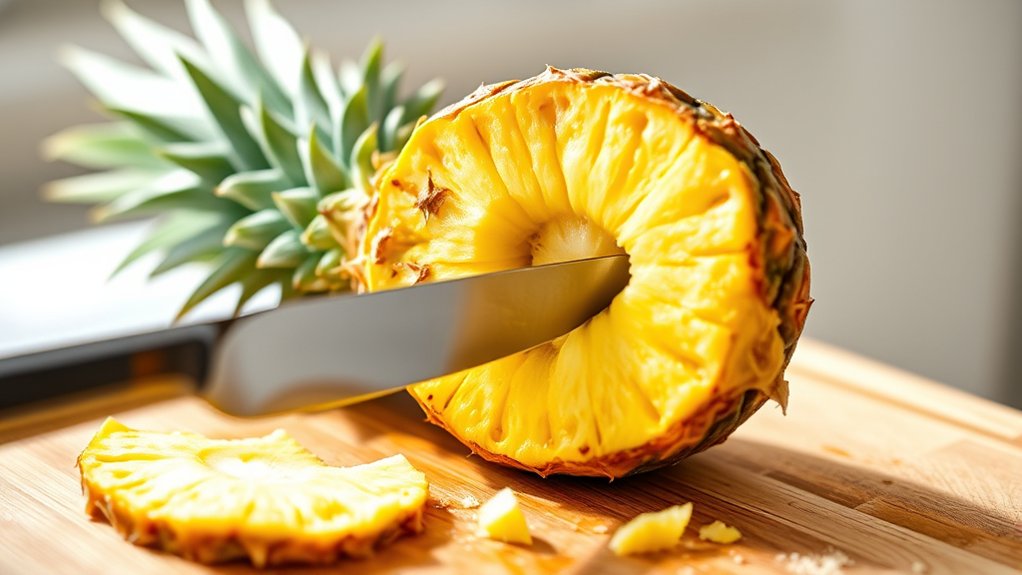
Now that you’ve picked a ripe pineapple, it’s time to peel and core it properly to get the best juice.
You’ll want to remove the tough outer skin and the fibrous core carefully.
Follow simple techniques to make this process quick and efficient.
Choosing Ripe Pineapples
When selecting a pineapple, what should you look for to guarantee it’s perfectly ripe? First, check its color—golden yellow means sweetness ahead. Give it a gentle squeeze; it should be firm but yield slightly.
Sniff the base for a sweet aroma; no scent means no ripeness. Avoid pineapples with bruises or soft spots. Your ripe pineapple will promise juicy, flavorful juice.
Effective Peeling Techniques
Although peeling a pineapple might seem tricky, mastering a few simple techniques will make the process quick and mess-free. Start by cutting off the top and bottom with a sharp knife to create stable, flat surfaces. Stand the pineapple upright and slice downwards along the sides, following the curve to remove the skin.
Don’t worry if some eyes remain; you can remove them by cutting shallow, diagonal grooves. Next, cut the pineapple into quarters lengthwise and slice out the tough core from each piece. The core is fibrous and less juicy, so removing it improves your juice’s texture.
With the skin and core gone, you’re ready to chop the pineapple into chunks for blending. This method saves time and reduces waste, ensuring vibrant, fresh juice every time.
Cut Pineapple Into Chunks for Juicing
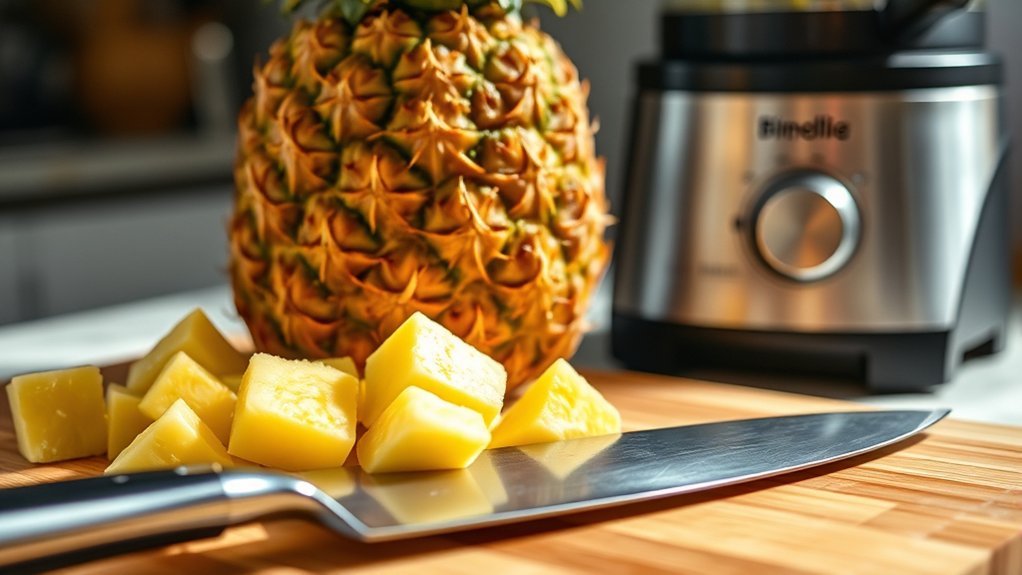
Before juicing, you’ll need to cut the pineapple into manageable chunks that fit your juicer. Start by placing the peeled pineapple on a cutting board. Slice off the top and bottom ends to create a stable base.
Next, cut the pineapple lengthwise into quarters. Remove the tough core from each quarter by slicing it out at an angle. Then, chop each quarter into bite-sized chunks—about 1 to 2 inches wide—so they blend easily.
Keep the pieces uniform to assure smooth blending. Avoid cutting chunks too large, as they may strain your blender’s motor or result in uneven texture. Once you have your pieces ready, you’re all set for the next step in making fresh pineapple juice.
Add Pineapple Chunks and a Splash of Water to the Blender
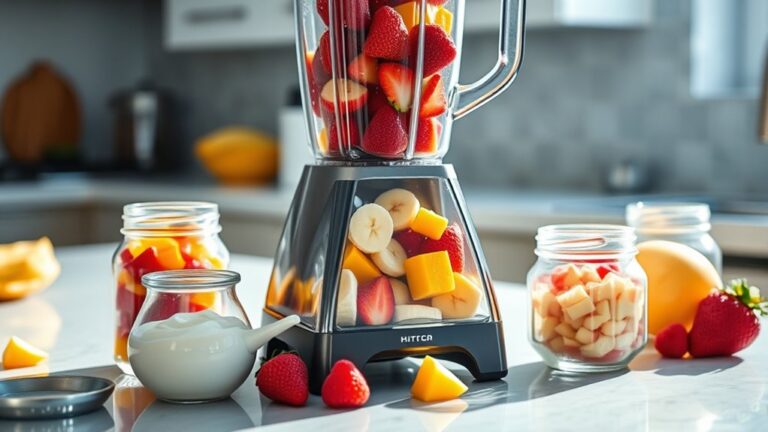
Once you’ve prepared your pineapple chunks, place them into the blender and add a splash of water to help the blending process. The water helps the blades move smoothly through the fruit, preventing them from getting stuck or overworking. Start with about 1/4 cup of water for every two cups of pineapple chunks; you can always add more later if needed.
This small amount of water also helps create a smoother texture, making it easier to blend the chunks evenly. Avoid adding too much water at this stage, as it can dilute the juice’s flavor. Keep the lid securely in place before you move on to blending.
Now you’re set to blend your pineapple chunks into fresh juice.
Blend Until Smooth With No Large Pieces Remaining
While blending, keep an eye on the texture to make certain there are no large pieces left. Start on a low speed to break down the pineapple chunks gradually, then increase the speed to high for about 30 to 60 seconds. Pause occasionally to check the consistency and scrape down the sides with a spatula if needed.
You want the mixture to look uniform and smooth, without any visible chunks that could affect the drinking experience. If you notice stubborn pieces, blend a little longer until everything is fully incorporated. Avoid over-blending, as this can heat the juice and slightly alter the flavor.
Once you achieve a consistent, smooth texture, you’re ready for the next step in your pineapple juice preparation.
Strain Juice to Remove Pulp for a Smooth Texture
Although blending creates a smooth base, straining the juice guarantees you get a silky texture by removing any remaining pulp or fibrous bits. To do this, place a fine mesh strainer or cheesecloth over a large bowl or pitcher. Pour the blended pineapple mixture slowly through the strainer, allowing the juice to collect below.
Use a spoon or spatula to gently press the pulp against the strainer’s surface, extracting as much liquid as possible without forcing solids through. Discard the leftover pulp or save it for smoothies or baking. Straining ensures your pineapple juice feels light and revitalizing, perfect for sipping or mixing into recipes.
Once strained, give the juice a quick stir, and it’s ready to enjoy immediately or chill for later.
Sweeten Your Pineapple Juice Naturally (Optional)
If you find your pineapple juice isn’t as sweet as you’d like, you can easily enhance its flavor using natural sweeteners. These options add subtle sweetness without overpowering the fresh pineapple taste. You can even mix and match to find your perfect balance.
| Sweetener | Suggested Amount per 1 cup juice |
|---|---|
| Honey | 1 to 2 teaspoons |
| Maple Syrup | 1 tablespoon |
| Agave Nectar | 1 to 2 teaspoons |
| Stevia (liquid) | 3 to 5 drops |
Add your chosen sweetener gradually, tasting as you go, so you get just the right sweetness for your palate. Natural sweeteners keep your juice wholesome and delicious!
Chill Your Juice Before Serving for Best Flavor
Once you’ve sweetened your pineapple juice to taste, cooling it enhances the invigorating flavor even more. You’ll want to chill your juice in the refrigerator for at least 30 minutes before serving. This step allows the natural sweetness and tanginess to meld, giving you a smoother, more revitalizing drink.
If you’re in a hurry, pour the juice over ice cubes to cool it quickly, but keep in mind that melting ice can dilute the flavor. For the best experience, use chilled glasses to keep your juice cool longer. By taking this simple step, you’ll enjoy a crisp, revitalizing pineapple juice that’s perfect for any time of day, especially on warm afternoons or after a workout.
Store Leftover Juice to Keep It Fresh
To keep your pineapple juice tasting fresh, store any leftovers promptly in a sealed container and place it in the refrigerator. Use a glass jar or bottle with a tight lid to prevent air from spoiling the juice. Make certain the container is clean and dry before transferring the juice.
Keep the juice chilled at all times, ideally below 40°F (4°C), to slow down oxidation and bacterial growth. Consume the leftover juice within 2 to 3 days for the best flavor and quality. If you notice any changes in smell, color, or taste, discard it immediately.
Avoid leaving the juice out at room temperature for extended periods, as it can spoil quickly. Proper storage ensures you enjoy your pineapple juice fresh every time.
Try These Natural Flavor Additions to Customize Your Juice
You can easily customize your pineapple juice by adding natural flavors that suit your taste. Try squeezing in some fresh citrus for a zesty boost, infusing herbs like mint or basil for a revitalizing twist, or adding a pinch of spice to give it a little kick.
These simple additions will make your juice uniquely yours.
Citrus Enhancements
Although pineapple juice is delicious on its own, adding a splash of citrus can brighten its flavor and give it an invigorating twist. Try squeezing in fresh lime or lemon juice to add a zesty kick that balances the sweetness. Orange juice works well too, offering a sweeter citrus note that complements pineapple’s tropical taste.
For a tangier option, grapefruit juice adds complexity and a slight bitterness that enhances the overall profile. Just start with small amounts—about a tablespoon per cup of juice—and adjust to your liking. These citrus enhancements not only boost flavor but also increase vitamin C content, making your juice both tastier and healthier.
Experiment with combinations to find your perfect pineapple-citrus blend.
Herbal Infusions
When you want to add a crisp, aromatic twist to your pineapple juice, herbal infusions offer a simple and natural way to customize the flavor. Herbs like mint, basil, and rosemary complement pineapple’s sweetness beautifully, giving your juice a unique profile.
Just toss a few fresh leaves into the blender with the pineapple chunks before blending. You can experiment to find your favorite combination.
| Herb | Flavor Profile | Pairing Tip |
|---|---|---|
| Mint | Cool, invigorating | Great with lime |
| Basil | Sweet, slightly spicy | Adds depth, try with lemon |
| Rosemary | Earthy, pine-like | Use sparingly for aroma |
Try these herbs to elevate your pineapple juice naturally.
Spicy Twists
If you want to add an exciting kick to your pineapple juice, spicy twists offer a bold way to customize the flavor naturally. Try blending in a small piece of fresh ginger for warmth and zing that complements the pineapple’s sweetness. A pinch of cayenne pepper can deliver a surprising heat that wakes up your taste buds without overpowering the juice.
For a more aromatic spice, toss in a few slices of jalapeño or a dash of black pepper. These natural additions not only enhance flavor but also bring health benefits like improved digestion and metabolism. Start with small amounts—you can always add more to suit your taste.
Experimenting with these spicy elements makes your pineapple juice uniquely invigorating and revitalizing every time.
Frequently Asked Questions
Can I Use Canned Pineapple Instead of Fresh for Juicing?
Yes, you can use canned pineapple for juicing. Just drain the syrup first to avoid extra sweetness, then blend the pineapple chunks with some water or ice for a revitalizing juice. It’s easy and tasty!
How Long Does Homemade Pineapple Juice Last in the Fridge?
You can keep your homemade pineapple juice fresh in the fridge for about 3 to 5 days. Picture that bright, tangy sip—store it in a sealed container to lock in flavor and freshness each time you drink.
Is Pineapple Juice Safe for People With Acid Reflux?
Pineapple juice can trigger acid reflux for some people because it’s acidic. You might want to avoid it if you’re sensitive.
Try small amounts first, and see how your body reacts before drinking more.
Can I Freeze Pineapple Juice Without Losing Flavor?
Yes, you can freeze pineapple juice without losing much flavor. Just make sure to store it in an airtight container, leaving some space for expansion.
Thaw it slowly in the fridge to preserve its fresh taste.
What Are the Health Benefits of Drinking Pineapple Juice Daily?
Wondering why you should drink pineapple juice daily? It boosts immunity, aids digestion, reduces inflammation, and provides antioxidants.
Plus, it supports skin health. Isn’t that a tasty way to stay healthy every day?
Conclusion
Now that you’ve mastered making pineapple juice with your blender, you’re ready to squeeze the day! With just a few simple steps, you can enjoy fresh, sweet juice anytime. Remember, choosing ripe fruit and blending it well is the key to that perfect tropical taste.
Don’t forget to store leftovers properly so you can savor your creation later. Keep experimenting with flavors, and you’ll always have a revitalizing treat at your fingertips! Making pineapple juice with a blender is quick, easy, and delicious.
By following these simple steps for pineapple juice with a blender, you can enjoy a refreshing and healthy drink anytime. Keep your blender ready and your pineapples fresh for the best homemade pineapple juice experience!