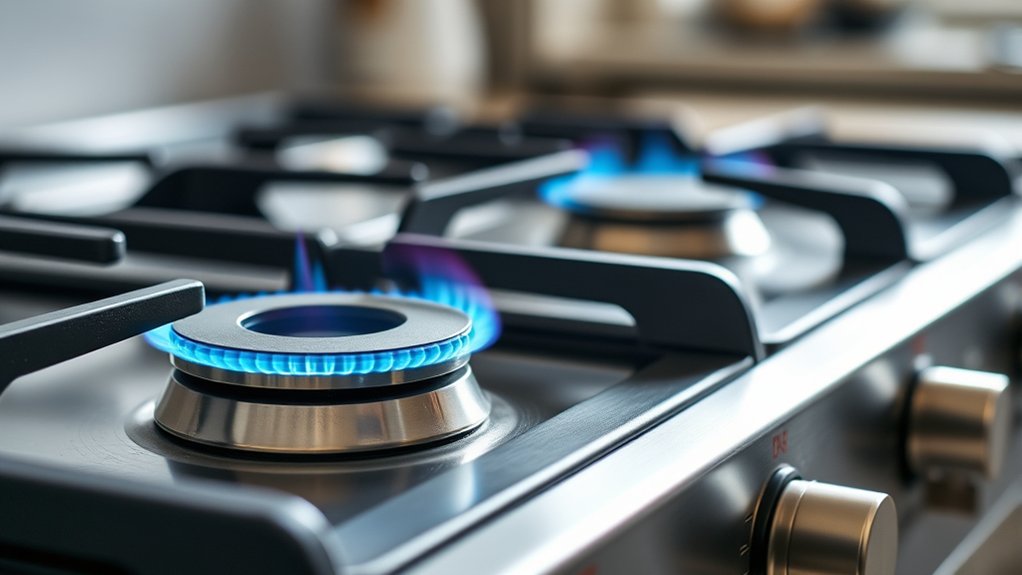
Do Gas Cooktops Need Electricity to Work?
You don’t always need electricity to use a gas cooktop because many models ignite manually with matches or built-in piezo igniters and operate solely on gas flow. This means gas cooktops can function during power outages, providing reliable cooking options.
However, electric ignition systems have become common for their convenience and precision.
Electric ignition and safety features add convenience and precision but rely on power, so they won’t work during outages.
Understanding the differences between manual and electric ignition is important for safety and usability.
If you want to learn how different ignition types work, why safety depends on electricity, and when upgrading makes sense, keep exploring the details ahead.
Key Takeaways
- Gas cooktops primarily use natural gas or propane and can produce heat without electricity through manual ignition.
- Electric ignition systems require electricity or batteries to create sparks for lighting burners quickly and safely.
- Safety features like flame failure protection often depend on electricity and may not function during power outages.
- Fully manual gas cooktops or those with built-in piezo igniters operate without any electrical power.
- During power outages, gas cooktops can still be used by manually lighting burners with matches or lighters.
Do Gas Cooktops Need Electricity to Work?
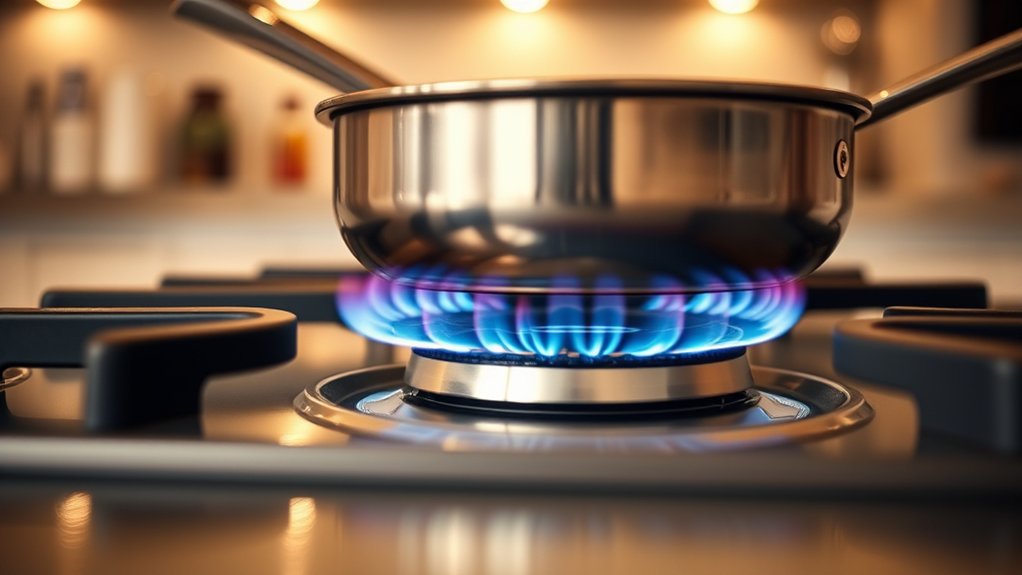
How do gas cooktops operate without relying on electricity? You don’t always need power for your gas cooktop to function because it primarily uses natural gas or propane as fuel. When you turn the burner knob, gas flows through the burners and ignites, creating a flame to cook your food.
Some models have a built-in piezoelectric ignition system that generates a spark mechanically, so you don’t need electricity for lighting. However, if your cooktop has electronic ignition or uses electric controls, it may require electricity to start the flame or run features like timers and lights.
But the core cooking function—burning gas to produce heat—can work independently of an electrical supply in many cases.
How Do Traditional Gas Cooktops Work Without Electricity?
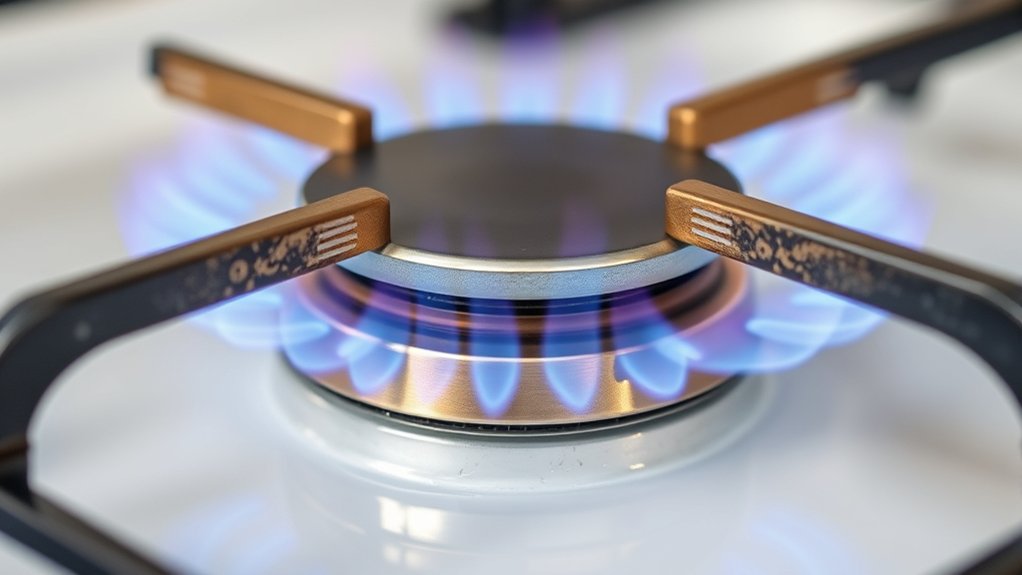
Although many modern gas cooktops rely on electricity for ignition, traditional gas cooktops work entirely without it by using a manual ignition system. When you turn the knob, you release gas through the burner. To light it, you simply use a match or a lighter near the burner’s edge.
The gas ignites as soon as it meets the flame, allowing you to start cooking right away. Because the system doesn’t depend on electric sparks or batteries, it’s reliable even during power outages. You control the flame size by adjusting the knob, regulating the gas flow.
This straightforward approach lets you cook efficiently without worrying about electricity, making traditional gas cooktops a dependable option in any kitchen.
What Types of Ignition Do Gas Cooktops Use?
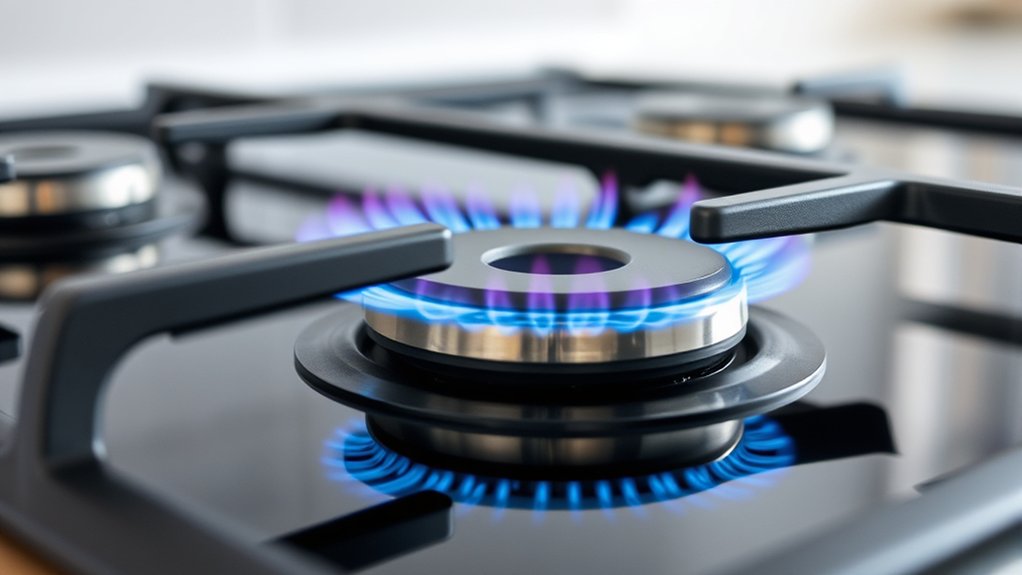
While traditional gas cooktops rely on matches or lighters to ignite burners, many modern models offer various built-in ignition methods that make lighting safer and more convenient. You’ll find three main types: manual ignition, electric spark ignition, and pilot light ignition.
Manual ignition requires no electricity—you simply light the gas with an external flame. Electric spark ignition uses a small electric spark to light the burner and often requires some power source. Pilot light ignition keeps a small flame burning continuously to ignite burners instantly.
Here’s a quick comparison:
| Ignition Type | Requires Electricity | How It Works |
|---|---|---|
| Manual Ignition | No | Light burner with external flame |
| Electric Spark | Yes (some models) | Sparks ignite gas |
| Pilot Light | No | Small flame ignites burners |
Each type has its pros and cons depending on your setup.
How Do Battery Igniters Work on Gas Cooktops?
You’ll find that battery igniters create sparks by sending an electric charge from a small battery to ignite the gas. This setup means you don’t have to rely on your home’s electricity, which adds convenience during power outages.
Let’s explore how this simple power source keeps your cooktop working smoothly.
Battery Igniter Functionality
When you press the igniter button on a gas cooktop, a battery-powered system generates a small electric spark that lights the gas. Inside the igniter, the battery sends an electric current to a piezoelectric or electronic spark module. This module rapidly creates a high-voltage spark, jumping across the gap near the burner’s gas outlet.
The spark ignites the gas, producing the flame you need for cooking. You don’t have to rely on external power because the battery provides all the energy necessary for ignition. This system activates only when you press the igniter, conserving battery life.
You’ll typically find a small compartment beneath the cooktop where the batteries are easy to replace when they run low.
Power Source Benefits
Although battery igniters operate independently from your home’s electrical system, they offer several key benefits that enhance your cooking experience. First, they provide reliable ignition even during power outages, so you won’t be left without a working stove. You’ll appreciate the convenience of instant sparks generated by the battery, which eliminates the need for matches or lighters.
Battery igniters also improve safety by reducing gas buildup since the flame ignites quickly after you turn the knob. Plus, because they don’t rely on your home’s electric supply, you can install your gas cooktop in areas without wired power sources. Overall, battery igniters give you consistent, safe, and hassle-free ignition, making your cooking routine smoother and more dependable.
What Safety Features in Gas Cooktops Depend on Electricity?
You rely on electric ignition systems to light your gas cooktop quickly and safely. If the flame goes out unexpectedly, flame failure protection uses electricity to cut off the gas supply and prevent leaks.
Automatic shutoff mechanisms also depend on electrical signals to stop gas flow, keeping your kitchen secure.
Electric Ignition Systems
Because electric ignition systems rely on a spark generated by electricity to light the gas, several important safety features in gas cooktops depend on a steady electrical supply. When you turn the knob, electricity powers the igniter to create that spark, guaranteeing a quick and reliable flame. Without power, you’d have to light the gas manually, which can be risky and inconvenient.
Here are some safety features tied to electric ignition systems:
- Automatic spark generation prevents gas buildup before ignition.
- Quick flame start reduces the chance of gas leaks.
- Controlled ignition timing minimizes accidental sparks.
- Integration with safety sensors ensures the cooktop only ignites when conditions are safe.
These features help you cook safely and efficiently with your gas cooktop.
Flame Failure Protection
How does your gas cooktop keep you safe if the flame suddenly goes out? Many models use flame failure protection, a safety feature that depends on electricity to function correctly. This system detects whether the burner’s flame is burning.
If the flame goes out unexpectedly—due to a spill or draft—the sensor triggers an electric valve to shut off the gas supply immediately, preventing dangerous leaks. Without electricity, this sensor can’t operate, so the gas might continue flowing even if there’s no flame. While the cooktop can still work manually in some cases, you lose this important safety net without power.
Automatic Shutoff Mechanisms
Flame failure protection is just one example of how electricity enhances gas cooktop safety. Automatic shutoff mechanisms rely on electrical sensors and controls to detect irregularities and cut gas flow promptly. These features protect you from potential hazards like gas leaks or unattended flames.
When you use a gas cooktop with automatic shutoff, you benefit from:
- Sensors that detect if the flame goes out unexpectedly
- Timers that turn off burners after a set period
- Temperature sensors preventing overheating
- Alerts that notify you of unsafe conditions
Without electricity, these safety systems wouldn’t function, so while gas flows without power, these important protections depend on it to keep you and your home safe.
Can You Use a Gas Cooktop During a Power Outage?
Wondering if you can use your gas cooktop during a power outage? The good news is, most traditional gas cooktops don’t rely on electricity to function. You can usually light the burners manually with a match or lighter, allowing you to cook even when the power’s out.
However, if your cooktop has an electric ignition system, you might need a lighter to start the flame since the automatic igniter won’t work without power. Keep in mind, any electric features like digital displays or timers won’t operate during an outage.
How Electric Components Improve Control and Precision on Gas Cooktops
Although gas cooktops offer reliable heat, electric components take your cooking control to the next level. These features give you more precision and convenience, making it easier to achieve perfect results every time.
You’ll notice how electric controls help you:
- Adjust flame intensity with digital touchpads or knobs for exact heat settings.
- Use electronic ignition systems to light burners instantly without matches or lighters.
- Monitor and maintain consistent temperatures with built-in sensors.
- Set timers and alerts to prevent overcooking or burning your dishes.
With these electric enhancements, you get the best of both worlds—the powerful flame of gas and the accuracy of modern electronics. This combination lets you cook smarter, saving time and improving your overall kitchen experience.
Installing Gas Cooktops Without Electrical Wiring: What You Need to Know
Electric components add convenience and precision to gas cooktops, but not every model requires electrical wiring. When installing a gas cooktop without electricity, you’ll rely on manual ignition methods, like a built-in piezo igniter or a simple match. This means you won’t need to connect the cooktop to a power source, simplifying installation and reducing costs.
However, you must verify your kitchen has proper gas supply lines and ventilation. Also, check local codes to confirm whether a non-electric cooktop complies with safety standards. Keep in mind that without electrical components, features like automatic ignition or digital controls won’t be available.
Still, installing a gas cooktop without wiring is straightforward if you follow manufacturer instructions and prioritize safety.
Troubleshooting Electrical Issues on Gas Cooktops
If your gas cooktop uses electrical components, you might occasionally face issues like ignition failure or unresponsive controls. To troubleshoot, start by checking these common problems:
- Power supply: Confirm the cooktop is plugged in and the circuit breaker hasn’t tripped.
- Igniter spark: Listen for clicking sounds; if absent, the igniter might be faulty or dirty.
- Control knobs: Make sure knobs aren’t stuck or damaged, as this can prevent ignition signals.
- Wiring connections: Inspect visible wires for loose connections or damage, especially after installation or cleaning.
If these steps don’t fix the problem, consider consulting a professional technician. Avoid using the cooktop until the issue is resolved to prevent safety risks.
Staying proactive helps keep your gas cooktop functioning smoothly.
Electric vs. Manual Ignition: Benefits and Drawbacks
You’ll find gas cooktops use either electric or manual ignition to start the flame. Electric ignition offers quick, push-button convenience, while manual ignition lets you light burners without relying on power.
Let’s compare the benefits and drawbacks of each to help you decide what works best for your kitchen.
Ignition Methods Explained
How do you decide between electric and manual ignition for your gas cooktop? Understanding the differences helps you choose what fits your kitchen needs. Electric ignition uses a spark powered by electricity to light the burner quickly and safely.
Manual ignition requires you to use a match or lighter to ignite the gas.
Consider these factors:
- Electric ignition offers convenience and ease of use with just a turn of the knob.
- Manual ignition works without electricity, useful during power outages.
- Electric systems may fail if the power or battery runs out.
- Manual ignition requires caution to avoid accidents and might be slower.
Weighing these points helps you pick the ignition method that suits your lifestyle best.
Pros Of Electric Ignition
Choosing between electric and manual ignition often comes down to convenience and reliability. With electric ignition, you get a quick, hassle-free start every time—just turn the knob, and the spark lights the burner instantly. You won’t need matches or lighters, which means less fuss and safer operation, especially if you’re multitasking in the kitchen.
Electric ignition also reduces the risk of gas leaks since the gas only flows when the spark is active. Plus, many models have automatic shut-off features for extra safety. Since the ignition is built-in, you avoid the wear and tear that comes with manual methods.
Manual Ignition Advantages
Although electric ignition offers convenience, manual ignition holds distinct advantages that many cooks appreciate. When you use a manual ignition gas cooktop, you don’t have to rely on electricity, making it perfect during power outages. You also gain more control over lighting your burners exactly when you want.
Plus, manual ignition systems tend to be simpler, which means fewer parts can break or need replacement.
Consider these benefits:
- Works without electricity, so it’s reliable anytime
- Offers a tactile, hands-on cooking experience
- Fewer mechanical components reduce maintenance needs
- Often costs less upfront and over time
Are There Gas Cooktops That Work Fully Without Electricity?
If you want a gas cooktop that runs without any electricity, you’ll find that there are models designed to ignite and operate entirely by manual means. These cooktops use a simple match or a built-in striker to light the burners, bypassing the need for electric ignition systems. You turn the gas knob and ignite the flame manually, giving you full control even during power outages.
While these models might lack advanced features like electronic timers or automatic shut-off, they offer reliable performance without depending on electricity. Choosing a fully manual gas cooktop ensures you can cook anytime, regardless of your power situation, making it a practical option for off-grid living or emergency preparedness.
When Is It Worth Upgrading to a Gas Cooktop With Electric Features?
While manual gas cooktops work well without electricity, upgrading to a model with electric features can bring added convenience and safety to your kitchen. You might consider this upgrade if you want more precise temperature control or quicker ignition. Electric features often include safety sensors that automatically shut off the gas if a flame goes out, which helps prevent accidents.
Additionally, electric ignitions eliminate the need for matches or lighters, making cooking easier and faster.
You should upgrade when you want:
- Faster, reliable ignition without manual effort
- Enhanced safety with automatic shut-off sensors
- Digital controls for precise heat adjustments
- Integration with smart home systems for remote control
These benefits can make cooking more enjoyable and safer overall.
Frequently Asked Questions
How Do Gas Cooktops Affect Indoor Air Quality?
Gas cooktops release combustion gases like nitrogen dioxide and carbon monoxide, which can lower your indoor air quality. You should use proper ventilation, like range hoods or open windows, to keep your kitchen air safe and fresh.
What Maintenance Is Required for Gas Cooktops?
Like tuning a musical instrument, you should clean burners and grates regularly, check ignition systems, and inspect gas lines for leaks.
This keeps your gas cooktop running smoothly and safely, avoiding any unexpected issues.
Are Gas Cooktops Safe for Children?
Gas cooktops can be safe for children if you use childproof knobs and keep handles turned inward. Always supervise kids in the kitchen and teach them about hot surfaces to prevent burns and accidents.
How Do Gas Cooktops Compare in Energy Efficiency?
You’ll save a fortune because gas cooktops are insanely energy-efficient, heating instantly and wasting hardly any fuel.
Compared to electric, they give you more control and speed, making cooking faster and cheaper every time.
Can Gas Cooktops Be Used With Outdoor Propane Tanks?
Yes, you can use gas cooktops with outdoor propane tanks. Just make sure you have the right regulator and hose, and always check for leaks to keep things safe while cooking outside.
Conclusion
You don’t necessarily need electricity to use a gas cooktop, especially if it relies on manual ignition. However, electric features often enhance efficiency and safety, sparking quicker starts and smarter safeguards.
Balancing benefits between battery-powered burners and basic burners boils down to your kitchen’s needs. So, consider convenience, cost, and control carefully when choosing your cooktop—because practical power paired with precise performance makes cooking more engaging and consistent every time.
In conclusion, while gas cooktops can work without electricity, integrating electric ignition and safety features offers better control and convenience. Understanding whether gas cooktops need electricity helps you make an informed choice for your kitchen setup.