How Do Induction Cooktops Get Hot?
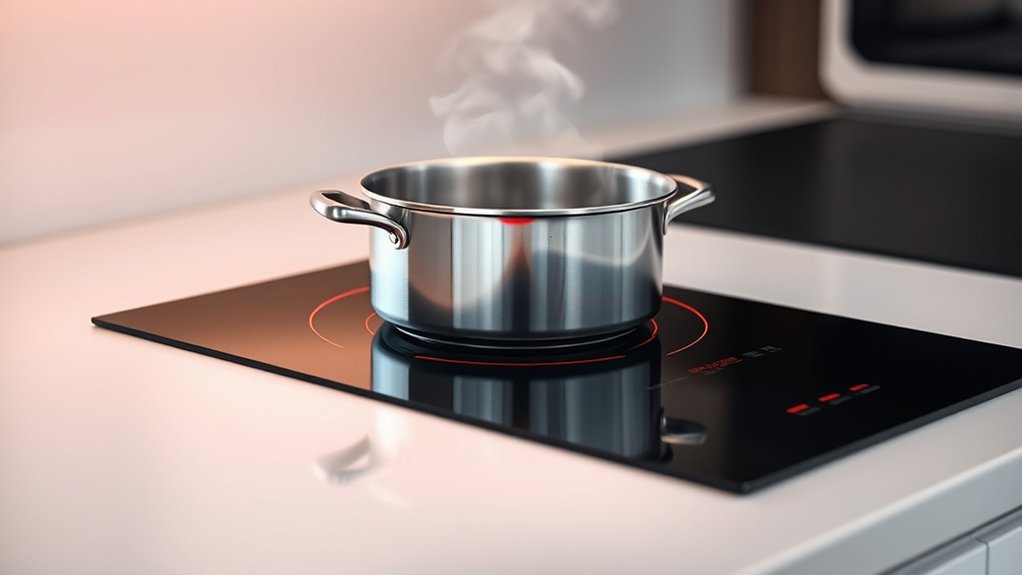
You get heat on an induction cooktop through magnetic fields that generate heat directly inside your cookware. Induction cooktops use electromagnetic induction to heat pots and pans quickly and efficiently.
When you power the cooktop, an electric current passes through a coil beneath the surface, creating a magnetic field that induces electric currents in ferrous pots and pans.
These currents generate heat inside the cookware itself, not on the cooktop, making it fast and efficient. This direct heating method reduces energy loss and allows for precise temperature control.
Keep exploring, and you’ll discover how cookware type and design impact performance and safety.
Key Takeaways
- Induction cooktops use a copper coil to create a rapidly changing magnetic field beneath the glass surface.
- This magnetic field induces eddy currents in ferrous cookware, generating heat directly inside the pan.
- Heat is produced through electrical resistance within the cookware’s metal, not by the cooktop surface itself.
- Only ferromagnetic cookware, like cast iron or stainless steel, responds effectively to the magnetic field.
- The cooktop surface stays relatively cool as heat is generated inside the cookware, ensuring faster and safer cooking.
How Do Induction Cooktops Heat Food Without Flames or Coils?
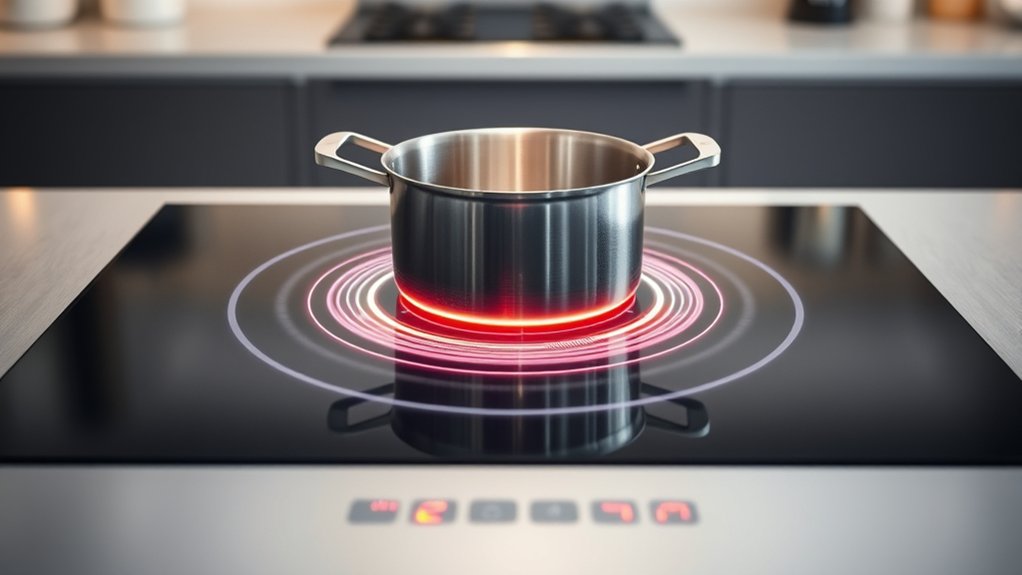
Although induction cooktops don’t use flames or coils, they heat food quickly by generating a magnetic field that directly warms your cookware. You won’t see any glowing coils or flickering flames because the heat is created inside the pot or pan itself.
When you place compatible cookware on the cooktop, an electric current passes through a copper coil beneath the glass surface. This current produces a magnetic field that induces tiny electrical currents in the metal of the cookware. These currents generate heat within the cookware’s base, cooking your food efficiently.
Because the cooktop surface stays relatively cool, you avoid burns or wasted energy. Just make sure your pots and pans are induction-ready, usually made of ferrous metals like cast iron or stainless steel.
What Role Does Magnetism Play in Induction Cooking?
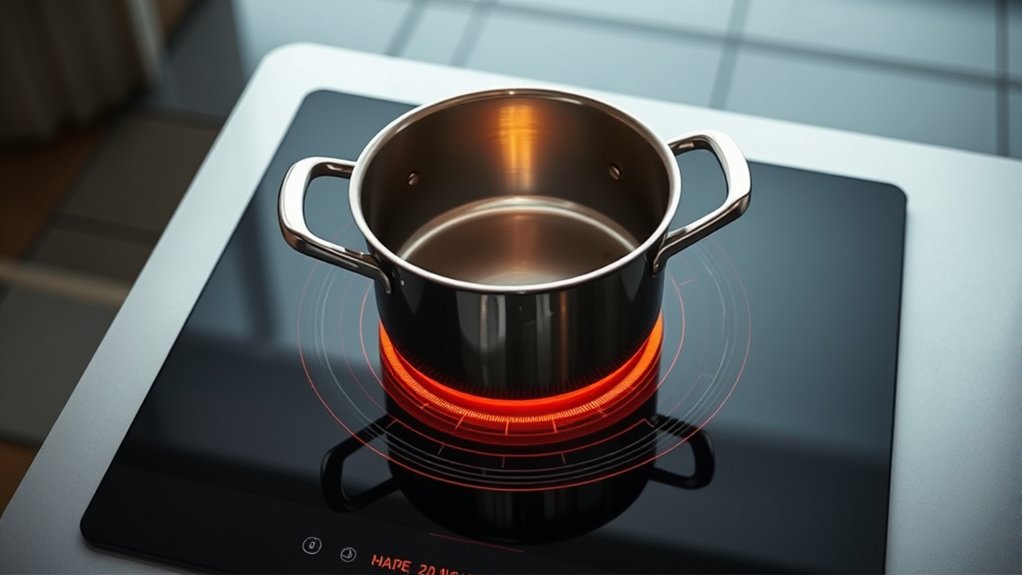
You’ll find that magnetism is key to how induction cooktops work. They create a magnetic field that interacts directly with your cookware. This interaction is what generates the heat needed to cook your food efficiently.
Magnetic Field Generation
Many induction cooktops rely on a rapidly changing magnetic field to generate heat directly in your cookware. This magnetic field is created by an electric coil beneath the cooktop surface. When you turn on the cooktop, an alternating current flows through the coil, producing a magnetic field that fluctuates quickly.
Here’s how it works:
- The alternating current causes the coil’s magnetic field to change direction rapidly.
- This changing field extends upward, reaching the cookware.
- The magnetic field induces electric currents in the metal of your cookware.
- These currents generate heat inside the cookware itself.
This process means the heat comes from within your pot or pan, not the cooktop surface, making induction cooking efficient and responsive.
Interaction With Cookware
Since the magnetic field generated by the induction cooktop interacts directly with your cookware, the type of metal you use plays a crucial role in how effectively heat is produced. Only ferromagnetic materials like cast iron or certain stainless steels respond well to the cooktop’s magnetic field. When you place compatible cookware on the surface, the magnetic field induces electric currents within the metal.
These currents generate heat through resistance, quickly warming your pan. If your cookware isn’t magnetic, the induction cooktop can’t induce these currents, so it won’t heat up effectively. That’s why you’ll notice some pans work perfectly while others don’t.
Using the right cookware ensures efficient energy transfer and faster cooking, making magnetism central to how induction cooktops get hot.
How Does Electricity Create Heat Inside Your Pan?
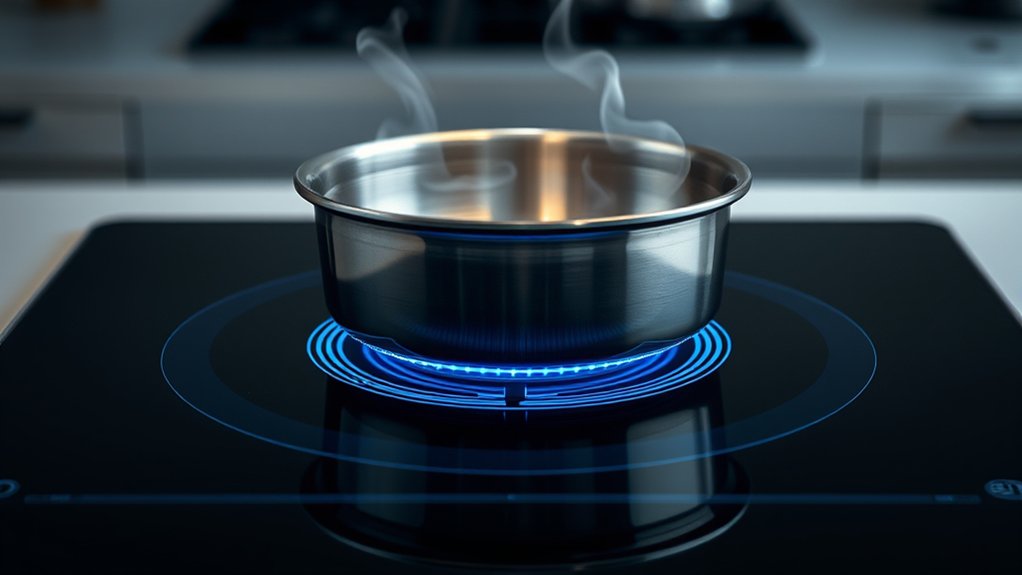
Although the induction cooktop itself doesn’t get hot, it generates an electromagnetic field that induces electric currents directly inside your pan. These currents, called eddy currents, flow through the metal, encountering resistance that produces heat. This process heats your food efficiently and quickly.
Here’s how electricity creates heat inside your pan:
- The electromagnetic field penetrates the metal base of your pan.
- Eddy currents start circulating within the conductive material.
- The pan’s electrical resistance converts these currents into heat.
- Heat spreads evenly across the pan’s surface, cooking your food.
This direct heating method minimizes energy loss and ensures your pan heats up faster than traditional cooktops. You’ll notice quicker cooking times and more precise temperature control.
What Types of Cookware Work Best on Induction Cooktops?
Understanding how an induction cooktop heats your pan helps explain why not all cookware works well with it. Since induction relies on magnetic fields to generate heat directly in the pan, your cookware must be magnetic. Cast iron and many types of stainless steel are your best bets—they heat quickly and evenly.
Avoid aluminum, copper, or glass pots unless they have a magnetic base layer, as they won’t respond to the cooktop’s magnetic field. To check if your pan will work, try sticking a magnet to the bottom; if it sticks firmly, your cookware is compatible.
Choosing the right cookware guarantees efficient heating and better cooking results when using an induction cooktop.
Can Induction Cooktops Work With All Metals?
You might wonder if all metals work with induction cooktops, but only those with magnetic properties heat up properly. Metals like cast iron and stainless steel are compatible, while aluminum and copper usually won’t work unless they have a magnetic layer.
Understanding this magnetic need helps you pick the right cookware for your induction stove.
Metals Compatible With Induction
Since induction cooktops rely on magnetic fields to generate heat, not all metals will work effectively with them. You need cookware made of ferromagnetic materials to get the best results.
Here are four common metals compatible with induction cooktops:
- Cast Iron – Excellent magnetic properties and retains heat well.
- Stainless Steel (magnetic grade) – Many types work, but check if it’s induction-compatible.
- Enamel-coated Steel – The steel base allows induction heating, while the enamel provides a smooth surface.
- Carbon Steel – Highly magnetic and heats quickly, ideal for stir-frying or searing.
If your cookware isn’t on this list, it might not work efficiently or at all on your induction cooktop. Always check compatibility before purchasing.
Why Some Metals Fail
Although induction cooktops offer fast, efficient heating, they don’t work with all metals because only those with magnetic properties can generate the necessary heat. When you try to use cookware made from metals like aluminum, copper, or glass, you’ll notice the cooktop won’t heat up properly. That’s because these metals lack the magnetic qualities needed to induce the electric currents that create heat.
You might find your pan stays cold or heats unevenly, frustrating your cooking efforts. Even some stainless steel pans can fail if their magnetic content is too low. So, if you want to avoid wasted time and energy, you need to choose your cookware carefully — not all metals will perform well on an induction cooktop.
Magnetic Properties Matter
Metals with magnetic properties respond directly to the induction cooktop’s electromagnetic field, allowing them to heat quickly and efficiently. Not all metals will work with induction because the cooktop relies on magnetism to generate heat. If a metal isn’t magnetic, the cooktop won’t heat it effectively.
Here’s what you should know:
- Ferrous metals like cast iron and stainless steel work best.
- Aluminum, copper, and glass won’t heat up unless they have a magnetic layer.
- You can test cookware with a magnet—if it sticks, it’s compatible.
- Some manufacturers add magnetic bases to non-magnetic pots to make them induction-friendly.
Understanding these magnetic properties helps you pick the right cookware and get the most from your induction cooktop.
Why Does the Induction Cooktop Surface Stay Cooler?
When you place a compatible pot on an induction cooktop, the cooktop itself doesn’t get as hot as traditional stoves because it relies on electromagnetic fields to heat the cookware directly. The surface only warms up slightly from the heat transferred back from the pot, not from direct heating. This means you won’t risk burning yourself on the cooktop as easily since it stays relatively cool.
The induction coil beneath the glass generates the magnetic field, but it doesn’t produce much heat on its own. Instead, the pot does the heavy lifting by converting the magnetic energy into heat. This efficient method keeps the cooktop surface safer and easier to clean because spills don’t bake onto a hot surface.
How Fast Do Induction Cooktops Heat Compared to Gas or Electric?
If you want to cook quickly, induction cooktops are a great choice because they heat up much faster than traditional gas or electric stoves. Here’s how they compare:
- Instant Heat: Induction cooktops heat your pots directly, so food starts cooking almost immediately.
- Faster Boiling: Water boils up to 50% faster on induction than on electric or gas.
- Precise Control: You can adjust the temperature quickly, similar to gas but with less delay.
- Quick Cooling: Once you turn off the induction cooktop, it cools down faster since the surface itself isn’t hot.
With these advantages, you save time and get better cooking control compared to gas or electric options.
What Energy Efficiency Benefits Do Induction Cooktops Offer?
Besides heating faster, induction cooktops also save energy by directing heat exactly where you need it—right into the cookware. Unlike traditional gas or electric stoves that waste heat by warming the cooktop surface or surrounding air, induction uses electromagnetic fields to generate heat directly in the pot or pan. This means less energy escapes, and your cooking is more efficient.
You’ll notice lower electricity bills because induction cooktops convert around 85-90% of their energy into cooking heat, compared to just 40-55% for gas and electric ranges. Plus, induction cools down quickly after you turn it off, preventing unnecessary energy use.
What Safety Features Make Induction Cooktops Safer?
Although induction cooktops use powerful electromagnetic fields to heat cookware, they’re designed with multiple safety features that protect you and your kitchen. These features not only prevent accidents but also give you peace of mind while cooking.
Here are four key safety features to look for:
- Auto Shut-Off: The cooktop turns off automatically if no pot is detected or if a pot is removed.
- Child Lock: Prevents accidental activation or changes in settings by locking the controls.
- Overheat Protection: Monitors temperature and shuts down if the cookware gets too hot.
- Residual Heat Indicators: Alerts you when the surface is still hot even after the cooking zone is turned off.
With these safeguards, your induction cooktop keeps cooking safe and stress-free.
How Does Induction Cooktop Design Affect Heating Performance?
You’ll notice that the size and placement of the induction coil directly impact how evenly and quickly your cookware heats. The materials used for the cooktop surface also play a key role in heat transfer and durability.
Understanding these design elements helps you choose a cooktop that matches your cooking style.
Coil Size And Placement
When you consider how an induction cooktop heats your cookware, the size and placement of the coil play a crucial role in its performance. The coil generates the magnetic field that induces heat in the pot or pan, so its design directly impacts efficiency and cooking speed.
Here’s how coil size and placement affect your cooking experience:
- Larger coils cover bigger cookware, ensuring even heating across the base.
- Smaller coils suit compact pots, preventing wasted energy on unused areas.
- Proper coil placement aligns with the cooking zone, maximizing magnetic field focus.
- Multi-coil arrangements allow flexible heating zones to match different cookware sizes.
Cooktop Surface Materials
Since the cooktop surface directly contacts your cookware, its material considerably influences heat transfer and durability. Most induction cooktops use glass-ceramic surfaces because they resist heat well and let the magnetic field pass through efficiently. You’ll find that the surface not only needs to withstand high temperatures but also resist scratches and stains to maintain performance over time.
Here’s a quick comparison of common cooktop surface materials:
| Material | Heat Transfer Efficiency | Durability |
|---|---|---|
| Glass-Ceramic | High | Scratch-resistant |
| Stainless Steel | Moderate | Very durable |
| Tempered Glass | Moderate | Less scratch-resistant |
Choosing a quality surface guarantees your cooktop heats evenly and lasts longer.
How Can You Choose the Best Induction Cooktop for Your Kitchen?
Although induction cooktops offer efficiency and safety, choosing the best one for your kitchen requires considering factors like size, power levels, and compatibility with your cookware.
Induction cooktops combine efficiency and safety, but choosing the right one means considering size, power, and cookware compatibility.
To make a smart choice, focus on these key points:
- Size and Burners: Pick a cooktop that fits your kitchen space and matches your cooking needs, whether you want two or more burners.
- Power Levels: Look for adjustable power settings for precise temperature control.
- Cookware Compatibility: Confirm your pots and pans have magnetic bases to work with induction.
- Features and Safety: Consider extras like touch controls, timers, and automatic shut-off for convenience and safety.
Frequently Asked Questions
How Do Induction Cooktops Impact Kitchen Ventilation Requirements?
Induction cooktops reduce kitchen ventilation needs since they produce less ambient heat and no combustion gases. You’ll still want good airflow, but you won’t need as powerful a vent hood compared to gas or traditional electric stoves.
This makes them a more efficient option in terms of kitchen ventilation. However, proper ventilation is still important to maintain air quality.
Can Induction Cooktops Interfere With Medical Devices Like Pacemakers?
Yes, induction cooktops can interfere with pacemakers due to their magnetic fields. If you have a pacemaker, you should consult your doctor before using one to confirm it’s safe and won’t cause any device malfunction.
Medical advice is important to ensure there are no risks. Your doctor can provide guidance tailored to your specific device. Always prioritize safety when using electronic appliances.
What Maintenance Is Needed to Keep Induction Cooktops Functioning Well?
Keeping your induction cooktop clean is like wiping fog off a mirror—wiping spills promptly and using a soft cloth prevents buildup.
You’ll want to avoid abrasive cleaners and check the surface regularly to keep it working smoothly.
Are Induction Cooktops Compatible With Smart Home Systems?
Yes, many induction cooktops are compatible with smart home systems. You can control them via apps or voice assistants, making cooking more convenient.
Just check the model’s features to guarantee it supports your smart setup.
How Noisy Are Induction Cooktops During Operation?
You’ll find induction cooktops pretty quiet, but they sometimes emit a low humming or buzzing sound, especially at high power.
This noise comes from the magnetic coils, but it’s usually subtle and won’t bother you much.
Conclusion
Induction cooktops heat your food quickly and efficiently by using magnetism to generate heat directly in your cookware. Did you know they can be up to 90% energy efficient, compared to just 40-55% for traditional electric or gas stoves? That means you save time and energy while cooking safely.
When choosing your induction cooktop, consider cookware compatibility and features to enjoy faster, safer, and more eco-friendly meals every day. Induction cooking offers precise temperature control and reduces the risk of burns. Embracing induction technology can transform your kitchen into a modern, energy-saving space.