How Do You Stack Charcoal in a Grill in 10 Essential Steps?
To stack charcoal in your grill effectively, start by choosing quality natural charcoal and thoroughly cleaning your grill. Proper stacking is essential for even heat distribution and better cooking results. Using a chimney starter is a reliable way to light the charcoal quickly and safely.
Begin by creating a stable base layer inside the grill. Build a pyramid shape to improve airflow, which helps the coals burn more efficiently. Arrange the coals to form both direct and indirect heat zones for versatile cooking options.
Add charcoal gradually to maintain a steady temperature throughout your grilling session. Adjust the vents to control oxygen flow, which influences how hot and fast the coals burn.
Knowing when the coals are ready ensures you cook your food perfectly every time.
Mastering these steps will make your grilling experience smoother and more enjoyable. You can discover more tips to enhance your charcoal stacking skills and achieve excellent results.
Key Takeaways
- Start by selecting dry, natural charcoal suited to your grill type for clean, efficient burning.
- Use a chimney starter with crumpled newspaper to light charcoal evenly and wait for white-gray ash.
- Arrange hot coals in a single, stable layer without gaps for uniform heat distribution.
- For two-zone cooking, pile coals on one side for direct heat and leave the other side for indirect heat.
- Gradually add charcoal every 20-30 minutes and adjust vents to control airflow and maintain steady temperature.
Choose the Right Charcoal for Your Grill
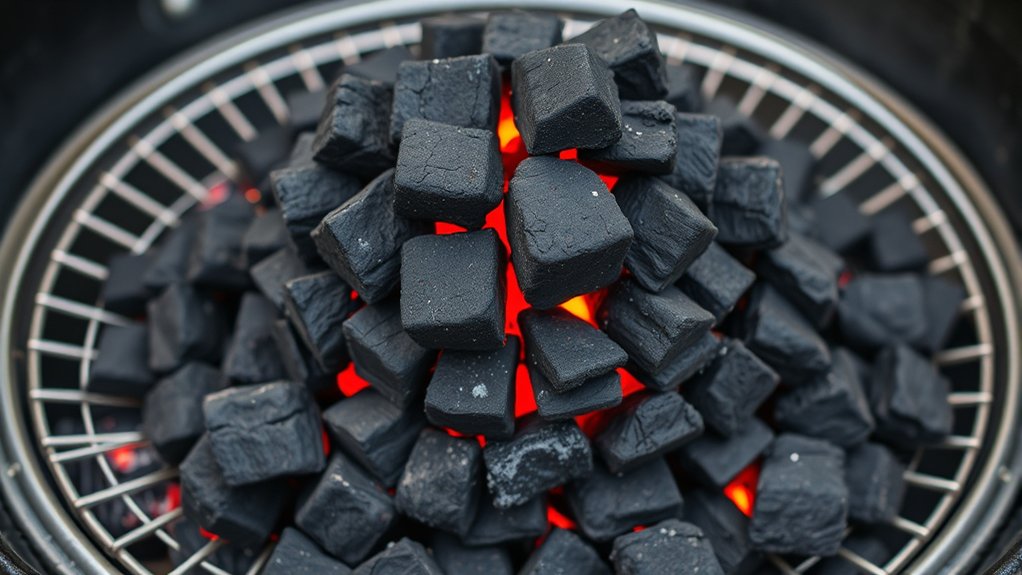
Before you start stacking charcoal, you need to pick the right type for your grill. You have two main options: briquettes and lump charcoal. Briquettes burn steadily and longer, making them ideal if you want consistent heat for slow cooking.
Lump charcoal lights faster and burns hotter, perfect for quick searing and high-heat grilling. Consider your grill type too—some grills perform better with one type over the other. Also, check for additives; natural charcoal without chemicals produces cleaner smoke and better flavor.
Avoid charcoal that’s damp or dusty, as it can be harder to light and produce more ash. By choosing the right charcoal, you set yourself up for a better grilling experience with easier stacking and controlled heat.
Prepare Your Grill for Safe Charcoal Stacking
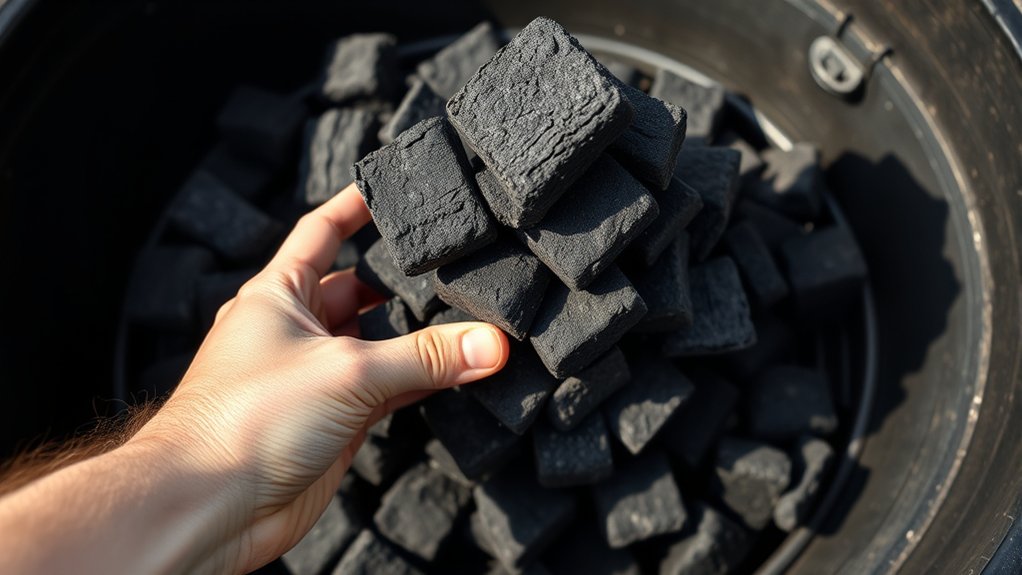
Before stacking your charcoal, make sure you clean your grill thoroughly to avoid flare-ups. Choose a safe, well-ventilated location to set up your grill. Don’t forget to gather all the necessary tools to make the process smooth and safe.
Clean Grill Thoroughly
Since a clean grill guarantees better heat distribution and prevents flare-ups, you’ll want to remove any old ash, grease, and food residue before stacking your charcoal. Start by letting your grill cool completely. Then, use a grill brush or scraper to clear off the grates.
Next, scoop out leftover ash from previous uses; too much ash can block airflow and affect burning. Wipe down the interior surfaces with a damp cloth or paper towel to remove grease buildup. If your grill has a removable drip pan, empty and clean it thoroughly.
Taking these steps guarantees your charcoal burns evenly and reduces the risk of dangerous flare-ups, giving you a safer, more efficient grilling session every time you light up.
Choose Safe Location
Although stacking charcoal is an important step, you need to start by choosing a safe location for your grill. Place your grill on a flat, stable surface away from any flammable materials like dry leaves, wooden decks, or overhanging branches. Make sure it’s at least 10 feet from your house or any structures to reduce fire risk.
Avoid windy spots that could blow sparks and cause accidents. Position your grill where you have enough space to move around safely while handling hot coals. Keep children and pets at a safe distance.
Gather Necessary Tools
To stack charcoal safely and efficiently, you’ll need a few essential tools on hand. First, grab a pair of heat-resistant gloves to protect your hands from burns while handling hot or sharp materials. Next, use a long-handled charcoal chimney starter to light the coals evenly without risking burns.
Have a metal charcoal rake or tongs ready to arrange the charcoal precisely inside the grill. A sturdy, fireproof surface nearby is also helpful for staging charcoal bags and tools. Don’t forget a bucket of water or a fire extinguisher close by for safety.
Finally, confirm you have a reliable lighter or matches to ignite the charcoal. Having these tools ready will make stacking your charcoal quicker, safer, and more efficient.
Set Up a Charcoal Chimney to Light Charcoal Easily
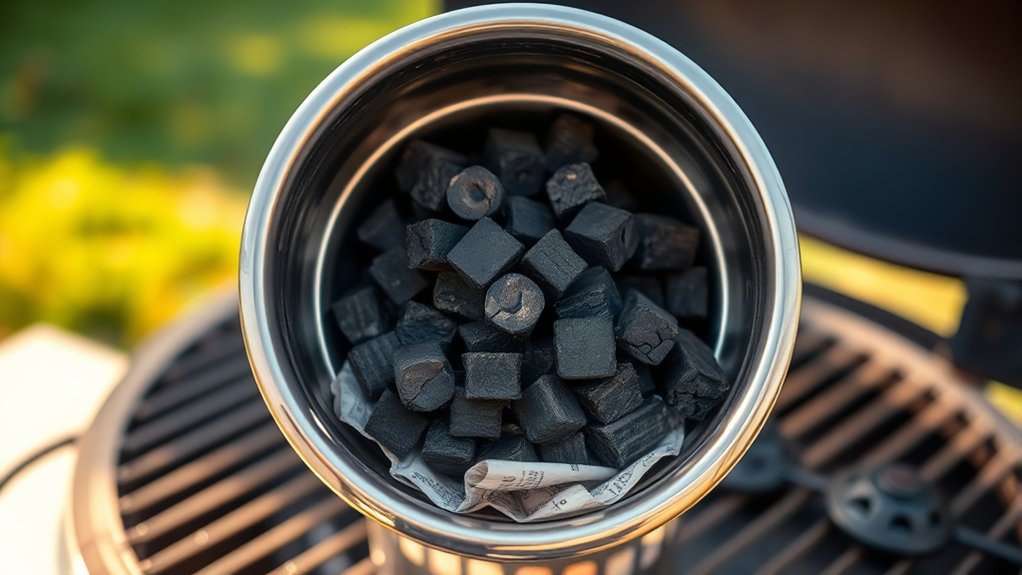
Wondering how to get your charcoal burning quickly and evenly? Setting up a charcoal chimney is your best bet. First, fill the top section of the chimney with the amount of charcoal you need.
Next, place a couple of crumpled newspaper sheets or a fire starter under the bottom grate of the chimney. Light the newspaper or fire starter, and let the flames rise to ignite the charcoal above. The chimney’s design allows air to flow freely, helping the coals heat evenly and faster than lighting them directly in the grill.
Once the coals are covered with a light gray ash, carefully pour them into your grill. Using a charcoal chimney makes lighting easier, safer, and guarantees your coals are ready to cook with consistent heat.
Create a Stable Base Layer for Even Heat
Once your coals are ready, you’ll want to arrange them in a stable base layer to guarantee even heat distribution. Start by spreading the hot coals in an even, single layer across the bottom of your grill’s charcoal grate. Make sure the coals touch each other closely but avoid gaps that could cause uneven heating.
This stable foundation prevents hot spots and ensures your food cooks uniformly. Use tongs to carefully move the coals, creating a solid bed without piling them too high. A consistent base layer will maintain steady heat for grilling and make it easier to manage temperature.
Avoid stacking coals loosely or unevenly, as this can lead to unpredictable flames and inconsistent cooking results.
Build a Charcoal Pyramid to Improve Airflow
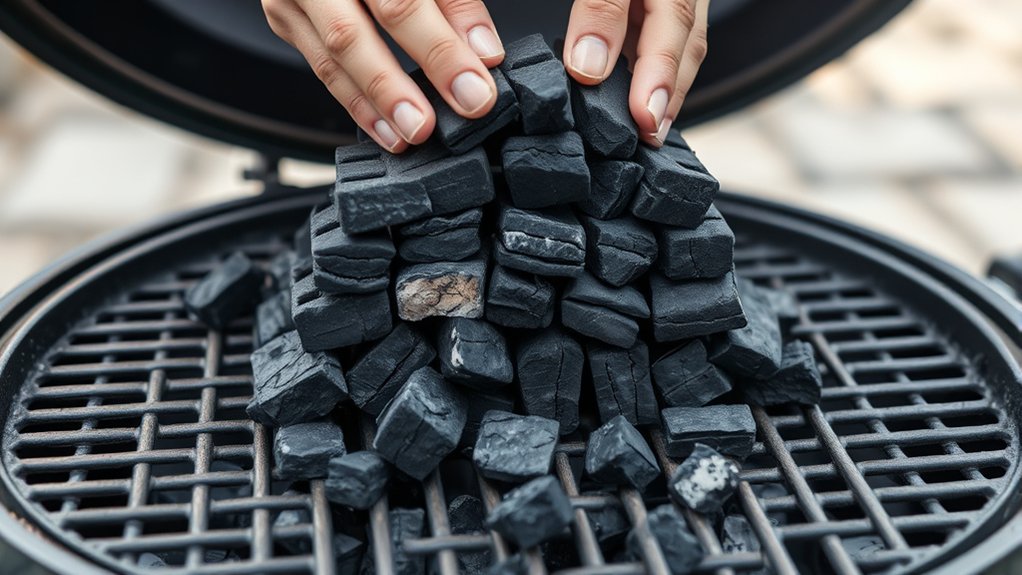
To get the best airflow, stack your charcoal in a pyramid shape that lets air flow freely between the coals. This arrangement helps the fire burn hotter and more evenly.
You’ll want to position the coals carefully to keep the structure stable while maximizing oxygen circulation.
Pyramid Shape Benefits
Although it might seem simple, stacking your charcoal in a pyramid shape considerably improves airflow, which helps the coals ignite faster and burn more evenly. When you pile charcoal this way, you create natural gaps that allow oxygen to circulate freely. This steady oxygen flow fuels combustion, making it easier to get your fire going without struggling with smothered coals.
The pyramid also concentrates the heat toward the center, so your coals reach ideal cooking temperature quicker. Plus, as the fire burns down, the structure maintains stability, preventing the pile from collapsing and disrupting the burn. By using this stacking method, you’ll spend less time waiting and more time grilling, ensuring your fire stays consistent throughout your cook.
Enhancing Air Circulation
When you build a charcoal pyramid, you actively boost airflow around the coals, which is essential for keeping your fire alive and strong. The pyramid’s shape creates gaps between the charcoal pieces, allowing oxygen to circulate freely. This airflow feeds the flames, helping the coals ignite faster and burn hotter.
If the coals are stacked too tightly, air can’t move well, causing the fire to smolder and produce more smoke. By arranging the coals in a pyramid, you prevent this by maximizing space for air to flow. You’ll notice your grill heats more evenly and maintains a steady temperature longer.
Optimal Charcoal Arrangement
Building your charcoal in a pyramid shape maximizes airflow, which is essential for a strong, consistent fire. Start by placing a small pile of charcoal in the center of your grill, then gradually add more pieces around and on top, forming a cone or pyramid. This arrangement allows oxygen to circulate freely between the coals, helping them ignite evenly and burn hotter.
Avoid spreading the charcoal flat across the grill, as this restricts airflow and causes uneven heating. Once the pyramid is lit and the coals begin to ash over, you can spread them out for cooking. By stacking your charcoal this way, you’ll get a reliable, well-distributed heat source that makes grilling easier and more efficient every time.
Light Charcoal Top-Down for Consistent Heat
If you want your grill to maintain steady heat throughout cooking, lighting charcoal from the top down is the way to go. This method ignites the top layer first, allowing the fire to burn downward gradually. It produces less smoke, reduces flare-ups, and gives you consistent heat for longer cooking sessions.
You’ll appreciate how this technique keeps your food perfectly cooked without constant adjustments.
Here’s a quick look at what you’ll experience:
| Benefit | Feeling It Evokes |
|---|---|
| Steady heat | Confidence |
| Less smoke | Comfort |
| Fewer flare-ups | Control |
| Longer burn time | Satisfaction |
| Even cooking | Pride |
Light the charcoal top-down, and enjoy a smoother grilling experience every time.
Arrange Charcoal for Direct and Indirect Zones
To cook your food evenly, you’ll want to create both direct and indirect heat zones in your grill. Place the charcoal directly under the cooking area for direct heat, perfect for searing.
Then, arrange charcoal off to one side or around the edges to set up an indirect heat zone for slower cooking.
Direct Heat Placement
When you arrange charcoal for direct heat, you create a hot zone where food cooks quickly and a cooler area for slower cooking or keeping items warm. To set this up, pile the lit charcoal evenly on one side of your grill, forming a dense, glowing bed of coals. This concentrated heat is perfect for searing steaks, burgers, or vegetables.
Leave the opposite side empty or with fewer coals to provide a cooler spot. Make sure the coals are spread in a single layer for consistent heat. Use long-handled tongs to move or add charcoal safely.
This direct heat placement gives you control over cooking intensity and lets you easily switch between fast searing and gentler cooking without adjusting the fire.
Indirect Heat Setup
Although indirect heat takes a bit more planning than direct heat, it gives you greater control for cooking larger or tougher cuts evenly without burning. To set up indirect heat, arrange your charcoal on one side of the grill, leaving the other side empty. This creates two zones: direct heat for searing and indirect heat for slow cooking.
Place your food over the empty side to cook it gently.
| Step | Charcoal Arrangement | Purpose |
|---|---|---|
| 1 | Pile charcoal on one side | Creates direct heat |
| 2 | Leave opposite side empty | Indirect cooking zone |
| 3 | Light charcoal thoroughly | Ensures even heat |
| 4 | Place drip pan if needed | Catches drippings |
| 5 | Monitor temperature zones | Maintain consistent heat |
Add Charcoal Gradually to Maintain Heat
As you cook, adding charcoal gradually helps you keep a steady heat without sudden temperature spikes. Instead of dumping all your charcoal in at once, add small amounts every 20-30 minutes. This approach maintains consistent heat for longer cooking sessions.
Use tongs or a charcoal chimney to safely place fresh briquettes near the existing hot coals, allowing them to ignite slowly. Avoid piling new charcoal directly on the food side if you’re using an indirect heat setup; instead, add it to the fire side for controlled warmth.
Adjust Air Vents to Control Your Fire
Because airflow directly influences your grill’s temperature, adjusting the air vents is one of the most effective ways to control your fire. When you open the vents more, you let in extra oxygen, which makes the charcoal burn hotter and faster. Closing the vents restricts oxygen flow, cooling the fire and extending the burn time.
Start by opening the bottom vents to feed oxygen to the coals and adjust the top vents to control smoke and heat release. Remember, small changes can have a big impact, so adjust gradually and monitor the temperature closely. Proper vent management lets you maintain consistent heat, ensuring your food cooks evenly without burning or undercooking.
Mastering this gives you better control over your grilling experience.
Know When Charcoal Is Ready to Start Cooking
Adjusting your grill’s air vents helps you manage the fire, but knowing when your charcoal is ready to cook is just as important. You’ll know the charcoal is ready when it’s covered with a layer of white-gray ash. This usually takes about 15 to 20 minutes after lighting.
Avoid cooking too soon, as unburned charcoal produces excess smoke and uneven heat. Once the coals glow red beneath the ash, spread them evenly to create a consistent cooking surface. You can test the heat by holding your hand about five inches above the grill grate—if you can keep it there for 2 to 4 seconds, the temperature is high enough for searing.
Waiting for the right moment guarantees your food cooks perfectly every time.
Frequently Asked Questions
How Long Does Charcoal Typically Last During a Grilling Session?
Charcoal typically lasts about 45 minutes to an hour during grilling, but it depends on the amount you use and airflow.
You’ll want to monitor it closely and add more charcoal if your session runs longer.
Can I Reuse Leftover Charcoal From a Previous Cook?
You can breathe new life into leftover charcoal, like rekindling a fading flame. Just make sure it’s fully cooled and free of ash, then add fresh briquettes to revive the fire and keep your grill sizzling strong.
What Safety Precautions Should I Take When Disposing of Used Charcoal?
You should make sure the charcoal is completely cooled before handling. Avoid water on hot coals to prevent steam burns. Dispose of ashes in a metal container, and keep it away from flammable materials until fully cold.
How Does Weather Affect Charcoal Grilling Performance?
Like a knight battling a storm, you’ll find rain and wind can cool charcoal, slowing heating and increasing cooking time. Cold weather demands more fuel, while humid air may affect your fire’s intensity and flavor.
What Are the Best Tools for Handling Hot Charcoal Safely?
You’ll want long, heat-resistant tongs, sturdy gloves, and a metal scoop to handle hot charcoal safely. Also, a chimney starter helps avoid lighter fluid. Always keep a fire extinguisher nearby, just in case.
Conclusion
Stacking charcoal properly can boost your grilling game, and here’s a fun fact: about 70% of backyard grillers struggle with uneven heat. By following these steps, you’ll create a steady, controlled fire that cooks your food perfectly every time.
Remember, mastering charcoal stacking isn’t just about heat—it’s about airflow and timing. So get your charcoal right, adjust those vents, and enjoy grilling like a pro!
Proper charcoal stacking is essential for even heat distribution and maintaining consistent airflow. With the right technique, your grill will perform at its best, making every cookout a success. Keep these tips in mind to elevate your grilling skills and achieve perfect results every time.