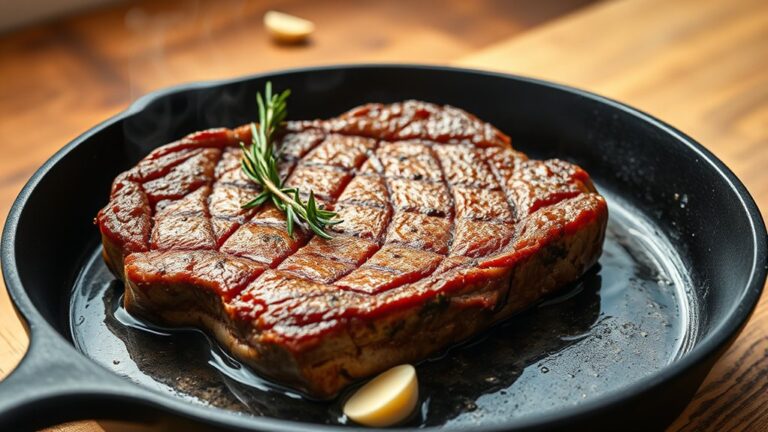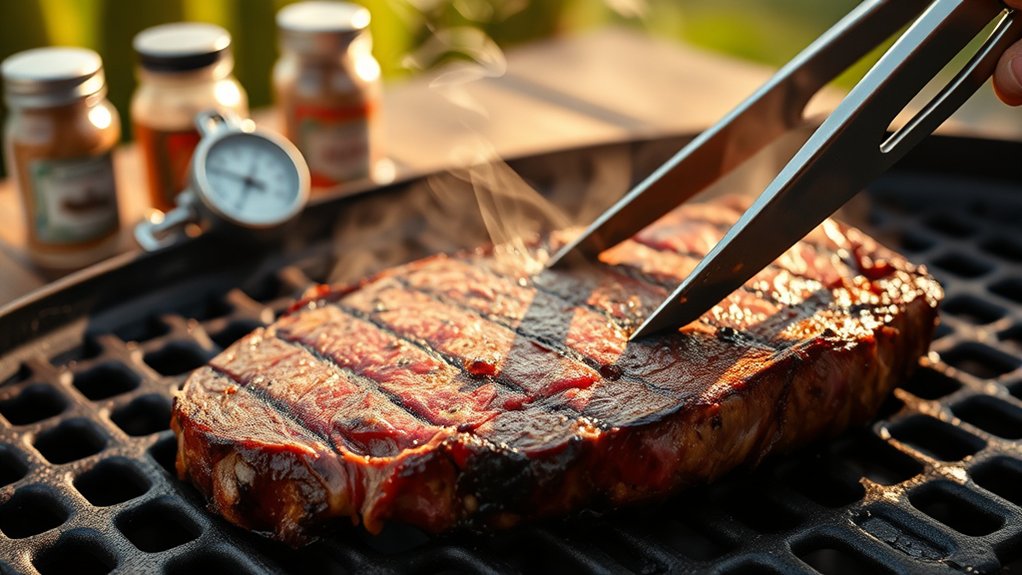
How Long to Grill Thick Ribeye Steak Step by Step
You’ll want to grill your thick ribeye steak, typically 1.5-2 inches thick, for the perfect balance of flavor and texture. Knowing how long to grill a thick ribeye steak is key to achieving your desired doneness, whether rare, medium-rare, or well-done.
Proper preparation and timing can make all the difference in creating a juicy, flavorful steak.
Grill your steak about 4-5 minutes per side for rare, 6-7 minutes for medium-rare, and up to 8-9 minutes for well-done.
Start by bringing the steak to room temperature, seasoning it well, and preheating your grill to high heat for a good sear.
Flip just once and use a thermometer to check doneness.
Rest the steak after grilling to keep it juicy.
Keep going for tips on perfect char and avoiding common pitfalls.
With these steps, you’ll master grilling thick ribeye steak every time.
Key Takeaways
- Preheat grill to high (450-500°F) for 10-15 minutes to ensure proper searing of a thick ribeye steak.
- Grill the 1.5 to 2-inch thick ribeye for 4-5 minutes per side for rare, up to 8-9 minutes per side for well-done.
- Flip the steak only once using tongs to maintain juices and develop an even crust.
- Use an instant-read thermometer to check internal temperature for desired doneness (e.g., 130°F for medium-rare).
- Rest the steak for 5 minutes after grilling to seal in juices and enhance tenderness before serving.
Choosing the Right Thickness for Thick Ribeye Steak
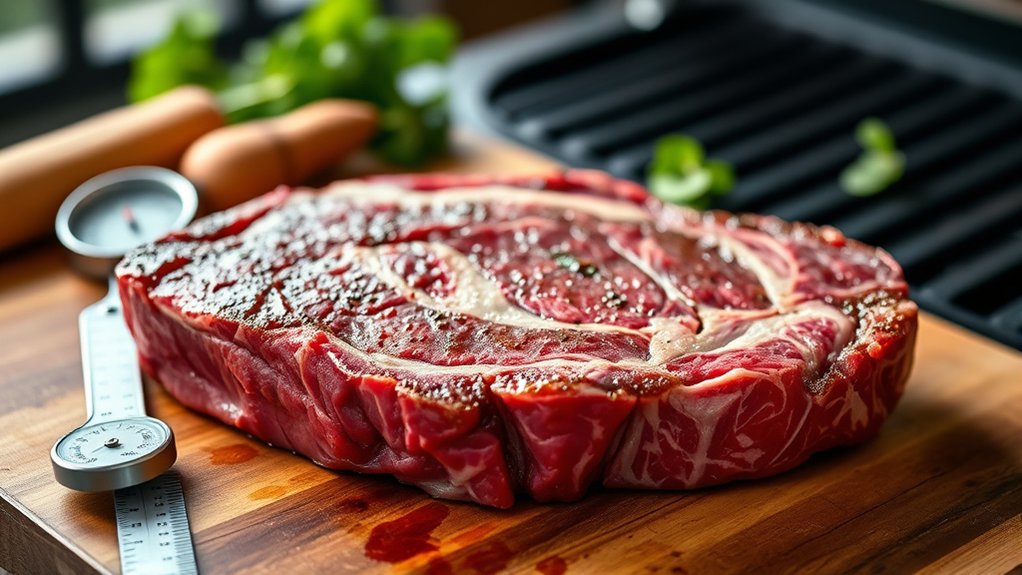
When you’re grilling a ribeye steak, choosing the right thickness is essential because it directly affects cooking time and flavor. You want a thick cut, usually between 1.5 to 2 inches, to guarantee the steak stays juicy and develops a perfect crust without overcooking inside. Thinner steaks cook too fast and risk drying out, while very thick cuts can be tricky to grill evenly.
Preparing Your Thick Ribeye Steak for the Grill
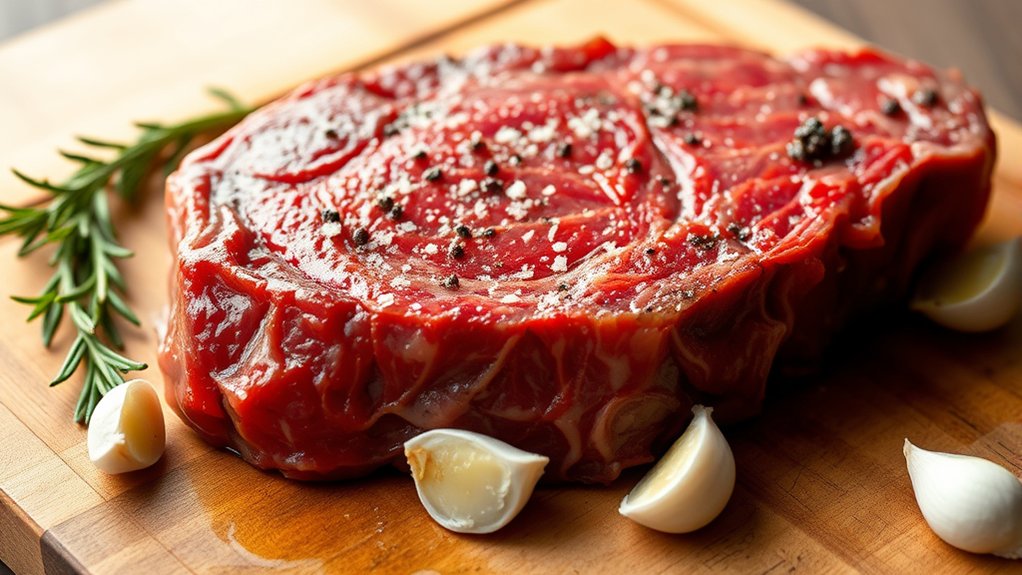
Selecting the right thickness for your ribeye sets you up for success, but proper preparation before grilling guarantees the deal. Begin by removing the steak from the refrigerator about 30 to 60 minutes before grilling. This allows it to reach room temperature, ensuring even cooking.
Pat the steak dry with paper towels to remove excess moisture, which helps create a better sear. Next, season generously with kosher salt and freshly ground black pepper. You can also add garlic powder or your favorite dry rub for extra flavor.
Let the seasoning rest on the steak while it warms up. Avoid overcrowding the surface to guarantee each bite is flavorful. Proper prep maximizes flavor and texture, setting the stage for a perfectly grilled thick ribeye.
Essential Equipment for Grilling Thick Ribeye Steak
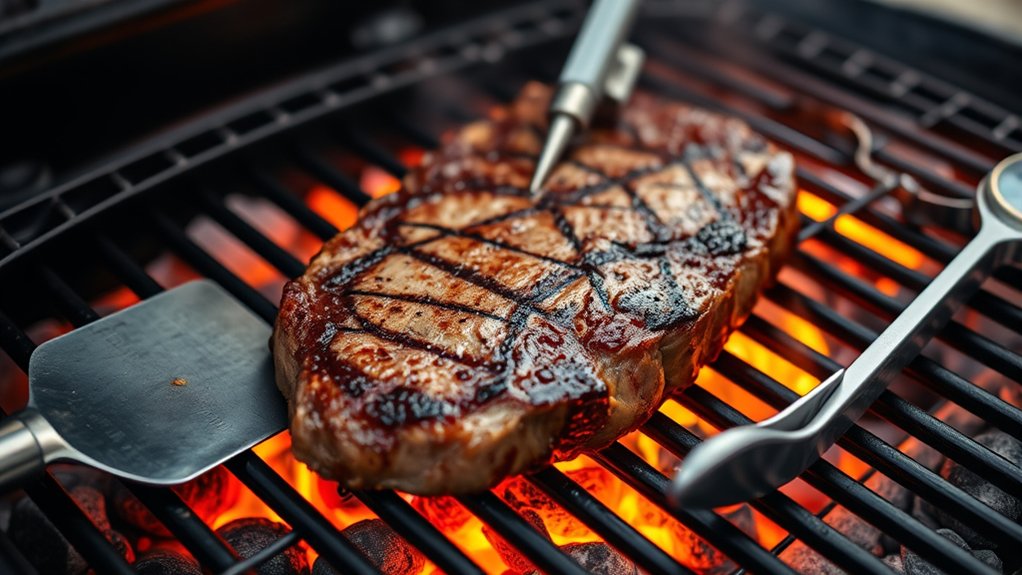
To grill a thick ribeye steak perfectly, you’ll need the right tools at your side. Essential grill tools like tongs and a spatula make handling easier, while a reliable cooking thermometer helps you hit the ideal doneness.
Let’s look at what gear will keep your steak juicy and flavorful.
Must-Have Grill Tools
Grilling a thick ribeye steak demands the right tools to guarantee even cooking and a perfect sear. First, get a sturdy grill grate that holds heat well and leaves those classic grill marks. Use long-handled tongs to flip the steak without piercing the meat, preserving its juices.
A grill brush is essential for cleaning the grates before and after cooking, preventing sticking and flare-ups. Don’t forget heat-resistant gloves to protect your hands when handling hot grill parts or adjusting vents. A reliable chimney starter will help you light charcoal evenly if you’re using a charcoal grill.
Finally, have a drip pan handy to catch drippings and avoid flare-ups that can char your ribeye. These tools help you grill confidently and get the best results.
Recommended Cooking Thermometers
Having the right tools in hand makes grilling a thick ribeye much smoother, but knowing exactly when your steak hits the perfect temperature takes the guesswork out of cooking. A reliable cooking thermometer ensures your ribeye is juicy and cooked to your preferred doneness.
Here are some recommended thermometers to contemplate:
- Instant-read digital thermometer: Quick and accurate temperature readings.
- Probe thermometer with alarm: Monitors temperature without opening the grill.
- Infrared thermometer: Measures surface temperature instantly.
- Leave-in meat thermometer: Stays in the steak while grilling for continuous monitoring.
- Wireless Bluetooth thermometer: Tracks temperature remotely via smartphone.
Using any of these tools helps you avoid overcooking or undercooking, delivering a perfectly grilled ribeye every time.
Preheating Your Grill for Perfect Ribeye Results
Although it might seem simple, preheating your grill is a crucial step that sets the stage for a perfectly cooked ribeye. When you preheat, you guarantee the grates reach the ideal high temperature needed to sear the steak, locking in juices and flavor. Turn your grill to high and close the lid, letting it heat for about 10-15 minutes.
This also helps burn off any residue from previous cooking, preventing sticking and off-flavors. Use a grill thermometer to check for a consistent temperature around 450-500°F (232-260°C). Avoid placing your ribeye on a cold grill; it won’t sear properly and can result in uneven cooking.
Taking the time to preheat assures a delicious, evenly cooked steak every time.
Grilling Times for Thick Ribeye Steak by Doneness
Once your grill is properly heated, you’ll want to focus on cooking times that match your preferred level of doneness. Thick ribeye steaks, about 1.5 to 2 inches thick, need specific grilling durations to achieve the perfect finish.
Here’s a quick guide for grilling times per side:
- Rare: 4-5 minutes
- Medium-rare: 5-6 minutes
- Medium: 6-7 minutes
- Medium-well: 7-8 minutes
- Well-done: 8-9 minutes
Remember to flip your steak only once for even cooking. Adjust these times slightly based on your grill’s heat and steak thickness. Following these times will help you get that juicy, flavorful ribeye just how you like it.
Using a Meat Thermometer to Check Ribeye Doneness
To get your ribeye cooked just right, you’ll want to use a meat thermometer to check the internal temperature. Knowing the ideal temperature ranges for rare, medium, and well-done helps you avoid guesswork.
Insert the thermometer into the thickest part of the steak to get an accurate reading every time.
Ideal Temperature Ranges
When grilling a ribeye, you’ll want to rely on a meat thermometer to hit the perfect doneness every time. Knowing the ideal internal temperature ranges helps you cook your steak exactly how you like it. Here are the key temperature targets to remember:
- Rare: 120–125°F (49–52°C) – cool red center
- Medium-rare: 130–135°F (54–57°C) – warm red center
- Medium: 140–145°F (60–63°C) – pink and firm
- Medium-well: 150–155°F (65–68°C) – slightly pink inside
- Well-done: 160°F+ (71°C+) – no pink, fully cooked
Checking these ranges ensures your ribeye turns out juicy and tender every time. Keep your thermometer handy, and trust the numbers over guesswork.
How To Use Thermometer
Knowing the ideal temperature ranges is just the start—you’ll need to use your meat thermometer correctly to get accurate readings. Insert the probe into the thickest part of the ribeye, avoiding bone or fat, since these can give false temperatures. Hold the thermometer steady until the reading stabilizes, usually within a few seconds.
For digital thermometers, wait for the beep indicating the final temperature. Don’t check the temperature multiple times in the same spot, as it can create false readings. Always clean your thermometer before and after use to maintain hygiene.
Using your thermometer this way guarantees you hit the perfect doneness every time, helping you avoid overcooking or undercooking your thick ribeye steak.
Checking Doneness Accuracy
Although you’ve properly inserted your thermometer, you still need to interpret its reading correctly to guarantee your ribeye reaches the desired doneness. Here’s how to check doneness accuracy effectively:
- Aim for these internal temperatures: 125°F for rare, 135°F for medium-rare, 145°F for medium, 150°F for medium-well, and 160°F for well-done.
- Insert the thermometer into the thickest part, avoiding bone or fat, for the most accurate reading.
- Let the steak rest after grilling; its temperature will rise 3-5°F during this time.
- Use an instant-read thermometer for quick and precise results.
- Double-check by taking multiple readings in different spots to ensure even cooking.
Resting Your Thick Ribeye Steak for Maximum Juiciness
Because a thick ribeye continues to cook after you pull it from the grill, you’ll want to let it rest before slicing. Resting allows the juices to redistribute, making every bite juicy and tender instead of dry. Simply tent the steak loosely with foil and wait 5 to 10 minutes.
Here’s a quick guide to resting times based on steak thickness:
| Thickness | Resting Time |
|---|---|
| 1 inch | 5 minutes |
| 1.5 to 2 inches | 7 to 10 minutes |
| Over 2 inches | 10 to 15 minutes |
Don’t skip this step! Resting seals in flavor and improves texture, giving you a perfectly juicy ribeye every time.
Adding Flavor: Marinades, Rubs, and Sauces for Ribeye
You can boost your ribeye’s flavor by using marinades with ingredients like garlic, soy sauce, and fresh herbs. If you prefer a dry approach, popular rubs often combine salt, pepper, paprika, and brown sugar for a tasty crust.
Experiment with these to find the perfect match for your grilling style.
Best Marinade Ingredients
When you want to elevate your ribeye steak, choosing the right marinade ingredients can make all the difference. A good marinade tenderizes the meat and infuses it with bold flavors. Focus on balancing acidity, sweetness, and aromatics to complement the steak’s rich taste.
Here are some of the best ingredients to include:
- Soy sauce for a salty, umami kick
- Olive oil to keep the steak juicy
- Garlic for pungent, savory notes
- Worcestershire sauce adds depth and complexity
- Fresh herbs like rosemary or thyme for an earthy aroma
Mix these ingredients well and let your ribeye soak for at least 30 minutes to enhance its flavor before grilling.
Popular Ribeye Rubs
Marinades add great flavor to ribeye, but rubs offer a different way to season your steak with bold, concentrated spices. When you use a rub, you create a flavorful crust that enhances the steak’s natural taste. Popular rubs usually combine salt, black pepper, garlic powder, and smoked paprika for a smoky, savory punch.
You can also add brown sugar for a subtle sweetness and a caramelized finish. For a spicy kick, include cayenne pepper or chili powder. When applying, pat your ribeye dry, then generously coat it with the rub.
Let it rest for at least 30 minutes before grilling to allow the flavors to penetrate. Using a rub is quick, easy, and delivers mouthwatering results every time.
Common Mistakes When Grilling Thick Ribeye Steak
Although grilling a thick ribeye steak can yield delicious results, many people make avoidable mistakes that ruin the flavor and texture. To get it right, avoid these common pitfalls:
Grilling a thick ribeye can be perfect if you avoid common mistakes that spoil flavor and texture.
- Skipping the Resting Period: Cutting too soon lets juices escape, leaving your steak dry.
- Grilling Straight from the Fridge: Cold meat cooks unevenly; let it reach room temperature first.
- Using Only High Heat: Intense heat can char the outside while leaving the inside undercooked.
- Flipping Too Often: Constant flipping prevents a proper crust from forming.
- Not Cleaning the Grill Grates: Residue causes sticking and uneven searing.
Tips to Keep Your Thick Ribeye Juicy and Tender
Mastering how you handle your ribeye during and after grilling makes all the difference in keeping it juicy and tender. First, always let your steak rest for at least 5-10 minutes after grilling. This allows the juices to redistribute instead of spilling out when you cut it.
Avoid cutting into the steak immediately. Second, season your ribeye generously with salt at least 40 minutes before grilling or right before placing it on the grill—this helps retain moisture. Third, use a meat thermometer to avoid overcooking; aim for medium-rare or medium for *ideal* tenderness.
*Finally*, avoid pressing down on the steak with your spatula as it cooks—this squeezes out precious juices. Follow these tips, and your ribeye will stay succulent every time.
How to Achieve a Perfect Char on Your Ribeye Steak
When you grill your ribeye at a high temperature, you create the perfect conditions for a flavorful char. To get that ideal crust, focus on these key steps:
- Preheat your grill until it’s scorching hot, around 450-500°F.
- Pat your steak dry to remove excess moisture, which inhibits searing.
- Season generously with salt and pepper to enhance the crust.
- Place the steak on the hottest part of the grill and don’t move it for 3-4 minutes to develop a good sear.
- Use tongs to flip and sear the other side, avoiding piercing the meat.
Following these tips will give you a deeply caramelized, crispy exterior that locks in flavor and juices.
Troubleshooting: Fixing Common Grilling Issues With Ribeye
Getting that perfect char on your ribeye is a great start, but grilling can still come with challenges that affect the final taste and texture. If your steak ends up dry, it’s likely overcooked—lower your grill’s heat and use a meat thermometer to check doneness early. For uneven cooking, make sure your grill grates are clean and preheated evenly.
If flare-ups cause burnt spots, move the steak to a cooler part of the grill and trim excess fat next time. Sometimes, the steak sticks to the grill; prevent this by oiling the grates and letting the steak sear undisturbed for a few minutes before flipping. By addressing these common issues, you’ll consistently grill ribeyes that are juicy, tender, and full of flavor.
Frequently Asked Questions
Can I Grill Thick Ribeye Steak on an Electric Grill?
Yes, you can grill thick ribeye steak on an electric grill. Just preheat it well, season your steak, and cook each side 6-8 minutes for medium-rare.
Use a meat thermometer to check doneness accurately.
What Side Dishes Pair Best With Grilled Ribeye Steak?
You’ll love pairing grilled ribeye with garlic mashed potatoes, grilled asparagus, or a fresh Caesar salad. Roasted vegetables or a tangy chimichurri sauce also complement the steak’s rich, smoky flavors perfectly.
These sides balance the hearty taste of the steak and add a variety of textures and flavors to your meal. Consider adding a baked sweet potato or sautéed mushrooms for extra indulgence.
Fresh herbs like rosemary or thyme can elevate the dish even further, enhancing the steak’s natural aroma. Choose sides that bring brightness and freshness to the plate for the best experience.
How Do I Store Leftover Grilled Ribeye Steak Safely?
Don’t wait—cool your leftover ribeye within two hours, then wrap it tightly in foil or plastic wrap.
Store it in the fridge at 40°F or below to keep it safe and delicious for up to four days.
Is It Better to Use Charcoal or Gas for Grilling Ribeye?
You’ll get richer flavor using charcoal, while gas offers more control and convenience. If you want smoky taste, choose charcoal; if you prefer ease and quick start, gas is better.
Both grill ribeye well.
Can I Grill Ribeye Steak Frozen, or Should It Be Thawed?
You should thaw ribeye steak before grilling for even cooking and better flavor. Grilling frozen steak can lead to uneven doneness and charred outside while the inside stays undercooked.
Pat it dry before grilling.
Conclusion
Grilling a thick ribeye steak takes patience and attention, but as they say, “good things come to those who wait.” By choosing the right thickness, prepping properly, and monitoring your grill times, you’ll lock in juicy, tender flavor every time.
Avoid common mistakes, keep your heat steady, and don’t rush the char. Follow these steps, and you’ll enjoy a perfectly grilled ribeye that’s worth every minute on the grill.
With the right technique and timing, knowing how long to grill thick ribeye steak ensures a delicious outcome. Master these steps to achieve mouthwatering results every time you fire up the grill.