How Would You Want to Use a Lead Frying Pan for Cooking Safely?
To use a lead frying pan safely, it’s important to understand the risks associated with lead exposure and take specific precautions when cooking.
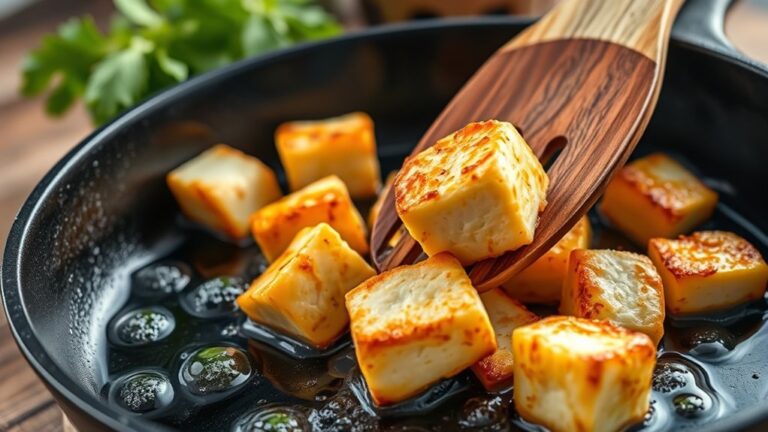
Lead frying pans should be used only for cooking non-acidic foods like eggs or potatoes, as acidic ingredients can increase lead leaching. Maintaining cooking temperatures below 300°F helps minimize the release of lead into your food and reduces health hazards.
Avoid long cooking times to further decrease the chance of lead contamination. Always inspect the pan for any damage or wear before use, since cracks or corrosion can increase lead exposure.
Clean the pan gently using mild soap and avoid harsh scrubbers that may damage the surface. After washing, dry the pan thoroughly to prevent corrosion.
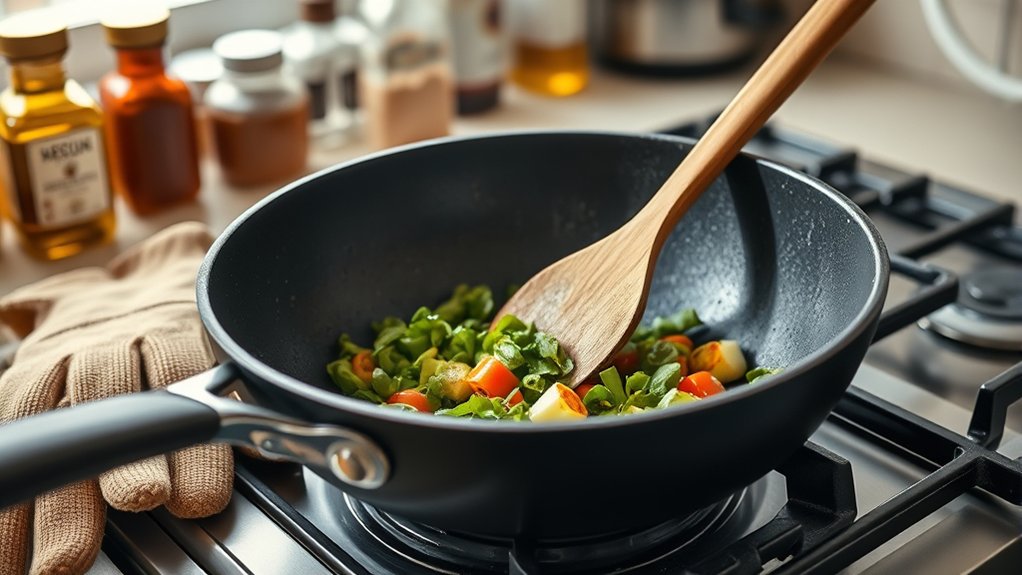
Store the lead frying pan separately from other cookware to avoid cross-contamination. Wearing gloves while handling the pan provides an extra layer of safety.
Following these guidelines can help reduce risks and promote safer cooking with lead cookware.
Key Takeaways
- Avoid cooking acidic foods like tomatoes or citrus in lead pans to minimize lead leaching into food.
- Keep cooking temperatures below 300°F (150°C) and preheat the pan slowly without heating it empty.
- Use the pan for short cooking times and avoid boiling or prolonged simmering to reduce lead exposure.
- Inspect the pan before use for cracks, chips, or damage, and clean it gently with mild soap and soft sponges.
- Wear protective gloves and work in ventilated areas when handling or cleaning the pan to prevent lead contamination.
Risks of Cooking With Lead Frying Pans
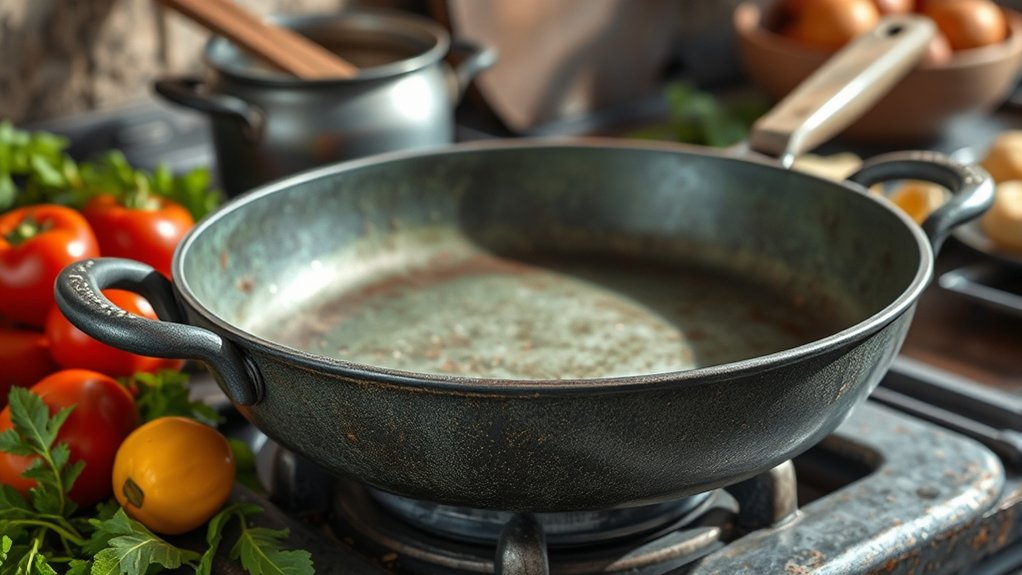
Although lead frying pans might seem unique or traditional, they pose serious health risks when used for cooking. You might not realize how dangerous lead exposure can be, especially since lead can accumulate in your body over time. When you use a lead pan, harmful lead particles can contaminate your food, increasing the risk of lead poisoning.
This can affect your nervous system, cause digestive issues, and even impact your cognitive abilities. You should also consider the risk to children and pregnant women, as lead exposure can cause developmental problems. Even occasional use can be risky, so it’s essential to understand these dangers before cooking with lead pans.
Protecting your health means weighing the risks carefully.
How Lead Exposure Occurs When Cooking
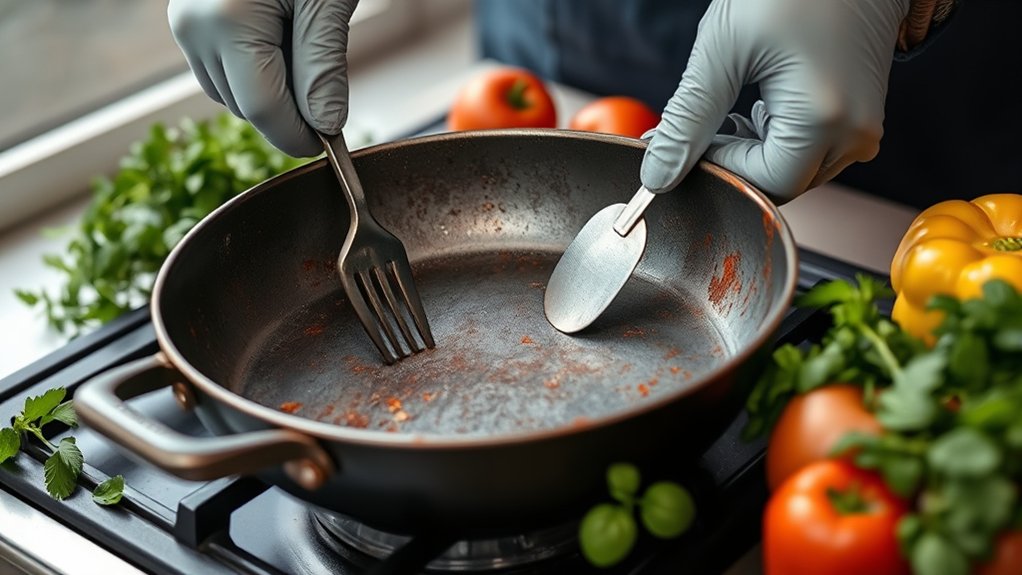
When you cook with a lead frying pan, lead particles can leach into your food, especially if the pan’s surface is damaged or acidic ingredients are used. Heat speeds up this process, increasing the risk of contamination. Acidic foods like tomatoes, vinegar, or citrus break down the lead, causing it to dissolve and mix with your meal.
If the pan has scratches, cracks, or worn areas, these expose more lead to your food. Cooking for long periods or at high temperatures also raises the chances of lead transfer. You might not taste or see the lead, but it still enters your body when you eat.
Understanding how exposure happens helps you recognize the importance of careful use and avoiding lead frying pans whenever possible.
How to Inspect Lead Frying Pans Safely
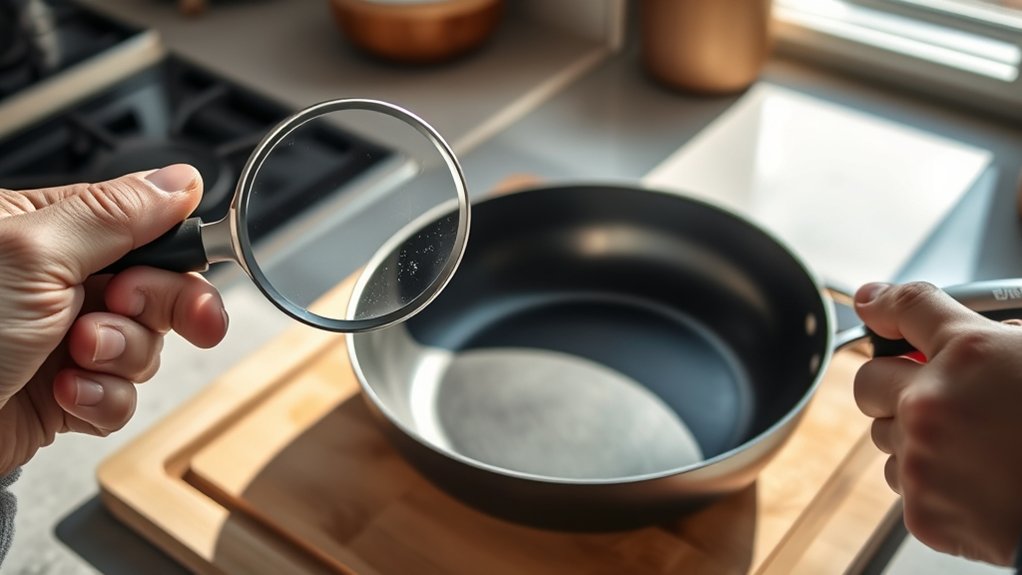
Since lead frying pans pose health risks, you need to inspect them carefully before each use. Check for cracks, chips, or peeling surfaces, as damaged areas increase lead exposure. Make sure the pan’s coating is intact and smooth.
Avoid pans with discoloration or corrosion, signaling wear. Clean the pan thoroughly, then look for residue or buildup that might hide damage.
| Inspection Step | Why It Matters |
|---|---|
| Surface check | Prevents lead from leaching into food |
| Coating integrity | Ensures safe cooking without contamination |
| Cleanliness | Reveals hidden damage or hazards |
Safety Gear for Handling Lead Cookware
After carefully inspecting your lead frying pan for damage, you need to protect yourself while handling it. Always wear nitrile or latex gloves to avoid direct skin contact with lead residues, which can be harmful even in small amounts. Use a dust mask or respirator rated for heavy metals to prevent inhaling any lead dust or particles, especially if you’re cleaning or sanding the pan.
Wear long sleeves and pants to minimize skin exposure. Work in a well-ventilated area to reduce the concentration of any airborne lead. Avoid eating or drinking while handling your lead cookware to prevent accidental ingestion.
After handling, wash your hands thoroughly with soap and water, even if you wore gloves, to guarantee all lead traces are removed.
Safe Foods to Cook in Lead Frying Pans
How can you guarantee your meals stay safe while using a lead frying pan? Focus on cooking foods that won’t react with lead or cause it to leach into your meal. Avoid acidic ingredients like tomatoes, vinegar, or citrus, as they increase lead absorption.
Instead, choose neutral or alkaline foods such as eggs, potatoes, or bread-based dishes. Cooking dry foods or those with low moisture content also reduces risk. Frying or sautéing without added acidic sauces helps keep lead exposure minimal.
You should never use the pan for boiling or simmering liquids, as long cooking times can increase lead transfer. By selecting appropriate foods, you keep your meals safer while still utilising your lead frying pan effectively.
Tips to Reduce Lead Exposure While Cooking
Although using a lead frying pan carries risks, you can take practical steps to minimize lead exposure while cooking. First, always season the pan properly before use; a well-seasoned surface creates a barrier between the food and lead. Avoid cooking acidic or highly salty dishes, as they increase lead leaching.
Use the pan for short cooking times to limit lead transfer. Clean the pan gently with mild soap and avoid abrasive scrubbing that can damage the seasoning. Store the pan in a dry place to prevent corrosion.
Finally, consider using a food-safe sealant designed for lead cookware to add an extra protective layer. By following these tips, you reduce the chances of lead contamination while still enjoying your lead frying pan.
Why Temperature Control Matters With Lead Pans
You need to keep a close eye on the temperature when using a lead frying pan to avoid overheating, which can release harmful lead. Staying within a safe cooking temperature range helps prevent lead from leaching into your food.
Risks of Overheating Lead
Because lead melts at a relatively low temperature, overheating your lead frying pan can quickly become dangerous. When lead reaches high heat, it can release toxic fumes and even start to melt, risking contamination of your food and severe health hazards.
Here’s a quick overview of risks:
| Overheat Level | Effect on Lead Pan | Risk to You |
|---|---|---|
| Mild | Slight discoloration | Minimal, but avoid frequent |
| Moderate | Warping or softening | Increased lead exposure risk |
| High | Melting begins | Serious poisoning risk |
| Extreme | Structural failure | Immediate health danger |
| Prolonged High | Residue buildup | Chronic lead exposure |
Always monitor heat closely to avoid these risks and protect your health.
Safe Cooking Temperature Range
Keeping your lead frying pan within a safe cooking temperature range helps prevent the dangerous consequences of overheating. You should never let the pan exceed around 450°F (232°C), as higher temperatures can cause lead to release toxic fumes or leach into your food. Using a reliable thermometer or stovetop with precise temperature control helps you maintain this limit.
Cooking at moderate heat keeps your food safe and preserves the integrity of the pan. Avoid heating the pan empty or for long periods without food, which can cause temperature spikes. Staying within this range lets you use your lead frying pan with greater confidence, minimizing health risks while ensuring your meals cook properly.
Temperature control is key to safe, effective use of lead cookware.
Lead Leaching Prevention Methods
How exactly does temperature control help prevent lead from leaching into your food? When you keep the heat in check, you reduce the risk of lead dissolving from the pan’s surface into your meal. High temperatures accelerate this leaching process, so controlling heat is essential.
To use your lead frying pan safely, follow these tips:
- Maintain cooking temperatures below 300°F (150°C) to minimize lead exposure.
- Avoid boiling acidic foods like tomatoes or vinegar-based sauces, as acidity increases lead release.
- Preheat the pan slowly to avoid sudden temperature spikes.
- Use a protective seasoning layer on the pan to create a barrier between food and lead.
How to Safely Clean Lead Frying Pans
You’ll want to use gentle cleaning materials that won’t damage the lead surface or leave harmful residues. Avoid harsh chemicals that could react with the pan and create toxic buildup.
After washing, make sure to dry the pan thoroughly using safe methods to prevent any moisture-related issues.
Proper Cleaning Materials
Why choose the right cleaning materials when dealing with lead frying pans? Using improper cleaners can damage the pan’s surface or risk lead contamination. You want to protect both your pan and your health.
Here’s what to use:
- Mild dish soap – gentle enough to clean without stripping protective layers.
- Soft sponges or cloths – avoid abrasive scrubbers that can scratch and expose lead.
- Warm water – helps dissolve grease without harsh chemicals.
- Non-abrasive brushes – for stubborn spots, ensuring you don’t damage the pan’s surface.
Stick to these materials to maintain your pan’s integrity and keep your cooking safe. Avoid harsh chemicals or steel wool, which can compromise the pan’s coating and increase lead exposure risk.
Avoiding Toxic Residue
Although lead frying pans require special care, you can safely clean them by following specific steps that minimize toxic residue. First, avoid harsh chemicals or abrasive scrubbers that might damage the pan’s surface and release lead particles. Instead, use mild soap and warm water with a soft sponge.
Rinse thoroughly to remove all soap traces, since residues can interact with lead. After washing, wipe the pan’s inside with a damp cloth to catch any remaining particles. Never soak the pan for long periods, as this can increase lead leaching.
Finally, dispose of cleaning water carefully and avoid pouring it down drains where it could contaminate water sources. By cleaning your lead frying pan thoughtfully, you’ll protect yourself and your family from toxic exposure.
Safe Drying Techniques
After carefully cleaning your lead frying pan to reduce toxic residue, drying it properly is just as important to prevent lead contamination. You’ll want to avoid moisture that can cause corrosion, which might release harmful lead particles. Follow these safe drying techniques:
- Use a clean, lint-free cloth to gently pat the pan dry immediately after washing.
- Air-dry the pan in a well-ventilated area away from food preparation zones.
- Avoid using high heat or open flames for drying, as this can damage the pan’s surface.
- Store the pan in a dry place to prevent moisture buildup and corrosion over time.
How to Store Lead Cookware to Avoid Contamination
When you store lead cookware improperly, you risk contaminating other kitchen items and surfaces. Always keep your lead frying pan separate from your regular cookware to prevent lead particles from spreading. Use a dedicated storage area or a sealed container to isolate it.
Make sure the pan is completely dry before storing to avoid moisture buildup, which can cause corrosion and increase lead exposure risks. Clean the storage space regularly to remove any dust or residue. Avoid stacking lead cookware with non-lead items, as friction can wear off tiny lead particles.
Label the storage spot clearly to remind yourself and others about the lead content. By taking these steps, you’ll minimize contamination and keep your kitchen safer when using your lead frying pan.
When to Avoid Using Lead Frying Pans
Since lead can leach into food under certain conditions, you should avoid using lead frying pans for cooking acidic or high-moisture dishes. Acidic ingredients like tomatoes or vinegar accelerate lead release, increasing health risks.
Also, steer clear of cooking foods with long cooking times in lead pans, as prolonged heat exposure worsens contamination.
Here are four key situations to avoid using lead frying pans:
- When preparing citrus-based sauces or dishes.
- Cooking stews or soups with high water content.
- Simmering or slow-cooking meals for extended periods.
- Frying or cooking at very high temperatures that can degrade the pan’s surface.
Safer Alternatives to Lead Frying Pans
Although lead frying pans have historical value, you should choose safer alternatives to protect your health. Instead, consider using pans made from stainless steel, cast iron, or ceramic coatings. These materials don’t leach harmful substances into your food and offer excellent heat distribution.
Non-stick pans with PFOA-free coatings are also a safe choice, but avoid scratched or damaged ones. If you appreciate traditional cookware, cast iron provides durability and natural non-stick properties when seasoned correctly. Stainless steel pans resist corrosion and are easy to clean, making them versatile for everyday cooking.
Ceramic cookware offers a non-toxic, environmentally friendly option with smooth surfaces that prevent sticking without chemicals. By opting for these alternatives, you guarantee your meals remain safe without compromising on cooking quality or technique.
Frequently Asked Questions
Can Lead Frying Pans Be Used for Baking in an Oven?
You shouldn’t use lead frying pans for baking in an oven because lead is toxic and can contaminate your food.
Instead, choose safe materials like cast iron or stainless steel for oven cooking. Stay safe!
How Does Seasoning Affect Lead Frying Pans?
Seasoning creates a protective layer, prevents rust, and reduces lead exposure. You’ll improve cooking performance, enhance flavor, and increase safety.
You’ll care for your pan, cook confidently, and protect yourself simultaneously.
Are Lead Frying Pans Dishwasher Safe?
You shouldn’t put lead frying pans in the dishwasher because harsh detergents and high heat can damage the seasoning and increase lead exposure risks.
Instead, hand wash gently with mild soap and dry thoroughly to keep it safe.
Can Lead Cooking Utensils Be Safely Used With Lead Pans?
Using lead cooking utensils with lead pans isn’t safe, like mixing poison into your meal. You shouldn’t risk lead contamination; instead, choose non-lead tools to keep your food healthy and avoid toxic exposure.
Do Lead Frying Pans Affect the Flavor of Food?
Yes, lead frying pans can affect your food’s flavor, often adding a metallic or unpleasant taste.
You shouldn’t cook with lead pans because they’re unsafe and can contaminate your meals with harmful toxins.
Conclusion
If you choose to cook with a lead frying pan, proceed with plenty of precautions. Protect yourself by properly inspecting, wearing safety gear, and preparing only safe foods. Prioritize precise cleaning and careful storage to prevent contamination.
Pay close attention to when to avoid using lead pans altogether. Ultimately, seek safer, smarter substitutes to safeguard your health. Staying savvy and sensible saves you from serious side effects while still satisfying your sizzling cooking cravings.
Using a lead frying pan requires careful handling and awareness. Always prioritize safety to minimize health risks associated with lead exposure. Remember, choosing lead frying pan alternatives is the best way to protect your well-being while enjoying cooking safely.