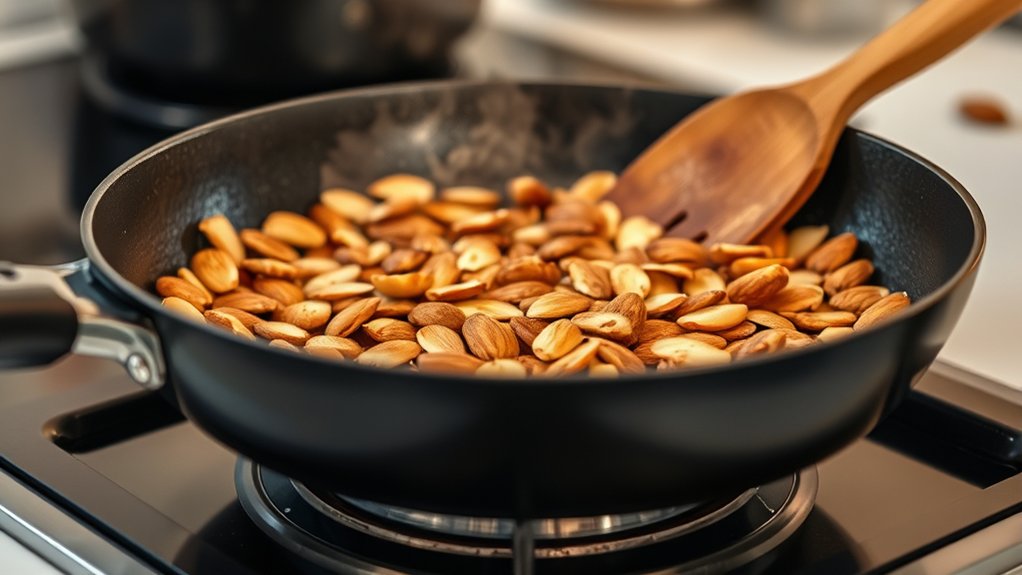
7 Easy Steps to Toast Almonds in a Frying Pan
To toast almonds in a frying pan, start by choosing raw, whole almonds without added oils or salt. Toasting almonds is an easy and quick way to enhance their flavor and crunch.
Using a clean, dry pan over medium heat ensures even toasting and prevents burning. Preheat your pan until it’s evenly hot.
Add the almonds in a single layer and stir or shake constantly to toast them evenly without burning. Watch for a golden color and a nutty aroma, which indicates they are perfectly toasted.
Once toasted, immediately transfer the almonds to a cool surface to stop the cooking process. Store them in an airtight container once cooled to maintain freshness.
Keep practicing, and you’ll discover tips for perfect results every time.
Key Takeaways
- Preheat a clean, dry frying pan over medium heat for 1-2 minutes until hot but not smoking.
- Spread raw almonds in a single layer without overcrowding for even toasting.
- Stir or shake the pan frequently to ensure uniform golden color and nutty aroma.
- Remove almonds immediately once golden brown and fragrant to prevent burning.
- Transfer toasted almonds to a plate to cool completely before storing in an airtight container.
Pick the Best Almonds for Toasting
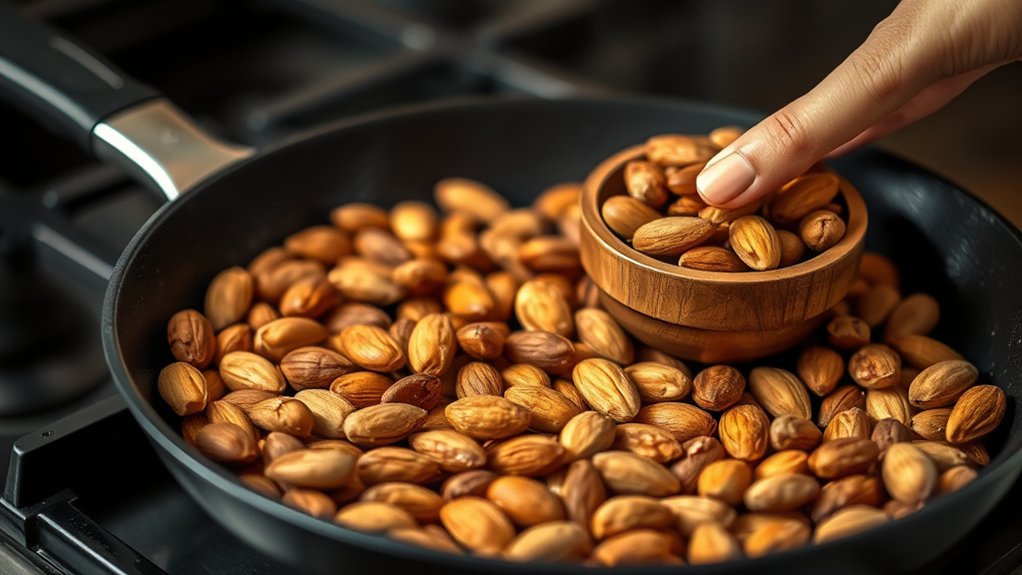
How do you choose the best almonds for toasting? Start by picking raw, whole almonds with no added oils or salt. These give you full control over flavor and texture.
Avoid pre-roasted or flavored almonds since they can burn quickly or develop off-flavors when toasted again. Look for almonds that are uniform in size to ensure even toasting in your pan. Check their appearance—fresh almonds are smooth, firm, and free from blemishes or dark spots.
Smell them too; fresh almonds have a mild, nutty aroma, while stale ones smell rancid or musty. If you want a healthier snack, opt for organic almonds without preservatives. Picking quality almonds upfront guarantees your toasting effort pays off with perfectly crisp, flavorful results every time.
Prepare Your Pan and Almonds for Toasting
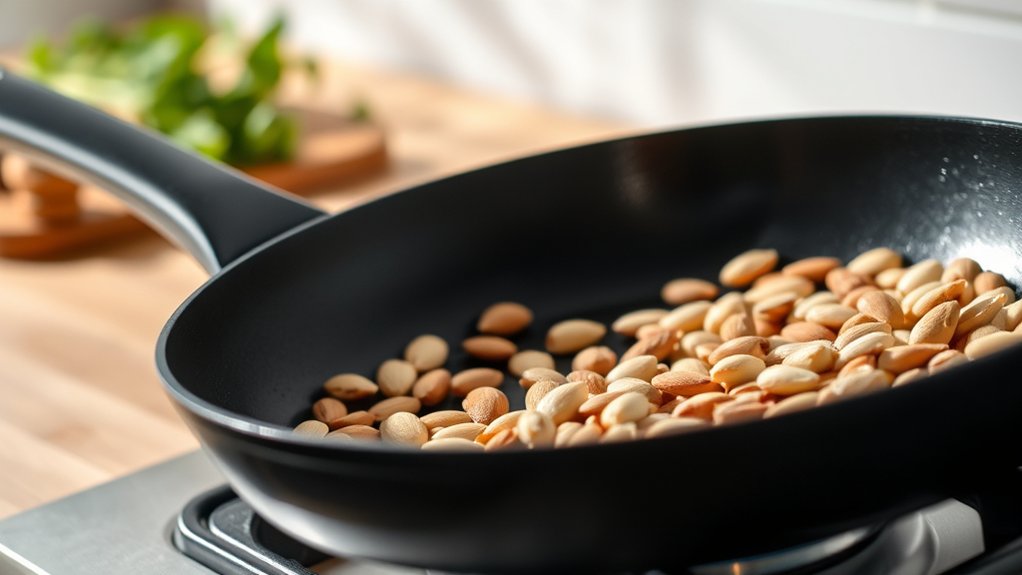
Before you start toasting, make sure your frying pan is clean and dry to prevent uneven cooking or burning. Wipe away any residue or moisture with a paper towel.
Next, spread your almonds out in a single layer inside the pan. Avoid overcrowding; if the pan is packed, the almonds will steam instead of toast, resulting in a less crisp texture.
If you’re using sliced or slivered almonds, handle them gently to keep their shape intact. No need to add oil or butter—dry toasting brings out their natural flavor.
Finally, have a wooden spoon or spatula ready for stirring once you begin heating. Properly preparing your pan and almonds sets the stage for even, delicious toasting.
Heat the Pan for Toasting Almonds
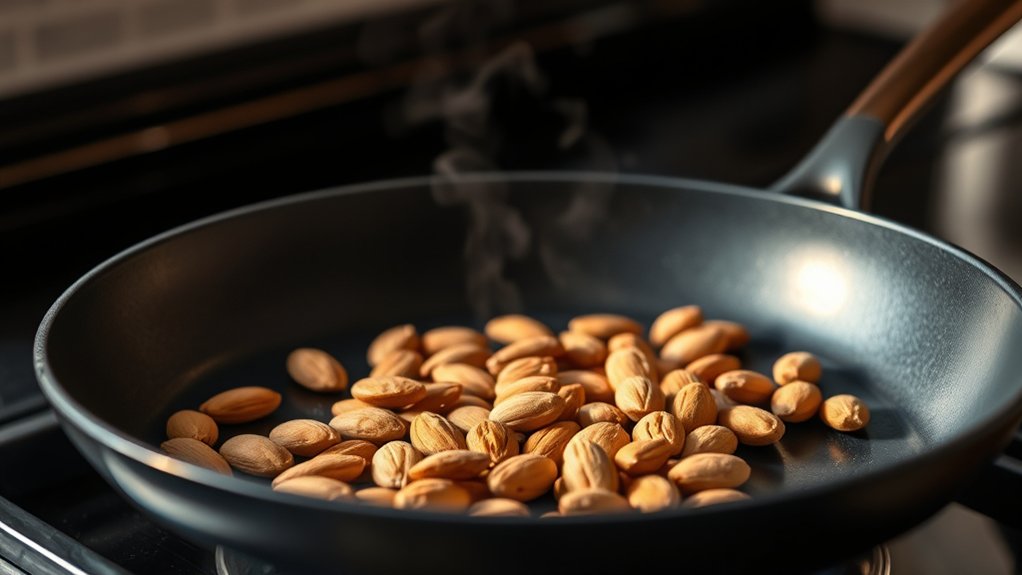
When should you heat your pan to get the perfect toast on your almonds? You want to heat your frying pan over medium heat before adding the almonds. This temperature is hot enough to toast the nuts evenly without burning them quickly.
Avoid cranking the heat too high, as almonds can scorch in seconds. Give your pan a minute or two to reach the right warmth, and you can test it by sprinkling a few drops of water—if they sizzle and evaporate almost immediately, your pan is ready.
Using a dry pan is key, so make sure it’s clean and free of oil or moisture. Heating the pan properly sets the stage for even, flavorful toasting in the next step.
Toast Almonds While Stirring and Watch for Doneness
You’ll want to keep the almonds moving constantly to make sure they toast evenly without burning. Use a wooden spoon or shake the pan gently as you stir.
Watch closely for a golden color and a fragrant, nutty aroma—that’s your sign the almonds are perfectly toasted.
Stirring Techniques For Evenness
Although toasting almonds seems straightforward, stirring them constantly is crucial to guarantee even browning and prevent burning. You want to keep the almonds moving so every nut gets equal heat exposure. Here are some effective stirring techniques to achieve that:
- Use a wooden spoon or heat-resistant spatula for gentle yet thorough stirring.
- Stir in small, consistent circles rather than big sweeps to avoid tossing almonds unevenly.
- Tilt the pan slightly to gather almonds at the lower edge, then stir to redistribute.
- Stir frequently—about every 10-15 seconds—to maintain even heat without losing control.
- Avoid overcrowding the pan; a single layer ensures better stirring and heat distribution.
With these techniques, you’ll get perfectly toasted almonds with uniform color and flavor.
Signs Of Perfect Doneness
As you stir the almonds, keep a close eye on their color and aroma to know when they’ve reached perfect doneness. The almonds will turn a rich, golden brown and release a warm, nutty fragrance. Avoid over-toasting, as burnt almonds taste bitter and lose their crunch.
Here’s a quick guide to spot the signs:
| Sign | What to Look For |
|---|---|
| Color | Even golden brown, not dark |
| Aroma | Nutty, warm scent fills the air |
| Texture | Slightly crisp when cooled |
Once you notice these signs, remove the almonds from the heat immediately. This prevents burning and guarantees a perfect crunch every time. Keep stirring to toast evenly and enjoy your perfectly toasted almonds!
Cool and Store Your Toasted Almonds
Once you’ve toasted your almonds, let them cool completely on a baking sheet or plate to stop the cooking process.
Choose an airtight container to keep them fresh and prevent moisture from sneaking in. Proper cooling and storage will help your almonds stay crunchy and flavorful longer.
Cooling Techniques For Almonds
After toasting your almonds to a perfect golden brown, you’ll want to cool them quickly to stop the cooking process and preserve their crunch. Cooling also helps prevent over-toasting and bitterness.
Here’s how you can cool your almonds effectively:
- Spread them out in a single layer on a baking sheet or large plate.
- Use a fan or place them near an open window for faster cooling.
- Stir them occasionally to release heat evenly.
- Avoid stacking while warm to prevent moisture buildup.
- Let them cool completely before storing to maintain texture and flavor.
Storage Container Options
Cooling your toasted almonds properly sets the stage for storing them to maintain freshness and crunch. Once cooled, choose an airtight container to keep air and moisture out. Glass jars with tight-sealing lids are great because they don’t absorb odors and allow you to see the almonds easily.
You can also use BPA-free plastic containers or resealable plastic bags, but make sure to press out excess air before sealing. If you plan to use the almonds within a week, a simple airtight container at room temperature works fine. For longer storage, consider containers that fit in the fridge or freezer.
Avoid storing almonds in open bowls or loosely covered containers, as they’ll quickly lose their crispness. Pick the container that fits your needs and space best.
Maintaining Freshness Longer
How can you keep your toasted almonds fresh and crunchy for as long as possible? First, make sure you let them cool completely before storing. Warm almonds release moisture, which can cause sogginess.
Once cooled, follow these tips to maintain freshness:
- Store almonds in an airtight container to prevent exposure to air and moisture.
- Keep the container in a cool, dark place away from sunlight and heat sources.
- Avoid storing almonds near strong-smelling foods to prevent odor absorption.
- For longer storage, consider refrigerating or freezing almonds in a sealed container.
- Use almonds within 2–3 weeks for the best flavor and crunch, or up to 3 months if frozen.
How to Use Your Toasted Almonds in Recipes
Once you’ve toasted your almonds to perfection, you can easily add them to a variety of dishes to enhance flavor and texture. Sprinkle them on salads for a satisfying crunch, mix into yogurt or oatmeal for a nutty boost, or chop and fold into baked goods like muffins and cookies.
They also make a great garnish for soups and roasted vegetables, adding depth and richness.
| Recipe Type | Almond Use | Flavor Impact |
|---|---|---|
| Salads | Whole or sliced | Crunchy, nutty |
| Breakfast | Chopped or slivered | Nutty, rich |
| Baking | Ground or chopped | Moist, flavorful |
| Soups | Garnish, chopped | Adds texture, richness |
| Vegetables | Tossed, whole | Toasty, savory |
Try experimenting—you’ll love the difference toasted almonds make!
Tips for Perfectly Toasted Almonds Every Time
Although toasting almonds might seem straightforward, a few simple tips can help you achieve the perfect golden crunch every time. You want to keep an eye on the almonds because they can go from toasted to burnt quickly. Stir frequently to guarantee even browning and avoid hot spots.
Use a dry frying pan and medium heat to control the toasting process better. Once you notice a nutty aroma, it’s a sign they’re almost done.
- Toast almonds in small batches to prevent overcrowding.
- Shake or stir the pan every 30 seconds.
- Remove almonds from heat as soon as they turn golden.
- Let them cool on a plate to stop cooking.
- Avoid using oil for dry toasting to keep them crisp.
Frequently Asked Questions
Can I Toast Almonds in the Oven Instead of a Frying Pan?
Yes, you can toast almonds in the oven. Just spread them evenly on a baking sheet, bake at 350°F (175°C) for about 8-10 minutes, and stir occasionally to guarantee they toast evenly without burning.
How Long Do Toasted Almonds Stay Fresh?
Toasted almonds stay fresh for about two weeks at room temperature. If you want to extend their freshness, store them in an airtight container in the fridge, where they can last up to six months.
Are Raw Almonds Safe to Eat Without Toasting?
Yes, you can eat raw almonds safely without toasting. Just make sure they’re fresh and stored properly. Toasting enhances flavor and crunch but isn’t necessary for safety or nutrition,
so feel free to snack on them raw.
Can I Use Other Nuts for This Toasting Method?
Just like a painter swaps brushes, you can definitely use other nuts—cashews, walnuts, pecans—in your frying pan. Keep an eye on them, though, because each nut toasts at its own pace and flavor.
Is It Necessary to Oil the Pan Before Toasting Almonds?
No, you don’t need to oil the pan before toasting almonds. Dry toasting helps them crisp up evenly and enhances their natural flavor without added fat.
Just keep stirring to prevent burning and enjoy the aroma.
Conclusion
Now that you’ve mastered the art of gently awakening your almonds’ hidden warmth, you’re ready to add a subtle touch of magic to your meals. Toasting almonds isn’t just cooking—it’s a quiet celebration of flavor and texture that brings comfort and joy to your kitchen.
Keep practicing these simple steps, and soon your toasted almonds will become the secret ingredient that turns everyday dishes into heartwarming memories. By following these easy steps to toast almonds in a frying pan, you’ll enhance your recipes with the perfect crunch and rich, nutty flavor. Enjoy the process and savor the delicious results of perfectly toasted almonds every time.