How to Use a Stainless Steel Frying Pan in 7 Easy Steps
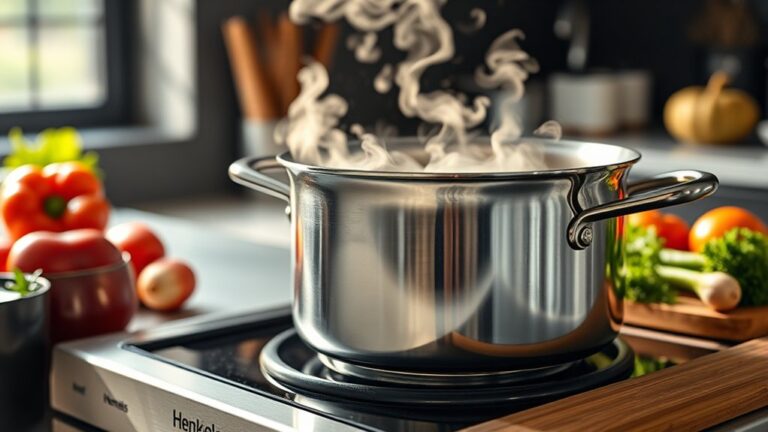
Choose a heavy, well-sized stainless steel frying pan with a thick base and secure handle. Preheating your pan properly is key to perfect cooking results. Heat it over medium heat for 2-3 minutes until water droplets dance and sizzle.
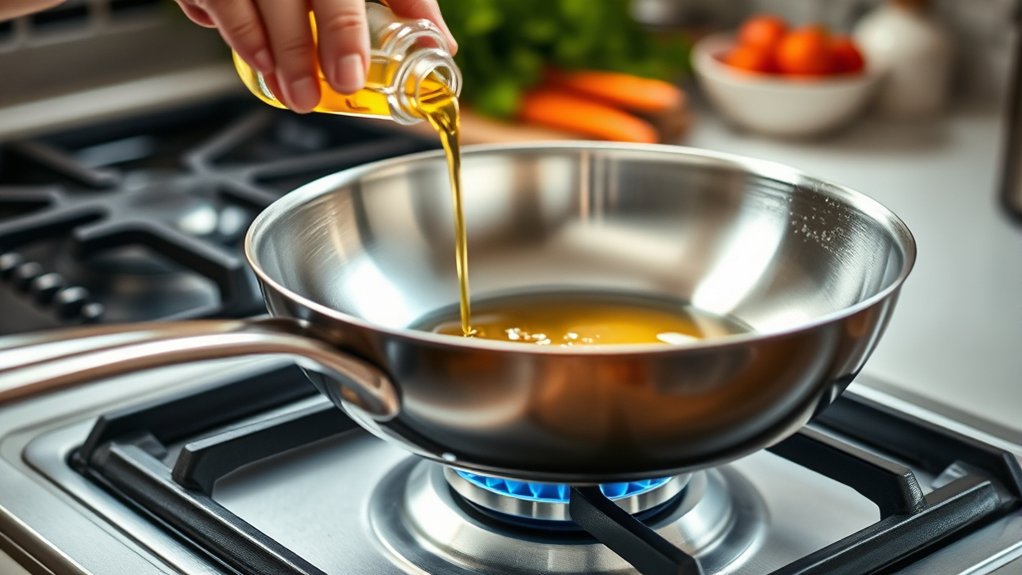
Add a high smoke point oil, such as avocado or grapeseed oil, and wait for it to shimmer before adding your ingredients. Controlling the heat is essential to avoid burning.
Sear meats undisturbed to develop a flavorful crust, while stirring vegetables frequently for even cooking.
After cooking, deglaze the pan with broth or wine to lift delicious flavors from the surface.
Proper cleaning and maintenance will keep your stainless steel frying pan lasting long and performing well. Keep going to discover tips for perfect searing and easy upkeep.
Key Takeaways
- Preheat the pan on medium heat for 2-3 minutes until water droplets dance and evaporate.
- Add high smoke point oil after preheating and wait until it shimmers before adding food.
- Use medium to medium-low heat to cook, preventing burning and ensuring even cooking.
- Sear meat undisturbed to develop a crust, then flip; stir vegetables frequently with oil.
- Deglaze the pan with liquid after cooking to lift flavorful browned bits and make sauces.
Choose the Right Stainless Steel Pan for Your Cooking
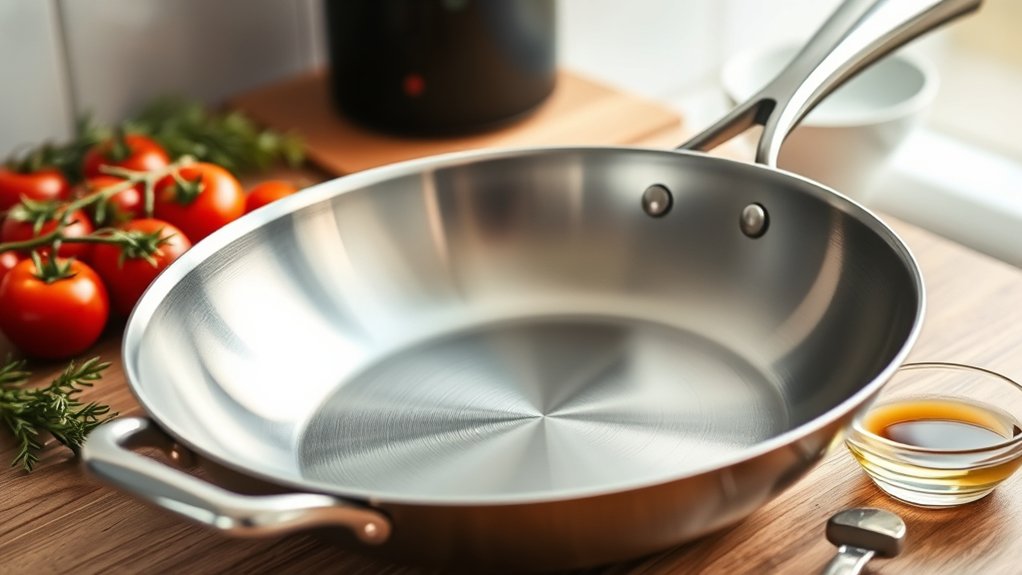
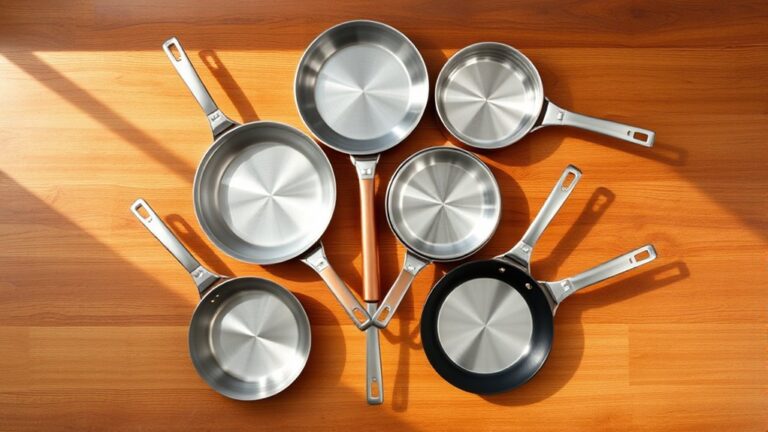
When choosing the right stainless steel pan for your cooking, consider the size and weight that suit your needs. If you often cook for one or two people, a smaller 8- or 10-inch pan works best. For family meals, a larger 12-inch pan gives you plenty of space.
Also, pay attention to the pan’s weight. A heavier pan heats evenly and retains heat better, but it should still feel comfortable to handle. Look for pans with a thick, layered base—this helps prevent hot spots and ensures consistent cooking.
Finally, check the handle design; it should offer a secure grip and stay cool during cooking. Picking the right pan upfront makes your cooking experience smoother and more enjoyable.
How to Properly Preheat Your Stainless Steel Pan
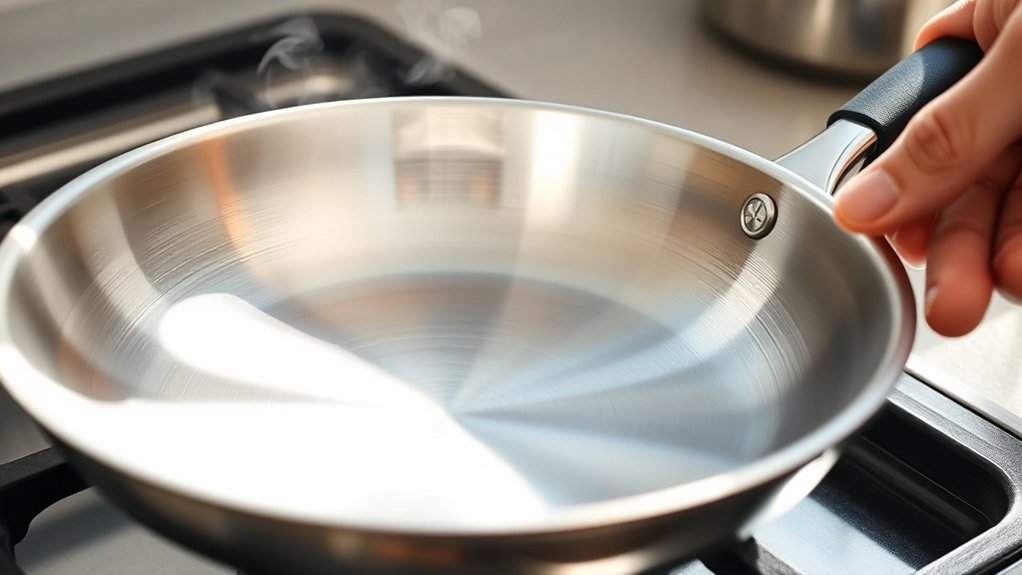
Before adding any ingredients, you’ll want to preheat your stainless steel pan properly to make sure even cooking and prevent food from sticking. Start by placing your pan on the burner over medium heat. Give it a few minutes—usually 2 to 3—so the heat spreads evenly across the surface.
To test if it’s ready, sprinkle a few drops of water onto the pan. If they dance and evaporate quickly, your pan is properly preheated. If the drops just sit or evaporate slowly, keep heating and test again every 30 seconds.
Avoid overheating, as this can damage the pan’s surface and affect cooking performance. Once your pan reaches the right temperature, you’re set to move on to adding oil or ingredients safely.
How to Heat Oil So Food Doesn’t Stick
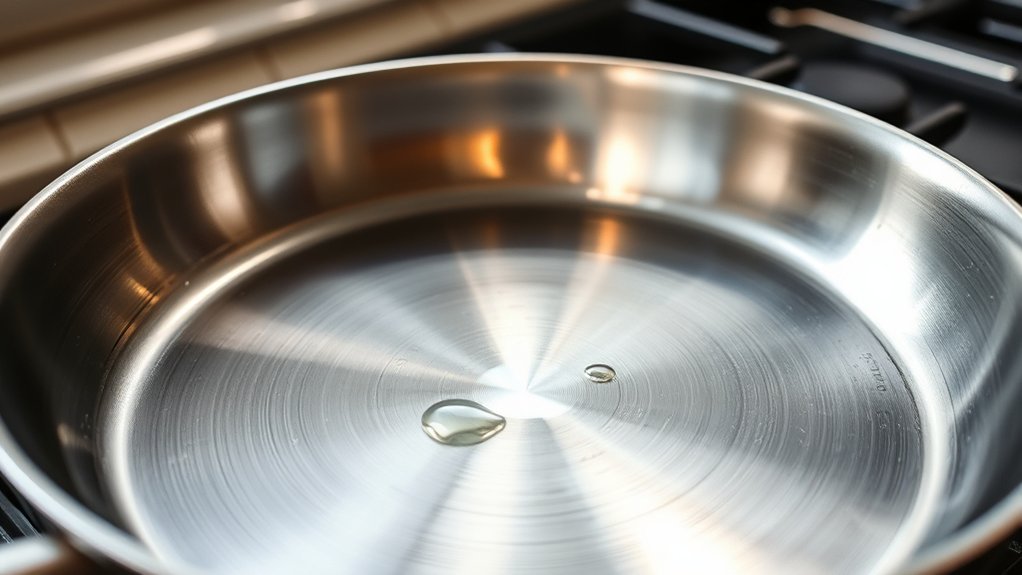
Although preheating your stainless steel pan is essential, heating the oil correctly is what truly prevents food from sticking. Once the pan is hot, add your oil and let it heat until it shimmers but doesn’t smoke.
This guarantees the oil creates a non-stick barrier between the pan and your food. Avoid adding oil too early or too late; both can cause sticking.
| Step | Tip |
|---|---|
| 1. Preheat pan | Medium heat for 2-3 minutes |
| 2. Add oil | Use oils with high smoke points |
| 3. Heat oil | Wait for shimmering surface |
| 4. Test readiness | Flick water drops to sizzle |
Following these steps helps your food release easily and cook evenly.
How to Cook Meat, Veggies, and Eggs Without Burning
How can you cook meat, veggies, and eggs in a stainless steel pan without burning them? First, control your heat—medium to medium-low works best. High heat can quickly scorch your food.
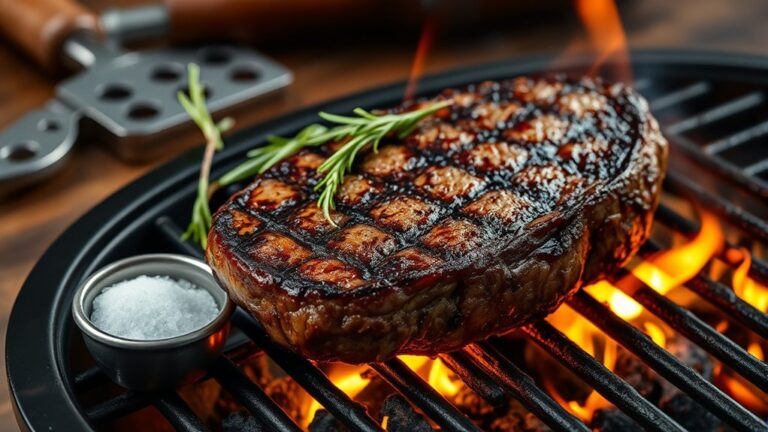
Preheat the pan properly, then add oil and wait until it shimmers before adding ingredients. For meat, let it sear undisturbed to develop a crust, then flip. Veggies cook well with a bit of oil and occasional stirring, preventing sticking and burning.
When cooking eggs, use moderate heat and add a little extra fat like butter or oil to create a nonstick surface. Patience is key—avoid rushing or constantly moving the food. With these steps, you’ll get evenly cooked, flavorful results without the frustration of burnt bits.
How to Sear and Sauté Perfectly in Stainless Steel Pans
Why does mastering searing and sautéing in stainless steel pans make such a difference? It locks in flavor and creates a beautiful, caramelized crust that enhances your dish’s texture and taste. To sear perfectly, heat your pan over medium-high heat until it’s hot but not smoking.
Add oil with a high smoke point, then place your meat or veggies without overcrowding. Let them cook undisturbed to form a crust before flipping. For sautéing, keep the heat medium, add oil or butter, then toss ingredients frequently to cook evenly and prevent sticking.
Avoid overcrowding to maintain temperature. With practice, you’ll get that balance between heat and timing, turning your stainless steel pan into a powerful tool for restaurant-quality cooking.
Make Flavorful Sauces by Deglazing Stainless Steel Pans
After cooking, you’ll notice browned bits stuck to your stainless steel pan—this is called the fond, packed with flavor. To make a delicious sauce, you’ll want to choose the right liquid, like wine or broth, to deglaze and lift those tasty bits.
Mastering simple techniques for effective deglazing will turn your pan into a flavor powerhouse.
Understanding Pan Fond
Although it might seem like just stuck-on bits, the browned residue—known as pan fond—holds incredible flavor potential. When you cook in a stainless steel pan, this flavorful buildup forms naturally as proteins and sugars caramelize. Instead of scrubbing it away, use it to enhance your dishes.
Here’s why pan fond matters:
- It’s packed with rich, concentrated flavors from your cooking
- It serves as the base for creating delicious pan sauces
- It adds depth and complexity to your meals with minimal effort
- It helps you make the most of your ingredients by reducing waste
Mastering how to work with pan fond transforms your cooking, letting you craft sauces that elevate every dish.
Choosing Deglazing Liquids
How do you choose the right liquid to deglaze your stainless steel pan and release those rich flavors trapped in the pan fond? Start by considering the dish’s flavor profile. Wine, both red and white, adds acidity and depth, perfect for meats or poultry.
Stock or broth offers a savory base without overpowering other ingredients. For a touch of sweetness and tang, balsamic vinegar or apple cider vinegar works well. If you want a quick kick, try citrus juice like lemon or orange.
Avoid using oils or heavy creams for deglazing—they won’t dissolve the fond properly. Pick a liquid that complements your meal, and you’ll transform those browned bits into a delicious, flavorful sauce in no time.
Techniques For Effective Deglazing
When you start deglazing your stainless steel pan, heat plays a crucial role in loosening those flavorful browned bits stuck to the surface. Keep the pan hot but not smoking to avoid burning the residue. Pour in your chosen liquid—like wine, broth, or vinegar—slowly, allowing it to sizzle and bubble.
Use a wooden spoon or spatula to gently scrape the pan’s bottom, lifting all the caramelized bits into the liquid. This process creates a rich base for your sauce.
Keep these tips in mind for effective deglazing:
- Don’t pour cold liquid into a hot pan to prevent warping.
- Add liquid gradually to control the sauce’s thickness.
- Stir constantly to dissolve all browned bits evenly.
- Finish by reducing the sauce to concentrate flavors.
Clean and Maintain Your Stainless Steel Pan for Longevity
To keep your stainless steel pan performing at its best, you’ll need to clean and maintain it regularly. After cooking, wash it with warm, soapy water and a soft sponge to remove food residues. Avoid steel wool or harsh abrasives that can scratch the surface.
For stuck-on food, soak the pan or use a gentle scrubber. Dry it immediately to prevent water spots and maintain its shine. Occasionally, polish your pan with a stainless steel cleaner to restore its luster.
| Cleaning Step | Tip |
|---|---|
| Wash | Use mild detergent and sponge |
| Soak | For stubborn food residues |
| Avoid | Steel wool or harsh scrubbers |
| Dry | Wipe immediately after washing |
| Polish Occasionally | Use stainless steel cleaner |
Frequently Asked Questions
Can I Use Stainless Steel Pans on Induction Cooktops?
Yes, you can use stainless steel pans on induction cooktops as long as the pan’s base is magnetic. Just check with a magnet—if it sticks, your pan will work perfectly with your induction stove.
This ensures the pan can interact with the cooktop’s magnetic field efficiently. Non-magnetic stainless steel pans will not heat up on induction surfaces.
Always perform the magnet test before using your pans on induction cooktops to avoid any cooking issues.
Are Stainless Steel Pans Dishwasher Safe?
Think of your stainless steel pan as a shining knight; yes, you can put it in the dishwasher, but frequent washes may dull its armor.
You’ll keep it gleaming longer by hand washing with gentle care.
How Do I Remove Discoloration From My Stainless Steel Pan?
You can remove discoloration by scrubbing with a paste of baking soda and water or using vinegar. Let it sit briefly, then rinse and dry.
This restores your pan’s shiny, clean surface quickly and easily.
Can Stainless Steel Pans Be Used in the Oven?
You can absolutely use stainless steel pans in the oven—they’re as tough as nails! Just make sure the handle is oven-safe and watch the temperature limits to avoid warping or damage.
Enjoy your versatile cookware!
What’s the Difference Between Stainless Steel and Non-Stick Pans?
Stainless steel pans heat evenly and develop a natural non-stick surface with proper technique, while non-stick pans have a coated surface that prevents sticking but can scratch easily.
You’ll choose based on durability and cooking style.
Conclusion
Now that you’ve mastered your stainless steel pan, think of it as your kitchen’s trusty sword—ready to conquer any recipe with precision and flair. With the right heat, a touch of oil, and a little patience, you’ll transform simple ingredients into golden victories.
Keep it clean and cared for, and this pan will be your lifelong cooking companion, shining bright and performing flawlessly every time you step into the culinary arena. Using a stainless steel frying pan properly ensures even cooking and enhances the flavor of your dishes.
By following these steps, your stainless steel frying pan will remain in excellent condition, making every meal a success. With the right care and technique, your stainless steel pan is truly your kitchen’s best ally.