How Long to Pan Fry Tilapia in 10 Steps
To pan fry tilapia perfectly, start by choosing fresh, firm fillets and lightly seasoning them. Knowing how long to pan fry tilapia is key to achieving a crispy, golden crust and tender flesh.
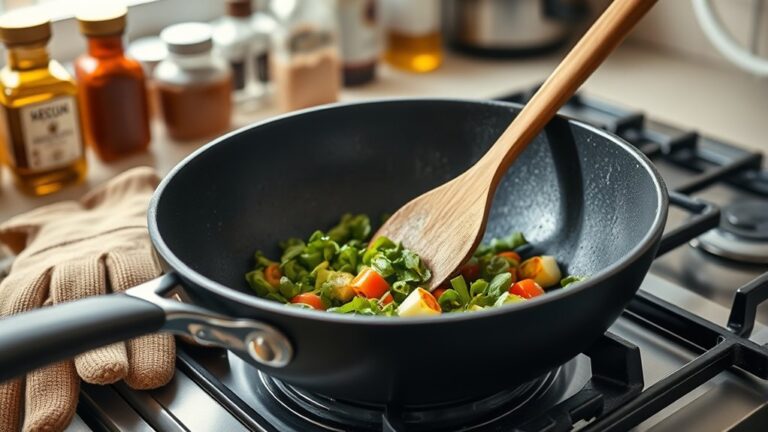
Heat a heavy skillet with high smoke point oil like avocado or canola until shimmering.
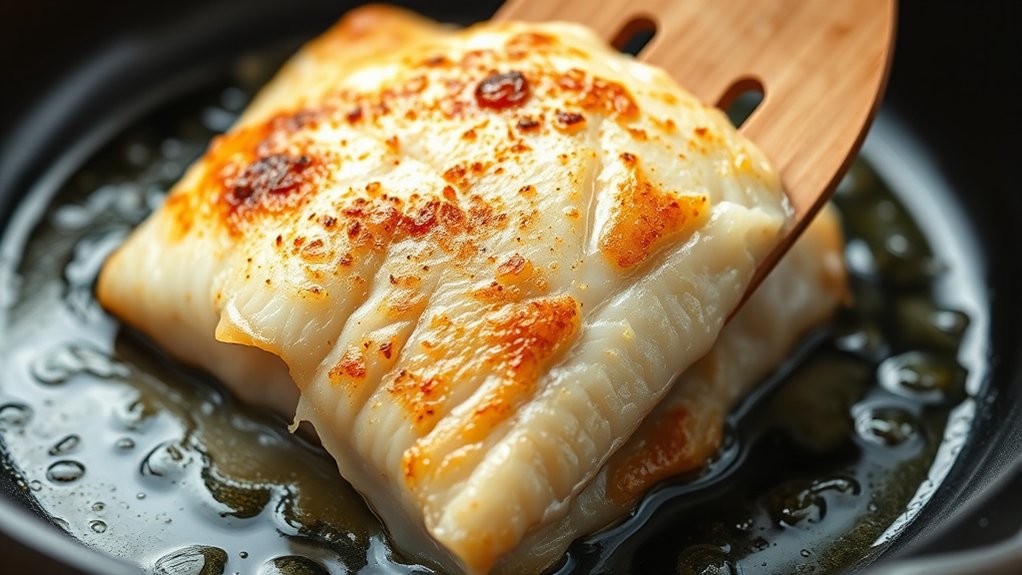
Cook each side for 3 to 4 minutes on medium-high heat, allowing the fillets to develop a beautiful crust without moving the fish too soon.
Check for opaque, flaky flesh at 145°F internal temperature to ensure it’s cooked through.
Rest the fillets for 3 to 5 minutes before serving.
Keep following for tips on seasoning, handling, and serving to make your pan-fried tilapia even more delicious.
Proper timing and technique make all the difference in this simple, flavorful dish.
Key Takeaways
- Preheat a heavy-bottomed skillet with high smoke point oil over medium to medium-high heat (350°F to 375°F) for 2-3 minutes.
- Pat tilapia fillets dry, season lightly, and place skin-side down in the hot oil without overcrowding the pan.
- Fry tilapia for 3 to 4 minutes on the first side without moving to develop a golden crust.
- Flip carefully and cook the other side for another 3 to 4 minutes until flesh is opaque, flakes easily, and reaches 145°F internally.
- Rest cooked tilapia on a warm plate for 3 to 5 minutes to lock in juices and enhance flavor before serving.
How to Choose Tilapia Fillets for Pan Frying
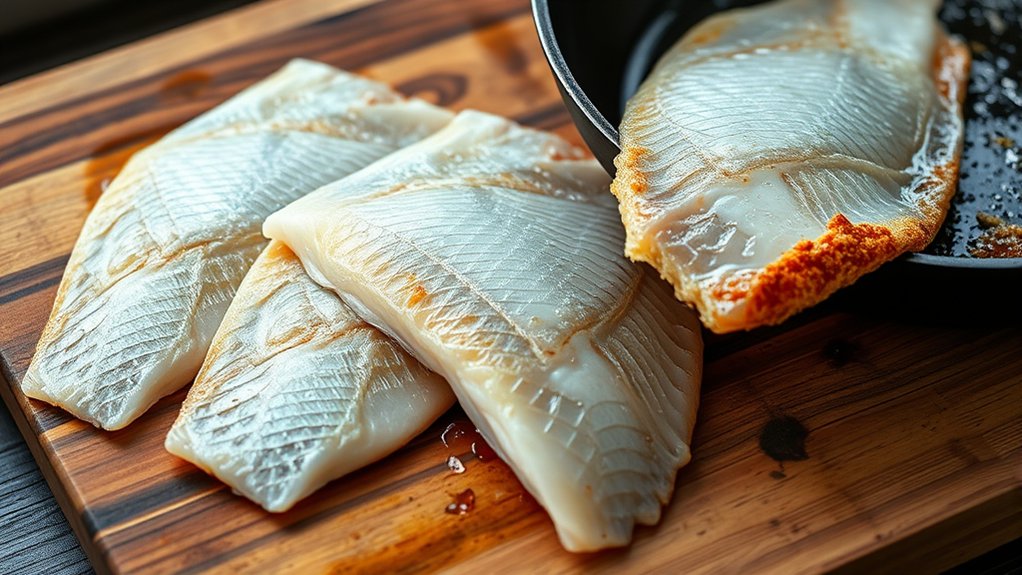
When selecting tilapia fillets for pan frying, you’ll want to pick pieces that are firm and fresh with a mild scent. Avoid fillets that smell overly fishy or have a slimy texture, as these indicate they’re not fresh. Look for fillets with a consistent, pale pink to white color without any dark spots or discoloration.
Choose fillets that feel slightly moist but not wet or sticky. If you can, buy fillets that are individually portioned and evenly sized to ensure they cook uniformly. Freshness is key because it affects both taste and texture.
Also, consider the source—wild-caught tilapia often has a firmer texture than farm-raised. Selecting the right fillets sets you up for perfectly pan-fried tilapia every time.
How to Prepare Tilapia Before Cooking
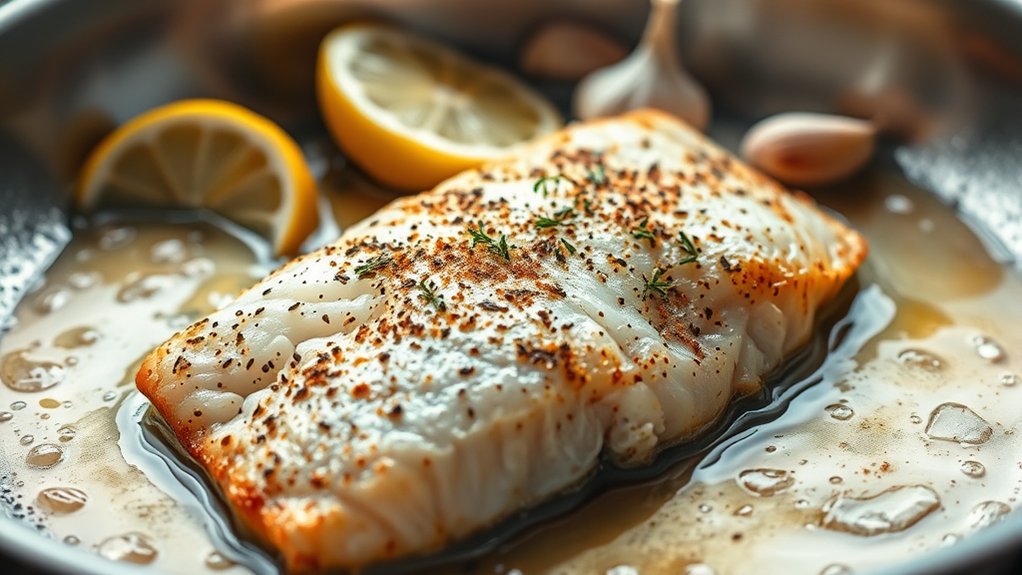
Choosing fresh, firm tilapia fillets is just the start. Before cooking, rinse the fillets under cold water and pat them dry with paper towels to remove excess moisture. This step helps guarantee a crispier crust when pan frying.
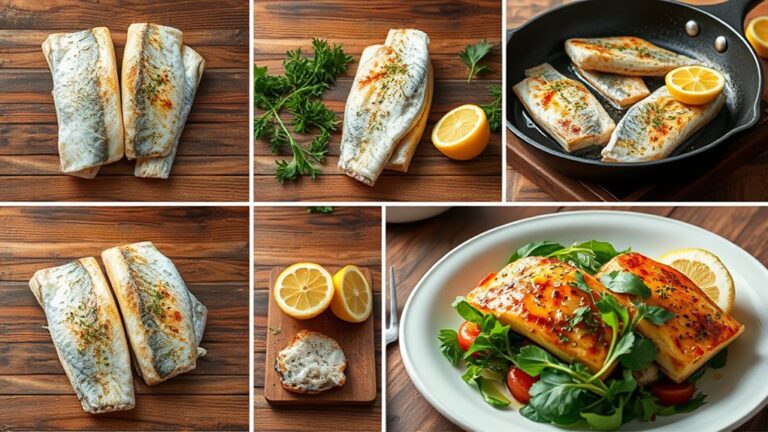
Next, check for any remaining bones by running your fingers over the fillets, and use tweezers to pull them out if needed. Lightly season both sides with salt and pepper, or your preferred spices, to enhance flavor without overpowering the delicate fish. If you want, marinate the fillets briefly—about 10 to 15 minutes—in lemon juice, garlic, or herbs to add subtle zest.
Just don’t over-marinate, as acid can start to “cook” the fish before it hits the pan.
Best Pan and Oil for Pan-Frying Tilapia
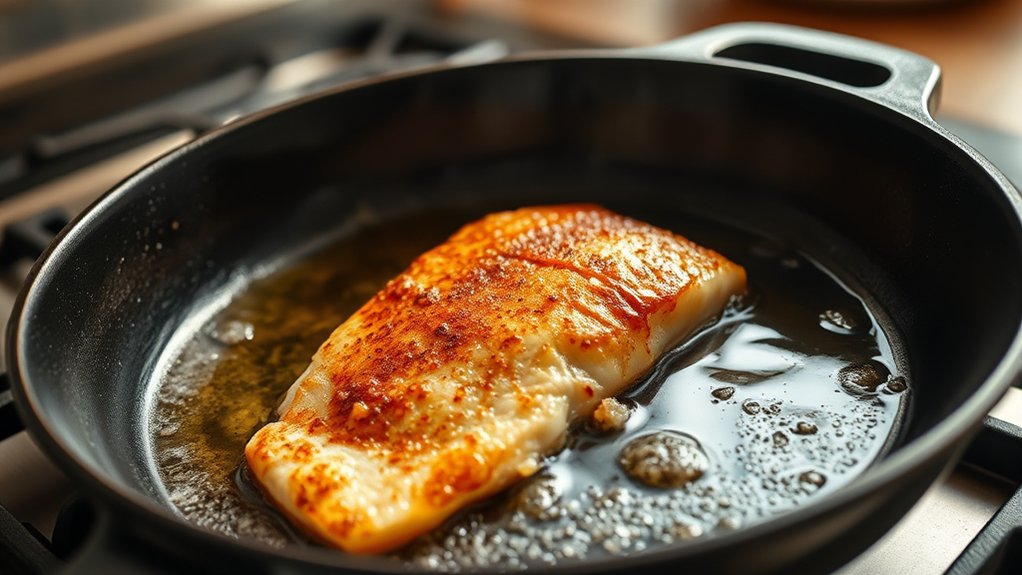
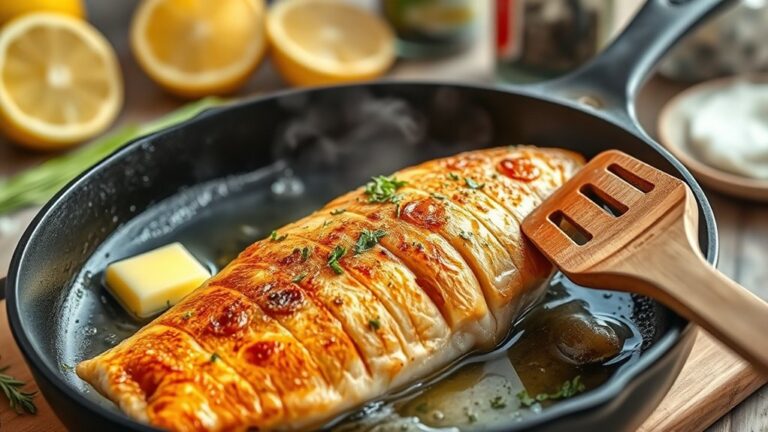
Although you can use various pans for frying tilapia, a heavy-bottomed skillet or cast-iron pan works best to guarantee even heat distribution and a perfectly crisp crust. These pans hold heat well, so your fish cooks evenly without sticking.
When choosing oil, pick one with a high smoke point to avoid burning and off-flavors.
| Best Pan Types | Recommended Oils |
|---|---|
| Cast-iron skillet | Avocado oil |
| Heavy-bottomed non-stick | Canola oil |
| Stainless steel | Grapeseed oil |
Using these combinations ensures your tilapia fries beautifully with a golden crust and tender inside. Avoid low smoke point oils like olive oil, as they burn quickly during pan-frying.
Ideal Pan Temperature for Pan-Fried Tilapia
You want your pan hot enough to sizzle the tilapia the moment it hits the surface, usually around medium-high heat. Too low, and the fish will steam; too high, and it can burn or dry out.
Look for a steady, gentle sizzle and golden edges as signs your pan is at the right temperature.
Optimal Heat Settings
When pan-frying tilapia, maintaining the ideal pan temperature is essential to achieve a crispy exterior without overcooking the delicate flesh. Set your stove to medium or medium-high heat—too high, and the fish will burn quickly; too low, and it won’t crisp properly. Preheat your pan for about 2-3 minutes before adding oil.
Use oils with high smoke points like canola or avocado oil to handle the heat without smoking. Once the oil shimmers but isn’t smoking, place the tilapia in the pan. Adjust the heat as needed to keep the temperature steady, ensuring even cooking.
This balance helps you cook tilapia perfectly every time without sticking or drying out the fillets.
Temperature Effects on Texture
Since the pan’s temperature directly influences how your tilapia cooks, keeping it within the ideal range guarantees the fillet develops a crispy crust while staying tender inside. If the pan’s too hot, you risk burning the outside while leaving the inside undercooked. Too low, and the fish turns rubbery and soggy.
To nail the perfect texture, aim for these temperature guidelines:
- Preheat your pan to medium-high heat, about 350°F to 375°F (175°C to 190°C).
- Use an oil with a high smoke point, like canola or avocado oil.
- Once the oil shimmers, place your tilapia fillet carefully to avoid temperature drops.
- Maintain consistent heat to ensure even cooking and a golden crust without drying out the fish.
Signs of Proper Heat
Maintaining the right pan temperature is key to achieving that perfect balance between a crispy crust and tender interior. You’ll know your pan is ready when a few drops of water sizzle and evaporate almost immediately upon contact. If the water dances and disappears quickly, the heat is just right.
Too low, and the water will sit and bubble slowly, which means your fish will stick and cook unevenly. Too high, and the oil will smoke, risking burnt fish and a bitter taste. When you add oil, it should shimmer but not smoke.
Once the oil looks like a liquid mirror, it’s time to add your tilapia. Keeping an eye on these heat signs helps you cook your fish perfectly every time.
How Long to Cook Tilapia on Each Side
Although cooking times can vary slightly depending on the thickness of your tilapia fillets, you’ll generally want to pan fry each side for about 3 to 4 minutes. This guarantees a nicely browned exterior and a tender, flaky interior.
Pan fry tilapia fillets 3 to 4 minutes per side for a golden crust and tender, flaky texture.
Here’s how to time it right:
- Heat your pan over medium-high heat and add oil.
- Place the fillets skin-side down if applicable.
- Fry the first side for 3 to 4 minutes without moving the fish.
- Flip carefully and cook the other side for another 3 to 4 minutes.
Sticking to this timing helps you avoid overcooking or undercooking your tilapia, giving you a perfect pan-fried result every time.
How to Tell When Tilapia Is Fully Cooked
When you pan fry tilapia, knowing when it’s fully cooked guarantees the best texture and flavor. Look for the flesh to turn opaque and white instead of translucent. The fish should easily flake apart when you gently press it with a fork.
If it resists flaking or looks shiny, it needs more time. You can also check the internal temperature with a food thermometer—tilapia is done at 145°F (63°C). Avoid cutting too early, as the fish continues cooking briefly after removal.
Tips for a Crispy Golden Crust and Avoiding Dryness
To achieve a crispy golden crust on your tilapia, start by patting the fillets dry before seasoning and frying. Moisture is the enemy of crispiness, so removing excess water helps the crust form beautifully. Use moderate heat to avoid burning the outside while keeping the inside tender.
Don’t overcrowd the pan; give each fillet room to cook evenly.
Here are four tips to help you get that perfect crust and avoid dryness:
- Preheat your pan and oil until shimmering before adding the fish.
- Use a thin coating of flour or cornmeal for extra crunch.
- Flip the fillets only once to maintain the crust.
- Finish cooking over medium heat to prevent drying out.
How to Season Tilapia Simply and Deliciously
Seasoning tilapia simply and deliciously starts with choosing a few key ingredients that enhance the fish’s mild flavor without overpowering it. Begin with salt and freshly ground black pepper to bring out the natural taste. Add a touch of garlic powder or minced fresh garlic for a subtle kick.
A squeeze of fresh lemon juice or a sprinkle of lemon zest brightens the flavor, giving it a fresh, zesty note. You can also include a pinch of paprika or cayenne pepper if you like mild heat and color. Finally, brush the fillets lightly with olive oil or melted butter to help the seasoning stick and promote even browning.
These simple steps guarantee your tilapia tastes vibrant and satisfying without complicated marinades.
How to Rest Tilapia for Maximum Flavor
After pan frying, you’ll want to let your tilapia rest to lock in its juices and boost flavor. Aim for about 3 to 5 minutes of resting time on a warm plate.
Simple techniques like loosely covering the fish with foil can help maintain the perfect temperature while it rests.
Importance Of Resting
While it might be tempting to dig in as soon as your tilapia leaves the pan, letting it rest for a few minutes enhances its flavor and texture. Resting allows the juices to redistribute throughout the fish, preventing dryness and ensuring each bite is moist and flavorful. It also helps the fish finish cooking gently, avoiding overcooking from residual heat.
Finally, resting lets the surface cool slightly, making it easier to handle and plate neatly.
Here’s why you shouldn’t skip resting your tilapia:
- Retains moisture for juicier fish
- Balances internal temperature for perfect doneness
- Improves texture by allowing fibers to relax
- Makes plating easier and less messy
Resting isn’t just a step—it’s key to maximum flavor.
Optimal Resting Time
Although it’s tempting to serve your tilapia immediately, letting it rest for about 3 to 5 minutes guarantees the flavors settle and the texture softens perfectly. This resting time allows the juices to redistribute evenly, preventing them from running out the moment you cut into the fish. You want the fish to remain moist and tender, which a brief rest helps achieve.
Resting too long, however, can cause the tilapia to cool down and lose its ideal warmth, so stick within this window. Keep the fish loosely covered with foil to retain heat without trapping steam, which could make the crust soggy. By timing your rest just right, you’ll enjoy tilapia that’s flavorful, juicy, and cooked to perfection every time.
Techniques For Resting
To get the most flavor from your tilapia, you need to rest it properly right after cooking. Resting lets the juices redistribute, keeping the fish moist and tasty. Here’s how to do it right:
- Remove from heat immediately – Take the tilapia off the pan to stop cooking.
- Place on a warm plate – Avoid cold surfaces that can cool the fish too fast.
- Cover loosely with foil – This traps heat without causing sogginess.
- Let it rest for 3-5 minutes – Enough time for juices to settle without losing warmth.
Following these steps ensures every bite is flavorful and tender, elevating your pan-fried tilapia to perfection.
How to Serve Pan-Fried Tilapia Perfectly
When you serve pan-fried tilapia, presentation and accompaniments play a key role in enhancing its flavor and appeal. Start by placing the fish on a warm plate to keep it hot longer. Add a squeeze of fresh lemon or lime juice to brighten the flavor.
Pair the tilapia with simple sides like steamed vegetables, rice, or a fresh salad to balance the meal. Garnish with chopped herbs such as parsley or cilantro for a pop of color and freshness. Avoid overcrowding the plate to keep the focus on the fish.
Serve immediately to enjoy the crispy texture at its best. With these touches, you’ll serve pan-fried tilapia that looks great and tastes even better.
Frequently Asked Questions
Can I Pan Fry Tilapia From Frozen?
You can pan fry tilapia from frozen, but it’s best to thaw it first for even cooking.
If you don’t, cook it on low heat longer, flipping carefully to avoid breaking the fish apart.
Is Tilapia Healthy to Eat Regularly?
Tilapia’s like a gentle breeze for your body—yes, you can enjoy it regularly. It’s low in fat, rich in protein, and offers healthy omega-3s.
Just balance it with variety for vibrant nutrition.
What Side Dishes Pair Well With Pan-Fried Tilapia?
You’ll love pairing pan-fried tilapia with roasted vegetables, garlic mashed potatoes, or a fresh garden salad. Steamed asparagus or quinoa also work great, adding texture and flavor without overpowering the fish’s delicate taste.
These side dishes complement the mild flavor of tilapia perfectly. They enhance your meal without overshadowing the main dish. Try mixing and matching to find your favorite combination.
How Do I Store Leftover Pan-Fried Tilapia?
You should let your leftover pan-fried tilapia cool, then wrap it tightly in foil or place it in an airtight container.
Store it in the fridge and eat within 2 days to keep it fresh and tasty.
Can I Use the Same Oil for Multiple Batches?
You might think reusing oil saves time and money, but you shouldn’t use the same oil for multiple batches. It breaks down, affecting flavor and safety.
Fresh oil keeps your tilapia crisp and delicious every time.
Conclusion
Now you know that pan-frying tilapia takes just about 3-4 minutes per side for a perfectly cooked, flaky fillet. Surprisingly, tilapia is one of the fastest-growing farmed fish, making it a sustainable and affordable choice.
By choosing the right fillets, seasoning well, and cooking at the ideal temperature, you’ll get a crispy, flavorful dish every time.
So, go ahead—enjoy your perfectly pan-fried tilapia with confidence! Remember, mastering how long to pan fry tilapia ensures a delicious, golden-brown finish that’s sure to impress.